
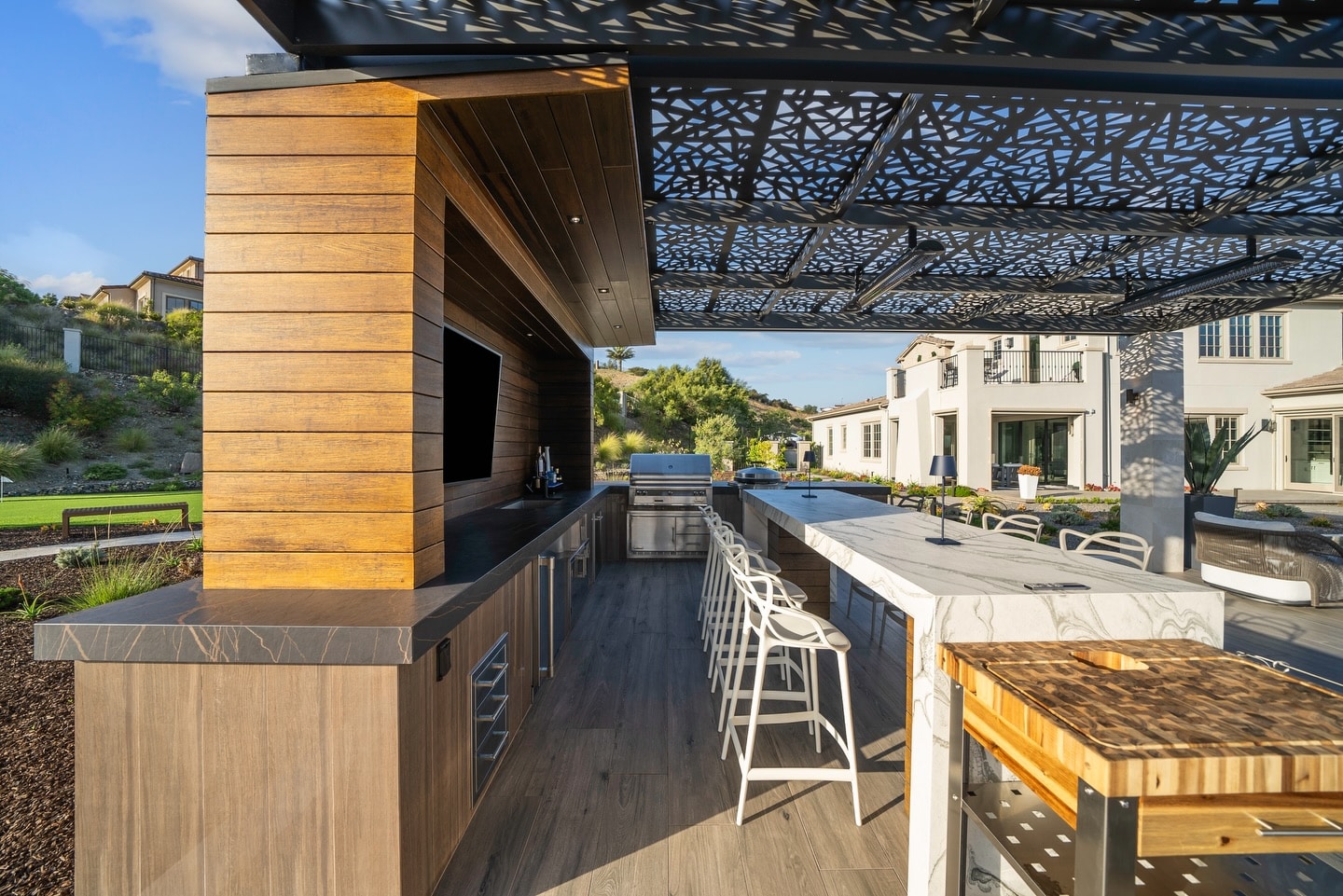
What makes a backyard BBQ memorable – the grill, the food, or the people gathered around it?
Here’s a controversial answer: it’s none of those things if the person cooking has to sprint into the house every three minutes because the tongs are missing, the cutting board is inside, and someone has mysteriously taken the only clean plate.
A great BBQ should feel relaxed. The cook should be near the action, the food should move smoothly from prep to grill to table, and nobody should have to perform an Olympic event just to fetch a bottle of sauce.
That’s where a great outdoor kitchen changes everything.
A well-designed outdoor kitchen isn’t simply a fancy grill surrounded by cabinets. It’s a complete cooking and entertaining space built around the way you actually BBQ.
Done properly, it gives you room to prep, cook, serve, store your gear, and enjoy the company without constantly running back indoors.
The secret isn’t buying every shiny appliance available. Good outdoor kitchen design is about workflow, convenience, durability, and knowing what you actually need.
So before you fire up the grill, let’s look at what turns an ordinary backyard cooking area into a BBQ setup worth bragging about.
What Makes a Great Outdoor Kitchen?
A great outdoor kitchen starts with one simple question:
How do you actually like to cook outside?
That sounds obvious, but it’s surprisingly easy to design a kitchen around how you think you should cook rather than how you really cook.
Someone who spends Saturday afternoons smoking ribs needs a different setup from someone who mainly throws burgers, steaks, and vegetables on the grill for dinner.
At its core, a practical outdoor kitchen needs several things:
- A cooking appliance that suits your BBQ style
- Enough counter space for preparation and serving
- Convenient storage
- Good lighting
- Weather-resistant materials
- A sensible layout
- Comfortable access to the dining or entertaining area
The grill might get all the attention, but it isn’t working alone.
Think of your outdoor kitchen as a small production line. Ingredients come in, food gets prepared, it hits the heat, and the finished meal needs somewhere to land.
A good layout makes that process almost effortless.
The best outdoor kitchen isn’t necessarily the biggest one. It’s the one that makes cooking easier.
That distinction can save you money, space, and a considerable amount of frustration.
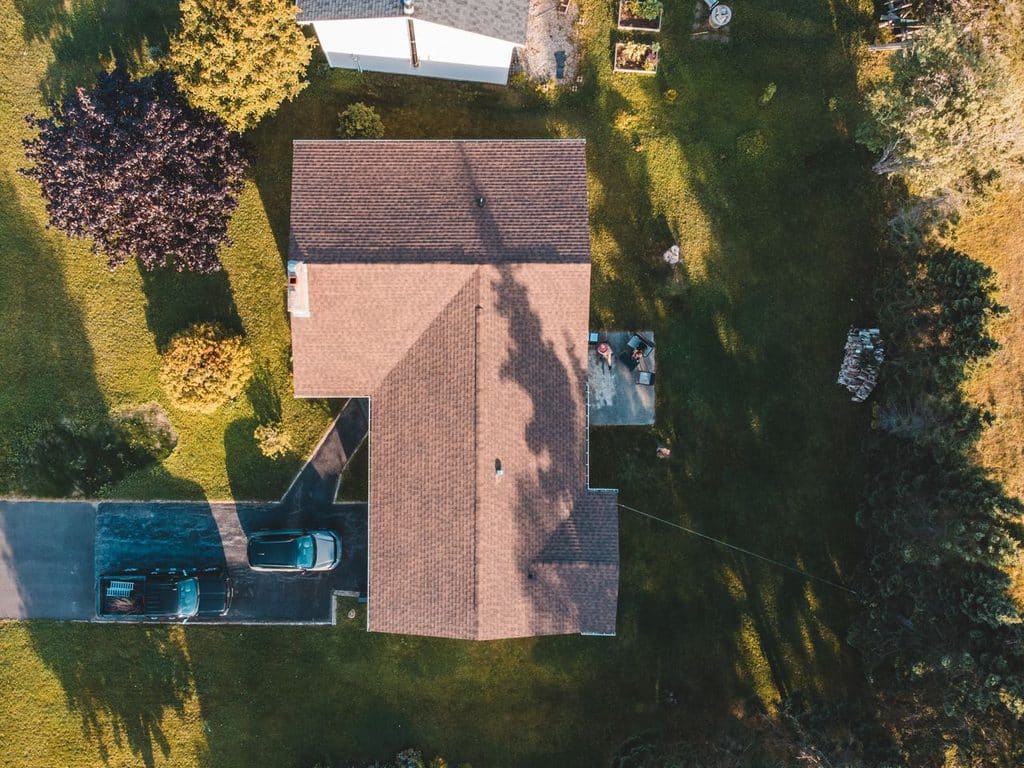
Choose the Right Location for Your Outdoor Kitchen
Location can make or break an outdoor kitchen.
Start by thinking about how people move through your backyard.
You don’t want the grill positioned directly in the middle of a busy walkway, nor do you want the cooking area hidden so far away that the person handling the brisket feels like they’ve been banished to another zip code.
Being reasonably close to the house is usually helpful. It makes transporting food, dishes, drinks, and supplies much easier.
But don’t forget about smoke.
A beautiful outdoor kitchen positioned so smoke constantly blows toward the house isn’t exactly a design triumph. Pay attention to prevailing winds and consider how smoke will travel when the grill is operating.
You’ll also want to consider:
Shade and sun: Cooking over a hot grill is already warm work. Direct afternoon sun can turn it into a full-contact sport.
Utilities: Gas, electricity, and water may influence where the kitchen can realistically go.
Traffic: Keep cooking equipment away from areas where children, pets, and guests constantly pass through.
Views: Ideally, the cook should be able to see and talk to guests while working.
Weather protection: A roof, pergola, awning, or other shelter can make the kitchen more useful throughout the year.
A little planning here pays off every time you cook.
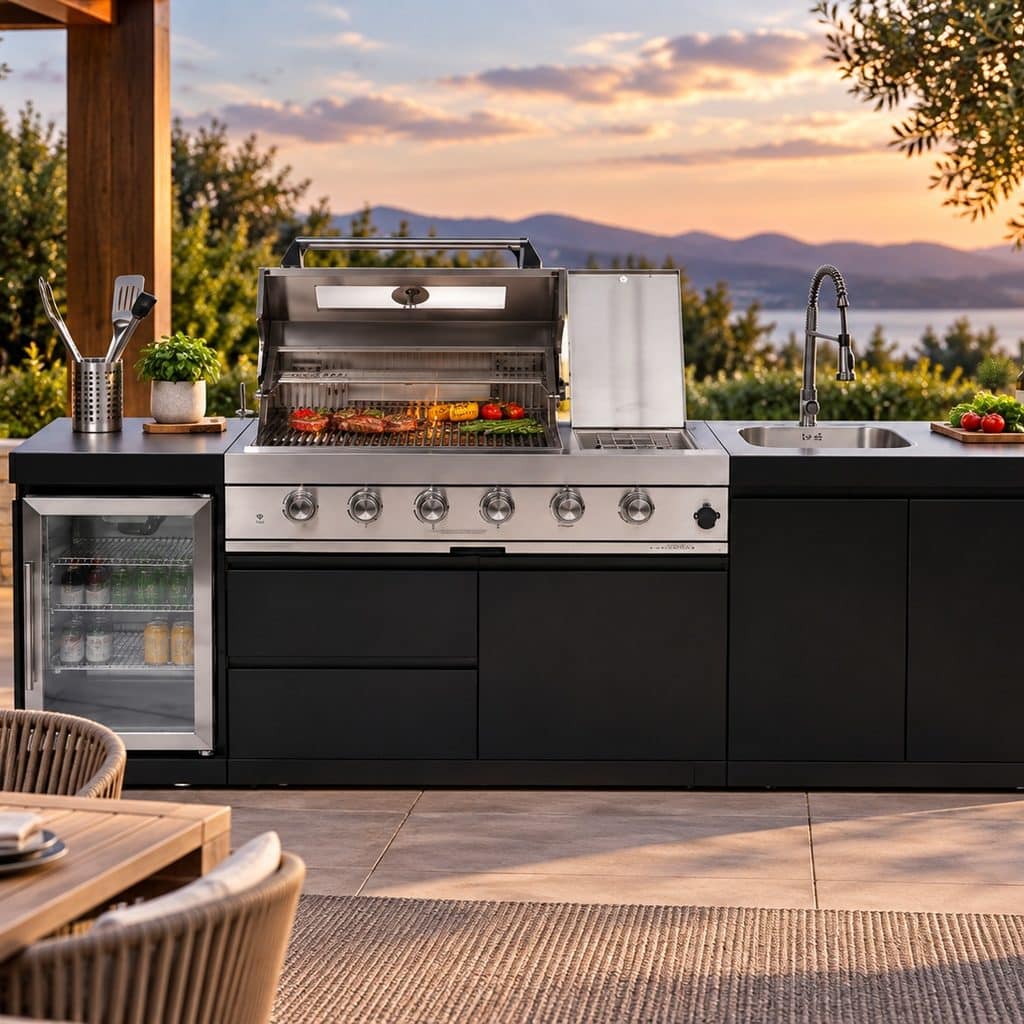
Build the BBQ Around the Right Grill
Here’s where BBQ dreams can get expensive.
Walk into an outdoor kitchen showroom and suddenly you need a grill the size of a small automobile, three burners, a smoker, a pizza oven, and enough stainless steel to outfit a restaurant.
Take a breath.
Choose your grill based on what you cook – not what looks impressive in a catalog.
Gas grills are convenient and easy to control. They’re useful for quick weeknight meals and larger gatherings.
Charcoal grills offer that classic live-fire experience and give you tremendous control over how smoke and heat interact with the food.
Pellet grills and smokers are particularly useful for low-and-slow cooking, especially when you’re interested in brisket, pork shoulder, ribs, and other BBQ staples.
Kamado-style cookers can handle both high-temperature grilling and long smoking sessions, making them remarkably versatile.
Built-in grills can create a sleek, permanent appearance, while freestanding models offer greater flexibility.
Before buying, think about:
- How many people you normally cook for
- How often you BBQ
- What types of food you prepare
- How much space you have
- How comfortable you are managing fire and temperature
- How much maintenance you’re willing to handle
More cooking capacity is useful only when you actually need it.
A massive grill gathering dust isn’t better than a smaller grill that gets fired up three times a week.
Don’t Forget Counter Space and Food Prep
Here’s an outdoor kitchen mistake that deserves more attention: not having enough countertop space.
People spend thousands on impressive grills and then give themselves barely enough room to put down a plate.
That’s backwards.
You need somewhere to season meat, arrange ingredients, place utensils, hold trays, and move cooked food away from the heat.
A useful outdoor kitchen can be divided into three basic zones:
Prep Zone
This is where raw ingredients are seasoned, chopped, mixed, and organized.
Cooking Zone
This is where the grill, smoker, burners, or other cooking equipment lives.
Serving Zone
This is where finished food can be placed before it heads to the table.
Keeping these zones reasonably close together creates a natural workflow.
Imagine preparing a rack of ribs. You season them on the prep counter, move them directly to the smoker, then transfer the finished ribs to a clean tray on the serving counter.
No unnecessary trips. No balancing a hot tray while trying to open a door with your elbow.
Counter space is working space. Give yourself enough of it.
Outdoor Kitchen Storage: Keep the BBQ Tools Close
Every serious BBQ setup accumulates equipment.
Tongs. Spatulas. Thermometers. Brushes. Cutting boards. Gloves. Skewers. Foil. Trays. Wood chunks. Charcoal.
Then somehow you end up storing half of it in a kitchen drawer indoors. Outdoor storage solves that problem.
Weather-resistant cabinets and drawers can keep your most-used tools close to the cooking area. Hooks can hold utensils, while dedicated compartments can keep smaller accessories organized.
Think beyond cooking tools, too.
You may need storage for:
- Plates and serving dishes
- Napkins
- Cooking oils and seasonings
- Cleaning supplies
- Charcoal or smoking accessories
- Trash and recycling bins
The goal is simple: keep the things you use most within easy reach.
Just make sure outdoor cabinets and storage components are designed to handle the conditions where you live. Outdoor kitchens face moisture, heat, humidity, dust, and sunlight that indoor cabinetry never has to worry about.
And yes, having the thermometer sitting outside is much more convenient than discovering it is inside after you’ve already lit the smoker.
Add the Features That Make BBQ Easier
Once you’ve covered the essentials, you can start thinking about extras.
An outdoor refrigerator is useful for keeping meat, drinks, sauces, and ingredients nearby. A sink can make food preparation and cleanup much easier. A side burner lets you cook sauces, vegetables, or other dishes without leaving the grill area.
Other possibilities include:
- Pizza ovens
- Smokers
- Beverage stations
- Ice makers
- Warming drawers
- Built-in trash storage
But here’s the important part:
Don’t turn your outdoor kitchen into an appliance showroom.
Every feature should earn its place.
A refrigerator you use every weekend can be worthwhile. A specialized appliance that gets used twice a year might be better left off the shopping list.
Start with your cooking habits. Add features that solve real problems. That’s how you create a great outdoor kitchen rather than simply an expensive one.
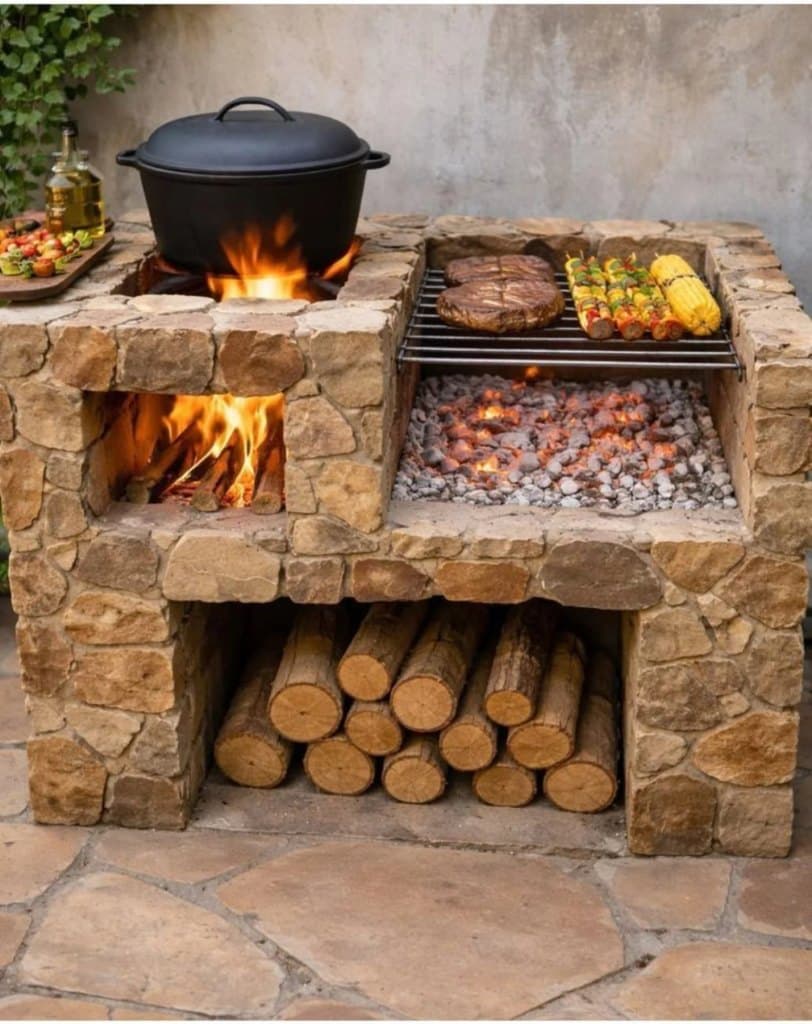
Create a Comfortable Backyard BBQ Entertaining Area
The best backyard BBQs aren’t just about food.
They’re about hanging around after dinner, telling stories, arguing about whose ribs were better, and pretending nobody noticed who took the last piece.
Your outdoor kitchen should support that atmosphere.
Consider placing seating close enough that guests can talk to the cook without standing directly in the smoke.
Depending on your space, that could mean:
- Bar stools along a countertop
- A dining table nearby
- Outdoor sofas
- Lounge chairs
- A dedicated conversation area
Shade matters, too. A pergola, umbrella, covered patio, or other shelter can make outdoor dining considerably more comfortable.
Lighting also becomes important once the sun goes down.
And there’s another advantage to keeping guests near the kitchen: the person cooking doesn’t miss the party.
Nobody wants to spend two hours preparing BBQ only to realize they haven’t spoken to anyone since lighting the charcoal.
Choose Durable Materials for an Outdoor Kitchen
Outdoor kitchens have a tougher life than indoor kitchens.
They’re exposed to rain, humidity, heat, sunlight, grease, dirt, and temperature changes.
That means materials need to be chosen for more than appearance.
Stainless steel is popular for outdoor appliances and cabinetry because it is durable and relatively easy to clean.
Stone and concrete can provide sturdy countertop surfaces, while brick and other masonry materials can create a substantial, built-in appearance.
Whatever you choose, consider:
Durability: Can it handle outdoor conditions?
Maintenance: How difficult is it to clean?
Heat resistance: Can it safely sit near cooking equipment?
Moisture resistance: Will it tolerate rain and humidity?
Sun exposure: Will prolonged sunlight affect the material?
A beautiful surface that requires constant babysitting may become annoying surprisingly quickly.
Outdoor kitchen materials should work as hard as the cook does.
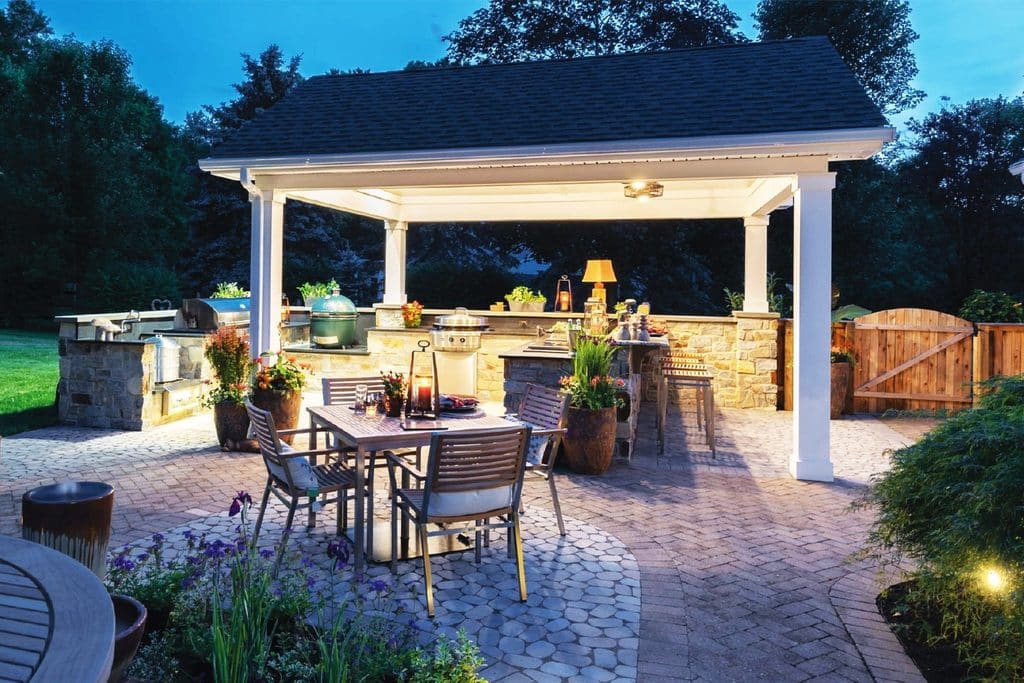
Outdoor Kitchen Lighting: Keep the BBQ Going After Dark
BBQ doesn’t always finish when the sun goes down.
In fact, some of the best backyard gatherings are just getting started at sunset.
Good lighting should serve two purposes: help you cook safely and create a pleasant atmosphere.
Task lighting is particularly important around the grill and preparation areas. You need enough light to see what you’re doing, check food, read thermometer displays, and handle knives safely.
Ambient lighting can then create the mood.
Think about under-counter lighting, pendant fixtures, string lights, or landscape lighting. Just don’t rely entirely on decorative lighting.
A beautifully illuminated patio isn’t much help when you’re standing over a steak trying to determine whether it’s cooked properly.
Light the work areas first. Make them pretty second.
Common Outdoor Kitchen Mistakes to Avoid
A little planning can prevent some expensive regrets.
One of the biggest mistakes is designing for appearance instead of workflow.
A kitchen can look fantastic in photographs and still be awkward to use.
Other common problems include:
Not enough counter space.
This is perhaps the classic mistake. Give yourself somewhere to work.
Too little storage.
BBQ equipment multiplies. Plan for it.
Poor grill placement.
Think about smoke, wind, traffic, and proximity to structures.
Ignoring lighting.
Your kitchen may look great at noon and become frustrating at 8 p.m.
Using unsuitable materials.
Outdoor conditions are unforgiving.
Adding too many appliances.
Every appliance costs money and takes up space.
Forgetting weather protection.
Rain and intense sun can limit how often you use the kitchen. The biggest lesson?
More stuff doesn’t automatically make a better outdoor kitchen. Better planning does.
How Much Should You Put Into a Great Outdoor Kitchen?
The cost of an outdoor kitchen can vary dramatically depending on its size, materials, appliances, utilities, and construction requirements.
Instead of starting with a giant wish list, divide the project into priorities. A simple setup might include a quality grill, countertop space, and basic storage.
A more developed kitchen could add refrigeration, a sink, additional burners, better storage, lighting, and a larger entertaining area.
A full-featured outdoor kitchen might include multiple cooking appliances, extensive cabinetry, premium countertops, plumbing, electrical work, and overhead protection.
The smart approach is to build around how often you’ll use the space.
A homeowner who BBQs every weekend may get tremendous value from investing in prep space and storage.
Someone who grills occasionally might prefer a simpler setup. You can also build in stages.
Start with the grill and workspace. Add storage later. Upgrade lighting. Install refrigeration when it makes sense.
Your outdoor kitchen doesn’t have to be finished in one giant weekend.
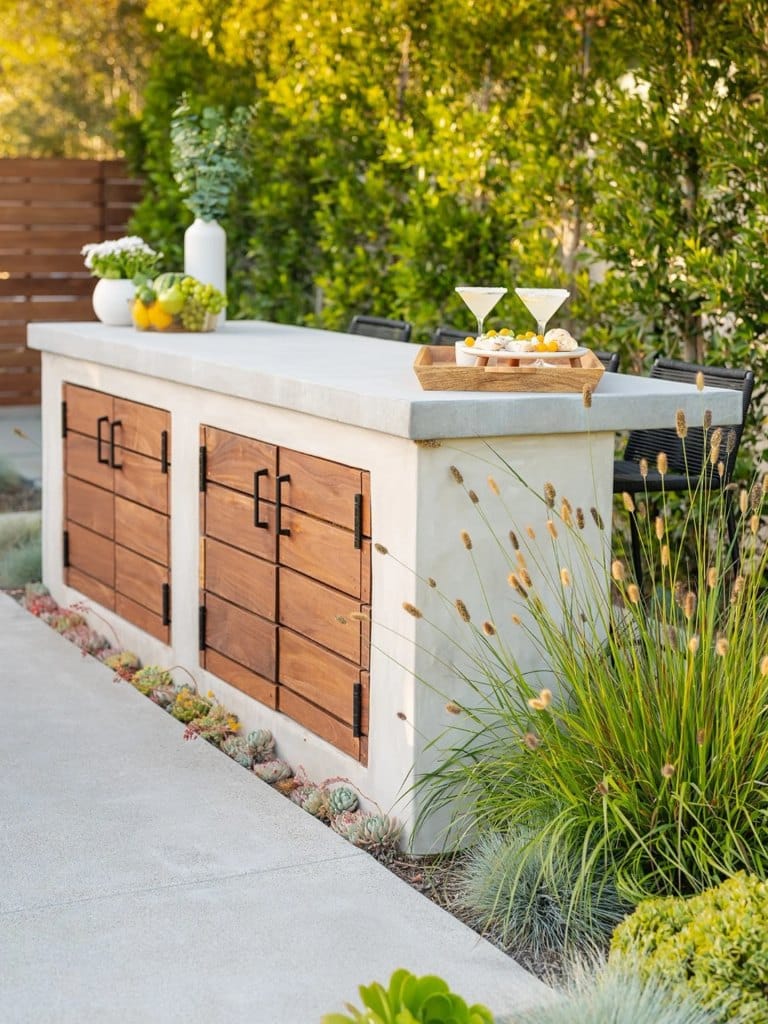
Design an Outdoor Kitchen Around How You BBQ
Before finalizing the design, think about your favorite cooks.
Do you spend hours smoking ribs and brisket?
Do you prefer quick steaks and burgers?
Do you cook large family meals?
Do you love making pizza?
Do you regularly entertain twenty people – or is your ideal BBQ four friends and a cooler?
Those answers should influence everything from grill size to counter space. A smoker enthusiast may prioritize fuel storage, prep space, and a smoker station.
A family that cooks nightly may care more about refrigeration, burners, and easy cleanup.
Someone who loves entertaining might prioritize a bar, seating, lighting, and beverage storage.
Design the outdoor kitchen around your cooking style – not somebody else’s dream backyard.
That single principle can keep the project practical and personal.
Conclusion: Build the Kitchen, Then Fire Up the Grill
A backyard BBQ should never feel like a commute.
When the grill, prep area, storage, appliances, and seating are positioned thoughtfully, outdoor cooking becomes easier and more enjoyable.
You spend less time searching for tools and more time watching the food, talking with guests, and enjoying the reason you fired up the grill in the first place.
That’s the real purpose of a great outdoor kitchen.
It isn’t about having the most expensive equipment or the largest cooking station on the block. It’s about creating a space that fits your cooking habits, your backyard, and the way you like to entertain.
Start with the essentials. Choose the right grill. Give yourself enough workspace. Keep your tools close. Use materials that can handle the weather. Add useful features instead of collecting appliances for bragging rights.
Then invite some friends over.
Fire up the grill.
And remember: the best outdoor kitchen isn’t the one that looks busiest – it’s the one that lets you cook, serve, and enjoy the BBQ without missing the party.
Frequently Asked Questions
1. What makes a great outdoor kitchen?
A great outdoor kitchen combines a suitable grill, plenty of prep space, practical storage, durable materials, good lighting, and a layout that makes cooking and entertaining easy. The best design depends on how you BBQ and how often you use the space.
2. What should an outdoor kitchen include?
At minimum, an outdoor kitchen should have a reliable cooking appliance, heat-resistant counter space, storage, and good lighting. Depending on your needs and budget, you can also add a refrigerator, sink, side burner, smoker, pizza oven, or beverage station.
3. Where should you place an outdoor kitchen?
Choose a location that provides convenient access to the house while allowing enough space for cooking and entertaining. Consider smoke direction, wind, sunlight, foot traffic, utilities, and weather protection before deciding where to build.
4. Is an outdoor kitchen worth it for BBQ?
An outdoor kitchen can make BBQ more convenient by keeping the grill, ingredients, tools, prep surfaces, and serving areas together.
For people who regularly grill or entertain outdoors, a well-planned setup can make cooking more enjoyable and reduce trips between the backyard and indoor kitchen.
5. How can I create an outdoor kitchen on a budget?
Start with the essentials rather than trying to build a fully equipped kitchen at once. Invest first in a quality grill, useful counter space, and basic storage.
You can add features such as refrigeration, sinks, extra burners, and upgraded lighting later as your needs and budget allow.
Featured image credit: @riverslandscape
