
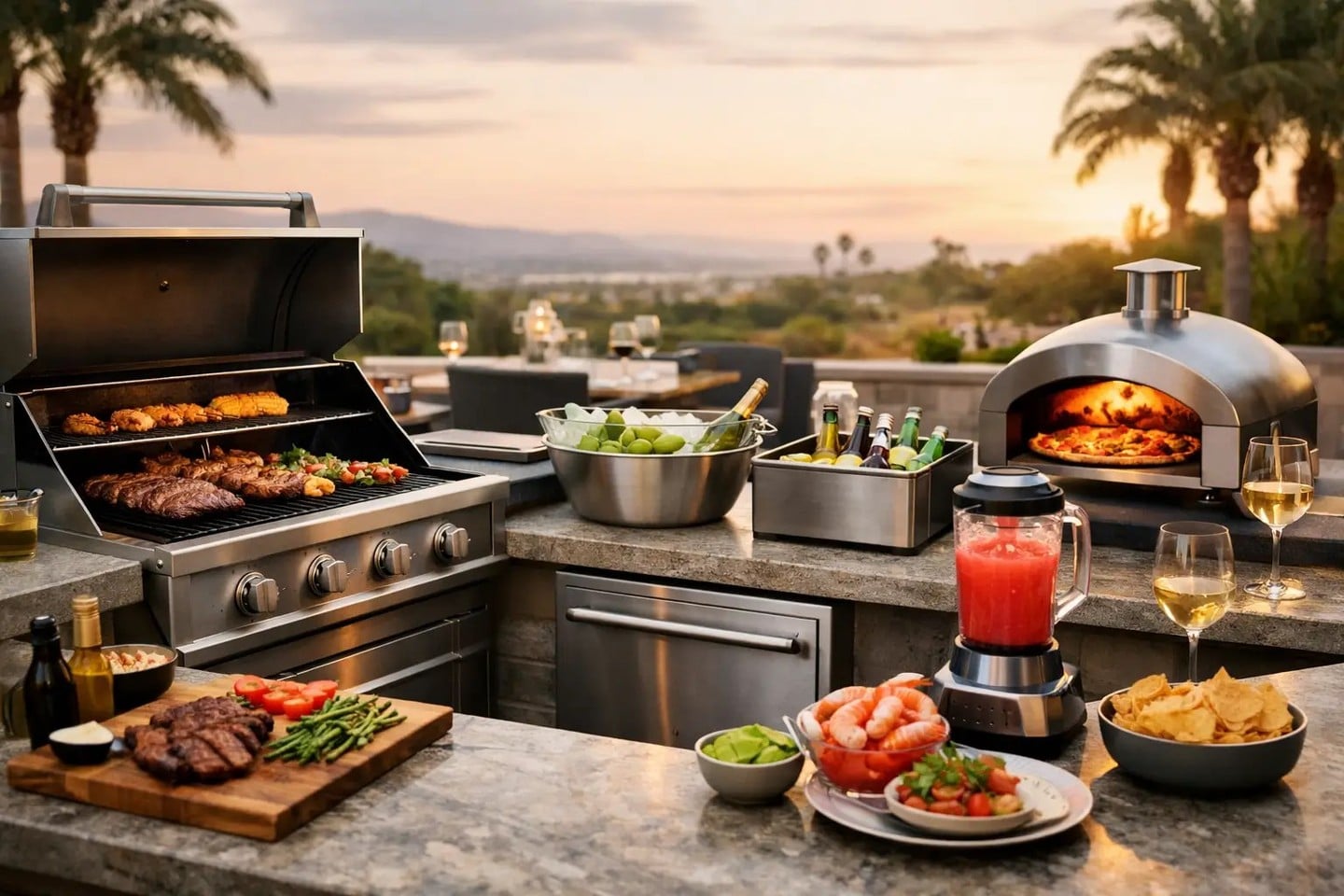
Building an outdoor cooking setup usually starts with grand dreams of sizzling ribeyes, cold drinks, and endless summer nights. Then reality hits: Mother Nature shows up uninvited. Rain, freezing temperatures, scorching midday heat, and hot grease splatters will destroy standard indoor surfaces fast.
Sliding a piping-hot cast iron skillet off a smoker onto the wrong counter can leave a permanent burn mark, while intense UV rays will turn cheap resin surfaces a sickening shade of off-yellow before the season ends.
Choosing the best countertop materials for outdoor kitchens isn’t just about picking a surface that matches your patio furniture – it is about picking a material that can take a beating from both the elements and your cooking gear.
To separate the champ slabs from the chumps, each material below was evaluated on four critical factors:
- UV Stability: Will direct sunlight fade, crack, or yellow it?
- Thermal & Freeze-Thaw Resistance: Can it handle blistering heat and sub-zero ice without cracking?
- Porosity & Stain Resistance: Will spilled red wine, hot marinade, or pork fat soak in forever?
- Maintenance Level: How much time will you waste sealing and scrubbing it?
Quick Comparison Guide
| Rank & Material | Durability (1-10) | UV Stability | Sealing Required? | Best Suited Climate |
| 1. Sintered Stone | 10 / 10 | Complete | No | Extreme (All Climates) |
| 2. Granite (Honed/Leathered) | 9.5 / 10 | Excellent | Yes (Annual) | Seasonal / Heat |
| 3. Soapstone | 9.0 / 10 | Complete | No (Optional Wax) | Freezing / Harsh Winters |
| 4. 316 Stainless Steel | 8.5 / 10 | Complete | No | Coastal / Rainy |
| 5. Concrete | 8.0 / 10 | Good | Yes (Frequent) | Mild to Moderate |
| 6. Natural Quartzite | 7.5 / 10 | Good | Yes (High-Grade) | Temperate |
| 7. Porcelain/Ceramic Tile | 7.0 / 10 | Excellent | Grout Only | Mild / Warm |
| 8. Slate | 6.5 / 10 | Fair | Yes | Shaded / Moderate |
| 9. Outdoor-Engineered Quartz | 6.0 / 10 | Moderate | No | Covered Patios Only |
The 9 Best Outdoor Countertop Materials, Ranked
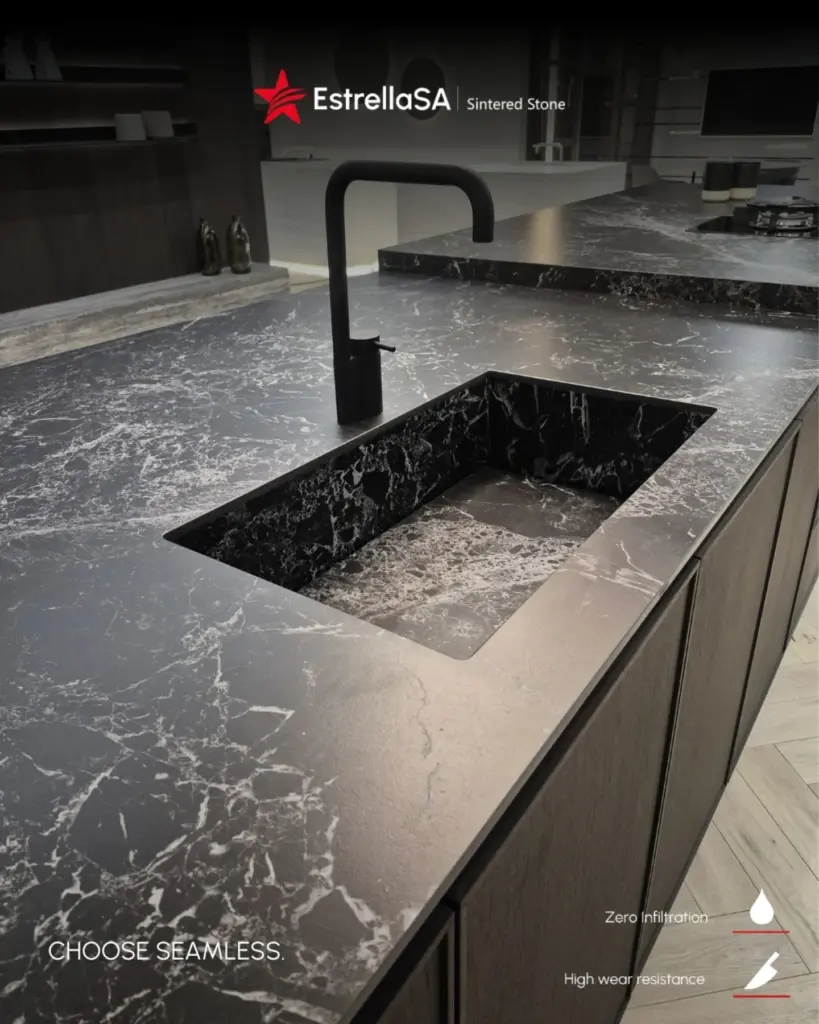
1. Sintered Stone / Porcelain Slabs (e.g., Dekton, Neolith)
If countertop materials had a heavyweight boxing division, sintered stone would walk away with the championship belt every single time.
Manufactured under immense heat and pressure, this ultra-compact material mimics the natural metamorphic process of stone – just sped up to warping speed.
It is virtually bulletproof.
You can pull a pan straight off a 700°F grill grate, slam it onto a sintered stone slab, and it won’t even flinch. It features near-zero water absorption, complete UV immunity, and zero need for chemical sealers.
The only drawback? It is pricey, and because it is so hard, it requires an experienced fabricator to cut and install without chipping the edges.
- Durability Score: 10/10
- The Big Win: Completely immune to heat, UV rays, and ice.
- The Trade-off: High upfront material cost and requires specialist installers.
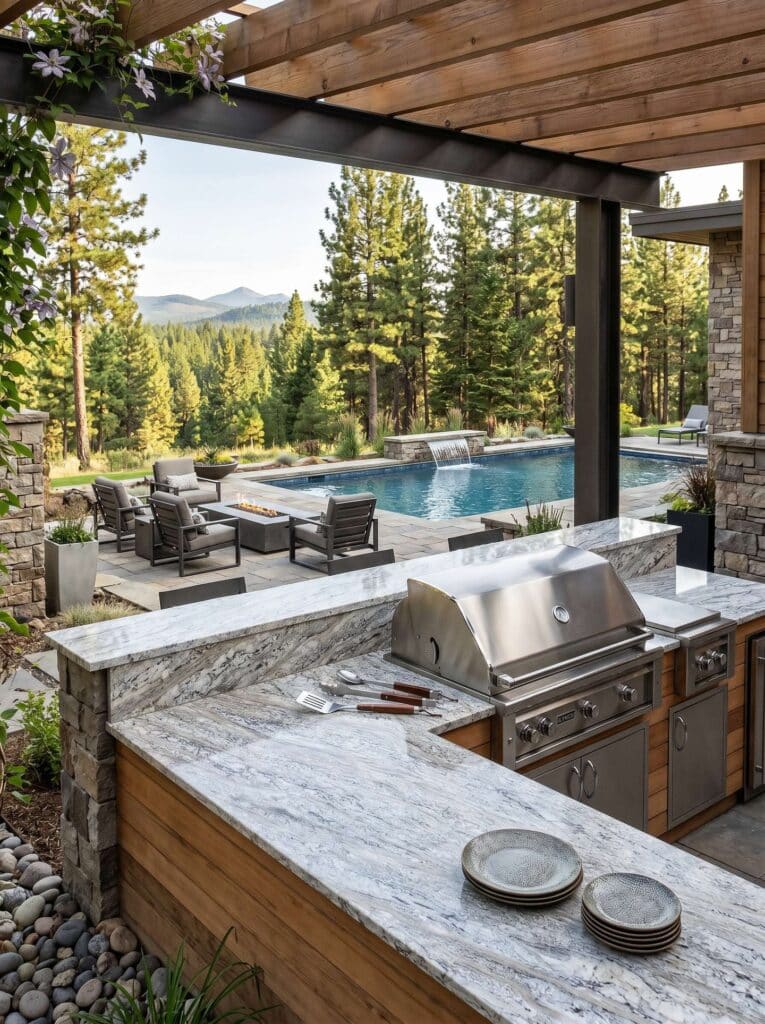
2. Granite (Honed or Leathered Finish)
Granite remains the undisputed king of natural stone for backyard prep stations. It formed deep in the Earth’s crust under mind-boggling pressure, so a little summer humidity isn’t going to phase it.
However, skipping polished granite for a honed (matte) or leathered (textured) finish is the pro move here. Polished granite acts like a mirror in direct sunlight, blinding you while flipping burgers, whereas textured finishes hide water spots and reduce glare significantly.
Granite handles scorching pans with ease and holds up exceptionally well through freezing winters. Just remember that granite is a natural stone with pores.
It requires a quick pass with a quality sealer once a year to keep grease and berry juices from sinking in.
- Durability Score: 9.5/10
- The Big Win: Time-tested natural beauty with top-tier heat and scratch resistance.
- The Trade-off: Dark granite gets scorching hot in direct sun; requires annual sealing.
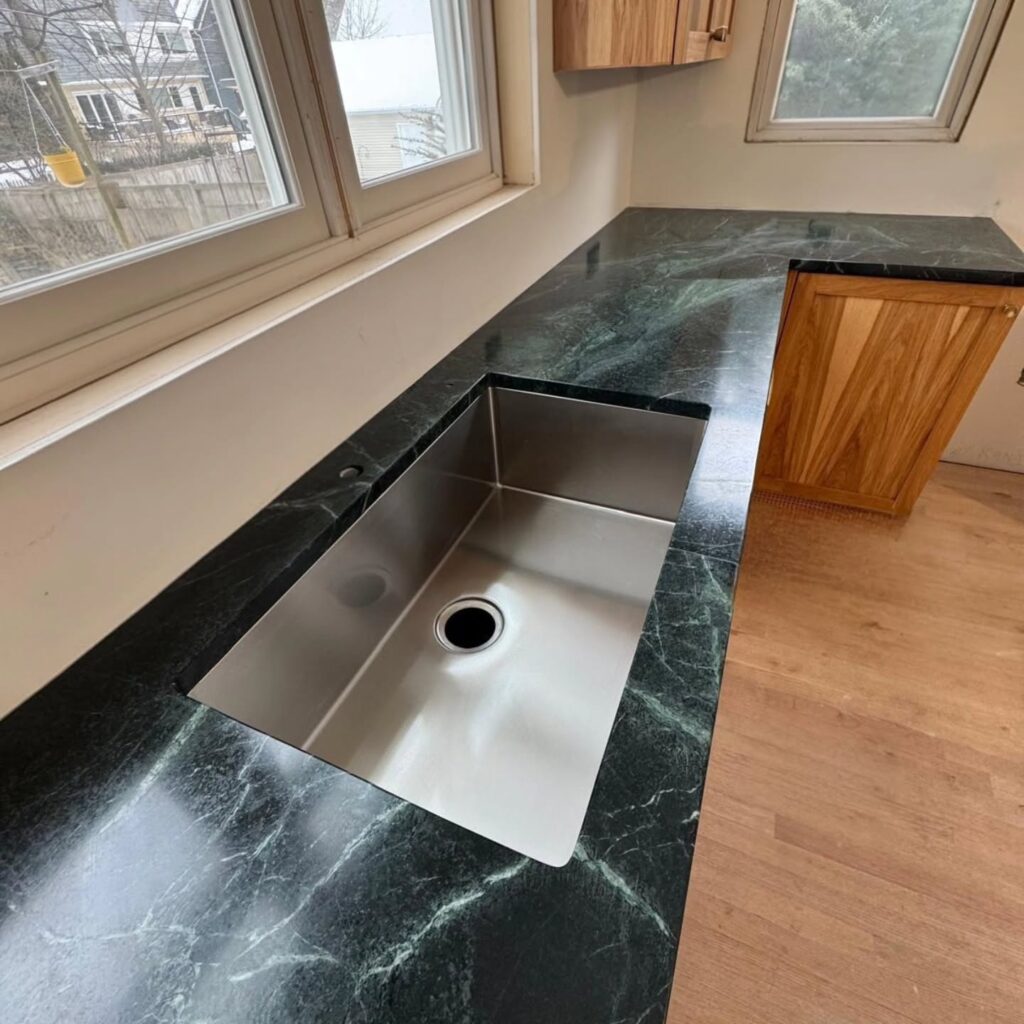
3. Soapstone
There is a reason chemistry labs use soapstone tabletops: the material is essentially indestructible when faced with heat, acids, and chemicals.
Soapstone is naturally non-porous, meaning it never requires a drop of sealer, and it will never absorb spillages like lemon juice, vinegar, or hot barbecue sauce.
A hot charcoal basket can sit near it without causing structural thermal shock. Over time, soapstone develops a dark, rich patina that gives an outdoor station an authentic, lived-in feel.
It is a bit softer than granite, meaning you might nick it if you drop a heavy cleaver, but those minor scratches rub right out with a dab of mineral oil and sand paper.
- Durability Score: 9/10
- The Big Win: Zero porosity means effortless cleanup and total immunity to acidic stains.
- The Trade-off: Scratches more easily than granite and comes in a limited range of dark gray tones.
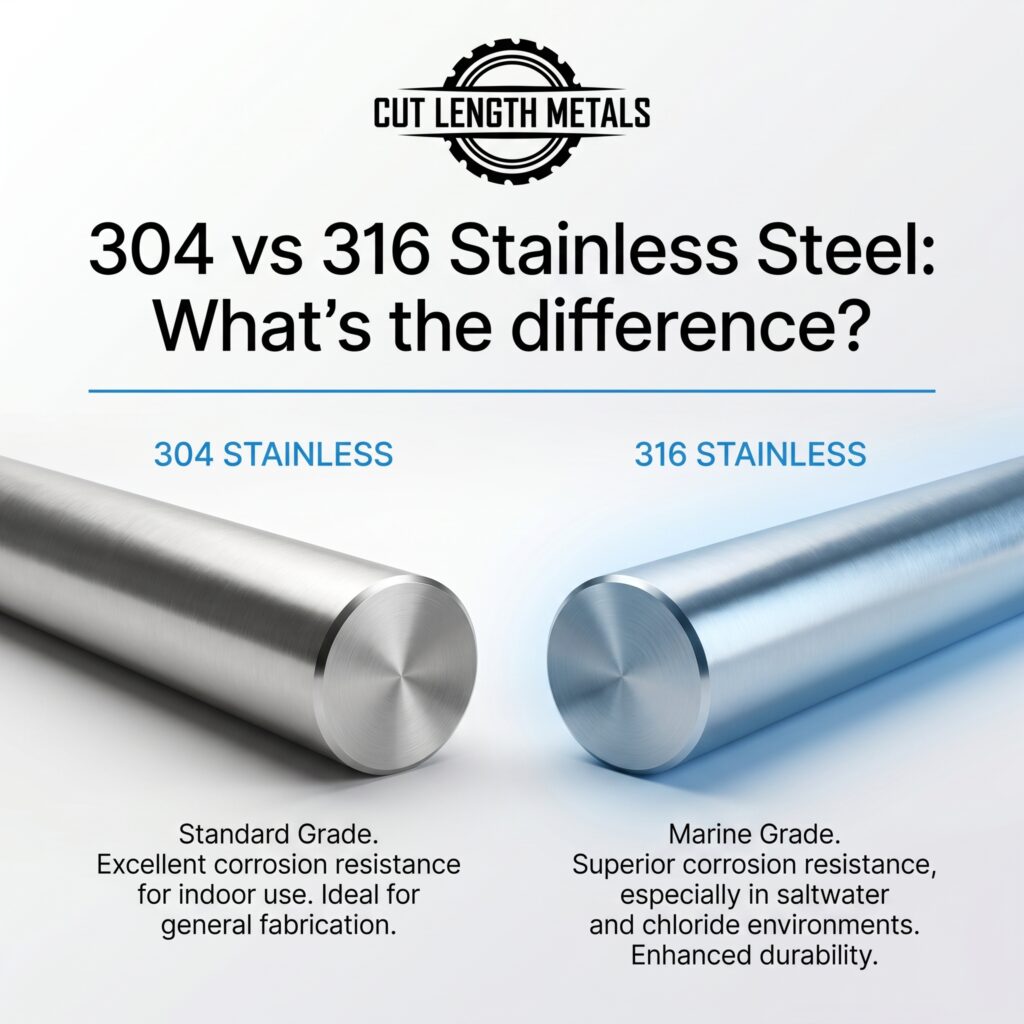
4. 316 Marine-Grade Stainless Steel
Nothing screams “commercial kitchen powerhouse” quite like seamless stainless steel.
It offers a sleek, industrial design that matches grill hardware flawlessly.
But don’t fall for standard indoor-grade 304 steel – outdoors demands 316 marine-grade stainless steel, which contains added molybdenum to withstand salt air and harsh atmospheric moisture without rusting.
Stainless steel is 100% non-porous, hygienic, and completely waterproof. It makes wiping away sticky glaze or raw chicken juice embarrassingly easy.
On the downside, stainless steel acts like a solar heat sink in the dead of July, so if your setup lacks an umbrella or awning, touch it with caution!
- Durability Score: 8.5/10
- The Big Win: Sanitary, indestructible water resistance that pairs perfectly with outdoor appliances.
- The Trade-off: Absorbs direct ambient heat quickly and shows scratches and fingerprints.
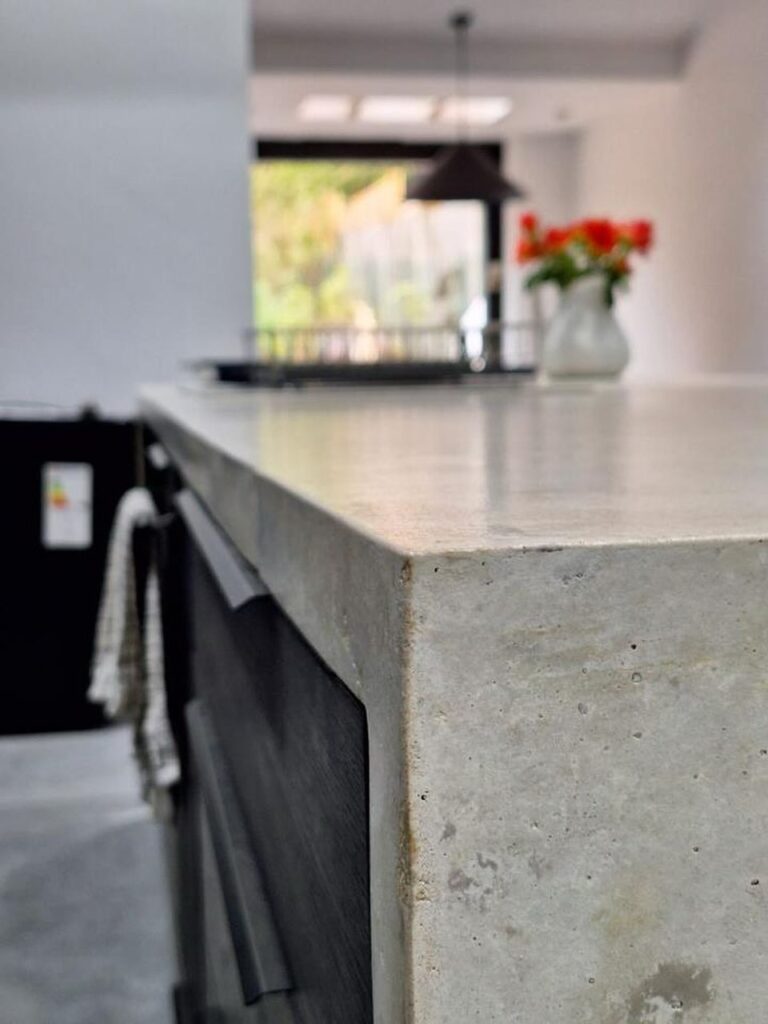
5. Concrete (Poured-in-Place or Pre-Cast)
Concrete is the ultimate choice for custom shapes, integrated sinks, or an raw, modern aesthetic. When poured by a professional, a concrete slab feels permanent, heavy, and rugged.
You can embed unique glass aggregates, create waterfall edges, or shape it to fit awkward patio corners.
However, concrete is naturally like a giant sponge. Without a high-performance, UV-stable sealer, concrete will soak up oils, crack during winter freeze-thaw cycles, and stain instantly.
It requires commitment to regular maintenance, but if you love the rustic design, it delivers character that no other slab can match.
- Durability Score: 8/10
- The Big Win: Unmatched design customization and industrial aesthetic.
- The Trade-off: High porosity requires strict, routine sealing to prevent cracking and staining.
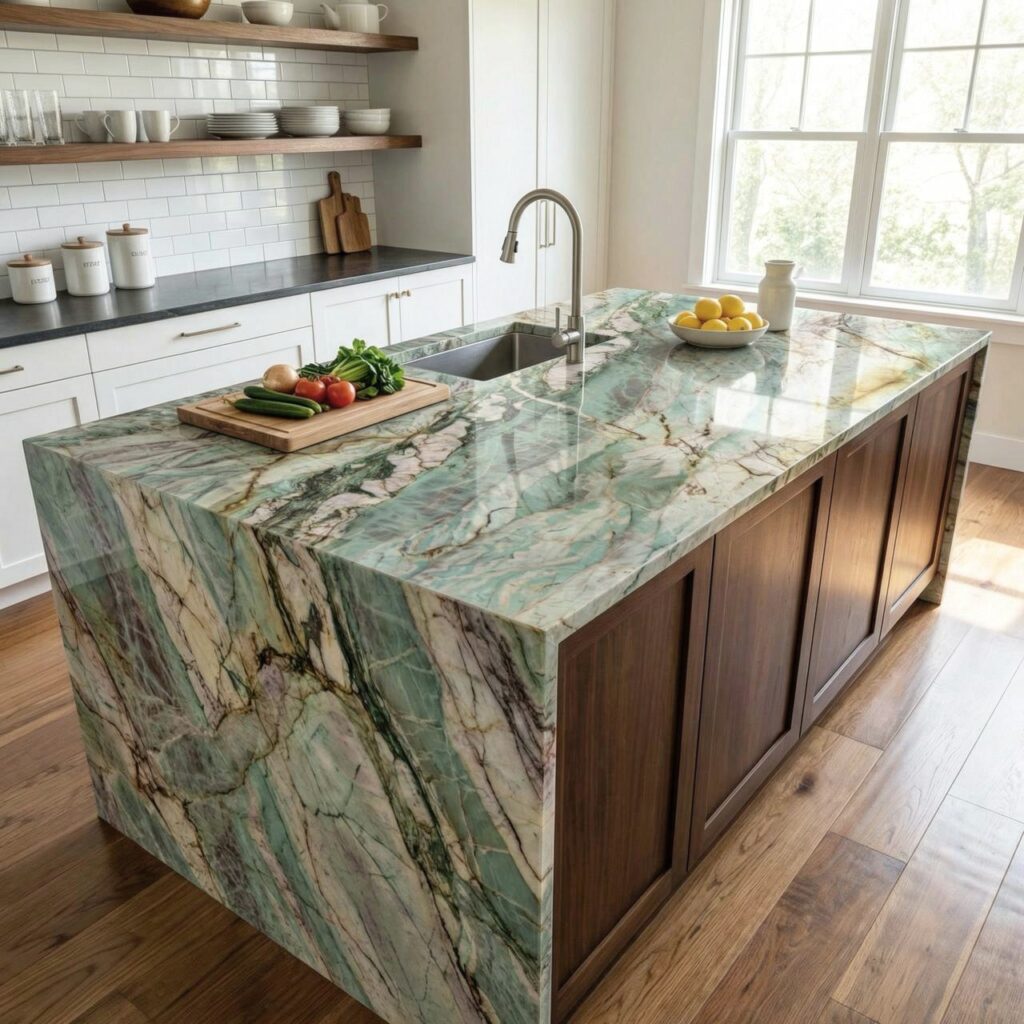
6. Natural Quartzite
Do not confuse natural quartzite with engineered quartz (which is bound by resins). Quartzite is a 100% natural metamorphic rock that is actually harder than granite.
It offers dramatic, elegant veining that looks strikingly similar to high-end marble, but without marble’s notorious fragility and extreme sensitivity to acids.
Quartzite handles intense heat extremely well and stands up to direct sunlight without fading. The main catch is that some slabs are more porous than others depending on where they were quarried.
Applying a heavy-duty penetrating sealer is non-negotiable if you want to keep greasy marinades from soaking into those beautiful white and gray veins.
- Durability Score: 7.5/10
- The Big Win: Delivers the luxurious look of marble with vastly superior hardness.
- The Trade-off: Quality varies by slab, requiring careful inspection and high-grade sealers.
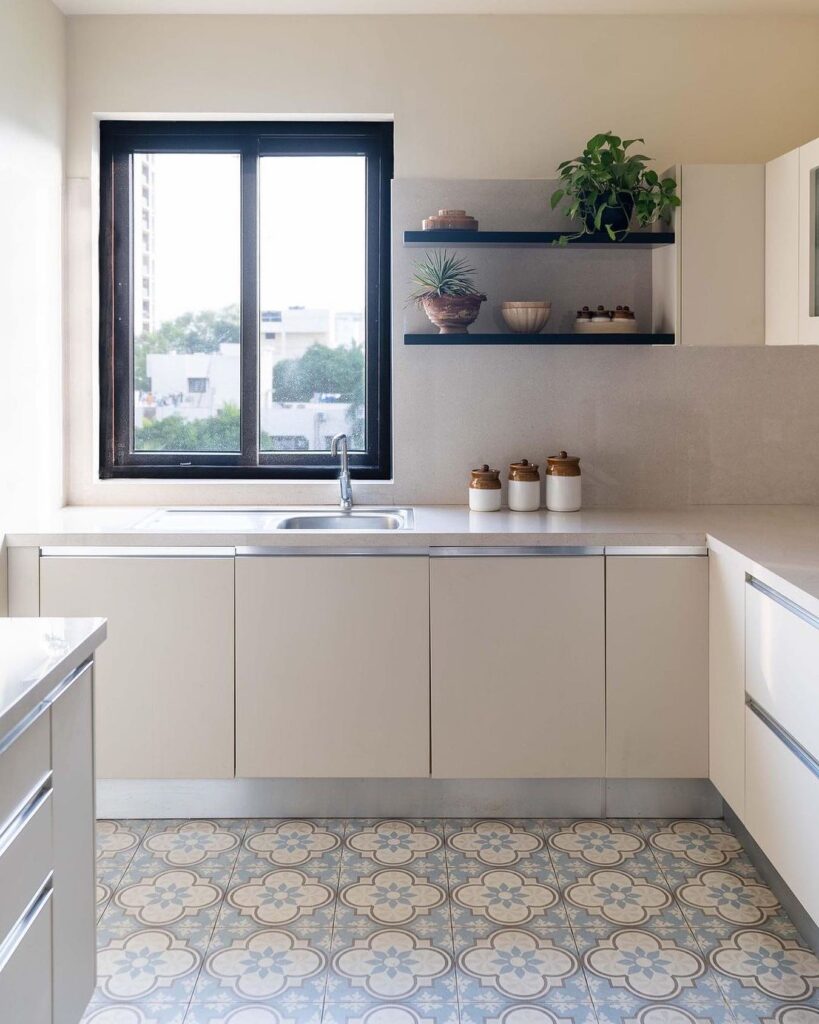
7. Outdoor Porcelain / Ceramic Tile
For a wallet-friendly option that doesn’t compromise on durability, tile is a classic workhorse.
Modern outdoor-rated porcelain tiles are fired at extreme temperatures, making them exceptionally dense, UV-proof, heat-resistant, and completely impervious to water.
The material itself will outlast almost anything, but its achilles’ heel isn’t the tile – it’s the grout lines. Grout is porous, prone to staining, and can crack under severe freeze-thaw stress.
If you choose tile, use dark-colored epoxy grout and keep tile sizes large to minimize the number of seams across your work area.
- Durability Score: 7/10
- The Big Win: Budget-friendly, highly heat-resistant, and available in endless design styles.
- The Trade-off: Grout lines require continuous scrubbing, sealing, and potential re-grouting over time.
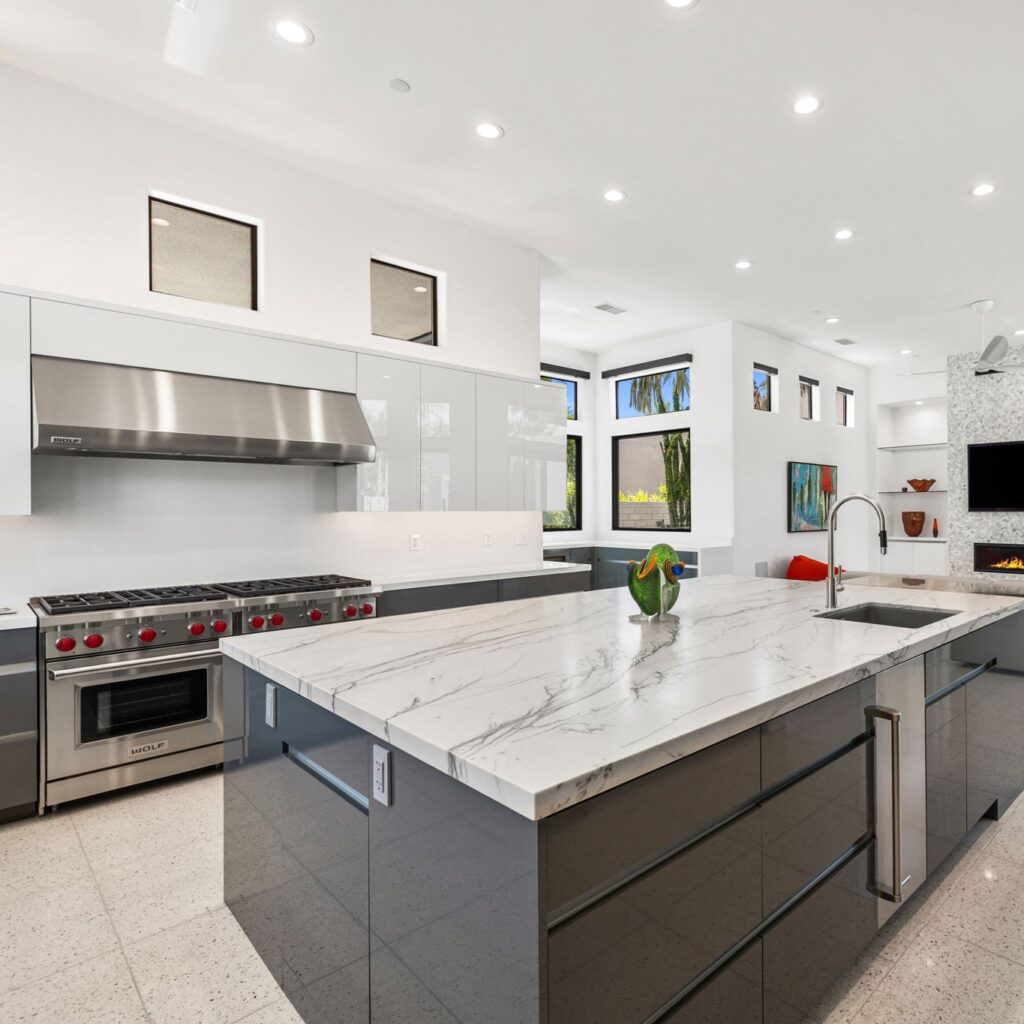
8. Slate
Slate offers a gorgeous, organic texture with deep earth tones that blend seamlessly into backyard landscapes. It has naturally low absorption rates and handles heat quite well, making it a popular choice around outdoor pizza ovens or wood-fired hearths.
However, slate has a layered metamorphic structure. When water gets trapped between these layers and freezes during bitter winter months, slate can cleave, flake, or chip away (a process called spalling).
It works brilliantly in covered outdoor spaces or milder southern climates, but requires extra caution in northern freeze zones.
- Durability Score: 6.5/10
- The Big Win: Stunning natural texture and excellent heat tolerance.
- The Trade-off: Susceptible to flaking and chipping in harsh freeze-thaw winter conditions.
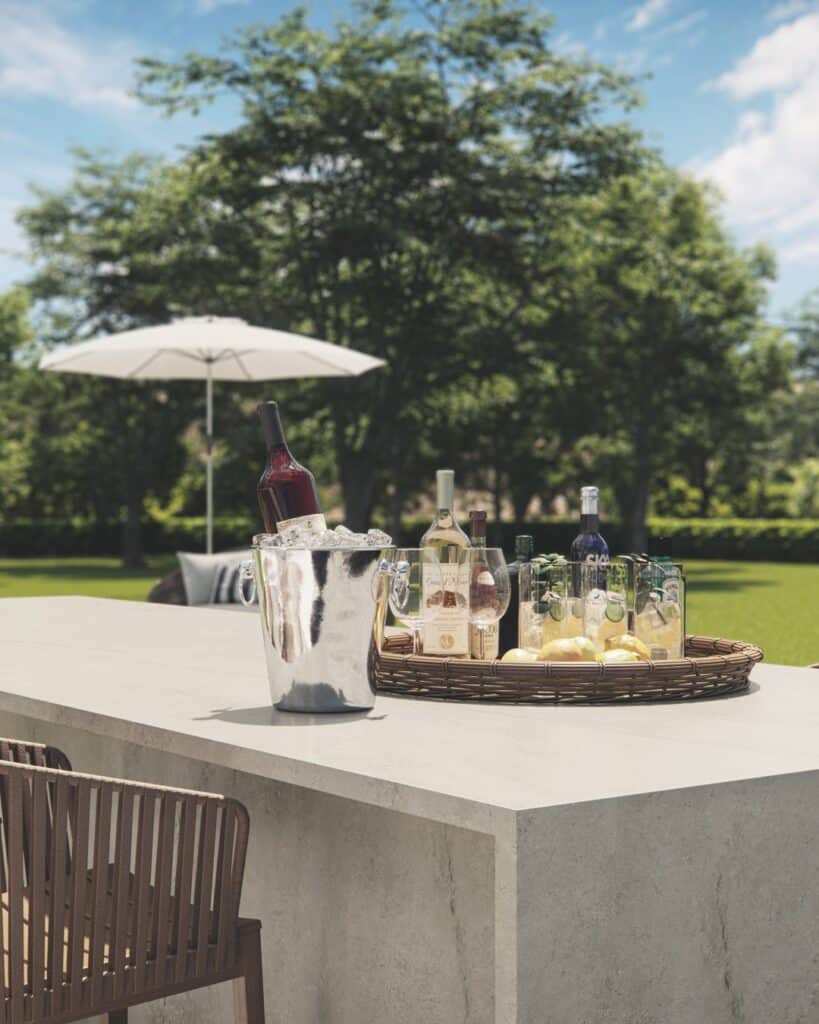
9. Outdoor-Engineered Quartz
Engineered quartz dominates indoor kitchen designs, but placing standard indoor quartz outside is a fast track to disaster. The petroleum-based resins used to bind indoor quartz will turn yellow, chalky, and brittle under direct sunlight UV exposure.
To use quartz outside, you must explicitly purchase outdoor-rated quartz lines (such as Caesarstone’s outdoor collection). These use specialized, UV-stable resin binders.
They offer incredible stain resistance and low maintenance, but they still carry lower thermal thresholds than natural stone – meaning hot pans must never touch the surface directly.
- Durability Score: 6/10
- The Big Win: Non-porous, stain-resistant, and requires zero sealing.
- The Trade-off: Must be specifically outdoor-rated; lower heat tolerance than natural stone.
Smart Buyer Considerations Before You Invest
Selecting the best countertop materials for outdoor kitchens goes beyond picking your favorite look at the showroom. Keep these practical considerations in mind before laying down your credit card:
- Direct Sunlight vs. Covered Patios: Dark materials like black granite, dark soapstone, and stainless steel absorb heat rapidly. If your kitchen sits under full sun without a pergola, dark surfaces will literally burn bare hands on a hot afternoon. Opt for lighter-toned sintered stone or light granite instead.
- Winter Weather Realities: Water expands by roughly 9% when it freezes. If water trickles into unsealed concrete, tile grout, or soft slate, the expansion will crack the material wide open. If you live in an ice belt, prioritize non-porous options like sintered stone or soapstone.
- Structural Base Weight: Heavy materials like concrete slabs, 3-cm thick granite, or quartzite require robust cabinetry support. Ensure your outdoor island frame (whether steel studs, concrete block, or polymer marine board) can support thousands of pounds of stone safely.
Final Verdict
Building an outdoor kitchen should be about making memories and grilling incredible food, not spending weekends worrying over delicate stone.
If you want the ultimate “set-it-and-forget-it” surface that laughs off hot skillets, frozen nights, and blazing sun, Sintered Stone takes top honors.
For those who crave the timeless look of genuine natural stone with legendary durability, Leathered Granite remains an unbeatable classic. And if you want zero-seal convenience with rustic appeal, Soapstone delivers every time.
Grab material samples, take them outside, splash them with oil and lemon juice, leave them in the sun, and test them yourself. Picking the right foundation ensures your outdoor oasis stays looking sharp through every season to come.
Featured image credit: @beyondbackyardliving
