
Have you ever noticed how the person standing behind an overpriced, space-age outdoor rig with forty-two dials usually burns the hot dogs first?
The legendary James Beard once quipped that “food is our common ground, a universal experience,” but let’s be honest – nobody ever fell in love with a cheeseburger because the cook dropped four grand on custom-imported titanium burners.
Great outdoor cooking comes down to heat control, airflow, and a heat source that actually ignites when you need it to.
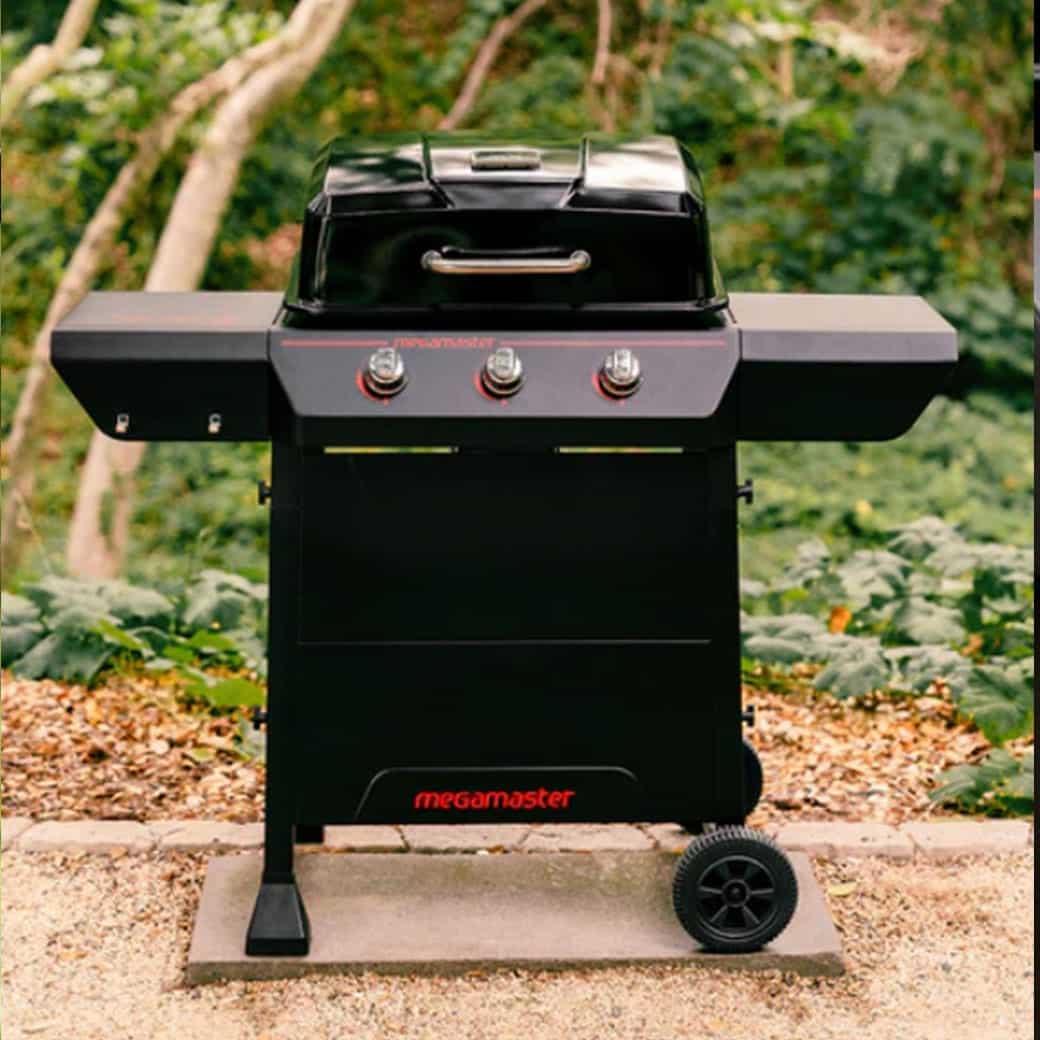
Enter the MegaMaster 3-Burner Propane Grill.
In an outdoor cooking market saturated with tech-bloated cookers that cost more than a reliable used sedan, this unit promises to strip away the fluff and deliver honest, high-heat backyard capability for everyday cooks.
But can a budget-friendly rig earn a permanent spot on your patio, or is it just another thin-metal box destined to rust out before next summer?
Let’s tear this machine down, run it through real-world thermal tests, and see if it truly earns the title of a backyard BBQ upgrade.
Quick Specifications & At-a-Glance Specs
Before throwing steaks over open flame, let’s look at the baseline engineering under the hood. Here is how the MegaMaster 3-Burner Propane Grill stacks up on paper:
| Feature Specification | Detail / Measurement |
| Total Heat Output | 36,000 BTUs across primary burners |
| Primary Cooking Area | ~360 to 400 sq. in. (varies slightly by sub-model) |
| Warming Rack Area | ~140 sq. in. porcelain-enameled steel |
| Main Burners | 3 independent stainless steel tube burners |
| Primary Grate Material | Porcelain-enameled cast iron / stamped steel |
| Ignition System | Piezo push-and-turn ignition |
| Cart Type | Open-cart design with two rugged wheels |
| Fuel Type | Standard 20 lb LP Propane Tank |
Unboxing, Assembly, and First Impressions
Opening the box on a new cooker always feels like Christmas morning – until you realize you have to put together seventy-five interlocking pieces of sheet metal with an Allen wrench.
Shipping protection on the MegaMaster is surprisingly stout. Styrofoam corner blocks and plastic wrapping protect the painted hood finish from shipping scratches, meaning your firebox won’t show up looking like it fought a bear in transit.
Here is what to expect during assembly:
- Time Investment: Plan on 60 to 90 minutes from unboxing to light-up.
- Tool Requirements: A standard Phillips screwdriver and an adjustable wrench will get the job done.
- The Frame Assembly: The open-frame leg kit feels lightweight on its own, but structural integrity locks in tight once you secure the lower shelf and the firebox unit.
- The Hose & Regulator Connection: The gas assembly comes pre-mounted to the manifold, saving you from dealing with leak-prone thread sealant during setup.
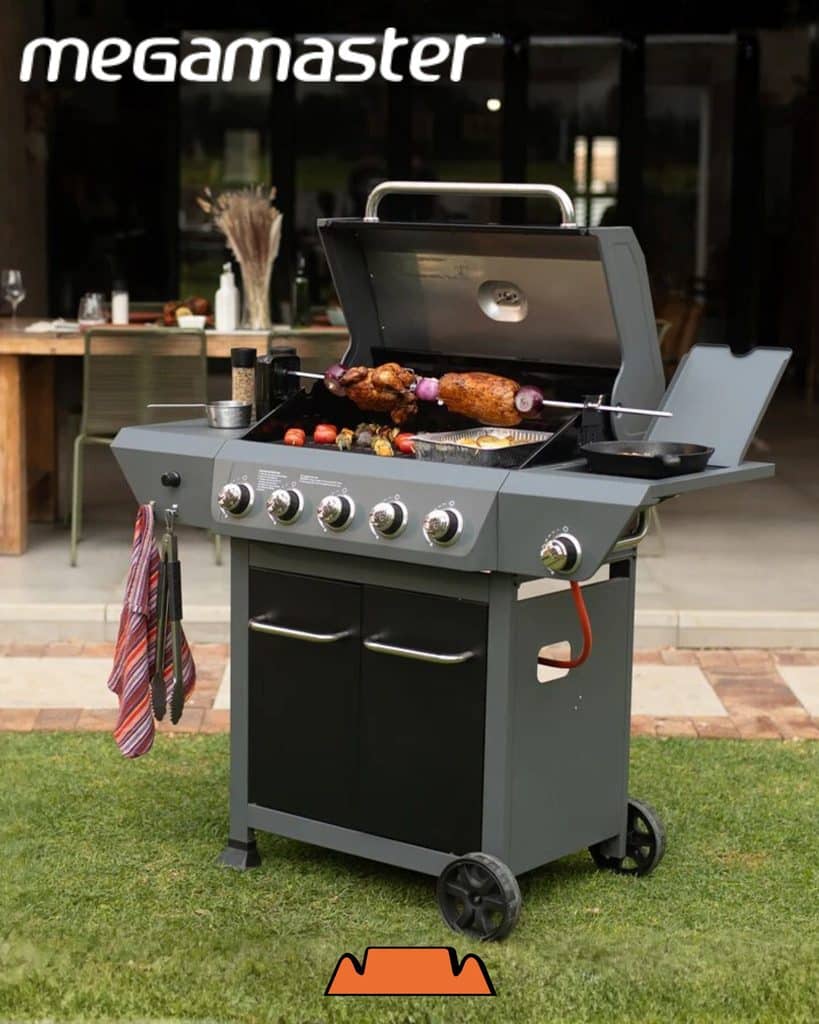
First impressions? The grill hits a solid middle ground. The hood feels weightier than bargain-basement department store units, and the handle stays cool to the touch.
It doesn’t possess the heavy armor weight of high-end commercial rigs, but at this price point, the fit and finish are tight and clean.
Key Features & Design Breakdown
Burner Power & Heat Distribution
The heart of any gas cooker lives inside its burners. The MegaMaster 3-Burner Propane Grill cranks out 36,000 total BTUs, delivering 12,000 BTUs per tube burner.
Why does a 3-burner configuration work so exceptionally well? It gives you true multi-zone flexibility on a compact footprint.
With two burners, creating distinct high-heat sear zones and gentle indirect roasting zones requires dynamic spatial gymnastics. With three burners, you can fire up the outer tubes to 500°F while keeping the center burner on absolute low (or completely off) for gentle heating.
- Left Burner (High): Direct heat for searing steaks, pork chops, or burger patties.
- Center Burner (Off): Indirect heat zone for gently cooking chicken, sausages, or delicate fish without flare-ups.
- Right Burner (High): Direct heat for grilling vegetables, crisping buns, or building a secondary sear station.
Cooking Grates & Surface Quality
The primary cooking grates feature a heavy porcelain enamel coating. Porcelain coating solves two major headaches for backyard cooks:
- It prevents rust without requiring immediate, painstaking seasoning rituals.
- It resists sticking, making delicate foods like white fish or marinated chicken thighs release without tearing.
The grates hold ambient heat well enough to leave deep mahogany cross-hatch marks on steaks, though they cool off faster than thick, bare cast-iron slabs if you leave the lid open too long.
Lid, Thermometer, and Frame Dynamics
The hood features a built-in temperature gauge right at eye level. While hood thermometers are notorious for reading ambient air near the top of the dome rather than exact grate surface temps, this dial provides a reliable baseline for monitoring overall heat retention.
The side shelves are fixed, offering ample prep space for raw meat platters, spice rubs, and tongs. Just remember: these shelves are rated for prep bowls and barbecue sauce jars, not for sitting on or moving the unit by hand.
Real-World Performance & Testing
Testing a cooker isn’t about looking at sleek paint jobs – it’s about putting raw food on hot metal and evaluating thermal consistency, flare-up control, and recovery times.
1. The Hot-Spot Bread Test
To map the thermal distribution across the primary cooking surface, white bread slices were laid out across the entire grate with all three burners set to medium heat for five minutes.
- The Results: Heat distribution remains remarkably uniform across the central 70% of the grate.
- The Hot Zone: A moderate heat boost sits directly along the rear wall where heat naturally channels toward the hood vent.
- The Cool Zone: The front two inches near the lip run roughly 15% cooler – perfect for holding cooked food while finishing raw items in the center.
2. High-Heat Searing: Ribeye Steaks
Grilling thick-cut bone-in ribeyes requires raw, aggressive heat to execute a crisp crust without overcooking the center.
After preheating with the hood down for 10 minutes, the surface gauge pegged near 500°F. The steaks hit the grates with an immediate sizzle.
The porcelain-coated grates transferred heat effectively, creating crisp, dark caramelization within two and a half minutes per side. Flame flare-ups from dripping fat were quickly tamed by the built-in flame tamers shielding the burner tubes.
3. Indirect Roasting: Bone-In Chicken Thighs
Chicken thighs are the ultimate test for flare-up control and indirect cooking capability. Fat dripping directly onto open flames creates acrid black smoke that ruins good meat.
By turning off the middle burner and keeping the left and right burners on medium, internal chamber temps stabilized right at 375°F.
The thighs roasted gently over the dead center zone, rendering skin down to a shatteringly crisp texture without a single flare-up scorch mark.
4. Ignition & Environmental Endurance
The piezo ignition system clicks smoothly on every turn. Across multiple test firings – including a breezy early evening test – the burners ignited on the first or second click.
The firebox geometry shields the burner tubes from wind cutouts, keeping temperatures steady even when outdoor gusts pick up.
Cleaning, Maintenance, and Durability
Nobody likes spending an hour scrubbing grease after eating a great meal. The MegaMaster 3-Burner Propane Grill keeps post-bbq cleanup relatively painless through a straightforward grease management system.
- Drip Tray System: A angled sheet metal tray funnels dripping fats down into a centralized grease cup.
- Quick Cleanup: Pulling the cup out, wiping it with a paper towel, and replacing it takes under two minutes.
- Pro-Tip for Longevity: Line the lower drip tray with heavy-duty aluminum foil before your first cook. When grease accumulates, peel off the foil and lay down a fresh sheet –this single habit will double the lifespan of your firebox.
For grate care, avoid harsh brass brushes that can chip the porcelain coating. Stick to a soft-nylon grill brush or a crumpled ball of aluminum foil held in tongs while the grates are still warm.
Pros & Cons
The Good
- Outstanding Price-to-Performance Ratio: Delivers serious heating power without forcing you into a massive home equipment loan.
- Versatile 3-Burner Layout: Allows true indirect roasting, multi-zone heating, and direct high-temperature searing.
- Reliable Piezo Ignition: Starts up fast without needing batteries or match sticks.
- Easy Maintenance: Porcelain-coated surfaces and an accessible grease tray make cleanup simple.
- Compact Footprint: Perfect for small patios, townhome decks, or cozy backyard setups.
The Trade-Offs
- Open-Cart Design: The lower area leaves your propane tank exposed to view rather than hiding it behind cabinet doors.
- Fixed Side Shelves: Shelves do not fold down, meaning you need a fixed clearance area for patio storage.
- Lightweight Frame: High wind gusts require placing the grill against a stable wall during storage to prevent tipping.
The High-Heat Altitude & Cold-Weather Factor
Winter & Altitude Thermal Performance
- Sub-40°F Temperatures: Reaches 400°F in 12–14 minutes
- High Winds (15+ mph): Firebox shielding prevents blowout
- Elevation (5,000+ ft): Minor 10% BTU oxygen drop-off
Most review articles assume you only cook on sunny, 75-degree summer afternoons. But what happens when hunger strikes in November?
Thin-walled budget cookers often struggle when ambient temperatures plummet, leaking thermal energy through the hood faster than the burners can generate it.
The MegaMaster 3-Burner Propane Grill holds up surprisingly well in cold conditions thanks to its compact firebox geometry, which traps heat efficiently despite lacking double-walled insulation.
While high winds can push ambient heat through the rear exhaust gap, placing the unit against a windbreak keeps chamber temps steady at 375°F to 400°F in near-freezing weather.
If you live at high elevation or love winter cookouts, this machine proves you do not need a four-figure rig to sear pork chops in a snowstorm.

Flavorizer Bars vs. Lava Rocks: The Science of Vaporization
The Vaporization Process
Dripping Juices → Hot Flame Tamer → Flavorized Smoke
Ever wonder where that distinct “outdoor grill flavor” actually comes from?
It isn’t the propane – gas burns completely clean. True backyard flavor happens when render fat and liquid marinade hit blistering hot metal and instantly vaporize back into food-penetrating smoke.
The MegaMaster uses porcelain-enameled steel flame tamers positioned directly above the stainless steel burner tubes.
Unlike old-school lava rocks that trap rancid grease and trigger aggressive flare-up infernos, these angled tents channel excess liquid smoothly into the grease cup while flash-vaporizing just enough droplets to coat your steaks in rich, smoky goodness.
Understanding this thermal mechanism helps you master flavor delivery without turning your dinner into a scorched charcoal brick.
Propane Tank Efficiency & Real-World Burn Time
Estimated Fuel Consumption (20 lb Tank)
| Cooking Style | Total Run-Time Per Tank |
| All 3 Burners on HIGH | ~12 to 14 Hours |
| 2-Burner Indirect Cook | ~18 to 22 Hours |
| Low-and-Slow Warming | ~28+ Hours |
Running out of fuel mid-cook is the ultimate backyard tragedy – especially when you have a grate full of raw burgers and hungry guests waiting.
Because the MegaMaster outputs 36,000 total BTUs across three main burners, a standard 20-pound LP propane tank gives you approximately 12 to 14 hours of continuous high-heat cooking.
However, utilizing smart multi-zone temperature control stretches your fuel supply significantly further.
Running two outer burners on medium-low for indirect roasting drops consumption down to roughly 18,000 BTUs, yielding an impressive 20+ hours of grill time per tank refill.
Keeping an inexpensive inline pressure gauge attached to your regulator ensures you will never suffer the heartbreak of a cold grill halfway through dinner.
Smart Upgrades: Transforming a Budget Rig into a Pitmaster Station
Popular Modular Accessory Upgrades
- Cast-Iron Griddle: Perfect for smashburgers, eggs, and breakfast bacon
- Smoker Box Pod: Adds rich wood-smoke flavor to pork ribs and meats
- Wireless Probe: Ensures precision internal meat temperatures
Out-of-the-box performance is great, but the real fun starts when you customize your setup with budget-friendly aftermarket accessories.
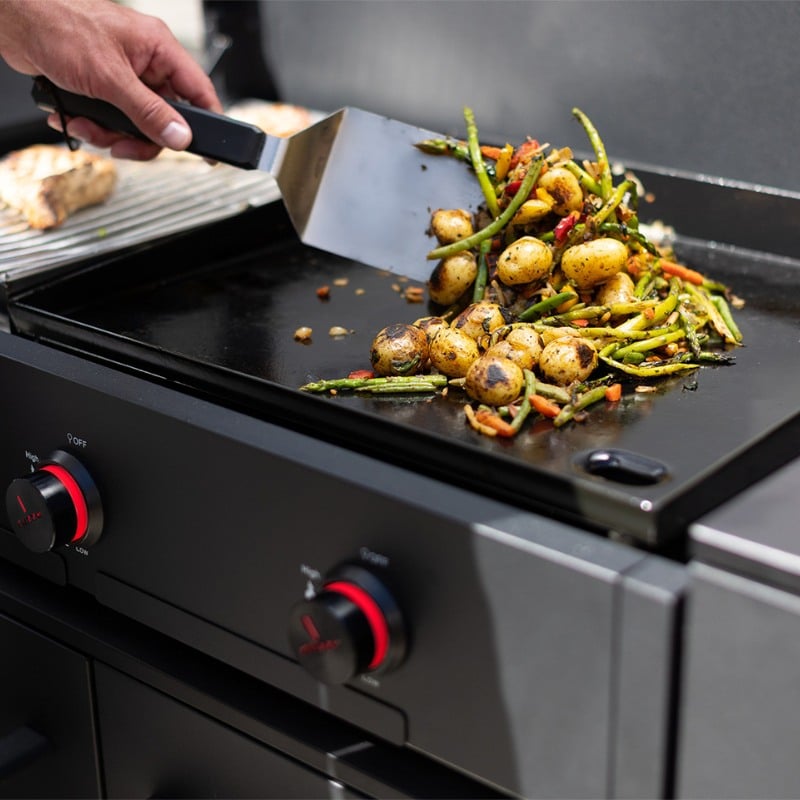
Dropping a heavy cast-iron griddle plate over two burners instantly converts your MegaMaster into a high-powered flat-top for breakfast bacon, diner-style smashburgers, and sizzling fajita veggies.
Want rich wood-smoke flavor on pork ribs?
Position a stainless steel smoker box filled with soaked hickory chips directly over the primary flame tamer.
Combined with an inexpensive dual-probe wireless meat thermometer, these minor additions turn a basic budget propane unit into a fully capable, multi-functional outdoor kitchen station without forcing you to spend hundreds on specialized single-use appliances.
Competitor Comparison
How does the MegaMaster hold up when parked next to its biggest rivals in the 3-burner gas category? Let’s take a look.
| Feature | MegaMaster 3-Burner | Weber Spirit II E-310 |
| Price Point | Budget / Entry-Level | Mid-Tier / Premium |
| Total BTUs | 36,000 | 30,000 |
| Construction Weight | Medium / Portable | Heavy-Duty Cast Aluminum |
| Primary Warranty | Limited 1-Year | 10-Year Limited |
MegaMaster vs. Weber Spirit II E-310
Weber is the legendary benchmark of outdoor cooking, offering thick cast-aluminum bodies and exceptional 10-year warranties. However, that prestige comes with a price tag that can easily run three times the cost of the MegaMaster.
If you want a lifetime heirloom piece, go Weber. If you want strong heat output, solid cooking capacity, and great results while keeping cash in your bank account, the MegaMaster easily takes the value crown.
MegaMaster vs. Char-Broil Performance 3-Burner
This is a direct head-to-head battle. Both grills hit similar price points and BTU metrics.
The MegaMaster pulls ahead slightly with a cleaner ignition engagement and more uniform heat across the front-to-back grate line, whereas entry-level Char-Broil models often exhibit pronounced cool zones near the front lip.
Buying Guide: Is a 3-Burner Propane Grill Right for You?
Choosing an outdoor cooker isn’t about buying the biggest machine on the showroom floor – it’s about matching the tool to your cooking habits.
Why 3 Burners Represent the “Sweet Spot”
- Single or 2-Burner Grills: Great for small balconies, but they lack the physical surface area to cook for more than three people at once. Indirect heat cooking is virtually impossible.
- 4-to-6 Burner Grills: Fantastic for massive block parties, but they consume propane at an alarming rate and take up substantial patio real estate.
- 3-Burner Grills: The ultimate middle ground. You can comfortably fit 12 to 15 burgers at once, run two temperature zones simultaneously, and cook for a family of four with room to spare for weekend guests.
If your primary goal is stepping outside on a Tuesday night, flipping on a dial, burning off some stress, and serving up perfectly grilled chicken breast or ribeyes in 20 minutes flat – a 3-burner propane rig is your absolute best friend.
Top 3 Alternatives
1. The Direct Budget Rival: Char-Broil Performance Series 3-Burner
If you want a direct competitor at a similar price point that tackles flare-ups better than almost anything else in its class, this is your best option.
The Char-Broil Performance Series 3-Burner Gas Grill provides infrared heating technology that prevents flare-ups while delivering even, juicier grilling results at an accessible price point.
- Key Strengths: Helps reduce hot spots and prevents burnt crusts on fatty cuts.
- Cooking Area: ~435 sq. in. primary space.
- Best For: Backyard cooks who want simple flare-up control on a tight budget.
2. The Feature-Packed Upgrade: Monument Grills Mesa Series 3-Burner
For just a small step up in price, Monument Grills packs in modern conveniences that most entry-level grills omit.
The Monument Grills Mesa Series 3-Burner Stainless Steel Propane Gas Grill features a ClearView lid window, 48,000 total BTUs, and an integrated side burner for maximum cooking versatility.
- Key Strengths: Glass window lets you monitor food without losing heat, plus LED-lit control knobs for night grilling.
- Cooking Area: 570 sq. in. total (405 primary + 165 warming rack).
- Best For: Cookout hosts who want extra heat power, a side burner for sauces, and modern style.
3. The Premium Benchmark: Weber Spirit E-310 3-Burner
If you are willing to spend more for a grill that will easily last a decade or longer, Weber remains the gold standard in 3-burner gas grilling.
The Weber Spirit E-310 3-Burner Liquid Propane Black offers superior cast-aluminum durability, exceptional heat retention, and a 10-year warranty for long-term reliability.
- Key Strengths: Legendary build quality, heavy porcelain-enameled grates, and Flavorizer bars for classic smoky flavor.
- Cooking Area: 429 sq. in. primary space.
- Best For: Serious grillers looking for a long-term investment backed by long warranty support.
How to Decide Which One to Buy
- Choose the Char-Broil Performance if you want to stick as close as possible to the MegaMaster’s price tag while getting better protection against grease flare-ups.
- Choose the Monument Grills Mesa 3-Burner if you want the most features per dollar (side burner, window lid, LED knobs, and higher BTU output).
- Choose the Weber Spirit E-310 if long-term durability and peace of mind matter more to you than upfront savings.
Final Verdict & Recommendation
The MegaMaster 3-Burner Propane Grill doesn’t try to be something it’s not. It doesn’t feature Wi-Fi app tracking, ambient LED lights, or motorized rotisseries.
Instead, it focuses on the fundamental elements that actually determine meal quality: steady BTU output, functional heat zoning, and a durable porcelain cooking surface.
For budget-conscious pitmasters, first-time homebuyers, or anyone looking to upgrade from a cramped 2-burner tabletop unit, this grill delivers exceptional value for money. It heats up fast, cooks evenly, and cleans up without hassle.
Final Rating: 4.4 / 5 Stars
Who Should Buy It:
- Backyard cooks looking for maximum heat performance on an affordable budget.
- Families needing enough surface area to cook full meals (main + sides) simultaneously.
- Grillers who value fast setup, simple maintenance, and straightforward controls.
Who Should Skip It:
- Daily year-round cooks who demand heavy-gauge stainless steel construction built to endure harsh, salt-air coastal environments for a decade.
- Anyone with severely limited patio storage space who requires folding side tables.
Frequently Asked Questions
Can you use natural gas with the MegaMaster 3-Burner Propane Grill?
No, this unit is engineered specifically for Liquid Propane (LP) tanks and uses a factory-preset LP regulator. Converting gas types without manufacturer-approved conversion kits is unsafe and voids the warranty.
How many burgers can fit on the primary grate at one time?
You can comfortably cook 12 to 15 standard-sized 4-inch burger patties without overcrowding the cooking surface or creating steam pockets.
Does the grill come with a cover?
A protective weather cover is usually sold separately. Investing in a heavy-duty, water-resistant vinyl cover is strongly recommended to protect the firebox and burner tubes from rain exposure when stored outdoors.
How fast does it reach maximum temperature?
In mild weather conditions, the grill preheats to over 450°F in under 10 minutes with all three burners set to high and the lid closed.
Featured image credit: @braaiboutique
