
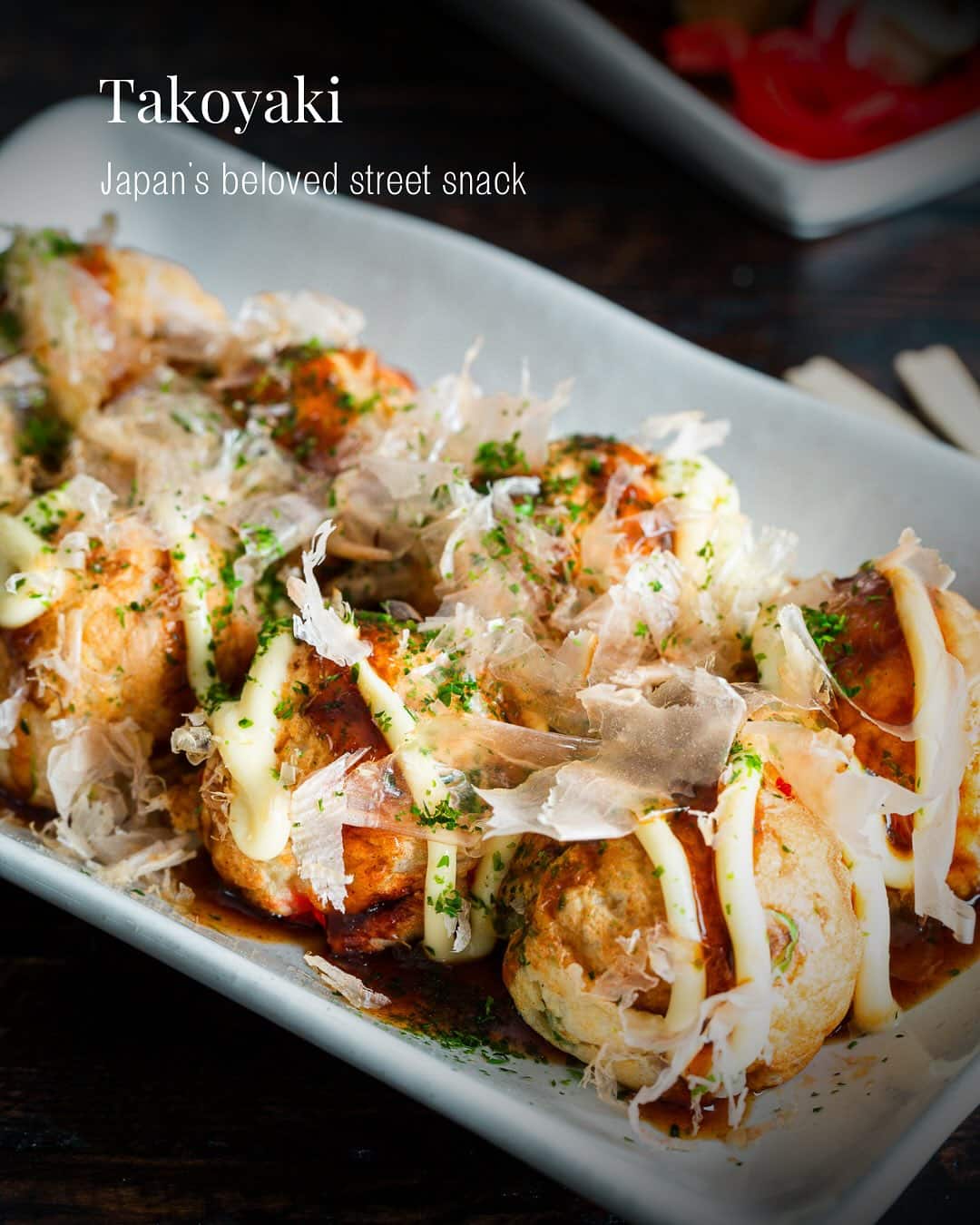
Brazilian grill legend Alex Atala once observed that “food is the strongest connection between human beings and nature – it brings the wild straight to our table in a way that nourishes both body and soul.”
Few foods on earth prove that point quite like Japanese Takoyaki. These molten, golden spheres of dashi batter stuffed with tender sea monster meat aren’t just street food; they’re culinary acrobatics served on a tiny paper boat.
Think about the absurdity of the premise for a second.
Humanity looked at a creature with eight legs, three hearts, blue blood, and intelligence that rivals a dog, and said, “Let’s chop it up, drown it in pancake batter, fry it in a cast-iron indent, and smother it in sweet barbecue sauce and mayonnaise.”
It sounds like a frantic midnight experiment concocted in a college dorm room after a long night out. Yet, Japanese Takoyaki stands as one of the single greatest achievements in street food history.
Over the smoker grates, precise temperature control and sear management are gospel. That exact same live-fire discipline applies directly to these scorching little octopus balls.
To master them – or simply appreciate why the entire globe is hopelessly addicted to them – requires understanding heat, texture, and flavor synergy.
Grab a cold beer and your favorite bamboo skewer. It is time to dive deep into the fascinating world of Japanese Takoyaki.
The Story of Takoyaki: From Osaka Streets to Global Stardom
Every legendary dish has a humble birthplace, and for Japanese Takoyaki, that sanctuary is Osaka.
Long regarded as Japan’s rowdy, food-obsessed kitchen capital, Osaka lives by a famous localized motto: Kuidaore, which translates to “eat yourself into financial ruin.”
That tells you everything you need to know about the local mindset. They do not eat to live; they live to feast on rich, comforting street treats.
The Evolution of the Ball
Back in the 1930s, a street vendor named Tomekichi Endo was slinging a popular snack called Choboyaki, which was essentially a flat sheet of fried batter topped with pickled ginger and beef.
Endo kept tweaking his recipe, experimenting with a popular dish called Radioyaki – named after the radio, the high-tech marvel of the era. Radioyaki featured spherical batter pockets stuffed with beef tendon and konjac jelly.
In 1935, after taking inspiration from coastal cooks in Akashi who used octopus and eggs in their dough, Endo made the fateful swap.
He ditched the beef, threw diced octopus into his rounded griddles, and christened his creation Takoyaki (tako meaning octopus, and yaki meaning grilled or fried).
The lineage moved steadily over time:
- Choboyaki (1920s): Flat batter layer with beef.
- Radioyaki (Early 1930s): Spherical batter with beef and konjac.
- Takoyaki (1935): Spherical batter filled with boiled octopus.
The dish caught fire faster than dry mesquite in a drafty pit. Post-World War II Japan saw Japanese Takoyaki shift from a localized Osaka secret into the centerpiece of every matsuri (traditional festival) across the country.
Today, you will find these sizzling spheres anywhere from high-end specialized izakayas in Tokyo to night markets in Los Angeles, London, and Sydney.
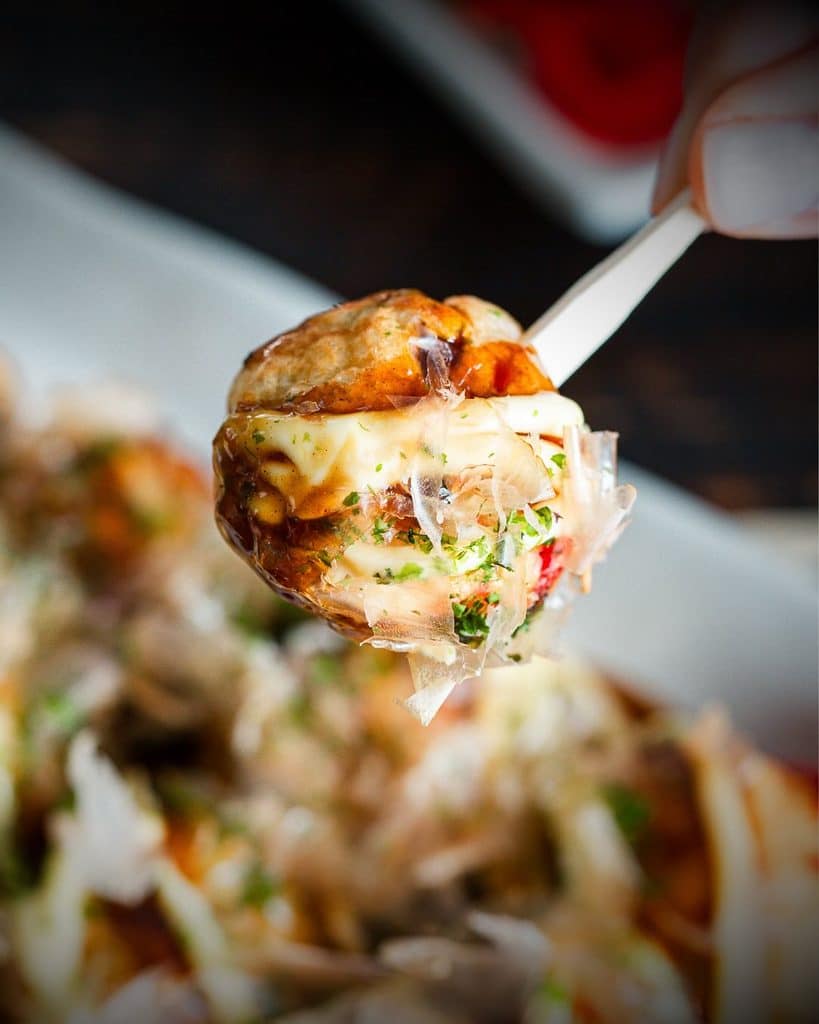
Anatomical Breakdown: The Making of a Perfect Takoyaki Ball
Much like a competition-grade rack of ribs, a proper Takoyaki ball relies on absolute balance. If one layer falls flat, the entire bite suffers. A great sphere of Japanese Takoyaki is a study in structural engineering.
A perfect ball layers these components from top to bottom:
- TOPPINGS: Katsuobushi (dancing bonito flakes) and Aonori seaweed powder.
- SAUCES: Takoyaki sweet-savory glaze paired with Kewpie mayo.
- CRUST: Golden, crispy dashi-egg shell.
- CENTER: Silky, molten batter with tenkasu and pickled ginger.
- CORE: Tender, boiled octopus chunk (tako).
The Shell and Batter Matrix
The foundation is a surprisingly thin batter made of flour, eggs, water, and dashi (Japanese sea stock made from kelp and bonito). Unlike western pancakes, which aim for fluffy and cake-like interiors,
Takoyaki batter stays fluid enough to create a distinct dual-texture effect: a delicate, crispy outer crust surrounding a custardy, molten center.
The Core Filling
Inside that piping-hot sphere, you find four critical interior components:
- Tako (Boiled Octopus): A firm, single chunk of octopus leg. It gives you something hearty to bite into amid the creamy batter.
- Tenkasu (Tempura Scraps): Golden bits of fried tempura batter. They melt slightly into the core, adding richness, fat, and structural air pockets.
- Beni Shoga (Red Pickled Ginger): Finely minced ginger steeped in plum vinegar. It cuts straight through the rich batter like a sharp squeeze of lemon over smoked brisket.
- Tenjo Scallions: Thinly sliced green onions for a fresh, oniony snap.
The Four Iconic Toppings
A ball of plain fried batter is boring. What makes Japanese Takoyaki instantly recognizable worldwide is its flashy presentation:
- Takoyaki Sauce: A thick, glossy, dark sauce that lands somewhere between Worcestershire, sweet barbecue, and fruit puree.
- Kewpie Mayonnaise: Made strictly with egg yolks and rice vinegar, offering an ultra-rich creaminess far superior to standard mayo.
- Aonori: Finely powdered green laver seaweed that adds an earthy ocean aroma.
- Katsuobushi: Paper-thin ribbons of smoked and dried skipjack tuna. When dropped onto hot food, the rising steam causes them to wave back and forth – creating the illusion that your food is dancing on your plate.
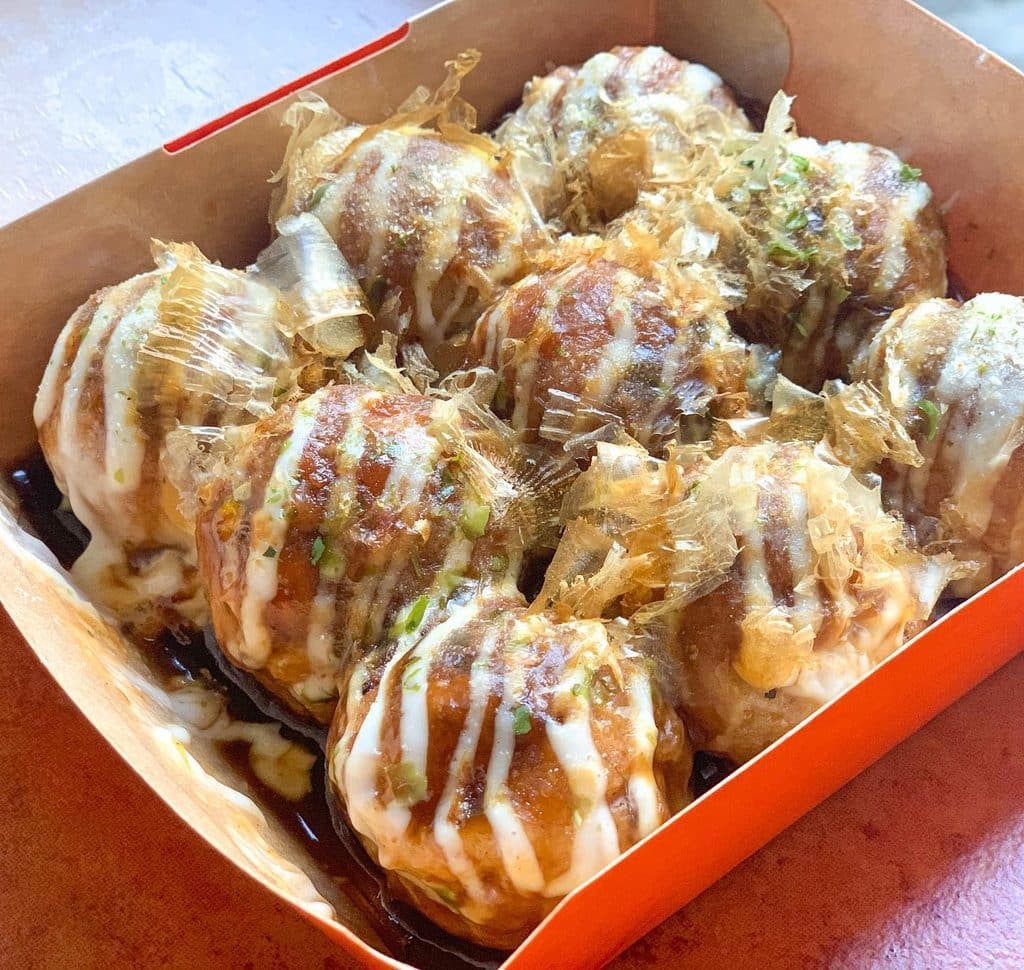
Why We’re Obsessed: The Science & Psychology of the Bite
Why does this particular snack hook people so intensely? The secret lies in sensory overload and flavor science.
The sensory journey flows naturally:
- Texture Spectrum: Crisp outer crust leads to a molten, creamy center, anchored by a chewy octopus core.
- Flavor Profile: Umami dashi blended with sweet glaze, tangy mayo, and salty seaweed.
The Culinary Contrast
Humans are hardwired to love contrasting textures in a single bite. Think of crisp bacon over soft eggs or seared bark on juicy pulled pork. Japanese Takoyaki delivers four distinct textures simultaneously:
- Crispy on the outer skin.
- Creamy and molten in the center batter.
- Chewy at the octopus core.
- Crunchy from fresh toppings and scallions.
Umami Overload
There is zero subtlety here. Japanese Takoyaki is a massive umami bomb.
Dashi in the batter, octopus in the middle, bonito flakes on top, and savory sauce drizzled across the surface create a compound effect on your palate.
Your taste buds get blasted with glutamates from four different directions at once.
The Thrill of the Heat Trap
Let’s address the elephant in the room: Takoyaki is a burn hazard. Every first-timer makes the mistake of popping an entire ball straight into their mouth raw off the grill.
The shell seals in steam, converting the inside into a lava pit of molten batter.
There is a hilarious, universal ritual to eating them: popping one in, realizing your mouth is instantly on fire, opening your lips wide, and furiously inhaling cold air while panting like a golden retriever on a hot summer afternoon.
That slight element of danger makes every successful bite feel like a minor victory.
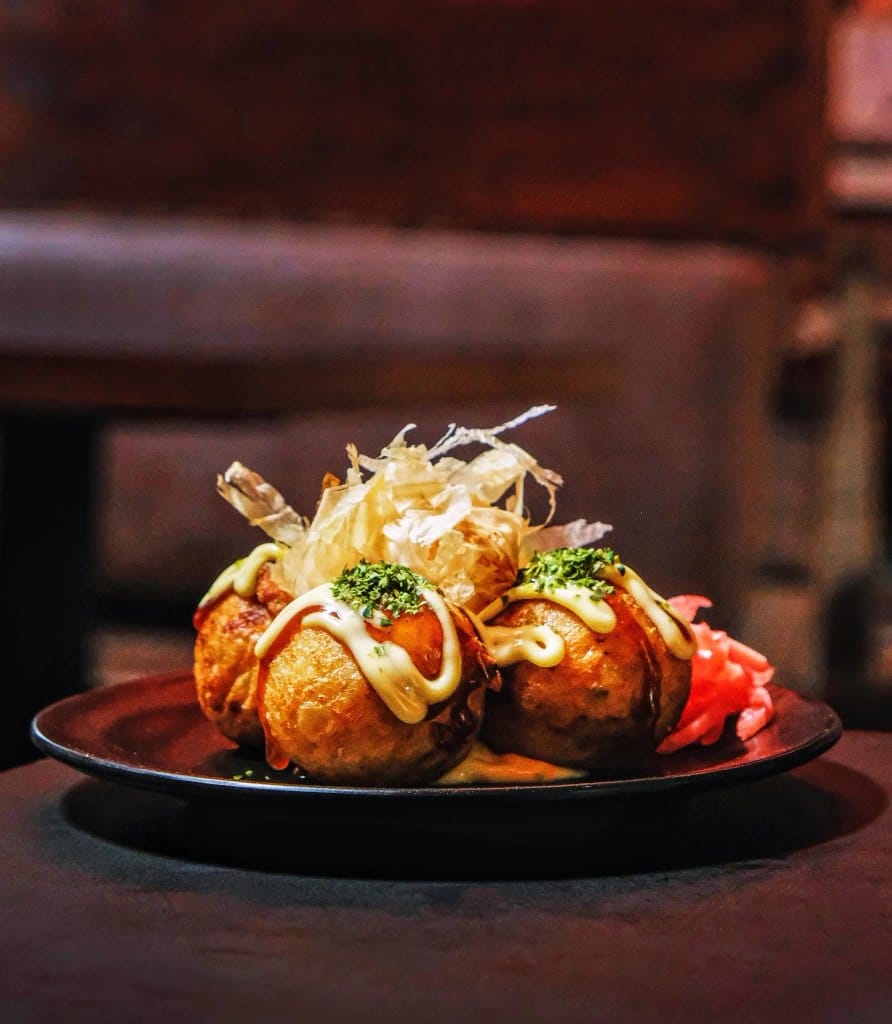
Beyond the Classic: Modern Variations & Regional Swaps
While purists swear by the classic Osaka setup, modern cooks and street vendors love breaking rules. Japanese Takoyaki serves as an incredible canvas for culinary experimentation.
Popular Style Variations
- Osaka Classic
o Core Fillings: Boiled octopus, red ginger, scallion.
o Sauce & Topping: Takoyaki sauce, Kewpie mayo, katsuobushi.
o Flavor Profile: Sweet, savory, smoked, classic street-style.
- Cheese Melt
o Core Fillings: Octopus with shredded mozzarella or cheddar.
o Sauce & Topping: Melted Gouda or cheddar, cracked black pepper.
o Flavor Profile: Gooey, salty, decadent comfort food.
- Mentai-Mayo
o Core Fillings: Octopus and tempura scraps.
o Sauce & Topping: Spicy cod roe mayo, nori strips.
o Flavor Profile: Creamy, ocean-salty, noticeable chili kick.
- Ponzu & Daikon
o Core Fillings: Octopus and scallion.
o Sauce & Topping: Citrus ponzu dip, grated white radish.
o Flavor Profile: Light, tangy, ultra-refreshing.
- Mochi & Bacon
o Core Fillings: Bacon cube and chewy rice cake.
o Sauce & Topping: Teriyaki glaze, garlic mayo.
o Flavor Profile: Smoky, chewy, savory meat-lover spin.
If you are skeptical about octopus – maybe you had a rubbery, overcooked ring of squid at a bad diner once – you can easily swap the filling. Diced sausage, shrimp, smoked pork belly, or smoked cheddar cheese work beautifully inside these fried dough pockets.
DIY Takoyaki: Hosting a “Takopa” at Home
In Japan, Japanese Takoyaki isn’t just fast food you buy at a train station; it’s a social activity.
They call it a Takopa (short for Takoyaki Party). Friends gather around a portable electric cast-iron mold placed right in the center of the kitchen table, cracking beers and rolling spheres for hours.
The Step-by-Step Method
- Prep: Mix thin dashi batter and chop all fillings ahead of time.
- Oil: Generously coat the cast-iron mold indentations.
- Pour: Flood the entire pan surface with batter until overflowing.
- Stuff: Drop octopus, ginger, and scallions into each cup.
- Flip: Use bamboo skewers to turn 90 degrees then 180 degrees into perfect spheres.
Essential Equipment
You cannot make this in a standard frying pan. You need a Takoyaki pan (takoyaki-ki). These are heavy cast-iron or non-stick plates loaded with hemispherical cup indentations.
You can find inexpensive electric countertop models or stovetop cast-iron plates that sit directly over a burner or gas camp stove.
Pro Flipping Techniques
Cooking Takoyaki looks like magic when you watch an experienced street vendor, but it relies on simple mechanics:
- Oil Heavily: Do not skimp on oil. Fill those hemispherical cups generously. The oil fries the shell, keeping it from sticking and making it crisp.
- Overfill the Pan: Pour the batter until it completely floods the entire pan, covering the individual cups and creating a flat top layer.
- Drop the Fillings: Scatter your octopus pieces, ginger, and green onions across the flooded top.
- Divide the Grid: As the bottom sets, take two wooden skewers and draw grid lines through the batter between the holes, isolating each cup section.
- The 90-Degree Turn: Push the cooked edge of the ball upward, rotating it 90 degrees so the uncooked, liquid interior spills out into the bottom of the cup mold.
- Tuck and Roll: Keep rotating the ball in small quarter-turns, tucking any stray fried edges into the center until you have a smooth, seamless sphere.
The Physics of the Flip: Engineering the Seamless Sphere
Transforming a flat pool of liquid batter into a flawlessly round, structural sphere isn’t just culinary flair – it’s an exercise in fluid dynamics and thermodynamics:
- Initial Contact: When thin, dashi-infused batter hits the scorching cast-iron mold, the outer rim instantly sets into a delicate crust while the core remains liquid.
- The Turn: Using dual bamboo skewers, skilled vendors execute precise quarter-turn rotations, forcing uncooked batter to spill downward and form a second hemisphere.
- Internal Pressure: As trapped steam expands within the cavity, it pushes outward, locking in a perfectly smooth, seamless outer shell.
Mastering this rhythmic tilt-and-tuck technique requires complete mastery over surface tension and ideal heat distribution.
Akashiyaki: The Delicate Coastal Ancestor You Never Knew
Before Takoyaki captured global fame, the quiet coastal town of Akashi was crafting its original forefather, Akashiyaki (originating in Hyogo Prefecture during the mid-19th century).
Here is how this regional ancestor differs from modern Osaka Takoyaki:
- Batter: Swaps heavy flour batter for an egg-rich custard dough filled with local tender octopus.
- Presentation: Served plain and unadorned, glowing with a soft golden hue rather than smothered in thick glazes.
- Dipping Ritual: Diners submerge each pillowy sphere into a bowl of warm, clear dashi broth to enhance the natural sweetness of the sea.
Tasting Akashiyaki offers a window into how coastal culinary traditions shaped Japan’s ultimate street food.
Festival Food Culture: The Smoldering Soul of Yatai
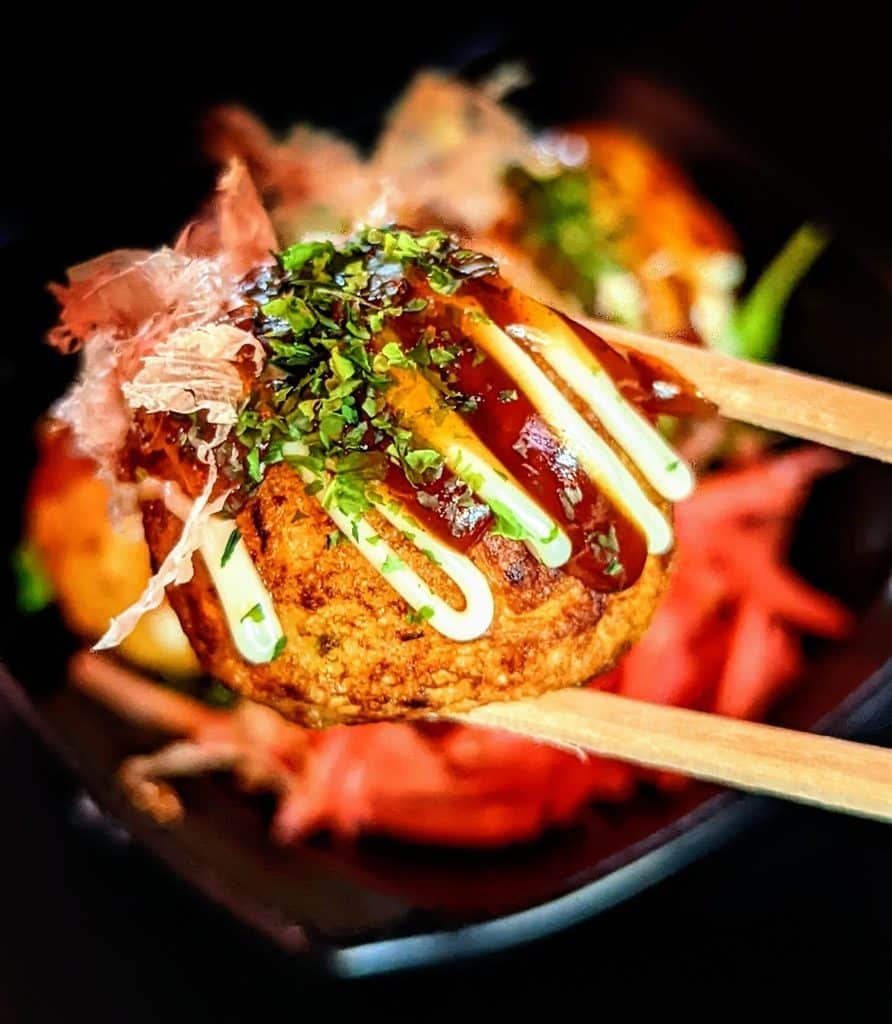
In Japan, Takoyaki is inextricably linked to the magic of matsuri (traditional festivals), where mobile food stalls called yatai light up the night under glowing lanterns.
The sensory charm of a yatai centers on:
- Culinary Acrobatics: Vendors flip hundreds of spheres over blazing griddles with hypnotic speed and precision.
- Sensory Atmosphere: The clinking of metal picks, sizzling batter, and sweet aroma of toasted seaweed draw massive crowds.
- The Experience: Holding a warm paper boat filled with dancing bonito flakes while exploring crowded shrine grounds.
Takoyaki at a yatai isn’t merely a quick snack—it is the beating heart of Japanese festival culture.
The Great Mayo Debate: Kewpie, Acid, and Emulsion Science
No batch of Takoyaki is complete without a rich zigzag of Kewpie mayonnaise, a condiment that fundamentally transforms the dish’s chemistry:
- Formula: Unlike Western mayo made with whole eggs and white vinegar, Kewpie relies strictly on egg yolks and rice vinegar.
- Flavor Profile: Higher concentrations of lipids and natural glutamates yield an ultra-rich texture and subtle acidity.
- The Synergy: When drizzled over hot spheres, the emulsion melts into the glossy Takoyaki glaze, balancing the heavy fried batter with a sharp, tangy contrast.
This precise balance elevates the dish’s overall flavor synergy, delivering richness and tang in every bite.
Takoyaki vs. Okonomiyaki: Clearing Up the Confusion
A common mix-up for newcomers to Japanese cuisine is confusing Takoyaki with Okonomiyaki. Both hail from Osaka, both rely on savory batter and similar toppings, but they are entirely different animals.
- Shape & Texture: Takoyaki is spherical, light, and custardy on the inside. Okonomiyaki is a dense, thick, savory pancake packed with shredded cabbage.
- Cooking Method: Takoyaki requires specialized molded cast-iron pans and constant flipping. Okonomiyaki is cooked flat on a griddle (teppan) like a hashbrown or thick burger patty.
- The Protein: Takoyaki centers almost exclusively around octopus (tako). Okonomiyaki (okonomi meaning “what you like”) accepts pork belly, squid, shrimp, cheese, or whatever ingredients you have in the fridge.
Final Thoughts: The Ultimate Comfort Bite
There is a simple reason Japanese Takoyaki has taken over the food world. It strips away pretense and focuses purely on joy.
It brings people together around a sizzling iron grid, combines explosive umami flavors with contrasting textures, and delivers sheer, unadulterated comfort in a tiny paper boat.
Whether you are hunting down a street cart in Osaka or setting up an electric pan on your own kitchen table for a weekend Takopa, these crispy, molten, dancing octopus balls prove that the best meals in life are often the ones you eat with your hands, laughing with friends, and gently burning your tongue along the way.
Frequently Asked Questions
1. What does Takoyaki taste like?
Takoyaki offers a savory, rich, and deeply umami flavor profile with a slight sweetness from the sauce. The exterior is warm and crispy, while the inside is soft and custardy, infused with the subtle ocean taste of dashi and tender octopus.
The toppings add layers of tanginess from Kewpie mayo, smokiness from bonito flakes, and a slight spicy bite from pickled red ginger.
2. Is the octopus in Takoyaki raw or already cooked?
The octopus used in Takoyaki is always pre-cooked – typically boiled – before being diced and added to the batter. This ensures that the meat achieves a tender, pleasant chew during the short frying process rather than becoming tough or rubbery.
3. Why is my home-cooked Takoyaki soggy instead of crispy?
Two major culprits cause soggy spheres: low heat and insufficient oil.
Use a heavy cast-iron pan, ensure it is smoking hot before pouring your batter, and coat every indentation generously with a high-smoke-point oil.
For extra crunch, brush a tiny droplet of fresh oil over the outer shell during the final rotation.
4. Can I make Japanese Takoyaki without a specialized pan?
While traditional spherical Takoyaki requires a specialized molded pan (takoyaki-ki), you can achieve similar flavor profiles using an egg bite mold, a cake pop maker, or a mini muffin tin.
Alternatively, you can make “Kaku-yaki” (square Takoyaki) by cooking the batter and fillings in a small rectangular tamagoyaki pan and cutting it into bite-sized cubes.
5. How do you eat Takoyaki safely without burning your mouth?
Because the crisp outer shell traps internal steam, fresh Takoyaki acts like a mini lava pocket. To avoid burning your mouth, use a bamboo skewer to poke a small vent hole into the top of the ball.
Let the steam vent for 30 to 40 seconds, then nibble a small corner off first to check the temperature before popping the rest into your mouth.
Featured image credit: @justonecookbook
