

Nothing beats the raw energy of open-flame cooking when charcoal meets fat, sugar, and smoke. Western barbecue has mastered the art of low-and-slow briskets and heavy tomato pastes, but turning your gaze toward the East opens up a whole new world of live-fire cooking.
Asian BBQ recipes offer an incredible spectrum of contrast: scorching heat balanced by refreshing citrus, pungent umami offset by deep sweetness, and aromatics that hit your nose long before the meat touches your tongue.
Traversing Asian night markets reveals one consistent truth – street food vendors are the absolute masters of the grill. They do not rely on massive smokers or complex temperature gauges; instead, they rely on high heat, intense marinades, and rapid caramelization.
Stepping out of your culinary comfort zone and bringing these ten vibrant dishes to your backyard will permanently change the way you cook over coals.
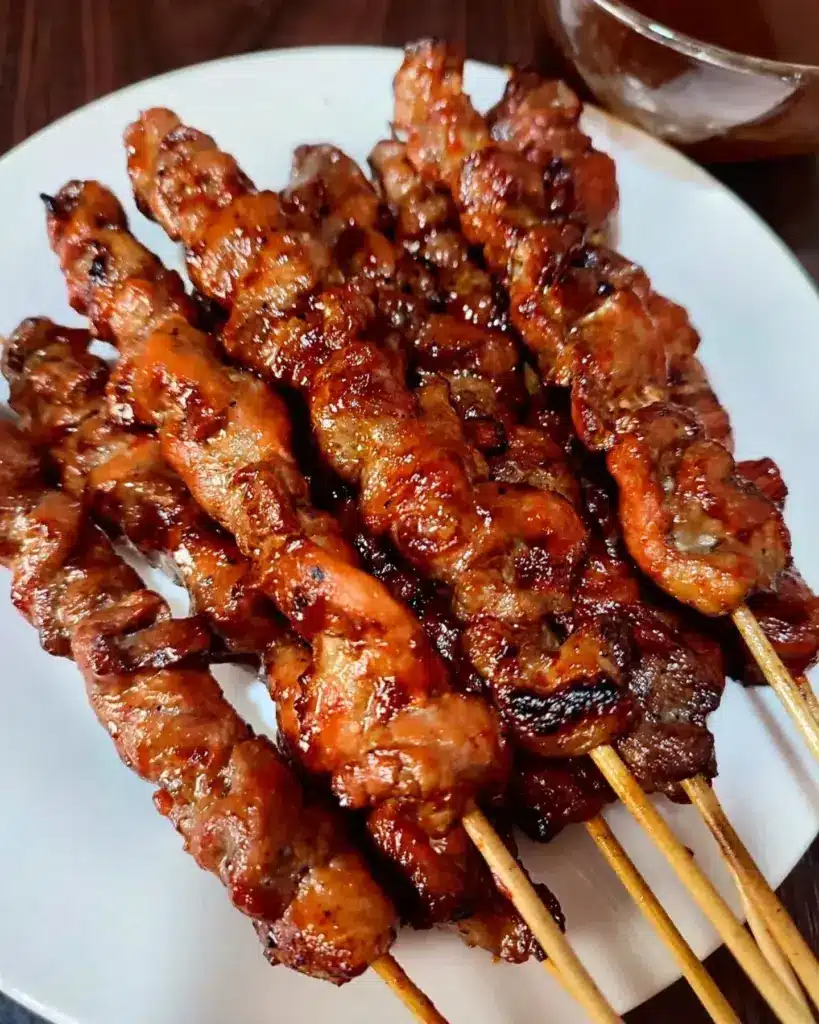
1. Philippines: Street-Style Filipino Pork BBQ Skewers
Walk down any side street in Manila after sunset, and the sweet, garlic-scented smoke will guide you directly to a roadside grill.
Filipino pork barbecue is famous for its punchy balance of sweet, salty, and sour flavors, combined with an impossibly shiny, lacquered glaze.
The secret weapon behind this legendary street food isn’t fancy imported syrup – it’s banana ketchup and lemon-lime soda. The soda acts as a dynamic meat tenderizer while adding sweetness, and the banana ketchup creates that rich, caramelized crust over the flames.
- The Cut: Pork shoulder or pork belly, sliced thin and threaded tightly onto bamboo skewers.
- Flavor Profile: Heavily garlicky, distinctly sweet, and balanced with tangy citrus notes.
- Key Ingredients: Banana ketchup, soy sauce, calamansi juice (or lime), minced garlic, brown sugar, and carbonated lemon-lime soda.
- Pro Grilling Tip: Baste constantly during the last few minutes of cooking. The high sugar content in the marinade caramelizes quickly, creating those dark, delicious charred edges without burning the meat through.
Mini recipe
Ingredients
- 1.5 lbs pork shoulder or belly, sliced thin (1/81/4 inch)
- ½ cup banana ketchup
- ¼ cup soy sauce
- ¼ cup carbonated lemon-lime soda
- 2 tbsp calamansi juice (or lime juice)
- 2 tbsp dark brown sugar
- 6 cloves garlic, finely minced
- ½ tsp black pepper
- Bamboo skewers, soaked in water for 30 mins
Instructions
- Marinate: Whisk banana ketchup, soy sauce, soda, calamansi juice, brown sugar, garlic, and black pepper in a bowl. Add the sliced pork, coat thoroughly, and cover. Refrigerate for at least 4 hours (overnight preferred).
- Skewer: Thread the pork ribbon-style tightly onto the soaked bamboo skewers. Reserve the leftover marinade in a small saucepan.
- Make Glaze: Bring the reserved marinade to a simmer over medium heat for 3–5 minutes until slightly thickened.
- Grill: Preheat your grill to high heat. Grill the skewers for 8–10 minutes, flipping frequently. During the last 3 minutes, baste heavily with the glaze until glossy and charred on the edges.
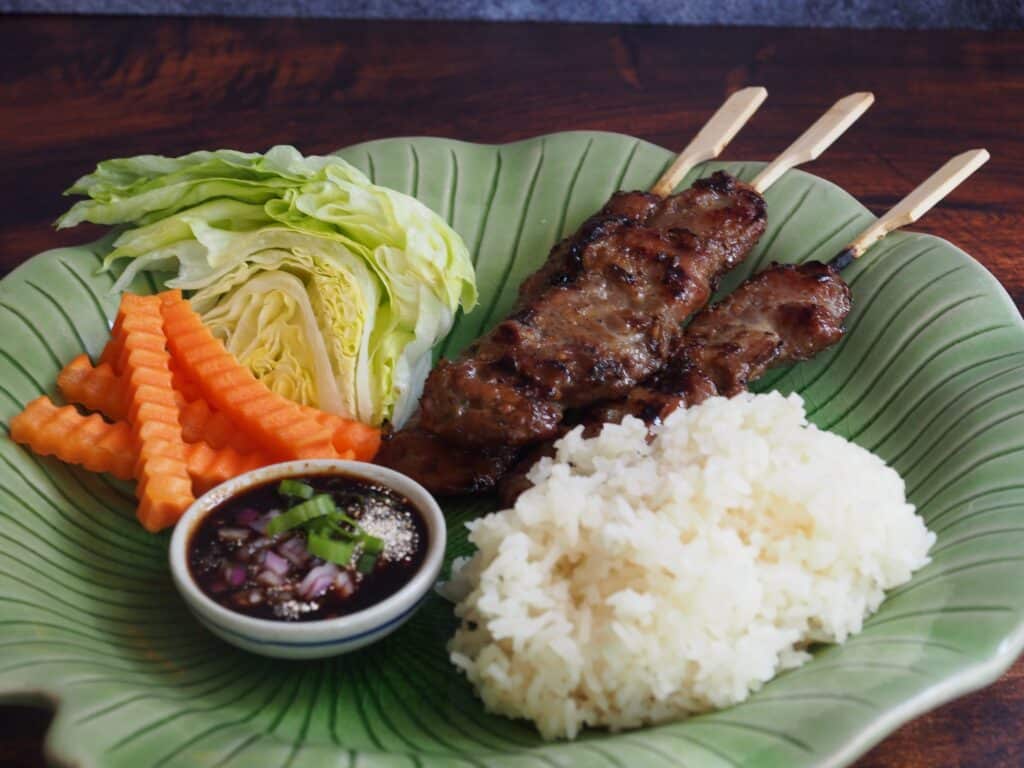
2. Thailand: Moo Ping (Thai Grilled Pork Skewers)
If morning commutes had a universal official scent in Bangkok, it would be the aroma of Moo Ping rendering over white-hot binchotan charcoal. Unlike Western marinades that rely on liquid bases,
Thai pork skewers get their foundation from a freshly pounded aromatic paste.
The magic happens when coriander roots, garlic, and white peppercorns are crushed together in a mortar and pestle. Coconut milk is added to the marinade, ensuring the meat stays tender and juicy even under high heat.
- The Cut: Pork shoulder mixed with a little bit of pork fat for maximum juiciness.
- Flavor Profile: Savory, herbal, slightly sweet, and rich with coconut milk.
- Key Ingredients: Coriander root, garlic, white pepper, palm sugar, fish sauce, and coconut milk.
- Pro Grilling Tip: Brush the skewers with fresh coconut milk while they are on the grill. This builds up an irresistible, creamy glaze that traps the smoke right onto the meat. Serve them with hot sticky rice for the authentic street-food experience.
Mini recipe
Ingredients
- 1.5 lbs pork shoulder (with some fat), sliced into thin 1 x 2-inch strips
- 3 coriander roots (or 6 cilantro stems), washed and chopped
- 5 cloves garlic
- 1 tsp white peppercorns
- 2 tbsp palm sugar (or brown sugar)
- 2 tbsp fish sauce
- 1 tbsp soy sauce
- 1 tbsp dark soy sauce
- ½ cup coconut milk (divided)
- Bamboo skewers, soaked in water
Instructions
- Pound Paste: In a mortar and pestle (or small food processor), pound coriander roots, garlic, and white peppercorns into a paste.
- Marinate: Mix the pounded paste with palm sugar, fish sauce, soy sauce, dark soy sauce, and ¼ cup of coconut milk until sugar dissolves. Add pork strips, massage well, and marinate for 2–4 hours.
- Assemble: Thread the pork pieces closely together on soaked skewers, packing them tightly into neat rectangular slabs.
- Grill: Cook over medium-high coals for 6–8 minutes, turning often. Brush generously with the remaining ¼ cup of coconut milk during grilling until a fragrant, milky crust forms and the meat is fully cooked.
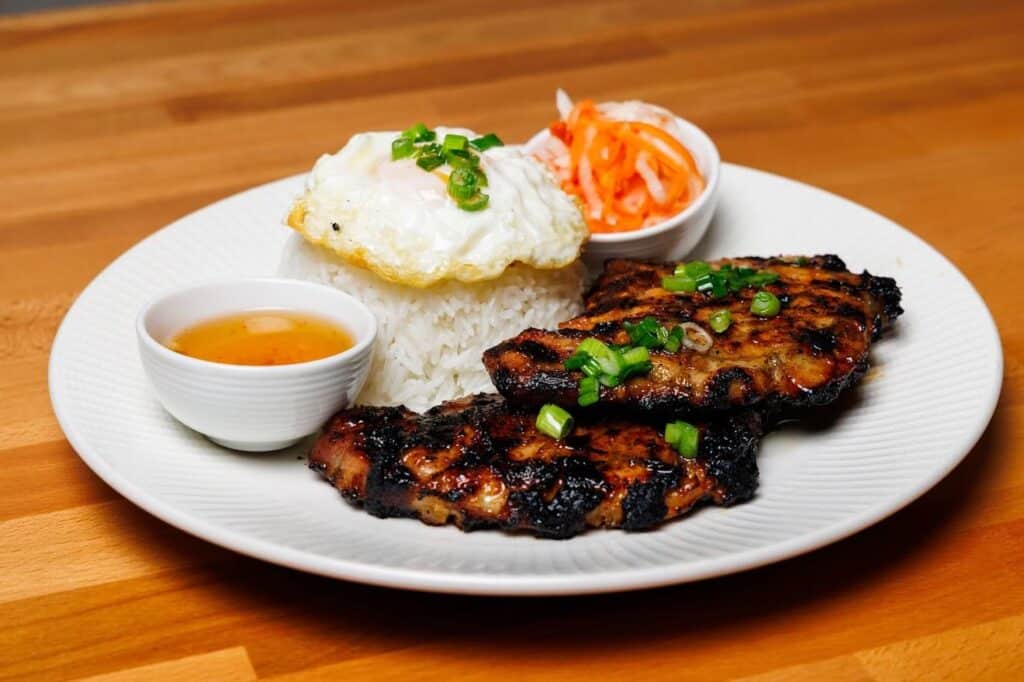
3. Vietnam: Thịt Nướng (Vietnamese Lemongrass Pork Chops)
Few ingredients interact with live fire quite as dramatically as lemongrass. When bruised lemongrass hits glowing coals, it releases aromatic oils that infuse meat with an unmistakable, herbal brightness.
Vietnamese Thịt Nướng turns everyday thin-cut pork chops into a masterpiece of smoke and citrus.
This dish relies on fish sauce for a massive hit of savory umami, balanced by shallots, garlic, and sugar. It is traditionally served over thin rice vermicelli noodles (Bún Thịt Nướng) alongside fresh herbs and pickled vegetables to cut through the rich smoky pork.
- The Cut: Thinly sliced pork chops or pork shoulder.
- Flavor Profile: Extremely aromatic, bright, herbal, and deeply savory.
- Key Ingredients: Freshly minced lemongrass, fish sauce, shallots, garlic, dark soy sauce, and sweetened condensed milk (a restaurant secret for rapid caramelization).
- Pro Grilling Tip: Mince the lemongrass as finely as humanly possible. Large pieces will char and turn bitter on the grill, whereas finely minced lemongrass forms an aromatic, golden crust.
Mini recipe
Ingredients
- 4 thin-cut bone-in pork chops (or sliced shoulder)
- 3 tbsp lemongrass, extremely finely minced (white part only)
- 2 shallots, finely minced
- 4 cloves garlic, minced
- 2 tbsp fish sauce
- 1 tbsp dark soy sauce
- 1.5 tbsp sweetened condensed milk
- 1 tbsp neutral oil
- 1 tsp black pepper
Instructions
- Prepare Marinade: Combine minced lemongrass, shallots, garlic, fish sauce, dark soy sauce, sweetened condensed milk, oil, and black pepper in a bowl.
- Marinate: Coat the pork chops evenly with the mixture. Cover and refrigerate for 3 to 12 hours.
- Grill: Heat grill to high. Scrape off any large clumps of lemongrass that might burn easily.
- Sear: Grill the chops for 3–4 minutes per side until deep caramelization occurs from the condensed milk and the meat reaches an internal temperature of 145ºF. Rest for 5 minutes before serving with rice or vermicelli.
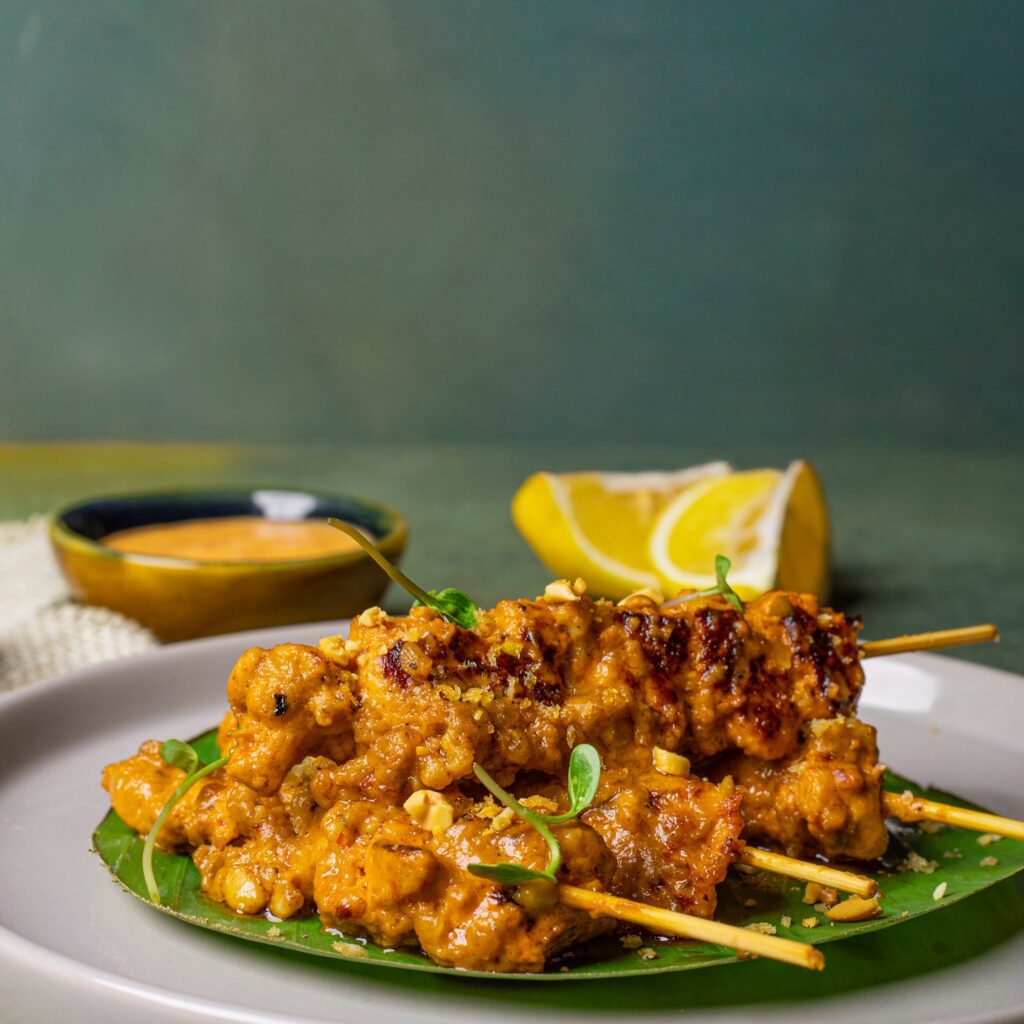
4. Indonesia: Satay Ayam (Indonesian Chicken Satay)
Satay is served across Southeast Asia, but Indonesia is its true spiritual home.
Forget the watered-down, artificial peanut sauces found in grocery store jars; authentic Indonesian Satay Ayam features fragrant, golden chicken skewers paired with a complex, freshly ground peanut sauce.
The chicken gets its brilliant yellow hue and warm flavor from fresh turmeric and coriander. Meanwhile, the sauce blends roasted peanuts, chili, garlic, tamarind, and kecap manis (Indonesian sweet soy sauce) into a velvety glaze that coats every bite.
- The Cut: Boneless skinless chicken thighs cut into small, uniform cubes.
- Flavor Profile: Earthy, nutty, mildly spicy, and rich with aromatic spices.
- Key Ingredients: Ground turmeric, coriander seeds, kecap manis, roasted peanuts, garlic, and tamarind paste.
- Pro Grilling Tip: Keep your skewers thin and small. Satay cooks very quickly over high heat, allowing you to get a beautiful charred exterior while keeping the chicken extremely tender inside.
Mini recipe
Ingredients
Chicken Skewers:
- 1.5 lbs boneless, skinless chicken thighs, cut into ¾-inch cubes
- 1 tsp ground turmeric
- 1 tsp ground coriander
- 1 tbsp kecap manis (Indonesian sweet soy sauce)
- 1 tbsp vegetable oil
- ½ tsp salt
Peanut Sauce:
- 1 cup roasted unsalted peanuts, finely crushed
- 2 cloves garlic, minced
- 1 red chili, minced
- 2 tbsp kecap manis
- 1 tbsp tamarind paste dissolved in ½ cup warm water
- 1 tbsp brown sugar
- ½ tsp salt
Instructions
- Marinate Chicken: Toss chicken cubes with turmeric, coriander, kecap manis, oil, and salt. Marinate for at least 1 hour. Thread 4–5 cubes onto soaked skewers.
- Make Sauce: Sauté garlic and red chili in a saucepan with a splash of oil for 1 minute. Add crushed peanuts, kecap manis, tamarind water, brown sugar, and salt. Simmer over low heat for 5 minutes until thickened. Adjust consistency with warm water if needed.
- Grill: Grill chicken skewers over high heat for 3 minutes per side until charred and cooked through.
- Serve: Drizzle hot peanut sauce over the skewers or serve it alongside as a dip.
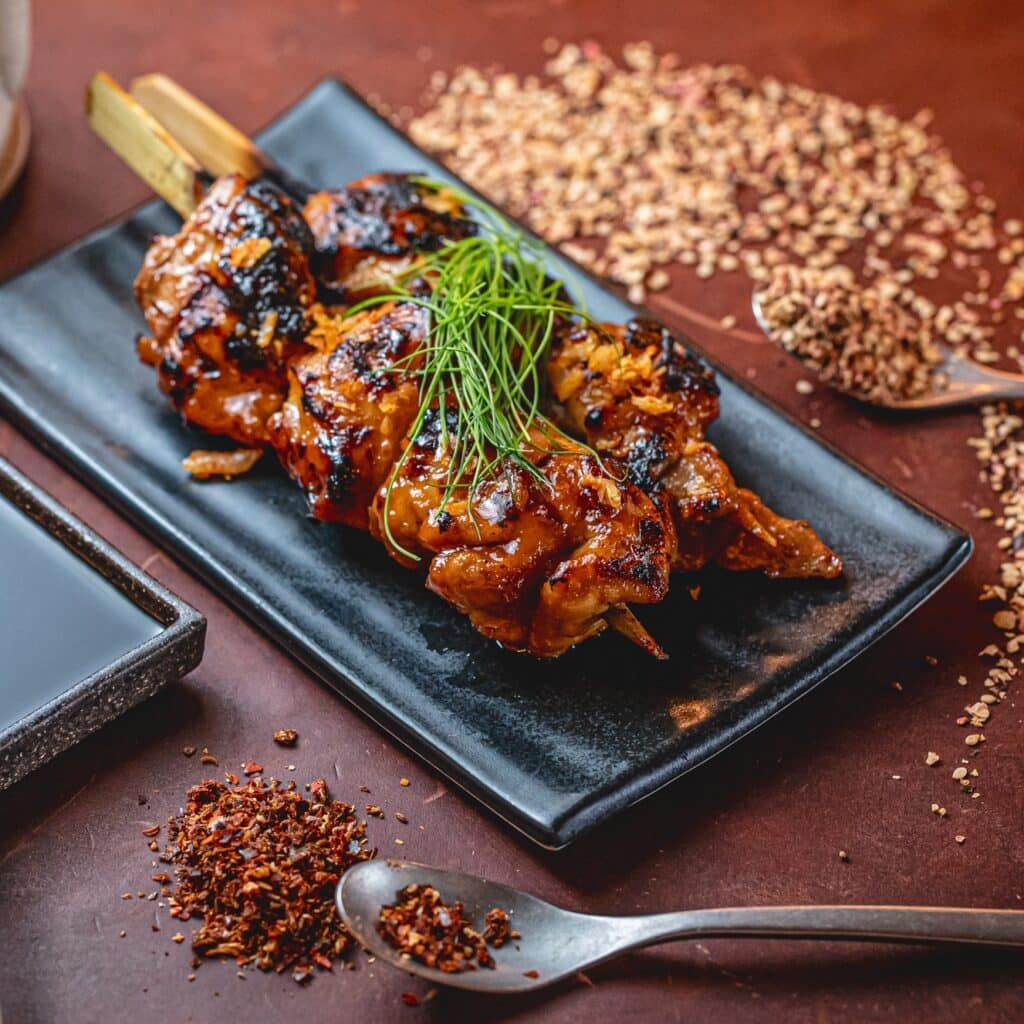
5. Malaysia: Ayam Percik (Kelantan Spiced Glazed Chicken)
Hailing from the state of Kelantan, Ayam Percik is often called “splashed chicken” – a name derived from the repeated, generous ladlefuls of thick spiced coconut sauce splashed over the bird as it grills.
Unlike fast-cooking skewers, Ayam Percik usually features larger chicken cuts that are gently poached or steamed in spiced coconut milk before hitting the grill.
This ensures the chicken is cooked through while the grill handles the final task: turning the thick coconut coating into a smoky, caramelized crust.
- The Cut: Bone-in, skin-on chicken legs or quarters.
- Flavor Profile: Rich, creamy, mildly spicy, and deeply aromatic.
- Key Ingredients: Lemongrass, galangal, ginger, dried chili paste, coconut cream, and tamarind juice.
- Pro Grilling Tip: Cook the marinade down on the stove until it reaches a thick, gravy-like consistency before grilling. Apply the paste in thick layers every time you flip the chicken to build up a substantial flavor crust over the charcoal.
Mini recipe
Ingredients
- 4 bone-in, skin-on chicken leg quarters
- 1.5 cups thick coconut cream
- 2 stalks lemongrass, bruised and sliced
- 1 inch galangal (or ginger), sliced
- 3 shallots, minced
- 2 cloves garlic, minced
- 1.5 tbsp dried chili paste (or sambal oelek)
- 1 tbsp tamarind juice
- 1 tbsp palm sugar
- 1 tsp salt
Instructions
- Blend Paste: Blend lemongrass, galangal, shallots, garlic, and chili paste with a splash of water into a smooth paste.
- Pre-Cook & Reduce Sauce: In a pot, combine the paste, coconut cream, tamarind juice, palm sugar, salt, and chicken quarters. Simmer covered for 15 minutes until chicken is partially cooked.
- Thicken Sauce: Remove the chicken legs and set aside. Continue simmering the remaining coconut sauce uncovered over medium heat until it thickens into a heavy paste.
- Grill: Place chicken on a medium-hot grill. Baste thickly with the concentrated sauce every 2–3 minutes, flipping regularly until skin is deeply charred, glossy, and internal temperature hits 165ºF (about 12–15 minutes total).
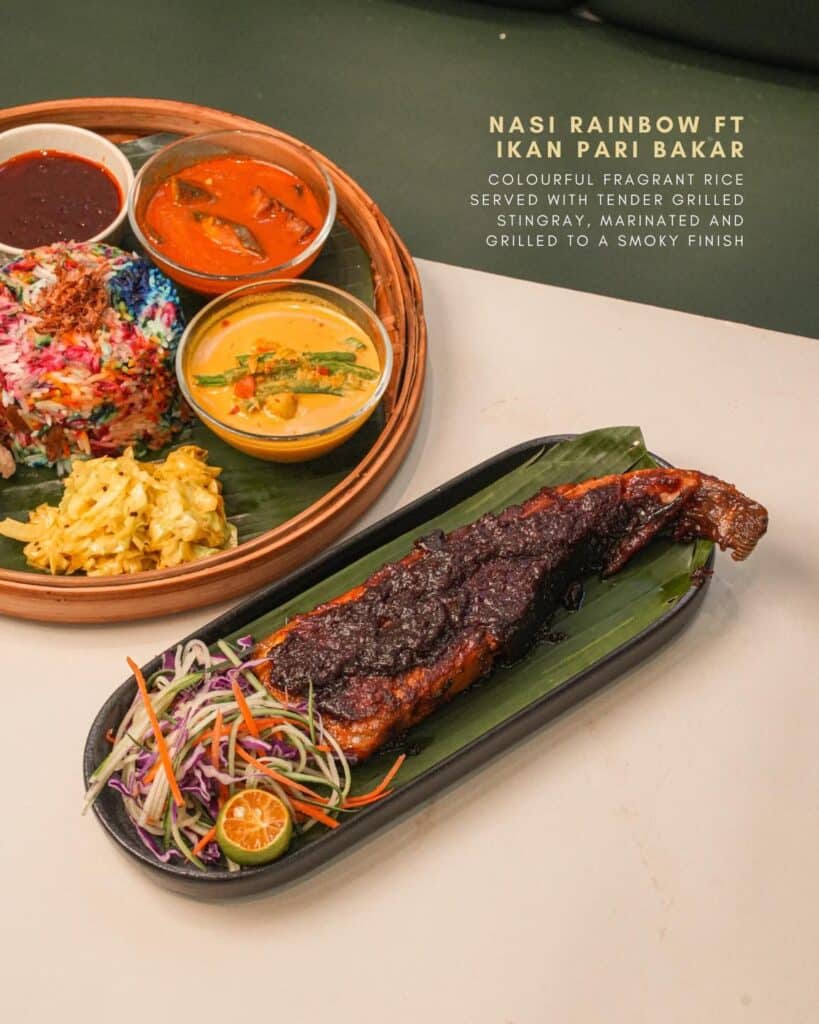
6. Singapore: Sambal Stingray (Ikan Pari Bakar)
Singaporean food culture thrives on adaptation and intense flavor, and nowhere is this clearer than at the hawker centers serving Sambal Stingray. Stingray meat features a unique, firm texture that holds up remarkably well to high heat without drying out or flaking apart.
The fish is slathered in a fiery sambal paste packed with dried chilies, shrimp paste (belacan), garlic, and tamarind, then wrapped in a banana leaf packet and placed directly onto a smoking grill.
- The Cut: Fresh stingray wings (skate wings work as a great substitute).
- Flavor Profile: Fiery, smoky, tangy, and bursting with seafood umami.
- Key Ingredients: Homemade sambal paste, shrimp paste (belacan), calamansi limes, and banana leaves for wrapping.
- Pro Grilling Tip: Do not skip the banana leaf. Wrapping the fish protects it from burning while trapping steam, cooking the stingray to silky perfection while infusing it with a delicate, tea-like herbal aroma from the leaf.
Mini recipe
Ingredients
- 1.5 lbs stingray wing (or skate wing / halibut fillets)
- 2 large banana leaves (softened over flame or warm water)
- 2 calamansi limes (halved, for serving)
Sambal Paste:
- 8 dried red chilies (rehydrated in hot water)
- 3 fresh red chilies
- 4 shallots
- 3 cloves garlic
- 1 tbsp toasted belacan (shrimp paste)
- 1 tbsp sugar
- 1 tbsp tamarind paste
- 2 tbsp cooking oil
Instructions
- Make Sambal: Blend dried chilies, fresh chilies, shallots, garlic, belacan, sugar, tamarind, and oil into a smooth paste. Fry the paste in a skillet for 5 minutes until fragrant and oil separates.
- Assemble: Lay a banana leaf on a baking sheet or foil. Place the fish on top and slather the fried sambal paste generously over the upper surface. Wrap folded edges to enclose tightly.
- Grill: Place the banana leaf packet directly onto a medium-high grill. Cover and cook for 10–12 minutes (turning carefully halfway through if needed) until the leaf is charred and fish is tender.
- Serve: Open the packet carefully and squeeze fresh calamansi lime juice over top right before serving.
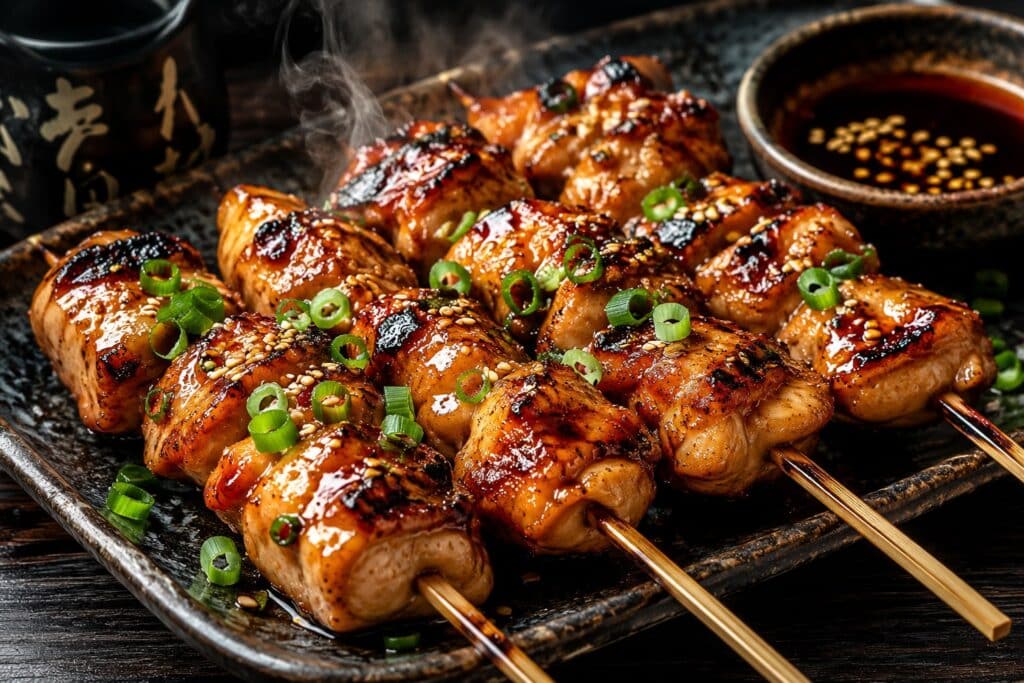
7. Japan: Yakitori (Tare-Glazed Chicken Skewers)
Japanese Yakitori represents minimalism elevated to an art form. Pitmasters in Tokyo spend decades mastering the precise grilling techniques required to transform humble cuts of chicken into extraordinary meals over ultra-hot binchotan charcoal.
While Yakitori can be seasoned simply with sea salt (shio), the version loved worldwide uses tare – a deeply savory, glossy reduction of soy sauce, mirin, sake, and sugar.
- The Process: Thread raw chicken onto bamboo skewers, sear over high heat, dip completely into hot tare glaze, and finish over the open flame for a final char.
- The Cut: Chicken thigh meat, skin, or meatballs (tsukune), often threaded with green onion lengths (negi).
- Flavor Profile: Clean, savory, sweet, and lightly smoky.
- Key Ingredients: Soy sauce, mirin, Japanese sake, brown sugar, and fresh chicken bones (simmered down to build the base tare).
- Pro Grilling Tip: Dip, don’t just brush. Dip the skewer directly into a tall jar of tare sauce late in the grilling process, then return it to the heat for 30 seconds to lock in the glaze.
Mini recipe
Ingredients
Chicken:
- 1.25 lbs boneless chicken thighs, cut into 1-inch pieces
- 2 bunches negi (Japanese long green onion) or thick scallions, cut into 1-inch lengths
- Bamboo skewers, soaked in water
Tare Sauce:
- ½ cup soy sauce
- ½ cup mirin
- ¼ cup Japanese sake
- 2 tbsp dark brown sugar
- 1 clove garlic, smashed (optional)
Instructions
- Simmer Tare: In a small saucepan, combine soy sauce, mirin, sake, brown sugar, and garlic. Simmer over medium-low heat for 10–12 minutes until reduced by half and syrupy. Pour into a tall, narrow heat-safe glass or jar.
- Skewer: Thread chicken pieces onto bamboo skewers, alternating with pieces of green onion.
- Initial Sear: Grill skewers over high heat for about 5 minutes, turning occasionally until lightly browned on all sides.
- Glaze: Dip each skewer directly into the jar of tare sauce to coat completely. Return to the grill for 30–60 seconds to caramelize. Repeat the dip-and-grill process 1–2 more times until deeply glazed and cooked through.
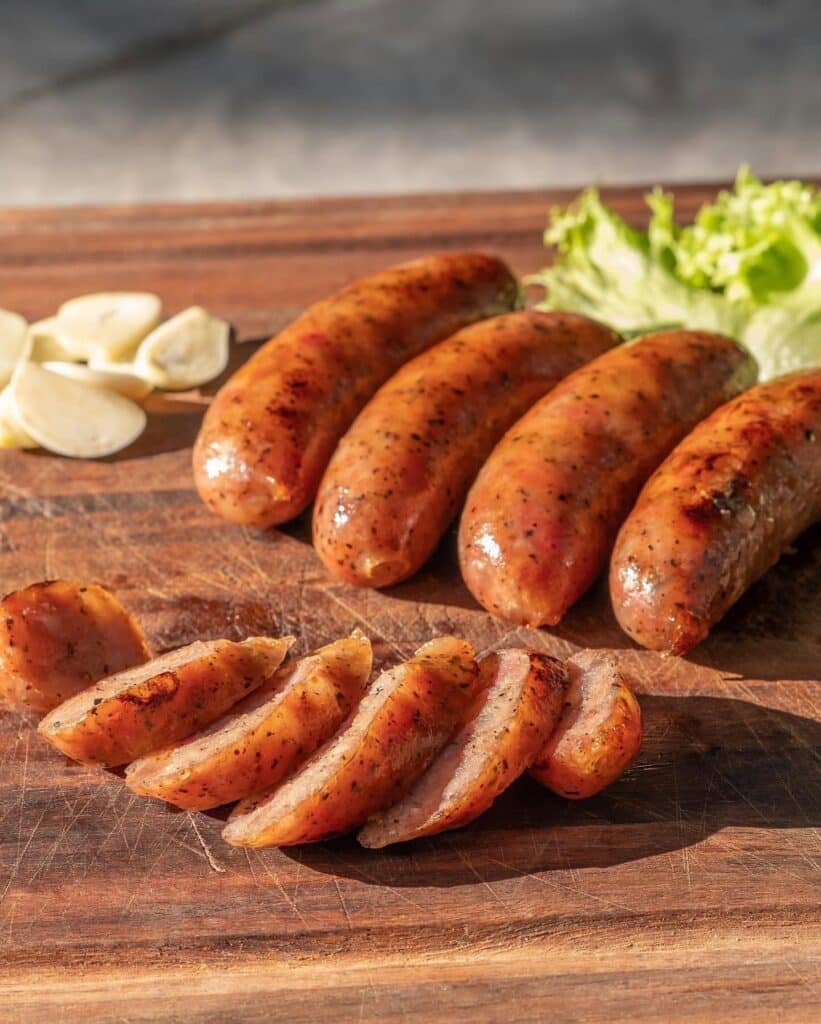
8. Taiwan: Taiwanese Sausage (Xiangchang) with Raw Garlic
If you have ever walked through Taipei’s Shilin Night Market, you have smelled Xiangchang. These sweet, plump pork sausages are grilled over open coals until the casings turn taut and snap under the bite.
What makes Taiwanese sausage unique is the inclusion of five-spice powder and Kaoliang liquor (a strong sorghum wine), giving the meat a distinct, sweet, floral aroma. The real secret, however, lies in how it is eaten.
- The Cut: Coarsely ground pork meat and pork fat encased in natural hog casing.
- Flavor Profile: Sweet, spiced, juicy, and punchy.
- Key Ingredients: Coarsely ground pork, sugar, five-spice powder, rice wine or Kaoliang liquor, and whole raw garlic cloves.
- Pro Grilling Tip: Always serve with fresh, peeled raw garlic cloves. Take a small bite of the hot, sweet sausage followed immediately by a tiny nibble of raw garlic. The raw heat cuts through the rich pork fat in an extraordinary way.
Mini recipe
Ingredients
- 4–6 Taiwanese pork sausages (Xiangchang)
- 1 whole head of raw garlic, separated into peeled, whole cloves
- 1 tbsp cooking oil (for brushing)
Instructions
- Prep Sausages: Poke 3–4 tiny holes in the casing of each sausage with a toothpick to prevent bursting on the grill.
- Indirect Grill: Set up grill for two-zone cooking (medium-low indirect heat). Place sausages on the cooler side of the grill, cover, and let gently cook for 10 minutes until warmed through.
- Direct Sear: Move sausages directly over the coals. Lightly brush with oil and grill for 3–5 minutes, rotating frequently until skins turn red, tight, and crispy with light char marks.
- Serve: Plate whole or sliced diagonally. Serve alongside a bowl of fresh, raw garlic cloves.
How to Eat: Bite into a piece of warm sausage, immediately followed by a small nibble of raw garlic.
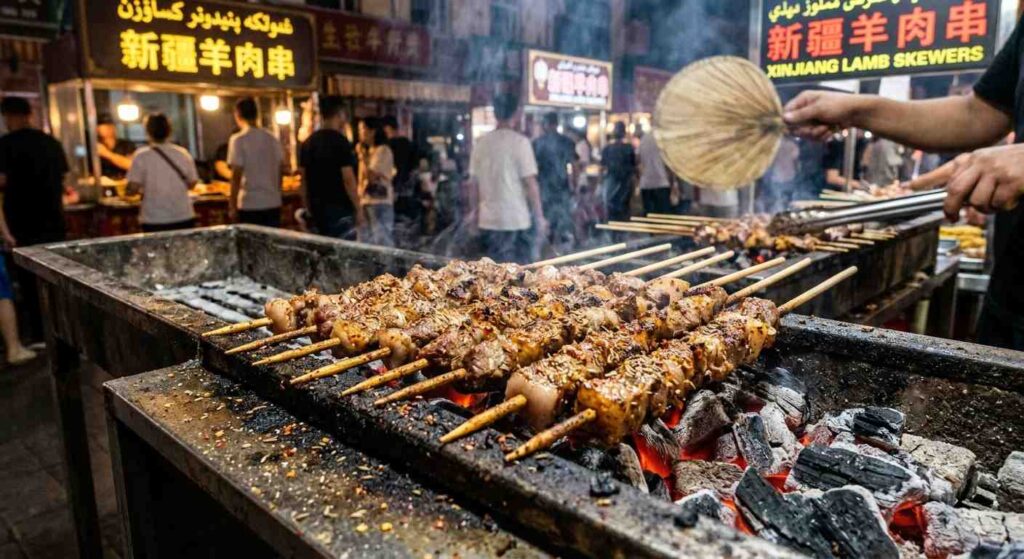
9. China: Cumin Lamb Skewers (Xinjiang Chuan’r)
Originating from the Uyghur people of Xinjiang in northwestern China, Chuan’r has taken over street corners across the entire country. This dish abandons sweet glazes entirely in favor of an intense, dry-rub spice blend dominated by toasted cumin and fiery chili flakes.
Fatty cuts of lamb are threaded onto long metal skewers, blasted over high heat, and heavily dusted with spices right as the rendering fat ignites over the coals.
- The Cut: Lamb shoulder or lamb leg, alternating cubes of lean meat with chunks of pure lamb fat.
- Flavor Profile: Earthy, pungent, spicy, and rich with rendered lamb fat.
- Key Ingredients: Whole cumin seeds (coarsely ground), dried red pepper flakes, Sichuan peppercorn powder, and coarse sea salt.
- Pro Grilling Tip: Toast your cumin seeds whole before grinding them. Pre-bagged ground cumin will burn into a bitter powder on the grill, but coarsely crushed, fresh-roasted seeds release incredible aromatic oils when hit by hot lamb fat.
Mini recipe
Ingredients
- 1.25 lbs lamb shoulder, cut into ¾-inch cubes (keep fat intact)
- 2 tbsp whole cumin seeds
- 1.5 tbsp coarse chili flakes
- 1 tsp Sichuan peppercorn powder
- 1 tsp coarse sea salt
- 1 tbsp soy sauce
- 1 tbsp vegetable oil
- Metal skewers (traditionally preferred over bamboo)
Instructions
- Toast & Grind Spices: Toast whole cumin seeds in a dry skillet for 1 minute until fragrant. Coarsely crush in a mortar or spice grinder. Mix crushed cumin with chili flakes, Sichuan pepper, and salt.
- Marinate Lamb: Toss cubed lamb with soy sauce, oil, and 1 tablespoon of the mixed spice blend. Let rest for 30 minutes.
- Skewer: Thread lamb onto skewers, alternating between lean chunks and fatty pieces.
- Grill & Dust: Cook over white-hot coals for 3 minutes, turning frequently. Dust heavily with the remaining spice blend on all sides right as the lamb fat renders and flares up. Grill for another 2–3 minutes until deeply crusted and smoky.
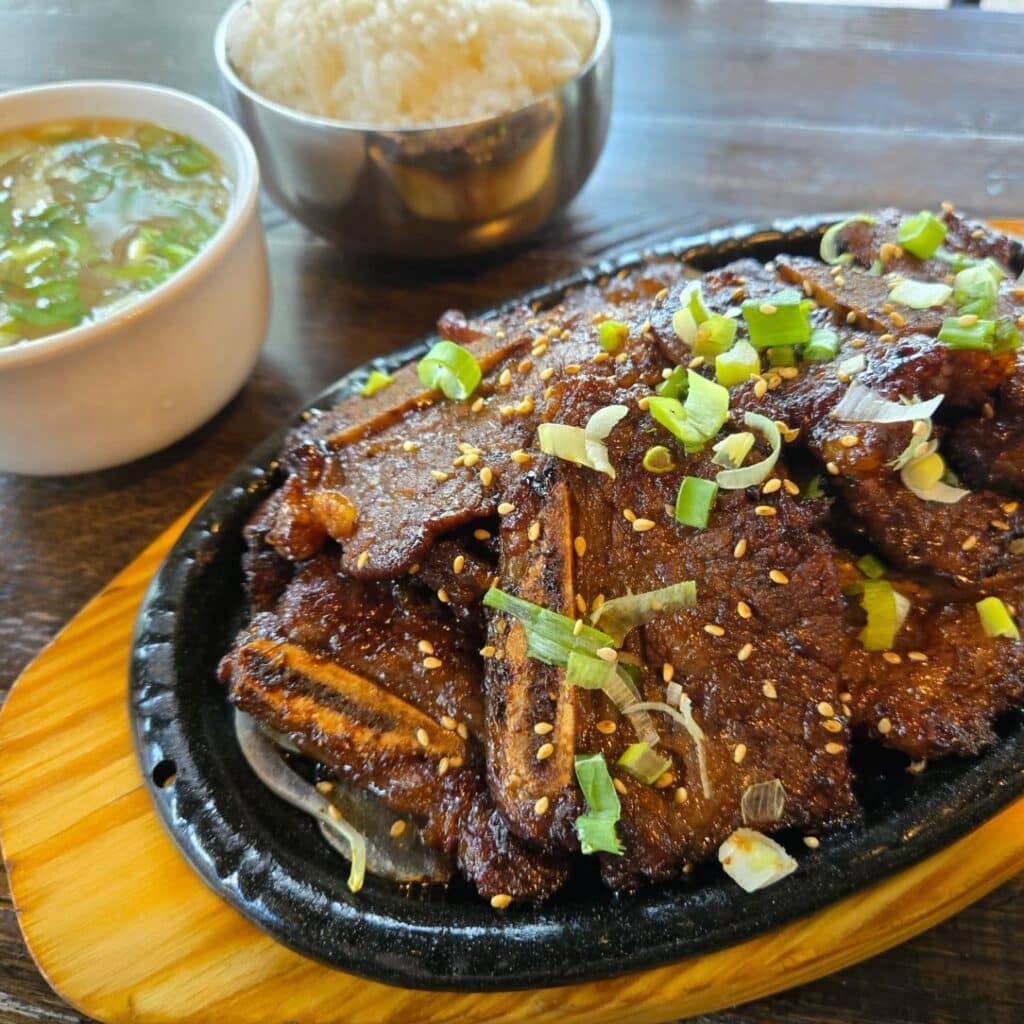
10. South Korea: LA Galbi (Korean Marinated Short Ribs)
Korean barbecue is world-famous for good reason, and LA Galbi sits at the top of the throne.
“LA” refers to the flanken cut – beef short ribs cut thinly across the bone – originating from Korean butchers in Los Angeles who wanted a quick-cooking cut suitable for high-heat grilling.
The marinade relies on grated Asian pear, which contains natural enzymes that break down tough meat fibers, leaving the ribs melt-in-your-mouth tender in just a few hours.
- The Cut: Flanken-cut beef short ribs (sliced thinly across three or four bone cross-sections).
- Flavor Profile: Rich, sweet, savory, garlicky, and deeply umami.
- Key Ingredients: Soy sauce, grated Asian pear (or grated apple), toasted sesame oil, minced garlic, brown sugar, and green onions.
- Pro Grilling Tip: Grill over high heat very quickly. Because the ribs are cut thin, you want a blazing hot fire to char the sweet marinade on the outside before the meat overcooks. Serve wrapped in fresh lettuce leaves with a spoonful of ssamjang paste.
Mini recipe
Ingredients
- 2 lbs flanken-cut beef short ribs (sliced ¼-inch thick across the bone)
- ½ cup soy sauce
- ½ cup water
- ½ Asian pear (or sweet apple), peeled and grated
- ¼ cup dark brown sugar
- 2 tbsp toasted sesame oil
- 4 cloves garlic, minced
- 1 tsp fresh ginger, grated
- 3 green onions, finely chopped
- 1 tbsp toasted sesame seeds (for garnish)
Instructions
- Soak Meat: Rinse beef ribs under cold water to remove bone dust, then soak in cold water for 20 minutes. Drain and pat dry.
- Make Marinade: Whisk soy sauce, water, grated pear, brown sugar, sesame oil, garlic, ginger, and green onions until sugar dissolves.
- Marinate: Lay ribs in a shallow baking dish and pour marinade over. Cover and refrigerate for 4 to 8 hours.
- Flash-Grill: Heat grill to maximum heat. Remove ribs from marinade (discard liquid) and lay flat across the hottest grate. Cook for 2–3 minutes per side until charred on the outside and tender inside. Garnish with sesame seeds.
Essential Pantry Staples for Asian BBQ
Mastering these Asian BBQ recipes does not require a commercial kitchen, but it does require setting up a proper pantry. Before firing up your grill, stock up on these foundational ingredients:
- The Liquid Umami Base: Quality soy sauce, fish sauce, and sweet soy sauce (kecap manis).
- The Fresh Aromatics: Garlic, ginger, lemongrass, shallots, and fresh coriander root.
- The Acids & Tenderizers: Calamansi limes, rice vinegar, tamarind paste, and Asian pears.
- The Sweet Glazings: Palm sugar, dark brown sugar, and banana ketchup.
Final Thoughts: South East Asian BBQ Smorgasbord
Barbecue has no single home; it is a global language spoken through smoke, fat, and heat.
By introducing these ten incredible Asian BBQ recipes into your outdoor cooking routine, you move beyond basic marinades and tap into centuries of live-fire street-food tradition.
Gather your ingredients, prep your marinades, light up your charcoal, and bring the bold, vibrant flavors of Asia directly to your backyard table!
Featured image credit: ChatGPT
