
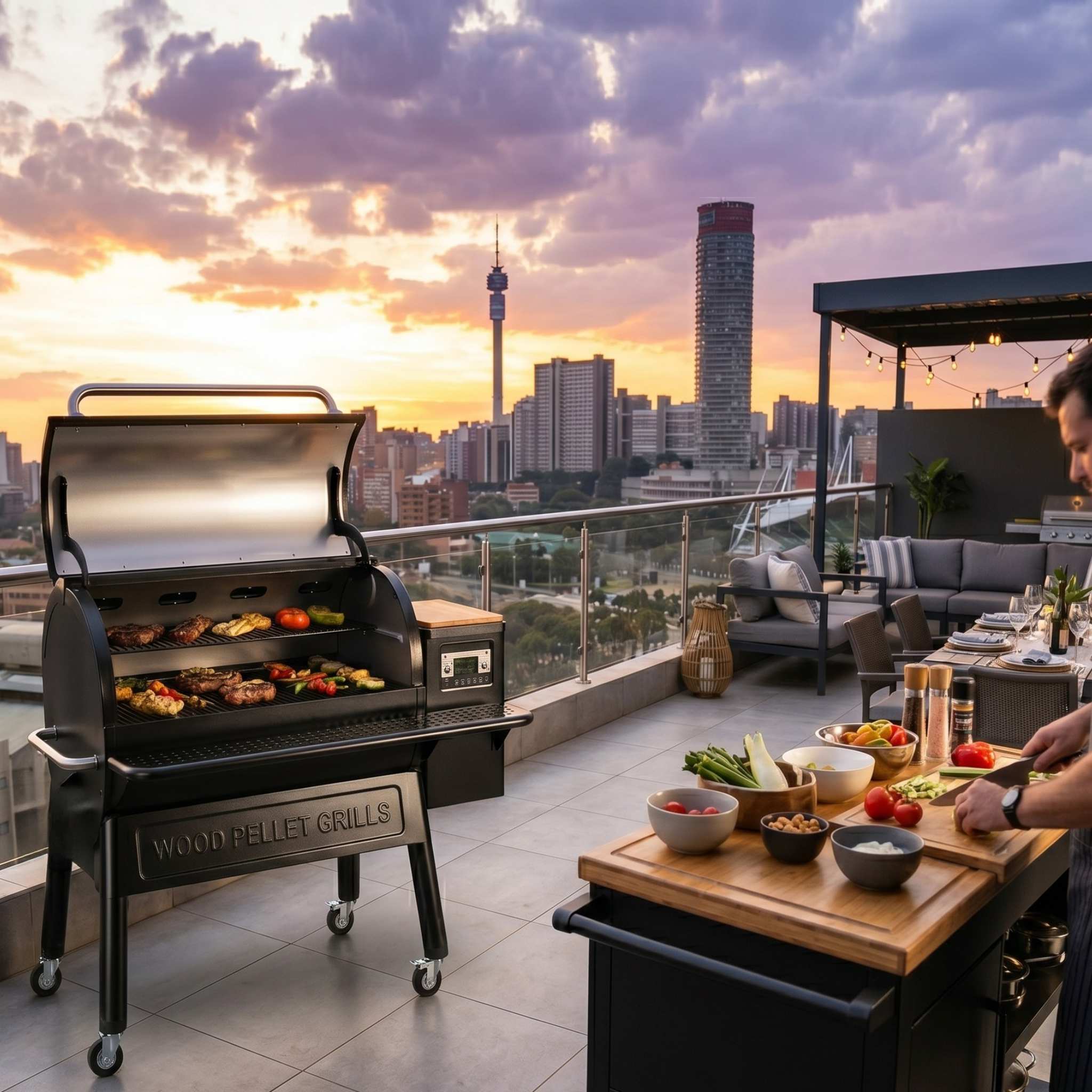
A pellet grill makes barbecue feel almost unfair.
Load the hopper, set the temperature, and let the controller do the heavy lifting while you enjoy a cold drink instead of babysitting a firebox. It’s convenient, consistent, and capable of producing outstanding barbecue.
Yet one question keeps popping up around backyard cookouts:
“Why doesn’t my pellet grill taste as smoky as my buddy’s offset smoker?”
That’s a fair question, and thankfully, the answer isn’t to buy another grill.
Pellet grill optimization is all about getting the absolute best smoke flavor from the equipment you already own. A handful of adjustments – some as simple as changing your pellets or lowering your cooking temperature – can noticeably improve your results.
The good news is that pellet grills aren’t “bad” at producing smoke.
They’re simply engineered differently. Instead of chasing thick clouds that look great on social media, they’re designed to burn fuel efficiently and maintain stable temperatures.
That clean-burning fire creates a lighter smoke profile, which many people actually prefer because it lets the meat shine instead of overwhelming it.
The secret isn’t making more smoke. It’s making better smoke.
After plenty of briskets, ribs, pork shoulders, and a few embarrassing over-smoked experiments that tasted like licking a campfire, certain techniques consistently stand out.
Let’s dive into the practical ways to coax richer, deeper smoke flavor from your pellet grill.
Understanding Why Pellet Grills Produce a Milder Smoke Flavor
Before changing settings or buying accessories, it helps to understand what’s happening inside the grill.
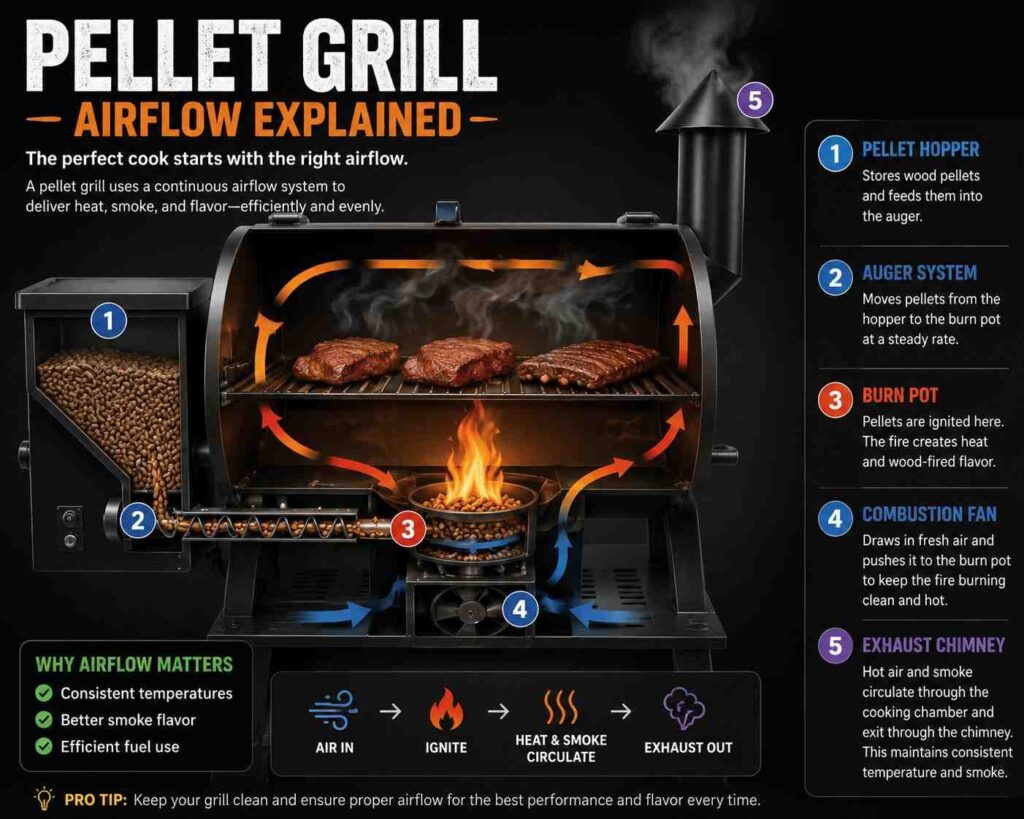
How a Pellet Grill Generates Heat and Smoke
A pellet grill is essentially a carefully managed wood fire.
Several components work together:
- Pellet hopper stores compressed hardwood pellets.
- Auger feeds pellets into the fire pot.
- Fire pot ignites the pellets.
- Combustion fan supplies oxygen.
- Digital controller keeps temperatures remarkably steady.
Everything happens automatically.
Unlike an offset smoker where logs naturally fluctuate between burning and smoldering, a pellet grill constantly adjusts fuel and airflow to maintain your selected temperature.
That precision is exactly why pellet grills are so popular. It’s also why smoke production differs.
Why Efficient Combustion Means Less Smoke
Here’s something that surprises many new pellet grill owners:
Cleaner combustion produces less visible smoke.
Thick white smoke might look impressive drifting across the backyard, but it often carries partially burned compounds that create bitter flavors.
Instead, you want thin blue smoke.
Pitmasters often call it “sweet smoke.”
It can be difficult to see. Sometimes you’ll wonder whether the grill is producing smoke at all.
Trust it. The invisible-looking smoke is usually delivering cleaner, more pleasant flavor than huge white clouds ever could.
Think of it like coffee. A carefully brewed cup tastes balanced. Burn the beans, and nobody wants a second sip.
Is Less Smoke Actually Better?
Heavy smoke isn’t always better.
Too much smoke can produce:
- Bitter bark
- Harsh aftertaste
- Acrid aromas
- Black, sooty surfaces
Balanced smoke lets the meat remain the star of the show.
The goal isn’t to recreate the inside of a chimney. It’s to build layers of flavor that complement great barbecue.
Choose High-Quality Wood Pellets for Better Smoke Flavor
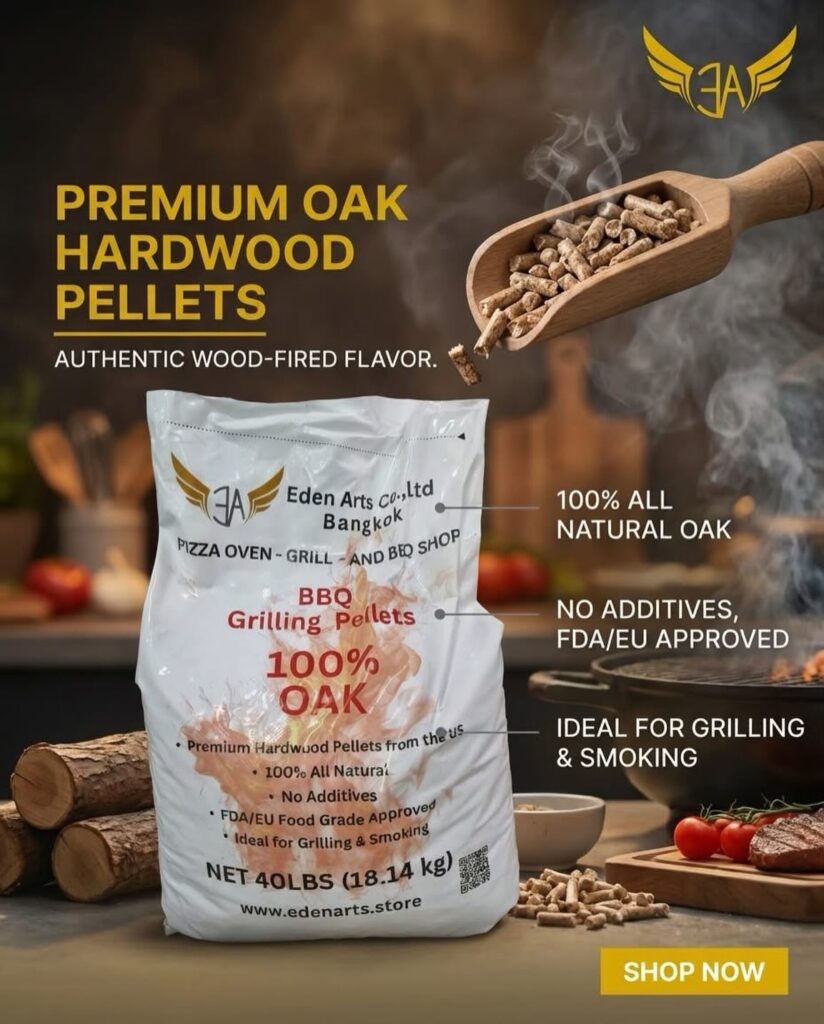
Not all pellets deserve a spot in your hopper.
Some burn hotter.
Some burn cleaner.
Some barely deserve to be called hardwood.
Why Pellet Quality Matters
Premium pellets typically contain:
- 100% hardwood
- Low moisture content
- Consistent density
- Minimal filler materials
Cheap pellets often contain excessive bark, softwoods, fillers, or inconsistent compression. That inconsistency affects both heat and flavor.
Garbage pellets create garbage smoke.
Simple. Store pellets properly too. Moisture is their worst enemy. Pellets that crumble easily or look swollen belong in the trash – not inside your grill.
100% Hardwood vs. Blended Pellets
Blended pellets aren’t automatically bad.
Many reputable manufacturers use oak as a base because it burns consistently while adding smaller amounts of flavor woods like cherry or hickory.
The trade-off is intensity.
100% flavor wood generally produces a stronger smoke profile.
Blended pellets often burn longer and more evenly. Experiment until you discover the combination that suits your palate.
Match Wood Species to Your Food
Different woods pair better with different meats.
| Pellet Type | Smoke Flavor | Best With |
| Hickory | Strong, classic | Pork, ribs |
| Oak | Medium | Beef |
| Mesquite | Bold, earthy | Brisket |
| Apple | Sweet | Chicken, pork |
| Cherry | Mild, fruity | Poultry |
| Pecan | Rich and nutty | Turkey, beef |
One quick tip:
Mesquite is like hot sauce.
A little adds excitement. Too much leaves everyone reaching for water.
Cook at Lower Temperatures for More Smoke Production
One of the easiest forms of pellet grill optimization requires pressing fewer buttons. Lower temperatures usually mean more smoke.
Why Lower Temperatures Produce More Smoke
When cooking around 180°F to 225°F, pellets spend slightly more time smoldering before reaching full combustion.
That creates additional smoke compounds. Raise temperatures to 350°F or higher, and the pellets burn much more efficiently.
More heat. Less smoke.
That’s why burgers cooked at high temperatures rarely develop the same smoky flavor as a slow-smoked brisket.
The Ideal Smoking Temperature Range
For maximum smoke flavor:
- 180°F – strongest smoke
- 200°F – excellent balance
- 225°F – classic barbecue temperature
Many pitmasters begin low for the first two to four hours before increasing temperatures later.
It’s a simple technique that builds deeper flavor without extending cook times dramatically.
Know When to Turn Up the Heat
Eventually, barbecue needs momentum.
Once the meat has absorbed plenty of smoke:
- Raise temperatures to finish cooking.
- Build bark more efficiently.
- Push through the stall.
- Finish faster without sacrificing flavor.
Think of the first few hours as laying the foundation. Everything afterward builds on it.
Keep Your Pellet Grill Clean for Optimal Smoke Performance
Nobody enjoys cleaning grills. Everyone enjoys eating barbecue that tastes better. Coincidence? Definitely not.
Clean the Fire Pot Regularly
Ash accumulates surprisingly quickly. Even a small pile restricts airflow around the fire. Poor airflow means inconsistent combustion.
That affects:
- Smoke production
- Temperature stability
- Pellet efficiency
A quick vacuum after several cooks makes a noticeable difference.
Empty Excess Ash
Ash doesn’t belong everywhere inside the grill.
Remove buildup from:
- Fire pot
- Burn chamber
- Bottom of the grill
It’s a fifteen-minute task that pays dividends every cook.
Remove Grease and Carbon
Grease buildup causes:
- Flare-ups
- Bad odors
- Uneven heating
Meanwhile, thick carbon deposits can eventually flake onto food. Nobody orders “extra crunchy carbon seasoning.”
Keep the drip tray, heat diffuser, and cooking chamber reasonably clean.
Notice the word reasonably.
A spotless smoker looks nice. A seasoned smoker cooks beautifully.
Improve Airflow Without Losing Smoke Flavor
Smoke can’t do its job without proper airflow. Ironically, too much escaping airflow reduces smoke contact with food.
Finding balance is key.
Airflow Keeps the Fire Healthy
Oxygen fuels combustion.
Without enough airflow:
- Pellets smolder poorly.
- Temperatures fluctuate.
- Dirty smoke develops.
Good airflow creates cleaner combustion and more consistent cooking.
Resist Opening the Lid
Opening the lid every fifteen minutes doesn’t make food cook faster.
It simply lets:
- Heat escape
- Smoke escape
- Moisture escape
Meanwhile, your grill works overtime recovering lost temperature.
Trust the process.
Your brisket doesn’t need encouragement every ten minutes.
Check Seals and Gaskets
Smoke leaking from every corner isn’t a badge of honor. It usually means heat is escaping too.
Inspect door seals occasionally. Replacing worn gaskets is inexpensive and helps improve temperature consistency.
Use Accessories to Increase Smoke Production
Accessories aren’t mandatory. They can, however, make a noticeable difference.
Smoke Tubes
A smoke tube is one of the simplest upgrades available.
Fill it with pellets.
Light one end.
Place it inside the cooking chamber.
It produces additional smoke independently of the grill’s fire pot. For larger cuts like brisket or pork shoulder, the difference can be surprisingly noticeable.
Pellet Maze Smokers
Pellet mazes function similarly but burn for much longer.
They’re especially useful for:
- Cold smoking cheese
- Smoking nuts
- Long barbecue sessions
They provide steady supplemental smoke without affecting grill temperatures significantly.
Water Pans
Water pans don’t create smoke. They help smoke stick. Moist surfaces attract smoke particles more effectively than dry surfaces.
Added humidity may also reduce surface drying during long cooks. It’s a simple trick that has survived generations of barbecue for good reason.
Timing Matters: Maximize Smoke Absorption
Smoke flavor depends just as much on timing as it does on quantity.
Cold Meat Absorbs Smoke Better
Starting with refrigerated meat gives smoke more opportunity to adhere before the surface heats up. This doesn’t mean freezing your brisket. Simply moving it directly from refrigerator to smoker often improves smoke absorption.
Don’t Rush the First Few Hours
The early portion of the cook matters most.
That’s when:
- Smoke ring develops
- Bark begins forming
- Smoke compounds bond with the meat
After several hours, adding more smoke has diminishing returns. Patience early pays off later.
Spritz During Long Cooks
Light spritzing every hour or so can help maintain surface moisture.
Popular choices include:
- Apple juice
- Water
- Apple cider vinegar mixtures
Don’t soak the meat. Think gentle mist – not pressure washing your ribs.
Common Pellet Grill Optimization Mistakes to Avoid
Even experienced backyard cooks occasionally sabotage their own barbecue.
Avoid these common mistakes:
1. Using Cheap Pellets
Poor pellets produce inconsistent heat and weak flavor.
Fuel quality matters.
2. Cooking Too Hot Too Soon
High temperatures reduce smoke production.
Build smoke first.
Finish hot later.
3. Ignoring Maintenance
Ash buildup quietly steals cooking performance over time. Routine cleaning keeps everything operating efficiently.
4. Chasing Thick White Smoke
This might be the biggest misconception in barbecue.
Thin blue smoke beats thick white smoke every single time.
Cleaner smoke creates cleaner flavor.
Pellet Grill Optimization Checklist
Before your next cook, run through this quick checklist:
✔ Use premium hardwood pellets
✔ Store pellets somewhere dry
✔ Begin cooking between 180°F and 225°F
✔ Vacuum the fire pot regularly
✔ Empty excess ash
✔ Keep grease buildup under control
✔ Open the lid only when necessary
✔ Match wood species with your protein
✔ Start with refrigerated meat
✔ Consider adding a smoke tube for extra flavor
Small improvements stack together. Each one may seem minor, but collectively they create noticeably better barbecue.
Final Thoughts
Great barbecue isn’t about chasing towering clouds of smoke or constantly tweaking your grill. It’s about understanding how your equipment works and making thoughtful adjustments that improve flavor one cook at a time.
Pellet grill optimization isn’t a single trick – it’s a collection of smart habits that work together.
Choosing quality hardwood pellets, smoking at lower temperatures during the early stages, keeping the fire pot clean, maintaining proper airflow, and using accessories like smoke tubes when needed all contribute to a richer smoke profile.
Add good timing and a bit of patience, and you’ll discover that a pellet grill is capable of producing barbecue with impressive depth and character.
The best part is that every cook teaches you something new.
Try different wood species, experiment with temperature ranges, and fine-tune your routine until you find the flavor that makes family and friends reach for another helping.
When someone asks what your secret is, you can smile, point to the grill, and say, “It’s not magic – it’s just a little pellet grill optimization.”
Frequently Asked Questions
Why doesn’t my pellet grill produce much smoke?
Pellet grills are designed for efficient combustion, which naturally creates less visible smoke than traditional stick burners.
The smoke they produce is usually cleaner and more balanced. Lower cooking temperatures and premium hardwood pellets can increase smoke flavor without sacrificing performance.
What pellets produce the strongest smoke flavor?
Hickory and mesquite are among the boldest options. Hickory delivers a classic barbecue taste, while mesquite provides an intense, earthy flavor best suited for beef.
For a more balanced profile, oak, pecan, cherry, and apple are excellent choices depending on the type of meat you’re cooking.
Does a smoke tube really work?
Yes. A quality smoke tube burns additional pellets independently of the grill’s fire pot, increasing smoke exposure without significantly changing cooking temperatures.
It’s one of the easiest and most affordable upgrades for anyone seeking a stronger smoke profile.
Is it safe to cook at 180°F for several hours?
Yes, during the initial smoking phase. Many pitmasters begin low to maximize smoke production before increasing the temperature later in the cook.
Always ensure the meat eventually reaches a safe internal temperature appropriate for the protein being prepared.
How often should I clean my pellet grill?
Remove ash from the fire pot every few cooks, clean grease from the drip tray regularly, and perform a deeper cleaning every few months or after several long smoking sessions.
Consistent maintenance is one of the simplest forms of pellet grill optimization.
Can I mix different wood pellets?
Absolutely.
Mixing pellets lets you create custom flavor profiles. A blend of oak and cherry, or hickory with apple, can deliver a balanced combination of smoke intensity and subtle sweetness.
Keep notes on your favorite blends so you can recreate successful cooks.
Featured image credit: @casacalore_sa
