
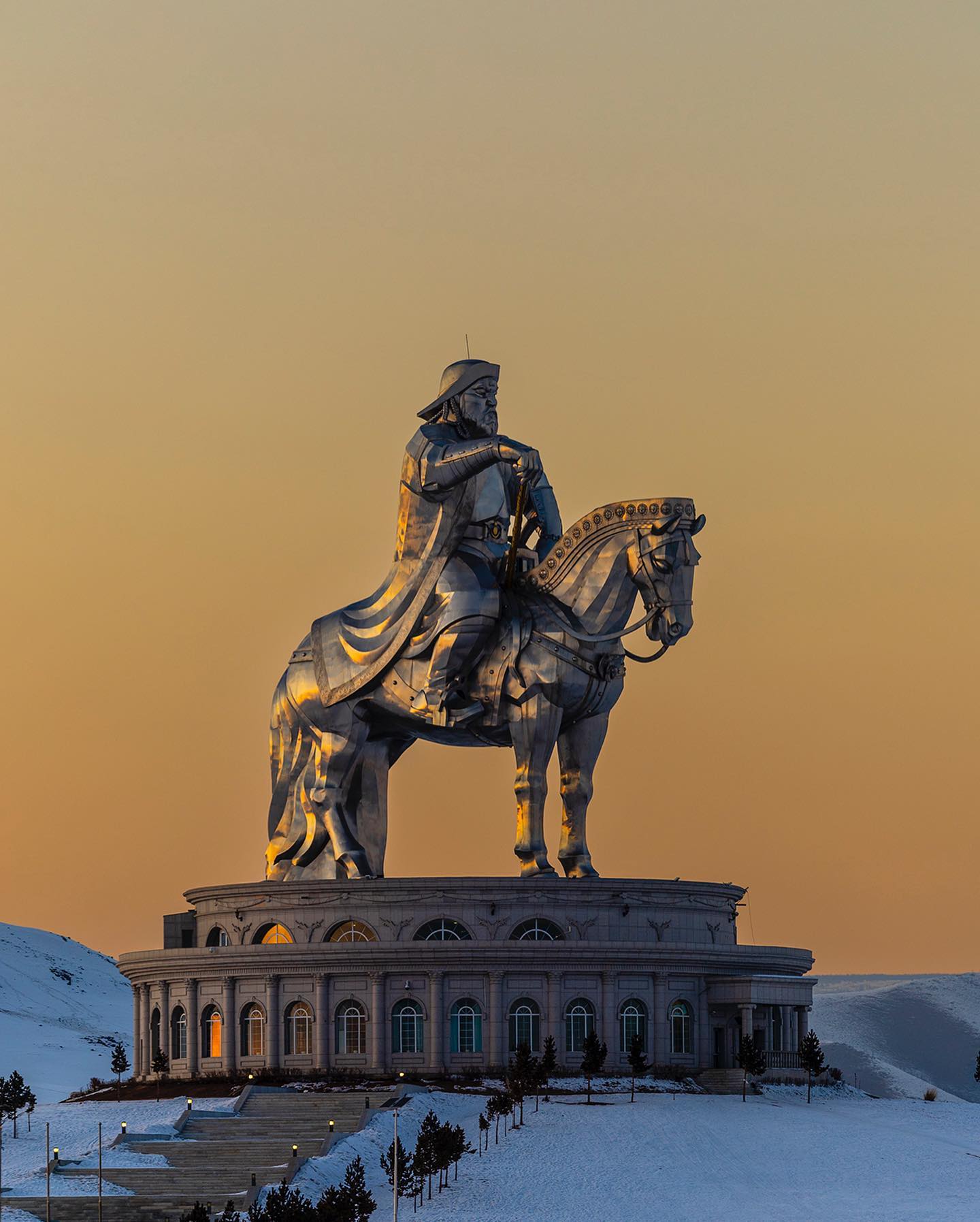
Anthony Bourdain once remarked, “Travel changes you. As you move through this life and this world you change things slightly, you leave marks behind, however small. And in return, life – and travel – leaves marks on you.”
Leave it to a late-night smoke-and-fire legend to summarize military history better than most tenure-track professors. When 13th-century warriors rode across the Eurasian steppe, they didn’t just conquer territories; they left scorch marks across entire continents.
Most military history buffs love blabbering about composite bows, lightning-fast cavalry maneuvers, and psychological warfare. But let’s cut through the smoke: bowstrings snap when your archers are starving, and horses don’t run on good vibes.
An army marches on its stomach, but the Mongol Horde sprinted on cured beef, open pit smoke, and sheer carnivorous ingenuity.
When we examine how a collection of scattered tribes swept from the shores of the Pacific all the way to the gates of Vienna, the real story isn’t just about tactical bloodshed. It’s about ultra-portable nutrition, high-calorie meal preservation, and masterclass live-fire butchery.
The true secret weapon of Genghis Khan wasn’t made of steel or iron – it was forged in smoke, salted over campfire embers, and carried directly beneath the saddle.
What Was “Mongol BBQ”? Fact vs. Modern Culinary Myth
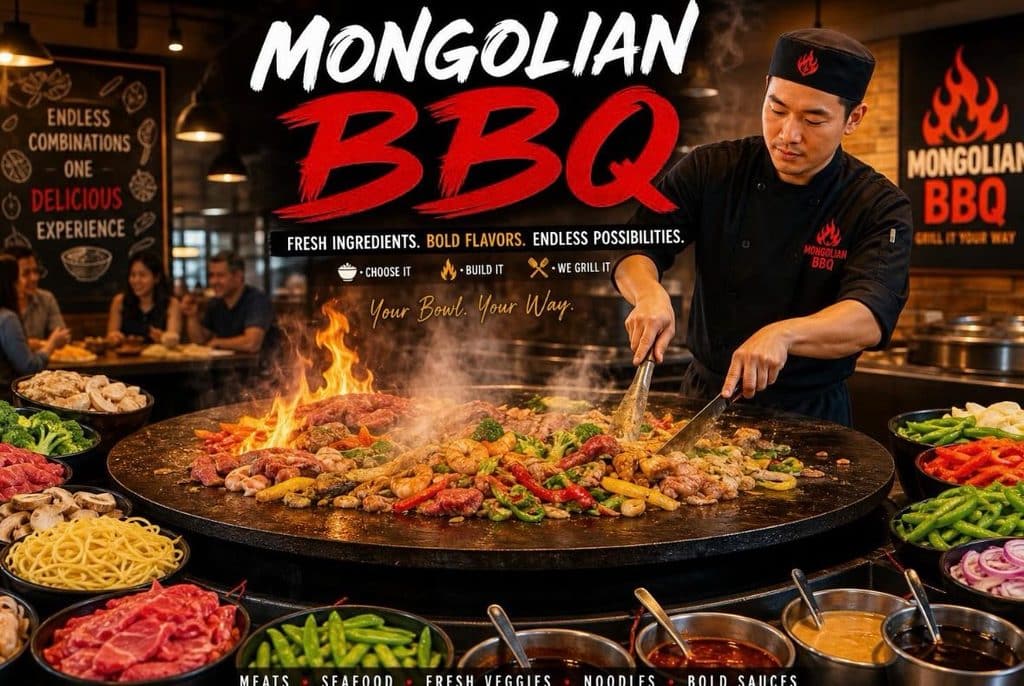
Ask any suburban diner what “Mongolian BBQ” is, and they’ll describe a bright, interactive buffet line. You stack a wooden bowl with sliced frozen pork, baby corn, water chestnuts, and sesame oil, then hand it over to an energetic chef who swirls it around a giant, circular iron griddle with oversized chopsticks.
It’s fun, it’s tasty, and it is 100% fake news.
Modern “Mongolian Barbecue” was actually invented in Taipei, Taiwan, back in the 1950s by a legendary restaurateur named Wu Zhaonan. It has as much to do with Genghis Khan’s actual field rations as a microwave hot dog has to do with central European heritage.
Real 13th-century steppe cooking was a rugged, zero-waste survival operation born out of harsh winds, frozen tundras, and endless migration.
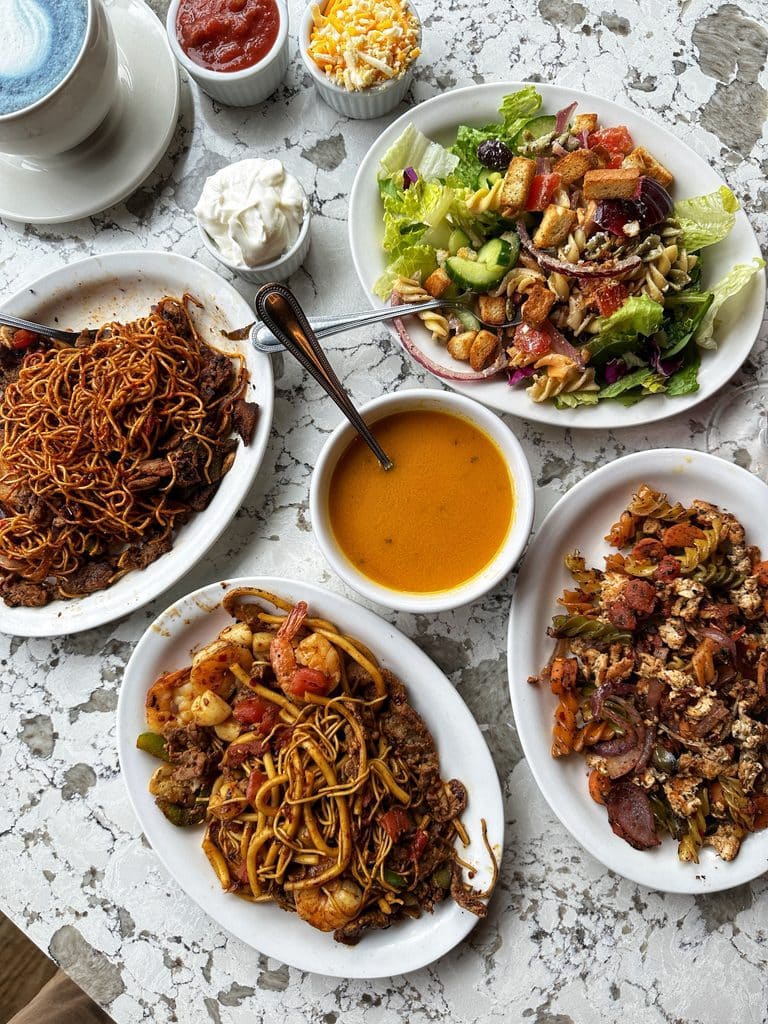
The Real Steppe Cooking vs. Modern Buffets
| Feature | Modern Buffet Style | 13th-Century Steppe Reality |
| Origins | Invented in 1950s Taiwan | Forged in the Eurasian Steppe |
| Ingredients | Fresh veggies & sweet sauces | Salt, fat, smoke, and blood |
| Cookware | Flat cast-iron griddle plates | Inverted shields, hot-stone bags |
| Setting | Cooked indoors for entertainment | Quick pit fires under sky and wind |
True Mongol barbecue fell into two main tactical categories:
- Khorkhog (The Hot Stone Roast): A tradition where horse or mutton meat was packed inside a sealed animal stomach or leather pouch alongside red-hot river rocks. The stones seared the meat from the inside out, creating a pressurized, steaming smoke chamber right in the middle of camp.
- Boodog (Inside-Out Pit Roasting): Whole goats or marmots were carefully boned out from the inside, stuffed with heated stones, and roasted over open flames. The skin served as its own pressure cooker, locking in every drop of fat, salt, and moisture.
Then there is the infamous “Saddle Meat” legend.
14th-century European travelers like Marco Polo reported with horror that Mongol riders placed raw slabs of horse meat under their saddles, riding on them all day before eating them raw. European observers assumed this was a barbaric tenderizing ritual.
In reality, the riders were using raw meat as a natural poultice to protect their horses’ galled backs from friction sores.
The sweat and pressure salted and tenderized the meat, sure – and while emergency rations sometimes demanded tough choices, it was more about equine care than fine dining.
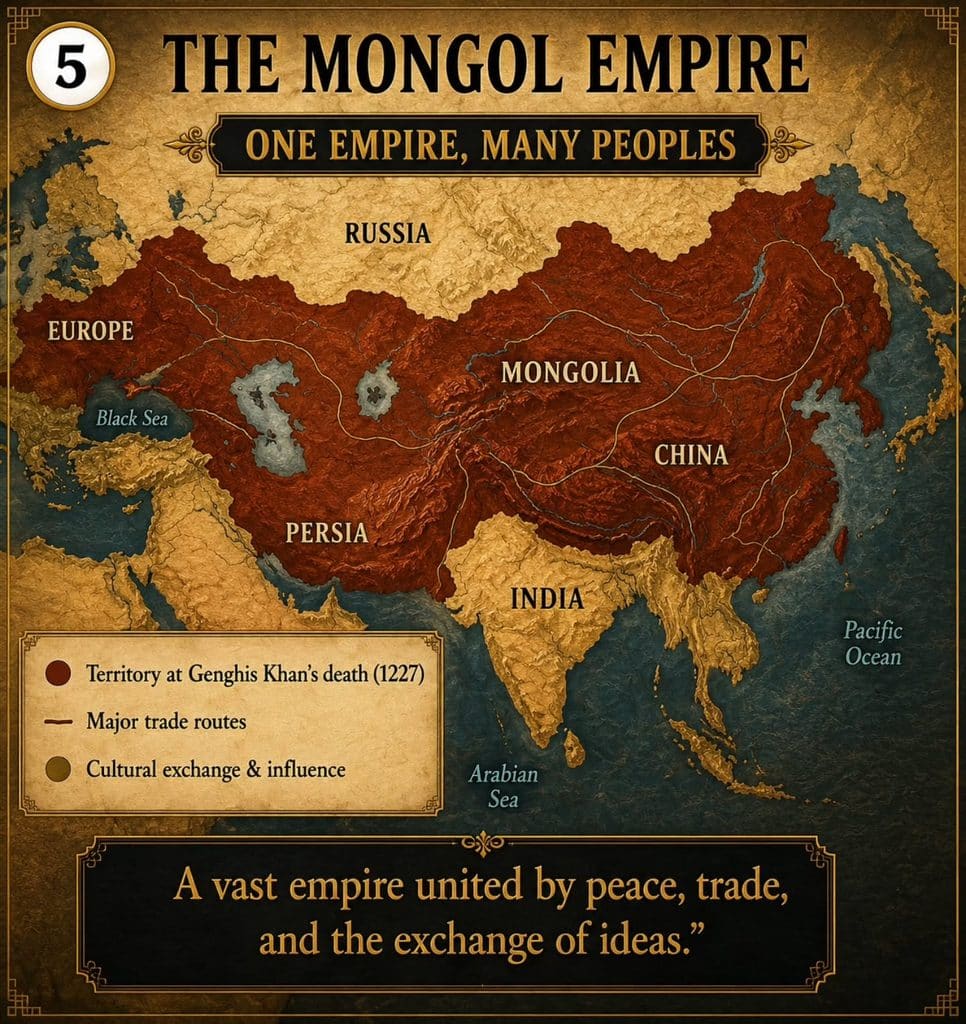
The Logistics of Empire: How Food Preservation Won Campaigns
Running a smokehouse requires understanding water activity, muscle fibers, and air movement.
Strip the moisture out of a brisket or shoulder, and you turn perishable muscle into shelf-stable protein gold. Genghis Khan understood this principle better than any commander in human history.
The absolute pinnacle of Mongol food engineering was a magic powder called Borts.
The Anatomy of Borts: The Original Beef Jerky
To survive brutal winters and months-long military thrusts without supply trains, the Mongols developed an extreme air-drying process:
- Winter Harvest: Cattle, camels, or sheep were butchered at the onset of winter when animals were fattest.
- Precision Slicing: Meat was stripped from the bone and cut into paper-thin, long ribbons.
- Freeze-Drying in the Wind: These strips were hung inside open wooden sheds or tent frames. The sub-zero steppe winds froze the moisture while dry air sublimated the ice, evaporating water without cooking the meat.
- Pulverization: Once bone-dry, the beef was pounded down until the muscle fibers broke apart into a fine, light-brown wool-like powder.
The result was mind-blowing density. An entire cow could be dehydrated, pulverized, and packed tightly into a single horse-bladder bag small enough to fit inside a rider’s saddle pouch.
When a soldier got hungry on the march, he didn’t stop to build a mess hall.
He scooped a handful of Borts powder into a leather canteen of boiling water (or even cold water stirred on horseback), and within minutes, the dry powder rehydrated into a rich, greasy, high-calorie broth.
Add in Airag – fermented mare’s milk that provided probiotic hydration, vitamins, and a mild alcoholic buzz – and you had a fighting force that never needed a single supply truck.
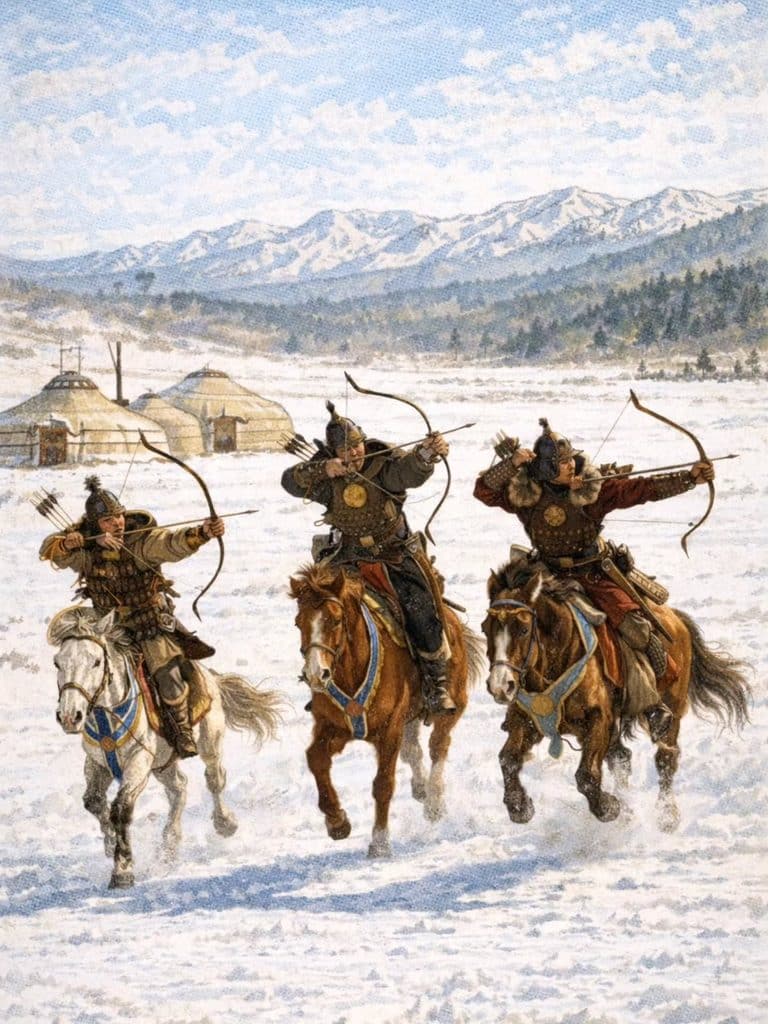
Comparative Advantage: Mongol Rations vs. Sedentary Armies
When military strategists compare historical armies, they usually pit sword against sword. But the real mismatch happened in the quartermaster’s tent.
Sedentary civilizations of Europe, China, and the Middle East relied on traditional supply lines. Their armies moved alongside thousands of slow-moving wooden grain wagons, herds of living cattle, heavy iron cauldrons, camp followers, and mobile bakeries.
Medieval European Supply Train
- Structure: Heavy grain carts, slow cattle herds, camp followers, marching knights.
- Speed: 10–15 miles per day maximum.
- Vulnerability: Extremely high (sever the supply lines, and the army starves).
The Mongol Lightning Horde
- Structure: Rider with 4 spare horses, saddlebags packed with Borts, Airag, and leather canteens.
- Speed: 60–80 miles per day.
- Vulnerability: Near zero (the entire supply train is self-contained on the saddle).
The differences in operational mobility were staggering:
- Movement Speeds: A European knight or Chinese infantry division moved at a sluggish 10 to 15 miles per day. A Mongol tumen (a unit of 10,000 riders) easily covered 60 to 80 miles per day over rough terrain.
- Stealth and Surprise: Traditional supply trains kicked up massive dust clouds visible from miles away, announcing an invasion weeks before arrival. The Mongols appeared overnight like ghosts out of the steppe horizon.
- Siege Capability: When besieging fortified cities, European armies often starved first because local pastures quickly ran dry of cattle feed. Mongol horsemen lived off dry Borts and steppe grass, outlasting city garrisons without sweating a single supply check.
By turning food into a lightweight, high-calorie fuel pack, Genghis Khan removed the single biggest handbrake in medieval warfare.
The Horse Blood Hack: Emergency Survival Nutrition
When Mongol riders pushed past the limits of human endurance, they utilized a survival trick that horrified European chroniclers: bleeding their horses on the march.
- The Technique: Riders made a precise, non-lethal incision in a spare mount’s neck vein, inserted a small bone straw to drink about half a pint of raw blood, and sealed the wound with pine pitch or fat.
- Nutritional Impact: Delivered an instant hit of iron, protein, and vital electrolytes without slaughtering the horse or interrupting the march.
- Rotation System: Because each warrior maintained a remount herd of four to six horses, they could rotate through animals safely without causing permanent harm.
This extreme field habit kept scouts alive for days across waterless deserts where traditional armies withered and died.
Fat as Armor: High-Calorie Diets in Sub-Zero Warfare
Modern pitmasters know that fat equals flavor, but on the frozen Eurasian steppe, fat meant survival. Unlike European infantry who struggled on grain-heavy rations, Mongol warriors consumed a massive 4,000 to 5,000 calories daily, heavily dominated by animal fats and suet.
- Internal Furnace: High-fat diets generated intense body heat to keep soldiers functional during brutal winter campaigns.
- Targeted Cuts: Riders prioritized fat-rich sources like mutton tail fat and kidney tallow, storing rendered fat inside dried bladders.
- Winter Advantage: Dense calorie fuel kept horsemen active in sub-zero blizzards while enemy soldiers froze in their armor.
By treating fat as an essential energy system rather than scrap trim, Genghis Khan turned harsh winter conditions into a decisive tactical advantage.
Weaponized Foraging: The Nerge Hunt as Military Drill
Long before a Mongol army marched into battle, they honed their battlefield coordination through the Nerge – a massive, month-long hunting circle.
- The Operation: Thousands of horsemen formed an expanding ring spanning hundreds of miles, slowly tightening the circle around wild game like deer, boar, and gazelles.
- Tactical Practice: Riders drilled complex signaling, flank maneuvers, and encirclement tactics under realistic, high-stakes conditions.
- Meat Harvest: The trapped game provided hundreds of tons of fresh meat that was butchered, salted, and smoked on the spot over mobile pit fires.
Through the Nerge, the Mongols seamlessly merged large-scale troop training with strategic meat harvesting, ensuring their military drills directly fed the empire’s food reserves.
Salt, Snow, and Smoke: Steppe Preservation Chemistry
Dry-curing a brisket requires precise environmental control, but steppe warriors mastered natural preservation chemistry using pure elemental forces.
- Mineral Curing: Lacking cheap access to mined salt, they harvested alkali salt flats and bitter steppe brine pools to treat meat strips.
- Sublimation & Freezing: Sub-zero winter temperatures froze muscle fibers and drew out moisture before spoilage bacteria could take root.
- Smoke Defense: During damp spring thaws, meat was exposed to green wood and dung smoke, sealing the exterior with antimicrobial phenols and acetic acids.
This three-layered defense – salting, freeze-drying, and smoking – created an impenetrable barrier against spoilage, yielding shelf-stable rations that lasted through multi-year campaigns.
Fermentation Warfare: Kumis and Microbial Endurance
Meat provided muscle, but fermented mare’s milk (Kumis or Airag) supplied vital gut health and mental stamina on long campaigns.
- Saddle Churning: Higher sugar levels in mare’s milk allowed nomadic fermenters to churn the dairy inside leather bags strapped directly to galloping saddles.
- Nutritional Punch: Motion and wild yeasts transformed the milk into a bubbly, mildly alcoholic, probiotic drink rich in Vitamin C and essential amino acids.
- Pathogen-Free Hydration: In an era where contaminated water regularly wiped out entire camps with dysentery, Mongol riders drank clean, fermented dairy.
This microbial edge meant Mongol soldiers rarely suffered from waterborne illnesses, keeping their combat readiness sky-high while enemy cities were crippled by disease behind their own defensive walls.
Fire, Meat, and Strategy: Open-Pit Cooking on the Move
When you’re running covert reconnaissance 100 miles deep in enemy territory, you can’t just spark up a massive oak-fire pit and let hickory smoke billow into the sky like a signal flare. Smoke gets you spotted, and getting spotted gets you killed.
The Mongols turned campfire management into an art form.
- Low-Smoke Fuel Sources: On the wide-open steppe, dry wood was scarce. Mongol scout parties relied heavily on dried animal dung (Argal). When burned, dry dung produces an intense, steady, almost smokeless heat source. It kept scout campfires virtually invisible from a distance while generating enough direct heat to sear fresh game or boil soup instantly.
- Shield and Armor Grilling: In high-speed operations, carrying heavy iron cookware was an unnecessary burden. Soldiers inverted their steel shields over open coals, using the hot metal surface as an impromptu plancha to sear thin strips of fatty mutton. They also used river stones heated directly in the embers to cook meat internally inside leather pouches.
- Communal Morale Building (The Shool): Food on the steppe wasn’t just physical fuel; it was tactical glue. After a successful raid or hunting drive (Nerge), the army gathered for a Shool – a massive communal feast of boiled and roasted meats. Dividing game equitably among commanders and common soldiers built fierce tribal loyalty. In an era where feudal lords ate roasted swans while infantry choked on moldy rye bread, Mongol soldiers ate the exact same high-fat meat dishes as Genghis Khan himself.
Legacy & Evolution: From Steppe Rations to Global BBQ Culture
The food technology forged on the Eurasian steppe didn’t vanish when the empire fractured. Instead, it moved along trade routes, shaping culinary cultures across Asia and Europe:
- Chinese Hot Pot (Huoguo): As Northern nomadic tribes integrated with Chinese dynasties, quick-cooking paper-thin meats in boiling tableside broth became a national staple.
- Japanese Jingisukan (Genghis Khan Dish): In Hokkaido, Japan, a popular dish named directly after the Khan features thin strips of mutton cooked over a raised, metal, helmet-shaped grill—a direct homage to soldiers grilling on armor.
- Turkish Doner & Middle Eastern Shawarma: The concept of stacking marinated, fatty meat onto spits over open fires migrated westward with Turkic-Mongol migrations, laying the groundwork for modern vertical-spit roasting.
- Jerky and Charcuterie: The technique of wind-curing salted beef strips migrated across continents, directly influencing South American Charqui and modern North American beef jerky.
Meat as a Weapon of War
History books love attributing grand empire-building to political brilliance, charismatic leadership, or superior weaponry. All those factors matter, but none of them function without calories.
The true secret weapon of Genghis Khan wasn’t a terrifying new catapult or an unbreakable battle line. It was an uncompromisingly efficient, high-protein food culture that treated meat preservation as serious military engineering.
By transforming whole herds of cattle into lightweight, long-lasting, flavor-packed rations like Borts, and mastering live-fire field cooking, the Mongol Horde turned the simple act of barbecue into an engine of world conquest.
The next time you bite into a piece of smoky beef jerky or sit down in front of a sizzling grill, remember: you aren’t just eating dinner. You’re participating in the very same fire-and-smoke technology that once conquered the known world.
Frequently Asked Questions
Did Genghis Khan actually invent modern Mongolian barbecue?
No. Modern Mongolian barbecue was created in the 1950s in Taipei, Taiwan, by chef Wu Zhaonan. Authentic Mongol cooking revolved around boiled mutton, wind-dried beef (Borts), and hot-stone roasts like Khorkhog.
What was Borts, and how was it made?
Borts is traditional Mongolian air-dried meat. Long strips of beef, mutton, or camel were hung in freezing winter winds to sublimatively remove all moisture.
The dried strips were then ground into a fine powder that could be stored for years and easily rehydrated into nutrient-rich broth.
How did Mongol army rations differ from European knights?
European armies relied on slow, heavy supply trains filled with grain carts and live cattle herds, restricting them to 10–15 miles a day.
Mongol horsemen carried light, dehydrated protein (Borts) directly in their saddlebags, allowing them to travel up to 80 miles a day without stopping for supply lines.
Featured image credit: @ganulzii_photographer
