
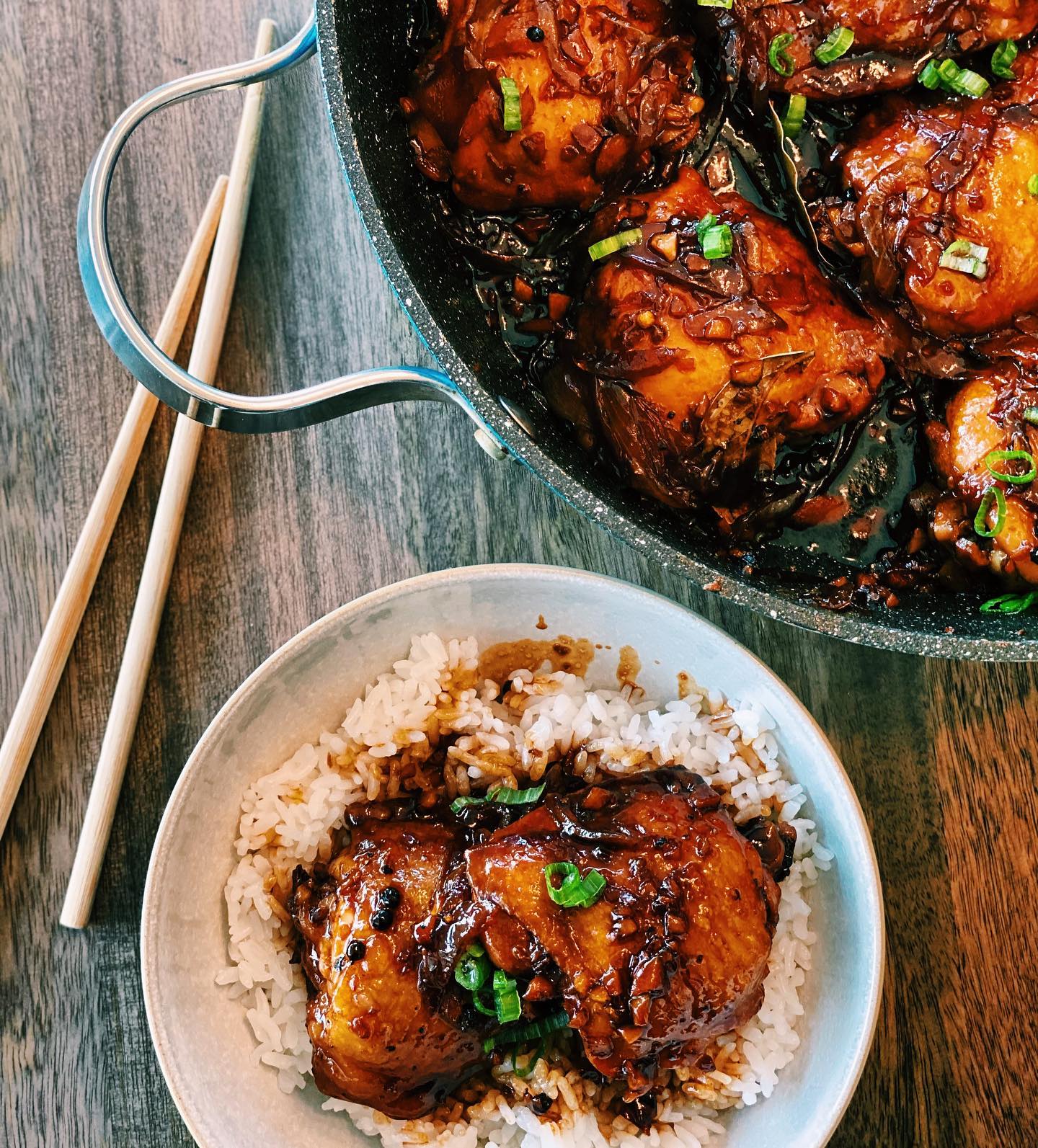
What if I told you that the ultimate comfort food requires zero fancy French techniques, zero precision knife skills, and practically begs you to ignore standard culinary dogma?
Anthony Bourdain famously declared the Philippines to be the home of some of the most underrated food on the planet, and at the absolute center of that culinary universe sits a pan of simmering garlic, vinegar, and soy sauce.
If mythology has taught us anything, it is that the gods of ancient Greece spent far too much time sipping nectar and ambrosia when they should have been eating adobo chicken.
This iconic Filipino staple – a savory, tangy braise of tender chicken bathed in garlic, vinegar, soy sauce, and black pepper – is so absurdly delicious that it can stop family feuds in their tracks and turn kitchen novices into absolute legend status overnight.
What Is Filipino Adobo Chicken?
To understand adobo chicken, you first have to unlearn what the Western world taught you about the word adobo.
In Mexican or Latin American cooking, adobo usually refers to a vibrant, chili-laden rub or sauce. In the Philippines, adobo is not just a sauce; it is a foundational technique of native preservation.
Long before modern refrigeration arrived in the tropical heat of the Southeast Asian archipelago, indigenous Filipinos used acid – specifically local palm and cane vinegar – along with salt to preserve meat.
When Spanish colonizers arrived in the late 16th century, they saw this stewing method and slapped their own word (adobar, meaning “to marinate”) onto the existing native process.
The secret behind adobo chicken lies in three distinct flavor pillars:
- Acidic balance: The vinegar breaks down tough muscle fibers and provides a bright, mouth-watering sourness.
- Umami depth: Dark soy sauce supplies a rich, salty backbone.
- Punchy aromatics: Crushed garlic, whole black peppercorns, and dried bay leaves release earthy oils during a low-and-slow simmer.
Unlike heavy, cream-based European stews or ultra-sweet Western glazes, adobo chicken hits a perfectly calibrated balance of sour, salty, and savory that keeps your palate craving the next bite.
The Regional Variations: From Coconut Milk to Turmeric
While the classic soy-vinegar braise reigns supreme, regional adaptations across the Philippine archipelago offer stunning twists on the national staple:
- Adobo sa Gata (Southern Luzon): Introduces rich coconut milk and fiery bird’s eye chilies to create a velvety, spicy sauce that tames the sour vinegar edge.
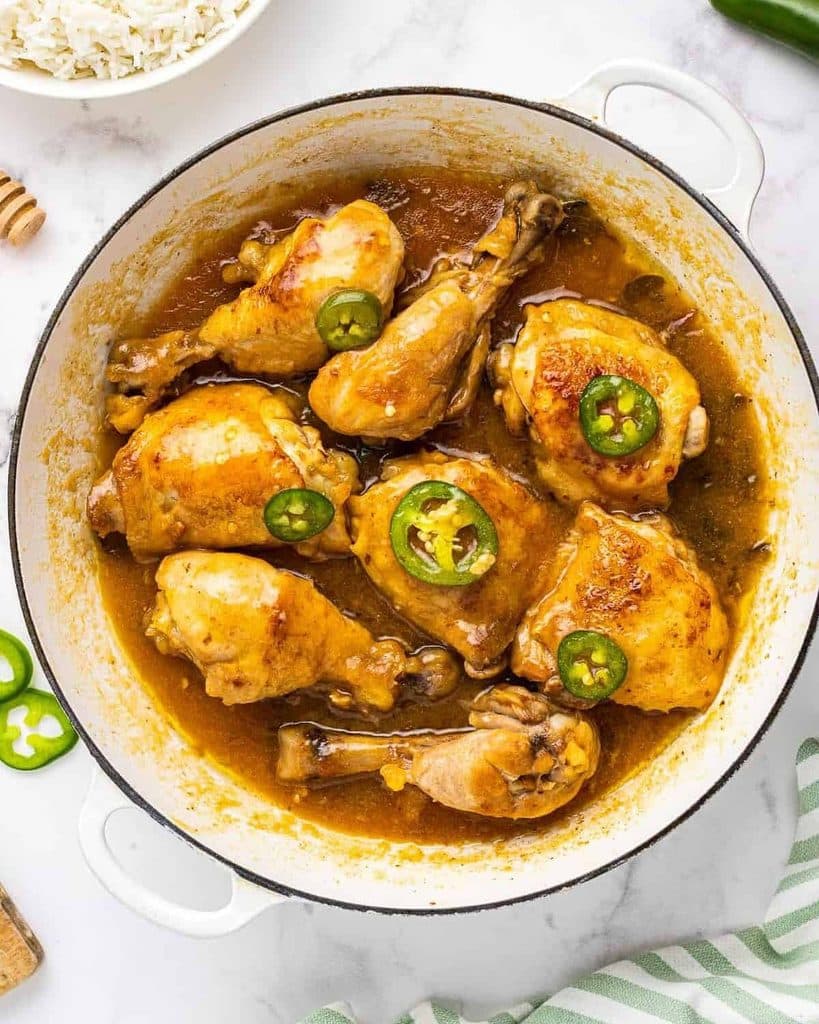
- Adobo sa Dilaw (Mindanao): Skips soy sauce entirely in favor of fresh turmeric, giving the chicken a brilliant golden hue and a warm, earthy profile.
Exploring these geographical variations proves that adobo is not a rigid recipe, but an evolving canvas of local Filipino terroir.
The Science of the Vinegar-Fat Emulsion
Understanding the chemical reactions inside the pan reveals why this simple stew achieves such a luscious texture:
- Fat & Gelatin Extraction: As the chicken simmers, collagen and fat render out directly into the braising liquid.
- Spontaneous Emulsification: During the final uncovered reduction, sharp acetic acid from the vinegar reacts with the rendered fat and gelatin to form a glossy, rich coat.
This biochemical transformation ensures the sauce clings effortlessly to the meat rather than pooling at the bottom of your plate, transforming a thin broth into a restaurant-quality dark glaze.
Leftover Alchemy: Turning Adobo into Flaky Floss and Fried Rice
If you think day-one adobo is unbeatable, wait until you experience the magic of day-two leftovers:
- Crispy Adobo Floss: Shred cooked adobo chicken and fry it in a dry skillet until dehydrated and crunchy for an addictive, savory meal topper.
- Adobo Fried Rice (Sinangag): Toss cold, day-old jasmine rice directly into the solidified garlic-infused fat at the bottom of yesterday’s pot to absorb every drop of concentrated flavor.
These simple leftover hacks demonstrate why this iconic dish remains the gift that keeps on giving in Filipino home kitchens.
Cast Iron vs. Stainless Steel: The Cooking Vessel Debate
Your choice of cookware drastically shapes the final flavor, texture, and crust of your braise:
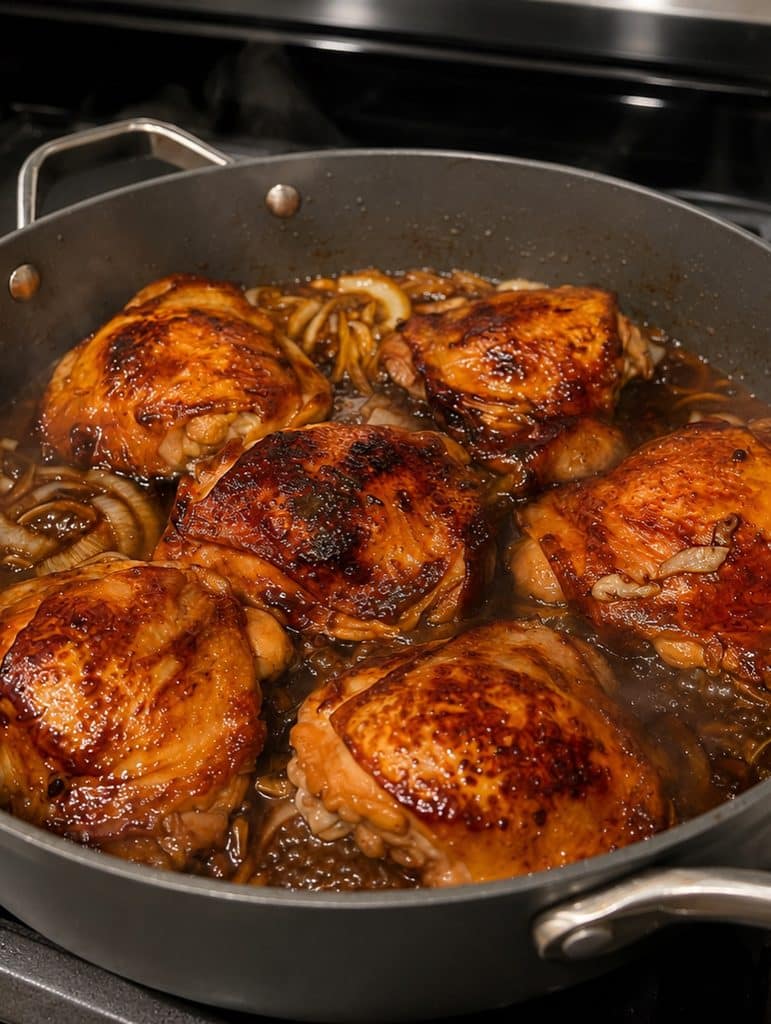
- Enameled Cast-Iron Dutch Oven: Delivers exceptional heat retention for an even, gentle simmer and deep caramelization of the chicken skin.
- Stainless Steel or Carbon Steel Skillet: Builds a thick layer of deeply browned bits (fond) that dissolves into the vinegar and soy sauce for an unbeatable smoky depth.
- Unlined Raw Aluminum (Avoid): The high acidity of the vinegar reacts negatively with bare aluminum, leaching an off-putting metallic taste into your sauce.
Why Adobo Is the Ultimate Road-Trip and Camping Food
Long before vacuum-sealed bags and electric coolers existed, adobo served as the original portable survival meal for travelers and fishermen thanks to two key preservative factors:
- High Acetic Acid (Vinegar): Functions as a powerful natural antimicrobial agent that halts bacterial growth.
- High Salinity (Soy Sauce): Draws out moisture and prevents food spoilage at ambient temperatures.
This durable chemical profile allows adobo to safely last on long trips – and because it improves in flavor as it sits, it remains the ultimate stress-free dish for outdoor adventures.
Pro-Tips for Legendary Adobo
- Resist the urge to stir immediately: When you first add vinegar to a hot skillet, let it come to a boil before stirring. Rushing it can leave a harsh raw taste in the finished sauce.
- Embrace Day Two: Adobo is one of the rare dishes that tastes significantly better the next day. As it rests in the fridge, the chicken continues to absorb the vinegary reduction, mellowing out the acidity and deepening the garlic-soy notes.
- Crispy edges for the win: If you love texture, place the cooked chicken under a high broiler for 3 minutes right before serving to crisp up the skin, then spoon the reduced sauce over the top.
Perfect Pairings & Serving Suggestions
Serving adobo chicken without white rice ought to be a punishable offense. Freshly steamed jasmine rice acts like a sponge, catching every drop of garlic-soy gravy and balancing the acidity of the dish.
To turn this into a full feast, pair your adobo chicken with:
- Pickled green papaya (Atchara): Adds a crunchy, sweet-and-sour contrast.
- Sliced fresh tomatoes: Simple, raw acidity that cleanses the palate between rich bites.
- Cold lager or Calamansi iced tea: Slices clean through the savory fat and garlic.
Summary & Final Thoughts
Few dishes match the sheer efficiency, comfort, and bold punch of traditional adobo chicken. It proves that you do not need an endless grocery list or hours of tedious prep work to create something truly extraordinary.
With just a few basic pantry staples and a single skillet, you can whip up a meal that carries centuries of heritage and flavor bold enough for royalty – or the gods themselves.
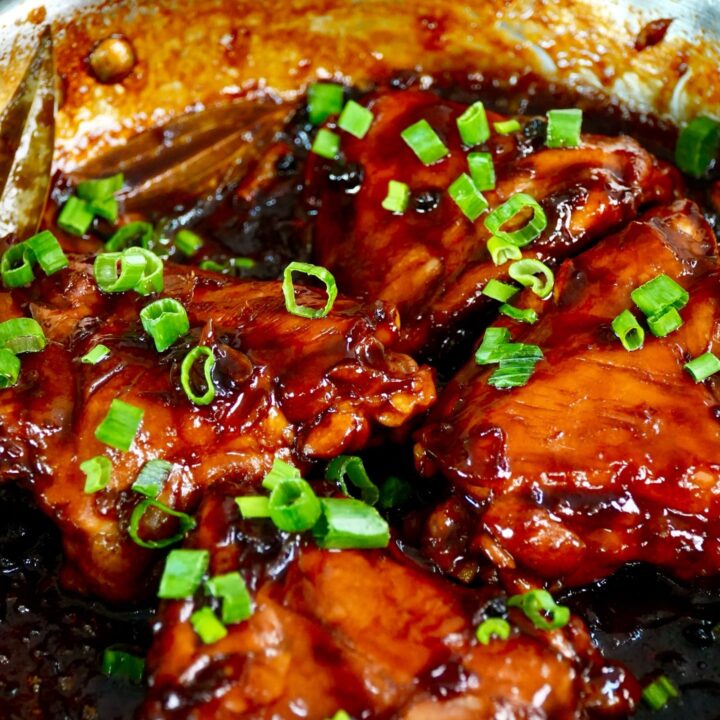
The Ultimate Filipino Adobo Chicken Recipe
Image credit: @imkarthi_89
Ingredients
- 3 lbs bone-in, skin-on chicken thighs and drumsticks
- 1 head garlic, peeled and lightly crushed
- ½ cup Filipino cane vinegar (or white distilled vinegar)
- ½ cup Filipino dark soy sauce
- 1 cup water
- 1 tbsp whole black peppercorns
- 4 dried bay leaves
- 1 tbsp cooking oil
- 1 tsp brown sugar (optional, for balance)
Instructions
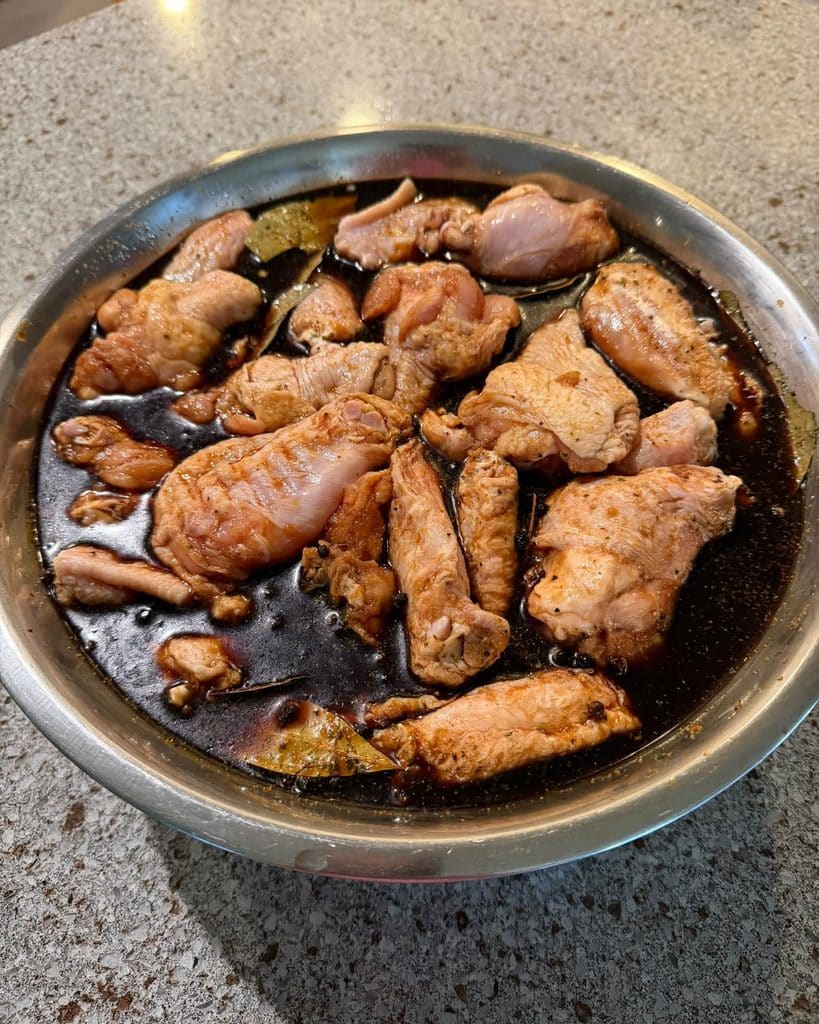
- Marinate the chicken: In a large bowl, combine the chicken, soy sauce, crushed garlic, whole black peppercorns, and bay leaves. Cover and marinate in the refrigerator for at least 30 minutes (preferably 2 hours or overnight).
- Sear the meat: Remove the chicken from the marinade, reserving the liquid and garlic. Heat oil in a large skillet or Dutch oven over medium-high heat. Add the chicken pieces skin-side down and sear for 4 to 5 minutes until golden brown. Flip and sear for another 2 minutes.
- Add liquid & boil: Pour in the reserved marinade, garlic, vinegar, water, and brown sugar (if using). Bring to a rolling boil over high heat, uncovered, for 5 minutes without stirring to allow the raw vinegar edge to dissipate.
- Simmer until tender: Reduce the heat to low, cover the pan with a lid, and let it simmer gently for 20 to 25 minutes, or until the chicken reaches an internal temperature of 165°F (74°C).
- Reduce sauce & glaze: Transfer the chicken pieces to a platter. Increase the heat under the skillet to medium-high and simmer the sauce uncovered for 8 to 10 minutes, stirring occasionally, until it thickens into a dark, glossy glaze.
- Serve: Return the chicken to the skillet, tossing it gently in the rich glaze. Serve hot over a generous bed of warm steamed jasmine rice.
Featured image credit: @tiffy.cooks
