
Remember that time you tried flipping a juicy burger in a cast iron skillet, only to realize your spatula was too flimsy, the handle was hotter than a summer sidewalk, and your kitchen towel was nowhere to be found?
Nothing takes the fun out of backyard cooking faster than wrestling with a hot, heavy skillet while dinner threatens to burn. We’ve all had those moments when a little preparation could have saved the day.
Here’s the thing: a cast iron skillet is one of the most versatile pieces of cookware you can own. It sears steaks beautifully, crisps up bacon, roasts vegetables, and even turns out incredible skillet cornbread.
But having a great skillet is only part of the equation. The right tools can make outdoor cooking safer, easier, and a whole lot more enjoyable.
Whether you’re a weekend griller, a seasoned backyard pitmaster, or someone who simply loves cooking over an open flame, these 12 cast iron skillet accessories deserve a spot in your toolkit.
From clever cleaning gadgets to heavy-duty grilling essentials, each one has a job to do.
Let’s take a look at the gear that can make your next backyard cookout even better.
1. Cast Iron Skillet Lid
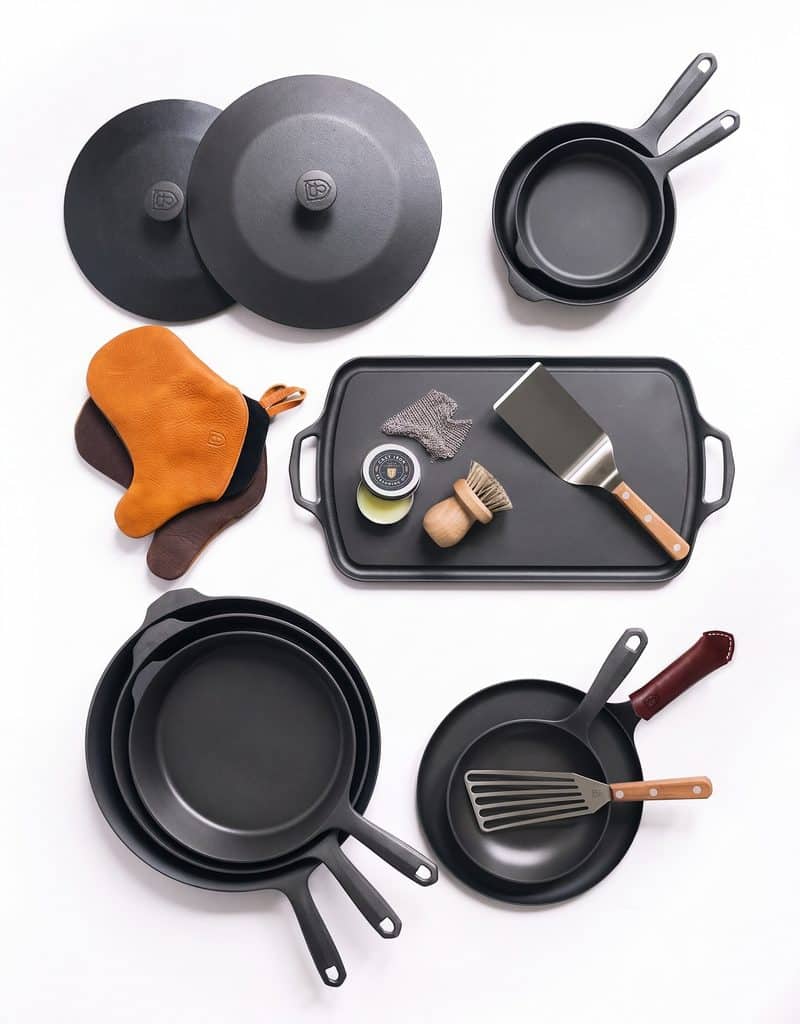
Think of a skillet lid as the accessory that gives your cast iron pan a second personality. Without one, you’re mostly searing, frying, and sautéing. Add a lid, and suddenly you’re ready to braise, steam, simmer, and slow-cook.
A properly fitted lid traps heat and moisture, helping food cook more evenly while keeping dishes from drying out. It’s particularly useful for finishing thick steaks, cooking chicken, melting cheese over burgers, or simmering a rich sauce alongside your grilled favorites.
You can choose between traditional cast iron lids and tempered-glass versions. Cast iron retains heat exceptionally well, while glass allows you to check your food without lifting the cover.
Backyard tip: Match the lid to your skillet’s diameter for the best fit. When cooking thick cuts of meat, try finishing them over indirect heat with the lid on for more controlled cooking.
2. Heat-Resistant Handle Cover
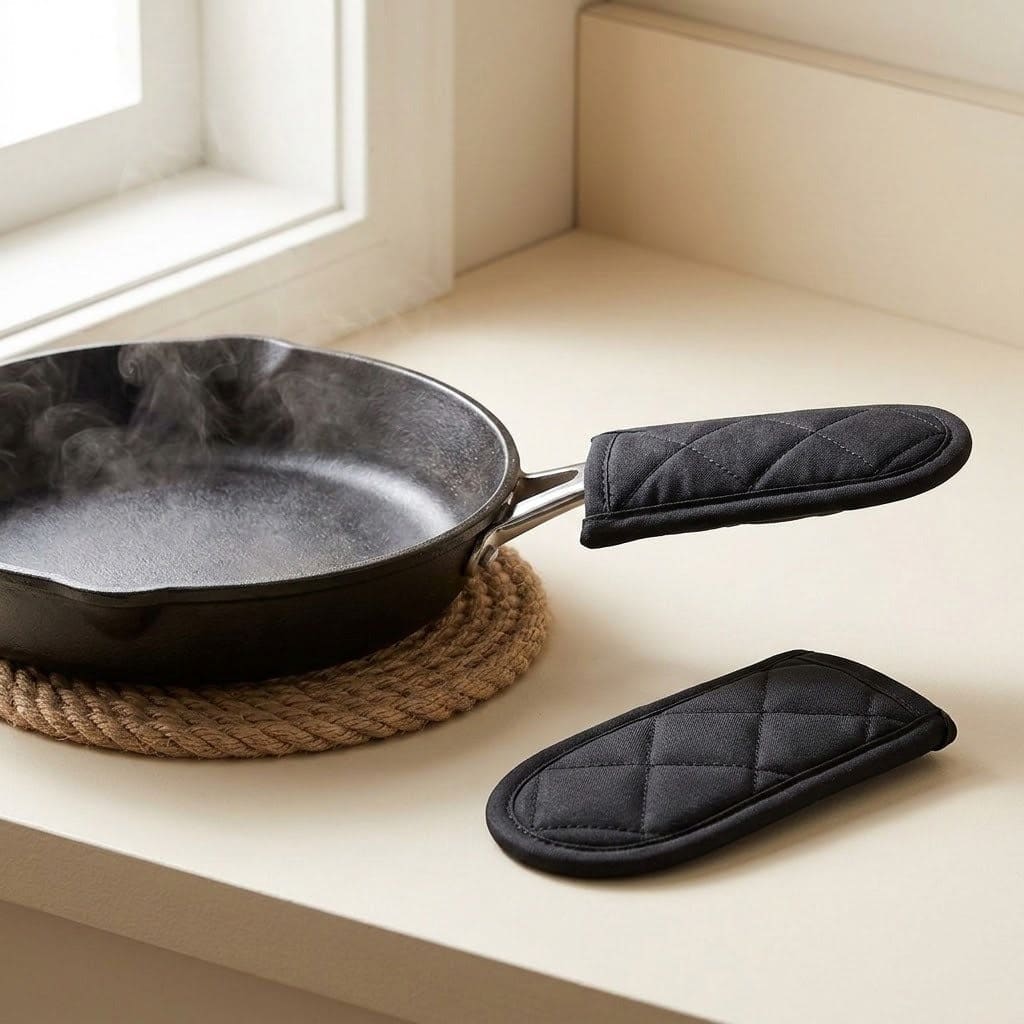
Here’s a backyard cooking lesson worth remembering: a cast iron handle gets just as hot as the cooking surface sometimes. That means grabbing it with your bare hand is a shortcut to a very unpleasant afternoon.
A heat-resistant handle cover provides extra protection and a more comfortable grip when moving your skillet. Silicone covers are popular because they’re flexible, easy to clean, and simple to remove.
Fabric covers are another option, provided they’re designed for the intended heat exposure.
However, don’t assume every handle cover can withstand direct flames or prolonged exposure to high temperatures. Most are designed for handling, not cooking over an open fire.
Backyard tip: Keep your handle cover close to your grill, but remove it before exposing the skillet to direct heat unless its manufacturer specifically states otherwise.
3. Long-Handled Cast Iron Skillet Lifter
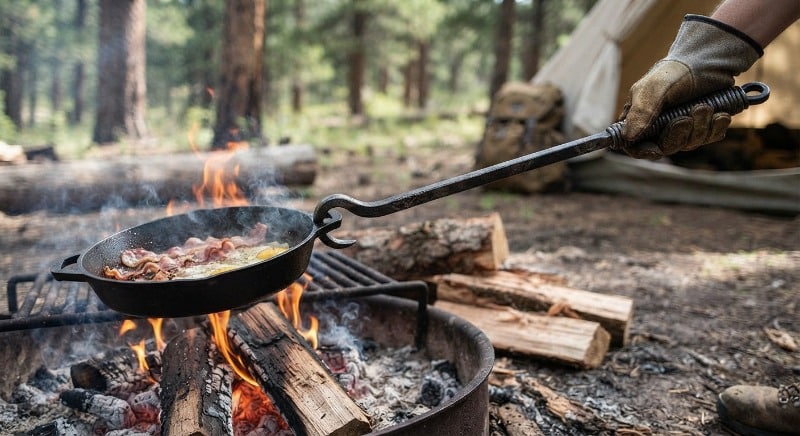
Moving a heavy cast iron skillet full of sizzling food isn’t exactly a one-finger operation. Even experienced backyard cooks appreciate having a proper lifting tool, especially when working over a charcoal grill or campfire.
A cast iron skillet lifter is designed to grip or support the cookware’s handle, making it easier to lift and reposition a hot pan. Depending on its design, it can provide additional leverage and control when handling heavier skillets.
Look for a sturdy model made from durable metal with a secure gripping mechanism. Always check its weight capacity and make sure it fits your skillet before using it.
Backyard tip: Practice with a cold skillet before attempting to lift a hot one. A few minutes of preparation can prevent a dangerous balancing act over an open flame.
4. Cast Iron Chainmail Scrubber
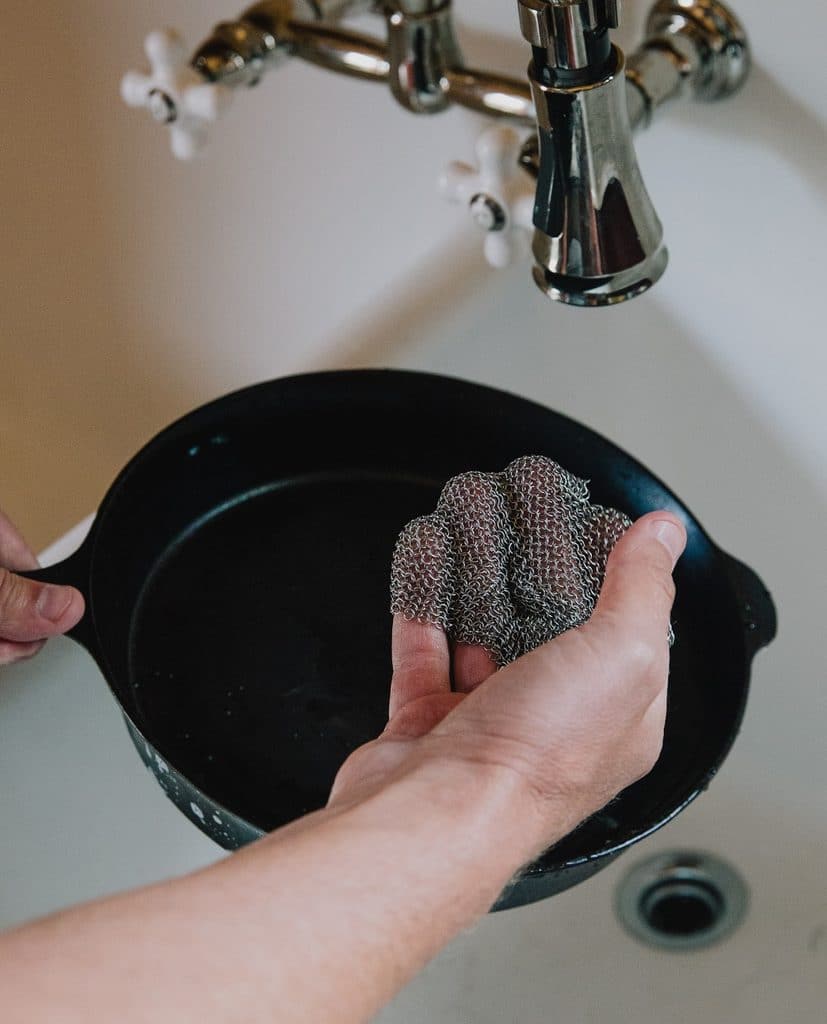
Ever cooked bacon, burgers, or sticky barbecue-glazed ribs in your skillet? Then you know how stubborn those leftover bits can be. A regular sponge doesn’t always cut it, and that’s where a chainmail scrubber earns its place.
This handy cleaning accessory consists of interlinked stainless-steel rings that help loosen stuck-on food without unnecessarily stripping away a well-maintained seasoning layer.
It’s reusable, easy to rinse, and particularly useful for cleaning after high-heat cooking sessions. Unlike disposable scrubbers, a quality chainmail design can last for years with proper care.
Backyard tip: Add warm water to your skillet and gently scrub away stubborn residue. Avoid aggressive scrubbing, then dry the pan thoroughly to prevent rust.
5. Cast Iron Cleaning Brush or Scraper
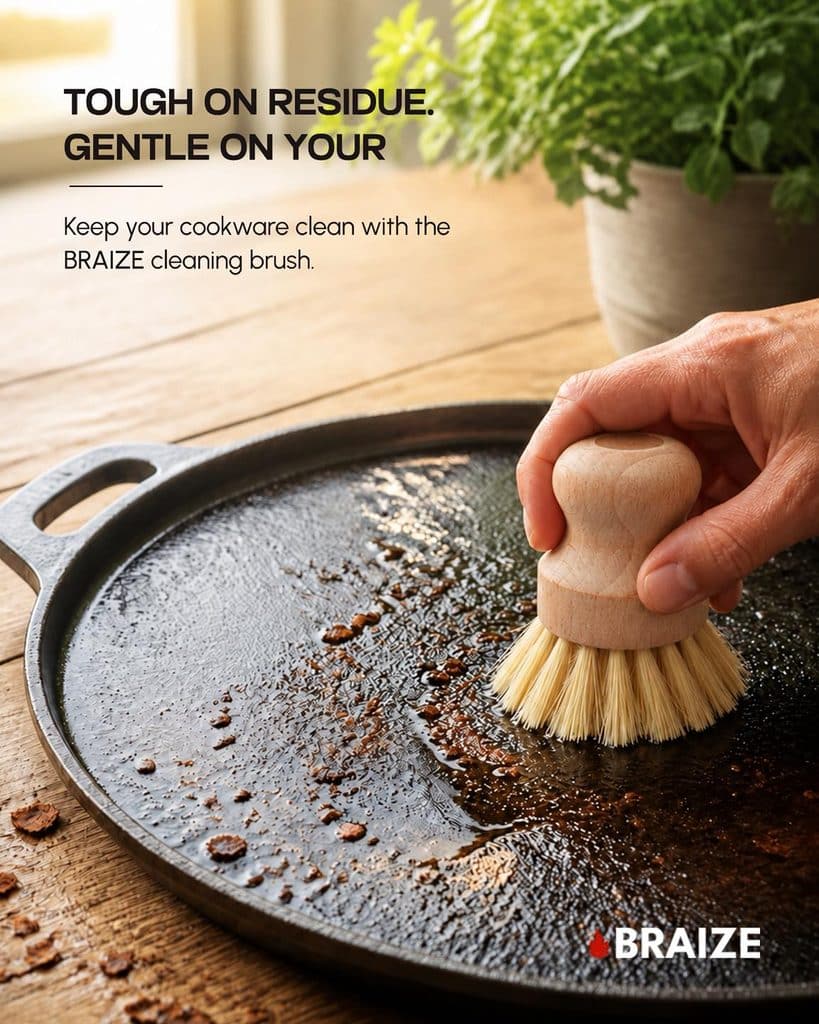
Not every skillet cleanup requires heavy-duty chainmail. Sometimes, all you need is a reliable brush or scraper to get rid of leftover grease and food particles.
A stiff-bristle cleaning brush works well for everyday maintenance, while a flat-edged scraper helps remove stubborn bits stuck to the cooking surface. Some scrapers even feature different edges designed to fit the shape of your skillet.
The trick is choosing a cleaning tool that’s effective without being unnecessarily abrasive.
Leaving food residue in your skillet overnight isn’t a great idea, particularly after cooking acidic dishes or sticky sauces.
Backyard tip: Clean your skillet while it’s still slightly warm using warm water and a suitable brush. Never handle a hot pan directly with bare hands, and always dry it completely before putting it away.
6. Skillet Spatula or Metal Turner
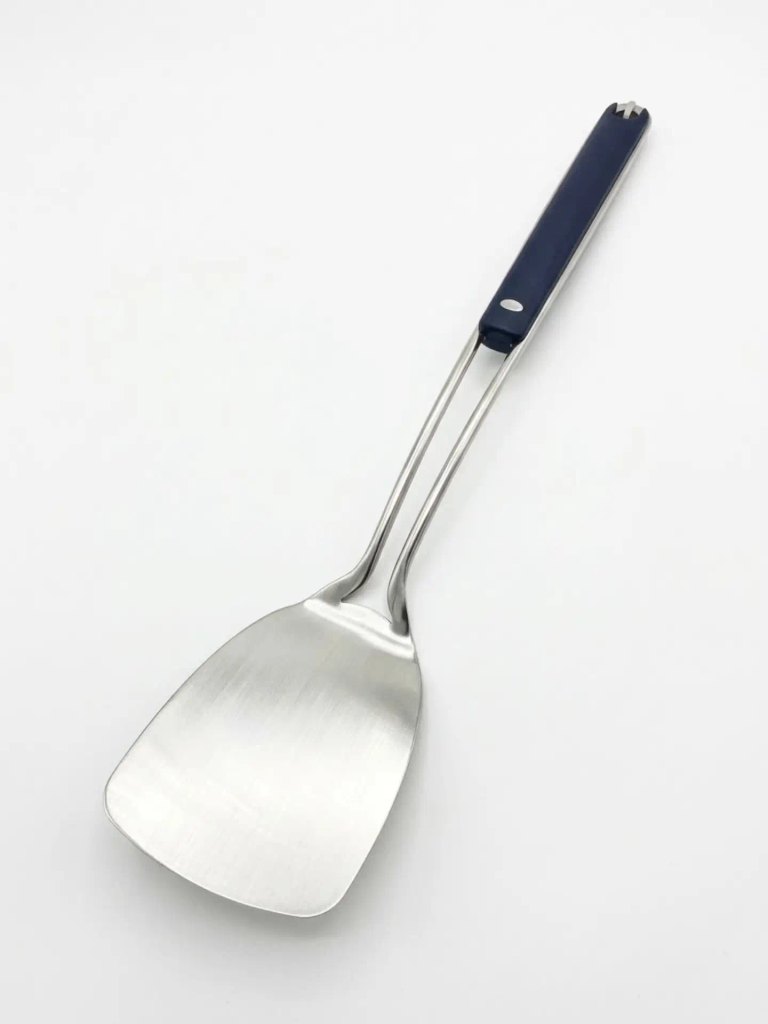
A good cast iron skillet deserves a spatula that can keep up. Forget flimsy plastic turners that bend under pressure when you’re trying to flip a thick burger.
A sturdy stainless-steel spatula with a thin, beveled edge makes it easier to slide underneath steaks, flip burgers, turn vegetables, and scrape up those delicious browned bits left behind after searing.
Metal spatulas are particularly useful with cast iron because their firm edges provide better control. With regular, appropriate use, they can also help smooth minor surface irregularities over time.
Backyard tip: After searing meat, use your metal turner to loosen the browned bits at the bottom of the skillet. Add onions, mushrooms, or a splash of broth to create a quick, flavorful pan sauce.
7. Cast Iron Seasoning Oil
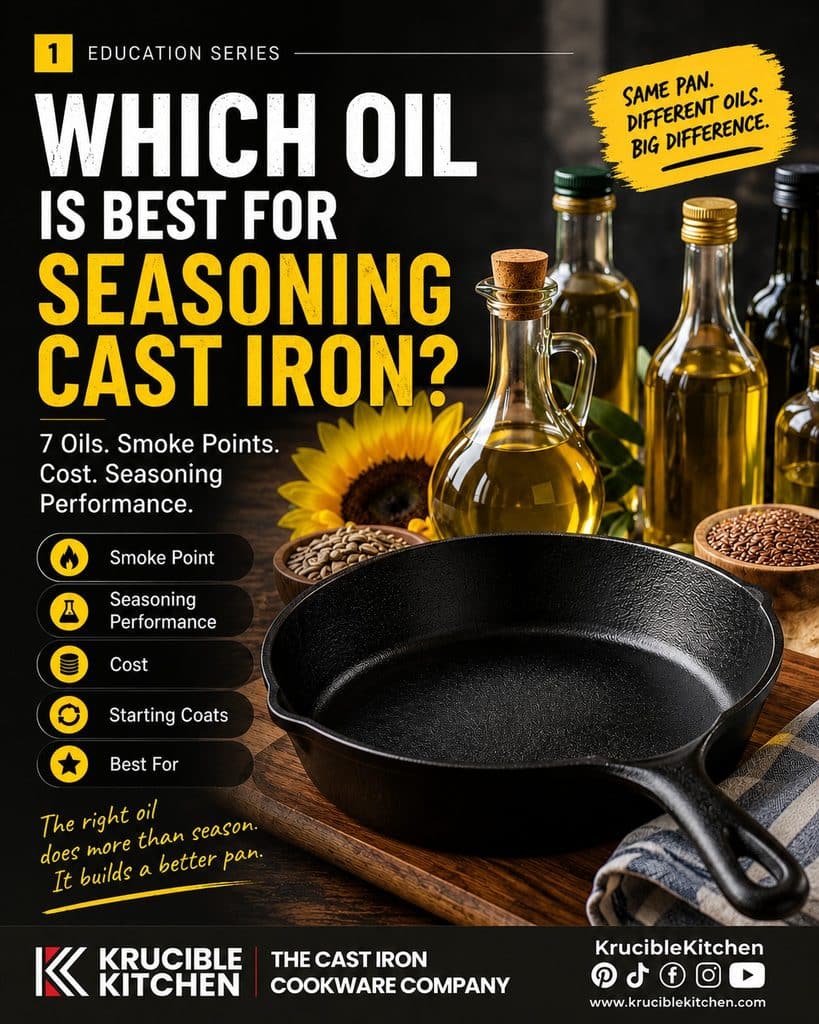
Seasoning is what helps make cast iron such a dependable cooking companion. It’s not simply about making the pan look shiny. A properly maintained seasoning layer helps protect against rust and creates a more reliable cooking surface.
Dedicated cast iron seasoning oils are formulated for cookware maintenance, although suitable everyday cooking oils can also work.
After cleaning your skillet, make sure it’s completely dry. Apply a very thin coating of oil across the cooking surface and other exposed areas as appropriate, then wipe away any excess.
Remember this golden rule: more oil doesn’t mean better seasoning. Too much can leave your skillet sticky instead of smooth.
Backyard tip: For everyday maintenance, a thin coating is usually enough. For a complete seasoning session, follow the manufacturer’s recommended process, including the appropriate oven temperature and heating time.
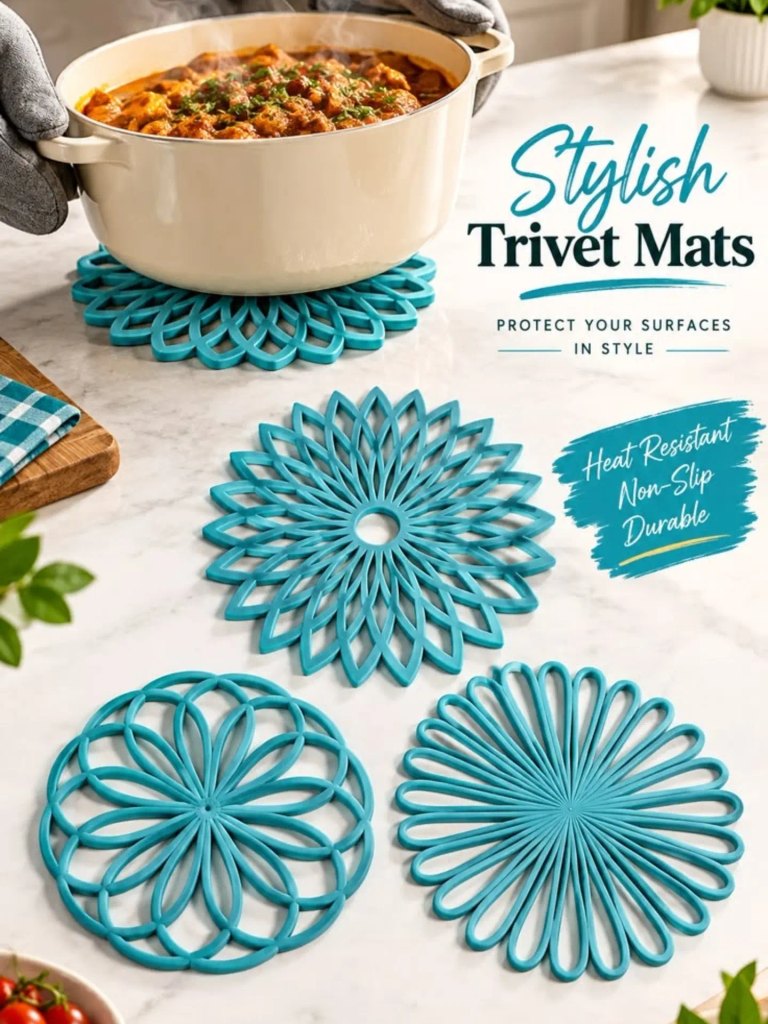
8. Cast Iron Skillet Trivet or Heat-Resistant Rest
Your skillet might be finished cooking, but that doesn’t mean it’s ready to sit on your favorite outdoor dining table.
Cast iron retains heat long after leaving the grill. A heat-resistant trivet gives it a safe resting place while protecting countertops, wooden tables, and serving stations from scorching.
Cast iron trivets are sturdy and often double as attractive serving accessories. Silicone mats and other heat-resistant rests are also practical alternatives, provided they’re rated for the cookware’s temperature and weight.
Backyard tip: Set your trivet near your cooking station before you start grilling. You’ll have somewhere safe to place your skillet when the food is ready, rather than scrambling for an empty surface.
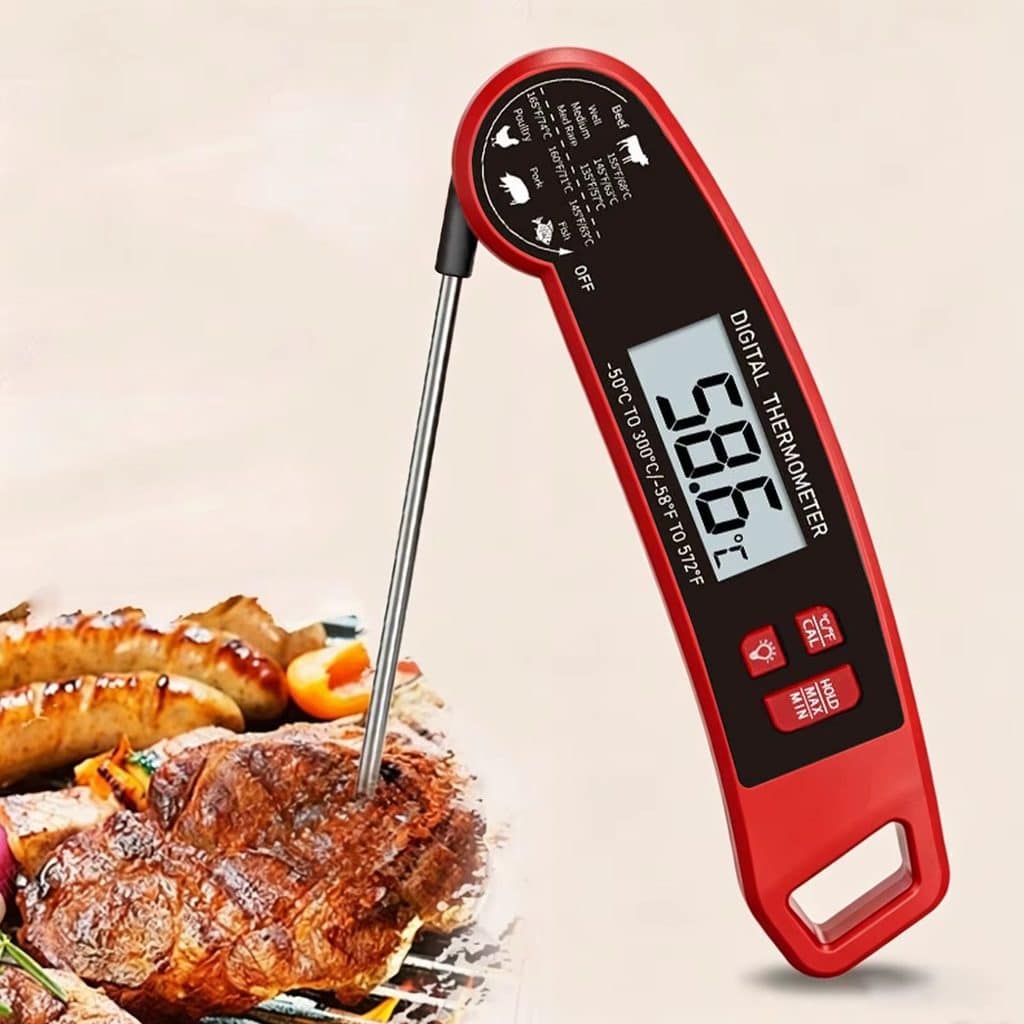
9. Instant-Read Meat Thermometer
A steak can look perfectly cooked on the outside and still be underdone in the middle. Chicken can be even trickier. That’s why guessing isn’t a cooking technique worth relying on.
An instant-read meat thermometer takes the uncertainty out of checking doneness. It provides quick internal temperature readings, helping you cook meat more consistently without cutting into it and letting those flavorful juices escape.
It’s especially useful for thick steaks, pork chops, chicken breasts, and other cuts that require careful temperature control.
For food safety, remember these important temperatures:
- Beef and pork steaks or chops: 145°F with a three-minute rest.
- Ground meat: 160°F.
- Chicken and other poultry: 165°F.
Backyard tip: Insert the thermometer into the thickest part of the meat, avoiding bones and large pockets of fat. A quick temperature check beats crossing your fingers and hoping for the best.
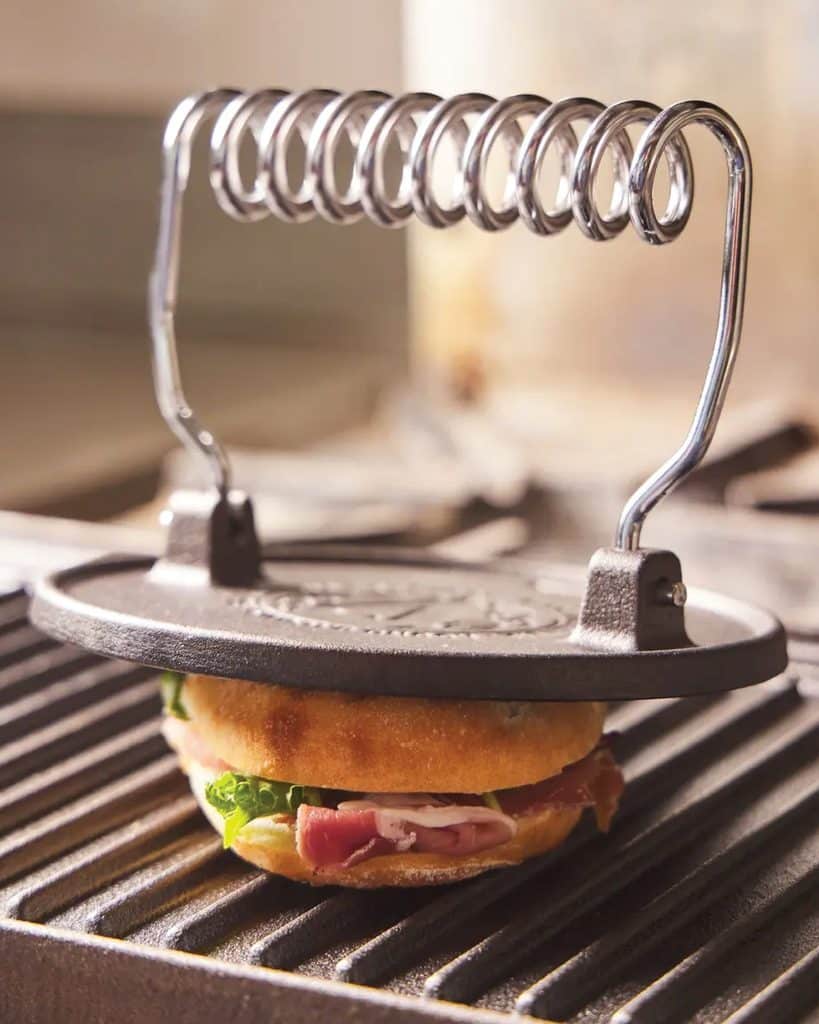
10. Cast Iron Skillet Grill Press
Want better contact between your food and the hot skillet? A grill press can help you achieve it.
This heavy accessory sits on top of food, applying pressure to encourage more even contact with the cooking surface. It’s particularly useful for burgers, bacon, grilled sandwiches, and other foods that benefit from consistent browning.
Most grill presses feature cast iron or stainless-steel construction, with some models offering wooden or heat-resistant handles.
One thing to remember: pressing down on burgers constantly can squeeze out their flavorful juices. Use the press strategically instead of treating every burger like it’s trying to escape.
Backyard tip: A grill press works particularly well for thin burgers and bacon. Preheat it carefully and always use appropriate heat protection when removing it.
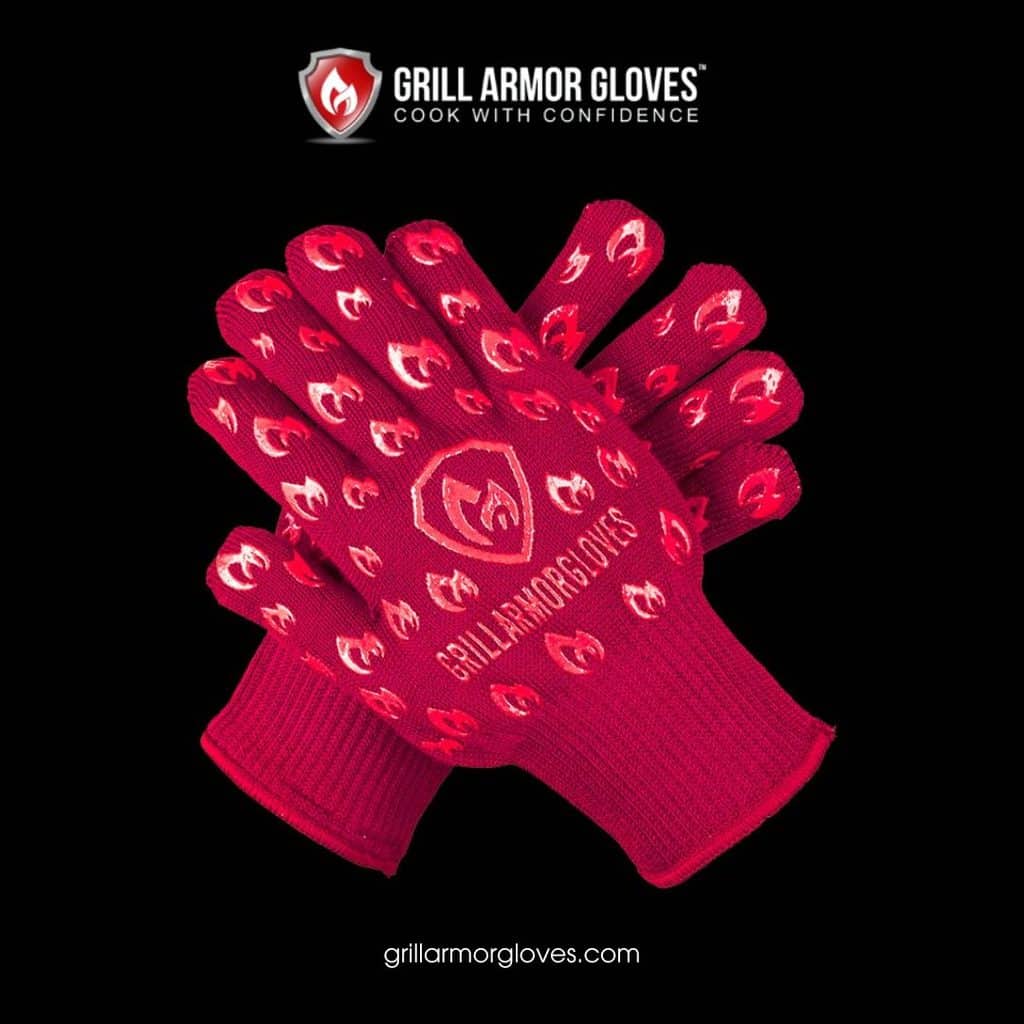
11. Heat-Resistant BBQ Gloves
A kitchen towel might work when handling an ordinary saucepan, but it isn’t the best choice when you’re dealing with scorching cast iron.
Heat-resistant BBQ gloves offer better coverage and grip when lifting skillets, adjusting cookware, or handling hot accessories around your grill.
Look for gloves made with heat-resistant materials, textured palms, and flexible construction. Longer cuffs are particularly useful because they provide additional protection around your wrists and lower arms.
Check the manufacturer’s temperature ratings before purchasing. Not all grilling gloves provide the same level of protection, and heat-resistant doesn’t automatically mean flameproof or waterproof.
Backyard tip: Keep a dedicated pair near your grilling station. Inspect them regularly for worn insulation, tears, and grease buildup that could affect their performance.
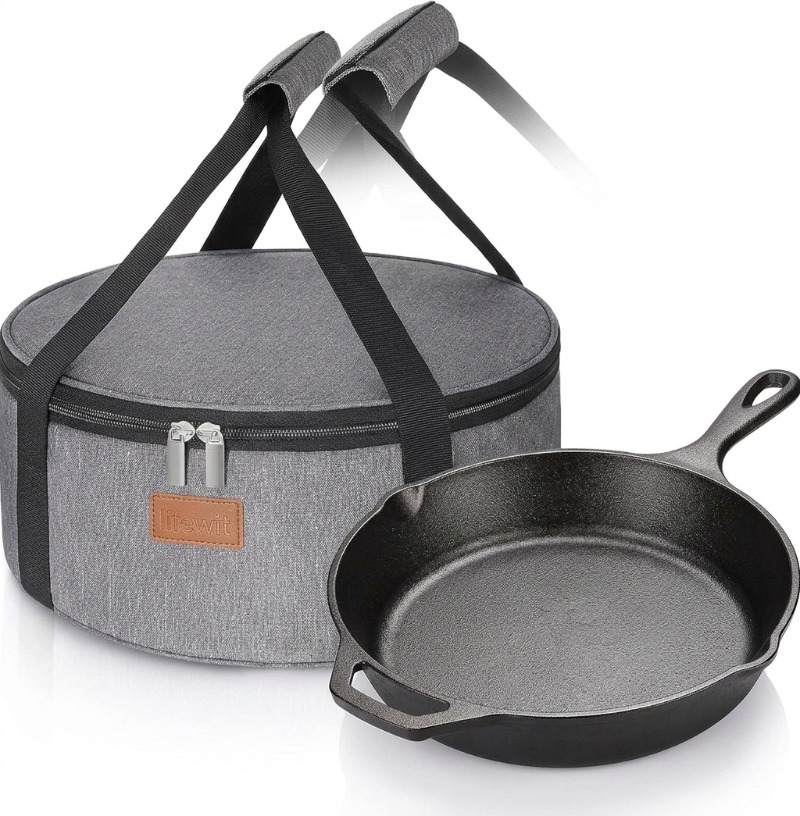
12. Cast Iron Skillet Storage Bag or Protective Cover
After a successful cookout, your skillet deserves a proper place to rest. Tossing it into a crowded cabinet underneath a pile of cookware isn’t exactly showing it some love.
A storage bag or protective cover helps protect cast iron from dust, scratches, and accidental damage. It’s especially useful when transporting your cookware between the kitchen, patio, campsite, or outdoor cooking station.
Choose a durable, breathable material that helps prevent moisture from becoming trapped around the pan. Protective separators are also worth considering if you stack multiple skillets.
Before storing your cookware, make sure it’s completely dry and properly maintained. Even the best storage bag can’t protect a skillet that’s already holding moisture.
Backyard tip: Store your cast iron in a dry location and avoid sealing it inside a damp bag. Proper storage is one of the simplest ways to keep your cookware in excellent condition.
How to Choose the Right Cast Iron Skillet Accessories for Your Backyard Kitchen
You don’t need to purchase all 12 accessories in one shopping trip. Building a practical toolkit is about identifying the tools that will make the biggest difference in your cooking routine.
Start with the essentials:
- For safety: Get heat-resistant BBQ gloves and a suitable handle cover.
- For cleaning: Invest in a chainmail scrubber and a quality cleaning brush.
- For maintenance: Keep seasoning oil and a protective storage cover handy.
- For better cooking: Add a sturdy metal spatula, instant-read thermometer, and properly fitted lid.
Consider your skillet’s size, the type of grill you use, and how frequently you cook outdoors. Prioritize durable materials, comfortable handling, and accessories that serve more than one purpose.
The best cast iron skillet accessories aren’t necessarily the most expensive. They’re the ones that solve everyday cooking problems and make your time around the grill more enjoyable.
Build Your Ultimate Cast Iron Cooking Toolkit
A cast iron skillet can do plenty on its own, but the right accessories help unlock even more of its potential.
From safer handling and easier cleanup to better temperature control and improved cooking techniques, these tools can make a noticeable difference in your backyard cooking experience.
Start with the accessories you’ll use most often, then add more as your outdoor cooking setup evolves. You don’t need a professional kitchen full of gadgets to cook incredible food.
At the end of the day, great backyard cooking comes down to good ingredients, reliable equipment, and knowing how to use both.
So fire up that grill, grab your favorite skillet, and get cooking. And whatever you do, don’t forget the handle cover. Your fingers will thank you!
Featured image credit: @lodgecastironph
