
“I want to believe,” Special Agent Fox Mulder famously declared on a grainy poster in a basement office at the FBI, though he probably wasn’t talking about a backyard cooker capable of searing a ribeye at 700 degrees while gently warming brioche buns two feet away.
Yet here we are.
While lawmakers on Capitol Hill have spent the last few years grilling Pentagon officials over blurry radar footage, Tic-Tac-shaped anomalies, and alleged non-human biologics, a completely different kind of unidentified flying object has quietly landed on patios across the country.
Welcome to the wild, sizzling world of UFO grilling.
Last summer, a neighbor leaned over my cedar fence, squinted at the gleaming, saucer-shaped steel contraption smoking on my patio, and asked if I was trying to signal the mothership or just making dinner.
Honestly, the confusion is fair.
Between curved plancha fire pits, dome-shaped aerodynamic smokers, and viral sandwich presses that fuse burger buns into flying saucers, UFO grilling looks like something salvaged from Area 51.
Beneath the sci-fi silhouettes and social media hype, however, lies some serious thermodynamic engineering. You do not need a top-secret security clearance to understand why circular, saucer-style cookers are changing the game for backyard barbecue.
Once you strip away the pop-culture jokes, these unconventional rigs solve several headaches that have plagued traditional rectangular grills for decades.
Declassifying the Phenomenon: What Is UFO Grilling?
Ask ten different backyard cooks to define UFO grilling, and you will get three distinct answers – all of them delicious.
Unlike a standard offset smoker or a boxy four-burner gas grill, the “UFO” label covers a specific family of gear and cooking techniques defined by circular geometry, dome aerodynamics, and sealed-edge cooking.
The Hardware: Saucer Grills and Dome Cookers
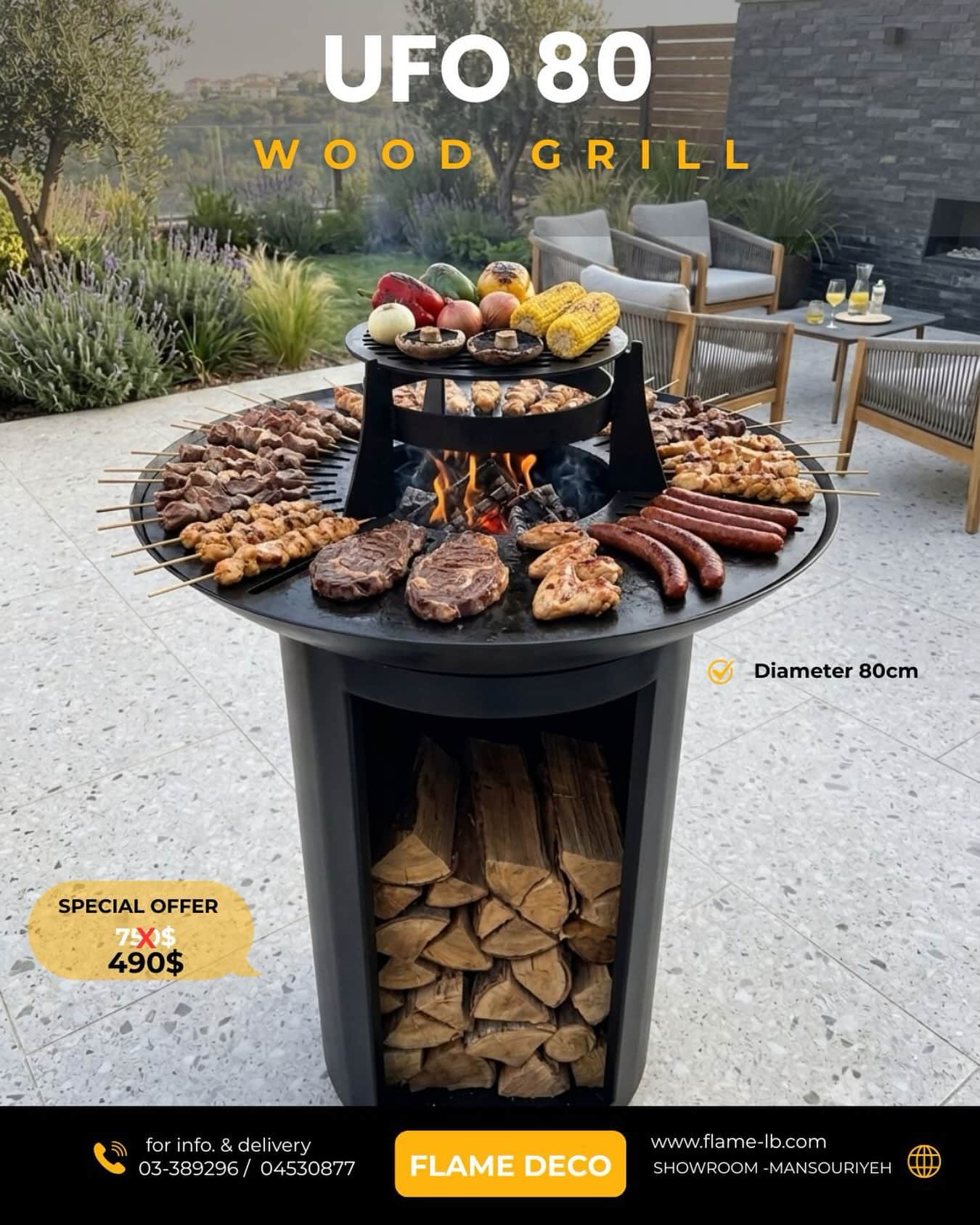
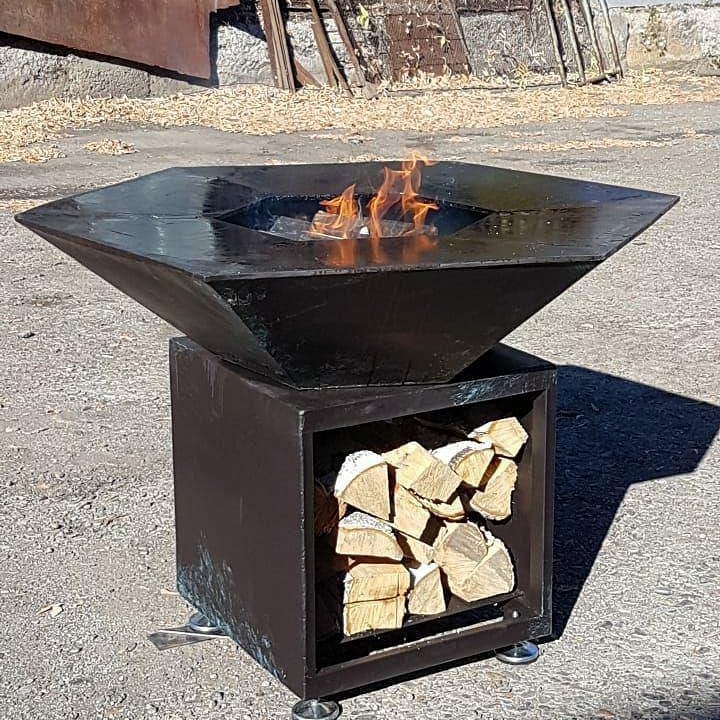
The centerpiece of the UFO grilling movement is the saucer grill, often built as a wide, concave carbon-steel ring perched over a central firebox. Brands like OFYR, Arteflame, and
Cowboy Cauldron popularized this silhouette, transforming a traditional fire pit into a 360-degree flat-top griddle. From a distance, the wide, brushed-steel rim glowing over a bed of hardwood embers looks dead-on like a retro flying saucer touching down on your lawn.
Alongside open saucer planchas sits a second breed of hardware: aerodynamic dome cookers. Think of classic kettle grills evolved to their final form – smooth, hemispherical lids paired with precision air intakes that eliminate sharp ninety-degree corners.
By removing flat walls and dead zones, these domes force heat and wood smoke to circulate in an uninterrupted vortex.

The Viral Food Trend: UFO Burgers and Sealed Pockets
On the culinary side of the phenomenon, UFO grilling also refers to a viral street-food technique born in South Korea and perfected over live coals.
Using a heavy, hinged cast-iron or aluminum press shaped like a miniature flying saucer, cooks sandwich a seasoned smash patty, melty cheese, and toppings between two soft brioche buns.
Clamping the press shut over high heat crimps and toasts the outer edges of the bread into a crisp, golden seal while steaming the center. The result is a zero-drip, pocket-sealed burger shaped like a classic flying disc.
No runaway pickles, no burger juice dripping down your forearm, and no structural collapse halfway through the meal.
“Unidentified Flame Objects”: Grill Lore and Pitmaster Slang
Around the pit, the acronym also doubles as tongue-in-cheek shorthand for those mysterious moments every live-fire cook experiences.
We have all dealt with an Unidentified Flame Object – that sudden, physics-defying grease flare-up that erupts from a drip pan you swore you cleaned last weekend, or the unlabeled foil-wrapped mystery cut buried in the back of the deep freezer since the last Super Bowl.
Fortunately, mastering actual saucer hardware gives you far more control over your fire than guessing what is inside a frostbitten butcher paper package.
The Science Behind the Saucer: Aerodynamics and Heat Distribution
Traditional rectangular grills have a dirty little secret: they are terrible at distributing heat evenly.
Hot spots lurk directly over burner tubes or coal piles, while the four corners sit cold enough to serve as a waiting room.
UFO grilling flips that geometry on its head by working with physics instead of fighting it.
Radial Heat Zones: The Reverse-Sear Advantage
When you build a wood or lump charcoal fire in the center of a circular steel disc, heat radiates outward in predictable, concentric rings. Physics does all the heavy lifting for you.
The inner edge of the cooking ring, closest to the central flame, routinely hits 600°F to 750°F.
That is prime real estate for achieving a deep, crusty Maillard reaction on thick-cut steaks, scallops, or smash burgers.
Move your food six inches toward the outer perimeter, and the surface temperature drops smoothly to a moderate 350°F to 425°F – ideal for roasting asparagus, caramelizing onions, or cooking chicken thighs without scorching the skin.
The very outer lip hovers around 200°F to 250°F, acting as a built-in warming tray.
You get multiple simultaneous cooking zones without twisting a single plastic knob or banking coals with a pair of tongs. You simply slide your food closer to or farther from the center like a vinyl record spinning on a turntable.
Airflow and Convection Under the Dome
If you have ever watched footage from those U.S. Congressional UAP hearings, you know lawmakers love asking witnesses about “transmedium travel” and impossible aerodynamics.
While your backyard kettle won’t break the sound barrier, a curved, hemispherical dome uses genuine fluid dynamics to cook food faster and more evenly.
In a rectangular grill box, rising hot air slams into flat lids and gets trapped in sharp corners, creating stagnant pockets of uneven temperature.
Under a smooth, rounded UFO dome, rising convection currents glide seamlessly along the curved interior walls, rolling back down over the grates in a continuous cycle.
This cyclonic airflow bathes roasts, whole chickens, and ribs in consistent radiant and convective heat, cutting down on dry spots and eliminating the need to constantly rotate your meat.
Material Matters: Carbon Steel, Cast Iron, and Stainless Steel
Pulling off this kind of thermal magic requires heavy-duty metallurgy. Most legitimate saucer grills rely on thick-gauge carbon steel (often 3/8-inch to 1/2-inch thick) or heavy cast iron for the cooking plate.
Thin stamped metal will warp like a cheap baking sheet the moment you light a hardwood fire beneath it.
Thick carbon steel strikes the sweet spot. It absorbs massive amounts of thermal energy from the central fire, holds onto that heat when you slap cold meat onto the surface, and develops a naturally slick, non-stick patina over time.
Stainless steel domes and bases, meanwhile, resist rust when your grill sits exposed to rain and humidity between weekend cookouts.
Close Encounters of the Culinary Kind: What Cooks Best on a UFO Grill?
Buying a saucer-shaped cooker just to grill six hot dogs is like buying a Ferrari to drive to the mailbox. Once you fire up a circular rig, a whole menu of high-impact dishes becomes effortless.
High-Heat Searing and Smash Burgers
A solid carbon-steel saucer plate is a smash burger’s best friend. Because there are no wire grate gaps for soft, high-fat beef to droop through, every square millimeter of meat makes direct contact with blazing-hot steel.
Press a ball of 80/20 chuck flat with a heavy spatula, season it with kosher salt and coarse black pepper, and within ninety seconds you have lace-thin, crispy edges that no wire grate can replicate.

Hibachi-Style Stir-Fries and Teppanyaki
Open saucer grills turn your patio into a backyard teppanyaki steakhouse.
The slight inward pitch of most steel cooking discs is intentional: as fat, butter, and marinades render out of your food, gravity pulls the drippings gently toward the center fire rather than spilling onto your patio stones.
You can toss diced chicken, shrimp, garlic butter, and day-old jasmine rice across the wide steel ring using two bench scrapers, feeding a crowd of ten while everyone stands around the fire watching the show.
Sealed UFO Sandwiches and Stuffed Pockets
If you pick up a cast-iron UFO burger press, don’t stop at standard cheeseburgers.
These hinged saucer irons work wonders over lump charcoal for stuffed breakfast pockets (scrambled eggs, bacon, and cheddar sealed inside buttered brioche), pulled pork melts with pickled jalapeños and gouda, or even campfire dessert pies packed with Nutella and sliced bananas.
A quick two-minute toast per side over medium coals locks the filling inside a crisp, golden shell.
Low-and-Slow Smoking with Deflector Plates
Dome-style UFO cookers aren’t just high-heat searing machines.
Drop a ceramic or steel heat deflector plate between your charcoal basket and the main cooking grate, choke down the bottom intake vents to a sliver, and that aerodynamic dome settles comfortably into a 225°F to 250°F smoking chamber.
Pork butts, baby back ribs, and whole spatchcocked turkeys pick up a clean, mahogany smoke ring thanks to that smooth, unobstructed airflow.
Congressional Hearings vs. Backyard Reality: Separating Hype from Hardware
Watching lawmakers quiz defense officials about classified aerospace programs has a funny parallel to shopping for modern outdoor cooking gear.
Both involve bold claims, slick visual presentations, and plenty of unanswered questions once you look closely at the fine print.
Before you drop serious cash on a space-age grill, it pays to separate genuine performance from flashy marketing.
Where UFO Grills Shine
When engineered properly, circular and saucer-style cookers deliver three undeniable wins over traditional grills:
- Social, 360-Degree Cooking: Traditional grills trap the cook staring at a brick wall or fence while guests mingle behind them. A circular saucer grill acts like a campfire – friends naturally gather all the way around the ring, grabbing warm appetizers right off the outer edge while you sear the main course.
- Zero Flare-Up Drama: On a solid steel saucer ring, grease vaporizes on contact with the hot plate or drains harmlessly into the central fire pit. You never have to rescue a tray of chicken thighs from a sudden wall of soot-black flames.
- Effortless Multi-Course Timing: Because you can cook at 700°F and 225°F simultaneously on the exact same piece of metal, your side dishes, toasted bread, and main proteins finish together without juggling foil pans in and out of your kitchen oven.
The Limitations (And What Marketing Won’t Tell You)
For all their charm, UFO grills come with real-world trade-offs that glossy product videos tend to gloss over:
- Serious Weight: A half-inch-thick carbon steel ring paired with a heavy pedestal easily tips the scales at 200 to 400 pounds. Once you park this spacecraft on your patio, you are not rolling it into the garage every evening.
- Fuel Appetite: Heating a massive slab of steel from dead cold takes time and fuel. Expect to burn through a generous load of seasoned hardwood splits or lump charcoal just to bring the outer cooking zones up to temperature.
- No Direct Flame Kiss: On solid-surface saucer planchas, food cooks via conduction from the steel rather than direct radiant heat rising between open grates. You get an unmatched crust, though you sacrifice a bit of that classic drippings-on-coals char flavor unless your model includes a removable center grate insert.
Wood Selection and Flavor Pairing: Fueling the Saucer
Choosing the right fuel is the secret weapon of UFO grilling. Because open saucer planchas don’t trap smoke under a lid, your fuel choice directly shapes the aroma rising over the cooking ring.
- Aromatic Hardwoods: Woods like post oak, hickory, and cherry generate high BTUs while creating a fragrant wood-fired canopy over your food.
- Natural Lump Charcoal: Laying down a base bed of lump charcoal delivers steady, predictable radiant heat before you add wood splits.
- Woods to Skip: Avoid resin-heavy softwoods like pine, which spit sticky sap onto your seasoned steel.
As the hardwood combusts, vaporized wood oils rise around the rim, giving smash burgers and seared scallops a subtle campfire complexity that propane flat-tops simply cannot replicate.
Cold-Weather Performance: Defying Winter Gravity
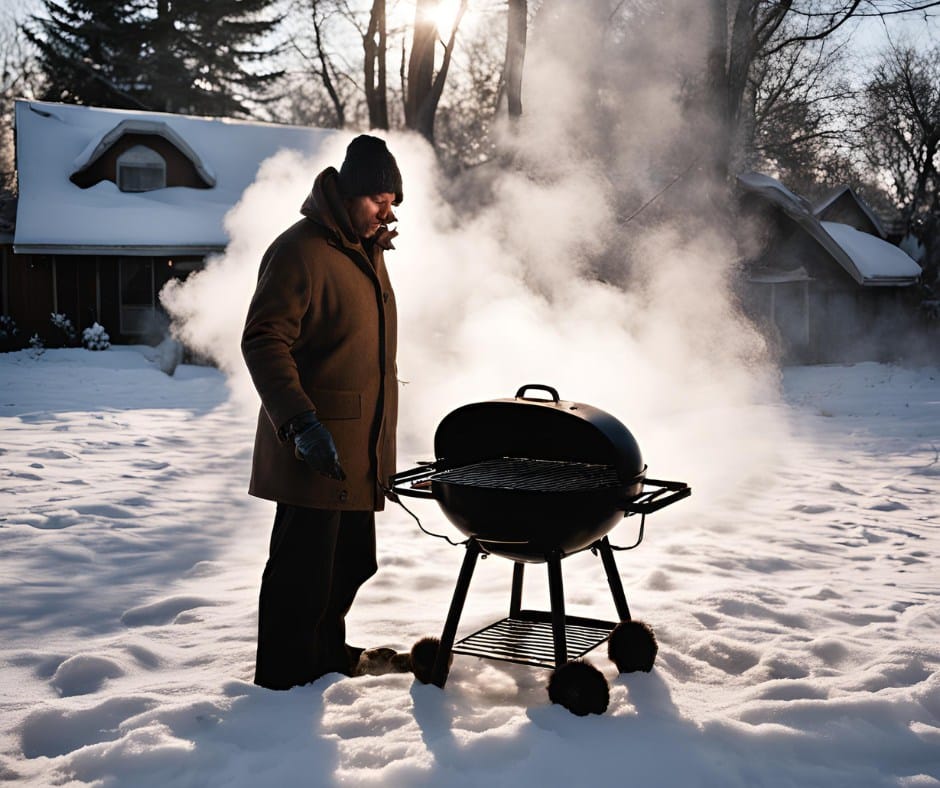
Most rectangular gas grills wave the white flag the moment January temperatures drop below freezing, struggling to hold heat against biting wind.
UFO grilling thrives in the cold. Heavy-gauge carbon steel acts like a thermal battery, storing massive amounts of radiant energy that won’t vanish every time you flip a steak.
Better yet, the 360-degree radial heat creates a warm microclimate around the pedestal, keeping your hands and guests comfortable even when snow blankets the patio.
While neighbors pack their tongs away until spring, a well-fed saucer grill lets you host winter backyard cookouts without fighting stubborn regulator valves or losing half your heat to a brisk breeze.
Essential Tool Upgrades: Outfitting Your Flight Deck
Standard short-handled grill tongs will leave your knuckles singing after five minutes over a 700-degree saucer ring. Outfitting your station with the right gear keeps you safe and in full control:
- Long-Handled Spatulas & Bench Scrapers: Flat-edged stainless steel tools let you flip burgers, chop hash, and scrape grease into the fire without reaching over open flames.
- Cast-Iron Basting Dome: Traps steam on the flat steel surface to melt thick slices of cheddar over patties in seconds.
- Heat-Resistant Welding Gloves: Essential for safely adjusting burning hardwood logs inside the central bowl.
- High-Heat Squeeze Bottles: Keep clarified butter or avocado oil within arm’s reach for quick surface lubrication.
Patio Safety and Clearance: Prepping the Landing Zone
Landing a 300-pound steel fire pit on your deck requires more thought than rolling out a lightweight kettle. Before lighting your first fire, lock down these non-negotiable safety steps:
- Protect Your Decking: Never set an open saucer grill directly on wooden planks or composite boards without an insulated fire-proof grill mat underneath.
- Clear the Airspace: Maintain at least ten feet of overhead clearance from tree branches, patio umbrellas, and vinyl siding to protect against drifting embers.
- Keep Dry Extinguishers Handy: Store a Class-B fire extinguisher or bucket of dry sand nearby – never throw water onto hot, grease-coated steel, which causes warping and dangerous steam flares.
Off-Menu Breakfasts: Sunrise Sessions on the Saucer
UFO grilling isn’t strictly reserved for Friday night steaks and weekend burgers – it is arguably the ultimate outdoor breakfast machine. The smooth, continuous steel surface handles delicate morning staples that would fall straight through traditional wire grates.
Crack farm-fresh eggs directly onto the medium-heat middle ring while thick-cut bacon crisps along the sizzling inner edge. Use the gentle outer perimeter to toast buttered sourdough, warm flour tortillas for chorizo breakfast tacos, or golden-brown a batch of buttermilk pancakes.
Everyone gathers around the fire with coffee mugs in hand, eating hot off the steel while the morning chill burns off the backyard.

First Contact: Essential Tips for Mastering Your First UFO Cook
Bringing a circular cooker home for the first time feels a lot like stepping onto the bridge of an unfamiliar ship – plenty of dials and surfaces, zero obvious instructions.
Follow a few foundational habits during your maiden voyage, and you will dial in your temperatures like a seasoned veteran.
Seasoning and Surface Prep
Never cook raw protein on a brand-new, unseasoned carbon steel or cast-iron saucer. Factory surfaces often carry a light protective shipping oil that needs to be burned off first.
Start by washing the cooking ring with warm, soapy water and drying it thoroughly with lint-free towels. Build a brisk central fire to bring the steel up to roughly 400°F.
Using a folded paper towel held with long tongs, wipe a paper-thin coat of high-smoke-point oil – canola, grapeseed, or avocado oil work best – across the entire steel surface.
Let the oil smoke off for 15 to 20 minutes until the metal darkens to a rich bronze hue.
Repeat this process three or four times before your first real cook, and you will build a durable, polymerized barrier that laughs at sticky marinades.
Managing Your Heat Zones
Resist the urge to pile wood or charcoal all the way up against the inner rim of your cooking plate. Keep your fuel concentrated dead-center in the fire bowl.
This preserves the natural temperature gradient across the steel ring, giving you a reliable cool zone on the outer perimeter to rescue food that is browning too quickly.
If you are using a dome smoker, make small, incremental adjustments to your bottom air vents – a quarter-inch nudge takes ten to fifteen minutes to register on your lid thermometer, so patience beats frantic dial-twisting every time.
Cleaning and Maintenance
Carbon steel and cast iron hate standing water more than a cat hates a bath.
While the cooking ring is still warm (around 200°F, not blazing hot), use a heavy-duty metal bench scraper to push stuck-on food bits and excess grease directly into the center fire bowl.
Wipe the surface clean with a damp cloth, let any remaining moisture evaporate completely, and finish with a whisper-thin rub of neutral cooking oil. Throw a fitted weatherproof cover over the unit once it cools down, and your saucer will stay rust-free for decades.
Above Top Secret: Eyes Only
Fox Mulder spent nine seasons chasing conspiracies in dimly lit warehouses, and congressional committees may spend the next nine debating what is flying through restricted airspace. Out on the back patio, though, the verdict is already in.
UFO grilling isn’t a passing novelty or a sci-fi gimmick – it is a smart, communal evolution of live-fire cooking that harnesses radial heat, smooth convection, and heavy-gauge steel to make outdoor cooking more social and versatile.
You don’t need classified documents or a tin-foil hat to experience something extraordinary in your backyard. Light a solid hardwood fire, season your steel, gather your favorite people around the ring, and let the truth reveal itself right there on the grates.
Frequently Asked Questions
1. What exactly is UFO grilling?
UFO grilling refers to both specialized circular outdoor cooking hardware and a viral sandwich technique.
On the hardware side, it covers wide, concave carbon-steel saucer planchas (like OFYR or Arteflame grills) and aerodynamic, dome-shaped cookers designed to circulate heat evenly without dead corners.
On the culinary side, it also refers to using a hinged, flying-saucer-shaped cast-iron press over live coals to crimp and seal burger patties, cheese, and toppings inside toasted brioche buns.
2. How do saucer grills create different temperature zones without burners or dials?
Building a concentrated wood or lump charcoal fire in the center of a circular steel plate naturally creates radial heat zones.
The inner edge closest to the central flame reaches 600°F to 750°F for hard searing, the middle ring sits around 350°F to 425°F for roasting vegetables or chicken, and the outer perimeter stays near 200°F to 250°F as a warming zone.
You control the cooking temperature simply by sliding food closer to or farther away from the center.
3. What types of wood and fuel work best in a UFO saucer grill?
Start with a base bed of natural lump charcoal for steady, predictable radiant heat, then feed seasoned aromatic hardwoods like post oak, hickory, or cherry into the center fire bowl.
As the hardwood burns, vaporized wood oils rise around the cooking ring to add subtle campfire flavor. Avoid resin-heavy softwoods like pine, which spit sticky sap onto your seasoned steel plate.
4. Can you use a UFO grill on a wooden or composite deck?
Yes, provided you take proper heat precautions.
Because open saucer grills radiate intense heat downward and weigh anywhere from 200 to 400 pounds, you should never set one directly on unprotected wood or composite boards.
Always place an insulated, fire-proof grill mat underneath the base and maintain at least ten feet of overhead clearance from tree branches, patio umbrellas, and siding.
5. How do you clean and prevent rust on a carbon-steel saucer grill?
Never wash a hot carbon-steel cooking ring with cold water, which can warp the metal and strip its seasoning.
While the plate is still warm (around 200°F), use a heavy-duty metal bench scraper to push food bits and excess grease directly into the center fire pit.
Wipe the surface clean with a damp cloth, let any moisture evaporate completely, apply a paper-thin coat of neutral high-heat cooking oil, and cover the unit once cool.
Featured image credit: @flamedecolb
