
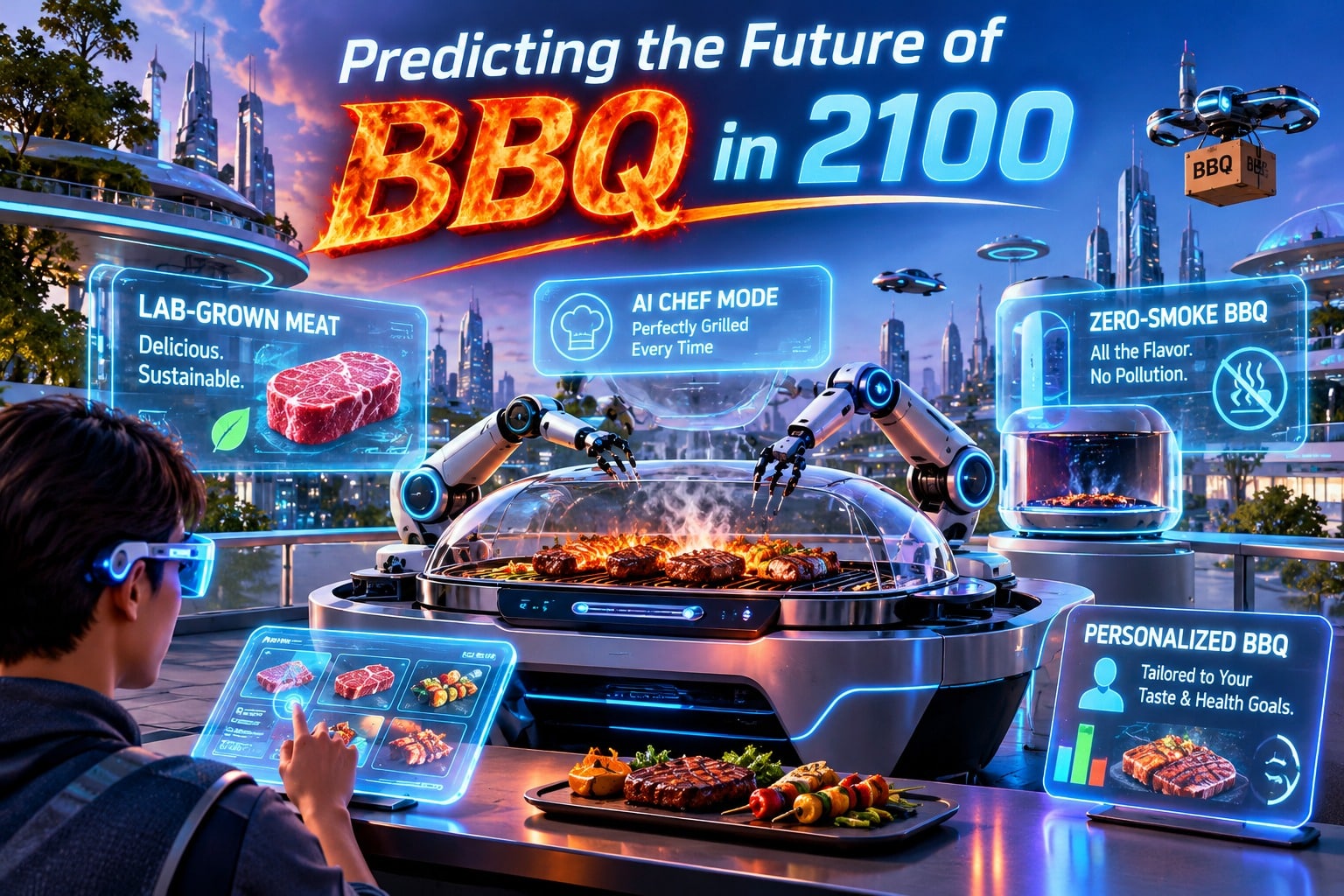
What happens when you combine a 14-hour brisket cook, artificial intelligence, a robotic pitmaster, and a time machine?
Hopefully, not a brisket that tastes like a computer motherboard. But by the year 2100, the barbecue world could look radically different from the smoky backyard cookouts we know today.
Imagine firing up a smoker that knows exactly when your brisket needs more heat, automatically adjusts its airflow, and sends you a notification when that beautiful bark reaches perfection. No temperature guessing.
No midnight trips outside to check the fire. No arguing with your brother-in-law about whether the brisket is actually done. Sounds like a pitmaster’s dream, doesn’t it?
The future of BBQ could bring all these possibilities and plenty more. From AI-powered smokers and lab-grown beef to sustainable fuels and personalized flavor technology, the next century could completely transform how we prepare, cook, and enjoy barbecue.
Naturally, this calls for a little time travel. Fans of Back to the Future will remember Doc Brown’s famous “Great Scott!” whenever something extraordinary happens.
And while the DeLorean might have needed 1.21 gigawatts to travel through time, our hypothetical trip to 2100 only needs a healthy appetite and an open mind.
So, let’s fire up the imagination, set the smoker for the next century, and find out what might be waiting on the other side of the timeline. One thing is certain: great brisket should never go out of style.
The Evolution of BBQ: From Traditional Pits to Futuristic Smokers
Barbecue has come a long way from cooking meat over an open fire. Early cooking methods relied on simple pits, burning wood, and plenty of patience.
Over generations, pitmasters refined their techniques, learning how different woods, temperatures, and cooking times affected the flavor and texture of meat.
Today, modern smokers have made barbecue more accessible. Pellet grills regulate fuel delivery automatically, digital thermometers track internal temperatures, and Wi-Fi-enabled smokers allow cooks to monitor their briskets from a smartphone.
But these conveniences could look primitive by 2100.
The next generation of smokers may manage nearly every part of the cooking process.
Advanced sensors could monitor chamber temperature, humidity, airflow, smoke density, and even the surface condition of the meat.
Instead of constantly adjusting dampers and checking thermometers, pitmasters might simply select a cooking profile and let the smoker handle the technical details.
Imagine a smoker that recognizes when the brisket’s internal temperature has stalled, adjusts its heat output, and maintains the ideal cooking environment without human intervention.

Will Traditional Wood-Fired BBQ Become a Thing of the Past?
Not likely. Technology may improve consistency, but traditional barbecue has something that automated cooking cannot easily reproduce: the experience of working with real fire and smoke.
The crackle of burning oak, the smell of hickory, and the satisfaction of managing a long cook are part of barbecue’s identity.
Even in 2100, traditional offset smokers could remain popular among enthusiasts who value craftsmanship over convenience. In fact, old-school cooking might become even more desirable as futuristic alternatives become commonplace.
After all, a computer might know the perfect temperature for brisket, but it probably won’t understand the satisfaction of tending a fire all night and waking up to a beautiful piece of smoked beef.
AI-Powered BBQ: Will Robots Become the Pitmasters of 2100?
Artificial intelligence is already changing how people work, communicate, and solve everyday problems. Its influence on cooking could become just as significant.
By 2100, AI-powered barbecue systems could function like digital pitmasters, using real-time information to make precise cooking decisions.
Instead of relying entirely on experience and instinct, these systems could analyze several factors simultaneously, including:
- Internal temperature: Monitoring different sections of the meat to identify uneven cooking.
- Humidity levels: Adjusting moisture conditions to help prevent excessive drying.
- Smoke intensity: Controlling how much smoke enters the cooking chamber.
- Heat distribution: Identifying hot and cold spots inside the smoker.
- Cooking progress: Predicting when the brisket will reach the desired tenderness.
The biggest advantage would be consistency. Brisket can be unpredictable. Two cuts from the same animal may have different thicknesses, fat distribution, and connective tissue.
Even experienced pitmasters occasionally encounter a stubborn brisket that refuses to cooperate.
AI could help reduce those surprises by adjusting cooking conditions based on the actual behavior of the meat rather than following a fixed schedule.

Personalized BBQ through Artificial Intelligence
The possibilities go beyond temperature control.
Future cooking systems could learn individual flavor preferences. Love a pepper-heavy Texas-style bark? Your AI assistant could recommend a customized rub. Prefer a stronger oak smoke profile? It could adjust the smoker’s settings to match your taste.
Some systems might even suggest cooking methods based on the specific cut of meat, its weight, fat content, and intended serving time.
Robotic assistants could eventually handle repetitive preparation tasks such as trimming briskets, applying seasoning, loading smokers, and managing fuel.
However, don’t start worrying about losing your pitmaster title just yet. AI might master the science of barbecue, but the art of barbecue still needs a human touch.
Besides, someone has to take credit when the brisket turns out perfect.
The Future of Brisket: Will we Still be Smoking Real Beef?
Let’s talk about the star of the show: brisket.
For generations, beef brisket has been one of barbecue’s most celebrated cuts. Its combination of connective tissue, intramuscular fat, and rich beef flavor makes it ideal for low-and-slow cooking.
But the way we produce meat could change dramatically over the next 75 years.
One possibility is the growing development of cultivated meat, sometimes called lab-grown meat. This technology produces animal cells in controlled environments rather than raising an entire animal for meat production.
Although cultivated meat is still developing, future advances could make it possible to produce beef with carefully controlled characteristics.
Imagine selecting a brisket with a specific fat distribution, muscle structure, and thickness before it even reaches the smoker.
Food scientists could potentially develop products designed to reproduce the qualities that make traditional brisket so appealing. The goal would be to achieve the tenderness, juiciness, and rich flavor that barbecue enthusiasts expect.
Plant-based meat alternatives could also become more sophisticated. Future versions might offer improved texture, realistic fat behavior, and better responses to long smoking sessions.

Could Lab-Grown Brisket Fool a Texas Pitmaster?
That’s where things get interesting.
A traditional Texas pitmaster might look at cultivated brisket and ask one simple question: Does it taste right?
Matching the appearance of beef is one challenge. Reproducing how fat renders, how connective tissue breaks down, and how meat responds to hours of smoke and heat is another.
Authentic brisket is about more than looking like beef. It’s about texture, flavor, bark, smoke penetration, and that unmistakable mouthfeel.
Some barbecue enthusiasts may embrace cultivated meat, particularly if it becomes more affordable and environmentally sustainable. Others will likely stick with conventionally raised beef.
And that’s perfectly fine. Barbecue has always been about personal preference.
Whether future brisket comes from a traditional cattle farm or an advanced food-production facility, the ultimate test will remain the same: Does it deserve a place on the cutting board?
Sustainable BBQ: The Green Revolution of 2100
Barbecue and sustainability haven’t always been the easiest partners.
Traditional smoking requires fuel, often in the form of wood, charcoal, or wood pellets. Large-scale meat production also carries environmental considerations, including land use, water consumption, and greenhouse gas emissions.
As environmental concerns become more important, the future of BBQ could depend heavily on cleaner energy and more sustainable food production.
By 2100, smokers may rely on renewable electricity, advanced biomass systems, and sustainably sourced wood products.
Energy-efficient cooking chambers could reduce heat loss, allowing smokers to maintain consistent temperatures while using less fuel.
Some manufacturers may also develop advanced heat-recovery systems that capture and reuse energy that would otherwise escape through exhaust systems.
Other possibilities include:
- Sustainably sourced wood: Using responsibly managed forests and agricultural wood waste.
- Renewable electricity: Powering high-efficiency electric smokers with cleaner energy sources.
- Biochar production: Exploring useful applications for carbon-rich material produced from biomass.
- Food waste reduction: Developing better systems for storing, processing, and reusing ingredients.
Can You Have Authentic Smoke Flavor Without the Environmental Cost?
This is one of the biggest challenges facing future barbecue technology.
Smoke is a major part of barbecue’s identity. Different woods produce different aromas and flavor characteristics. Oak provides a balanced smoke profile, hickory brings a stronger flavor, and fruitwoods offer lighter, sweeter aromatic notes.
Future smoke-generation systems could provide more precise control over these characteristics while using less raw material.
Advanced filtration and combustion technology might also help reduce unwanted emissions without eliminating the flavors that make smoked meat special.
However, there’s an important distinction: sustainable barbecue shouldn’t mean sacrificing flavor.
A cleaner smoker that produces dry, flavorless brisket won’t win many fans. The real challenge is finding ways to protect the environment while preserving everything people love about traditional barbecue.
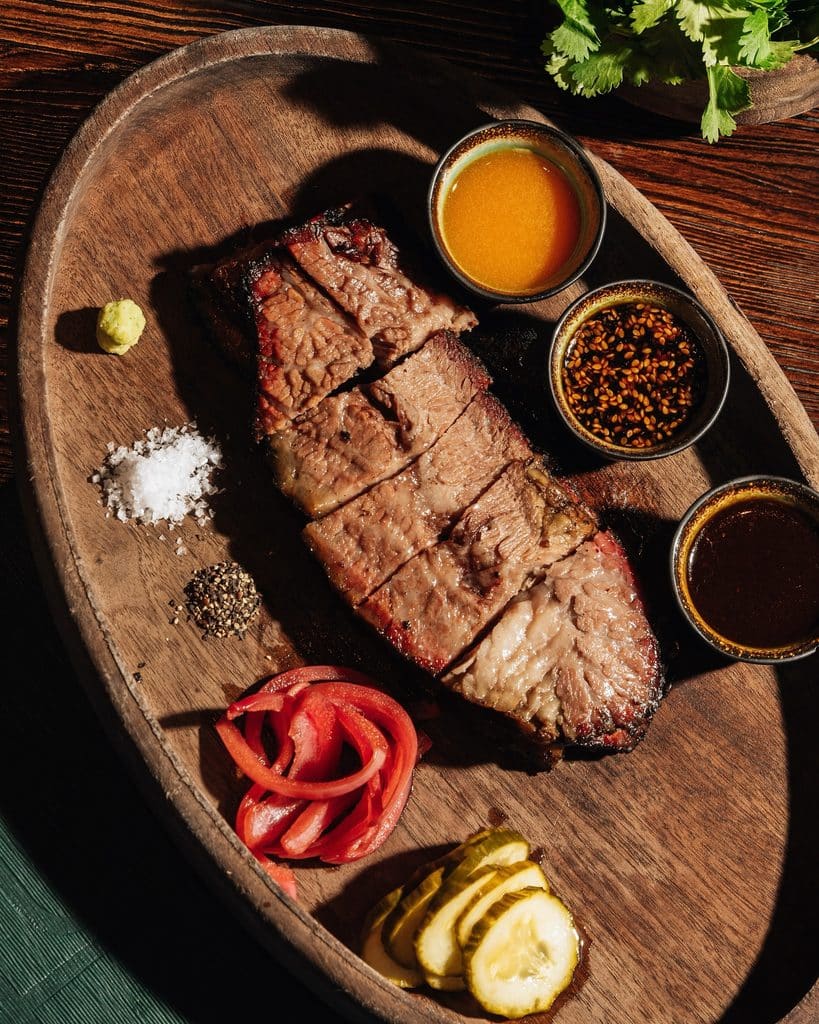
Futuristic BBQ Flavors: What Will Brisket Taste Like in 2100?
The future of barbecue won’t just be about smarter equipment. It could also transform the ingredients and flavors we put on the grill.
Food science is advancing in areas such as precision fermentation, alternative protein development, and ingredient production. These technologies could influence everything from barbecue sauces to spice blends.
Imagine a seasoning system that analyzes your favorite flavors and creates a customized brisket rub. Prefer a stronger pepper kick? It adjusts the blend. Want more sweetness and less heat? It changes the proportions.
Personalized flavor technology could make every BBQ experience unique.
Advanced food-production methods might also improve access to ingredients that are currently expensive, seasonal, or difficult to source.
New spice varieties, fermentation-based flavor ingredients, and carefully developed smoke alternatives could introduce barbecue enthusiasts to combinations that today’s pitmasters haven’t even considered.
AI-assisted flavor pairing could suggest combinations based on the characteristics of a particular cut of meat.
For example, a cooking assistant might recommend a specific combination of spices, wood aromas, and finishing sauces to complement the fat content of a brisket.
Will Texas BBQ Still Taste Like Texas BBQ?
Let’s hope so.
Texas barbecue has a distinctive identity built around simple seasoning, quality beef, wood smoke, and patient cooking.
The classic salt-and-pepper brisket remains a favorite for a reason. It allows the beef and smoke to do most of the talking.
Even as futuristic flavor technology becomes available, traditional regional styles could remain popular.
Innovation doesn’t have to replace tradition. It can give tradition more ways to evolve.
And honestly, if somebody offers you a futuristic brisket with 47 ingredients, a digital seasoning profile, and a flavor algorithm, there’s nothing wrong with asking for a simple salt-and-pepper version.
Some things don’t need fixing.
The Future BBQ Experience: Restaurants, Backyard Grilling, and Virtual Pitmasters
Barbecue isn’t just about cooking meat. It’s about the experience surrounding it.
Think about backyard gatherings, family celebrations, neighborhood cookouts, and the friendly competition between people who insist their ribs are better than everyone else’s.
By 2100, the technology surrounding these experiences could look completely different.
Futuristic BBQ restaurants might feature automated cooking stations, robotic kitchen assistants, smart serving systems, and interactive dining environments.
Customers could customize their meals through digital interfaces, selecting everything from meat alternatives and seasoning profiles to smoke intensity and preferred doneness.
Some restaurants might even offer immersive dining experiences using augmented or virtual reality. Guests could learn about the origins of their food, watch virtual demonstrations of traditional smoking techniques, or explore the history of regional barbecue.
Backyard BBQ in 2100
Home grilling could become even more convenient.
Smart backyard grills might connect with household automation systems, allowing users to schedule cooking sessions, monitor fuel supplies, and receive maintenance alerts.
Augmented reality cooking guides could display instructions directly through compatible glasses or other wearable devices.
Imagine looking at your brisket and seeing an interactive display showing its internal temperature, estimated cooking progress, and recommended next steps.
Virtual pitmaster assistants could also provide real-time advice to beginners.
Need help adjusting airflow? Your assistant provides instructions. Unsure whether the bark has developed properly? It offers guidance based on sensor readings.
Still, the most important part of backyard BBQ probably won’t change.
People will continue gathering around good food, sharing stories, and arguing about whose barbecue is best.
No robot can replace the satisfaction of feeding a hungry crowd and hearing someone say, “That’s the best brisket I’ve ever had.”
At least, not yet.
What Will Never Change About BBQ? The Traditions worth Preserving
With all these technological possibilities, it’s easy to imagine barbecue becoming a completely automated activity.
But that would overlook something important.
Barbecue is more than a cooking method. It’s a tradition built around patience, craftsmanship, community, and the appreciation of good food.
Even in 2100, some people will probably prefer traditional offset smokers, handmade rubs, carefully selected wood, and the satisfaction of managing a fire themselves.
There will always be enthusiasts who believe the best brisket comes from a smoker that requires attention, experience, and a little stubbornness.
And they may have a point.
Technology can measure temperature, calculate cooking times, and monitor humidity. But barbecue also involves judgment, creativity, and personal preference.
A seasoned pitmaster knows that cooking isn’t always about following numbers. Sometimes the meat tells you what it needs.
The future of BBQ will likely belong to those who understand how to balance innovation with tradition.
Perhaps the biggest development of the next century won’t be a robot that can smoke brisket perfectly. It will be technology that makes great barbecue easier to produce while keeping the traditions alive.
After all, nobody wants a future where barbecue becomes just another automated food-delivery experience.
We still want the smoke, the aroma, the conversation, and the anticipation of lifting that brisket off the smoker.
Great Scott! The Future of BBQ Is Looking Delicious
So, what will barbecue look like in 2100?
We could see AI-powered smokers that manage every detail of the cooking process, robotic pitmasters that handle preparation, cultivated beef designed for consistent results, and sustainable technologies that make barbecue more environmentally responsible.
Flavor technology could introduce exciting new combinations, while smart grills and virtual cooking assistants could make backyard barbecue easier than ever.
But despite all these possibilities, one thing will probably remain unchanged: the love of great barbecue.
Maybe Doc Brown’s DeLorean will never make it to your backyard, but the idea of traveling into the future gives us an exciting glimpse of what might be possible.
And if a pitmaster from 2100 ever invites you over for brisket, don’t worry too much about the technology. Just bring your appetite.
One final question remains: Would you trust a robot to smoke your brisket, or would you rather leave it in the hands of a pitmaster who knows how to manage a real fire?
Great Scott! Here’s hoping both can deliver a slice worth remembering.
Frequently Asked Questions
1. What will BBQ look like in 2100?
The future of BBQ could feature AI-powered smokers, robotic pitmasters, smart grilling systems, sustainable cooking fuels, and advanced food technologies. While cooking methods may become more automated, traditional barbecue flavors and techniques could remain popular.
2. Will AI and robots replace traditional pitmasters?
AI and robotic technology may automate tasks such as temperature monitoring, meat preparation, smoke control, and cooking adjustments. However, traditional pitmasters will likely remain important because barbecue involves craftsmanship, personal taste, and experience that technology cannot easily replace.
3. Will we still eat traditional beef brisket in 2100?
Traditional beef brisket will likely remain a barbecue favorite, although cultivated meat and plant-based alternatives could become more common. Advances in food science may also create new brisket alternatives designed to replicate the flavor, texture, and tenderness of conventional smoked beef.
Featured image credit: ChatGPT
