
You ever spend half a day tending the fire, smelling like smoke (in a good way), only to slice into your masterpiece and… chew like you’re working a jaw workout routine?
Yeah. Happens to the best of us.
Here’s the truth most beginners don’t hear enough: BBQ isn’t just cooking – it’s managing heat, time, and moisture like a three-way negotiation. And when one of those goes sideways, your meat lets you know immediately.
This guide is your no-nonsense, pitmaster-approved playbook for BBQ troubleshooting. We’re not just fixing problems – we’re understanding why they happen so you don’t repeat them next weekend.
By the end, you’ll know how to:
- Turn tough brisket into tender slices
- Rescue dry meat before it hits the trash
- Bring bland BBQ back to life with flavor
Let’s fix your BBQ.
Why BBQ Goes Wrong (Understanding the Basics)
Before we fix anything, you need to understand the engine behind good BBQ.
At its core, BBQ success comes down to three things:
- Heat control
- Time (and patience)
- Moisture retention
Mess up one, and the others can’t save you.
The Real Culprit: Collagen and Fat
Tough cuts like brisket and ribs are loaded with connective tissue. That’s collagen—and it only breaks down properly when you cook low and slow.
Rush it? You get rubber.
Cook it right? You get that melt-in-your-mouth magic.
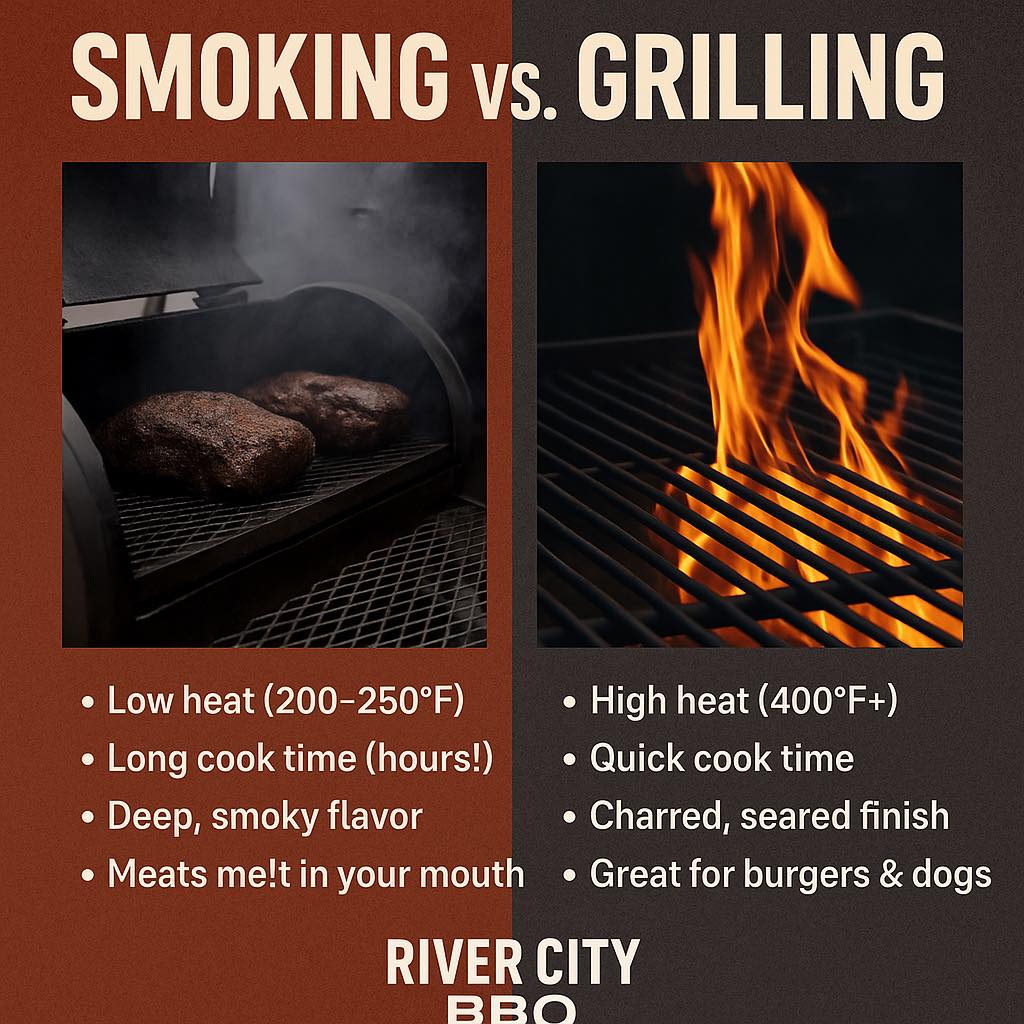
Grilling vs. Smoking (Big Difference)
- Grilling = hot and fast (steaks, burgers)
- Smoking = low and slow (brisket, ribs, pork shoulder)
Trying to smoke like you grill is one of the fastest ways to end up Googling “why is my meat terrible?”
Small Mistakes Snowball
- Too much heat → dries out meat
- Too little time → tough texture
- Poor seasoning → bland results
BBQ troubleshooting starts with recognizing that every step matters.
How to Fix Tough BBQ Meat
Let’s talk about meat that fights back.
Common Causes of Tough Meat
- Undercooked connective tissue
Brisket at 170°F isn’t done – it’s just getting started. - Cooking too hot
High heat tightens muscle fibers. That’s science – and bad eating. - Skipping the rest period
Slice too early, and all the juices run out like they’re escaping a bad movie.
Quick Fixes for Tough Meat
Here’s how you recover without starting over:
- Put it back on the heat (low and slow)
If it’s tough, it’s probably undercooked. Keep going. - Wrap it (the “Texas crutch”)
Use foil or butcher paper with a splash of broth.
→ This traps heat and moisture, speeding up collagen breakdown. - Slice against the grain
This is huge.
Cutting across muscle fibers = instant tenderness upgrade.
Prevention Tips (So You Don’t Repeat This)
- Cook to feel, not just temperature
Brisket should feel like soft butter when probed - Be patient
BBQ rewards time, not impatience - Know your cuts
Tough cuts need long cooks – don’t fight it
How to Fix Dry BBQ Meat
Dry BBQ is heartbreaking. It looks perfect… until you take a bite.
Why Meat Turns Dry
- Overcooking (most common mistake)
- Too lean of a cut
- No moisture strategy during cooking
Here’s the kicker: dry meat is usually overcooked, not undercooked.
Quick Fixes for Dry Meat
You can still save it – here’s how:
- Add moisture immediately
o Warm broth
o Melted butter
o BBQ sauce
→ Let it soak in, not just sit on top
- Shred it
Pulled pork-style fixes a lot of sins
→ Mix with sauce and juices - Use a glaze or mop sauce
Adds both moisture and flavor fast
Prevention Tips
- Use a meat thermometer (seriously)
Guessing leads to dryness - Try brining or marinating
Salt helps meat retain water - Wrap during cooking
Especially for long smokes
→ This keeps moisture locked in - Don’t overcook “just to be safe”
Safe doesn’t mean dry
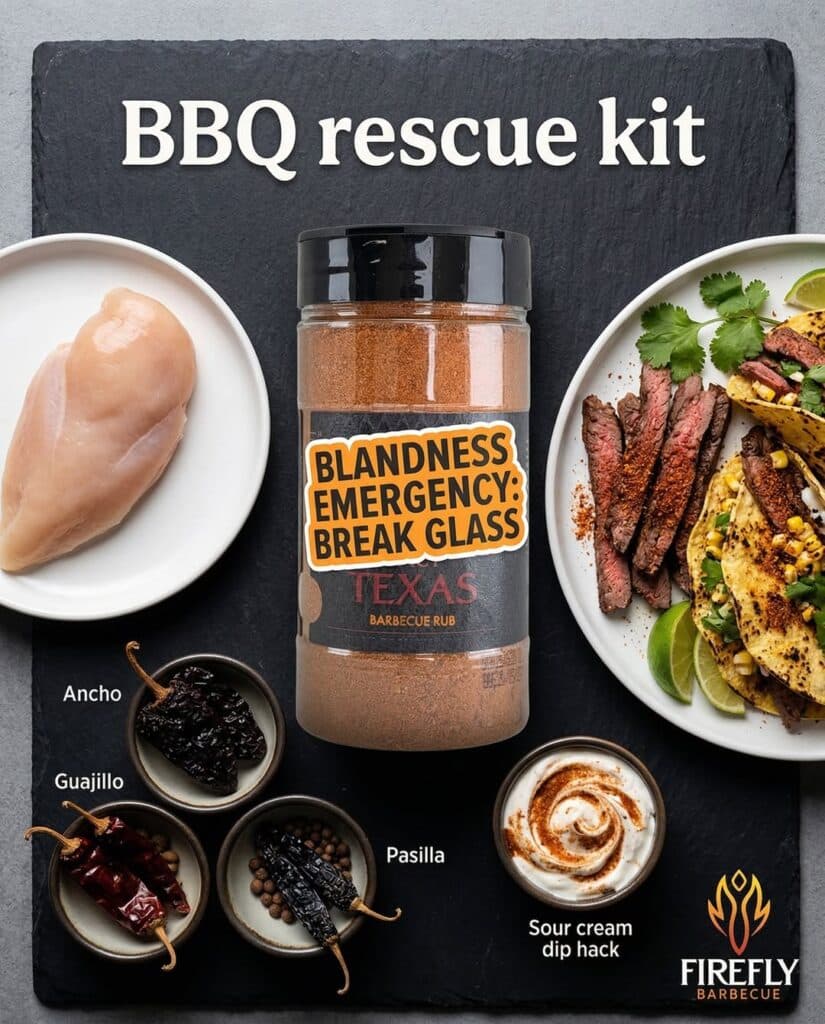
How to Fix Bland BBQ Meat
Bland BBQ is like a joke with no punchline – it just doesn’t land.
Common Causes of Bland Flavor
- Not enough seasoning
- Seasoning too late
- Weak smoke flavor
- No salt foundation
Let’s be clear:
If your meat is bland, it was under-seasoned. Almost always.
Quick Fixes for Bland BBQ
- Add finishing salt
This alone can transform flavor instantly - Brush on sauce or glaze
Adds sweetness, tang, and depth - Layer seasoning after cooking
A light dusting of rub can wake things up - Quick smoke boost
Toss it back on the smoker briefly with fresh wood
Prevention Tips
- Season generously (more than you think)
Big cuts need big flavor - Salt early
Let it penetrate the meat - Use quality wood
Good smoke = good flavor - Balance flavors
Great BBQ hits:
o salty
o sweet
o smoky
o slightly acidic
Essential BBQ Tools That Prevent Mistakes
You don’t need fancy gear – but a few tools make BBQ troubleshooting way easier.
- Meat thermometer
→ This is non-negotiable - Reliable smoker or grill
→ Temperature control is everything - Foil or butcher paper
→ For wrapping and moisture control - Water pan
→ Helps stabilize heat and humidity - Tongs (not forks)
→ Don’t stab your meat – you’re letting juices escape
BBQ Temperature and Timing Cheat Sheet
If you remember nothing else, remember this section.
Target Internal Temps
- Chicken: 165°F (74°C)
- Pork ribs: 195–203°F (90–95°C)
- Brisket: 200–205°F (93–96°C)
- Steak: 125–135°F (52–57°C) depending on doneness
Resting Times
- Small cuts: 5–10 minutes
- Large cuts: 30–60 minutes
Resting is not optional.
It’s where juices redistribute and magic happens.
Pro Tips for Perfect BBQ Every Time
This is the stuff you only learn after a few “what went wrong?” moments.
- Control your fire, don’t chase it
Constant adjustments = unstable cooking - Cook with intention, not panic
Every lid lift costs heat and time - Keep notes
What worked? What didn’t?
Your future self will thank you - Trust the process
BBQ is slow for a reason - Taste as you go (when possible)
Adjust seasoning before it’s too late
The Stall: Why Your Meat “Stops Cooking” (And What To Do About It)
You’re cruising along, feeling like a BBQ hero… then suddenly your meat hits around 150–170°F and just refuses to move. Welcome to the stall – every pitmaster’s rite of passage.
Here’s what’s happening: evaporative cooling. Moisture on the surface of the meat evaporates, cooling it down at the same rate it’s heating up. It’s basically your brisket sweating out the heat.
Now, don’t panic and crank the fire – that’s how you ruin everything.
Instead, you’ve got two smart plays:
- Wait it out (pure, traditional approach)
- Wrap the meat (the famous Texas crutch)
Wrapping pushes through the stall faster by trapping heat and moisture.
Key takeaway: The stall isn’t a problem – it’s part of the process.
Smoke Overload: When Too Much Smoke Ruins Flavor
Yes, you can absolutely use too much smoke. I’ve seen it happen – meat comes out tasting like a burnt log instead of BBQ.
The issue is usually dirty smoke – thick, white, billowy clouds. That’s not flavor – that’s bitterness.
What you want is thin blue smoke. It’s almost invisible, but it delivers that clean, deep BBQ flavor.
Common mistakes:
- Using too much wood at once
- Poor airflow in the smoker
- Burning unseasoned or wet wood
If your BBQ tastes harsh or bitter, this is your culprit.
Fix it fast:
- Open airflow vents
- Use smaller chunks of wood
- Let the fire burn clean before adding meat
Good BBQ smoke whispers. It doesn’t shout.
The Importance of Resting Meat (And Why Most People Rush It)
You’ve made it to the finish line. The meat looks perfect. The smell? Unreal.
And then – you slice immediately.
Big mistake.
When meat cooks, the juices are pushed toward the center. If you cut too soon, they spill out all over your cutting board. That’s not flavor on the plate – that’s flavor lost.
Resting allows juices to redistribute throughout the meat.
Think of it like letting the meat relax after a long workout.
- Small cuts: rest 5–10 minutes
- Large cuts (brisket, pork shoulder): 30–60 minutes minimum
Wrap loosely in foil and let it sit.
Key phrase to remember: Rested meat = juicy meat.
Fire Management: The Skill That Separates Beginners from Pitmasters
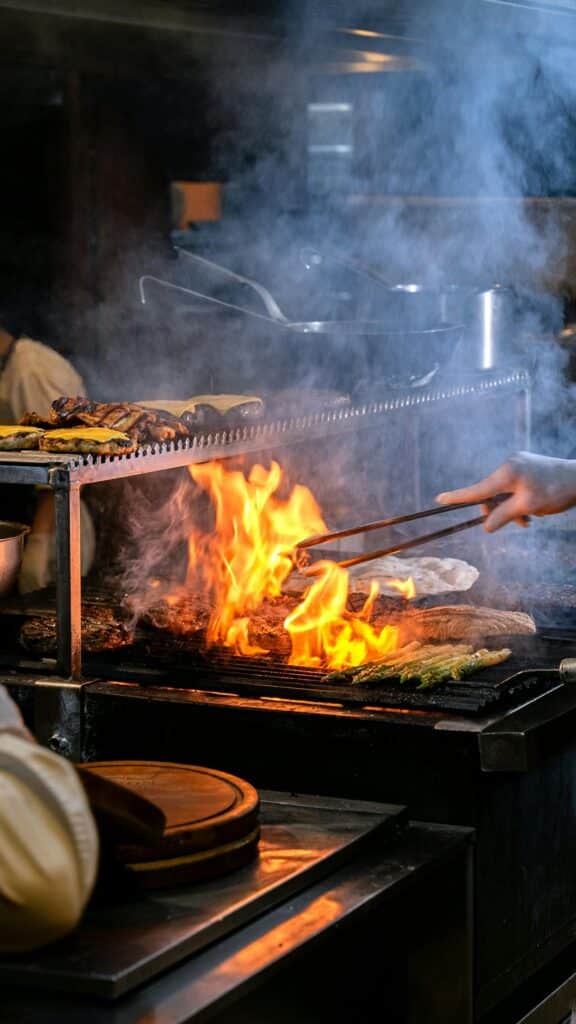
You can have the best meat and seasoning in the world—but if you can’t control your fire, you’re just guessing.
Fire management is everything.
Most beginners make one of two mistakes:
- Constantly adjusting the fire (temperature rollercoaster)
- Ignoring it completely (temperature drift)
What you want is steady, controlled heat.
Tips that actually work:
- Use consistent fuel (same charcoal or wood type)
- Adjust airflow – not just fuel – to control heat
- Make small changes, then wait
BBQ isn’t about reacting fast – it’s about reacting smart.
Once you master fire, BBQ troubleshooting becomes 10x easier, because you’ve eliminated the biggest variable.
Meat Selection: Why Your Cut Matters More Than You Think
Let me say this straight: you can’t turn a bad cut into great BBQ – no matter how good your technique is.
Different cuts behave very differently on the smoker.
- Brisket & pork shoulder → tough but forgiving
- Chicken breast → lean and easy to dry out
- Ribs → balance of fat, meat, and timing
The biggest mistake? Picking cuts that don’t match your cooking method.
Look for:
- Good marbling (fat = flavor and moisture)
- Fresh, high-quality meat
- Cuts suited for low and slow cooking
If your BBQ keeps disappointing, start here.
Better meat doesn’t guarantee great BBQ – but it makes it a whole lot easier.
Sauce Timing: When to Sauce (and When Not To)
Sauce can make or break your BBQ – and timing is everything. Put it on too early, and the sugars burn. Put it on too late, and it just sits there without bonding to the meat.
Here’s the move:
- Apply sauce in the last 10–20 minutes of cooking
- Let it caramelize slightly, not burn
- Use thin layers – don’t drown the meat
Also, not all BBQ needs sauce. Good BBQ should stand on its own.
Sauce should enhance – not hide – your meat.
If you’re fixing bland BBQ, sauce helps. But if you’re relying on it every time, something earlier in your process needs work.
Weather Matters: How Wind, Cold, and Humidity Affect BBQ
You might not think about it, but weather can mess with your cook big time.
- Cold air pulls heat from your smoker
- Wind spikes or drops temperatures unpredictably
- Humidity affects smoke and moisture retention
Ever had a cook that went perfectly one day and totally sideways the next? That’s probably why.
Quick adjustments:
- Use a windbreak
- Preheat longer in cold weather
- Monitor temps more closely
Outdoor cooking means adapting to outdoor conditions.
Great pitmasters don’t fight the weather – they work with it.
Overhandling Meat: The Hidden Juice Killer
This one sneaks up on a lot of people.
Every time you:
- Flip too often
- Press down on the meat
- Poke it repeatedly
…you’re losing juices and disrupting the cooking process.
Especially pressing meat – don’t do it. That sizzle you hear? That’s moisture escaping.
Handle your meat like you respect it:
- Flip only when needed
- Use tongs, not forks
- Keep the lid closed as much as possible
Less handling = better results.
Sometimes the best move in BBQ is doing nothing at all.
Flavor Layering: Building BBQ That Actually Tastes Complex
Great BBQ isn’t just salty or smoky – it’s layered. If your BBQ tastes “flat,” you’re missing depth.
Here’s how pitmasters build flavor:
- Base layer – salt and seasoning
- Smoke layer – wood choice and clean burn
- Moisture layer – spritz, mop, or wrap
- Finish layer – sauce, glaze, or resting juices
Each step adds something.
Want next-level BBQ? Add contrast:
- Sweet + heat
- Smoke + acid
- Salt + richness
Bold keyword to remember: Layered flavor beats one-dimensional BBQ every time.
This is how you go from “pretty good” to “who made this?!”
Mastering BBQ Is About Control, Not Luck
Here’s the honest truth:
Every bad BBQ session is a lesson in disguise.
Tough meat? You needed more time.
Dry meat? Too much heat or too long.
Bland meat? Not enough seasoning.
That’s the heart of BBQ troubleshooting – understanding cause and effect.
Stick with it, stay patient, and don’t be afraid to experiment. Even seasoned pitmasters still tweak, adjust, and learn every time they fire up the pit.
And remember:
Great BBQ isn’t about perfection – it’s about control, consistency, and a little bit of swagger.
FAQ: Quick BBQ Troubleshooting Answers
Why is my BBQ meat always tough?
Because it’s likely undercooked, not overcooked. Tough cuts need time for collagen to break down.
How do I keep BBQ meat juicy?
Control temperature, avoid overcooking, and use brining or wrapping techniques.
What’s the fastest way to fix bland BBQ?
Add finishing salt or sauce. It’s the quickest flavor boost.
Should I wrap meat while smoking?
Yes – especially for long cooks. Wrapping helps retain moisture and speed up cooking.
How do I know when BBQ is done?
Don’t rely on time alone.
Use:
- Temperature
- Texture (probe tenderness)
Featured image credit: Mario Schafer
