
“To the ruler, the people are heaven; to the people, food is heaven.”
The ancient Chinese Emperor Gaozu of Han – the legendary founder of the Han Dynasty – recognized that fundamental truth over two thousand years ago.
But if he had ever pulled up a stool in a Visayan kitchen in the central Philippines, he undoubtedly would have added a crucial footnote to his empire-building wisdom: if you’re afraid of pork fat, run for the hills.
Let’s be honest with each other. Modern food culture spends a ridiculous amount of time trying to make everything lean, green, and completely devoid of joy.
We substitute zoodles for pasta, swap real sugar for stevia, and pretend turkey bacon is a legitimate food group. But every now and then, your soul needs something that laughs in the face of calorie counting.
Enter humba.
This isn’t a quick Tuesday night stir-fry designed to keep your abs visible.
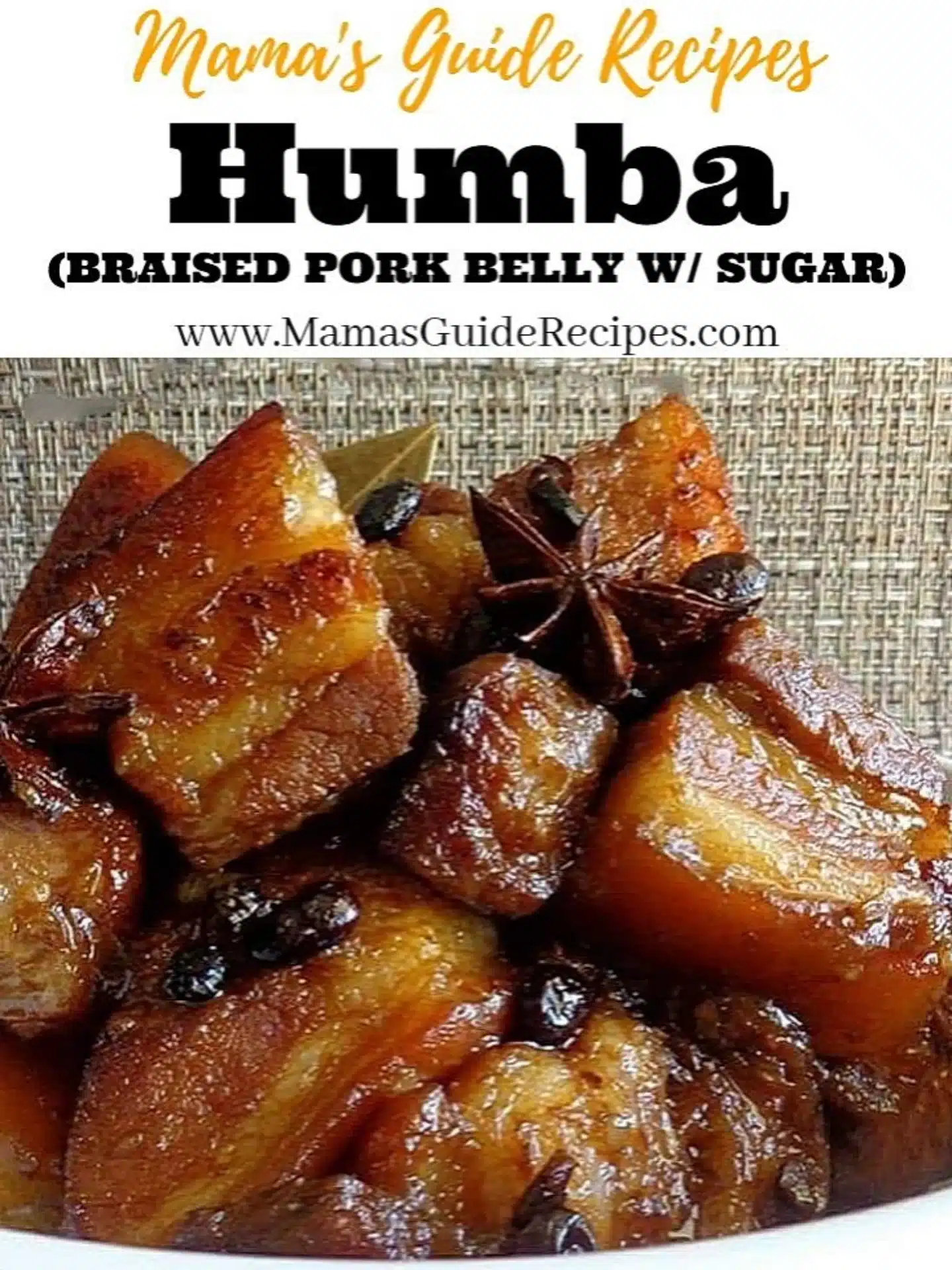
Humba is the undisputed king of Filipino comfort food – a rich, sticky, slow-braised masterpiece of pork belly that hits every single taste receptor on your tongue at the exact same time.
It is sweet, savory, tangy, and so melt-in-your-mouth tender that chewing becomes entirely optional.
If you’ve never cooked it before, prepare yourself. You’re about to learn why this dish causes absolute chaos at family reunions when the last scoop of sauce hits the table.
What is Authentic Filipino Humba?
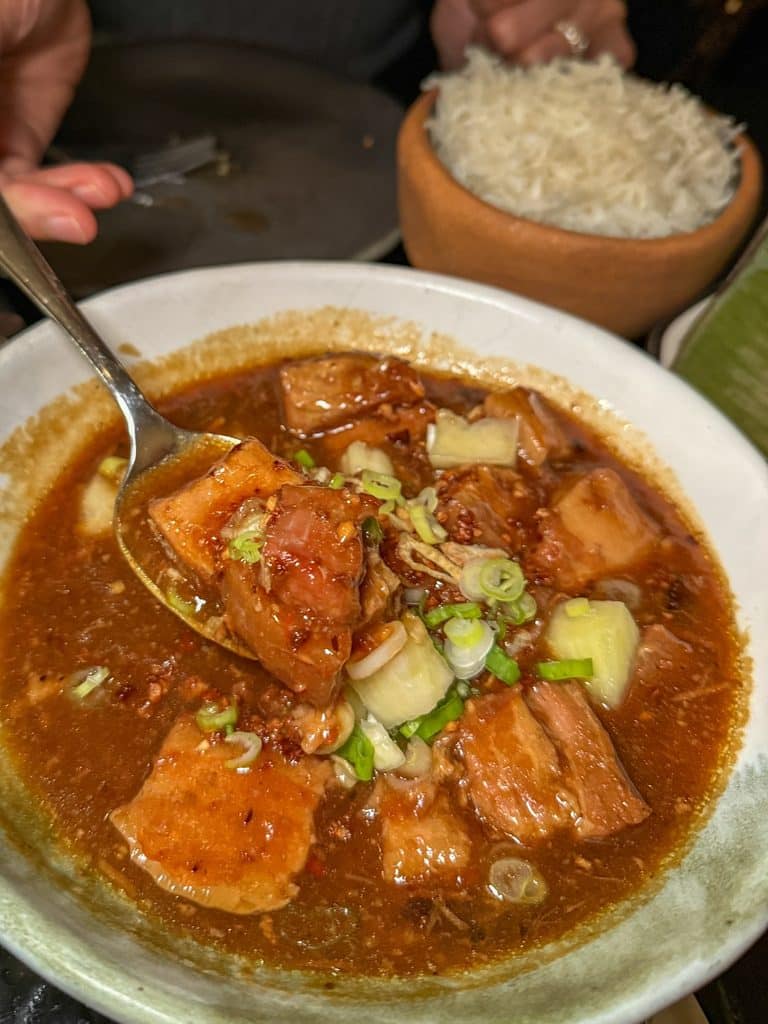
To understand humba, you first have to understand the central and southern islands of the Philippines, particularly Cebu. Around these parts, humba isn’t just dinner; it’s a lifestyle.
Historically, the dish traces its roots back to Chinese immigrants – specifically Hokkien traders who brought Hong Ba (red braised pork belly) to Philippine shores centuries ago.
Local cooks took that rich, braised pork concept, looked around their tropical pantries, and did what Filipinos do best: turned up the flavor intensity to eleven.
They swapped subtle spices for aggressive garlic, dumped in brown sugar, threw in local cane vinegar, and added fermented black beans for a massive hit of umami.
The result was a dish that could sit on a hot kitchen counter for days without spoiling – a critical feature before modern refrigeration existed – and taste even better on day three.
What makes authentic humba instantly recognizable comes down to a few key elements:
- Pork Belly (Liempo): You need layers of meat, fat, and skin. Lean pork chops have no business being anywhere near this pot.
- Salted Fermented Black Beans (Tausi): These tiny, salty flavor bombs provide the earthy backbone that keeps the dish from turning into a dessert.
- Dried Banana Blossoms (Bulak ng Saging): They look like dark shreds of wood, but they add a subtle floral aroma and a wonderful, stringy texture that absorbs the glaze.
- Dark Brown Sugar: This isn’t just for sweetness; it creates the sticky, dark caramelization that coats your lips.
The Great Rivalry: Humba vs. Pork Adobo
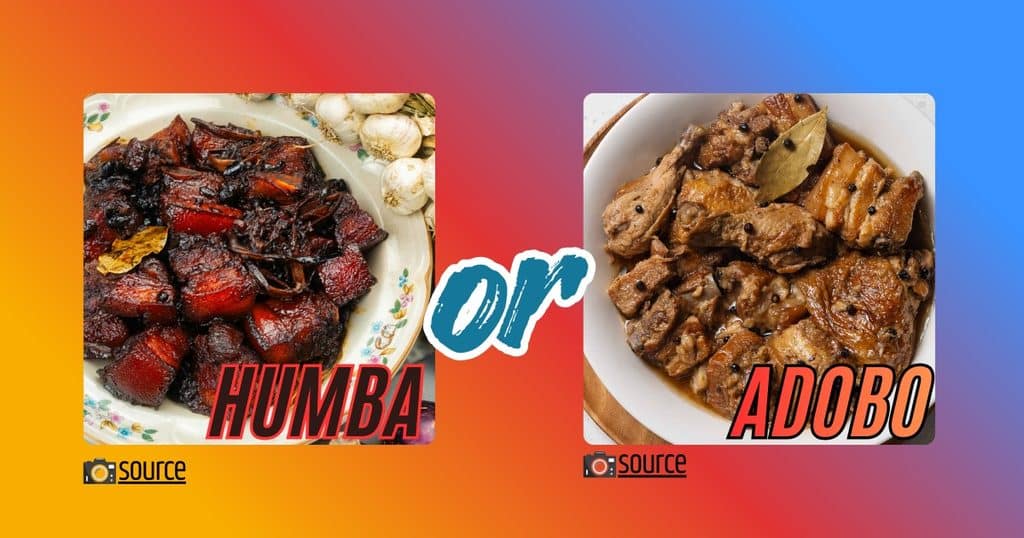
Mention humba to someone outside the Philippines, and they’ll usually say, “Oh, so it’s basically Pork Adobo?”
Do not say this to a native Visayan unless you want a lecture. That’s like telling a Texan that beef brisket is just pot roast with smoke.
While both dishes start with a classic base of soy sauce, vinegar, and garlic, their personalities couldn’t be more different:
| Feature | Pork Adobo | Authentic Humba |
| Primary Flavor Profile | Tangy, garlic-forward, sharply savory | Deeply sweet, savory, and intensely rich |
| Key Sweetener | None (or just a tiny pinch to balance acid) | Heavy dark brown sugar or pineapple juice |
| Signature Ingredients | Bay leaves, whole black peppercorns | Fermented black beans (tausi) and banana blossoms |
| Sauce Consistency | Thin, vinegary broth or clear rendered oil | Thick, sticky, dark caramelized glaze |
Adobo is bright and tangy; humba is heavy, decadent, and unapologetically rich. Think of Adobo as a dependable daily driver and humba as the luxury sports car you pull out of the garage for special occasions.
The Secrets to Master-Level Execution
Braising pork belly sounds simple enough, but going from “good” to “legendary” requires mastering a few critical mechanics in the kitchen.
1. The Rendering Trick
Rendering fat is an art form. If you throw raw pork belly straight into a pot of liquid, the fat stays rubbery and chewy. You must sear the pork cubes in a dry, hot pot first.
As the heat hits the pork skin, the fat liquefies, browning the meat in its own juices and giving you a deep, nutty base note that no cooking oil in the world can replicate.
2. Respect the Vinegar Rule
When you pour vinegar into a simmering pot, do not touch it with a spoon for at least three minutes.
Stirring cold or room-temperature vinegar immediately breaks down the acid before it can cook off, leaving your sauce with a sharp, harsh bite.
Let it boil uncovered, let the raw fumes evaporate, and then stir to your heart’s content.
3. The Salt Control Check
Fermented black beans (tausi) pack a serious punch.
Always rinse your black beans under cold tap water before adding them. If you dump them straight out of the jar with their packing brine, your humba will end up so salty you’ll be drinking water until next Tuesday.
Perfect Side Dishes and Pairings
A dish this rich cannot exist in a vacuum. You need the right supporting cast to balance out the deep, sweet fat.
- Warm Jasmine Rice: Absolutely mandatory. The sauce from humba is liquid gold, and fluffy white rice acts like a sponge to catch every single drop.
- Atchara (Pickled Green Papaya): The crunchy, ice-cold acidity of pickled papaya cuts straight through the thick pork fat like a culinary palate cleanser.
- Calamansi Juice or Cold Lager: Wash it down with a bright, tart citrus drink or a ice-cold beer. The carbonation and acid clear your palate between bites so every forkful tastes like the first.
Final Thoughts
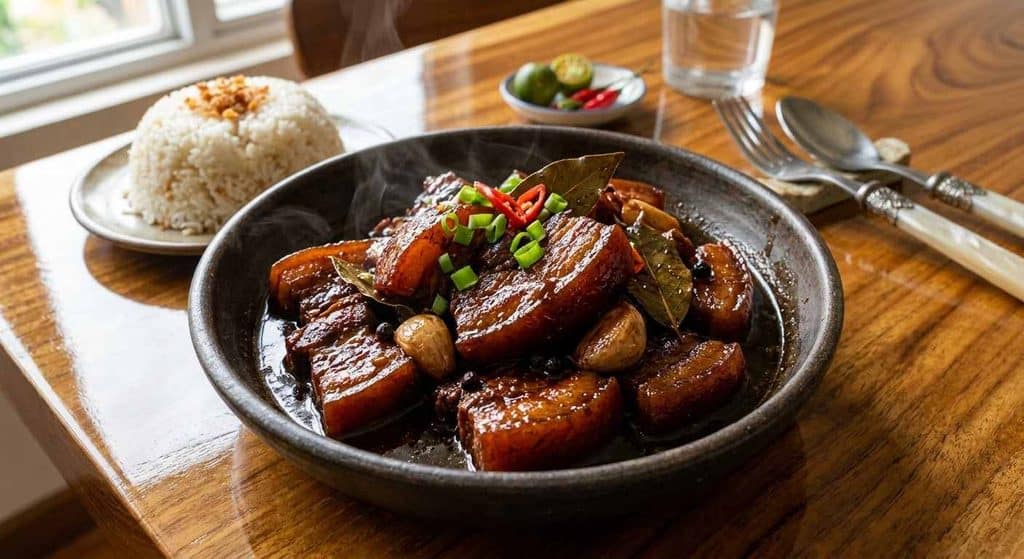
Making authentic humba is a celebration of low-and-slow home cooking. It forces you to slow down, respect the process, and let simple ingredients transform into something truly extraordinary over a gentle flame. Put on an apron, fire up the stove, and get ready to serve a dish that people will be talking about long after the plates are cleared.
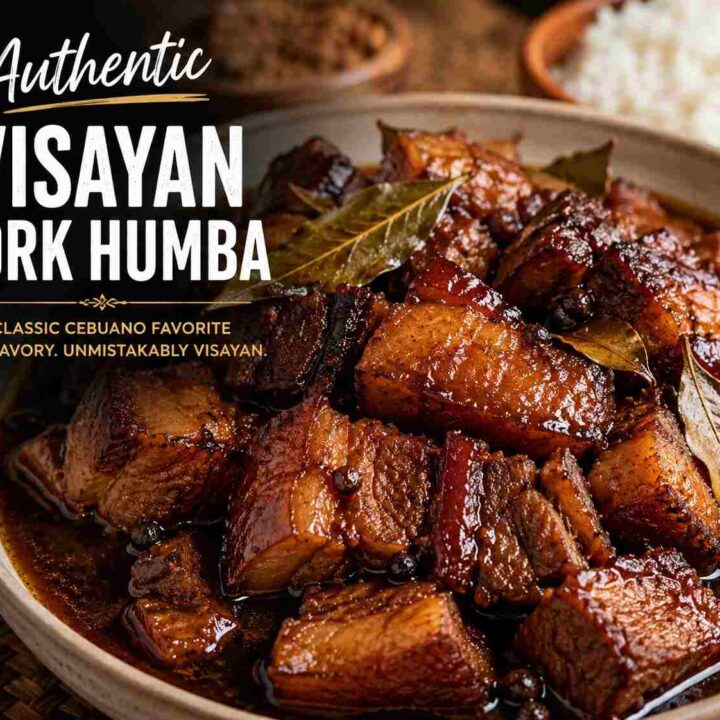
Authentic Visayan Pork Humba
Image credit: ChatGPT
Ingredients
- 2 lbs (1 kg) Pork Belly, cut into 1.5-inch cubes
- 1/2 cup Soy Sauce (Filipino brand like Datu Puti preferred)
- 1/3 cup Cane Vinegar (or Coconut Vinegar)
- 1/2 cup Dark Brown Sugar
- 1 cup Pineapple Juice (unsweetened)
- 1 head Garlic, peeled and thoroughly crushed
- 1 medium Red Onion, chopped
- 2 tbsp Fermented Salted Black Beans (Tausi), rinsed well
- 1/2 cup Dried Banana Blossoms
- 3 Dried Bay Leaves
- 1 tsp Whole Black Peppercorns
- 1 cup Water (if needed during braising)
- 4 Hard-Boiled Eggs (peeled, optional)
Instructions
- Marinate the Meat: Combine the pork belly cubes, soy sauce, crushed garlic, and whole black peppercorns in a large mixing bowl. Toss well to coat every piece. Let it marinate for at least 30 minutes at room temperature.
- Sear the Pork: Place a large Dutch oven or heavy-bottomed pot over medium-high heat. Pull the pork out of the marinade (save the liquid!) and lay the pieces in the dry pot. Sear for 6–8 minutes until the outer edges are browned and the pork belly begins rendering its own oil.
- Sauté the Aromatics: Push the pork to the sides of the pot. In the rendered fat sitting in the center, add the chopped onion and rinsed black beans. Sauté for 2 minutes until aromatic.
- Deglaze and Cook the Vinegar: Pour in the saved marinade, pineapple juice, and cane vinegar. Bring the liquid to a rapid boil for 3 minutes without stirring to burn off the raw vinegar smell.
- Set the Braise: Add the dark brown sugar, bay leaves, and dried banana blossoms. Stir everything together gently, lower the heat to its absolute minimum setting, and cover the pot tightly with a lid.
- Simmer Until Tender: Braise on low heat for 50 to 60 minutes. Check the pot around the 30-minute mark; if the liquid is evaporating too fast, add up to a cup of water. The pork is done when a fork slides into the fat layer with zero resistance.
- Glaze and Serve: Remove the lid and drop in the hard-boiled eggs. Turn the heat up to medium and let the sauce boil down for 8–10 minutes until it turns into a thick, shiny glaze. Ladle generously over steaming mounds of white rice and serve immediately!
Featured image credit: @mamas.guide
