
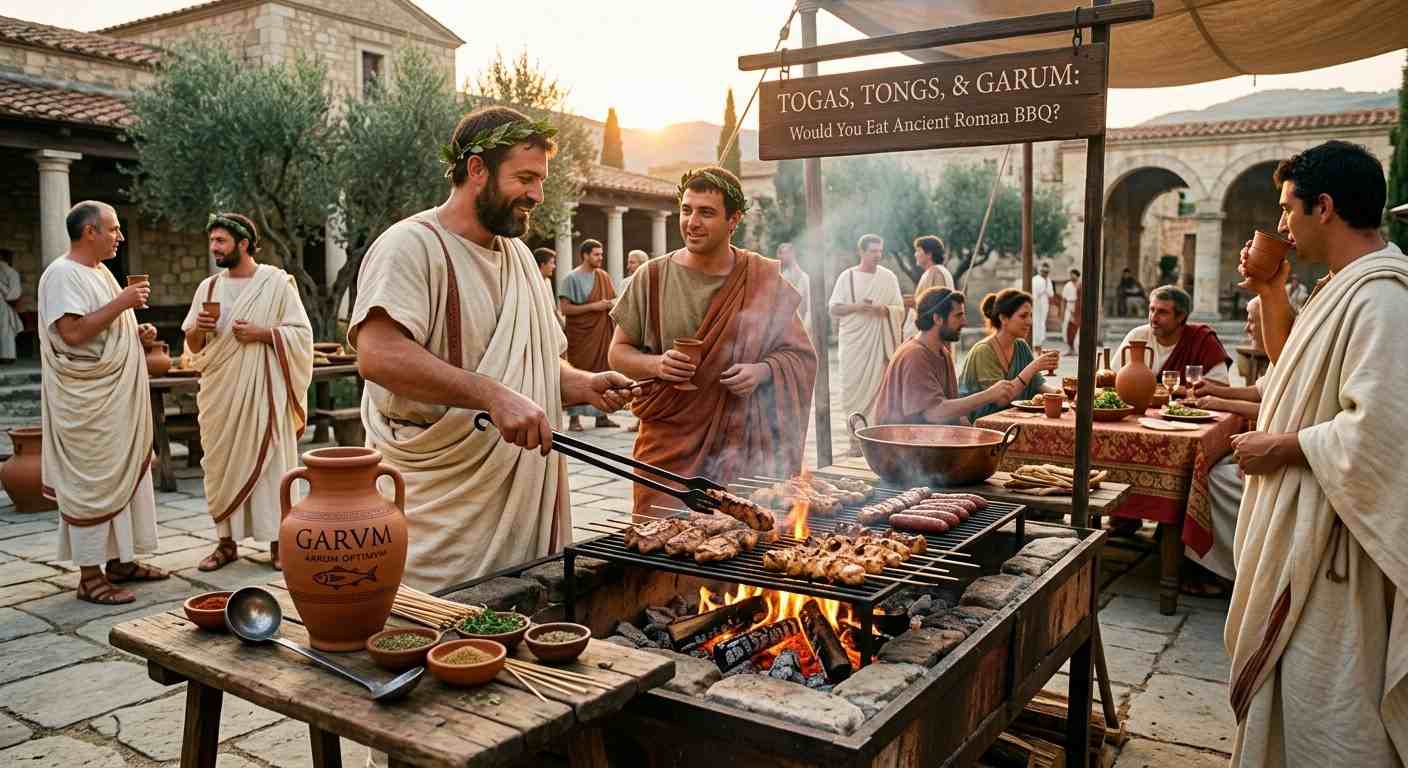
“Tell me what you eat, and I will tell you who you are,” the famed French gastronome Jean Anthelme Brillat-Savarin famously wrote in 1825.
If that formula holds true, then the citizens of ancient Rome were bold, obsessed with extreme flavors, dangerously impatient, and thoroughly wild at heart.
How else do you explain a civilization that built aqueducts capable of moving millions of gallons of water, yet spent their Sunday afternoons slathering sun-rotted fish gut sauce over wild boar ribs?
Every smokehouse veteran knows that modern barbecue is built on simple, unyielding principles: wood, smoke, meat, patience, and a well-balanced sauce.
But if you were to step back two thousand years into the heart of the Roman Republic, you would find a fire-cooking culture that would make today’s backyard grill masters scratch their heads in sheer disbelief.
There were no sweet molasses rubs, no hickory smoke rings, and zero red tomatoes.
Yet, the smell of live charcoal wafting through the streets of Pompeii was as irresistible then as the scent of slow-cooked brisket is today.
Welcome to the world of Roman BBQ – an ancient culinary playground where heavy cast iron met funky seafood glazes, and where street vendors flipped skewers for hungry plebeians long before fast food was ever a modern concept.
At A Glance: Ancient BBQ Reality Check
- No Tomatoes or Chilis: New World ingredients were centuries away; sweetness came from reduced grape juice (defrutum) and raw honey.
- Beef Was Off-Limits: Cows were prized draft animals; pork and wild game ruled the grates.
- Garum Is King: Sun-fermented fish intestines provided the ultimate umami punch for every single dish.
The Charcoal Empire: Roman Fire Engineering
Operating a pit without a digital probe thermometer or adjustable airflow vents requires an instinct earned through hours over hot coals. Ancient Romans didn’t just cook over open flames; they engineered fire with industrial precision.
In a world constructed largely of timber and packed mud, indoor residential cooking was a recipe for catastrophe. The multi-story apartment buildings of Rome – known as insulae – were literal tinderboxes.
Cooking over an open flame inside your third-floor walkup meant risking an inferno that could wipe out three city blocks before sunset.
Because of this constant fire hazard, high-temperature cooking was pushed outside. The Roman live-fire setup relied on three primary pieces of hardware:
- The Craticula: The direct ancestor of the modern charcoal grill. These heavy bronze or forged-iron grates sat atop portable terracotta or iron braziers filled with glowing coals.
- The Spit (Veru): Long iron skewers used for high-heat roasting over elevated hearths, turned manually by kitchen slaves or street vendors.
- The Clibanus: A portable dome-shaped terracotta oven placed directly over coals to trap heat, creating a primitive convection environment ideal for baking meat patties.
Fuel selection was taken just as seriously as it is at any competition cook-off today. Hardwood charcoal made from oak and olive wood was the gold standard. It burned clean, threw immense heat, and delivered a subtle, non-overpowering timber woodsmoke flavor.
For low-income street vendors, olive pomace – the crushed leftover pulp and pits from olive oil extraction – was compressed and burned as a cheap, long-lasting coal substitute.
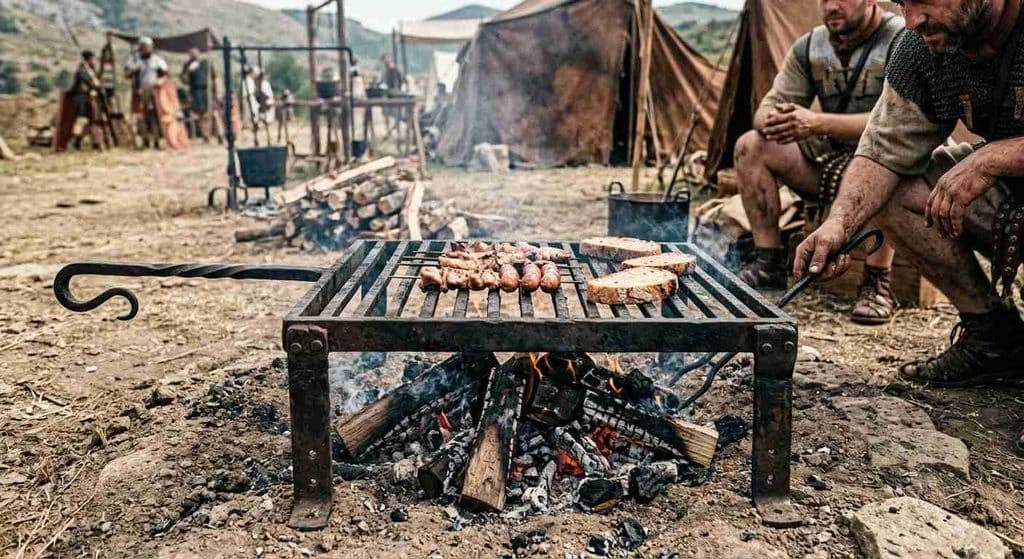
What Was on the Gridiron? (Hint: Not Brisket)
Throwing a choice Prime brisket on the smoker sounds like second nature to us, but a Roman cook would have considered that a colossal waste of farm machinery. In antiquity, cattle were valued as heavy work animals for plowing fields, not as dinner.
Old oxen were occasionally slaughtered, but their meat was tough, lean, and reserved for cheap stews. Pork was the absolute king of the Roman grill.
“If you want to feed an empire, you raise swine. Pigs convert oak acorns into fat and tender meat faster than any animal on earth.” — Roman Agricultural Manual Tradition
The variety of meats sizzled over Roman embers went far beyond basic chops and belly cuts:
- Aper (Wild Boar): The ultimate prize for elite outdoor feasts. Hunted in the oak forests of Etruria, wild boar was roasted whole on iron spits, basted continuously with vinegar, honey, and herb glazes.
- Sumen (Sow’s Udder): Considered an absolute delicacy. Stuffed with salt, pepper, and sea urchin paste, then grilled over hot coals until the skin rendered into a golden, crispy crust.
- Glires (Dormice): These weren’t field mice; they were plump, forest-dwelling dormice. Raised in special clay jars called dolia and fattened on chestnuts and walnuts, they were stuffed with minced pork, pine nuts, and pepper, then grilled on small wire grates.
- Kid and Lamb: Young goat and sheep were popular across all social classes, typically marinated in garlic, lovage, and coriander before hitting the grill.
Seafood was equally prominent along coastal regions. Fresh red mullet, octopus, and sea bass were slapped directly onto oiled iron grates, charred over medium heat, and finished with a splash of wine and garum.
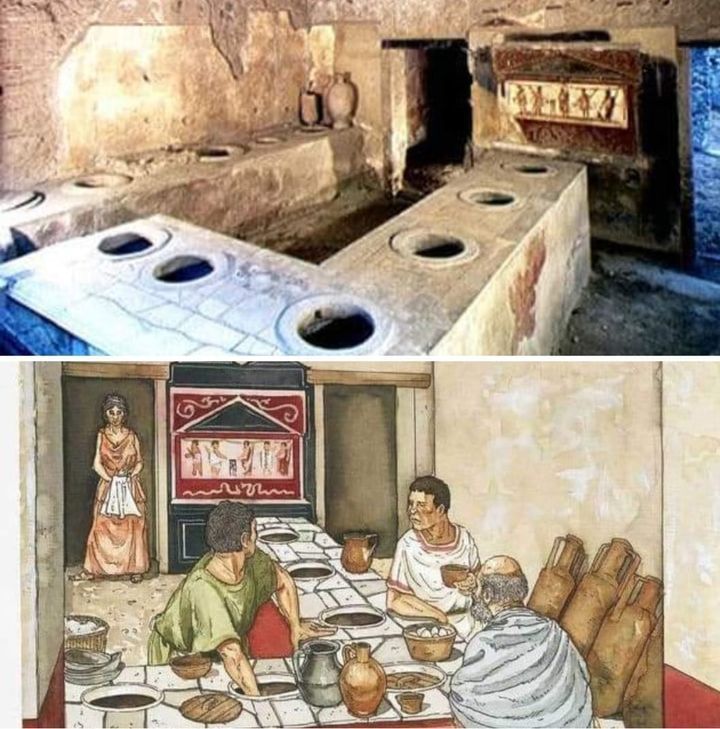
Demystifying Garum: The Ultimate Umami Bomb
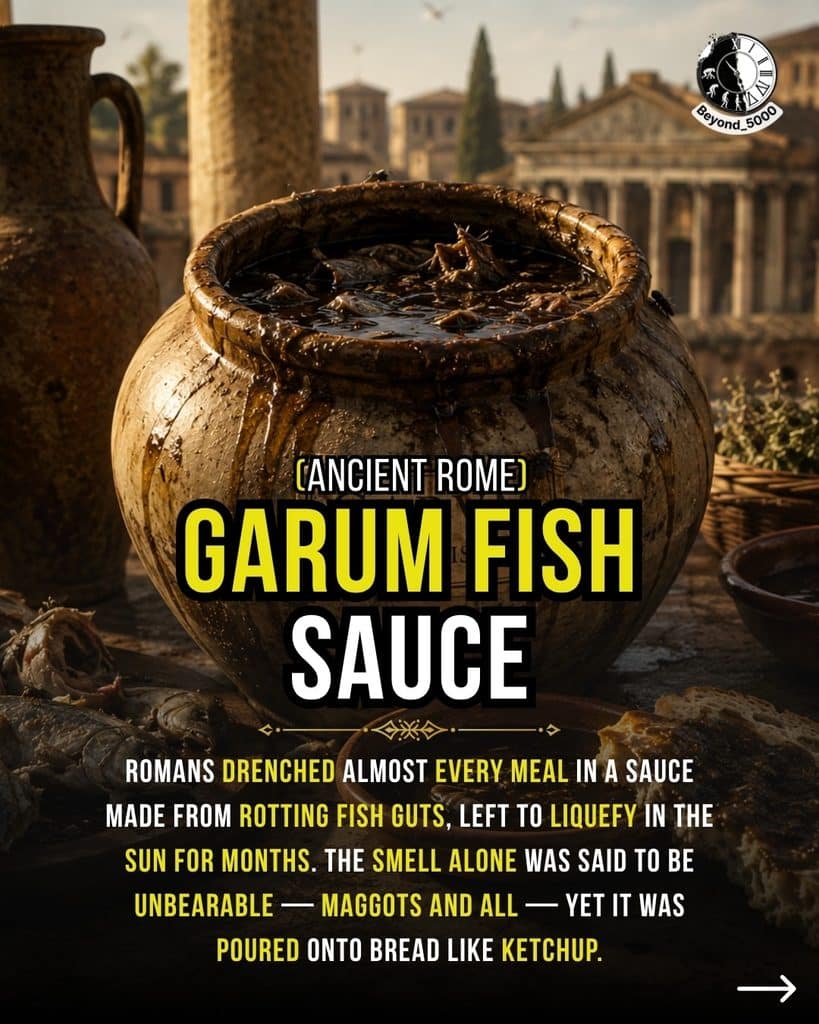
No discussion of Roman BBQ is complete without facing the elephant in the smokehouse: garum (also referred to as liquamen). Mention “fermented fish gut sauce” at a suburban tailgate and people will back away slowly.
But dismissing garum as spoiled fish juice is a huge mistake – it was the culinary backbone of the entire Western world for over six centuries.
To make traditional garum, Roman processors packed large stone vats with fish guts, gills, and small fatty fish like anchovies or mackerel.
They layered the fish with heavy sea salt and let the entire mixture sit exposed to the Mediterranean sun for two to three months.
The salt prevented pathogenic bacterial growth while natural enzymes broke down the fish proteins into a clear, amber-colored liquid rich in naturally occurring glutamates.
The Flavor Profile of Garum
Properly made garum did not taste like “rotten fish.” Once strained and aged, it provided an intensely savory, salty, deep umami baseline.
It functions exactly like modern Southeast Asian fish sauce (such as Thai nam pla or Vietnamese nuoc mam), Italian colatura di alici, or a supercharged Worcestershire sauce.
Roman cooks rarely used straight garum as a standalone dip. Instead, they used it as a versatile liquid seasoning base to create customized barbecue glazes:
- Oenogarum: Garum mixed with wine, black pepper, and herbs. Used to baste roasts during the final stages of grilling.
- Oxygarum: Garum blended with sharp wine vinegar and rue, providing an acidic punch that cut through fatty pork.
- Meligarum: Garum combined with raw honey and defrutum (a thick syrup made by boiling down unfermented grape juice). This produced a sticky, sweet-and-savory glaze that caramelized over open embers just like modern sugar-based BBQ sauces.
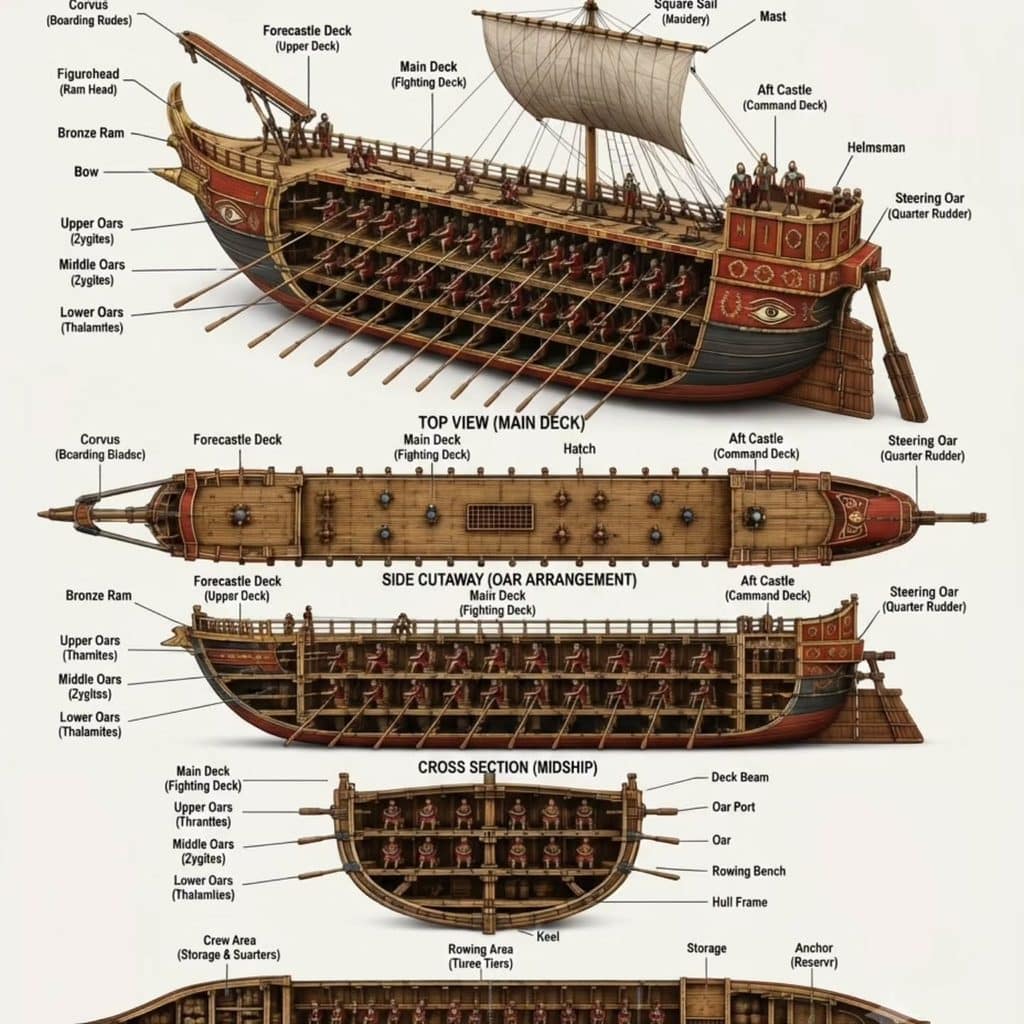
Fast Food at the Thermopolium: Street BBQ Culture
Think street-side food trucks and quick-service drive-thrus are modern inventions? Walk down the excavated stone streets of Pompeii or Herculaneum, and you will see that Roman urbanites were obsessed with fast, ready-to-eat meals.
Most urban apartments lacked proper kitchens, meaning millions of ordinary Romans ate their primary warm meal out on the town.
Enter the thermopolium (plural: thermopolia) – the ancient equivalent of a neighborhood BBQ joint. These street-facing counters were lined with embedded terracotta jars (dolia) that held dried grains, nuts, and cooked stews. Right behind the counter sat the hearth and craticula grill.
A worker at a thermopolium turned out hot, portable fast food for laborers, sailors, and merchants on the move:
- Isicia Omentata: Ancient Roman sliders. Minced pork or pine nut patties wrapped in caul fat (omentum) and grilled over coals. The fat casing melted slowly, basting the meat and keeping it juicy.
- Lucanicae: Smoked pork sausages packed with pine nuts, pepper, cumin, bay leaves, and lard. Roman legions carried these sausages across Europe, introducing cured and grilled meats to distant provinces.
- Skewered Bits: Cubes of pork belly and goat meat seasoned with cumin and coriander, cooked rapidly over narrow braziers for on-the-go consumption.
Feast or Famine: Roman BBQ Across Social Classes
While a working-class Roman plebeian grabbed a quick pork skewer from a dusty counter, a wealthy patrician experienced live-fire cooking as a grand theatrical event. Elite Romans turned outdoor dining into an extravagant showcase of wealth and political influence.
The famous Roman foodie Marcus Gavius Apicius – a first-century culinary hedonist who compiled the world’s oldest surviving cookbook, De Re Coquinaria – detailed grand banquet centerpieces that pushed fire-cooking to wild extremes.
One favorite showstopper was the Porcus Trojanus (Trojan Pig).
A whole hog was gutted, stuffed with live-grilled thrushes, sausages, spiced minced meat, and eggs, then roasted whole over an open pit. When sliced open at the dinner table, the stuffed interior spilled out, mimicking the Greek soldiers emerging from the Trojan Horse.
| Category | Street Vendor (Plebeian BBQ) | Patrician Banquet (Elite BBQ) |
| Primary Meats | Pork sausages, lean kid goat, organ meats, slider patties | Whole wild boar, stuffed sow’s udder, fattened dormice |
| Seasoning | Basic garum, vinegar, wild cumin, crushed garlic | Costly black pepper, saffron, defrutum, imported honey |
| Cooking Method | Fast direct grilling on iron craticulae over coals | Slow pit-roasting, multi-stage baking in clibani |
| Dining Vibe | Eaten on the street corner or standing at stone bars | Reclining on cushioned couches in open-air courtyard triclinia |
The Drink of the Pit: Wash It Down with Posca and Mulsum
No Roman BBQ was complete without the perfect pairing, but you wouldn’t find modern ice-cold beers or sweet sodas beside the coals. Ancient drinkers relied on two distinct brews to match their live-fire feasts:
- Posca (Everyday Refresher): A sharp, tart blend of sour wine vinegar, water, and aromatic herbs. It served as an ancient palate cleanser, slicing directly through heavy animal fats and salty garum glazes.
- Mulsum (Elite Luxury): A potent mix of red wine and raw honey spiced with pepper and laurel. This sweet, viscous nectar amplified the caramelized honey rubs on roasted wild boar, keeping banquet guests feasting long into the night.
Managing live coals on a wooden Roman warship required sheer engineering genius to feed hundreds of hungry rowers during long sea voyages:
- Insulated Braziers: Roman military engineers built naval stoves lined with heavy clay to contain extreme heat.
- Pivoting Frames: Mounted on iron swivels, these units absorbed shocks from choppy waves to keep loose embers from igniting the wooden deck.
- High-Seas Rations: Sailors seared cured Lucanicae sausages and salted kid goat over slow-burning, dense olive pomace coals.
Sacrificial Smoke: BBQ as a Sacred Gift to the Gods
In the Roman mind, every barbecue pit doubled as a bridge to the divine. Live-fire cooking was deeply intertwined with religious animal sacrifices (sacrificia), turning public butchery into a sacred spectacle:
- For the Gods: Priests burned the fat and bones on high stone altars, sending fragrant smoke plumes up to Jupiter.
- For the People: Prime, tender meat was cooked on-site over massive braziers and handed out to the crowds. For millions of poor citizens, these holy festivals offered their only chance to eat real meat.
The Smokehouse Masters: Slaves, Chefs, and Gridiron Specialists
Behind every jaw-dropping Roman feast stood an army of highly specialized culinary workers who managed the heat:
- The Coquus: The elite head chef who designed complex menus and garum reductions.
- The Focarius: The frontline slave whose sole duty was mastering fire control, judging heat purely by ember colors and radiant warmth on bare skin.
- Pit Specialists: Dedicated skewer-turners rotated heavy iron spits for hours, while basted cuts elevated a senator’s political standing.
The Seasoning Silk Road: Rare Spices of the Pit
While garum provided the salty umami base, Roman pitmasters flexed their wealth by layering meats with exotic imported seasonings:
- Malabar Black Pepper: Shipped directly from India to add a sharp, biting heat.
- Silphium & Asafoetida: Pungent resins that infused grilled cuts with a powerful, garlic-like aroma.
- Sumac & Saffron: Crushed sumac berries delivered a lemony kick over fatty lamb, while costly saffron strands turned honey bastes into a dazzling golden glaze.
Bringing Ancient Rome to Modern Pitmasters
Would you actually enjoy eating an authentic Roman BBQ meal today? The honest answer is a resounding yes – provided you understand their unique approach to balancing sweet, savory, and sour notes.
While the absence of modern ingredients like sweet corn, chili peppers, and tomato sauce might seem limiting at first, the Roman flavor engine was surprisingly sophisticated.
They understood that fat needs acid to cut through it, that harsh meat benefits from sweet caramelization, and that rich umami ties everything together.
If you want to run a live-fire experiment in your own backyard grill using ancient Roman principles, try this straightforward approach:
- Ditch the Sugar Rub: Skip the store-bought brown sugar rubs. Instead, crush whole black peppercorns, dried lovage (or celery leaf), cumin seeds, and pine nuts into a coarse mixture with a splash of olive oil.
- Build an Oenogarum Glaze: Mix two tablespoons of Thai or Vietnamese fish sauce (or Italian colatura) with a quarter cup of dry red wine, a tablespoon of honey, and a teaspoon of red wine vinegar. Warm it in a saucepan until cohesive.
- Grill Fatty Pork: Use thick-cut pork chops, pork belly skewers, or country-style ribs. Charcoal grill over medium-high direct heat.
- Baste Frequently: Brush the sweet-and-savory glaze onto the meat during the last three minutes of grilling. Let the honey sugar caramelize over the glowing embers without scorching.
The Verdict: Respect the Ancient Flames
The ancient Romans were far more than empire-builders and road builders – they were aggressive, creative, and passionate cooks who pushed live-fire technology to its absolute limit.
They recognized that simple ingredients transformed by glowing oak coals could feed a bustling neighborhood or anchor a legendary emperor’s feast.
Next time you fire up your grill, adjust your charcoal vents, and smell that first sweet plume of woodsmoke rising into the air, remember that you are participating in a tradition thousands of years old.
The ingredients may have evolved, but the fundamental thrill of cooking over open fire remains completely unchanged. Slip on your apron, grab your iron tongs, pass the garum, and eat like a Caesar.
Frequently Asked Questions
Did ancient Romans really cook over open fire without modern BBQ sauces?
Yes. Modern staples like tomatoes, chili peppers, and molasses-based sauces were completely unknown in ancient Rome because they originate from the Americas.
Instead, Romans built flavor using garum (a fermented fish sauce rich in umami), defrutum (reduced grape syrup), raw honey, vinegar, and ground spices like cumin, coriander, and black pepper.
Was beef popular at Roman live-fire cookouts?
Rarely. Cattle were far too valuable as heavy draft animals for plowing fields to be slaughtered for meat.
Instead, pork was the undisputed king of the Roman grill – ranging from wild boar to sow’s udder and sausages – along with kid goat, lamb, dormice, and coastal seafood.
What exactly is garum, and does it taste like rotten fish?
Garum was made by sun-fermenting fish intestines and small fatty fish with heavy sea salt for several months.
The high salt content prevented bad bacteria from growing while enzymes broke the fish down into a clear, amber liquid.
It did not taste spoiled; rather, it provided an intensely salty, savory umami backbone similar to modern Asian fish sauces or Worcestershire sauce.
How did Romans prevent house fires while grilling in crowded cities?
Because Roman apartment buildings (insulae) were made of timber and packed mud, indoor cooking was extremely dangerous.
As a result, high-heat grilling was pushed outdoors to street-side vendors (thermopolia) or public spaces.
Romans used portable terracotta or iron grates called craticulae and burned clean-burning hardwood charcoal or compressed olive pomace.
What did ordinary Romans drink alongside grilled meats?
Everyday plebeians washed down fatty pork skewers with posca – a tart, refreshing drink made of sour wine vinegar, water, and herbs that acted as a natural palate cleanser.
Wealthier Romans drank mulsum, a luxurious blend of red wine, raw honey, and spices that paired perfectly with sweet-and-savory caramelized glazes.
Featured image credit: Google Gemini
