
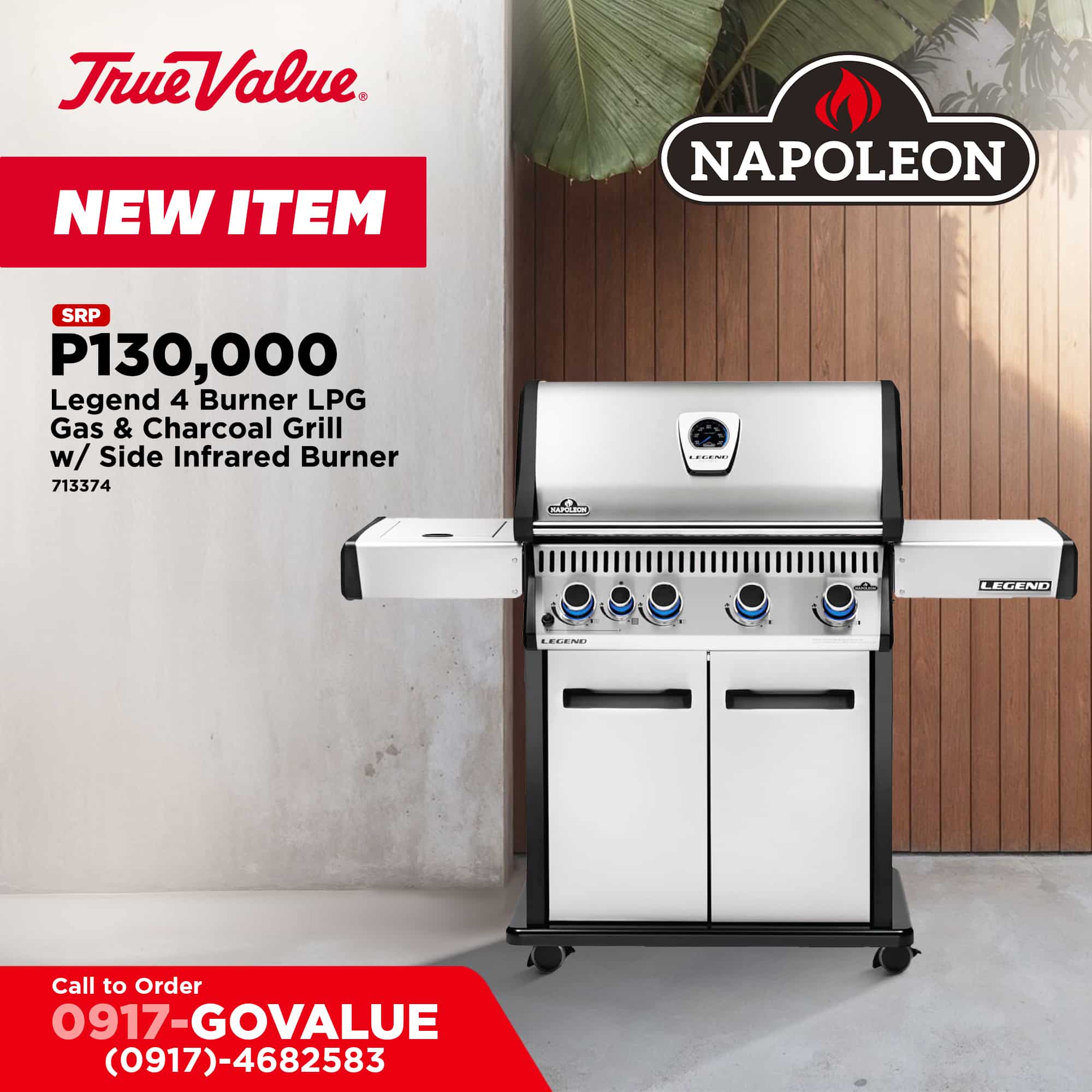
A great gas grill should do more than get hot. It should get hot where you need it, stay steady when you turn the heat down, and make dinner without turning the patio into a construction site.
That is where the Napoleon Rogue 425 Gas Grill gets interesting.
Napoleon has positioned the Rogue 425 as a relatively compact grill with enough firepower for serious backyard cooking.
The standard three-burner model delivers 42,000 BTU, provides a 23.75 x 18-inch main cooking area, and offers 576 square inches of total cooking space when the additional cooking area is included.
Napoleon also gives it porcelainized cast-iron cooking grids, dual-level stainless-steel sear plates, Jetfire ignition, folding shelves, and locking casters.
Those numbers look good on paper.
But here’s the question that matters more: Does the Rogue 425 actually make grilling easier and produce the kind of food you’d happily serve to a hungry crowd?
Let’s break it down.
Napoleon Rogue 425 Gas Grill Overview
The Rogue 425 sits in that sweet spot between a basic gas grill and a much larger premium backyard cooking station.
The standard Rogue 425 uses three main burners and produces 42,000 BTU. Its primary cooking surface measures about 23.75 x 18 inches, while the manufacturer lists 576 square inches of total cooking area.
Napoleon rates the main surface for up to 26 burgers, although real-world capacity depends on how generously you space the food.
That distinction matters.
A grill can technically fit a mountain of burgers, but that doesn’t mean you should pack every square inch with meat. Good grilling needs room for flipping, moving food between heat zones, and avoiding the dreaded “one giant burger family reunion.”
Key Specifications
| Specification | Napoleon Rogue 425 |
| Burners | 3 main burners |
| Heat output | 42,000 BTU |
| Main cooking area | 23.75 x 18 inches |
| Total cooking area | 576 sq. in. |
| Fuel | Propane or natural gas, depending on model |
| Cooking grates | Porcelainized cast iron |
| Ignition | Jetfire battery-free ignition |
| Rotisserie | Not included on standard model |
| Height | 47.5 inches |
| Width | 51 inches |
| Depth | 25 inches |
| Warranty | Up to 15 years, depending on model/market |
Napoleon offers the Rogue 425 in multiple configurations, so check the exact model number before buying. Propane and natural-gas versions are available, and equipment can differ between standard, side-burner, and rotisserie-equipped versions.
Design and Build Quality
The first thing that stands out about the Rogue 425 is that it isn’t trying to be a giant outdoor kitchen.
That’s a good thing.
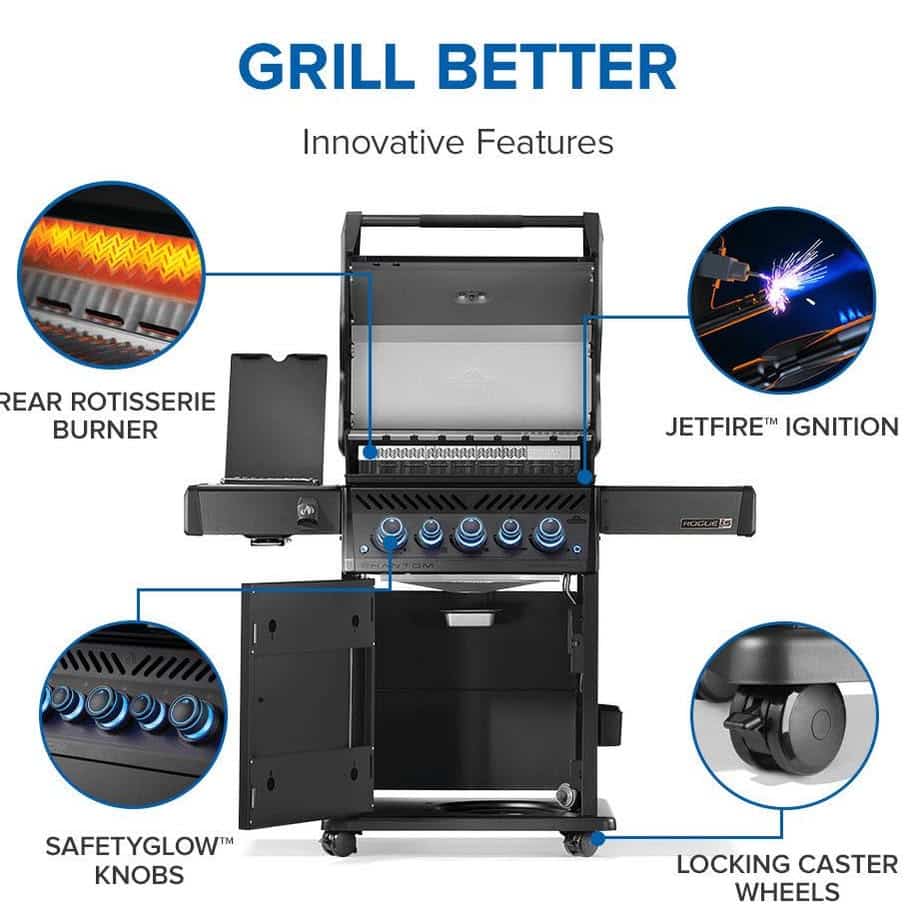
The grill is designed to provide useful cooking space without demanding an enormous footprint. The side shelves fold down, reducing the width from roughly 51 inches to about 35 inches with the shelves down.
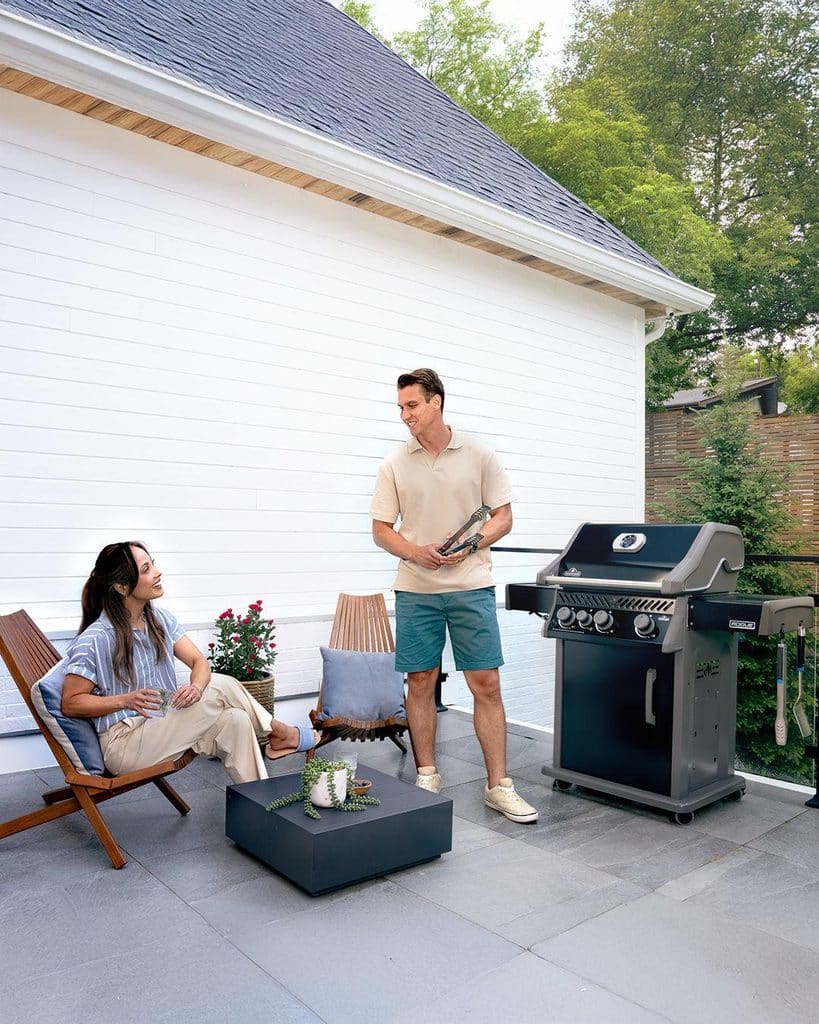
That’s particularly useful for smaller patios, balconies, or anyone who doesn’t want their grill permanently blocking half the backyard.
Porcelainized Cast-Iron Grates
The cooking grates are one of the Rogue 425’s biggest selling points.
Napoleon uses porcelainized cast iron, which combines the heat-retention characteristics of cast iron with a porcelainized surface designed for easier maintenance.
The grates also use Napoleon’s distinctive WAVE-shaped design.
Those grooves aren’t just decoration. They help keep smaller foods from slipping through the grate while creating the familiar grill marks people expect from a backyard barbecue.
Napoleon also says the reversible grids can provide larger sear marks, while the grooves help retain juices against the food.
For steak, burgers, chops, and chicken, that’s exactly the kind of grate you want.
Folding Side Shelves
The folding shelves are another practical touch.
When you’re cooking, they give you somewhere to put a tray, seasoning, thermometer, or plate. When the party is over, you can fold them down and reclaim some patio space.
That sounds like a small feature until you’ve tried storing a full-size grill in a cramped outdoor area.
Locking Casters
The Rogue 425 also comes with locking caster wheels.
That makes moving the grill around the patio considerably easier than dragging a heavy grill across the ground like you’re trying to relocate a refrigerator with a grudge.
Once positioned, the locking mechanism helps keep the grill secure.
Bottom line: The design favors practical backyard cooking over unnecessary bulk.
Napoleon Rogue 425 Assembly: What to Expect
Here’s the part nobody puts on the glossy product photo.
Assembly.
Even a good grill can test your patience when you’re staring at a pile of hardware and wondering whether that mysterious bolt belongs to the left side or the right side.
The Rogue 425 is a substantial grill, so assembly is best treated as a two-person project, particularly when you’re handling larger sections of the cabinet and grill body.
Napoleon provides an assembly guide with the Rogue 425, and the major process involves assembling the cart and frame, installing the side shelves, fitting the burners and internal components, installing the cooking grates and warming components, and connecting the control system.
A Few Assembly Tips
- Lay out the hardware first.
Separate screws, washers, brackets, and other hardware before starting. - Don’t rush the frame.
A slightly misaligned cabinet can make later steps unnecessarily frustrating. - Keep a second person nearby.
Some sections are simply easier to position with another set of hands. - Don’t overtighten everything immediately.
Leaving certain connections slightly loose until components are aligned can make assembly much easier. - Inspect the burner and grate placement before firing it up.
- Perform the appropriate gas-connection and leak checks before cooking.
The good news is that once the grill is assembled, most of the complexity disappears. That’s the real goal.
Assembly verdict: Moderate. It’s not a five-minute setup, but it shouldn’t be an ordeal for someone comfortable with basic tools and following instructions.
Heating Performance and Temperature Control
Here’s where a gas grill earns its keep.
The Rogue 425’s 42,000 BTU output from three main burners gives it enough firepower for high-temperature grilling while maintaining the ability to cook at lower temperatures. Napoleon specifically emphasizes the grill’s precise heat control for both grilling and roasting.
The important thing isn’t simply the BTU number.
Temperature Control Matters More than Bragging Rights
A grill that blasts out enormous heat but can’t hold a steady temperature isn’t particularly useful. You want to be able to turn the burners up for steak, then dial them back for chicken or indirect cooking without constantly chasing the temperature.
The three-burner layout also makes creating different heat zones possible.
For example:
- Left burner: high heat
- Center burner: medium
- Right burner: low or off
That gives you options.
Sear a steak over high heat, then move it toward a cooler zone to finish. Brown chicken over direct heat and move it away from the flames to finish cooking more gently.
That flexibility is one of the Rogue 425’s biggest strengths.
The grill also uses Napoleon’s dual-level stainless-steel sear plates. These sit below the cooking grates, helping distribute heat and catch drippings before they reach the burners.
Napoleon says the system helps vaporize drippings, reduce flare-ups, and protect the burners.
Jetfire Ignition: A Small Feature That Matters
Nobody wants to fight with a grill before dinner.
The Rogue 425 uses Napoleon’s Jetfire ignition system, which is designed to light the burners with a small jet of flame and does not require a battery for ignition.
That’s a useful convenience.
Turn the control, ignite the burner, and get on with cooking.
Simple is good.
Grills don’t need smartphone apps, mood lighting, or a master’s degree in electrical engineering to make a burger.
Napoleon Rogue 425 Cooking Results
Now we get to the part that actually matters.
How Does the Napoleon Rogue 425 Perform with Food?
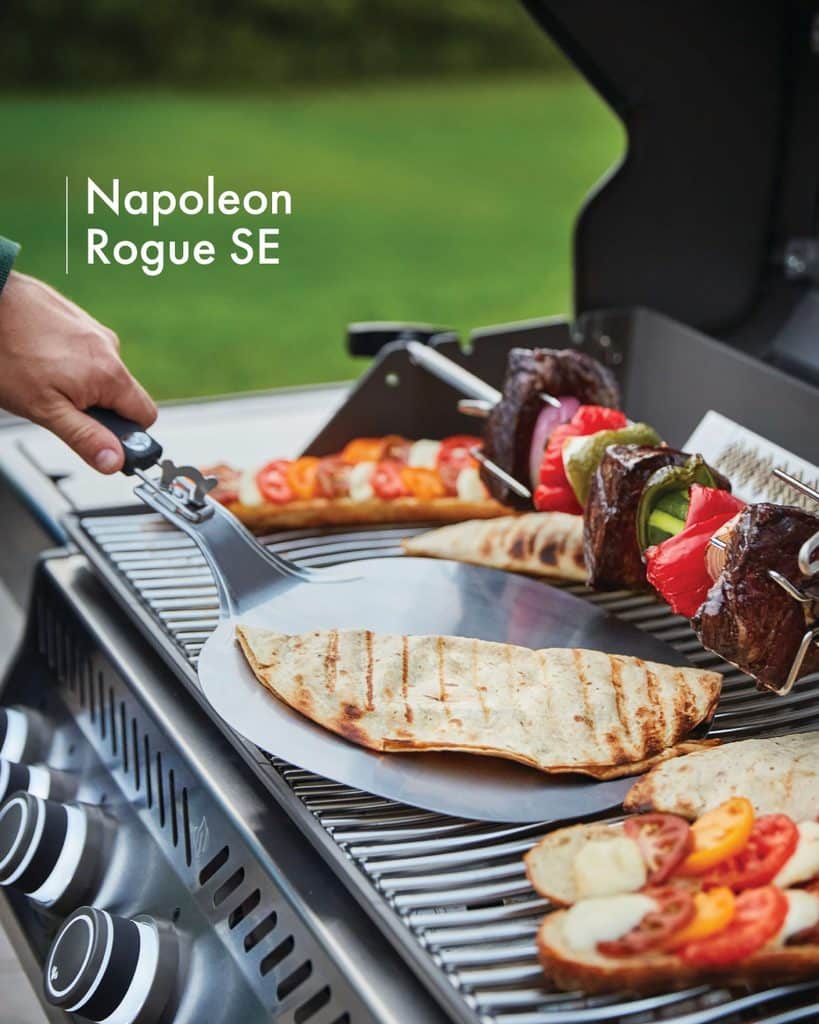
Its combination of three burners, cast-iron grates, and dual-level sear plates gives it the right foundation for several common backyard cooking styles.
Burgers
Burgers are one of the easiest ways to evaluate a gas grill. You want enough heat to develop a browned exterior without burning the outside before the center is cooked.
The Rogue 425’s cast-iron grates should be particularly well suited to this job because they retain heat and provide solid contact with the burger surface.
The 23.75 x 18-inch main cooking area also gives you plenty of room for a family-sized burger cook without immediately running out of space.
The trick is not to overcrowd the grates.
Give each burger room.
Preheat the grill properly, place the patties over the hotter zone, and resist the urge to constantly flip them. Let the grates do their job.
Expected result: deeply browned burgers with pronounced grill marks and good crust development.
Steaks
This is where the Rogue 425 should feel most at home. Steak needs high heat, stable grates, and enough control to move the meat away from the hottest area once the crust develops.
The cast-iron cooking grids are a good match for that job.
Napoleon’s WAVE pattern is designed to create distinctive sear marks, while the reversible grate design gives you some flexibility in how much contact you want with the food.
For a thick steak, a two-zone approach is ideal:
Sear first. Finish second.
Get the crust you want over higher heat, then move the steak to a cooler zone to bring the center to temperature.
That technique is much more reliable than blasting a steak over one temperature from start to finish.
Chicken
Chicken is where temperature control becomes more important. A steak can handle aggressive heat. Chicken isn’t nearly as forgiving.
Boneless chicken breasts, thighs, wings, and bone-in pieces all benefit from having both direct and indirect cooking zones available.
The Rogue 425’s three-burner layout makes that possible.
For chicken, start with moderate direct heat to build color, then move larger pieces to a cooler area and close the lid.
The goal is golden-brown skin without turning the outside into charcoal.
And yes, the grill can handle the classic chicken test: when the sauce goes on, don’t immediately crank the burners to maximum. Sugary barbecue sauce burns much faster than chicken cooks.
That little mistake has ruined many a backyard cookout.
Vegetables
The Rogue 425 isn’t just a meat machine.
Vegetables such as peppers, onions, zucchini, corn, asparagus, and mushrooms benefit from direct grilling because the high heat quickly develops caramelization and char.
The WAVE grates are useful here because they reduce the chance of smaller pieces disappearing into the fire.
For smaller vegetables, though, a grill basket or griddle insert can make life easier.
Indirect Cooking
The Rogue 425 can also be used for indirect cooking.
Turn one or more burners on while keeping the food positioned away from the direct flame.
This opens the door to larger cuts, whole chicken, roasts, and other foods that need gentler cooking.
It’s not a dedicated smoker, and nobody should confuse a three-burner gas grill with a 16-hour offset barbecue rig.
But for everyday roasting and indirect grilling, the setup gives the Rogue 425 considerably more versatility than a basic two-burner grill.
Cleaning and Maintenance
Cast iron rewards good maintenance.
The porcelainized finish makes the Rogue 425’s cooking grates more manageable than bare cast iron, but they’re still something you should treat properly.
After cooking:
- Brush off loose food debris.
- Let the grill cool appropriately before deeper cleaning.
- Keep grease buildup under control.
- Inspect the burner and sear-plate areas periodically.
- Keep the exterior clean and protected.
- Use a grill cover when appropriate for your environment.
Napoleon’s stainless-steel sear plates are designed to catch drippings and help protect the burners, which should make the internal cooking system easier to maintain over time.
The bigger lesson is simple:
A grill that gets cleaned regularly will usually be a much happier grill.
You don’t need to polish it like a sports car after every burger. Just don’t let six months of grease become part of the architecture.
Napoleon Rogue 425 Pros and Cons
Pros
- 42,000 BTU from three main burners
- Porcelainized cast-iron cooking grates
- 576 square inches of total cooking area
- Useful direct and indirect cooking capability
- Jetfire battery-free ignition
- Folding side shelves save space
- Locking casters make movement easier
- Dual-level stainless-steel sear plates
- Strong choice for burgers, steaks, chicken, and vegetables
- Long warranty on applicable models
Cons
- Assembly requires some time and patience
- Standard Rogue 425 does not include a rotisserie
- Cast-iron grates require more care than some stainless-steel alternatives
- The standard model doesn’t have a dedicated side burner
- Multiple Rogue 425 configurations can make model comparisons confusing
- It may be more grill than a very occasional griller actually needs
Is the Napoleon Rogue 425 Worth It?
The Rogue 425 makes the most sense for someone who wants a serious everyday gas grill without jumping straight into a huge outdoor kitchen.
It’s particularly appealing if you regularly cook for family or friends and want enough space to handle several different foods at once.
It’s also a strong fit for cooks who like having options.
Want burgers?
Easy.
Steaks?
Absolutely.
Chicken?
Use those heat zones.
Vegetables?
No problem.
A roast or whole chicken?
Set up indirect heat and let the grill work.
That’s what makes this grill more interesting than a simple “three burners and a lid” barbecue.
The biggest consideration is price.
A cheaper gas grill can certainly cook a burger. The question is whether you want the build quality, cooking-grid design, heat-control flexibility, space-saving features, and longer-term ownership experience that come with stepping into a more premium grill.
For someone who grills frequently, those differences can matter.
For someone who lights the grill three times a year, they may not.
Best Alternatives for the Napoleon Rogue 425 Gas Grill
1. Weber Genesis E-325s – Best Overall Alternative
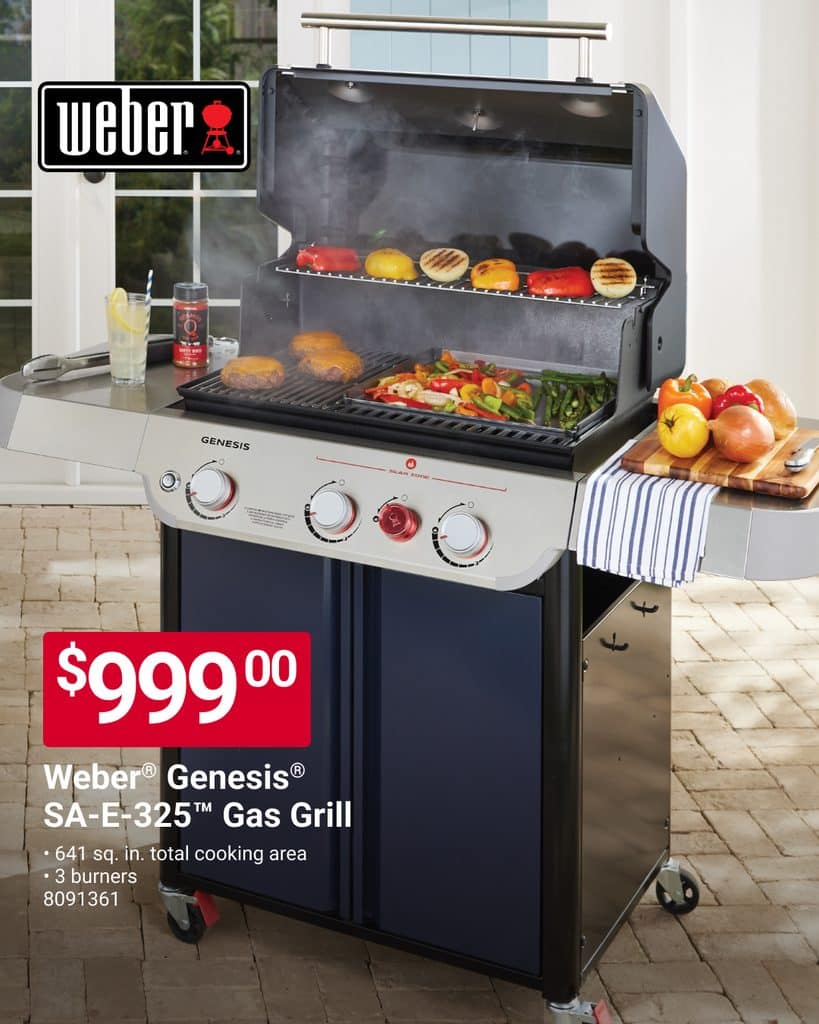
Weber’s Genesis E-325s is probably the most direct competitor to the Rogue 425.
It moves slightly more toward the premium end, but the additional cooking capacity and dedicated sear zone make it particularly attractive for people who cook steaks, burgers, and larger meals regularly.
Independent reviews also put the Genesis E-325s ahead of the Rogue in overall build quality and long-term parts support.
Why it’s a great alternative:
- 3 main burners
- 39,000 BTU main-burner output
- Large cooking surface
- Dedicated high-heat sear zone
- Cast-iron cooking grates
- Strong heat retention
- Excellent long-term parts availability
- 10-year Weber warranty on major components
The biggest advantage over the Rogue 425 is the dedicated sear zone.
For steak lovers, that’s a meaningful upgrade rather than just another number on a specification sheet. Bon Appétit also found the Genesis E-325s consistently produced excellent meat and vegetable results, including in windy conditions.
The tradeoff is size and price. The Genesis is heavier and considerably wider than the Rogue 425, so it isn’t the obvious choice for a smaller patio.
Best for: Serious backyard grillers who prioritize durability, searing, and long-term ownership.
Compared with the Rogue 425: The Genesis is the better premium upgrade, while the Rogue generally makes more sense when value and a smaller footprint matter.
2. Monument Grills Denali 405 – Best Feature-for-the-Money Alternative
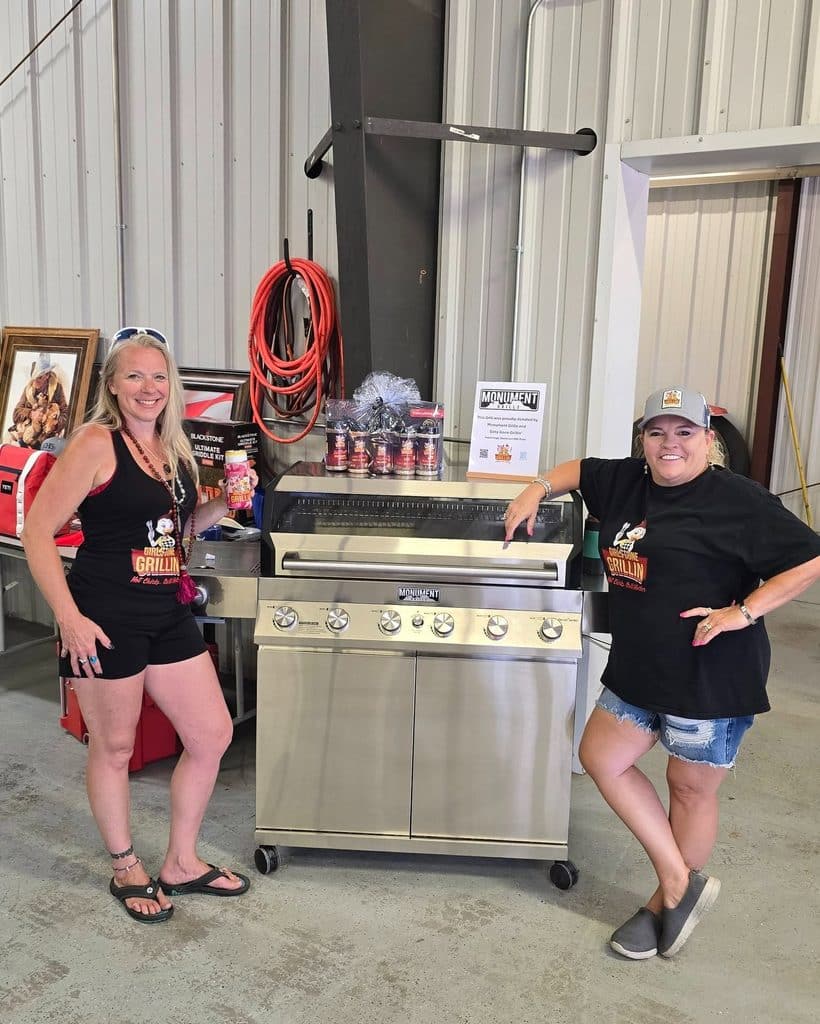
Monument Grills’s Denali 405 takes a very different approach.
Rather than trying to beat the Rogue 425 on brand reputation or compactness, it gives you more grill and more features for the money.
The Denali 405 has four main burners plus a side burner, 60,000 BTUs of total burner output, and approximately 710 square inches of total cooking area. It also uses cast-iron cooking grates and stainless-steel construction.
And then things get interesting.
The Denali 405 adds smart-grill functionality, including electronic ignition and app-connected features, along with an LED display and viewing-oriented design elements.
Current product information lists it at 710 square inches of total cooking area and a capacity of around 28 burgers.
That’s a lot of grill.
Where the Denali 405 Beats the Rogue 425
Cooking capacity.
The Rogue 425 is a compact, three-burner grill. The Denali 405 gives you another main burner and substantially more total cooking space.
That becomes useful when you’re cooking for a crowd.
Think:
Steaks + chicken + corn + vegetables + buns warming on the rack.
That’s where a larger four-burner grill earns its keep.
The side burner is another practical advantage. You can simmer barbecue sauce, cook onions, heat a pan, or prepare something that would otherwise take up valuable kitchen space.
Where the Rogue 425 has the Edge
The Rogue is the more established premium grill platform, and its design is more focused on straightforward grilling rather than packing in as many features as possible.
The Denali’s smart technology is appealing, but technology isn’t what makes a steak good.
Heat control, grate quality, burner design, and cooking technique still win the barbecue battle.
Best for: Families and frequent entertainers who want lots of cooking space and premium-style features without moving into the highest price tier.
Compared with the Rogue 425: Choose the Denali 405 for capacity and features; choose the Rogue for a more compact, straightforward premium grilling experience.
3. Weber Spirit E-325 – Best Value Alternative
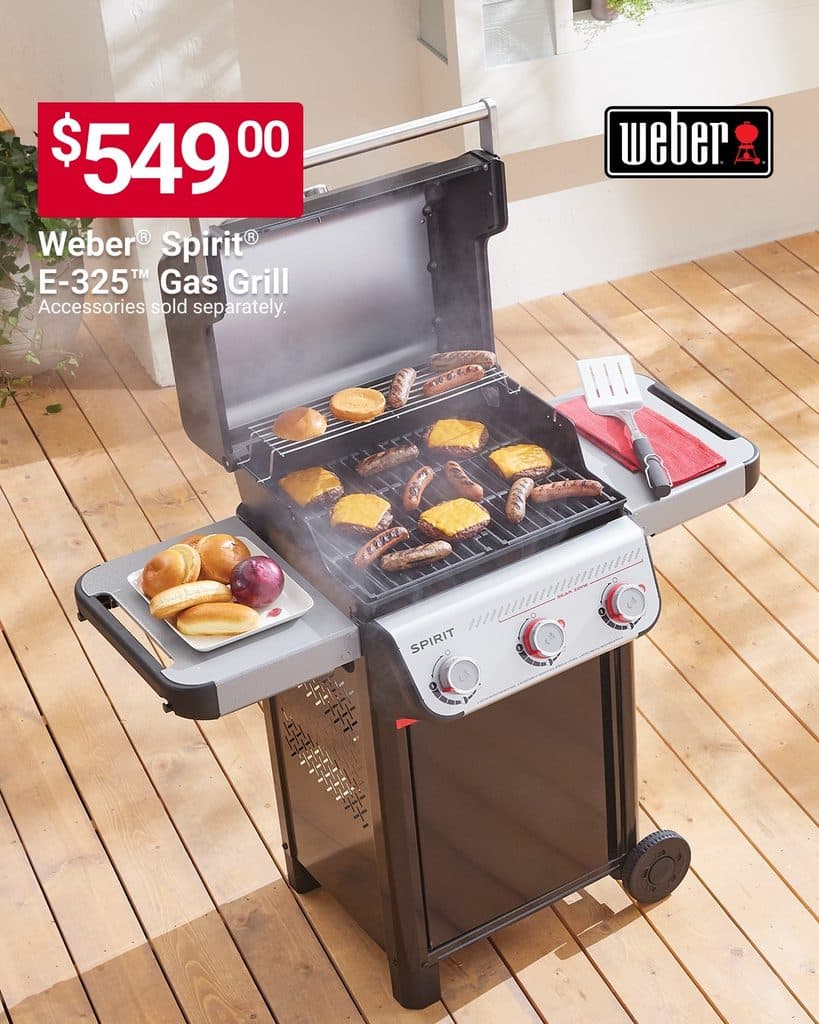
If the Genesis E-325s feels like a step too far in price and size, the Weber Spirit E-325 is the alternative I’d look at next.
It occupies a similar everyday-grilling role as the Rogue 425 but puts more emphasis on value, simplicity, and the Weber cooking system.
The current Spirit E-325 is a three-burner gas grill designed for everyday backyard cooking. It gives you a dedicated searing area while maintaining a relatively approachable footprint compared with the larger Genesis platform.
That’s an important distinction.
You don’t necessarily need a massive grill to cook excellent food.
A three-burner grill is often the sweet spot for a family because it gives you enough space to establish separate heat zones without taking over the patio.
Why the Spirit E-325 is Worth Considering
The biggest reason is value.
You get Weber’s established burner and heat-management system, a dedicated searing area, and enough cooking room for normal family meals without stepping all the way up to Genesis pricing.
It’s particularly appealing to someone who mainly cooks:
- Burgers
- Steaks
- Chicken
- Sausages
- Vegetables
- Fish
- Weeknight dinners
In other words, the stuff most people actually grill.
Current buying guides continue to position Weber’s Spirit line as a strong value choice, while the Genesis range sits above it as the premium step-up option.
Best for: Families and everyday grillers who want Weber’s cooking system without paying Genesis-level money.
Compared with the Rogue 425: The Spirit E-325 is the stronger choice if value and a dedicated sear zone are your priorities.
Final Verdict: Napoleon Rogue 425 Gas Grill Review
The Napoleon Rogue 425 Gas Grill is a well-rounded backyard cooker that focuses on the things that actually matter: usable cooking space, controllable heat, solid grates, practical storage, and versatility.
Its three-burner configuration and 42,000 BTU output give it enough power for serious searing, while the burner layout allows you to create cooler zones for chicken, roasts, and indirect cooking.
The cast-iron WAVE grates add strong searing potential, while the dual-level sear plates help manage drippings and flare-ups.
The folding shelves are especially useful for smaller spaces, and the Jetfire ignition and locking casters add the kind of everyday convenience that doesn’t sound exciting until you actually use the grill regularly.
The Rogue 425 isn’t the biggest grill in the backyard – and that’s part of its appeal.
It gives you enough room to cook a proper meal without requiring a dedicated patio extension.
Overall Rating: 4.5/5
| Category | Rating |
| Build Quality | 4.5/5 |
| Assembly | 4/5 |
| Heat Performance | 4.5/5 |
| Cooking Versatility | 4.5/5 |
| Ease of Use | 4.5/5 |
| Cleaning & Maintenance | 4/5 |
| Value | 4.5/5 |
| Overall | 4.5/5 |
Best for: Backyard cooks who want a capable, space-conscious gas grill for steaks, burgers, chicken, vegetables, roasting, and everyday family meals.
Skip it if: You mainly want a dedicated smoker, need a very large cooking surface, or only grill a handful of times each year.
For everyone else, the Napoleon Rogue 425 makes a compelling case for itself.
The real test of a grill isn’t how impressive it looks with the lid open. It’s whether you keep finding excuses to cook on it. The Rogue 425 gives you plenty of reasons.
Napoleon Rogue 425 Gas Grill FAQs
1. Is the Napoleon Rogue 425 Gas Grill good for beginners?
Yes. The Napoleon Rogue 425 Gas Grill is relatively straightforward to operate, with three main burners, simple controls, and reliable ignition. Its burner layout also makes it easy to learn direct and indirect grilling.
2. How many people can the Napoleon Rogue 425 cook for?
The Rogue 425 offers enough cooking space for family meals and small gatherings. Napoleon lists a capacity of up to 26 burgers, although leaving some space between foods makes cooking and flipping easier.
3. Does the Napoleon Rogue 425 get hot enough for steaks?
Yes. Its 42,000 BTU three-burner system and cast-iron cooking grids provide the high heat needed for browning and searing steaks. Creating a two-zone fire also lets you sear first and finish the steak over gentler heat.
4. Is the Napoleon Rogue 425 easy to assemble?
Assembly is best described as moderate difficulty. The grill has several components to put together, so having a second person available can make the process easier. Carefully following the manufacturer’s instructions is recommended.
5. Is the Napoleon Rogue 425 worth buying?
For regular backyard grilling, yes. It offers a useful balance of cooking space, heat control, build quality, and versatility. It’s particularly well suited to people who regularly cook burgers, steaks, chicken, vegetables, and other everyday grilled foods.
Featured image credit: @truevalueph
