
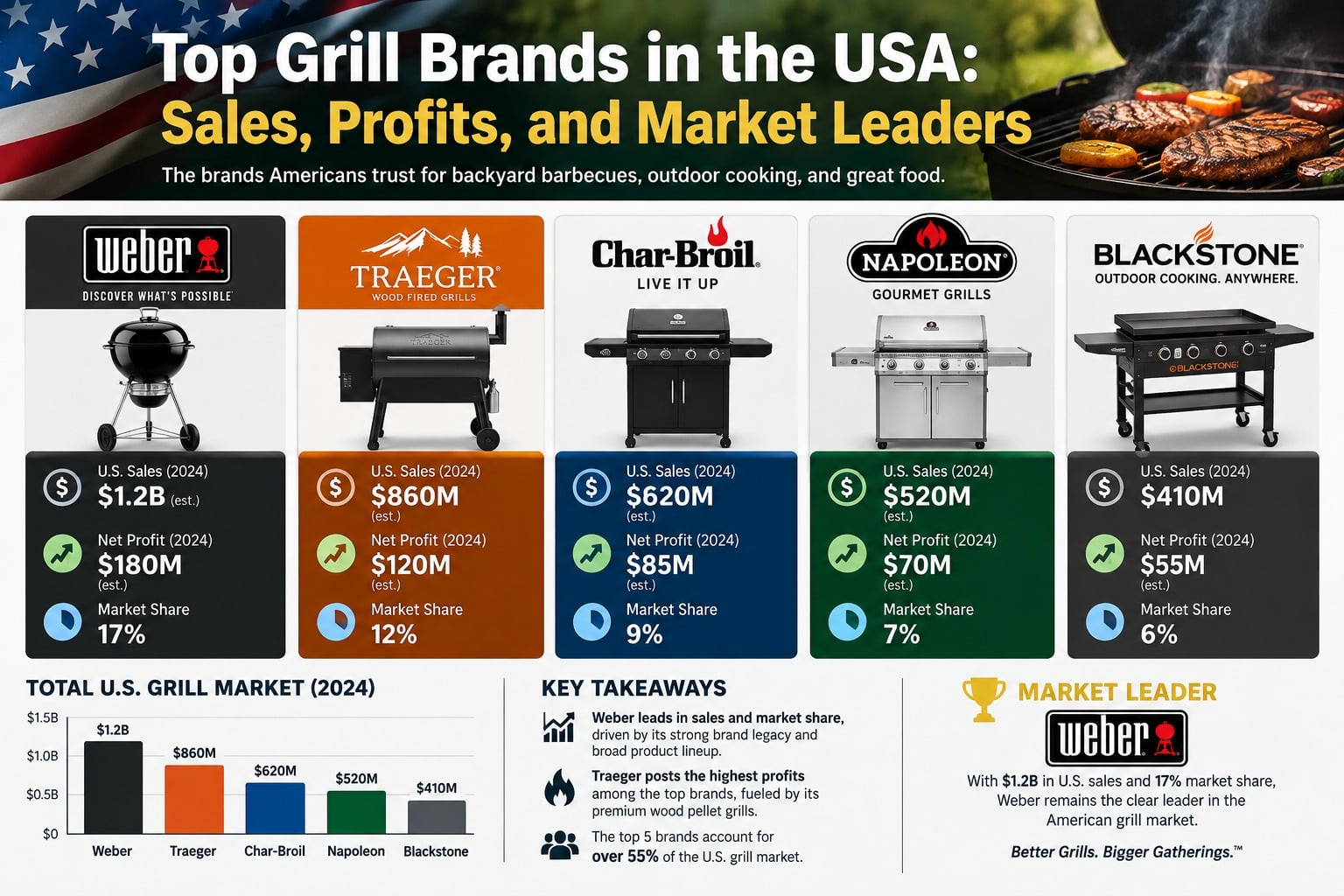
What makes a great grill: the brand name stamped on the lid, the number on the price tag, or what happens when a thick steak hits the grates and starts making that glorious sizzle?
That last one usually settles the argument.
The top grill brands in the USA have built their reputations in very different ways. Weber became a backyard institution with its iconic kettle grills. Traeger helped turn pellet cooking into a mainstream obsession. Blackstone made the outdoor griddle almost impossible to ignore.
Napoleon pushed premium grilling into serious outdoor kitchens, while brands such as Char-Broil and Pit Boss have made capable cooking more accessible to shoppers on tighter budgets.
But big sales numbers do not automatically mean better barbecue.
A grill can dominate store shelves and still leave you fighting hot spots, flimsy burners, or a lid that feels like it belongs on a toy barbecue.
On the other hand, a premium grill can cook beautifully while costing enough to make your wallet ask for a moment of silence.
This guide takes a closer look at the leading grill brands in the United States, examining their products, cooking performance, value, market position, and overall reputation.
The goal is simple: find out which grill brands are actually worth your money.
How We Ranked the Top Grill Brands
A grill review should involve more than opening a catalog and counting stainless-steel knobs.
A brand can have impressive marketing and still produce mediocre equipment. For this review, the brands are judged across several practical categories.
Cooking Performance
A good grill needs to do the basics extremely well.
That means:
- Consistent heat
- Reliable temperature control
- Good heat distribution
- Enough power for searing
- Enough control for slower cooking
- A cooking surface that suits the intended use
A steak should not come out perfectly seared on one side and suspiciously pale on the other.
Build Quality
Materials matter because grills live a hard life. They sit outdoors. They experience extreme heat, rain, grease, smoke, and repeated temperature changes.
A good grill should be built for years of cooking, not a couple of summers.
We considered construction, grates, burners, lids, hinges, fireboxes, wheels, and overall fit and finish.

Value for Money
The cheapest grill isn’t always the best deal.
A $400 grill that needs major replacement parts after two years can be more expensive than a $700 grill that continues performing for a decade.
Value means looking at what you get for the money, including cooking performance, features, durability, warranty, and replacement-part availability.
Brand Strength and Market Presence
Sales and market presence matter because they tell us something about consumer demand and distribution.
However, financial comparisons need some caution. Some grill companies are publicly traded and disclose financial information. Others are privately held or operate as part of larger parent companies.
Revenue is not the same thing as grill sales, and grill sales are not the same thing as profit.
That distinction matters throughout this article.
Ownership Experience
Finally, we considered the things that become important after the honeymoon period ends.
Can you get replacement parts?
Is the warranty useful?
Are accessories easy to find?
Does customer support actually help?
Because the real test of a grill often begins after the first 50 burgers have been cooked.
Top Grill Brands in the USA at a Glance
| Brand | Best For | Typical Position | Main Strength |
| Weber | Best overall | Mid-range to premium | Proven all-around performance |
| Traeger | Pellet grilling | Mid-range to premium | Convenient wood-fired cooking |
| Char-Broil | Budget buyers | Budget to mid-range | Affordable gas grilling |
| Blackstone | Griddles | Budget to mid-range | Large flat-top cooking |
| Napoleon | Premium grilling | Premium | Build quality and features |
| Pit Boss | Value pellet grills | Budget to mid-range | Features for the price |
| Kamado Joe | Ceramic grilling | Premium | Versatility and heat retention |
| Big Green Egg | Traditional kamado | Premium | Proven ceramic cooking |
Quick verdict: Weber is the strongest all-around choice, Traeger leads for convenient pellet cooking, Blackstone dominates outdoor griddling, and Napoleon is one of the strongest choices for premium gas grilling.
1. Weber – Best Overall Grill Brand
Few grill brands have become as closely associated with backyard cooking as Weber.
The famous kettle is almost part of the American backyard landscape. You see one at family cookouts, neighborhood parties, tailgates, and the house of the guy who owns seven different bags of charcoal and has very strong opinions about lump versus briquettes.
Weber’s biggest advantage is simple: it understands grilling fundamentals.
What Weber Does Best
Weber offers a broad lineup covering gas, charcoal, pellet, electric, and other outdoor cooking formats.
The Original Kettle remains one of the company’s most recognizable products. It is straightforward, affordable compared with many premium grills, and capable of far more than burgers and hot dogs.
Move up the range and the Spirit and Genesis lines provide more cooking space, stronger gas-grilling performance, and additional features.
The Genesis line is particularly attractive for families who want a serious everyday gas grill without immediately entering luxury outdoor-kitchen territory.
Cooking Performance
Weber grills generally excel at predictable, repeatable cooking. That matters more than having a dashboard full of gadgets.
A quality gas grill should let you establish different heat zones, move food away from direct heat, and adjust the cooking environment without constantly babysitting the burners.
Charcoal models provide even more flexibility for smokers and barbecue enthusiasts willing to manage the fire themselves.
The Weber advantage is consistency.
You know what you’re getting, and replacement parts and accessories are generally easier to find than those for obscure brands.
Sales and Market Position
Weber’s brand recognition gives it one of the strongest positions among top grill brands in the USA.
Its products have broad retail distribution, strong name recognition, and a long history in American outdoor cooking.
However, buyers should be careful when comparing financial figures between Weber and publicly traded competitors. Company structures and reporting practices can make direct revenue comparisons misleading.
Pros
- Excellent overall product range
- Strong brand reputation
- Good replacement-part availability
- Excellent charcoal heritage
- Strong gas-grill lineup
- Good balance of price and performance
Cons
- Some premium models become expensive
- Basic models may lack advanced features
- Accessories can add significantly to the total cost
Verdict
Best for: Most backyard cooks.
Why buy it: Weber offers one of the safest all-around bets in grilling. It may not always be the flashiest grill in the showroom, but it is difficult to argue with a design that has earned decades of trust.

2. Traeger – Best Pellet Grill Brand
Traeger helped take pellet grilling from a niche idea to a major category.
The appeal is obvious: wood-fired flavor without spending your entire afternoon managing a fire.
That is a compelling proposition.
A traditional offset smoker can produce incredible food, but it also demands attention. Pellets make the process much more approachable.
What Traeger Does Best
Traeger specializes in pellet grills that combine automated temperature control with wood-fired cooking.
You load the hopper, choose a temperature, and let the grill handle much of the fire management.
That makes Traeger particularly attractive for cooks who want brisket, ribs, pork shoulder, chicken, and other smoked foods without constantly adjusting vents and adding fuel.
Cooking Performance
Traeger’s biggest strength is controlled low-and-slow cooking.
Pellet grills are not simply outdoor ovens. They can smoke, roast, bake, and grill, although their strengths depend heavily on the specific model.
The more expensive models typically offer better insulation, more sophisticated controls, additional cooking space, and enhanced connectivity.
The trade-off is that pellet grills introduce another system to maintain: electronics, augers, fans, ignition components, and pellet storage.
That convenience is fantastic – right up until the electronics decide that dinner is optional.
Sales and Market Position
Traeger has established itself as one of the most recognizable names in pellet grilling.
Its public-company history also makes financial information more accessible than it is for many privately held grill brands. Still, company-wide revenue should not be treated as identical to US grill sales.
Traeger’s real market strength is category leadership and brand recognition within pellet cooking.
Pros
- Excellent for smoking
- Convenient automated temperature control
- Strong product ecosystem
- Wide range of wood pellets
- Excellent for beginners entering barbecue
Cons
- Requires electricity
- Pellets add ongoing fuel costs
- More mechanical components than traditional grills
- Some models are expensive
Verdict
Best for: Home cooks who want authentic wood-fired cooking with less fire management.
Why buy it: Traeger is a strong choice when convenience matters almost as much as smoke flavor.
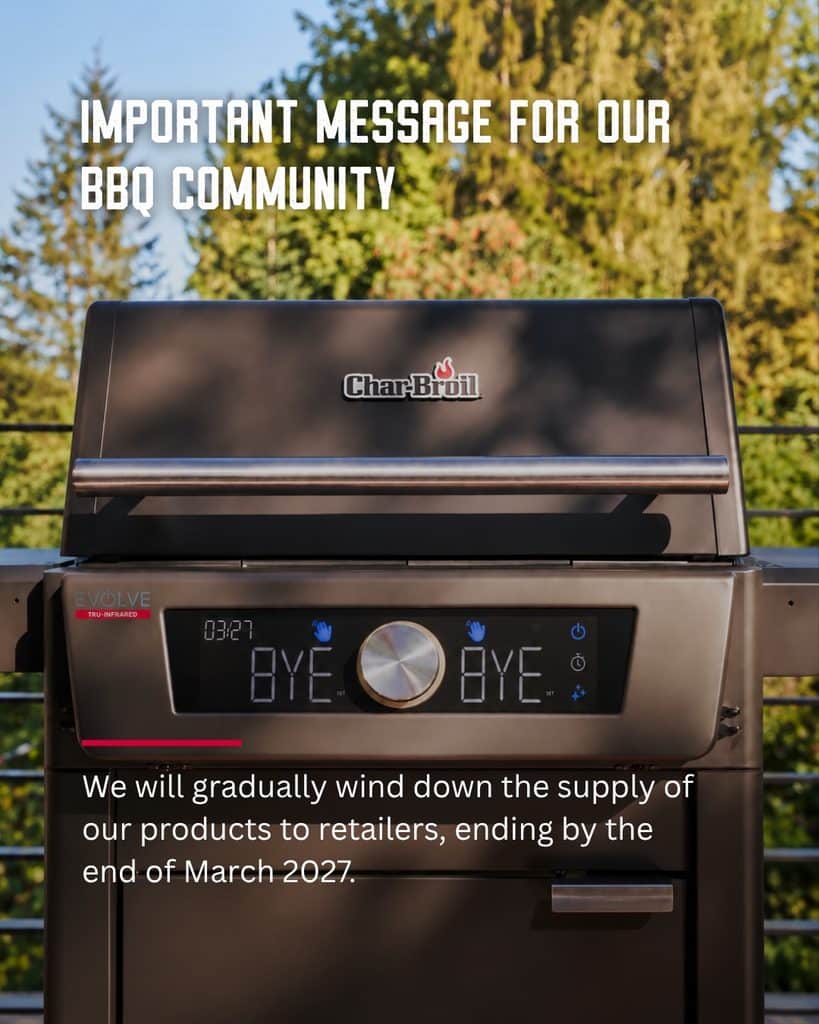
3. Char-Broil – Best Budget Grill Brand
Not everybody needs a $2,000 grill.
Sometimes you need something that can cook burgers on Saturday, chicken on Sunday, and survive another summer without requiring a second mortgage.
That’s where Char-Broil earns its place.
What Char-Broil Does Best
Char-Broil has built its reputation around accessible outdoor cooking.
Its lineup includes gas grills, charcoal grills, electric models, and infrared cooking technology. The brand is particularly appealing to first-time grill buyers and households that want reasonable performance without moving into premium pricing.
Cooking Performance
The exact experience varies considerably between models, but the better Char-Broil grills can provide solid everyday performance.
Look for models with:
- Adequate burner output
- Durable grates
- Multiple burners
- Useful warming racks
- Reasonable grease management
The biggest mistake with budget grills is focusing entirely on the number of burners.
More burners do not automatically mean better cooking.
Heat control and distribution matter more.
Value
Char-Broil’s strongest argument is value.
It gives new grill owners an accessible way to start cooking outdoors without paying premium-brand prices.
The compromise tends to appear in construction, finish, hardware, and long-term durability when compared with higher-end equipment.
Pros
- Affordable
- Broad product selection
- Easy to find
- Good choice for beginners
- Several useful cooking formats
Cons
- Build quality varies by model
- Some components may not last as long as premium alternatives
- Fewer luxury features
Verdict
Best for: Budget-conscious households and first-time grill buyers.
Why buy it: Char-Broil makes sense when the priority is getting a capable grill without overspending.
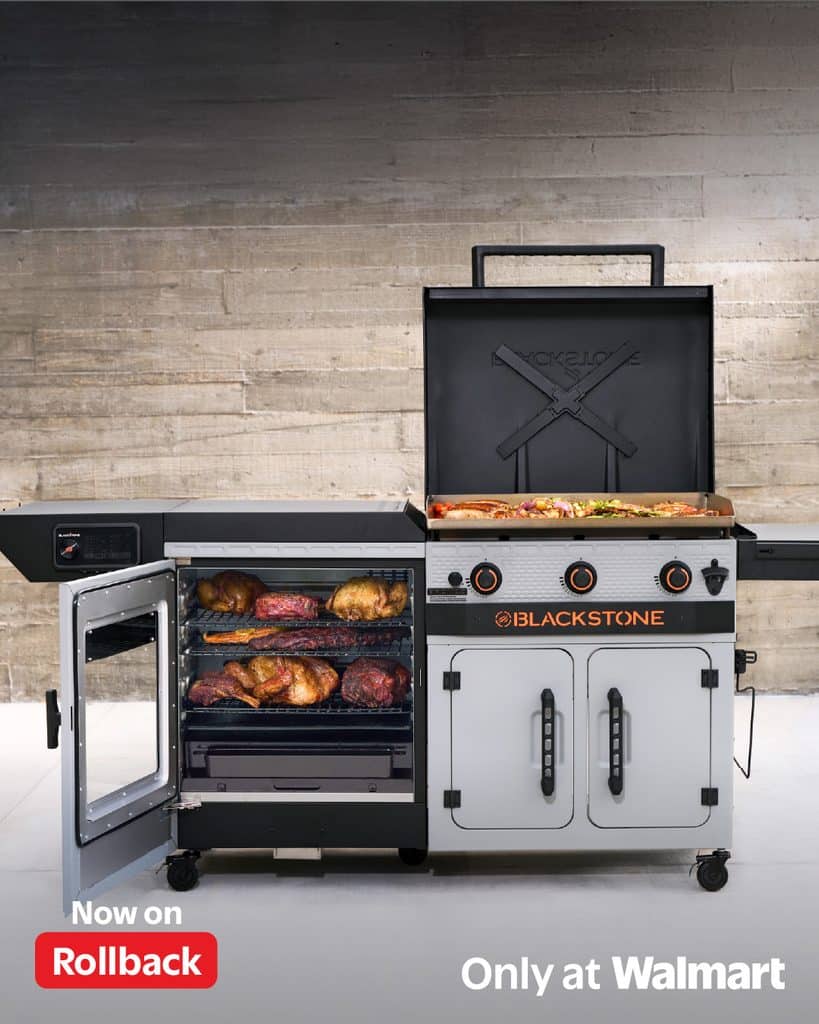
4. Blackstone – Best Griddle Brand
Technically, a Blackstone isn’t a traditional grill.
But try telling that to someone standing over a sizzling pile of smash burgers, bacon, eggs, onions, and pancakes.
Blackstone helped make the outdoor griddle one of the biggest stories in backyard cooking.
What Blackstone Does Best
The company’s large flat-top griddles are designed for foods that don’t always behave well on traditional grates.
Think:
- Smash burgers
- Philly cheesesteaks
- Breakfast
- Fried rice
- Fajitas
- Vegetables
- Bacon
- Pancakes
The flat cooking surface is the star.
You get enormous usable cooking space without worrying about a burger falling between the grates.
Cooking Performance
Heat control is one of Blackstone’s biggest strengths.
Multiple burners allow you to create different temperature zones across the surface.
That means you can sear meat in one area while keeping finished food warm elsewhere.
For large gatherings, that’s extremely useful.
A traditional grill still wins for foods that benefit from open grates and direct flame, but the Blackstone has a different mission.
Market Position
Blackstone’s popularity demonstrates how consumer tastes can create an entirely new outdoor-cooking category.
The company isn’t simply competing against gas grills.
It has convinced many consumers that they need another outdoor cooker entirely.
And judging by the number of backyard griddles, that strategy seems to be working.
Pros
- Huge cooking surface
- Excellent for burgers
- Great for breakfast
- Easy to cook for groups
- Strong value
Cons
- Not a traditional grill
- Requires seasoning and maintenance
- No traditional grill marks
- Large models need substantial storage space
Verdict
Best for: Smash burgers, breakfast, entertaining, and large families.
Why buy it: If you regularly cook for a crowd, the flat-top format can be more useful than another traditional grill.
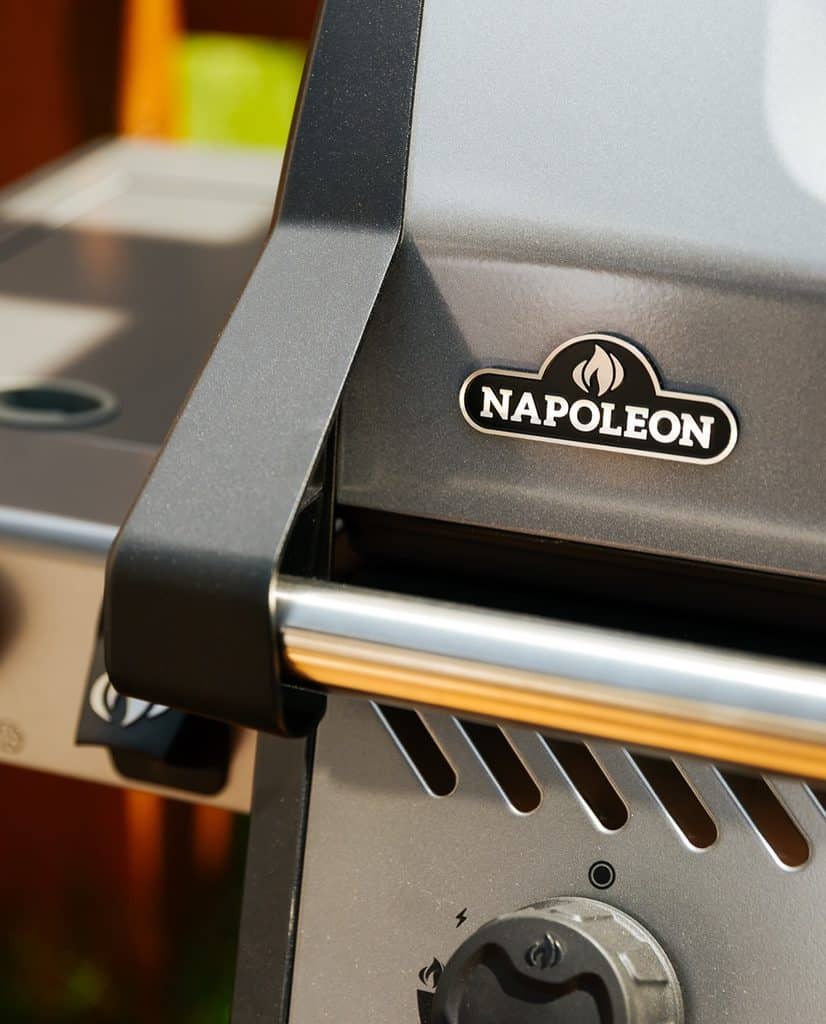
5. Napoleon – Best Premium Grill Brand
When the budget starts moving toward premium territory, Napoleon becomes difficult to ignore.
The brand competes directly with established high-end grill manufacturers and has built a reputation around polished construction, attractive designs, and extensive features.
What Napoleon Does Best
Napoleon’s lineup includes gas grills, charcoal products, smokers, portable grills, and outdoor-kitchen equipment.
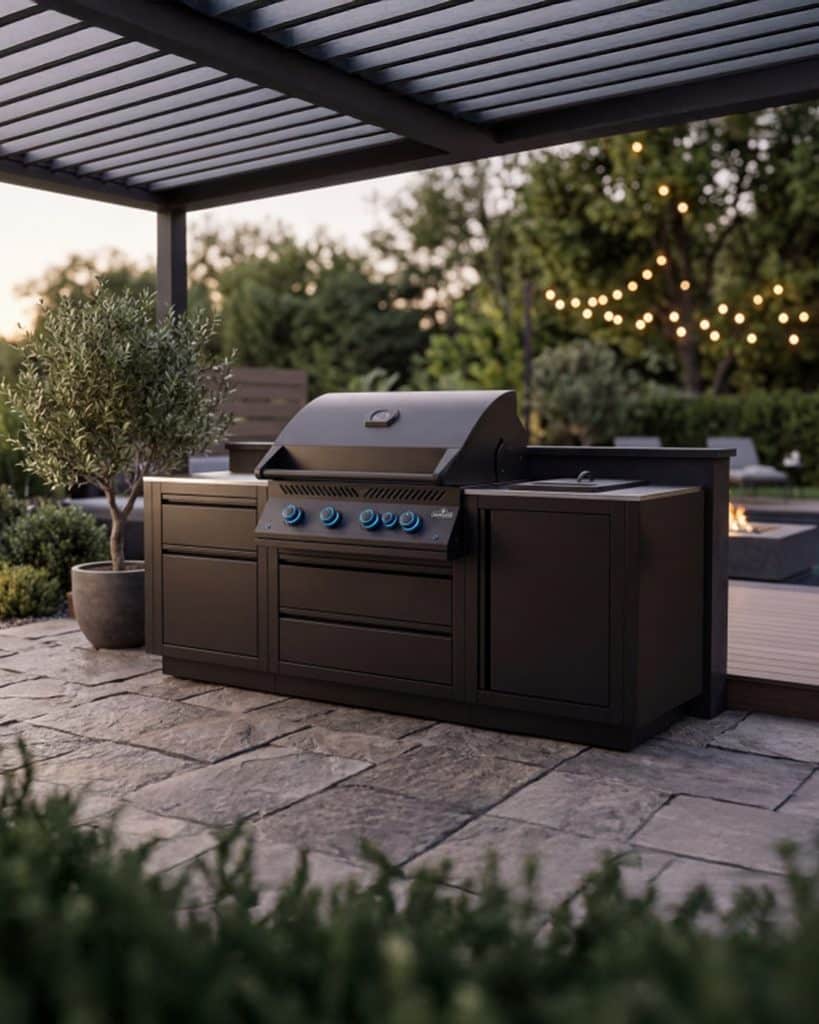
Its premium gas grills are particularly interesting for homeowners who want a permanent outdoor cooking setup.
Cooking Performance
Premium grills should deliver more than shiny stainless steel.
Napoleon focuses heavily on burner design, heat distribution, cooking surfaces, and additional cooking features.
Many models also provide useful extras such as side burners and rotisserie systems.
The result is a grill that can function as the centerpiece of an outdoor kitchen rather than simply a place to cook Saturday burgers.
Price and Value
The big question is whether you will actually use the features you’re paying for. A homeowner who grills twice a month may not need a luxury grill.
A serious outdoor cook who hosts regularly may find the additional capacity, construction, and features worthwhile.
Premium only makes sense when you use the premium features.
Pros
- Excellent construction
- Strong cooking performance
- Attractive designs
- Broad premium lineup
- Excellent for outdoor kitchens
Cons
- Higher prices
- Large models require substantial space
- Accessories increase the final cost
Verdict
Best for: Serious grillers and premium outdoor kitchens.
Why buy it: Napoleon is a strong choice for buyers who want a polished, feature-rich grill and are willing to pay for it.
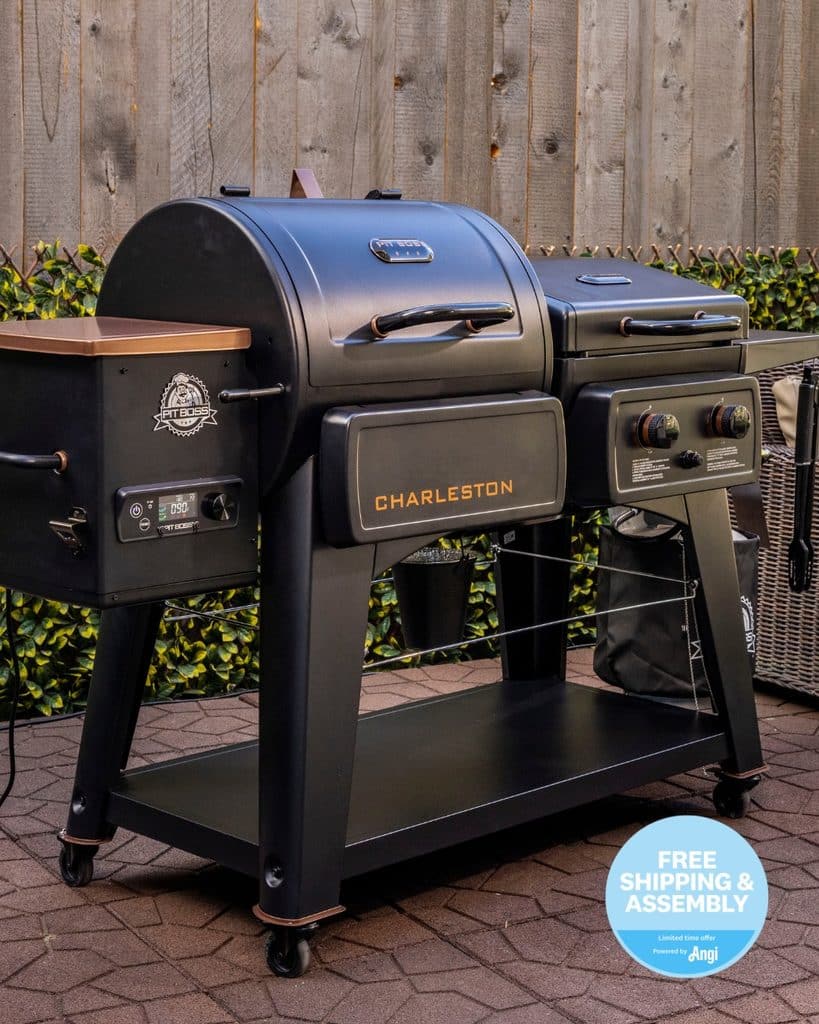
6. Pit Boss – Best Value Pellet Grill Brand
Pellet grilling can become expensive surprisingly quickly. That’s where Pit Boss has carved out an attractive position.
The brand focuses heavily on giving consumers plenty of cooking capacity and features without pushing every model into premium pricing.
What Pit Boss Does Best
Pit Boss offers pellet grills, smokers, combination cookers, gas grills, and other outdoor cooking equipment.
Its pellet products are particularly appealing to shoppers who like the idea of automated smoking but don’t necessarily want to pay premium prices.
Cooking Performance
Pit Boss grills can be very capable smokers.
Their strengths include:
- Large cooking surfaces
- Digital controls
- Multiple cooking configurations
- Strong feature sets
- Competitive pricing
The important thing is to compare models individually.
A lower price can mean compromises in insulation, finish, controls, or component quality.
Value
This is where Pit Boss shines.
For someone entering pellet cooking, spending less on the grill can leave room in the budget for meat, pellets, thermometers, and accessories.
And frankly, those things matter. A $2,000 grill doesn’t make a bad brisket taste good.
Pros
- Strong value
- Large cooking capacity
- Broad pellet-grill selection
- Lots of features for the money
Cons
- Quality varies by model
- Finish may not match premium competitors
- Long-term durability requires careful consideration
Verdict
Best for: Budget-conscious pellet-grill buyers.
Why buy it: Pit Boss offers one of the better feature-to-price propositions in pellet grilling.
7. Kamado Joe – Best Premium Ceramic Grill
Ceramic kamado grills are the Swiss Army knives of outdoor cooking.
They can smoke.
They can roast.
They can bake.
And they can reach temperatures hot enough to make a steak wonder what it did to deserve such treatment.
Kamado Joe has become one of the strongest names in this category.
What Kamado Joe Does Best
The thick ceramic construction provides excellent heat retention.
That makes kamado grills particularly good for:
- Low-and-slow barbecue
- High-temperature searing
- Pizza
- Roasting
- Baking
Kamado Joe also distinguishes itself through its multi-level cooking systems and accessories.
Performance
Once a kamado is stabilized, it can hold a cooking temperature for a long time. The learning curve is steeper than a gas grill, but the reward is exceptional versatility.
The downside?
Ceramic grills are heavy.
Very heavy.
This is not the cooker you casually move around the patio because you suddenly decide the sun is better on the other side of the yard.
Verdict
Best for: Serious outdoor cooks who want one cooker capable of doing almost everything.

8. Big Green Egg – Best for Kamado Traditionalists
Big Green Egg is one of the most recognizable names in ceramic grilling. The brand has developed an extremely loyal following around its distinctive ceramic cookers.
What Big Green Egg Does Best
Like other kamado grills, the Big Green Egg combines excellent insulation with precise airflow control.
That makes it capable of everything from low-temperature smoking to high-temperature searing.
Its accessory ecosystem also allows owners to expand the cooking setup over time.
The Ownership Experience
Big Green Egg’s appeal isn’t only about the cooker. It’s also about the community surrounding the brand.
Owners often become enthusiasts, experimenting with pizza stones, multi-level setups, cast-iron cookware, smoking accessories, and different charcoal techniques.
Verdict
Best for: Traditional kamado enthusiasts who value proven design and a strong accessory ecosystem.
Grill Brand Comparison: Which One Is Best?
Choosing among the top grill brands in the USA becomes easier when you stop asking which brand is universally “best.”
The better question is:
Best for what?
Best Overall: Weber
For the widest range of backyard cooking styles, Weber remains one of the safest recommendations.With excellent customer support and a vast ecosystem of accessories, you can easily expand your outdoor cooking setup over time.
Best Pellet Grill: Traeger
Choose Traeger when automated wood-fired cooking and smoking convenience are priorities.Their set-it-and-forget-it temperature controls and smart app connectivity make managing long, low-and-slow cooks completely effortless.
Best Budget Grill: Char-Broil
Char-Broil is a sensible entry point for buyers who need a functional grill without a premium price. It is an easy, low-risk investment for casual weekend cooks or anyone getting into outdoor grilling for the first time.
Best Outdoor Griddle: Blackstone
For smash burgers, breakfast, cheesesteaks, and large batches, the Blackstone format is hard to beat. The intuitive rear grease management system makes cleanup fast and hassle-free after a big cook.
Best Premium Grill: Napoleon
Napoleon makes the most sense for buyers who want a higher-end gas grill and are willing to invest in construction and features. Heavy-gauge stainless steel components and industry-leading warranty coverage ensure your investment lasts for decades.
Best Value Pellet Grill: Pit Boss
Pit Boss is attractive when you want pellet-grill functionality while keeping the purchase price under control. Features like the direct-flame sear slider give you the flexibility to go from low-and-slow smoking to open-flame searing with ease.
Best Ceramic Grill: Kamado Joe
Kamado Joe is an excellent choice for cooks who want maximum versatility from a ceramic cooker. Thoughtful innovations like the Divide & Conquer flexible cooking system and airlift hinge make operating a heavy ceramic grill remarkably easy.
Best Traditional Kamado: Big Green Egg
Big Green Egg remains a compelling choice for buyers who want the classic kamado experience and a mature accessory ecosystem. Backed by decades of proven performance, it remains the gold standard for long-lasting, wood-fired ceramic cooking.
Which Grill Brand Has the Biggest Market Presence?
This question sounds straightforward until you start digging into the numbers.
The grill industry doesn’t provide one universally accepted scoreboard showing exactly how much every brand sells in the United States.
Some companies disclose detailed financial results. Others are private. Some brands belong to larger parent companies whose financial reports combine multiple product categories.
That means comparing “profits” across brands can become an apples-to-brisket situation.
A better approach is to consider several indicators:
- Revenue
- Market share
- Retail presence
- Brand recognition
- Product range
- Category leadership
Weber has enormous brand recognition in traditional grilling.
Traeger is especially prominent in pellet cooking.
Blackstone has established a powerful position in outdoor griddles.
Napoleon competes strongly in premium equipment.
Pit Boss has built a significant value-oriented presence in pellet grilling.
The biggest brand is not necessarily the best brand.
That is particularly important for consumers.
A company can sell enormous volumes of entry-level products while another sells fewer premium grills at much higher prices.
Sales tell us about business scale.
They do not tell us whether your steak will be cooked evenly.
What to Consider Before Buying a Grill
The best grill is the one that matches how you actually cook. Not the one with the biggest advertising budget. Not the one your neighbor bought. And definitely not the one with 47 buttons you will never press.
Gas vs. Charcoal vs. Pellet vs. Griddle
Gas
Best for: Convenience and everyday grilling. Gas heats quickly, offers easy temperature control, and is ideal for weeknight cooking.
Charcoal
Best for: Traditional flavor and hands-on cooking. Charcoal requires more work but rewards you with excellent high-heat cooking and the unmistakable experience of cooking over live fire.
Pellet
Best for: Smoking and convenience. Pellet grills combine automated temperature control with wood-fired cooking.
Griddle
Best for: Burgers, breakfast, and large batches. The flat surface completely changes what you can cook outdoors.
Grill Size
Think about how many people you normally cook for.
A massive six-burner grill looks impressive until you realize you normally cook four burgers.
On the other hand, a small two-burner grill becomes frustrating when you host a family gathering.
Buy for your normal cooking habits, not your imaginary championship barbecue every Saturday.
Construction Materials
Look closely at the materials.
Stainless steel can provide excellent corrosion resistance and durability, but not all stainless steel is equal.
Also examine:
- Grate material
- Burner construction
- Lid thickness
- Firebox design
- Hardware
- Wheels and casters
A grill should feel solid when you open the lid.
If the entire grill shakes like a shopping cart with one bad wheel, that’s not encouraging.
Temperature Control
This is one of the most important factors. A grill should let you cook hot when you want a sear and lower when you need more controlled cooking.
Temperature control is more valuable than gimmicks.
Smart connectivity is useful. Built-in lights are nice. A dozen cooking presets can be fun. But consistent heat is what puts dinner on the table.
Are Expensive Grill Brands Worth It?
Sometimes.
And sometimes you’re simply paying extra for a prettier lid.
Premium grills can offer better construction, stronger burners, improved heat distribution, heavier components, better warranties, and more accessories.
But those advantages matter most to people who grill frequently.
A casual backyard cook may be perfectly happy with a well-chosen mid-range Weber or Char-Broil.
A serious outdoor cook who grills several times a week may appreciate the durability and capacity of a premium Napoleon or another high-end system.
Spend more when the upgrade solves a real problem.
Don’t spend more because the grill has a touchscreen.
Final Verdict: The Best Grill Brands in the USA
The top grill brands in the USA are not all competing for exactly the same customer.
That’s what makes the market interesting.
Weber remains the strongest all-around recommendation thanks to its combination of performance, product variety, reputation, and support.
Traeger is the standout for convenient pellet cooking.
Char-Broil offers an affordable entry into backyard grilling.
Blackstone has created a compelling alternative with its outdoor griddles.
Napoleon is a premium contender for serious gas-grill buyers.
Pit Boss delivers plenty of pellet-grilling capability for the money.
Kamado Joe and Big Green Egg appeal to cooks who want the heat retention and versatility of ceramic cooking.
But here’s the most important takeaway:
The grill with the highest sales isn’t automatically the grill you should buy.
Start with your cooking style.
Do you want fast weeknight dinners? Buy for convenience.
Do you love brisket and ribs? Look closely at pellet and kamado options.
Do you cook for ten people every weekend? Cooking area matters.
Do you live for smash burgers? A griddle might completely change your outdoor cooking routine.
And if you simply want a dependable grill that cooks dinner without demanding a technical degree, keep things simple.
Because at the end of the day, nobody sitting around the backyard cares how impressive your grill’s brochure looked.
They care about what’s on the plate.
Frequently Asked Questions
What is the best grill brand in the USA?
Weber is one of the strongest overall choices. Its broad product range, proven designs, brand reputation, and strong support ecosystem make it suitable for a wide range of backyard cooks.
What grill brand sells the most in the USA?
Exact rankings can vary depending on the category and how sales are measured. Traditional gas, charcoal, pellet, and griddle markets have different leaders.
Market presence should not be confused with total company revenue.
What is the most reliable grill brand?
Weber has a particularly strong reputation for dependable designs and long-term parts availability. However, reliability ultimately depends on the specific model and how well the grill is maintained.
What is the best grill brand for the money?
For traditional grilling, Weber and Char-Broil offer compelling choices at different price points. In pellet grilling, Pit Boss is particularly attractive for buyers focused on features per dollar.
Is Weber better than Traeger?
They are designed around different cooking experiences.
Weber is the better all-around choice for traditional grilling. Traeger is the better choice for automated wood-fired cooking.
Is Napoleon better than Weber?
Not necessarily.
Napoleon is particularly compelling in premium gas grilling, while Weber offers a broader range of traditional and modern cooking options.
Your cooking style matters more than the logo.
Are expensive grills worth the money?
They can be, especially for frequent cooks.
Premium grills can offer better construction, durability, temperature control, cooking capacity, and features. But occasional grillers may get better value from a mid-range model.
What is the best grill brand for beginners?
Weber is an excellent starting point because its products are relatively straightforward, widely supported, and available in several configurations.
Char-Broil is another sensible option for buyers with tighter budgets.
Featured image credit: ChatGPT
