
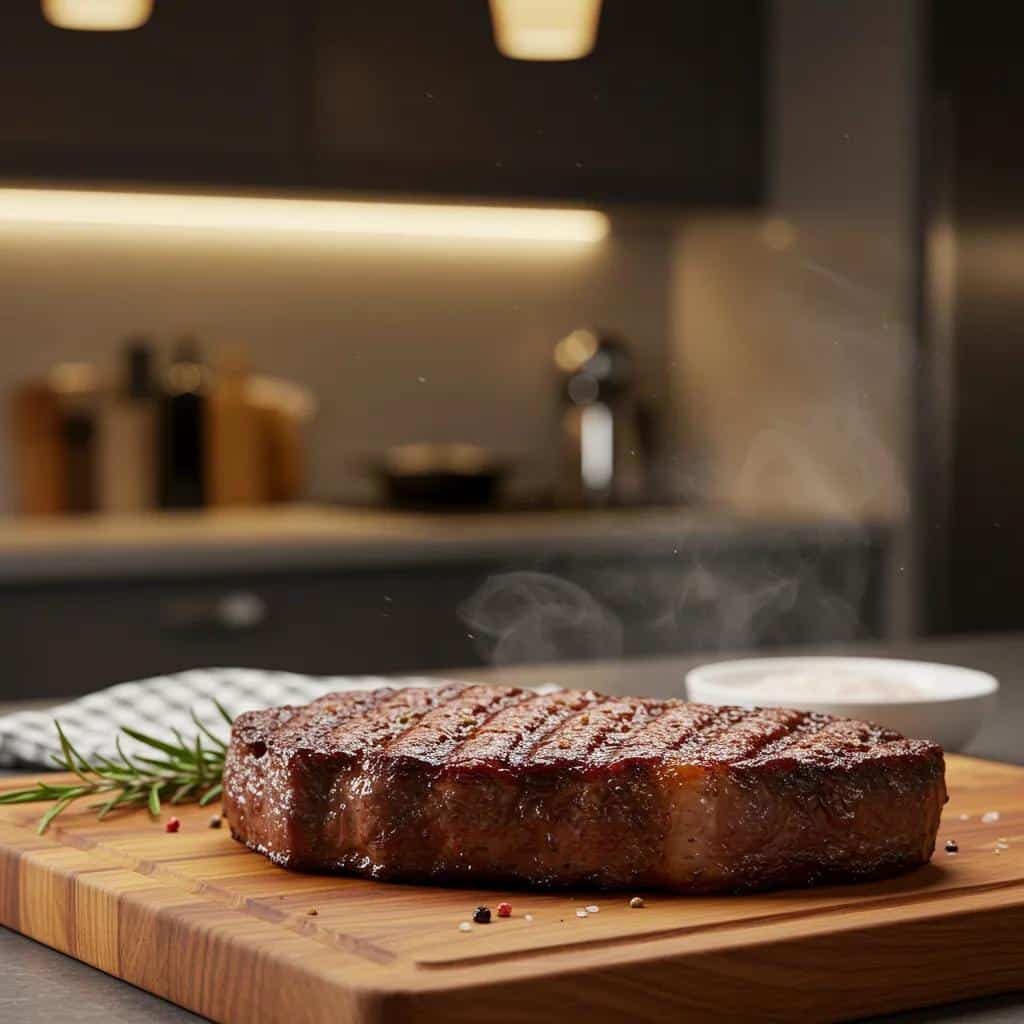
Resting a steak is the brief pause after cooking when internal juices redistribute and proteins relax, producing a more tender, flavorful bite. This article teaches why resting matters, what goes wrong when you skip it, and precise steps to avoid the most common mistakes that dry out or soften a crusted steak.
You will learn how long to rest by thickness and cut, when to tent or leave the steak uncovered, and practical ways to keep temperature without steaming the crust. Practical tips include using a thermometer for carry-over cooking, choosing a wire rack or cutting board placement, and finishing touches like compound butter done at the right time.
The guide is organized into four focused sections: consequences of not resting, timing and temperature guidance, covering and surface choices, and warmth-management strategies — each with short tables, checklists, and clear action steps.
Throughout, related tools such as meat thermometers and wire racks are discussed to help you measure and preserve ideal juiciness and flavor.
What Happens If You Don’t Rest Your Steak?
Resting stops the high internal pressure that forces juices out when you slice immediately after cooking, and it allows carry-over cooking to finish at a controlled rate. When you cut too soon the hot muscle fibers contract and squeeze juices toward the surface, causing a visible puddle on the plate and a drier, tougher bite for the diner.
Letting a steak rest preserves both texture and a balanced distribution of flavor compounds, which makes each slice consistently juicy. Understanding these effects leads directly to identifying the most common mistakes cooks make and the simple corrections that restore a perfect eating experience.
Why Skipping Resting Causes Dry and Tough Steak
Muscle fibers behave like a squeezed sponge when they are hot: cutting immediately forces the juices out instead of letting them reabsorb as the proteins relax. This physical squeeze produces a noticeable loss of moisture and a firmer, chewier mouthfeel that many people interpret as overcooked.
The visual symptom—pools of red or brown juices—signals that the steak lost internal moisture that would otherwise remain in the meat. To test the difference, cook two identical steaks and rest only one; the rested steak will be visibly juicier and more tender when sliced.
How Resting Prevents Flavor and Juice Loss
Resting gives time for internal juices and soluble flavor compounds to redistribute evenly through the muscle, smoothing temperature gradients and concentrating taste in each bite. As the steak cools slightly, collapsed proteins reabsorb some of the expelled juices and the carry-over cooking raises the center a few degrees toward the target doneness.
The process also allows fat and connective tissue to settle, preserving mouthfeel and preventing immediate runoff when you slice. After resting, cut against the grain and you’ll notice consistent juiciness across slices rather than a single dry center.
How Long Should You Properly Rest Your Steak?
Resting time depends primarily on thickness: thin steaks need only a short pause while thick cuts and roasts require longer to allow center temperatures to stabilize. A simple rule of thumb is to rest thinner steaks for a few minutes and thicker cuts for several minutes per inch, adjusting for carry-over cooking and desired final temperature.
Using an instant-read meat thermometer helps you monitor internal temp before and after resting so you can account for the typical 2–6°F carry-over rise in many steaks.
For further detail on timing and thermometer selection, BBQ Host provides a focused how-long-to-rest-steak guide and recommendations on precision tools like instant-read thermometers to measure carry-over cooking accurately.
What Is the Ideal Resting Time by Steak Thickness and Cut?
Below is a concise table comparing common steak thicknesses and recommended rest times alongside typical carry-over temperature rise and target internal temperatures. This table helps you plan rest so the steak reaches the intended doneness without losing juiciness.
This compact mapping shows thickness as the primary factor; use a thermometer to confirm internal temperature and adjust rest time if the kitchen environment is cold or the steak is exceptionally thick.
What Are the Risks of Resting Too Short or Too Long?
Resting too briefly means cutting while internal pressure remains high, which triggers juice loss and a dryer texture; too long risks the steak cooling below an enjoyable eating temperature and, if tightly wrapped, softening the crust. Overly long rests in a tightly sealed wrap can trap steam and finish-cook the exterior, which blunts the sear.
Mitigations include a loose foil tent or a warm plate to hold temperature without trapping moisture, and periodic temperature checks with an instant-read thermometer. Planning rest around serving timing ensures the steak stays in the sweet spot of warm, juicy, and well-textured.
Should You Cover Your Steak While Resting?
Covering affects both heat retention and crust preservation: a tight cover traps steam and softens the sear, while an uncovered steak cools faster but keeps its crust texture intact.
A loose foil tent reduces convective heat loss without creating a sealed, steamy environment and is a common compromise in colder kitchens or when resting long cuts. For crust-first servings, resting on a wire rack is preferable because it allows air circulation under the steak and prevents moisture pooling on the bottom surface.
BBQ Host has a covering methods resource that outlines tenting techniques and recommends simple accessories like wire racks to preserve crust while managing warmth.
When to Use Foil Tenting vs. Resting Uncovered
Use a loose foil tent when you need extra warmth retention — for example with thick steaks, roasts, or in a cold kitchen — but avoid wrapping tightly because that produces steam and softens the crust. For thin, high-heat-seared steaks served immediately, leave them uncovered on a rack or board to keep the crust crisp and the interior juicy.
For longer rests (over 10 minutes) a loose tent paired with a warm plate under the cutting board balances temperature and texture. Choose the method that matches your priority: warmth retention or crust preservation.
How Does Resting on a Rack Compare to a Flat Surface?
A wire rack elevates the steak and allows airflow around all surfaces, preventing condensation from pooling under the meat and retaining a crisp exterior. Flat surfaces like cutting boards can trap residual moisture or cause the bottom to sweat, softening the crust if left for longer rests; tilting slightly or using absorbent paper helps but is less effective than a rack.
Racks also make cleanup easier by collecting juices in a sheet pan below, and they pair well with loose tenting when warmth is needed. For best results, rest steaks on a wire rack placed over a tray or warm plate to combine airflow with gentle heat retention.
How Do You Keep Your Steak Warm Without Losing Quality During Resting?
Maintaining serving temperature without steaming the crust requires controlled, low-risk methods that preserve texture and avoid overcooking: warm plates, brief low-oven holds, loose tenting, and insulated carriers are practical options depending on service needs.
Each method balances warmth retention against the risk of moisture buildup or continued cooking; selecting one depends on rest duration and whether you need to transport the steak.
A short note: BBQ Host’s resources on warmth strategies outline these approaches and recommend practical tools such as instant-read thermometers and wire racks to monitor temperature and preserve crust integrity during rest.
Choosing the right method helps ensure the steak stays at ideal eating temperature without sacrificing juiciness.
What Are Effective Strategies to Maintain Warmth?
Common, effective strategies include warming plates in advance to receive the rested steak, briefly holding the steak in a low oven (turned off or at very low heat), and using insulated carriers for transport — each with pros and cons depending on crust sensitivity.
Warm plates are low-risk for crust preservation and require minimal monitoring, while a low oven can keep steaks warm but must be used cautiously to avoid raising internal temperature too far.
Insulated carriers are excellent for transport but can trap moisture if sealed tightly; pairing them with a rack or ventilation reduces that risk. Test and time each method for your typical service conditions to find the optimal balance.
Does Butter Help While Resting Steak?
Applying a small cold or room-temperature butter pat after the brief rest can add flavor and a short-lived surface warmth without generating steam; avoid smearing hot melted butter during a long rest because it can soften the crust.
Compound butters applied after a short rest melt gently into the exterior without driving moisture into the crust and offer a controlled flavor boost at serving.
If you prefer a buttery finish, wait until just before plating to add butter so the crust remains intact and the flavor disperses evenly. This timing preserves texture while delivering the richness diners expect.
Common mistakes to avoid when resting steak: Cutting immediately: Slicing hot forces juices out and yields a dry steak.
Tight wrapping: Sealing in foil creates steam that softens the crust.
No thermometer check: Ignoring carry-over cooking risks under- or over-shooting doneness.
