
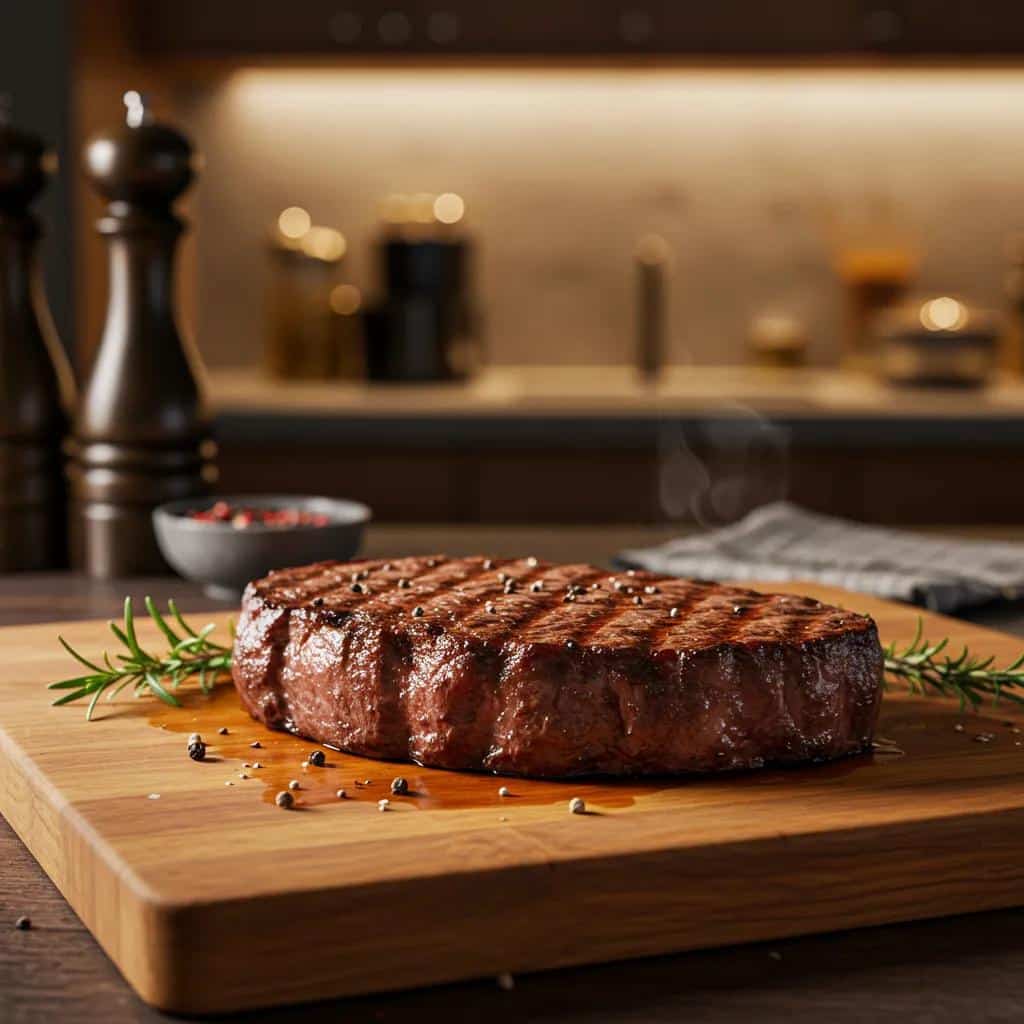
Resting steak means letting a cooked cut sit briefly off the heat so internal temperature stabilizes and juices redistribute; this step transforms a good sear into consistently juicy slices.
In this guide you will learn the scientific reasons to rest steak, exact rules of thumb for resting times by cut and thickness, practical step-by-step resting techniques, and the common mistakes that strip steaks of juiciness.
Many home cooks skip or rush resting because they fear the steak will go cold, but a short, intentional rest preserves moisture and improves tenderness while carryover cooking reaches the target doneness.
This article maps the why, the how long (with a compact reference table), the how-to process (including tools like meat thermometers and warming trays), and troubleshooting tips to avoid soggy crusts or lukewarm meat.
Read on to get snippet-ready rules of thumb for resting steak time, simple techniques to keep crust and warmth, and quick checks to know when a steak is ready to carve.
Why Rest Steak? Understanding the Benefits for Juiciness and Tenderness
Resting steak is the deliberate pause after cooking that allows internal juices to redistribute and muscle fibers to relax, resulting in more even moisture and improved tenderness.
Heat causes muscle proteins to contract and push fluids toward the surface during cooking; when a steak rests, those fibers partially relax and fluids migrate back into the interior, which reduces drip loss when slicing.
The practical benefit is clear: a rested steak delivers thicker, juicier slices and a better mouthfeel than one cut immediately off the heat.
Understanding this mechanism explains why resting pairs with monitoring internal temperature and supports predictable doneness, and it sets up the next section where we examine exactly what happens to juices during the rest.
This section highlights three core advantages of resting steak:
- Improved juiciness through redistributed internal fluids.
- Enhanced tenderness as contracted fibers relax and reabsorb moisture.
- More accurate final doneness due to carryover cooking stabilizing internal temperature.
These benefits show why resting is a small extra step with a large payoff in eating quality and preparation confidence.
What Happens to Steak Juices During Resting?
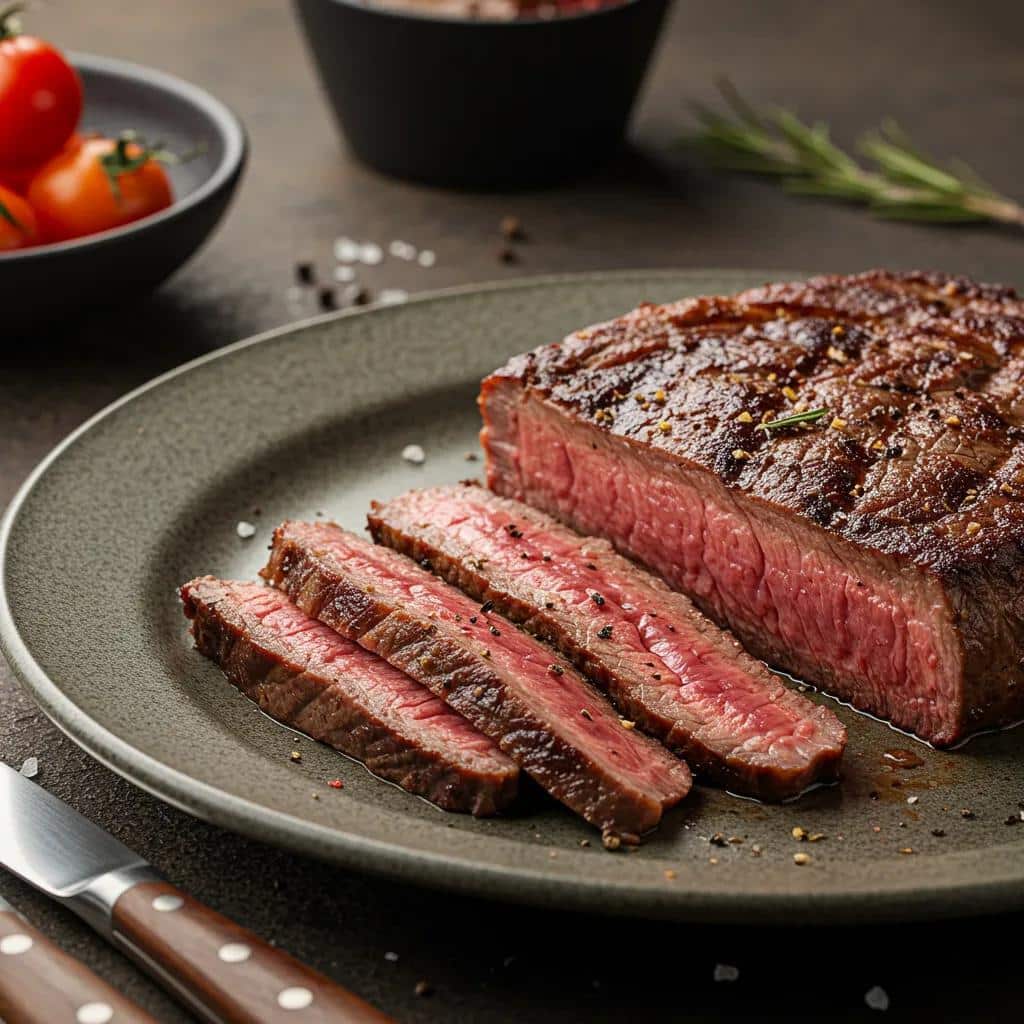
When a steak finishes cooking, its outer layers are hotter and the contracting proteins have pushed juices outward; during resting those juices move inward as temperature gradients even out. This redistribution is driven by diffusion and the gradual relaxation of muscle fibers, which reduces the pressure forcing liquids toward the surface.
The result is less juice pooling on the cutting board and more retained moisture in each slice when you carve, yielding juicier bites. To visualize the effect, imagine squeezing a sponge hot from the dryer versus letting it cool: cooling lets the sponge reabsorb liquid, much like meat fibers do during rest.
This process of juice redistribution is a key factor in how cooking impacts meat quality.
Meat Cooking: Effects on Tenderness, Weight Loss, and Quality
Cooking can positively affect meat tenderness, on the other hand, the heat treatment also causes weight loss. The resulting tenderness of cooked meat is influenced by the background toughness of fresh meat, by thepost mortemageing process and by the method of cooking. In the case of heat treatment, the temperature and duration of action play a key role. In this respect, the meat tenderness depends on the type of appliance used for cooking. The cooking loss of meat during heat treatment is caused by contraction of muscle fibres and intramuscular connective tissue, the intensity of which also depends on the temperature and device used. The extent of this cont
How Does Resting Affect Muscle Fibers and Texture?
Heat-induced contraction shortens and tightens muscle fibers, making meat feel firmer immediately after cooking; resting allows partial relaxation that softens texture and permits juicier results. As fibers relax, they regain some of their original length and re-entrap moisture that had been forced outward, which changes the mouthfeel from dense to tender.
This process also moderates the gradient between the outer sear and inner doneness for a more pleasing bite. Recognizing this relationship between fiber behavior and texture helps cooks choose rest durations that match cut thickness and desired doneness.
How Long Should You Rest Steak? Resting Times by Cut and Thickness
A straightforward rule of thumb is: small, boneless steaks generally need 5–10 minutes; thicker or bone-in cuts require 10–20 minutes; very large steaks or roasts can need 20+ minutes. Carryover cooking increases internal temperature after removal from heat, so remove steaks a few degrees below target to hit final doneness during rest.
The best approach combines a thickness-based rule with temperature checks to avoid under- or over-resting. Below is a compact reference table to scan recommended rest times by common cuts and typical thickness ranges.
Introductory table: quick resting times for common steak cuts and thicknesses.
This table summarizes practical resting windows and highlights that bone-in or very thick cuts need the longest rests to allow internal heat to even out and juices to redistribute.
What Are the Recommended Resting Times for Common Steak Cuts?
Recommended times differ by cut because muscle composition and bone presence affect heat retention and carryover cooking; boneless, lean cuts stabilize quicker than large bone-in steaks. For petite cuts such as a 1-inch filet mignon, 5–8 minutes typically suffices because the small mass cools and reabsorbs juices quickly.
Ribeyes and sirloins at 1–1.5 inches benefit from 5–10 minutes to preserve the sear and let interior juices settle. Larger bones and very thick cuts like tomahawks need 15–25 minutes because the bone and mass trap heat longer, prolonging the redistribution process and requiring more time for even temperature.
How Does Steak Thickness Influence Resting Duration?
Thickness directly correlates with resting time: the thicker the steak, the longer it holds heat and the more time is required for internal gradients to even out. For example, a 1-inch steak often needs only a short rest while a 2-inch steak commonly requires double the rest to achieve the same internal temperature stabilization.
Carryover cooking also scales with mass, so expect a 5–10°F rise after removal that lessens the need to cook to full target on the grill. Applying a simple thickness-based rule helps: add roughly 5–10 minutes per extra inch beyond 1 inch to account for additional heat storage and redistribution needs.
How to Properly Rest Steak for Maximum Juiciness and Warmth
Proper resting balances preserving a crisp crust with keeping the interior warm and juicy; remove steak from heat at target-minus a few degrees, place it on a carving board or warmed plate, and loosely tent to hold heat without steaming the crust.
Use a reliable meat thermometer to remove steaks at the desired internal temperature minus carryover allowance, and let the steak rest undisturbed for the recommended time by cut and thickness. Next are practical steps and tool recommendations to make resting consistent and simple in any kitchen.
Tools and accessories that help produce predictable rests are summarized below with when to use each option.
What Are the Best Techniques for Resting Steak?
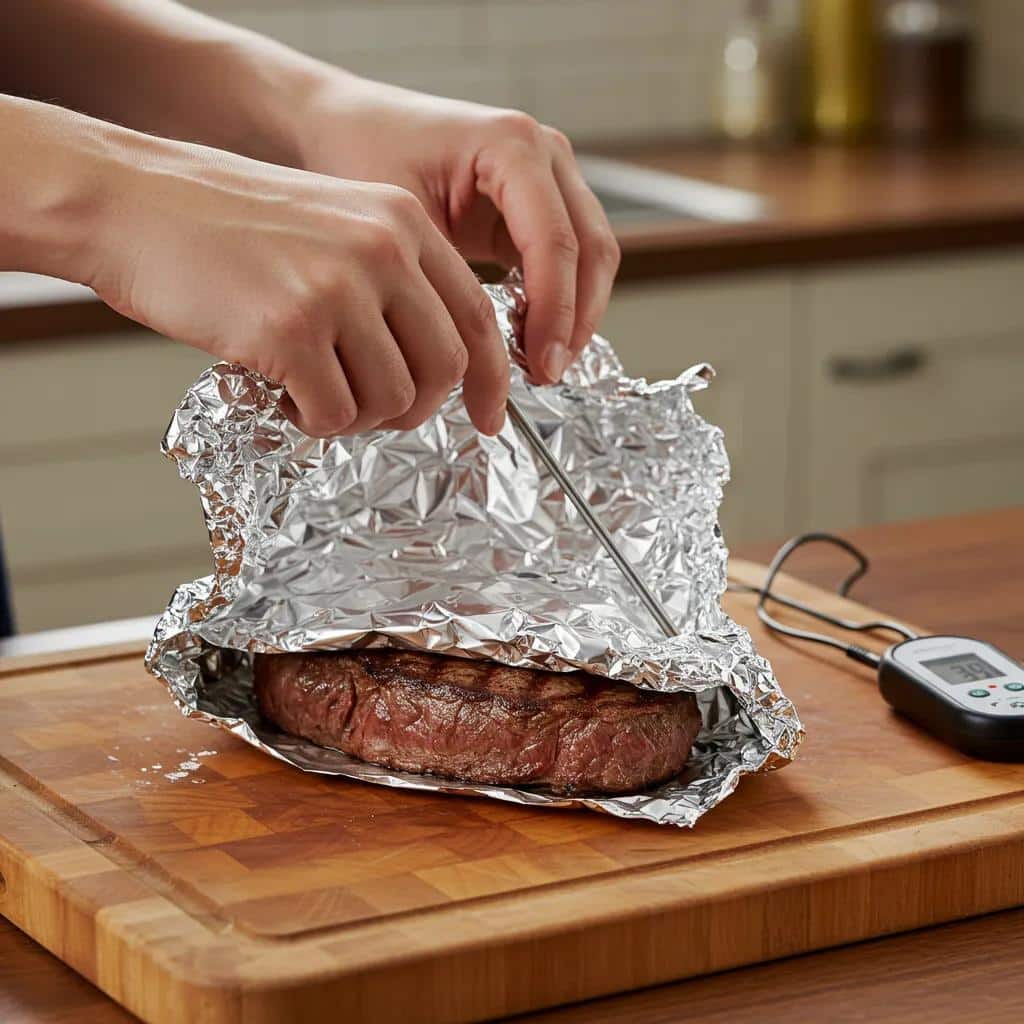
Follow a clear step sequence: remove steak when internal temp is just below target, transfer to a warm cutting surface, loosely tent with foil, and wait the recommended time before slicing. Removing at a few degrees under the target accounts for carryover cooking so the steak finishes at the intended doneness as it rests.
Loosely tenting preserves heat while allowing steam to escape, maintaining crust texture. These steps, paired with a quick thermometer check before carving, ensure consistent juiciness and temperature.
Should You Cover or Tent Steak While Resting?
Loosely tenting with foil is the preferred practice because it reduces radiant heat loss while permitting some moisture to escape, which protects the sear from softening. Tightly wrapping traps steam and can soften the crust, turning a crisp exterior limp and reducing the contrast many diners expect.
For very long rests, a warmed plate or low-heat warming tray under the cutting board will keep the center warm without creating steam. Choosing a gentle tenting approach balances crust preservation with temperature maintenance.
What Common Mistakes Should You Avoid When Resting Steak?
Avoiding common errors preserves both juiciness and crust: do not cut too soon, do not wrap tightly, and do not let a steak sit on a cold surface during a long rest. Cutting immediately forces juices onto the board; tight wrapping traps steam and softens the sear; resting on a cold plate accelerates cooling and reduces serving temperature.
Below is a troubleshooting table that lists common mistakes, why they happen, and how to prevent them so cooks can salvage a near-perfect result.
Why Is Cutting Steak Too Soon a Problem?
Cutting a steak immediately after cooking releases the juices that are still driven outward by residual heat, which causes a dry surface and lower perceived juiciness in each bite. Waiting the recommended rest time or confirming stabilization with a thermometer prevents that early loss and ensures juices remain distributed throughout the slices.
A practical remedy is to perform a quick internal temperature check before carving to confirm carryover has settled. Applying this check keeps slicing decisions data-driven rather than guesswork.
How Can You Prevent Steak from Getting Cold During Resting?
Keep a steak warm by resting it on a slightly warmed plate or carving board, loosely tenting with foil, or using an insulated resting box or low-heat warming tray for longer rests; these methods preserve temperature without steaming the crust.
Pre-warming the serving platter or placing the cutting board on a warm surface reduces heat loss during the rest and maintains serving temperature.
For cooks who want tool recommendations or a simple resting time calculator and equipment guide, BBQ Host provides resources and practical guides to meat thermometers, carving boards, and warming accessories tailored to grilling workflows. Using these tools keeps steak warm while protecting juiciness and crust.
