
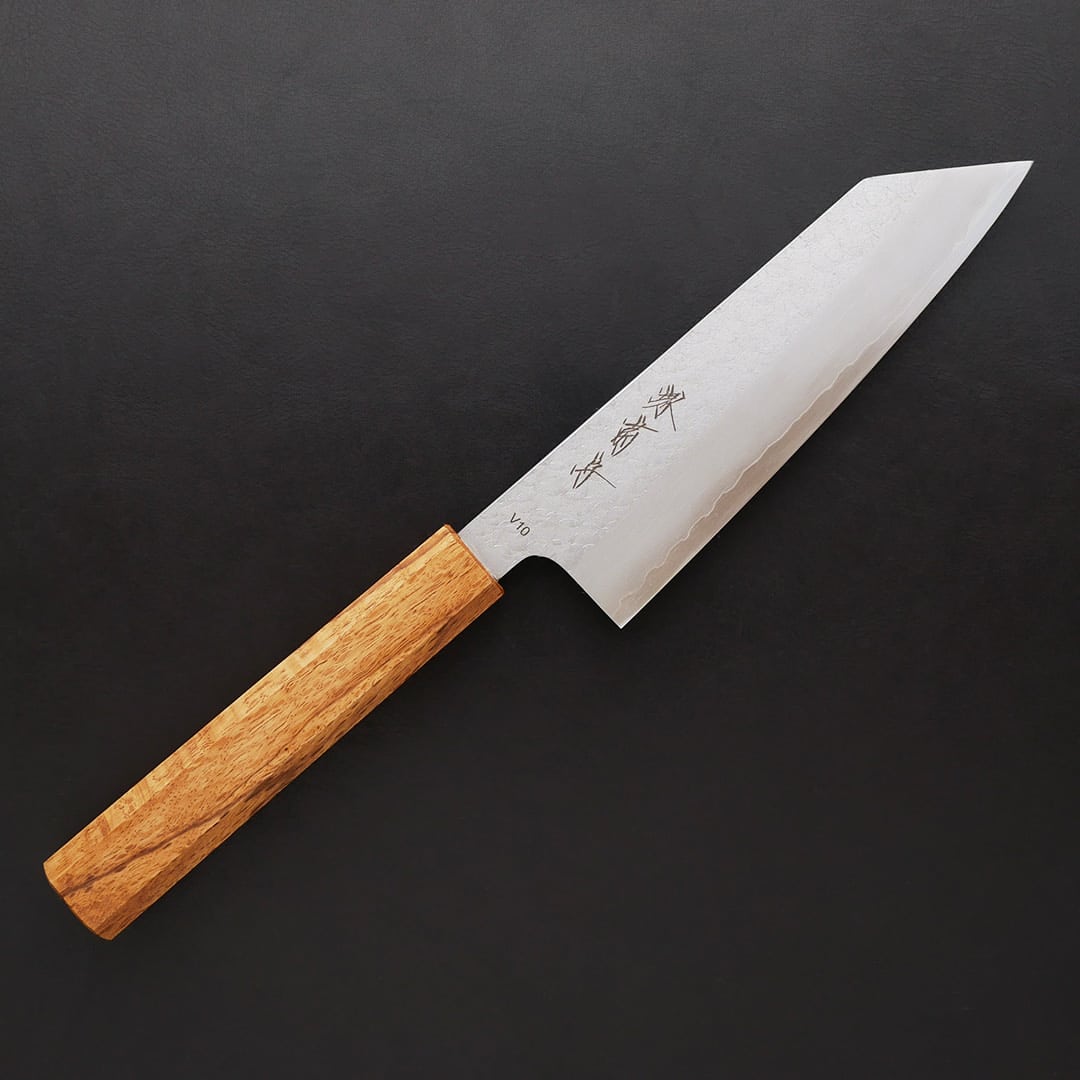
“A knife is an extension of a cook’s hand. You don’t just hold it; you feel the steel through the prep.”
— Marco Pierre White
Echoing the belief that mastery stems from skill rather than price tag, Marco Pierre White famously spoke these words, a reminder that true authority requires instinctive control and deep respect for the craft.
Yet, step into any modern kitchen or smokehouse pit, and you will spot folks wielding $400 hand-forged blades to slice through a basic grocery store onion like they are single-handedly fending off a Mongol invasion.
It is slightly ridiculous, sure, but the obsession with legendary steel runs deep for a good reason.
For centuries, the samurai katana represented the absolute peak of metallurgy, discipline, and personal honor. Today, that exact warrior philosophy has migrated off the feudal battlefield and landed squarely on the cutting board.
This union of samurai heritage and prep work creates the ultimate culinary katana fantasy: a mindset where cooking stops being a daily chore and transforms into a focused, highly satisfying martial art.
When you learn to handle high-performance Japanese steel with the intent and respect of the ancient code of Bushido, your time in the kitchen completely changes. You stop tearing through ingredients and start mastering them.
The Heritage of Steel: From Battleground to Prep Station
Ever wonder how blade smiths went from crafting weapons of war to making tools for slicing brisket and dicing carrots?
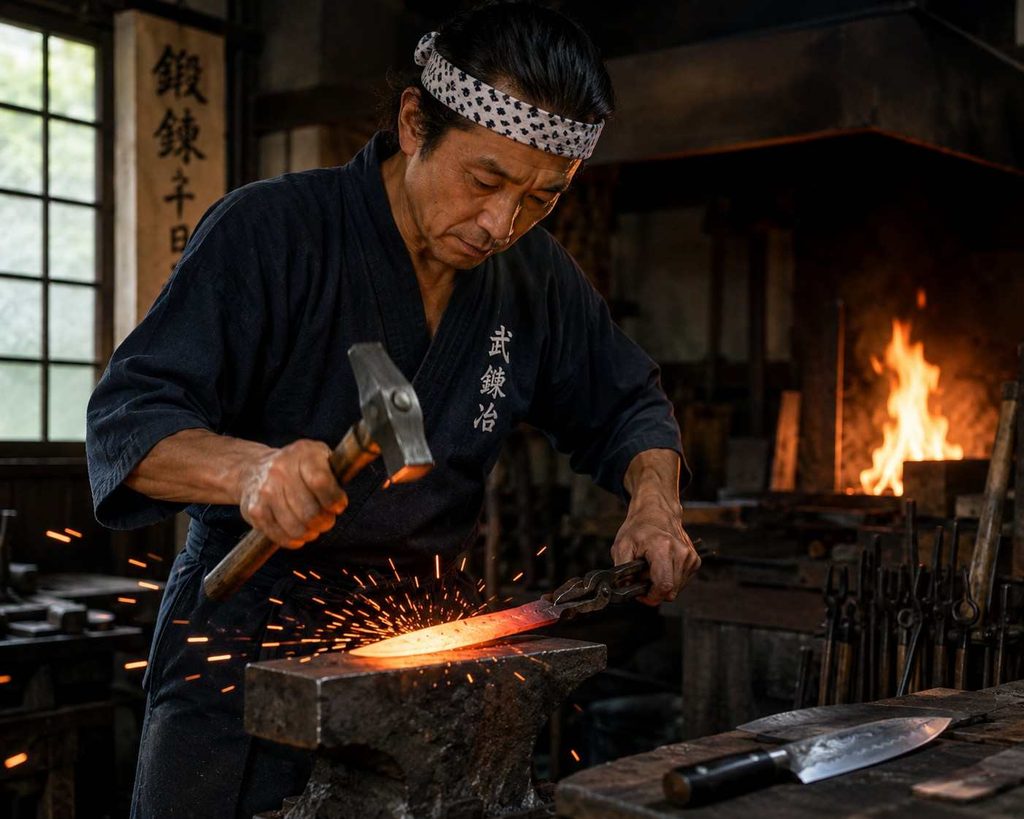
Blame the late 19th century. During the Meiji Restoration in Japan, the samurai class was officially abolished, and carrying swords in public was banned by law.
Master blacksmiths in legendary sword-making hubs like Sakai and Seki suddenly found themselves with a major business problem: adapt or starve.
They took centuries of secret metallurgical knowledge and redirected it entirely toward kitchen cutlery. The result was a radical evolution in food prep history.
| Feature | High-Carbon Steel (Aogami/Shiro) | Modern Stainless (VG-10/SG2) |
| Sharpness | Extreme, glass-like edge | Exceptionally sharp |
| Maintenance | High (Must dry immediately) | Low (Rust-resistant) |
| Edge Retention | Outstanding | Long-lasting |
| Best For | Precision slicing, delicate cuts | Heavy daily prep, high moisture |
The heart of any modern culinary katana fantasy lies in the metal itself:
- High-Carbon Steel (Shirogami & Aogami): Shirogami (White Paper Steel) is pure, razor-sharp, and unforgiving, taking an edge so keen it feels illegal. Aogami (Blue Paper Steel) adds tungsten and chromium for improved edge retention. Both will rust if you so much as glance at them with a damp towel, but their cutting power is unmatched.
- Modern Stainless Steels (VG-10 & SG2/R2): These offer incredible stain resistance alongside powder-steel hardness, ideal for busy cooks who do not want to wipe their blade every three seconds.
- Clad Construction (San Mai & Damascus): Hard, brittle core steel is sandwiched between softer layers of protective steel. This creates a blade that holds a razor edge at the center while remaining tough enough not to snap under pressure.
Blade geometry matters just as much as metal selection. Traditional Western knives feature a symmetrical double-bevel (Ryoba) profile, ground on both sides like a standard wedge. Classic Japanese blades often feature a single-bevel (Kataba) profile, ground on only one side.
This asymmetrical design slides through food with zero drag, steering cuts with pinpoint accuracy.
The Seven Virtues of Bushido on the Cutting Board
Living out the culinary katana fantasy is not just about flexing fancy equipment on social media. It requires adopting the seven core principles of Bushido right at your prep station.
- 義 (Gi – Right Action): Respecting your ingredients through precise, intentional cuts. Crushing a delicate tomato with a dull knife is an offense against good food; making clean, effortless passes preserves the texture and integrity of the produce.
- 勇 (Yuu – Courage): Fearlessly tackling intimidating culinary tasks, whether that means breaking down a whole hog shoulder or mastering paper-thin radish sheets.
- 仁 (Jin – Benevolence): Cooking is fundamentally an act of service. Channeling energy into prepping a meal is done to nourish and bring joy to the people sitting at your table.
- 礼 (Rei – Respect): Keeping your prep station spotless, arranging your mise en place with care, and never tossing a high-end blade into a sink full of soapy water where it can nick or rust.
- 誠 (Makoto – Honesty): Allowing raw ingredients to showcase their natural flavors without hiding bad technique behind heavy, overly complex sauces.
- 名誉 (Meiyo – Honor): Maintaining absolute pride in your work, holding high personal standards for every slice even when no one else is watching.
- 忠義 (Chuugi – Loyalty): Committing to continuous self-improvement, known in Japan as Kaizen. Every prep session is an opportunity to refine your angle, grip, and rhythm.
The Anatomy of the Culinary Katana
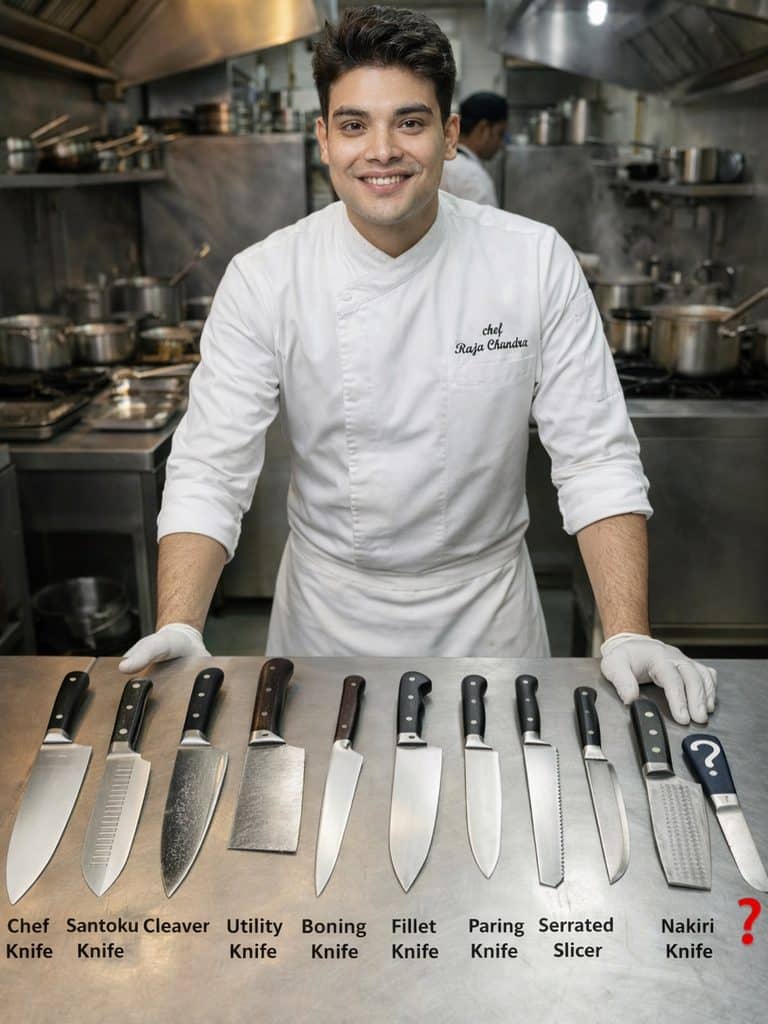
Stepping up to the cutting board requires picking the right tool for the job. You would not use a sledgehammer to drive a finishing nail, and you definitely should not use a massive butcher’s cleaver to mince garlic.
Gyuto (The Chef’s Knife)
The Japanese take on the classic Western chef’s knife. Featuring a flatter belly and a leaner profile, the Gyuto excels at precise push-cutting, slicing, and delicate tip work across meats and vegetables.
Santoku (The Three Virtues)
Translating directly to “three virtues” or “three uses,” this knife handles meat, fish, and vegetables with equal ease. Its shorter length and rounded sheep’s foot tip make it an agile, user-friendly choice for tight workspaces.
Nakiri & Usuba (The Vegetable Specialists)
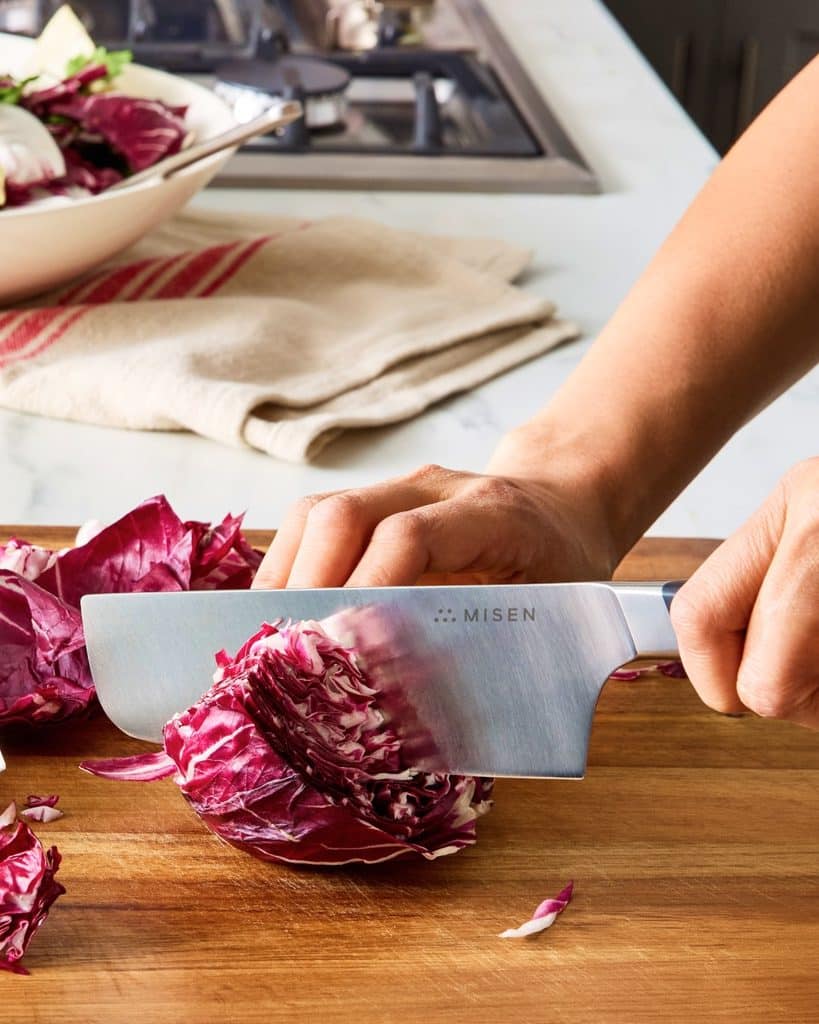
Featuring flat, rectangular profiles, these blades eliminate the rocking motion entirely. The Nakiri (double-bevel) and Usuba (single-bevel) drop straight to the board, making flat, consistent contact to cleanly sever vegetable fibers without leaving annoying accordion strips behind.
Yanagiba (The Willow Blade)
Long, slim, and single-beveled, the Yanagiba is engineered for long, continuous draw-cuts. It glides through raw fish and delicate proteins in a single motion, leaving behind a polished, glossy surface that seals in moisture.
The Wa-Handle Connection
Traditional Japanese knives feature a lightweight, wooden Wa-handle (D-shaped, octagonal, or oval). Because the wooden handle is lighter than the steel blade, the balance point shifts forward toward the heel. This forward weight lets gravity do most of the cutting work for you.
Masterclass: Precision Cut Techniques as Martial Art
Unlocking the true power of a high-performance knife comes down to mechanics, posture, and intent. If you stand slouching over a low counter, hacking away wildly at a slab of meat, you will wear out your wrist, shoulder, and lower back in under twenty minutes.
Posture and Stance (Kamae)
Stand with your feet shoulder-width apart, angling your non-dominant side slightly forward at a 45-degree angle to the cutting board. This stable foundation opens up your chest, keeps your shoulders relaxed, and allows your cutting arm to move freely like a pendulum.
The Motion: Push-Cut vs. Draw-Cut
Western heavy-bellied knives encourage a high-rocking motion that can bruise delicate herbs and crush soft produce. Japanese blades demand linear precision:
- The Push-Cut: Move the blade forward and down simultaneously. Let the razor edge do the work without pressing down with heavy hand force.
- The Draw-Cut: Start near the heel of the blade and pull smoothly back and down, allowing the length of the steel to glide effortlessly through soft proteins.
Essential Knife Skills
- The Guarding Claw: Curl the fingertips of your non-knife hand inward like a bear claw, resting the flat side of the blade safely against your knuckles.
- Katsuramuki (Rotary Peeling): A classic test of mastery where a cylinder of daikon radish or cucumber is rotated against a single-bevel knife, producing a paper-thin, continuous sheet of vegetable.
- Kazari-giri (Decorative Cutting): Transforming simple ingredients into visual art – such as carving plum blossoms from carrots – elevating food presentation into a memorable experience.
Approaching prep with this level of focus brings you into a state of Zanshin – a state of calm, relaxed alertness where fatigue drops away, speed increases naturally, and cutting becomes second nature.
The Ritual of Maintenance: Sharpening as Meditation
Nothing breaks the culinary katana fantasy faster than pulling out a dull, nicked blade and trying to force it through a tough piece of meat.
High-performance steel demands proper maintenance, and relying on cheap mechanical pull-through sharpeners will destroy a fine Japanese edge in seconds.
The Whetstone (Toishi) Journey
Sharpening on synthetic or natural water stones is a rewarding, meditative skill that puts you directly in touch with your steel.
- Coarse Stones (400–1000 Grit): Designed for repairing small chips, resetting worn bevels, and reshaping dull edges.
- Medium Stones (2000–3000 Grit): The everyday workhorse range that brings a refined, bitey edge back to daily prep knives.
- Fine Stones (5000–8000+ Grit): Used for mirror-polishing edges, creating ultra-smooth finishes ideal for delicate sashimi and precision protein slicing.
To sharpen correctly, maintain a consistent angle – typically 12 to 15 degrees per side for Japanese blades – and move the knife smoothly across a water-lubricated stone. As metal rubs off, a muddy slurry forms on top of the stone.
This slurry acts as a liquid abrasive that polishes the steel.
Once a microscopic metal wire (a burr) forms along the entire length of the opposite side, flip the knife over and repeat the process.
Finish by lightly stropping the blade across a fine stone or leather strip to remove the burr, leaving behind an unbelievably sharp edge.
Crucial Rule: Never use dishwashers! The high heat and harsh detergents crack wood handles and ruin razor edges in a single cycle.
The Chemistry of Precision Cuts and Flavor Release
Cutting techniques are not just about aesthetics; they fundamentally change how food tastes. When a razor-sharp Japanese blade cleanly severs plant cells rather than crushing them, it prevents oxidation and bitter enzyme releases.
- Dull Blades: Crush cell walls, releasing harsh sulfurous compounds that cause tears and bitter flavors.
- Sharp Blades: Slice cleanly through fibers, locking in natural sugars, moisture, and vibrant colors.
- Proteins: A smooth draw-cut preserves fat marbling and juices, maximizing surface area contact for superior searing.
Custom Steel and the Artisanal Knife Market
Beyond standard production blades lies the world of custom knife making, where modern blacksmiths blend centuries-old forging traditions with modern metallurgy. Artisans craft bespoke blades featuring:
- Exotic Aesthetics: Damascus mosaic patterns, custom ergonomic handles, and rare wood burls.
- Personal Armory: Unique heat treatments and forge marks that turn tools into functional art.
- Deeper Connection: Collecting custom pieces builds a lasting bond between the cook, the blade, and the blacksmith’s craft.
Kitchen Ergonomics and Repetitive Strain Prevention
Mastering blade work requires understanding biomechanics to prevent chronic injuries like carpal tunnel syndrome and wrist tendonitis. Protecting your body during long prep sessions comes down to a few key adjustments:
- Pinch Grip: Resting fingers on the blade’s spine shifts control from the wrist to larger arm and shoulder muscles.
- Board Height: Keeping your prep surface at hip level maintains a neutral spine and prevents lower back fatigue.
- Blade Momentum: Allowing the knife’s weight to do the cutting protects joints and reduces physical exertion.
End-Grain vs. Edge-Grain Cutting Boards
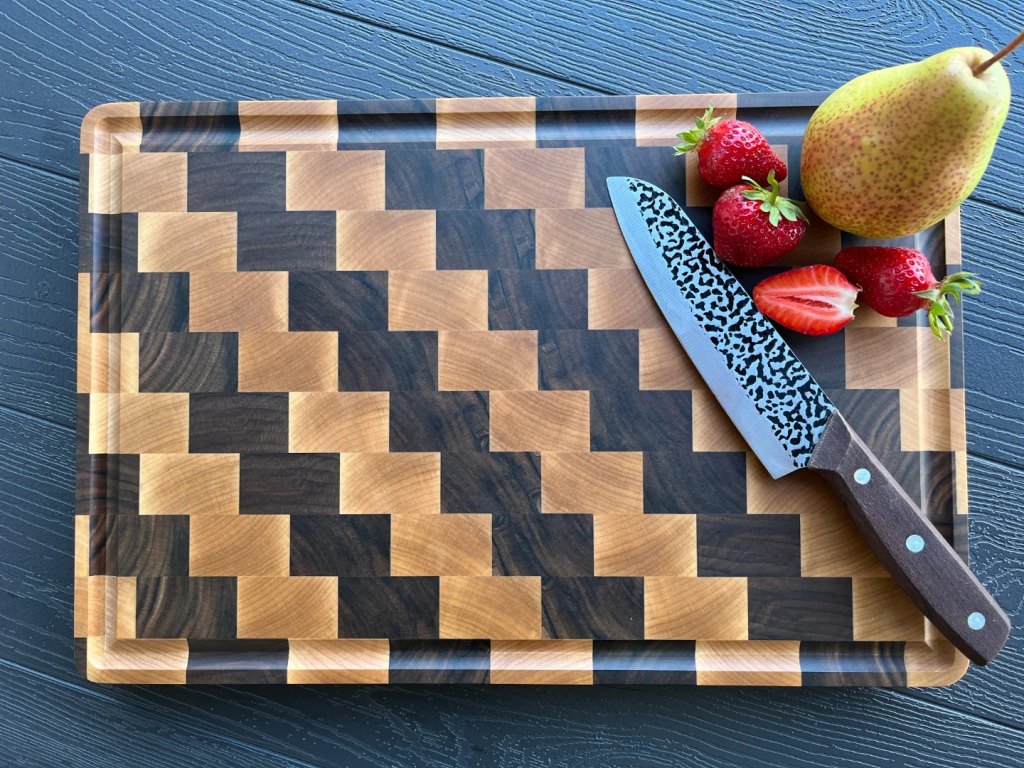
Pairing a high-performance blade with the wrong surface is like running race tires on gravel. End-grain wood cutting boards act like a bundle of vertical straws, allowing the blade to slip between fibers rather than severing them.
- End-Grain Boards: Self-healing surfaces that preserve edge sharpness and prevent micro-chipping on hard steel.
- Plastic & Bamboo: Rigid impact surfaces that quickly dull, roll, or damage fine Japanese edges.
- Ideal Woods: Thick walnut or larch boards that extend the time between sharpening sessions.
Mindful Cooking and Flow State Psychology
Beyond physical prep, blade work offers a direct path into psychological flow state – a mental zone of complete immersion and focused clarity. Transforming your mindset on prep work yields clear mental benefits:
- Rhythmic Focus: The steady sound of steel meeting wood silences daily mental chatter and stress.
- Active Meditation: Treating chopping as a mindful ritual turns a routine chore into a calming mental reset.
- Grounding Experience: Focused prep work replaces kitchen fatigue with deep personal satisfaction and creative joy.
Daily Rules for Tool Longevity
- Dry Immediately: High-carbon steel requires instant care. Keep a clean, damp towel beside your board to wipe down the blade during prep, followed instantly by a dry towel.
- Embrace the Patina: Carbon steel blades naturally darken and form a colorful protective layer (patina) over time when cutting proteins and acidic foods. Patina is not rust; it is a sign of a well-used blade and actually helps shield raw steel from harmful corrosion.
- Wooden Saya Storage: Protect your edges by storing knives in a custom wooden sheath (Saya), inside a protective knife roll, or mounted on a wood-faced magnetic strip. Never toss loose blades unprotected into a cutlery drawer.
Elevating Prep into Philosophy
Bringing the samurai mindset to your cutting board is not about wearing costume armor or speaking in medieval proverbs while prepping dinner. It is about bringing intent, respect, and deep focus back into the kitchen.
When you treat your knife as an extension of your body and view prep work as a discipline rather than a chore, everything shifts. Dull, stressful kitchen work fades away, replaced by the deep satisfaction of smooth, clean, perfectly executed cuts.
Mindful prep leads to sharp steel, which builds respect for ingredients. That sequence naturally creates elevated cooking, mastery, and pure enjoyment at the table.
Mastering the culinary katana fantasy takes patience, practice, and the right tools. Invest in quality steel, learn to maintain your own edges on a whetstone, and step up to your prep station with purpose.
When you respect the steel, respect the ingredients, and respect the process, every single meal you prepare becomes something truly extraordinary.
Frequently Asked Questions (FAQ)
Q1: How did ancient Japanese sword-making traditions transition into modern kitchen knives?
During the late 19th-century Meiji Restoration, the samurai class was abolished and public sword-carrying was banned.
Master blacksmiths in famous sword-making hubs like Sakai and Seki pivoted by applying their secret metallurgical techniques to kitchen cutlery, transforming battlefield steel expertise into high-performance chef knives.
Q2: What is the main difference between High-Carbon Steel and Modern Stainless Steel Japanese knives?
High-Carbon steel (like Shirogami and Aogami) achieves an extreme, razor-sharp edge and outstanding edge retention, but it requires high maintenance because it rusts easily if left wet.
Modern Stainless steel (like VG-10 and SG2) offers long-lasting sharpness with high rust resistance, making it better suited for low-maintenance, heavy daily prep.
Q3: Why are traditional Japanese knife shapes different from standard Western knives?
Unlike Western knives that use a symmetrical double-bevel (Ryoba) wedge shape, many classic Japanese knives feature a single-bevel (Kataba) profile ground on only one side.
This asymmetrical geometry lets the blade slide through ingredients with minimal drag and maximum precision.
Additionally, specialized shapes cater to specific tasks, such as the Nakiri for flat vegetable cuts and the Yanagiba for long protein slicing.
Q4: How does a sharp Japanese knife actually improve the flavor of food?
When a razor-sharp blade cleanly severs plant and animal cells instead of crushing them, it prevents the release of bitter enzymes and harsh sulfurous compounds.
Clean cuts lock in natural sugars, juices, and moisture, maintaining the ingredient’s integrity and enhancing its natural taste.
Q5: What are the most important care rules to preserve a high-end Japanese knife?
- Never use a dishwasher: High heat and harsh detergents crack wooden handles and ruin sharp edges.
- Avoid mechanical pull-through sharpeners: Sharpen only with synthetic or natural whetstones (Toishi) at a consistent 12–15 degree angle.
- Keep high-carbon blades dry: Wipe and dry the blade immediately after use to prevent rust, and store it in a wooden sheath (Saya) or on a magnetic strip rather than loose in a drawer.
Featured image credit: @kitchensamurai_
