
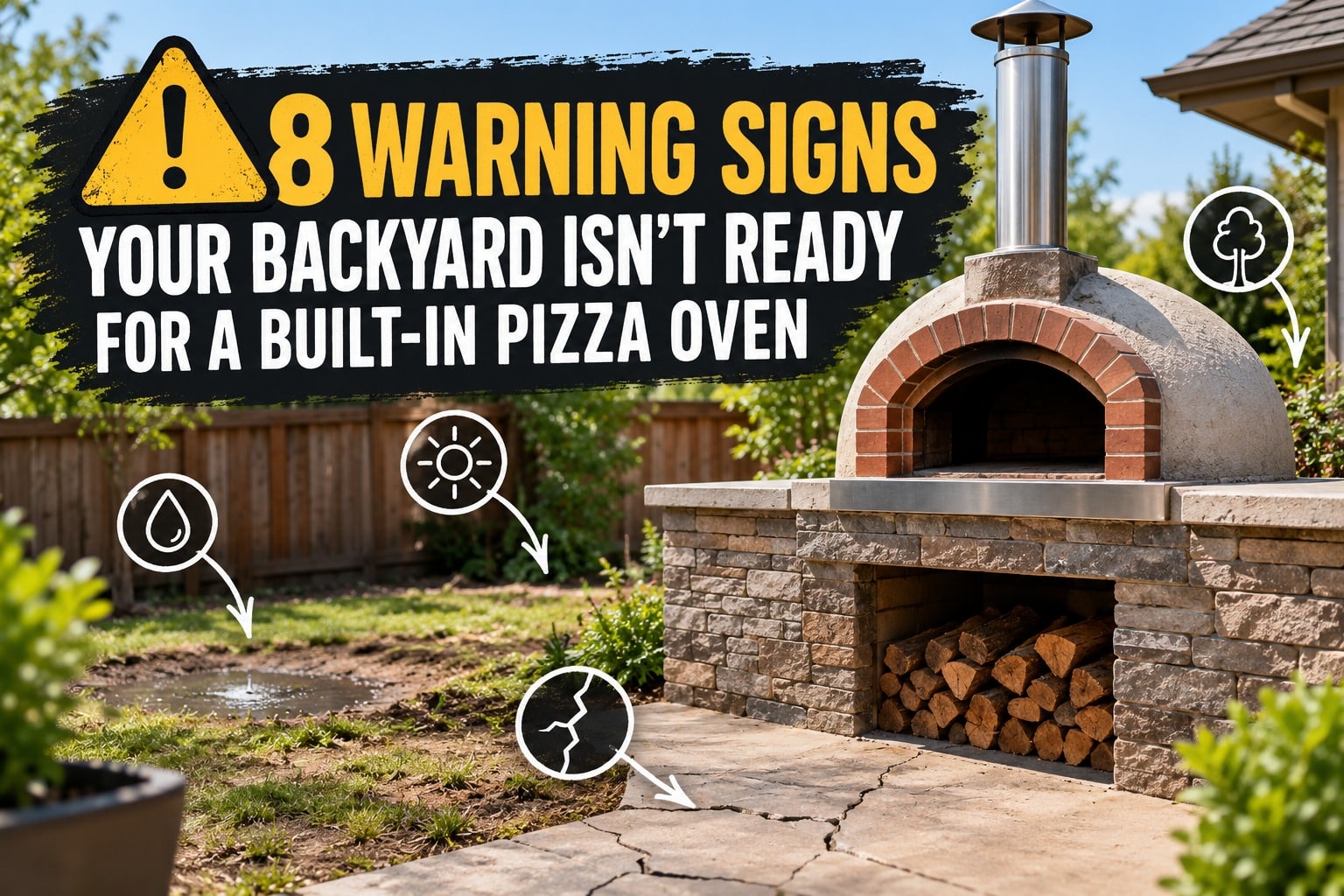
“Life is a combination of magic and pasta,” Federico Fellini once famously declared, though one has to wonder if the legendary Italian filmmaker ever tried to drag a 600-pound modular brick dome across a soggy lawn while wearing flip-flops.
Let’s be honest: nothing screams backyard culinary prestige quite like a built-in pizza oven. It transforms an ordinary patch of grass into an open-air trattoria where you are the reigning maestro of the mozzarella.
But before you start maxing out credit cards on artisan firebricks and imported Caputo flour, take a step back from the dream board.
Pour yourself a glass of Chianti, and look closely at your landscape. Ignoring reality right now is a surefire way to turn your gourmet sanctuary into an expensive, smoking monument of regret.
Paying attention to critical warning signs early on will save your sanity, your masonry, and your relationship with your neighbors.
1. You Lack the Required Vertical and Horizontal Clearance
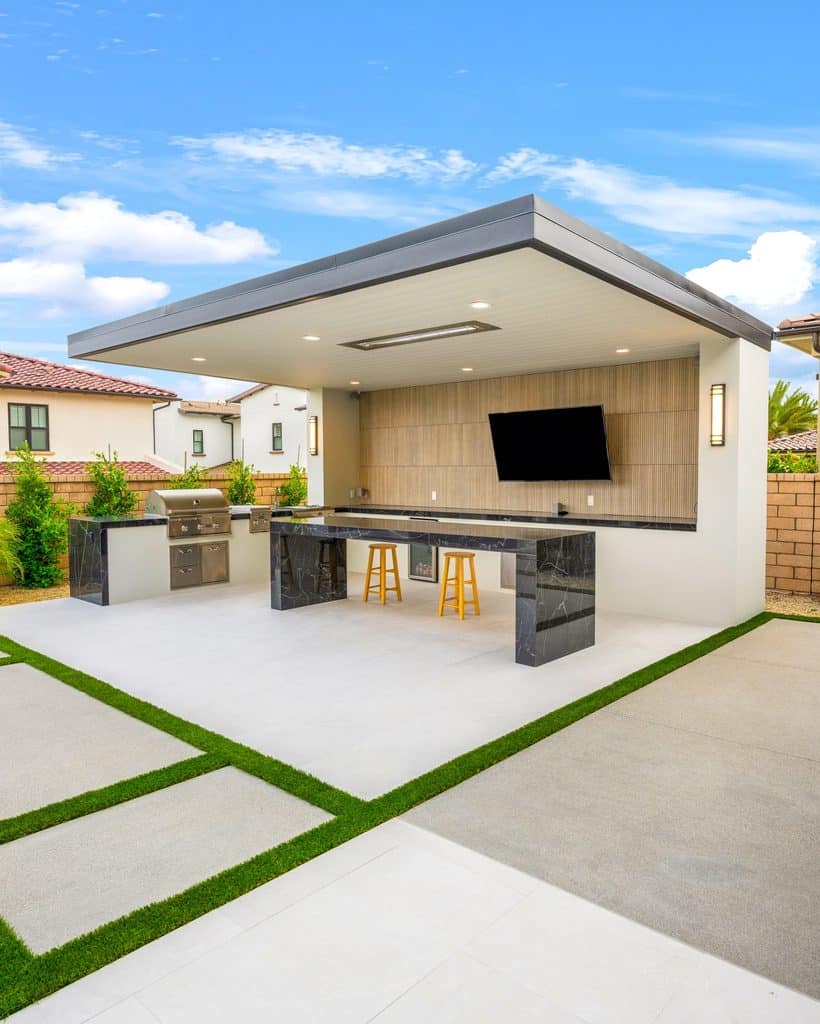
Enthusiasm is a wonderful thing, but physics tends to be remarkably unforgiving. When people get starry-eyed over masonry domes, they rarely look up. Wood-fired beasts routinely reach internal temperatures north of 900°F, and that radiating heat has to go somewhere.
If your dream spot sits snugly beneath a charming wooden pergola, dangerously close to vinyl siding, or right under low-hanging oak branches, you are looking at a textbook hazard.
- The Thermal Danger Zone: Radiant heat doesn’t care about your aesthetic vision; it melts vinyl, scorches wood, and can easily spark an uninvited structural fire.
- The Fix: Always cross-reference manufacturer specifications with local municipal building codes. You need ample buffer zones on all sides and a clean vertical path for your chimney flue to vent safely into the open sky.
2. Your Chosen Spot Sits on Shifting Soil or Puddles
Ever tried building a house on a swamp?
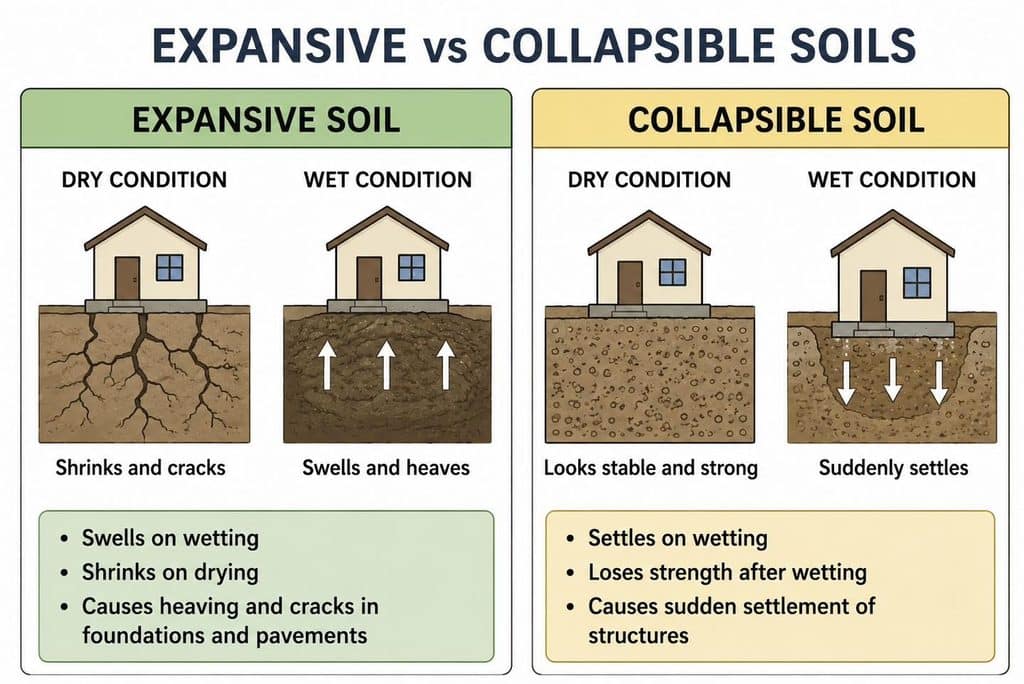
History suggests it’s a poor long-term investment. Built-in pizza ovens – especially those crafted from refractory mortar, cast concrete, and heavy stone – are astonishingly heavy.
If you place one on loose, uncompacted earth or a low spot that collects standing water after a brief summer rainstorm, you are begging for structural disaster.
- The Foundation Crack-Up: Ground movement, freeze-thaw cycles, and shifting soil will cause heavy masonry to crack, warp, and eventually tilt like the Leaning Tower of Pisa.
- The Fix: Professional installation requires a properly leveled, reinforced concrete slab engineered to handle immense point loads. If your yard resembles a sponge every time it rains, remediation and proper drainage must happen before a single brick is laid.
3. Smoke Blows Directly Into Your (or Your Neighbor’s) Living Area
There is a romantic notion associated with the aromatic, wood-smoked fragrance of a crackling fire.
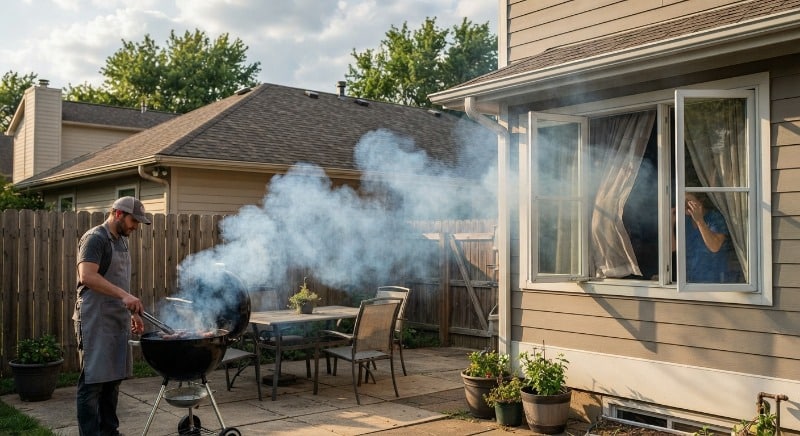
That romance evaporates rapidly when a sudden shift in wind direction traps a dense cloud of hardwood smoke directly against your bedroom window – or worse, pumps it straight into your neighbor’s open patio umbrella during their Sunday brunch.
- The Neighborhood Diplomat Test: Poor smoke management turns outdoor hospitality into an neighborhood feud faster than a late-night lawnmower.
- The Fix: Spend a few weekends observing your yard’s micro-climate. Where do prevailing winds travel? Are there adjacent multi-story homes that will trap and funnel smoke? Positioning your oven downwind or extending your chimney stack can save you from a torrent of passive-aggressive text messages.
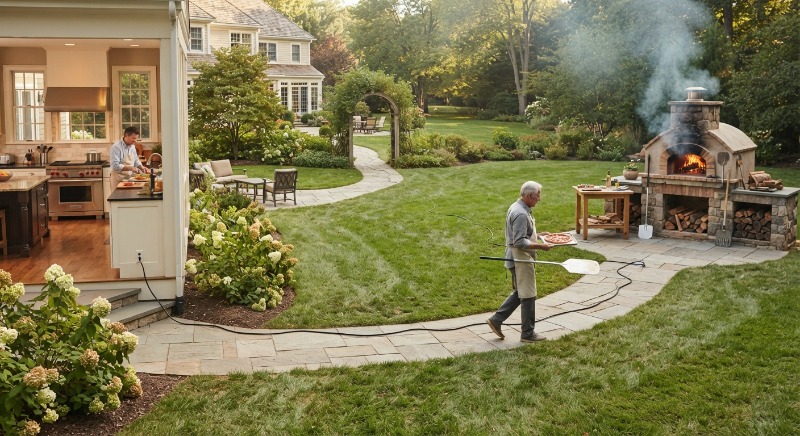
4. It’s Too Far From Your Kitchen or Utilities
In theory, tucking your pizza oven into the far, secluded corner of the backyard sounds like a peaceful escape.
In practice, reality hits the moment you realize you are trekking fifty yards across damp grass carrying a delicate wooden peel loaded with a soft, sauce-and-cheese-laden pie.
- The Logistics Nightmare: The distance between your indoor prep station and your outdoor oven directly correlates to dropped ingredients, frustrated cooks, and messy slips. Furthermore, if you are eyeing a gas-assisted or hybrid burner model, routing fuel lines across a massive expanse of lawn requires serious trenching and plumbing.
- The Fix: Map out your culinary workflow. Keep your outdoor kitchen ecosystem compact, accessible, and close enough to your indoor utilities so that cooking feels like a joy rather than an obstacle-course marathon.

5. You Haven’t Checked Local Permits or HOA Guidelines
Nothing kills the celebratory mood of pulling your first leopard-spotted Neapolitan pie from the embers quite like code enforcement knocking on your gate with a clipboard and a fine.
Many homeowners assume that what happens in their private backyard stays in their private backyard, but municipal governments and Homeowners Associations often have strict, unyielding rules regarding permanent outdoor cooking structures, masonry heights, and open-flame appliances.
- The Red Tape Reality: Skipping the paperwork can result in mandatory tear-downs, hefty fines, and unnecessary legal headaches.
- The Fix: Call your local building department or review your HOA covenant before buying materials. Ensuring compliance from day one guarantees that your culinary masterpiece remains a permanent fixture of your home rather than a temporary violation.
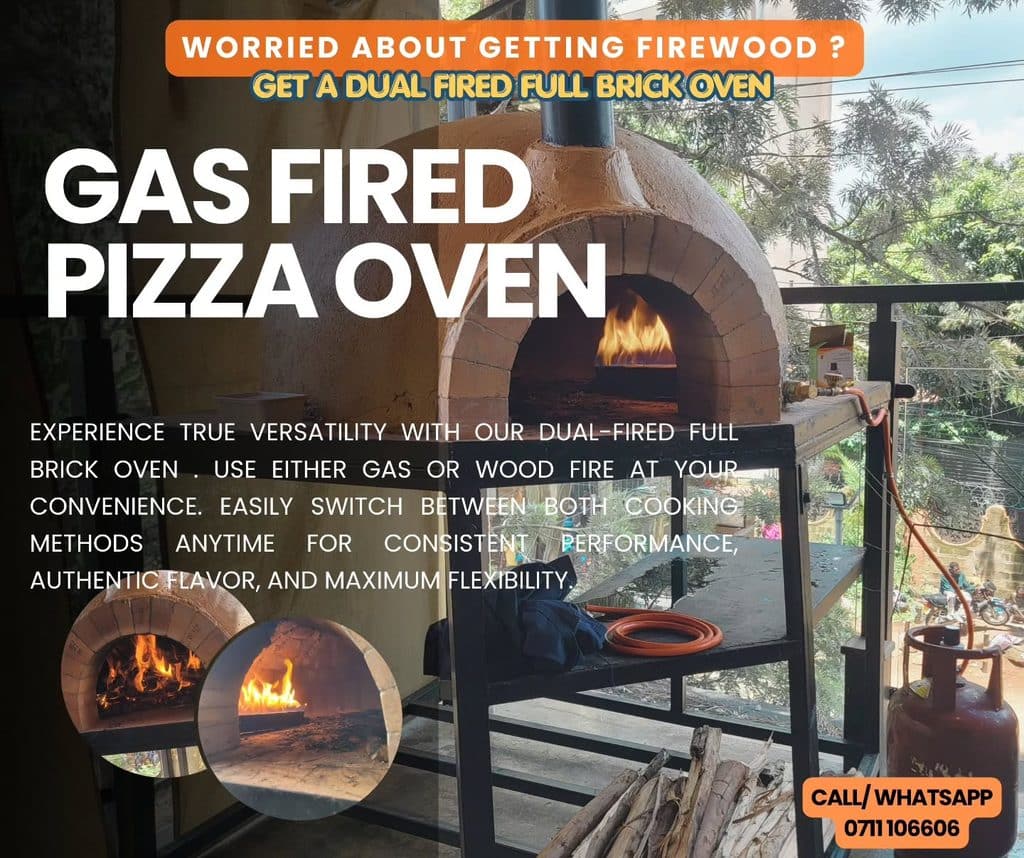
6. You Underestimated the Fuel Storage and Moisture Battle
Storing heavy hardwood or managing propane tanks is the unglamorous side of outdoor cooking that Instagram posts conveniently crop out.
A roaring, 900-degree brick oven demands a steady diet of seasoned, dry wood – ideally oak, ash, or fruitwood. If you overlook this step, you face several major pitfalls:
- Soggy Kindling Failure: Without a dedicated, weatherproof storage zone, your expensive logs will absorb moisture, produce miserable, sputtering smoke, and fail to reach baking temperature.
- Uninvited Pests: Stacking wood directly against your home or wooden fence invites termites and carpenter ants straight to dinner.
- The Smart Fix: Always factor in a dry, ventilated alcove for your fuel supply close to the oven, ensuring your culinary ambitions never stall out.

7. Your Backyard Microclimate is a Culinary Wind Tunnel
We often talk about general wind direction, but local topography can turn your specific backyard into an aggressive wind tunnel.
If your property sits on a hill, near an open body of water, or between two closely spaced two-story houses, wind gusts behave unpredictably and impact your cooking in key ways:
- Temperature Drops: High winds wreak havoc on wood-fired ovens by prematurely cooling the dome exterior.
- Ash Contamination: Strong gusts blow ash directly onto your fresh toppings and make internal flame control nearly impossible.
- The Smart Fix: Test how air moves across your patio on a breezy afternoon, and plan for windbreaks or strategic screening to prevent a charred disaster.
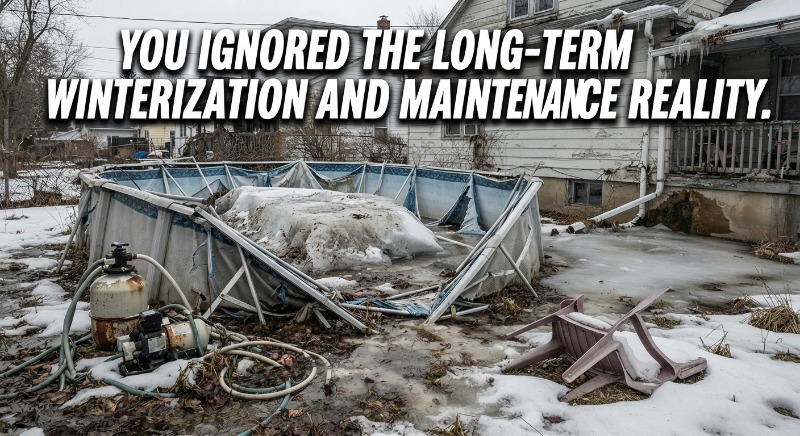
8. You Ignored the Long-Term Winterization and Maintenance Reality
It is easy to fall head over heels for the summer aesthetic of an outdoor kitchen, but winter and heavy monsoon seasons show zero mercy to neglected masonry. Traditional brick and mortar absorb ambient moisture, creating lasting vulnerabilities:
- Structural Spalling: Trapped moisture expands during heavy seasonal downpours or freezing temperatures, leading to hairline fractures and damaged masonry.
- Rapid Degradation: If your chosen spot is completely exposed to the elements without a protective overhang or a heavy-duty, waterproof custom cover, your investment will degrade rapidly.
- The Smart Fix: Plan your installation with weather protection in mind, or prepare for regular sealing, repointing, and seasonal maintenance to keep your oven pristine.
Final Thoughts
Building an outdoor pizza oven is an incredible backyard upgrade, but respecting these foundational warning signs separates a successful project from a costly mistake. Take the time to evaluate your clearance, ground stability, wind patterns, utility lines, and local laws.
Address the groundwork first, and you’ll ensure that your outdoor cooking space delivers decades of crispy, golden perfection instead of structural headaches.
“Life is a combination of magic and pasta,” Federico Fellini once famously declared, though one has to wonder if the legendary Italian filmmaker ever tried to drag a 600-pound modular brick dome across a soggy lawn while wearing flip-flops.
Let’s be honest: nothing screams backyard culinary prestige quite like a built-in pizza oven. It transforms an ordinary patch of grass into an open-air trattoria where you are the reigning maestro of the mozzarella.
But before you start maxing out credit cards on artisan firebricks and imported Caputo flour, take a step back from the dream board.
Pour yourself a glass of Chianti, and look closely at your landscape. Ignoring reality right now is a surefire way to turn your gourmet sanctuary into an expensive, smoking monument of regret.
Paying attention to critical warning signs early on will save your sanity, your masonry, and your relationship with your neighbors.
1. You Lack the Required Vertical and Horizontal Clearance
Enthusiasm is a wonderful thing, but physics tends to be remarkably unforgiving. When people get starry-eyed over masonry domes, they rarely look up. Wood-fired beasts routinely reach internal temperatures north of 900°F, and that radiating heat has to go somewhere.
If your dream spot sits snugly beneath a charming wooden pergola, dangerously close to vinyl siding, or right under low-hanging oak branches, you are looking at a textbook hazard.
- The Thermal Danger Zone: Radiant heat doesn’t care about your aesthetic vision; it melts vinyl, scorches wood, and can easily spark an uninvited structural fire.
- The Fix: Always cross-reference manufacturer specifications with local municipal building codes. You need ample buffer zones on all sides and a clean vertical path for your chimney flue to vent safely into the open sky.
2. Your Chosen Spot Sits on Shifting Soil or Puddles
Ever tried building a house on a swamp?
History suggests it’s a poor long-term investment. Built-in pizza ovens – especially those crafted from refractory mortar, cast concrete, and heavy stone – are astonishingly heavy.
If you place one on loose, uncompacted earth or a low spot that collects standing water after a brief summer rainstorm, you are begging for structural disaster.
- The Foundation Crack-Up: Ground movement, freeze-thaw cycles, and shifting soil will cause heavy masonry to crack, warp, and eventually tilt like the Leaning Tower of Pisa.
- The Fix: Professional installation requires a properly leveled, reinforced concrete slab engineered to handle immense point loads. If your yard resembles a sponge every time it rains, remediation and proper drainage must happen before a single brick is laid.
3. Smoke Blows Directly Into Your (or Your Neighbor’s) Living Area
There is a romantic notion associated with the aromatic, wood-smoked fragrance of a crackling fire.
That romance evaporates rapidly when a sudden shift in wind direction traps a dense cloud of hardwood smoke directly against your bedroom window – or worse, pumps it straight into your neighbor’s open patio umbrella during their Sunday brunch.
- The Neighborhood Diplomat Test: Poor smoke management turns outdoor hospitality into an neighborhood feud faster than a late-night lawnmower.
- The Fix: Spend a few weekends observing your yard’s micro-climate. Where do prevailing winds travel? Are there adjacent multi-story homes that will trap and funnel smoke? Positioning your oven downwind or extending your chimney stack can save you from a torrent of passive-aggressive text messages.
4. It’s Too Far From Your Kitchen or Utilities
In theory, tucking your pizza oven into the far, secluded corner of the backyard sounds like a peaceful escape.
In practice, reality hits the moment you realize you are trekking fifty yards across damp grass carrying a delicate wooden peel loaded with a soft, sauce-and-cheese-laden pie.
- The Logistics Nightmare: The distance between your indoor prep station and your outdoor oven directly correlates to dropped ingredients, frustrated cooks, and messy slips. Furthermore, if you are eyeing a gas-assisted or hybrid burner model, routing fuel lines across a massive expanse of lawn requires serious trenching and plumbing.
- The Fix: Map out your culinary workflow. Keep your outdoor kitchen ecosystem compact, accessible, and close enough to your indoor utilities so that cooking feels like a joy rather than an obstacle-course marathon.
5. You Haven’t Checked Local Permits or HOA Guidelines
Nothing kills the celebratory mood of pulling your first leopard-spotted Neapolitan pie from the embers quite like code enforcement knocking on your gate with a clipboard and a fine.
Many homeowners assume that what happens in their private backyard stays in their private backyard, but municipal governments and Homeowners Associations often have strict, unyielding rules regarding permanent outdoor cooking structures, masonry heights, and open-flame appliances.
- The Red Tape Reality: Skipping the paperwork can result in mandatory tear-downs, hefty fines, and unnecessary legal headaches.
- The Fix: Call your local building department or review your HOA covenant before buying materials. Ensuring compliance from day one guarantees that your culinary masterpiece remains a permanent fixture of your home rather than a temporary violation.
6. You Underestimated the Fuel Storage and Moisture Battle
Storing heavy hardwood or managing propane tanks is the unglamorous side of outdoor cooking that Instagram posts conveniently crop out.
A roaring, 900-degree brick oven demands a steady diet of seasoned, dry wood – ideally oak, ash, or fruitwood. If you overlook this step, you face several major pitfalls:
- Soggy Kindling Failure: Without a dedicated, weatherproof storage zone, your expensive logs will absorb moisture, produce miserable, sputtering smoke, and fail to reach baking temperature.
- Uninvited Pests: Stacking wood directly against your home or wooden fence invites termites and carpenter ants straight to dinner.
- The Smart Fix: Always factor in a dry, ventilated alcove for your fuel supply close to the oven, ensuring your culinary ambitions never stall out.
7. Your Backyard Microclimate is a Culinary Wind Tunnel
We often talk about general wind direction, but local topography can turn your specific backyard into an aggressive wind tunnel.
If your property sits on a hill, near an open body of water, or between two closely spaced two-story houses, wind gusts behave unpredictably and impact your cooking in key ways:
- Temperature Drops: High winds wreak havoc on wood-fired ovens by prematurely cooling the dome exterior.
- Ash Contamination: Strong gusts blow ash directly onto your fresh toppings and make internal flame control nearly impossible.
- The Smart Fix: Test how air moves across your patio on a breezy afternoon, and plan for windbreaks or strategic screening to prevent a charred disaster.
8. You Ignored the Long-Term Winterization and Maintenance Reality
It is easy to fall head over heels for the summer aesthetic of an outdoor kitchen, but winter and heavy monsoon seasons show zero mercy to neglected masonry. Traditional brick and mortar absorb ambient moisture, creating lasting vulnerabilities:
- Structural Spalling: Trapped moisture expands during heavy seasonal downpours or freezing temperatures, leading to hairline fractures and damaged masonry.
- Rapid Degradation: If your chosen spot is completely exposed to the elements without a protective overhang or a heavy-duty, waterproof custom cover, your investment will degrade rapidly.
- The Smart Fix: Plan your installation with weather protection in mind, or prepare for regular sealing, repointing, and seasonal maintenance to keep your oven pristine.
Final Thoughts
Building an outdoor pizza oven is an incredible backyard upgrade, but respecting these foundational warning signs separates a successful project from a costly mistake. Take the time to evaluate your clearance, ground stability, wind patterns, utility lines, and local laws.
Address the groundwork first, and you’ll ensure that your outdoor cooking space delivers decades of crispy, golden perfection instead of structural headaches.
Featured image credit: ChatGPT
