
There is an old saying in the pitmaster community: if you are looking, you aren’t cooking. It takes patience, discipline, and a willingness to stand over a wall of intense, radiating heat to make something beautiful out of a tough piece of meat.
Interestingly enough, those are the exact same traits required to survive a standard Hollywood shootout.
As someone who spends their weekends balancing the delicate airflow of an offset smoker and managing the internal temperatures of briskets, I have noticed a bizarre but brilliant trend in cinema. Action directors love a good backyard cookout.
On the surface, throwing a culinary pause button into a high-octane narrative seems counterintuitive. Why slow down the adrenaline for a plate of ribs?
The truth is, the backyard grill is the ultimate cinematic canvas. It is where alphas establish dominance, where fragmented teams bond into chosen families, and where villains show us just how cold-blooded they truly are.
When the smoke clears from the muzzle flashes, the sweet aroma of hardwood smoke takes over. Grab your tongs and pull up a lawn chair.
We are counting down ten action flicks with BBQ scenes that prove true heroes know their way around a smoke ring.
The Ultimate List of Action Cinema Cookouts
1. The Fast and the Furious (2001)
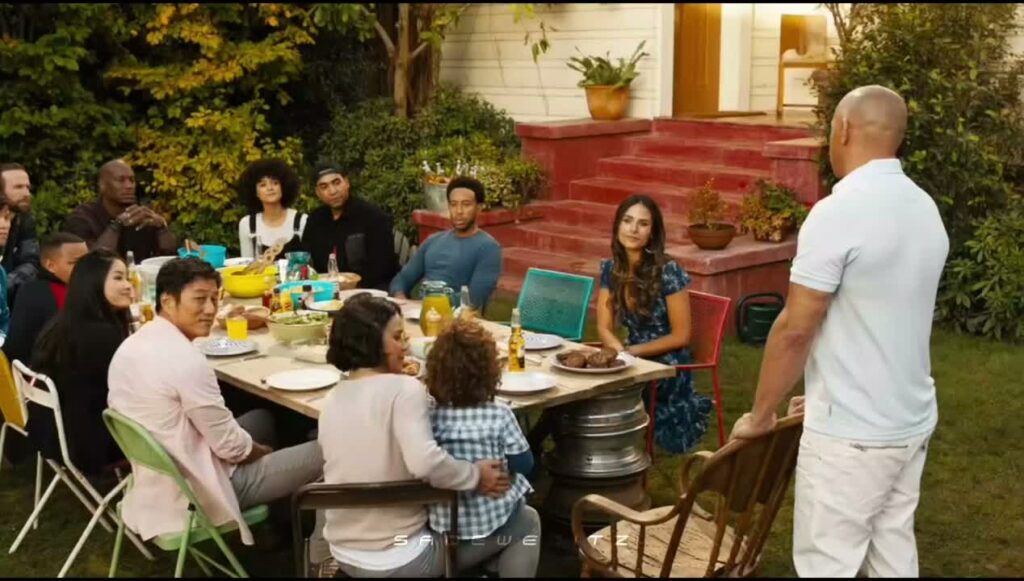
Long before the franchise traded street racing for launching cars into orbit, it was anchored by a simple, blue-collar philosophy: family, loyalty, and cold Corona. The Toretto backyard serves as the ultimate sanctuary where Brian O’Conner is finally initiated into the crew.
- The Setup: Dom stands over the grill like a king on his throne, flipping chicken breasts with absolute authority, while Vince broods in the corner, radiating pure jealousy.
- Culinary Analysis: Dom’s grill setup is a bit chaotic. He works with high direct heat, meaning those chicken breasts are pushing past 165°F a bit too fast.
- The Subtext: This scene acts as a tribal initiation. By forcing Brian to say grace because he arrived first, Dom uses the grill as a sacred hearth where weapons are laid down, beefs are shelved, and “The Family” is cemented over charred protein.
2. Predator (1987)
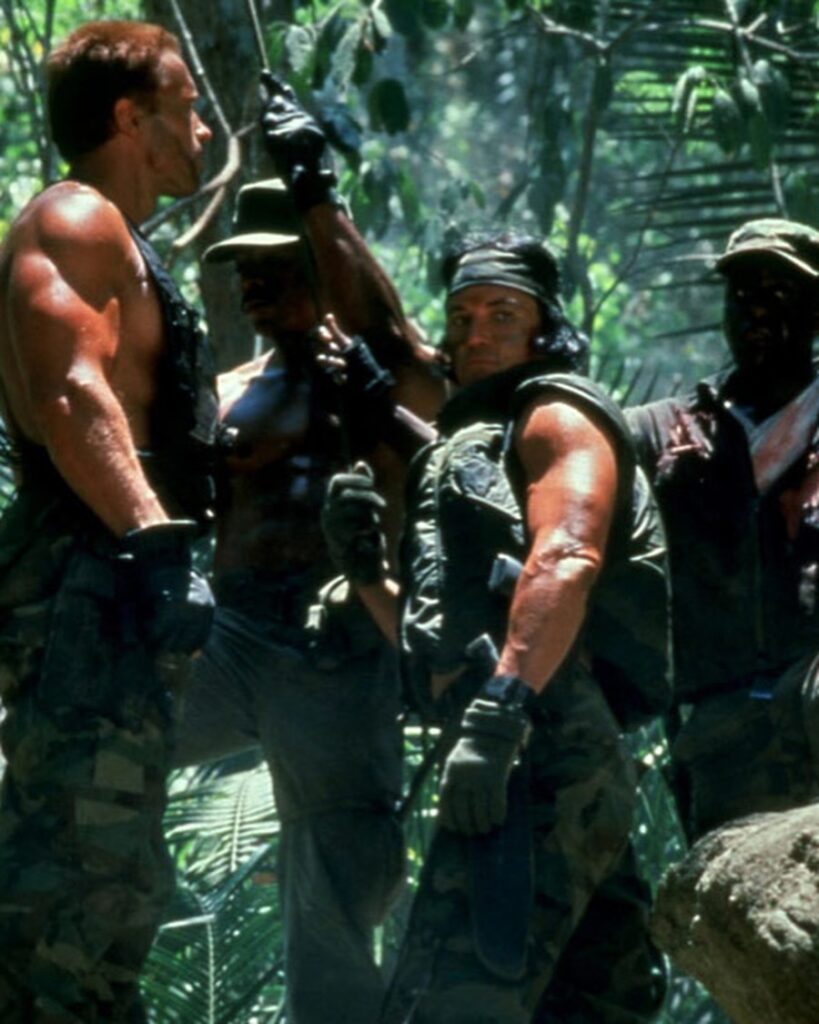
Before Arnold Schwarzenegger and his band of hyper-muscular commandos head into the thick jungle to hunt an extraterrestrial terror, they take a brief moment to relax at their temporary base camp.
- The Setup: Dutch and Dillon exchange their legendary, bicep-popping handshake while the team lounges around, trading crude jokes and sharpening massive combat knives.
- Culinary Analysis: A whole pig is slowly turning over an open pit fire, glistening with rendered fat. A whole hog roast represents the ultimate communal feast – demanding hours of teamwork to celebrate a successful hunt.
- The Subtext: This is textbook foreshadowing. By showing these men dominating nature and roasting an animal on a spit, the director establishes them as the apex predators of the modern world – right before they are systematically turned into prey.
3. Terminator 2: Judgment Day (1991)
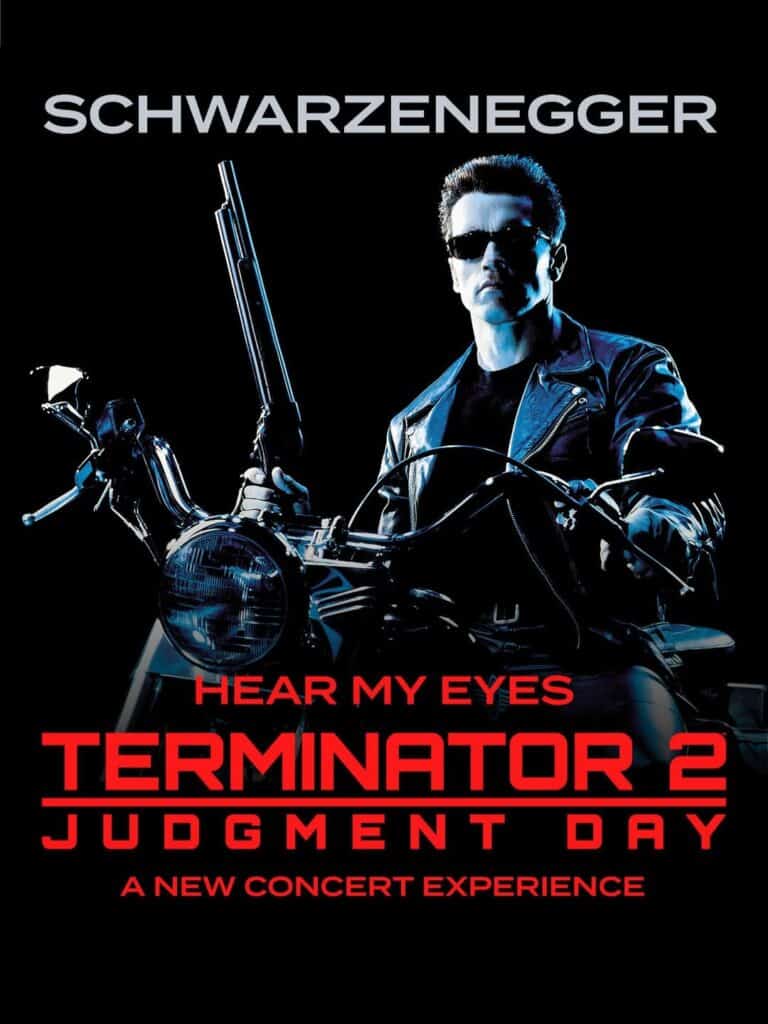
Fleeing the urban sprawl of Los Angeles, Sarah Connor, John, and the reprogrammed T-800 seek refuge in the desert compound of Enrique Salceda, a survivalist prepared for the end of the world.
- The Setup: Despite the threat of nuclear apocalypse, the compound buzzes with life – children play, dogs bark, and food is prepared over open fires in the dry desert wind.
- Culinary Analysis: This is an improvised survivalist cookout, featuring simple, rustic meats and flatbreads cooked directly over wood coals.
- The Subtext: The outdoor kitchen represents humanity’s resilience. Standing the cold, metallic T-800 next to a warm community reveals a beautiful contrast: even on the brink of total annihilation, humans will gather around a fire to feed one another. Watching this causes Sarah to realize this machine might make a better father to John than any human man could.
4. Marvel’s The Avengers (2012)
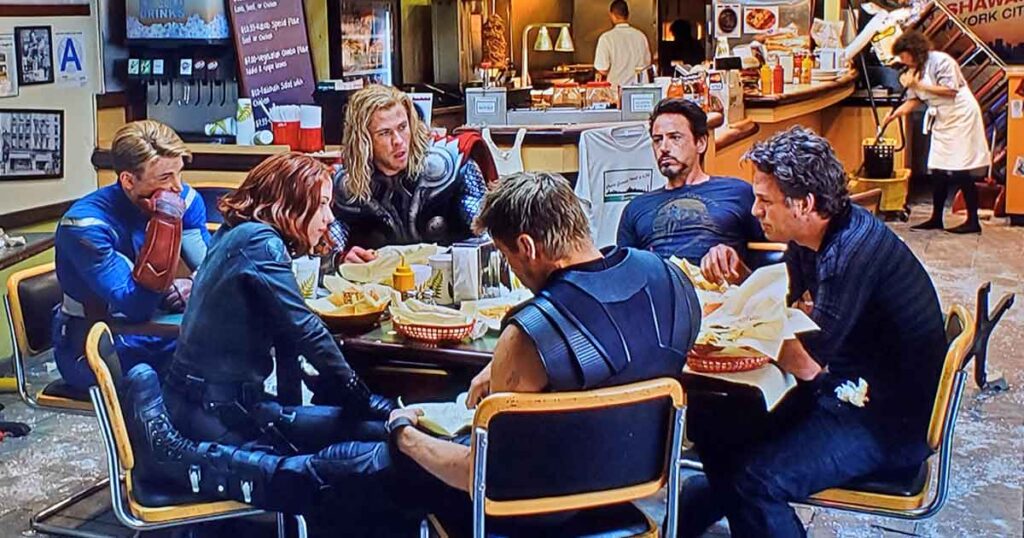
After Tony Stark narrowly survives flying a nuclear missile into a wormhole, he crashes back to Earth and immediately asks if anyone has tried the local shawarma joint. The post-credits scene delivers on that promise.
- The Setup: Six superheroes sit in a completely trashed New York diner while a tired cook carves roasted meat off a vertical rotisserie behind them.
- Culinary Analysis: While a vertical spit isn’t a traditional backyard smoker, shawarma is the spiritual cousin of BBQ – defined by slow-roasted, heavily spiced meat.
- The Subtext: The punchline is the absolute, exhausting silence. There is no triumphant music or witty banter – only rhythmic chewing. When adrenaline drops from a cosmic high, the body craves salt, fat, and protein. The scene grounds these gods and billionaires, reminding us that they are just tired workers looking for a hot meal after a hard day’s work.
5. G.I. Joe: Retaliation (2013)
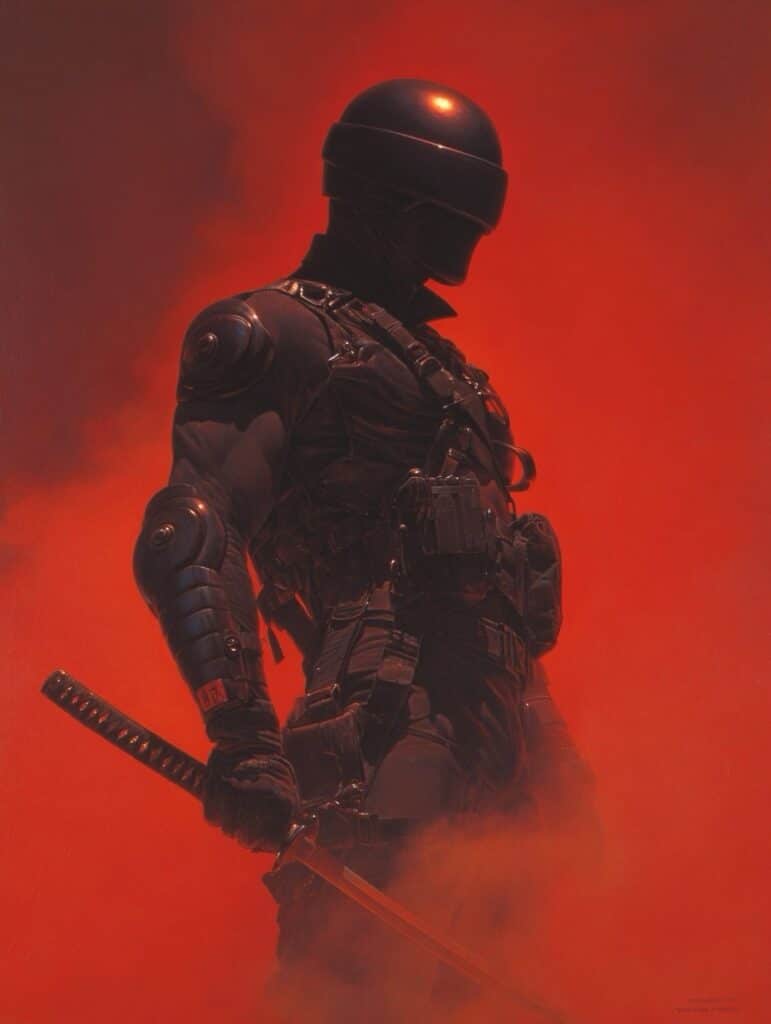
Dwayne “The Rock” Johnson’s character, Roadblock, is introduced in his natural habitat: a pristine, suburban backyard hovering over a massive grill.
- The Setup: Roadblock flips burgers and hot dogs for his kids, laughing and enjoying a sunny afternoon, handling a spatula with the same ease he later uses to handle a .50 caliber machine gun.
- Culinary Analysis: A classic American backyard cookout focused on getting a perfect sear on a standard patty.
- The Subtext: This utilizes the cinematic trope of the “domestic setup before the teardown.” Filmmakers use the wholesome BBQ to establish a character’s normalcy and high stakes. By building this peaceful baseline, the audience immediately roots for Roadblock to hunt down the Cobra organization when they inevitably destroy his domestic bliss.
6. Bad Boys II (2003)
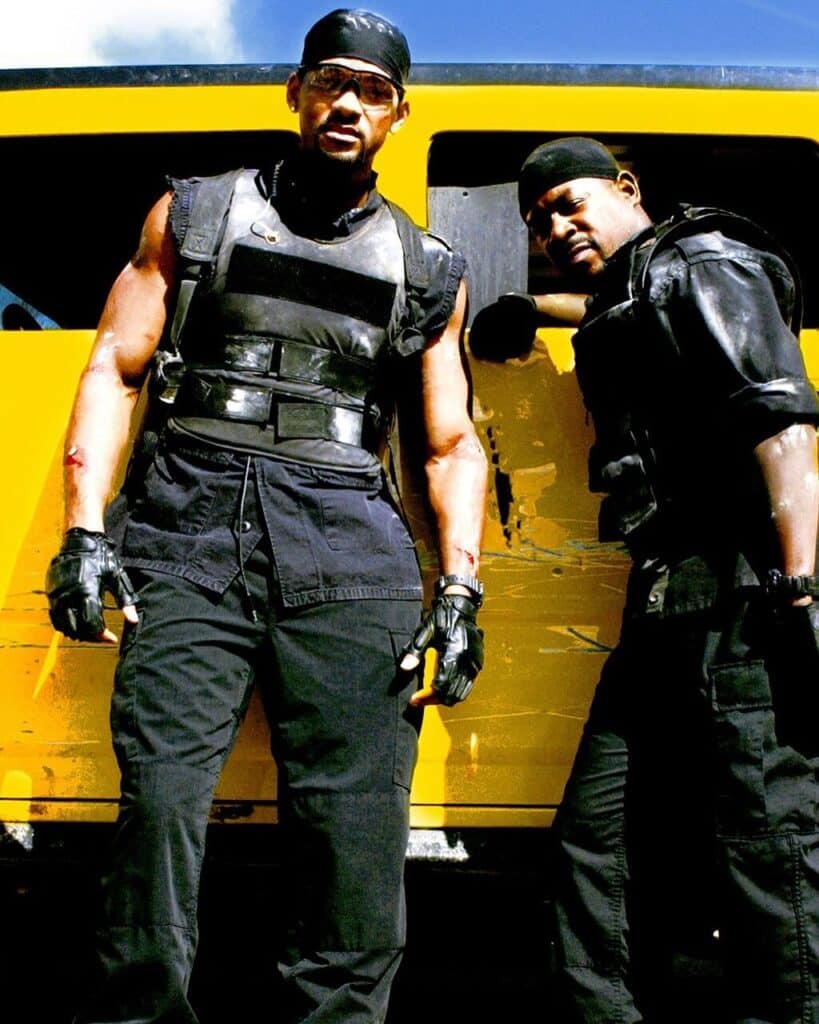
Marcus Burnett (Martin Lawrence) is trying to enjoy some rare downtime in his backyard, wearing a pristine chef’s apron and attempting to navigate the chaotic world of charcoal management.
- The Setup: The peace is shattered when Reggie, a soft-spoken teenager, arrives to take Marcus’s daughter out on their first date, prompting a legendary interrogation by Marcus and his partner, Mike Lowrey (Will Smith).
- Culinary Analysis: Standard backyard burger flipping, constantly interrupted by high-stakes family drama.
- The Subtext: The grill serves as a hilarious comedic backdrop. Marcus runs back and forth, trying to maintain his identity as a peaceful family pitmaster while simultaneously terrifying a teenager. The contrast highlights the core conflict of the franchise: these men are permanently wired for war, making it impossible for them to relax even when they are just supposed to be executing a perfectly timed flip of a burger.

7. Kingsman: The Golden Circle (2017)
Director Matthew Vaughn introduces the main antagonist, Poppy Adams (Julianne Moore), a psychopath living with cheerful nostalgia in a secret 1950s-style Americana town hidden deep within the Cambodian jungle.
- The Setup: After a henchman fails her, Poppy casually explains her philosophy of loyalty while standing next to a heavy-duty, commercial meat grinder.
- Culinary Analysis: The freshly ground meat is formed into a patty, thrown onto a flat-top grill, and cooked to a perfect medium-well before being served with a toasted bun, melted cheese, and a perfect pickle.
- The Subtext: This is a pitch-black subversion of the wholesome American cookout, transforming ultimate comfort food into a tool of psychological horror. Watching someone respect the culinary process while knowing the horrific, human origin of the meat instantly establishes Poppy as a top-tier villain who processes her enemies and serves them with a smile.
8. Lethal Weapon 4 (1998)
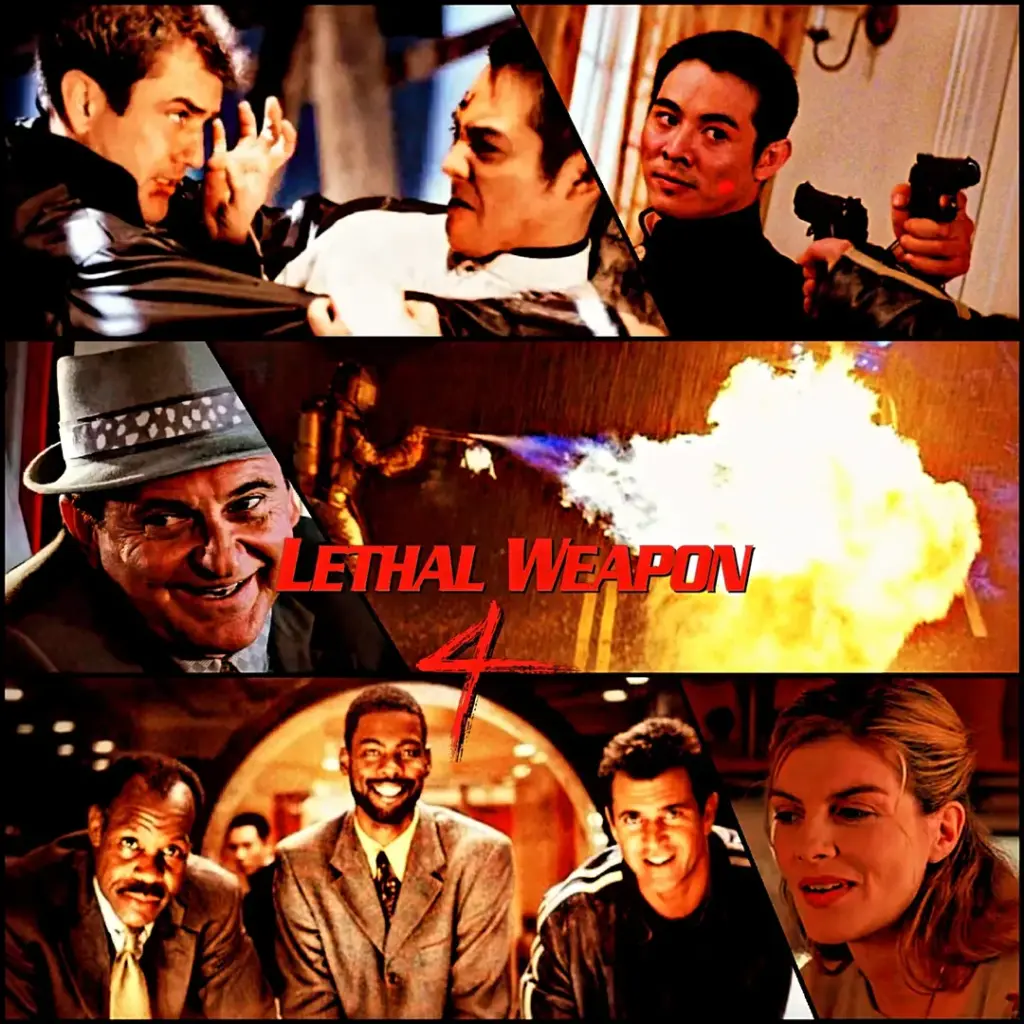
By the fourth installment of this franchise, the core cast has grown significantly, and the film reflects this by using domestic gatherings to bookend the high-octane chaos.
- The Setup: Roger Murtaugh stands by the grill in his dad gear, dealing with the frantic energy of Riggs, Lorna, Leo Getz, and the rest of the crew.
- Culinary Analysis: A standard, crowded backyard grill-out where the smoke from the coals blends with the chaotic, overlapping dialogue of a massive family dinner.
- The Subtext: For Murtaugh, the grill is his anchor to sanity. Throughout the series, his catchphrase is “I’m gettin’ too old for this.” The backyard BBQ is the physical manifestation of the peaceful retirement he is desperately chasing – a life where the only pressure he faces is keeping the meat from burning.
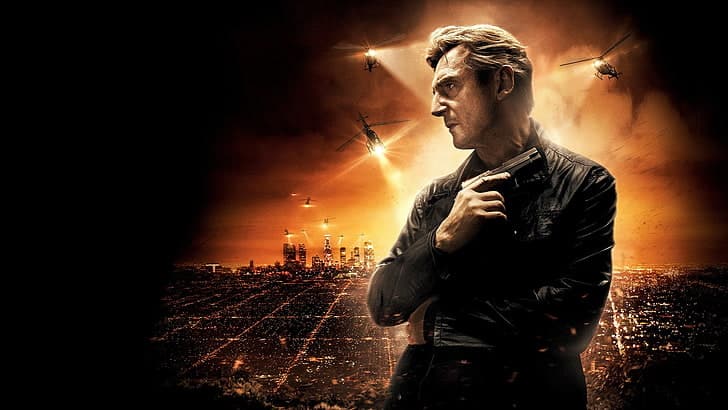
9. Taken 3 (2014)
Bryan Mills (Liam Neeson) has a very particular set of skills – skills that apparently do not include a nuanced understanding of food transport or casual social dynamics.
- The Setup: Desperate to maintain a relationship with his daughter, Kim, Bryan shows up on her college campus completely unannounced to force a moment of normal father-daughter bonding.
- Culinary Analysis: A massive, warm selection of takeout BBQ and deli food, including giant bagels and heavy proteins, transported in a standard bag.
- The Subtext: The humor comes from the absolute absurdity of his intensity. Bryan treats a casual food delivery like a covert black-ops drop, scanning his surroundings for threats while holding a bag of hot food. It proves that no matter how lethal you are with a handgun, you are still vulnerable to the awkwardness of trying to connect with your kids over a meal.
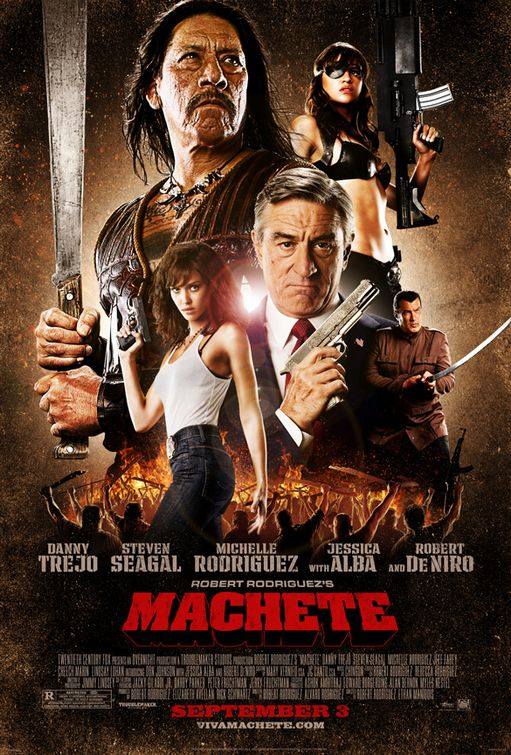
10. Desperado (1995) / Machete (2010)
Director Robert Rodriguez treats food with the same reverence he treats heavy weaponry. In his cinematic universe, local taco stands, roadside BBQ pits, and smoky kitchens are central hubs for the criminal underworld.
- The Setup: Hitmen discuss contracts over plates of slow-cooked pork, and Danny Trejo’s characters use kitchen utensils as improvised throwing blades.
- Culinary Analysis: Characterized by the smoky, sweat-drenched atmosphere of Mexican border towns, punctuated by the smell of char, slow-cooked meats, and roasting peppers.
- The Subtext: Rodriguez understands that food is a cultural anchor. Nothing establishes a sense of place faster than the local culinary style; the smoke from the wood fires mirrors the dusty, sun-bleached landscape of his films. When a gunfight erupts, the flying flour, spilt salsa, and shattered plates add a visceral, tactile layer that reminds us these larger-than-life characters operate in a real, breathing world.
The Secret Sauce in Action Flicks: Why Woodsmoke and Gunpowder Mix
As a pitmaster, I see a clear parallel between managing a smoker and executing a great action sequence.
Both disciplines require a profound respect for timing. If you rush a brisket, it turns out tough and inedible; if you rush an action sequence, it becomes a confusing mess of quick cuts and shaky camera movements.
Both arts require you to handle intense heat without flinching.
Directors use action flicks with BBQ scenes because they recognize the primal nature of fire. Fire destroys, but it also creates. It is the element that cooks our food and the force that propels our bullets.
When a director places a hero next to a grill, they are tapping into an ancient human instinct: the gathering around the hearth after a successful hunt or a brutal conflict.
The next time you fire up your smoker, throw a brisket on the grate, and settle in for a long, twelve-hour cook, think about these scenes. Turn on one of these classic films, pour yourself a cold beverage, and appreciate the craftsmanship.
After all, whether you are saving the world from aliens, taking down international cartels, or just trying to get a perfect bark on a piece of beef, it all comes down to the same basic rule: you’ve got to respect the smoke.
Featured image credit: @prateekparma
