
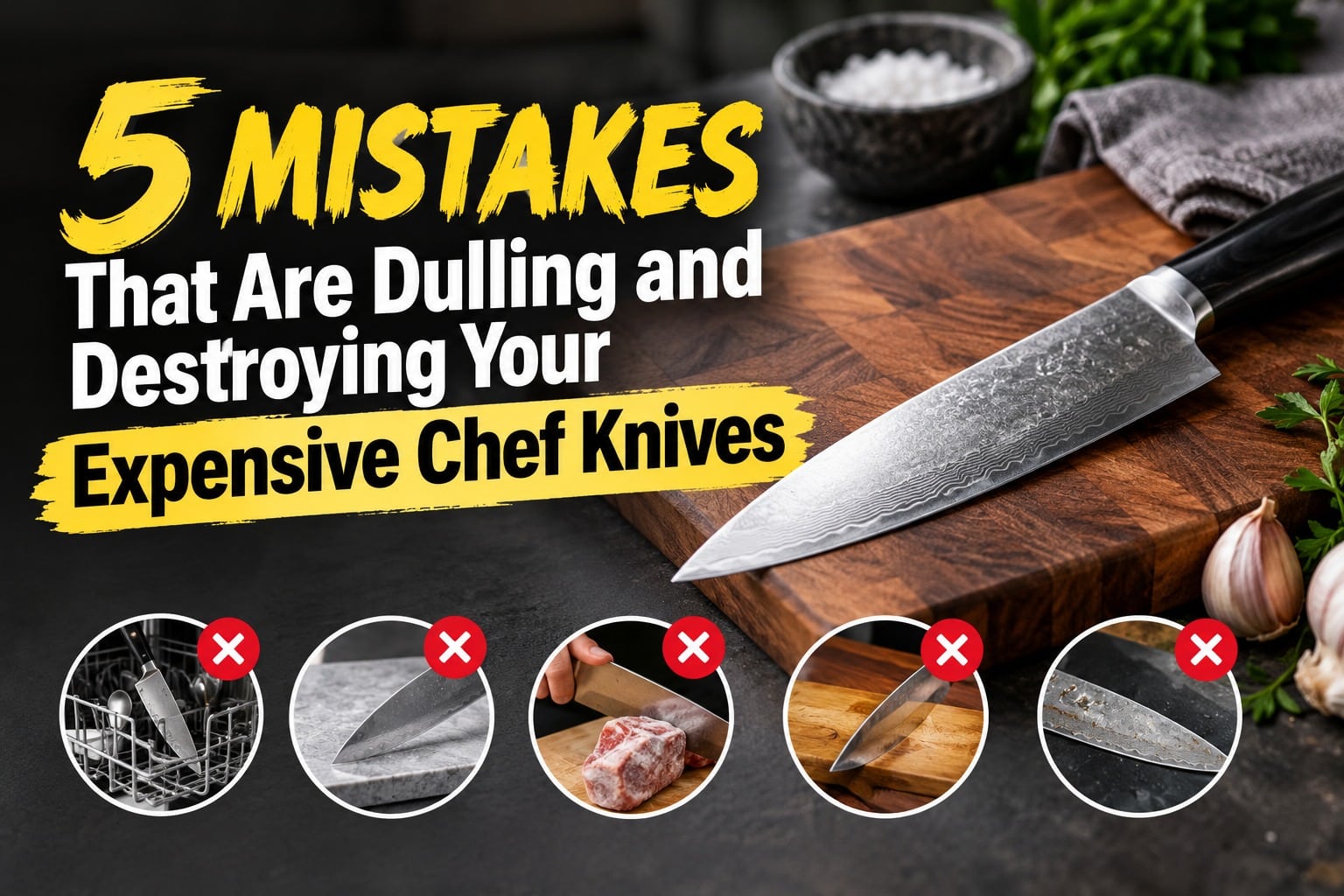
Today we will learn how to maintain expensive chef knives and enjoy using them for long-term.
“A knife is the chef’s truest friend, yet it is treated by most like an enemy they wish to torture slowly.”
Fernand Point, the legendary father of modern French gastronomy who reigned supreme over French cuisine in the 1940s, understood that a kitchen tool demands absolute respect.
If he walked into a modern home kitchen today and watched what people do to their high-end blades, he would likely lock himself in the pantry and weep into a saucepan of béarnaise.
Let’s be honest about what happens when someone drops a serious chunk of change on a high-end Japanese or German steel blade.
It arrives in a gorgeous presentation box, gleaming like a surgical instrument forged by ancient blacksmiths who wept tears of pure craftsmanship.
You slice a ripe tomato just to watch gravity do the work, feeling like a culinary god.
Yet, within six months, that same masterpiece of metallurgical art is struggling to hack through a rogue carrot, leaving you leaning on it with the body weight of a desperate Victorian child.
The culprit isn’t bad luck or cheap steel. It’s user error.
Most home cooks commit slow-motion treason against their cutlery every single day without realizing it. Protecting that investment requires breaking a few deeply ingrained, lazy kitchen habits.
Avoiding these five silent killers will keep your expensive chef knives razor-sharp, safe, and functional for decades.
1. The Dishwasher Death Sentence
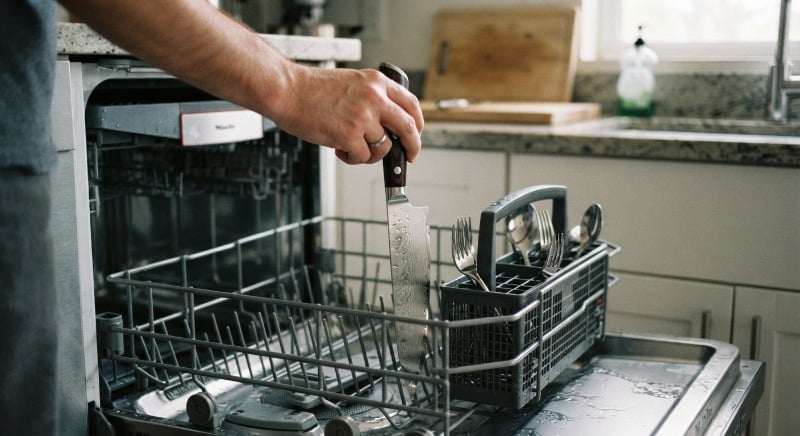
Putting a high-end blade into the automatic dishwasher is the culinary equivalent of sending a vintage Ferrari through an automated truck wash loaded with coarse gravel. It is a slaughterhouse for fine cutlery.
Commercial dishwashers and home units alike are hostile environments. The extreme heat warps and cracks wooden handles, causes composite scales to shrink and separate, and subjects the steel to aggressive, caustic detergents that pit and corrode the surface.
Worst of all, the high-pressure water jets rattle the knife around, causing the fine edge to slam violently against ceramic plates, silverware, and the metal rack.
You pull it out looking cloudy, dull, and chipped, wondering why a three-hundred-dollar tool feels like a butter knife.
- The Fix: Hand-wash your blade immediately after use. Use warm water, a drop of mild dish soap, and a soft sponge, wiping away from the sharp edge. Dry it completely with a towel before putting it away. Never let it soak in a sink full of soapy water where it becomes an invisible, finger-seeking hazard.
2. Cutting on Hard or Incompatible Surfaces
Granite, marble, glass, and stainless steel look sleek on a kitchen counter, but using them as a cutting surface is an absolute catastrophe for your edge.
When a razor-thin steel edge impacts a piece of granite or a glass cutting board, physics demands a sacrifice.
Because stone and glass are significantly harder than hardened carbon or stainless steel, the knife’s edge yields instantly. It rolls, folds over, or micro-chips on impact.
Even ceramic plates fall into this trap – using a chef knife to slice a pizza directly on a ceramic dinner plate is basically a quick-fire way to ruin an afternoon.
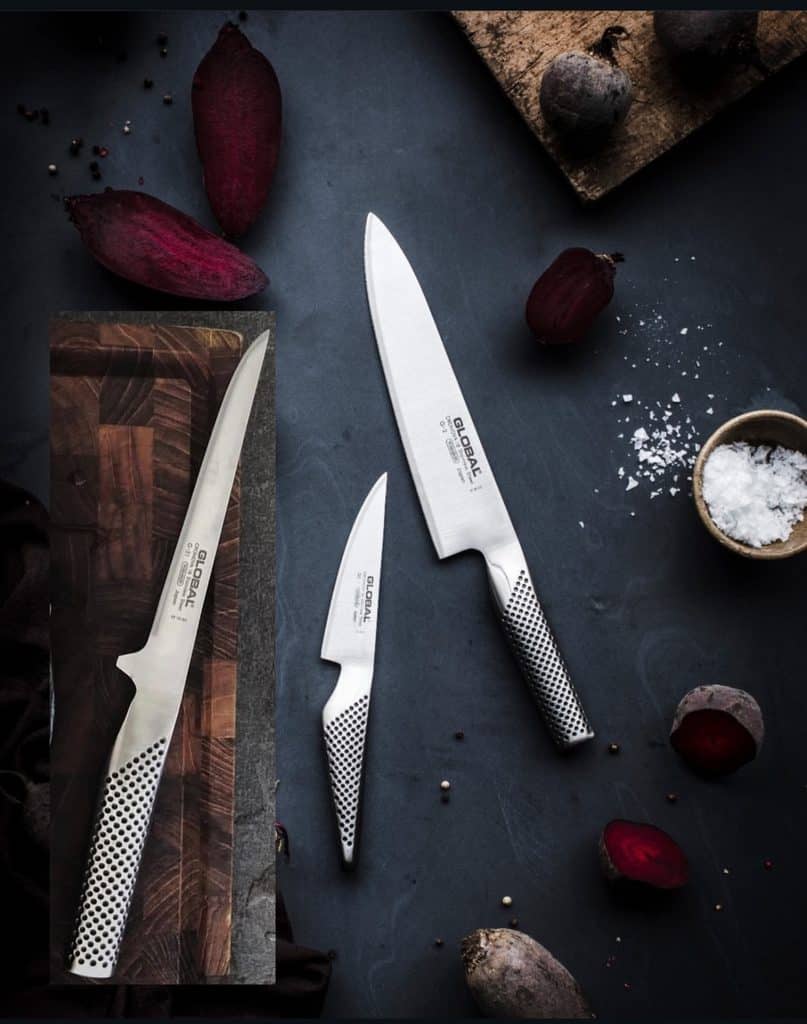
- The Fix: Stick exclusively to end-grain or face-grain wood boards (such as maple, walnut, or teak) or high-density plastic boards. Wood has natural “give” that cushions the impact, allowing the steel to bite cleanly through food without slamming into a brick wall of mineral hardness.
3. Careless Storage in Crowded Utility Drawers
Throwing a pristine, high-end blade loose into a kitchen drawer alongside garlic presses, metal whisks, and measuring spoons is a fast track to disaster.
Every time the drawer slides open or shut, the knife rattles around, grinding its delicate edge against hard metal and plastic tools.
Not only does this dull the blade before it ever touches a vegetable, but it also turns opening the drawer into a literal game of Russian roulette.
Rummaging around blindly for a whisk is a terrible way to discover how sharp your heel is.
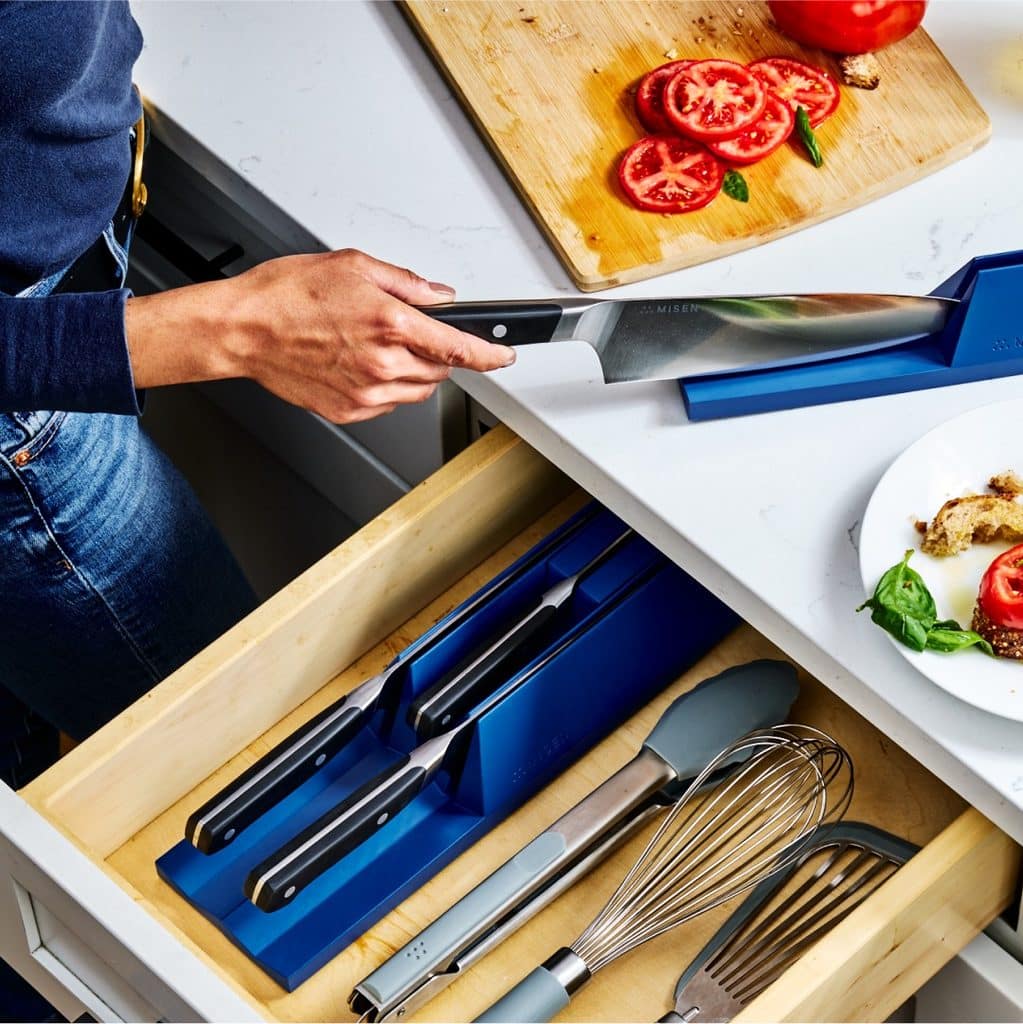
- The Fix: Treat your blades with respect by giving them proper housing. Invest in a magnetic wall-mounted strip (which also shows off your collection like kitchen art), an in-drawer custom wooden block organizer, or a traditional countertop block where the blades slide in edge-up to protect the cutting edge.

4. Using the Blade as a Scoop or Scraping Tool
Chopping a mountain of garlic, shallots, and herbs feels deeply satisfying, but the moment the knife clears the board reveals a hidden hazard.
Most people instinctively flip the blade over and use the sharp edge to drag and sweep ingredients off the cutting board into a pan.
That scraping motion grinds the microscopic apex of the edge sideways across wood, plastic, or stone, instantly rolling the thin steel over.
You are essentially using your precision blade as a flathead screwdriver or a putty knife.
- The Fix: Cultivate the flip. Always use the spine – the thick, unsharpened back of the blade – to scoop, push, and slide food across your board. It protects the edge, keeps your blade sharp exponentially longer, and saves your knuckles from accidental slips.
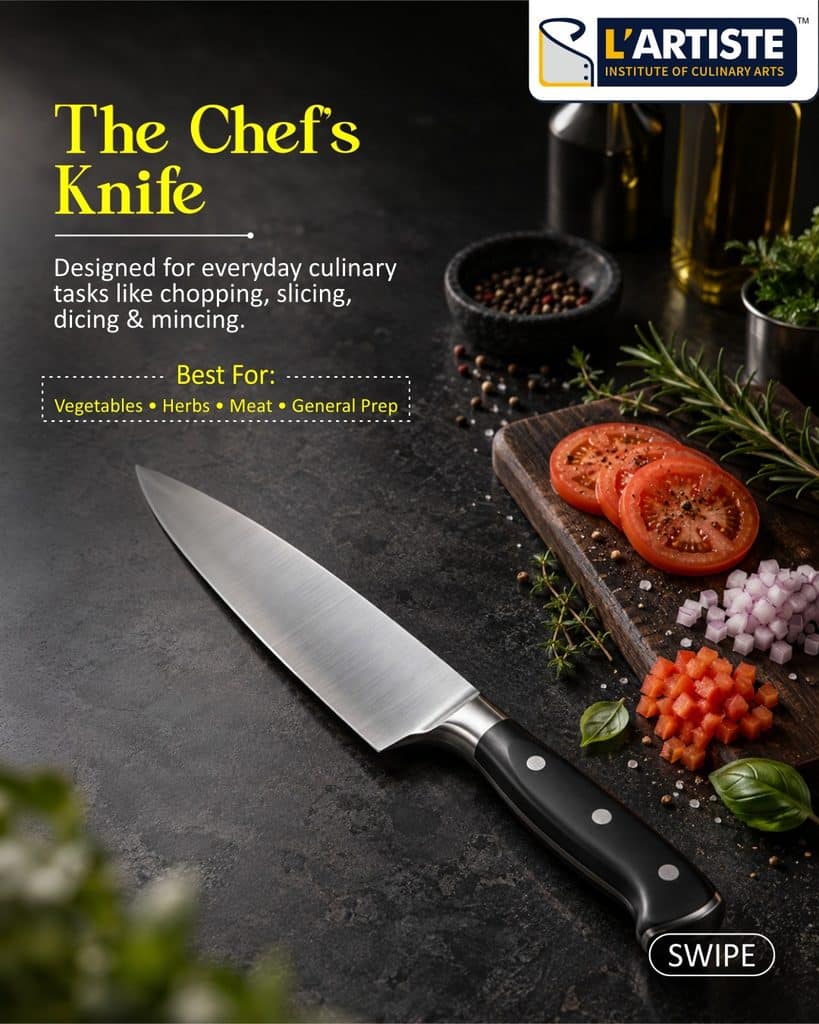
5. Treating Your Chef Knife Like a Multi-Tool
A high-end chef knife is a specialized, high-performance precision instrument designed for one primary purpose: slicing, dicing, and chopping food. It is not a Swiss Army knife, a crowbar, or a workshop tool.
Using an expensive chef knife to pry open stubborn cardboard boxes, slice through thick plastic zip-ties, cut frozen food, or pop open a stubborn bottle cap is a structural nightmare.
Lateral torque – twisting the blade while it is embedded in something hard or dense – will snap the tip off or fracture the steel right down the middle.
- The Fix: Keep utility scissors, a box cutter, or a proper screwdriver within arm’s reach of your prep station. Reserve your culinary steel strictly for the kitchen, and let your tools do the jobs they were actually engineered to execute.
The Sin of Storing Wet Blades in Wooden Blocks
Plugging a freshly washed blade straight into a traditional wooden countertop block might look tidy, but it creates a damp microbial trap that slowly murders your steel from the inside out.
When residual water gets trapped inside a dark, unventilated wooden slot, it cannot evaporate properly.
This bad habit triggers serious consequences:
- Rust blooms and mold growth: Stagnant moisture invites bacteria and rust to party all over your edge, particularly near the bolster.
- Swelling wood fibers: Trapped water makes the wood expand inside the slot, pinching the blade.
- Edge degradation: Every time you pull the knife out, the swollen slot scrapes and dulls your razor edge.
- The Fix: Always towel-dry your cutlery completely before storing it, or switch to an open-air magnetic rack that lets your steel breathe.
Leaving Your Knife Immersed in the Danger Sink
Tossing an expensive chef knife into a soapy sink full of dirty pots, pans, and silverware is the ultimate kitchen hazard.
Not only does this transform your basin into an invisible, finger-seeking guillotine, but leaving high-carbon or premium stainless steel submerged in standing water causes severe damage.
Leaving your blade in the sink introduces major risks:
- Galvanic corrosion: Food acids, salts, and harsh dish soaps sit against the metal unattended.
- Chemical pitting: The solution chemically attacks the microscopic apex of the edge, turning a fine polished line into a corroded mess.
- Accidental trauma: Hiding your knife under soapy water makes it easy to cut yourself or nick your other cookware.
- The Fix: Wash your blade immediately after use, or clean it last when the sink is completely empty.
Forgetting the Crucial Habit of Regular Honing
Owning a top-tier blade without a honing steel is like buying a Ferrari and refusing to ever change the oil. Many home cooks mistakenly believe that honing sharpens a knife by shaving off metal, leading them to avoid the tool out of fear.
Understanding proper maintenance changes everything:
- Realignment vs. sharpening: Regular honing simply realigns the microscopic teeth of the edge that inevitably roll over during normal cutting.
- Preventing structural failure: Skipping this quick ten-second step causes the blade apex to fold flat, forcing you to push harder.
- Minimizing slip hazards: Forcing a dull-feeling, unhoned blade through food dramatically increases the risk of slips and chips.
- The Fix: Swipe your blade along a steel before every big cooking session to keep that factory edge standing tall and true.
Respect the Steel, Reap the Reward of Maintaining Expensive Chef Knives
Investing in expensive chef knives changes the entire rhythm of cooking, turning tedious meal prep into an effortless, fluid joy. But a great blade is only as good as the habits of the person holding the handle.
By ditching the dishwasher, upgrading your cutting board, storing your blades safely, swapping your scraping habits, and leaving the box-cutting to actual box-cutters, you preserve the factory-fresh performance that made you fall in love with your knife in the first place.
Treat your steel well, keep it honed, and it will effortlessly slice through decades of dinners to come.
Featured image credit: ChatGPT
