
The legendary outdoor writer and conservationist Edward Abbey once declared, “Any meal is a good meal when you’re on a good river” – though he probably never tried eating a charred-black ribeye that was cold on the inside because the charcoal died halfway through the cook.
Every weekend warrior eventually faces the ultimate grill-side betrayal.
You buy expensive cuts of meat, spend hours prepping a dry rub, open a cold drink, and light up the grill – only for your fuel to burn out in forty-five minutes, leaving behind a mountain of grey ash and a raw pork shoulder.
Standard charcoal briquettes and fast-burning wood lumps have ruled the backyard live-fire scene for decades, but they carry a secret dirty habit.
Most cheap store-bought briquettes contain petroleum binders, anthracite coal, and filler ingredients that smell suspiciously like lighter fluid and burn out faster than a cheap flashlight.
The secret to breaking this cycle lies in upcycled tropical waste. Coconut shell charcoal is quietly revolutionizing outdoor cooking, delivering an eco-friendly fuel alternative that burns hotter, lasts longer, and leaves standard fuel choices in the dust.
What is Coconut Shell Charcoal?
Most people hear the words “coconut charcoal” and immediately imagine tossing raw tropical husks onto an open fire, expecting sweet pina colada smoke to billow out. That is not how this works.
Coconut shell charcoal is a high-density fuel made from upcycled coconut shells after the meat and water have been harvested.
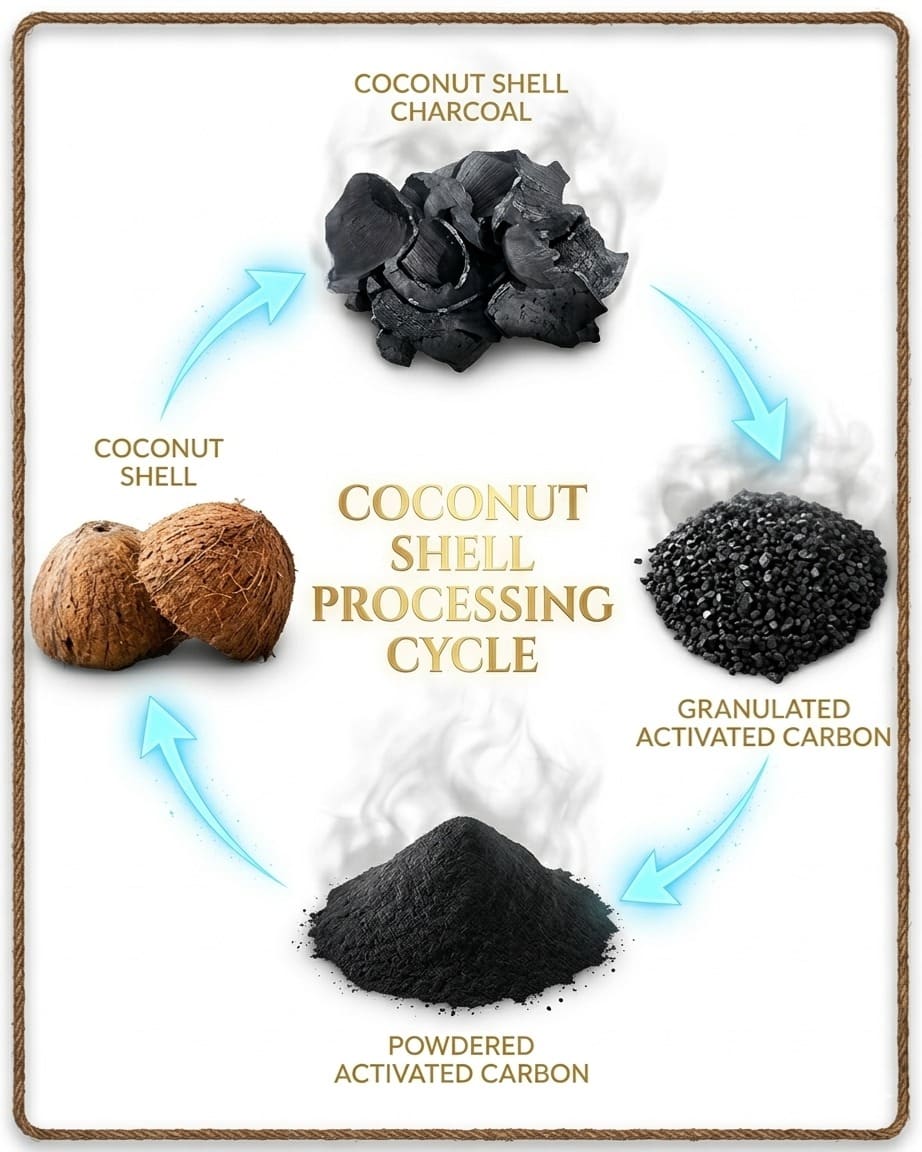
Instead of letting millions of tons of discarded coconut husks rot in agricultural landfills, green-tech processors collect these dense, fibrous shells and transform them into pure carbon fuel through a process known as pyrolysis.
Here is how the transformation unfolds:
- Collection & Prep: Raw coconut shells are gathered, cleaned, and dried under the sun to drop moisture content below 15%.
- Controlled Carbonization: The dried shells undergo thermal decomposition in low-oxygen kilns heated to extreme temperatures. This bakes off volatile organic compounds, water, and impurities, leaving behind nearly pure carbon.
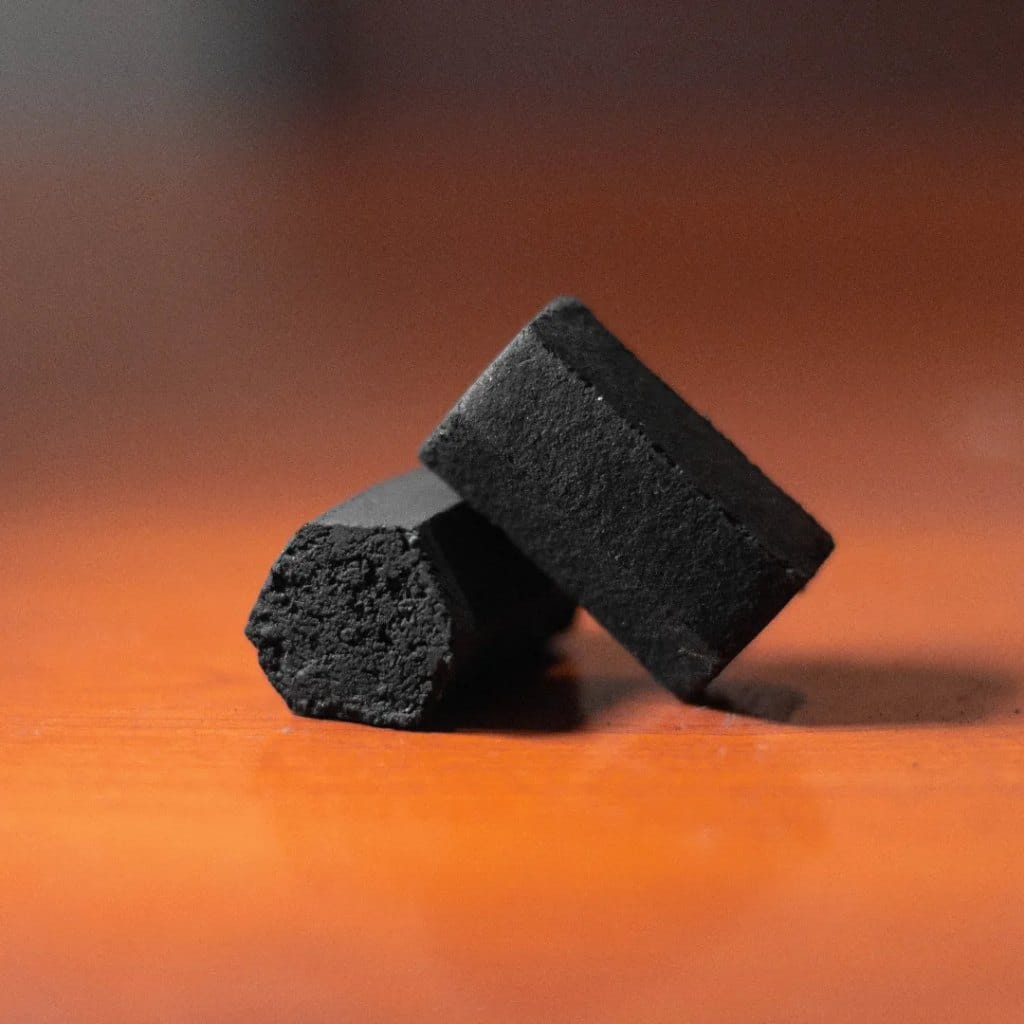
- Crushing & Shaping: The resulting bio-char is pulverized into a fine powder, blended with natural binders (usually tapioca starch), and extruded under high mechanical pressure into uniform briquettes or long hexagonal logs.
Because raw coconut shells possess a naturally ultra-dense cellular fiber structure, compressing them into carbon blocks creates an extraordinary mass density. The end product looks clean, weighs more than standard wood charcoal, and holds zero tropical scent.
Why Coconut Shell Charcoal Outperforms Traditional Charcoal
Upgrading your fuel source changes every aspect of your cook. Switching to coconut shell charcoal solves the four biggest pain points that plague live-fire cooking: thermal instability, quick burn times, choked air vents, and off-tasting fuel smoke.
Extreme Heat & Unmatched Temperature Stability
Standard lump charcoal is infamous for erratic behavior. A single bag contains microscopic twigs that burn away in five seconds alongside massive log chunks that take forty minutes to catch fire.
This structural inequality creates unpredictable temperature spikes that char your food on the outside while leaving the interior completely cold.
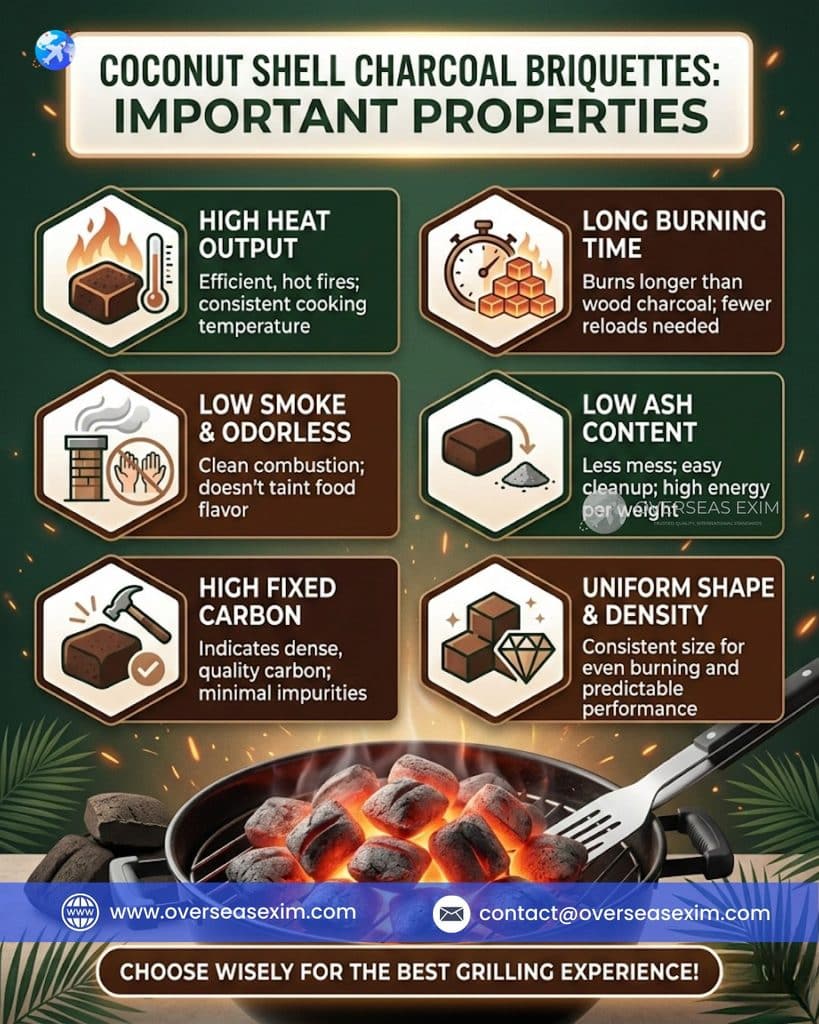
Coconut shell charcoal delivers uniform, steady heat output. Because extruded coconut briquettes share identical density, shape, and mass, they radiate heat at a consistent BTU rating.
- Peak Temp Capacity: Reaches internal temperatures exceeding 1,000°F (537°C), making it ideal for rapid steak searing.
- Thermal Steady-State: Holds steady ambient temperatures (such as 225°F or 250°F) for low-and-slow barbecue without violent thermal spikes.
Extended Burn Time (Your Wallet Will Thank You)
Nothing ruins a twelve-hour brisket cook like having to open the smoker hood every forty-five minutes to reload charcoal, losing precious heat and moisture every single time.
Coconut shell charcoal burns up to two to three times longer than traditional hardwood lump charcoal. A single load of high-density coconut briquettes can hold a steady cooking temperature for 5 to 8 continuous hours.
While a bag of premium coconut fuel might carry a slightly higher upfront price tag at the store, you use less than half the volume of fuel per cooking session, making it significantly cheaper per cookout in the long run.
Ultra-Low Ash Output (No More Suffocated Vents)
Standard supermarket charcoal briquettes contain heavy clay, limestone, and chemical fillers designed to add artificial weight to the bag. When burned, those cheap additives melt down into massive piles of fine grey ash.
In offset smokers or Kamado-style ceramic grills, heavy ash accumulation clogs the bottom air vents, choking off oxygen supply and smothering your fire mid-cook.
Pure coconut shell charcoal leaves behind an unbelievably low ash yield of just 2% to 5% of its total mass.
Instead of scooping out buckets of grey powder after every meal, you are left with tiny traces of fine white ash. Your air vents stay clear, air flow remains wide open, and grill cleanup takes less than thirty seconds with a hand shovel.
Clean Burn & Pure, Unadulterated Flavor
Have you ever bitten into a grilled chicken breast that tasted subtly like a gas station pump? That unpleasant chemical aftertaste comes directly from low-grade charcoal briquettes made with synthetic binders, coal dust, and chemical ignition accelerants.
Coconut shell charcoal burns virtually smokeless and odorless once fully lit.
It releases zero toxic off-gassing, synthetic chemical smells, or heavy soot. This gives you complete, surgical control over your food’s final flavor profile. When you want hickory, oak, applewood, or mesquite flavor, you simply drop real hardwood chunk wood onto pure coconut coals.
The charcoal acts strictly as the clean heat engine, while your select wood chunks supply pure flavor smoke.
Environmental & Health Impact: Grilling Without the Guilt
Outdoor cooking is one of life’s purest pleasures, but traditional charcoal production carries a heavy ecological footprint.
Zero Deforestation
Commercial hardwood lump charcoal requires cutting down live trees. Millions of acres of natural forests across South America, Africa, and Southeast Asia are harvested annually simply to burn down into charcoal logs.
Coconut shell charcoal uses 100% upcycled agricultural waste.
Not a single tree is cut down to produce it. Instead of consuming living forests, the industry redirects coconut shells that coconut water and oil processing plants would otherwise burn open air or throw into landfills.
Healthy, Non-Toxic Heat
Commercial “match-light” charcoal briquettes are saturated with mineral spirits and volatile hydrocarbons to make them ignite quickly. As those chemical additives burn, they vaporize directly onto your grates and absorb straight into your food’s fat layers.
High-grade coconut shell charcoal relies entirely on organic food-grade binders like tapioca starch. Burning coconut charcoal produces zero toxic fumes, zero petroleum vapors, and significantly lower volatile compound emissions.
Coconut Shell Charcoal vs. the Competition
To truly appreciate what coconut shell charcoal brings to your outdoor kitchen, it helps to put it head-to-head against traditional live-fire fuels.
| Fuel Metric | Coconut Shell Charcoal | Premium Hardwood Lump | Standard Commercial Briquettes |
| Burn Time | 5 – 8+ Hours | 1.5 – 3 Hours | 2 – 3 Hours |
| Heat Output | Very High & Uniform | High (Spiky & Erratic) | Moderate |
| Ash Production | Extremely Low (< 3%) | Low to Moderate | High (10% – 15%) |
| Chemical Additives | None (100% Natural) | None | Heavy (Fillers & Binders) |
| Deforestation Risk | Zero (Upcycled Waste) | Moderate to High | Moderate |
| Sparks / Flare-ups | Virtually Zero | Frequent popping & sparks | Minimal |
When to Use What?
- Choose Hardwood Lump when you want a quick 15-minute quick sear on weeknights and desire a raw, heavy timber smoke profile built right into the coal bed.
- Avoid Cheap Commercial Briquettes unless you enjoy cleaning out mountains of ash and eating subtle hints of mineral spirits.
- Choose Coconut Shell Charcoal when you demand rock-solid temperature control, long low-and-slow smoking runs, clean high-heat searing, zero chemical off-gassing, and effortless cleanup.
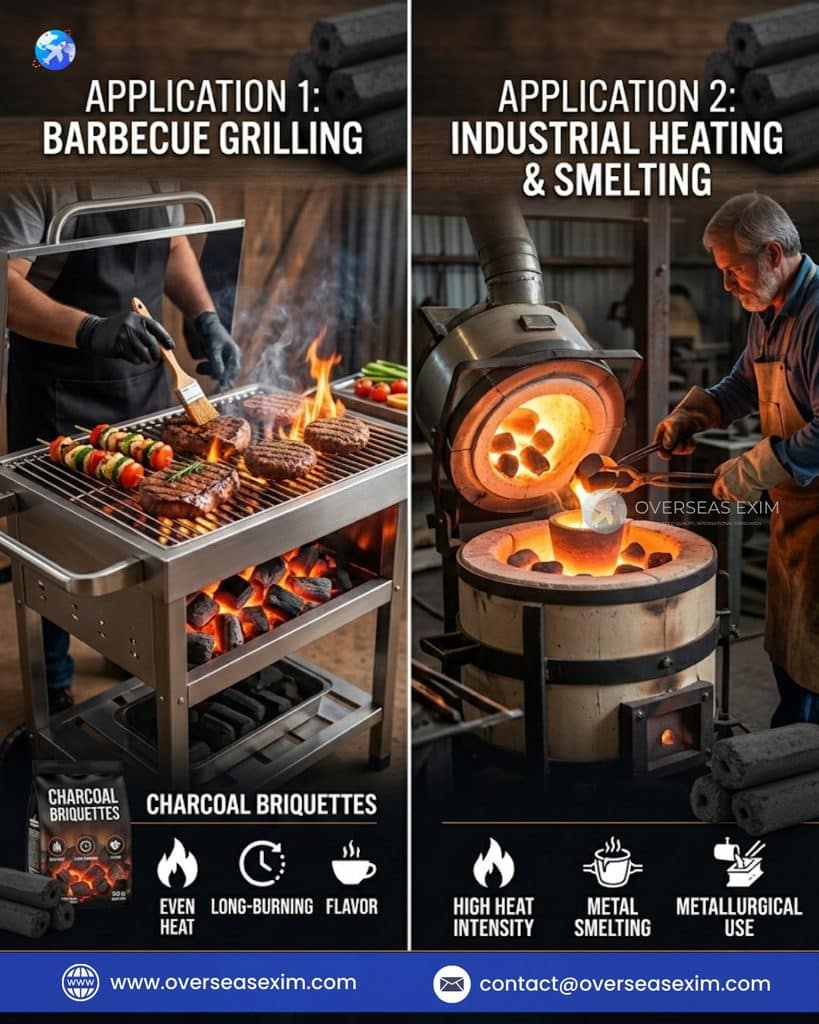
How to Use Coconut Shell Charcoal: Step-by-Step Pitmaster Guide
Because coconut shell charcoal is dense and completely free of chemical accelerants, lighting and managing it requires a slight tweak to your normal routine.
Step 1: Ditch the Lighter Fluid Forever
If you take only one piece of advice from this guide, let it be this: never pour liquid lighter fluid over coconut shell charcoal.
Lighter fluid turns premium, odor-free bio-char into an expensive petroleum sponge.
Instead, invest in a classic metal chimney starter.
- Fill the top section of your chimney starter with coconut shell briquettes.
- Place two all-natural firestarter cubes (made of compressed wood shavings or vegetable wax) on your bottom grill grate.
- Light the firestarter cubes and set the chimney starter directly over the flame.
- Allow 15 to 20 minutes for the coals to ignite. Because coconut carbon is dense, it takes a few extra minutes to catch – be patient. The coals are ready when they glow bright red at the base and carry a light dust coat of white ash at the top.
Step 2: Dial in Your Fire Zones
Once your coals are burning hot, dump them carefully into your grill chassis to set up your cooking zones:
- Two-Zone Setup (Direct & Indirect): Push ignited coconut briquettes over to one side of the charcoal grate, leaving the opposite side completely empty. This creates a high-heat searing zone directly over the coals (500°F+) and a gentle roasting zone on the clear side (250°F–300°F) for bringing thick cuts of meat up to temp without burning the exterior.
- The Snake Method (For All-Night Smoking): If you are running a classic kettle grill for long pork butt or brisket cooks, arrange unlit hexagonal coconut logs in a semi-circle ring around the outer edge of your bottom grate. Light just 3 or 4 coals in a chimney starter and dump them at the head of the snake. The fire will slowly crawl along the coconut chain like a fuse, providing steady 225°F heat for up to 12 uninterrupted hours.
Step 3: Fine-Tune Temperature with Airflow
Because coconut fuel burns so consistently, adjusting internal grill temperatures becomes surprisingly simple.
- To increase heat: Open your bottom intake dampers wide to supply more oxygen to the carbon bed.
- To decrease heat: Partially close the bottom intake vent to throttle air intake.
- Maintain exhaust clarity: Keep top exhaust dampers at least half-open at all times so fresh air draws smoothly across the coal bed without creating stagnant soot smoke.
Step 4: Snuff Out and Reuse Remaining Fuel
Unlike cheap briquettes that burn into useless piles of grey dust, coconut shell charcoal retains its structural integrity even after hours of burning.
When you finish cooking, close both top and bottom air vents completely to starve the fire of oxygen. Within thirty minutes, the remaining coals will extinguish.
The next time you light the grill, brush away the light ash layer, save the remaining unburned coconut logs, and light them right alongside your fresh fuel batch.
Buyer’s Guide: How to Pick Premium Coconut Charcoal
As demand for sustainable fuel skyrockets, plenty of brands have jumped on the coconut bandwagon. Not all coconut charcoal bags are created equal.
Use these standards to make sure you get authentic quality:
- 100% Pure Coconut Shell Carbon: Check the label carefully. Avoid bags marked “coconut blend,” which often dilute pure coconut char with cheap wood dust or anthracite fillers.
- Low Binder Content (< 5% Tapioca Starch): Quality manufacturers use minimal organic food-grade tapioca starch to hold the compressed shapes together. High binder percentages reduce heat output and raise ash production.
- Form Factor Selection:
o Hexagonal Logs (with center hole): The absolute gold standard for smoker setups. The center hollow tube creates a natural chimney effect inside each log, driving self-sustaining airflow and exceptionally steady burn lines.
o Pillow / Cube Briquettes: Fantastic for high-heat kettle cooking, flat top grills, and fast weekend cookouts.
- Moisture-Proof Packaging: High-density carbon absorbs ambient air humidity if left exposed. Look for brands that seal their product in heavy plastic lining inside sturdy cardboard boxes or heavy-duty multi-layer paper bags.
Final Verdict: Time to Upgrade Your Live-Fire Setup
Mastering the grill requires precision control over time, air, meat quality, and heat. Continuing to rely on cheap, low-grade charcoal filled with synthetic binders and chemical starters is like putting low-grade, watered-down fuel into a high-performance sports car.
Making the switch to coconut shell charcoal upgrades every step of your cooking process.
You gain blistering searing capability, whisper-quiet low-and-slow endurance, virtually zero ash cleanup, and pure, chemical-free flavor profiles – all while using upcycled agricultural waste that saves living forests from harvest.
Pick up a bag of pure coconut charcoal before your next cookout, fire up your chimney starter, drop on a thick steak, and experience how clean live-fire cooking was always meant to taste.
Frequently Asked Questions
How long does coconut shell charcoal take to light compared to regular charcoal?
Because of its ultra-high density and lack of chemical accelerants, coconut shell charcoal takes about 15 to 20 minutes to ignite in a standard chimney starter.
Using natural firestarter cubes or paper beneath the chimney gets the coals glowing red and ready to cook efficiently.
Does coconut shell charcoal make your food taste like coconut?
No. The carbonization process bakes off all volatile organic compounds, oils, and moisture from the raw husks.
The resulting charcoal is completely odorless and neutral, ensuring your food retains its natural flavors or absorbs whichever hardwood chunks (like hickory or oak) you choose to add.
Can you use coconut shell charcoal in any type of grill?
Yes. It performs exceptionally well across all live-fire setups, including Kettle grills, offset smokers, Kamado ceramic grills, and portable camping stoves.
Its low-ash output makes it especially great for ceramic grills, as it prevents air vents from getting clogged during long cooks.
Why is coconut shell charcoal considered more eco-friendly than lump charcoal?
Traditional lump charcoal requires cutting down living trees, contributing to deforestation.
Coconut shell charcoal is made entirely from upcycled agricultural waste – reclaiming discarded coconut husks that would otherwise rot in landfills or be burned in open fields.
Is coconut shell charcoal more expensive than standard store-bought briquettes?
While the upfront cost per bag is typically higher than basic chemical briquettes, coconut charcoal is actually more cost-effective over time.
Because it burns up to 2 to 3 times longer and holds steady heat, you use less than half the volume of fuel per cooking session.
Can you reuse coconut shell charcoal if it doesn’t burn completely?
Yes. Unlike traditional briquettes that crumble into fine ash, coconut charcoal retains its structural integrity.
Simply close your grill vents to suffocate the fire, let the coals cool, brush off the thin ash layer, and re-light the remaining coals for your next cookout.
What is the best shape of coconut charcoal to buy for long smoking sessions?
Hexagonal logs with a hollow center are ideal for low-and-slow smoking.
The center hole acts as a miniature chimney to promote uniform airflow, helping the charcoal burn consistently for up to 8 continuous hours without requiring a fuel reload.
Featured image credit: @seco.samudraexport
