
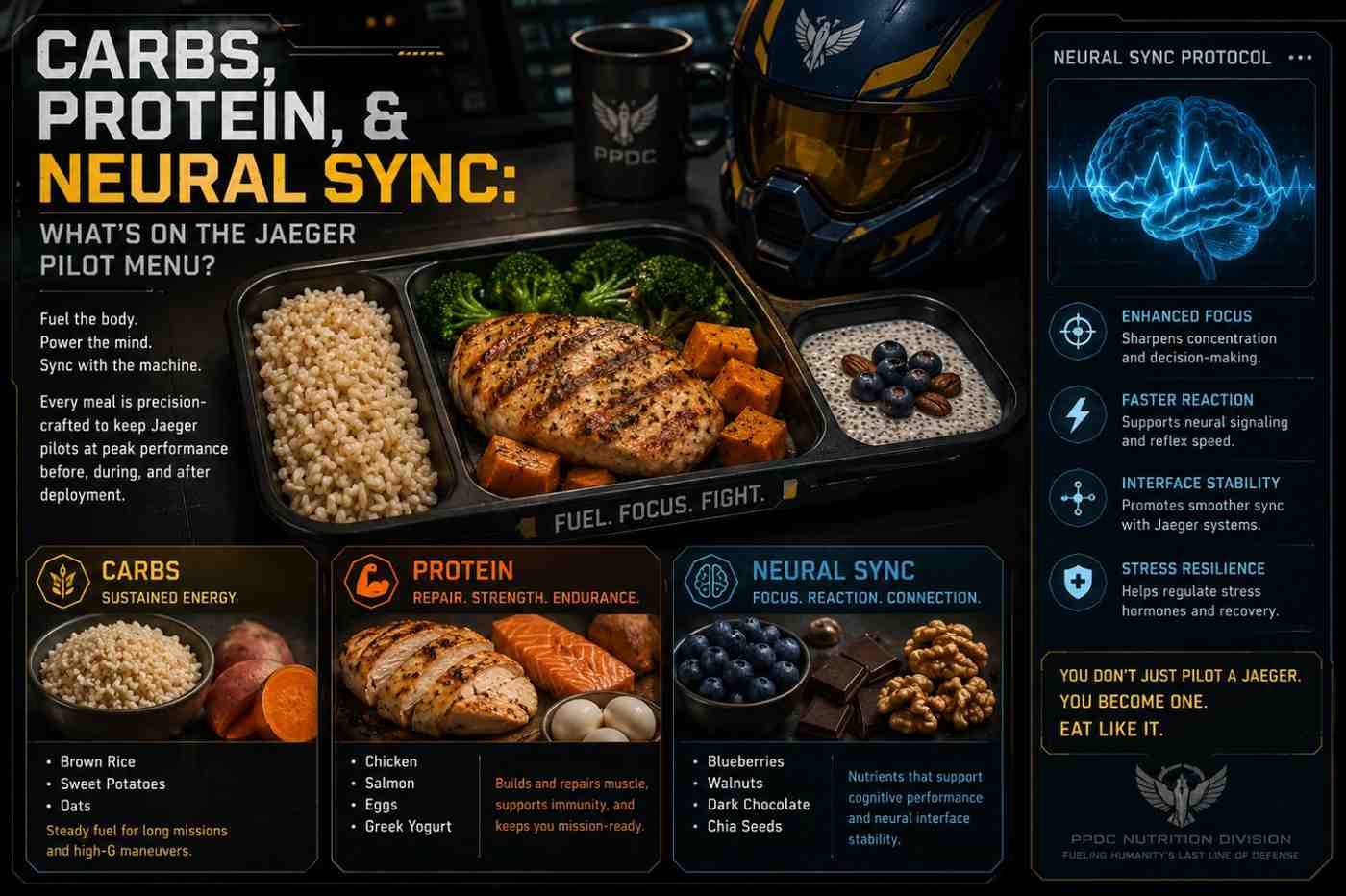
Saving humanity from skyscraper-sized monsters probably isn’t the best time to realize your breakfast was a stale donut and a cup of coffee. Yet that’s how plenty of action heroes seem to operate.
Hollywood loves the idea that grit alone can carry the day. Reality? Even the toughest fighter becomes slower, weaker, and foggier when the fuel tank is empty.
That’s one reason the idea of a Jaeger pilot menu is oddly fascinating.
The pilots in Pacific Rim don’t simply punch Kaiju into next week. They run, brace, react, think, communicate, and synchronize their minds through the mysterious Drift. It’s science fiction at its finest, but the physical demands are rooted in something very real.
Elite performance starts with what goes on the plate long before anyone climbs into the cockpit.
Around the smoker, one lesson comes up again and again: great results don’t happen by accident. A championship brisket isn’t rushed, and neither is a body expected to perform under enormous stress. Good fuel, patience, and consistency beat shortcuts every single time.
No diet can magically create neural synchronization. Sorry – extra bacon won’t unlock psychic powers. But modern sports nutrition tells us a lot about how carbohydrates, protein, healthy fats, hydration, and recovery meals help people perform at their absolute best.
So let’s fire up the grill, sharpen the knives, and build a Jaeger pilot menu worthy of saving the world.
Why Would Nutrition Matter for a Jaeger Pilot?
Piloting a Jaeger would combine the demands of several professions into one.
Imagine blending:
- An Olympic athlete
- A fighter pilot
- A powerlifter
- A marathon runner
- A special operations soldier
…then asking them to fight monsters hundreds of feet tall.
That kind of workload demands serious nutrition.
The Physical Demands
A Jaeger pilot would constantly rely on:
- Explosive power
- Muscular endurance
- Balance
- Coordination
- Quick recovery
Every movement would require muscles to fire efficiently for long periods without breaking down.
Skipping meals or eating nothing but junk food would be like trying to smoke a brisket with wet firewood. Technically something might happen, but nobody is going to like the outcome.
The Mental Demands
The fictional Drift adds another challenge.
Pilots must process enormous amounts of information while staying synchronized with another person’s thoughts and movements.
Even though neural syncing isn’t real science, mental fatigue certainly is.
Modern research consistently shows that nutrition influences:
- Reaction time
- Memory
- Decision-making
- Attention span
- Mood
- Mental endurance
The brain may only account for about two percent of body weight, yet it consumes roughly 20% of the body’s energy. That’s a hungry piece of equipment.

Carbohydrates: The Main Fuel Source
Among fitness circles, carbohydrates often get blamed for everything from weight gain to bad moods.
That’s a little like blaming charcoal because somebody burned the ribs.
Carbs aren’t the enemy. Poor eating habits are.
Why the Brain Loves Carbs
The brain primarily runs on glucose.
Complex carbohydrates gradually release glucose into the bloodstream, providing steady mental energy instead of dramatic highs and crashes.
Good carbohydrate choices include:
- Oats
- Brown rice
- Sweet potatoes
- Whole-grain bread
- Beans
- Fruit
- Vegetables
These foods provide lasting energy instead of quick burnout.
Fueling High-Intensity Performance
Muscles store carbohydrates as glycogen. When activity becomes intense, glycogen supplies energy quickly.
Without adequate glycogen:
- Fatigue appears sooner.
- Power output drops.
- Concentration suffers.
- Recovery slows.
That’s why endurance athletes spend so much attention on carbohydrate intake before major events.
A Jaeger pilot menu would almost certainly do the same.
Smart Carb Timing
Timing matters almost as much as food selection.
Before training
Choose slow-digesting carbohydrates with moderate protein.
Before deployment
Eat a balanced meal two to four hours beforehand.
After combat
Refill glycogen stores with carbohydrates alongside protein.
Think of it as adding fresh logs before the fire burns out rather than waiting until everything turns cold.

Protein: The Repair Crew
Protein doesn’t just build muscle.
It repairs damaged tissue, supports immunity, helps produce hormones, and assists recovery after demanding physical work.
Every hard workout creates tiny muscle damage. Protein provides the raw materials needed to rebuild stronger tissue.
Excellent Protein Sources
A performance-focused Jaeger pilot menu would include:
- Chicken breast
- Turkey
- Lean beef
- Eggs
- Fish
- Greek yogurt
- Cottage cheese
- Lentils
- Beans
- Tofu
- Tempeh
Each provides valuable amino acids that help maintain lean muscle.
How Much Protein?
Elite athletes generally consume around 1.2 to 2.0 grams per kilogram of body weight daily, depending on training intensity.
Rather than eating one enormous steak at dinner, protein works better when spread throughout the day.
A steady supply supports continuous recovery.
Kind of like feeding hardwood into the smoker every hour instead of tossing on one massive log and hoping for the best.
Healthy Fats: Brain Food That Actually Earns the Name
Healthy fats spent years getting unfairly criticized. Thankfully, nutrition science has set the record straight.
Healthy fats play an essential role in brain function, hormone production, and long-term energy.
Omega-3 Fatty Acids
Omega-3s receive special attention because they’re associated with healthy brain function.
Excellent sources include:
- Salmon
- Sardines
- Mackerel
- Walnuts
- Chia seeds
- Flaxseed
While omega-3s won’t improve psychic communication between Jaeger pilots, they do contribute to overall brain health.
Other Healthy Fat Sources
Include foods such as:
- Avocados
- Olive oil
- Almonds
- Pistachios
- Cashews
- Pumpkin seeds
These provide sustained energy that complements carbohydrates rather than replacing them.
Hydration: The Secret Weapon Nobody Talks About
Even mild dehydration affects performance. Lose only a small percentage of body water and several things happen:
- Reaction time slows.
- Mental clarity declines.
- Muscles fatigue sooner.
- Decision-making becomes less accurate.
That doesn’t sound ideal when a Kaiju is swinging a tail the size of a freight train.
Electrolytes Matter Too
Water isn’t the whole story.
Sweat also removes:
- Sodium
- Potassium
- Magnesium
Replacing both fluids and electrolytes helps maintain muscle contractions and nerve function during prolonged activity.
For extended missions, hydration would likely become a carefully monitored part of the Jaeger pilot menu rather than an afterthought.
Micronutrients That Support Peak Performance
Calories get most of the attention. Micronutrients quietly do much of the heavy lifting.
Iron
Iron supports oxygen transport.
Low iron often leads to:
- Fatigue
- Reduced endurance
- Poor exercise performance
Magnesium
Magnesium assists hundreds of biochemical reactions.
It contributes to:
- Muscle contraction
- Nerve signaling
- Energy production
- Recovery
B Vitamins
These vitamins help convert food into usable energy. Without them, even excellent meals become less effective.
Vitamin D
Vitamin D contributes to:
- Bone health
- Immune function
- Muscle performance
Antioxidants
Colorful fruits and vegetables contain antioxidants that help combat oxidative stress produced during hard exercise.
Blueberries, spinach, peppers, tomatoes, berries, and citrus fruits deserve regular spots on the table.
The Importance of Sleep Before Climbing Into a Jaeger
Nutrition often gets most of the attention, but quality sleep deserves an equally important spot alongside the Jaeger pilot menu. During sleep, the body performs critical repairs that no meal alone can replace.
While you’re sleeping, your body is busy:
- Repairing muscles after intense physical activity.
- Consolidating memories and reinforcing learning.
- Clearing metabolic waste from the brain.
- Preparing the body for another day of peak performance.
Missing even one night of proper rest can negatively affect reaction time, decision-making, and coordination – all skills a Jaeger pilot would need when facing a Kaiju.
Think of sleep as the overnight maintenance crew for both body and mind. You wouldn’t expect a giant robot to operate at full capacity after skipping routine maintenance, and the human body works much the same way.
Pairing consistent sleep habits with balanced nutrition creates a stronger foundation for endurance, sharper thinking, and faster recovery. Sometimes the best performance enhancer isn’t another meal – it’s simply a good night’s sleep.
Would Coffee Help or Hurt a Jaeger Pilot?
Coffee is practically a food group for many people, but would it deserve a place on the Jaeger pilot menu? The answer comes down to timing and moderation.
A moderate amount of caffeine may provide several performance benefits, including:
- Improved alertness
- Better focus
- Faster reaction speed
- Reduced feelings of fatigue
These benefits could make coffee useful before training sessions or demanding missions.
However, more isn’t always better. Too much caffeine may cause:
- Jitters
- Increased heart rate
- Difficulty concentrating
- An energy crash later in the day
Energy drinks loaded with sugar often make those crashes even worse. A freshly brewed cup of coffee paired with a balanced meal is generally a smarter choice than relying on oversized caffeinated beverages.
Like a great barbecue rub, a little enhances the flavor, while too much overwhelms the whole dish.
The Team Meal: Building Trust Beyond the Drift
Sharing meals has always brought people together, whether around a campfire, a family dinner table, or a backyard smoker. For Jaeger pilots, those shared meals could strengthen much more than their bodies.
A regular team meal helps build:
- Trust
- Communication
- Camaraderie
- Stress relief
- Stronger personal connections
Preparing and eating food together creates opportunities for conversation and helps teammates understand one another outside the pressure of combat.
Although neural synchronization belongs firmly in science fiction, real-world research consistently shows that teams perform better when strong relationships already exist. That’s one reason athletes, military units, and emergency responders often place so much value on eating together.
Sometimes the most valuable ingredient on the Jaeger pilot menu isn’t a nutrient at all – it’s the confidence that comes from knowing the person beside you has your back.
How Would a Jaeger Pilot Eat During Long Deployments?
A mission lasting several hours – or even days – would require much more planning than simply packing a sandwich. A practical Jaeger pilot menu would focus on foods that are portable, filling, and easy to digest.
Smart options might include:
- Trail mix
- Protein bars with minimal added sugar
- Dried fruit
- Whole-grain wraps
- Beef jerky
- Electrolyte drinks
These foods are ideal because they’re:
- Lightweight
- Easy to store
- Quick to eat during short breaks
- Packed with long-lasting energy
Hydration would remain just as important as solid food, especially during physically demanding missions. The overall goal would be to maintain steady blood sugar, proper hydration, and mental focus instead of relying on one oversized meal.
After all, nobody wants their toughest battle to be against hunger halfway through a Kaiju encounter.

Could Personalized Nutrition Create Better Jaeger Pilots?
Not every pilot would perform their best on the exact same diet, making personalized nutrition an exciting addition to the Jaeger pilot menu. Modern sports science increasingly tailors meal plans to fit each individual’s unique needs.
Factors that influence personalized nutrition include:
- Body size
- Training goals
- Metabolism
- Food allergies
- Genetics
- Recovery needs
For example, a larger pilot focused on strength training may require more protein and calories, while an endurance-focused pilot could benefit from additional complex carbohydrates.
Future technology might even allow wearable devices to monitor:
- Hydration levels
- Recovery status
- Energy expenditure
- Daily calorie needs
Nutrition teams could then adjust meals in real time to keep pilots performing at their best. While this level of customization wouldn’t magically improve neural sync, it could maximize each pilot’s physical and mental performance.
Just as every pitmaster fine-tunes a barbecue recipe to suit the cut of meat, every elite pilot would likely need a menu built specifically for their body and mission.
Building the Ultimate Jaeger Pilot Menu
So what would a full day actually look like? Here’s one balanced example.
Breakfast
- Scrambled eggs
- Oatmeal
- Fresh berries
- Greek yogurt
- Orange
Goal: Build steady energy for the morning.
Mid-Morning Snack
- Apple
- Handful of almonds
Goal: Maintain focus between meals.
Lunch
- Grilled chicken
- Brown rice
- Mixed vegetables
- Olive oil dressing
Goal: Refill energy while supporting muscle recovery.
Pre-Mission Meal
- Rice
- Grilled fish
- Sweet potato
- Banana
Goal: Easy-to-digest carbohydrates with moderate protein.
Avoid oversized greasy meals. Nobody wants heartburn while wrestling a monster.
Recovery Meal
Within an hour after intense activity:
- Chocolate milk
- Turkey sandwich
- Fruit
- Electrolyte drink
The combination of protein plus carbohydrates speeds recovery.
Dinner
- Smoked salmon
- Roasted vegetables
- Quinoa
- Avocado salad
Balanced.
Nutritious.
Delicious.
And yes, smoked food can absolutely fit into healthy eating when prepared thoughtfully.
Foods That Would Probably Stay Off the Menu
Not every food supports elite performance. Some choices are better saved for celebration after the mission.
These include:
- Excess sugary snacks
- Ultra-processed foods
- Deep-fried meals
- Heavy alcohol consumption
- Too much caffeine
A single burger won’t ruin performance. Living on burgers might. Nutrition is built on consistent habits rather than one perfect meal.
Could Nutrition Improve Neural Synchronization?
Here’s where fiction and science shake hands before walking separate paths.
Nutrition absolutely influences cognitive performance.
It supports:
- Better concentration
- Faster recovery
- Improved endurance
- Sharper reaction time
- More stable energy
What it cannot do is create psychic synchronization between two people. The Drift remains firmly inside the world of science fiction.
Still, that’s part of the fun.
Using real sports nutrition to imagine how Jaeger pilots might prepare gives fans a believable glimpse into what life inside the Pan Pacific Defense Corps could look like.
The result feels grounded because the biology is real, even when the robots aren’t.

The Real-World Superpower Diet
The fictional Jaeger pilot menu may never appear in an official training manual, but the nutritional principles behind it are surprisingly realistic.
Carbohydrates provide reliable energy. Protein repairs and strengthens the body. Healthy fats support the brain. Hydration keeps everything running smoothly. Micronutrients quietly power countless biological processes that make elite performance possible.
Whether you’re preparing for a marathon, a demanding day at work, or a weekend tending a smoker while arguing about which Kaiju deserved more screen time, the same lesson applies: performance starts with preparation.
Sure, no meal can unlock neural synchronization or help you throw a skyscraper-sized uppercut.
But consistently eating balanced, nutrient-rich foods can improve energy, focus, recovery, and resilience – and that’s about as close to a real-world superpower as most of us are likely to get.
Now excuse me while the brisket finishes smoking. Even Jaeger pilots would line up for that.
Frequently Asked Questions
What foods would best fuel a Jaeger pilot?
A balanced combination of complex carbohydrates, lean protein, healthy fats, fruits, vegetables, and proper hydration would provide the best foundation for sustained physical and mental performance.
Do carbohydrates improve brain performance?
Yes. The brain relies heavily on glucose, making quality carbohydrates an important part of maintaining concentration, memory, and mental endurance.
How much protein would an elite pilot need?
While needs vary, highly active individuals often benefit from approximately 1.2–2.0 grams of protein per kilogram of body weight daily, spread across multiple meals.
Are supplements necessary?
Not always.
Whole foods should provide most nutrients. Supplements may help in certain situations, but they work best when recommended by qualified healthcare professionals.
Can nutrition improve reaction time?
Good nutrition supports overall brain function, helping maintain focus and reducing fatigue, both of which contribute to better reactions.
Is neural synchronization scientifically possible?
Current science doesn’t support anything resembling the Drift from Pacific Rim. It remains an entertaining fictional concept.
Featured image credit: ChatGPT
