
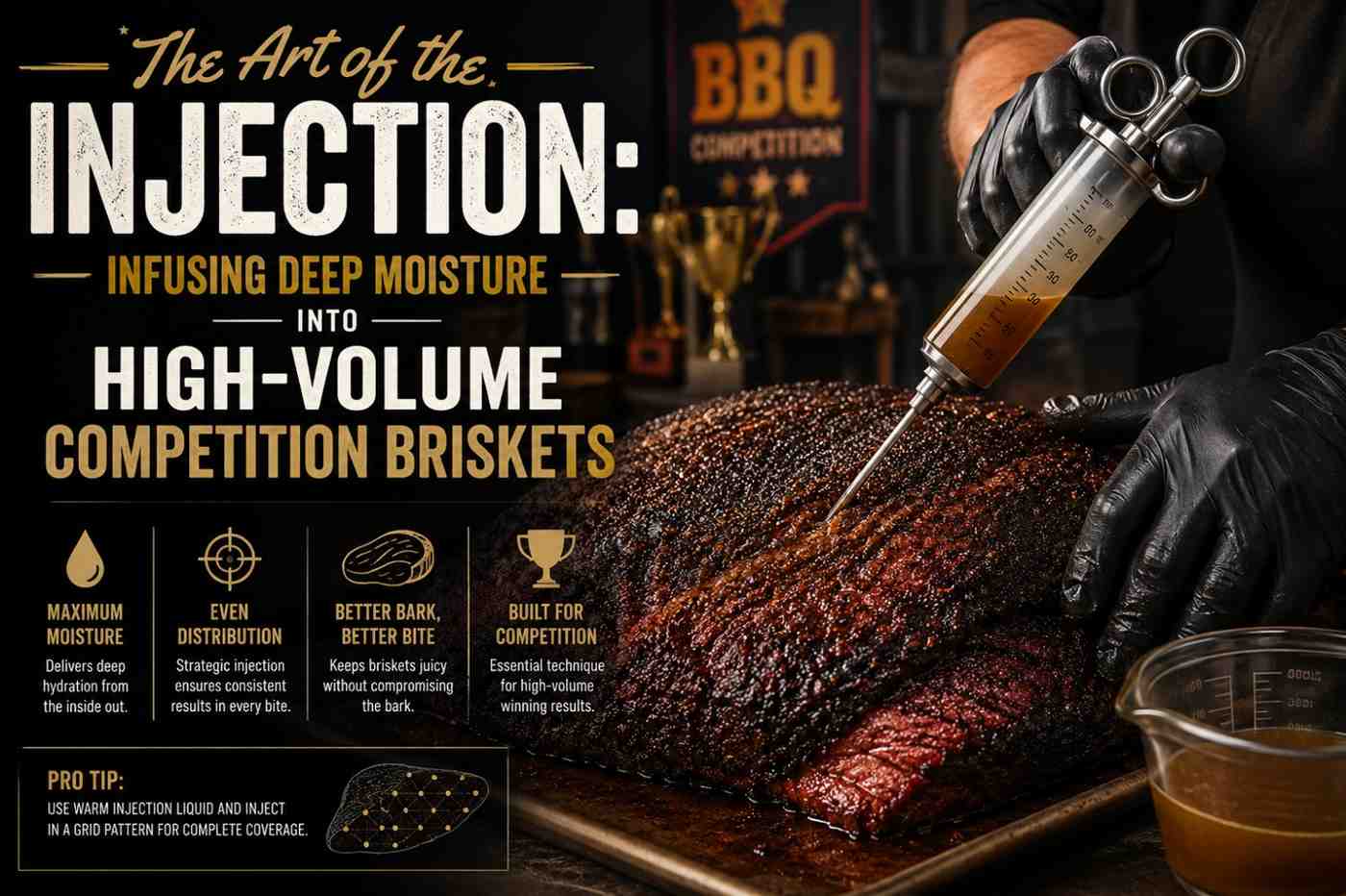
The Secret Nobody Wants to Admit About Award-Winning Brisket
Mention competition briskets in a room full of serious barbecue cooks and you’ll hear plenty of opinions. Mention injecting those briskets, and suddenly everyone becomes strangely quiet.
It’s a bit like asking Grandma whether her famous pie crust really came from scratch.
Some folks will swear that a great brisket needs nothing but salt, pepper, smoke, and patience. Others are quietly loading an injector while hoping nobody notices.
Here’s the funny part: plenty of championship barbecue teams have been injecting briskets for years. It isn’t cheating.
It isn’t magic.
It certainly isn’t replacing good technique. It’s simply another tool that helps produce incredibly juicy slices after twelve to sixteen hours in a smoker.
Brisket has never been an easy cut to master.
One end is loaded with fat while the other is notoriously lean. Cook it too long, and the flat turns into expensive jerky. Pull it too soon, and you’re serving something with the tenderness of a leather boot.
That’s exactly why competition briskets are treated differently than the average weekend barbecue. Judges expect every slice to be moist, flavorful, tender, and nearly identical.
Hoping everything works out isn’t much of a strategy when trophies are on the line.
Injecting brisket isn’t about covering mistakes. It’s about stacking the odds in your favor before the fire is even lit.
Let’s dig into how it works, why the best teams rely on it, and how to do it correctly without turning your brisket into a soggy science experiment.
What Is Brisket Injection?
Think of brisket injection as delivering flavor and moisture exactly where they’re needed instead of asking smoke and seasoning to do all the heavy lifting from the outside.
A brisket spends many hours losing moisture as heat slowly breaks down connective tissue. While that transformation creates tenderness, it also removes a surprising amount of water from the meat.
An injection helps replace some of that moisture before cooking begins.
Instead of only seasoning the surface, a liquid mixture is distributed throughout the brisket using a food-grade injector. Every small pocket of liquid becomes part of the cooking process.
The Main Goals of Injection
A properly injected brisket aims to:
- Increase internal moisture
- Improve beef flavor throughout the meat
- Reduce drying during extended cooks
- Create more consistent slices from end to end
- Give lean sections extra insurance against overcooking
None of these benefits replace proper smoking techniques. A poorly cooked brisket won’t magically become competition-worthy because it received an injection.
Think of it more like quality suspension on a pickup truck. The driver still has to know where they’re going.
Competition vs. Backyard Cooking
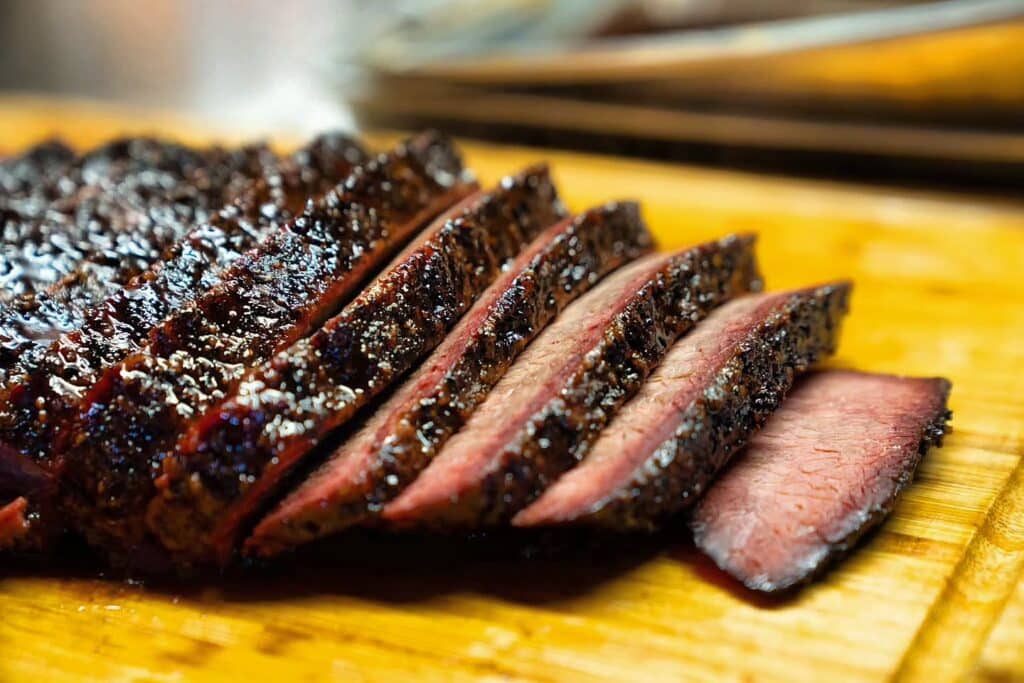
Weekend cooks usually have one brisket feeding family and friends. Competition teams often prepare several briskets, knowing only one may earn a place in the turn-in box.
That changes everything. Judges don’t grade effort. They judge the final slice.
Every brisket has natural differences in fat content, muscle structure, and moisture levels. Injection helps reduce those variables, making competition briskets far more predictable from cook to cook.
Why High-Volume Competition Briskets Need Injection
Cooking one brisket is challenging. Cooking six or eight while expecting every single one to finish beautifully is another level entirely. Consistency becomes the real competition.
Long Cooks Remove More Moisture Than Most People Realize
Brisket spends hours sitting in temperatures where moisture slowly escapes.
During that process:
- Water evaporates.
- Fat renders.
- Muscle fibers tighten.
- Connective tissue breaks down.
All of these changes improve tenderness – but they also remove valuable moisture.
Injection helps offset part of that unavoidable moisture loss.
Multiple Briskets Mean Multiple Variables
No two briskets are identical. Even two USDA Prime briskets from the same supplier may cook differently.
One finishes early.
One stalls forever.
One develops incredible marbling.
One dries out faster.
Injecting each brisket using the same method creates a much more consistent starting point.
That consistency matters when you’re producing dozens of slices that all need to impress judges.
The Flat Always Needs Extra Attention
Ask almost any experienced barbecue cook which section causes the most stress.
The answer is usually the flat.
It’s lean.
It cooks faster.
It dries sooner.
And unfortunately, it’s also the section most judges examine closely.
Many pitmasters deliberately inject the flat more heavily than the point to help maintain moisture during the cook.
How Brisket Injection Actually Works
People sometimes imagine injected liquid sitting inside the meat like little water balloons.
Fortunately, that’s not how it works.
Once injected, the liquid begins interacting with muscle fibers, proteins, and connective tissue.
Some moisture naturally spreads throughout nearby muscle tissue.
Some binds to proteins.
Some slowly cooks alongside the meat throughout the smoking process. The goal isn’t flooding the brisket.
The goal is improving moisture retention where it matters most.
Surface Seasoning Can Only Go So Deep
Rubs create bark.
Smoke develops flavor.
Neither can penetrate deeply into thick muscles.
Injection solves that limitation by carrying flavor directly into the interior.
Instead of seasoning only the crust, you’re enhancing every slice.
What Injection Cannot Do
Let’s clear up one common misconception.
Injection cannot:
- Rescue poor-quality meat.
- Fix severe overcooking.
- Replace proper resting.
- Make rushed barbecue taste championship-worthy.
Good barbecue still depends on fire management, patience, trimming, seasoning, wrapping, and proper slicing.
Injection simply supports those fundamentals.
Common Ingredients Found in Competition Brisket Injections
One glance at commercial injection products reveals dozens of ingredients. Fortunately, most successful injections rely on a surprisingly familiar group of components.
Beef Stock
Quality beef stock provides natural beef flavor while adding moisture. It’s often the foundation of homemade injections.
Beef Base
Concentrated beef base intensifies flavor without requiring large amounts of liquid. Think of it as turning up the volume on the natural beef profile.
Worcestershire Sauce
A little goes a long way.
It contributes:
- Umami
- Slight acidity
- Rich savory complexity
Too much, however, can overpower the brisket.
Butter or Beef Tallow
Fat contributes richness and improves mouthfeel. Many competition teams prefer rendered beef tallow because it reinforces the natural beef flavor instead of competing with it.
Phosphates
Commercial injections frequently contain food-grade phosphates. These ingredients help muscle proteins retain more moisture during cooking.
They don’t make brisket juicy by themselves – they help the meat hold onto the moisture already present.
Seasonings
Common additions include:
- Garlic powder
- Onion powder
- Black pepper
- MSG
- Small amounts of sugar
The goal isn’t creating bold seasoning. It’s supporting the beef.
Commercial Injection Products vs. Homemade Recipes
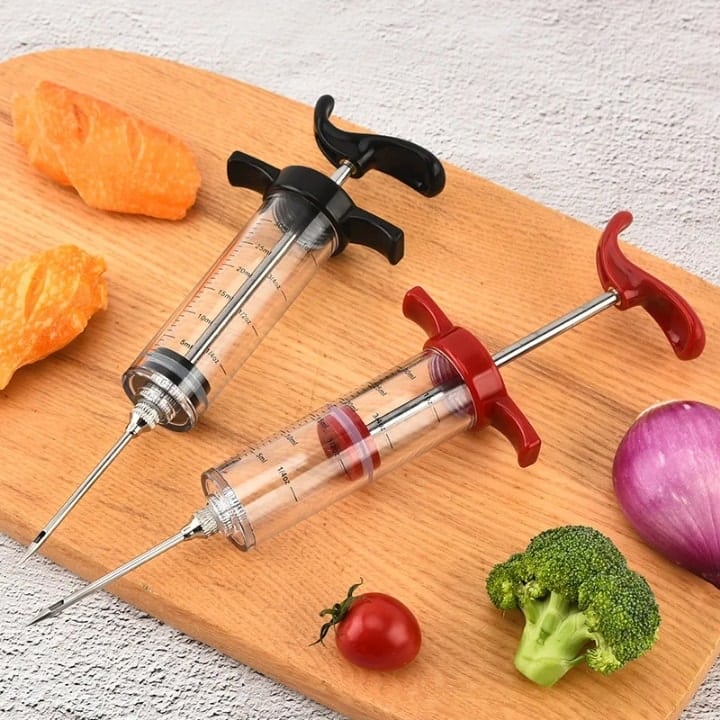
One question comes up constantly. Should you buy an injection mix or make your own?
The honest answer is that both approaches can produce outstanding competition briskets.
Commercial Products
Advantages include:
- Proven formulas
- Consistent flavor
- Easy preparation
- Reliable moisture retention
They’re especially useful for new competition cooks who want repeatable results.
Homemade Injections
Making your own offers:
- Complete ingredient control
- Lower long-term costs
- Endless customization
Many experienced pitmasters eventually develop their own signature blends after learning what works for their cooking style.
One warning, though.
Kitchen creativity sometimes gets carried away. Not every spice in the cabinet belongs inside a brisket injector. Your brisket doesn’t need to taste like holiday stuffing.
Step-by-Step Guide to Injecting a Competition Brisket
Technique matters every bit as much as the injection itself.
Step 1: Mix the Injection
Blend ingredients thoroughly. Filter out solids that might clog the needle. Nothing ruins momentum faster than an injector that suddenly refuses to cooperate.
Step 2: Trim First
Complete all trimming before injecting. Removing fat afterward simply wastes some of the liquid you’ve worked to distribute.
Step 3: Fill the Injector
Draw the mixture slowly to minimize trapped air bubbles. A steady flow produces cleaner, more even injections.
Step 4: Inject With the Grain
Insert the needle deep into the muscle. Inject slowly while withdrawing the needle. This creates an even distribution instead of large pockets of liquid.
Slow and steady always beats fast and messy.
Step 5: Space Injection Points Evenly
Imagine a loose grid across the brisket. Pay particular attention to the lean flat. Avoid repeatedly injecting the exact same location.
Step 6: Let It Rest
After injecting, refrigerate the brisket for several hours. This allows the liquid to settle before cooking begins. Many competition teams inject the evening before firing up their smokers.
The Science of Phosphates and “Sponging” Muscle Tissue
Commercial injections heavily rely on sodium tripolyphosphate (STPP) to radically transform the meat’s internal protein structure during extended cooks.
- Protein Shrinkage: As internal pit temperatures climb past 140°F, muscle proteins shrink and squeeze out natural juices.
- pH Level Elevation: Injected phosphates raise the pH of the meat, forcing tightly bound actin and myosin protein strands to unwind and repel each other.
- Microscopic Trap: This molecular shift creates tiny internal gaps that trap moisture and dissolved fats like a dense sponge.
Instead of wringing itself dry under intense smoke, the meat retains fluid, allowing competition pitmasters to deliver ultra-plump, pillow-soft brisket flats that hold maximum juice even after hours resting in a hot box.
Mastering the “Grid Method” and Needle Angle Dynamics
Achieving pristine, uniform slices requires precise mechanics during the injection process. Advanced pitmasters utilize the grid method, visualizing a strict one-inch matrix across the flat and point.
- Insert the needle at a 45-degree angle parallel to the grain, rather than plunging straight down (which creates vertical channels that bleed fluid).
- Depress the plunger steadily while smoothly pulling the needle backward to leave an even track of liquid deep inside the muscle fiber.
- Inject underneath the fat cap so the rendering fat seals the needle puncture holes during the cook.
This tactical angling prevents ugly injection squirts and pocket pooling, guaranteeing clean, pristine slices with no unappealing discoloration on the turn-in board.
Tallow Washing: The Game-Changing Hydrophobic Seal
A cutting-edge technique shaking up the competition circuit is using rendered wagyu beef tallow as a warm liquid injection chaser or surface glaze.
Because water-based injections easily evaporate in high-draft offset smokers, pitmasters introduce warm tallow directly into the injection mix or coat the meat post-injection.
- Hydrophobic Barrier: Lipid molecules lock the water-based beef broth deep inside the interior grain.
- Rich Mouthfeel: Melting tallow adds rich beefiness and texture that broth alone cannot achieve.
- Bark & Tissue Protection: Prevents surface washing, allowing your dry rub to adhere cleanly while shielding muscle tissue from hot convection currents.
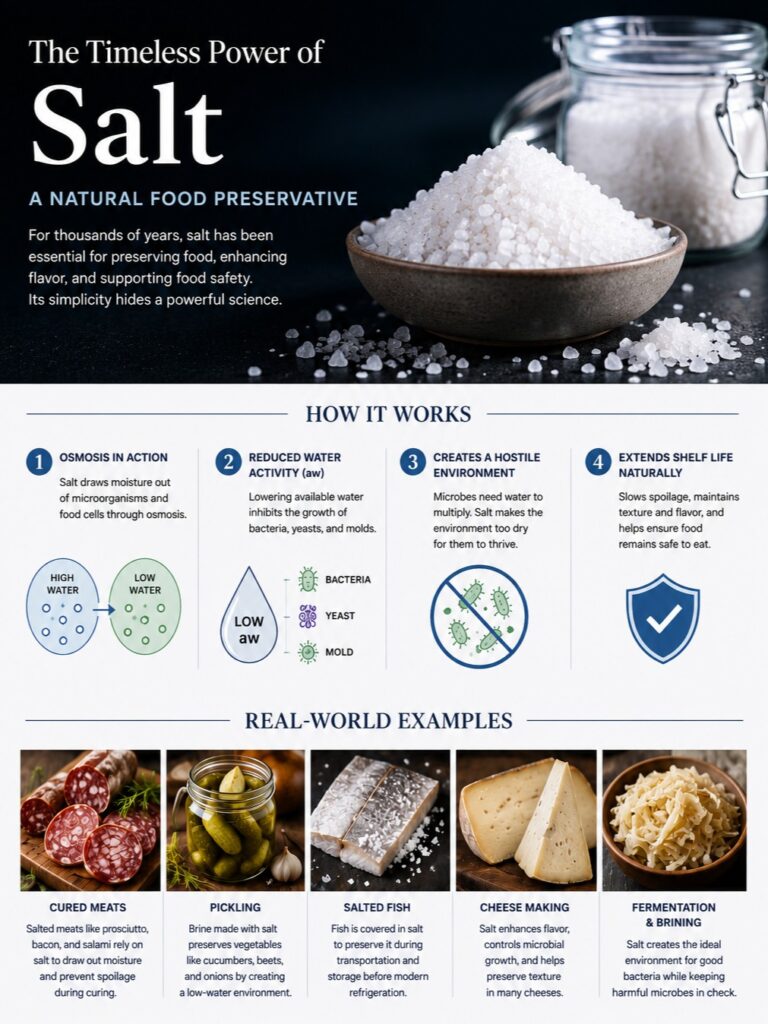
The Salt-Curing Trap and Managing Nitrite Smear
While heavy sodium levels enhance rich beef flavors, improper injection chemistry can completely ruin a championship entry by accidentally curing the interior meat.
High concentrations of table salt or unbuffered soy sauce left inside raw muscle overnight turn tender beef into a spongy, ham-like texture.
Furthermore, injected liquids rich in nitrates or acid can cause nitrite smear, forming deep, muddy grey streaks or unnatural pink halos inside the flat that judges instantly penalty-score for bad presentation.
To bypass this trap, follow these critical rules:
- Mix your injection using a low-sodium beef stock base.
- Keep total salt content strictly below 1.5%.
- Add a splash of monosodium glutamate (MSG) to boost deep umami notes without destroying the brisket’s authentic, clean beefy bite.
Mistakes That Can Ruin an Injected Brisket
Injection is straightforward, but several common mistakes reduce its effectiveness.
Over-Injecting
Too much liquid creates mushy texture and leakage. More isn’t always better.
Thick Mixtures
Large herbs, cracked pepper, or chunky ingredients clog needles quickly. Keep mixtures smooth.
Uneven Distribution
Clusters of injection points create wet pockets while other sections stay dry. Aim for even coverage.
Injecting Too Close to the Surface
Surface leaks waste valuable moisture. Inject deeper into the muscle whenever possible.
Ignoring Food Safety
Always refrigerate injected briskets promptly. Sanitize equipment thoroughly before and after use. Food safety isn’t optional.
Does Injection Affect Bark Formation?
A common concern is whether injected brisket develops weaker bark. The short answer? Not necessarily. Excess liquid sitting on the exterior can delay bark formation.
Internal moisture generally doesn’t. Pat the brisket dry before seasoning. Allow surface moisture to evaporate. Then apply your rub normally.
Dry outside. Moist inside. That’s the sweet spot.
Best Practices Used by Championship Pitmasters
Small details often separate good brisket from unforgettable brisket.
Many successful teams consistently follow these habits:
- Inject the flat more generously than the point.
- Keep injection mixtures refrigerated until use.
- Use filtered liquids to prevent clogging.
- Maintain identical injection patterns from brisket to brisket.
- Record every cook in a barbecue log.
The last tip may sound boring. It also wins championships. Memory gets fuzzy. Written notes don’t.
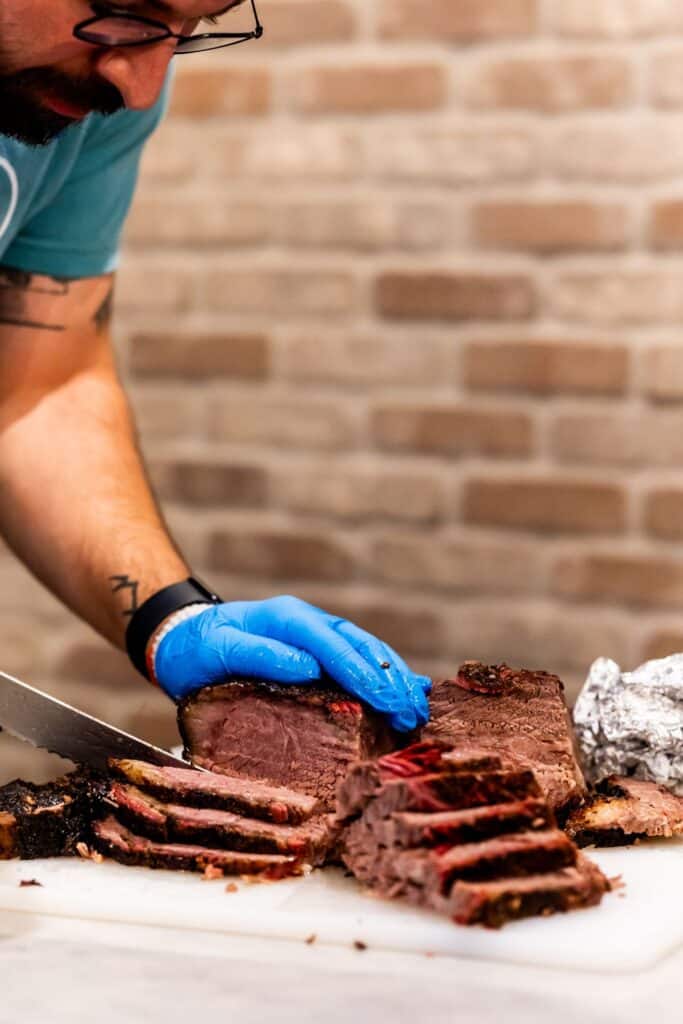
The Trophy Table Mindset: Why Details Drive Championship Barbecue
Winning competition briskets rarely come down to one secret ingredient or one magical technique.
Success is built from dozens of smart decisions that work together – careful trimming, balanced seasoning, steady fire management, proper wrapping, patient resting, and consistent slicing.
Injection simply gives those efforts a stronger foundation.
Done correctly, it helps protect the lean flat, improves internal moisture, enhances beef flavor, and delivers the consistency judges expect from championship barbecue.
It doesn’t replace craftsmanship, but it does make that craftsmanship more repeatable, especially when cooking multiple briskets under pressure.
Perhaps the biggest lesson is that injection isn’t about shortcuts. It’s about preparation. Every experienced pitmaster knows barbecue is won long before the first slice hits the cutting board.
The small details – the ones many people overlook – often separate a respectable brisket from one that has judges reaching for a second bite.
So the next time someone insists that injections are unnecessary, just smile, tend the fire, and keep your injector handy.
Every pitmaster is entitled to an opinion, but the trophy table has a funny way of rewarding the cooks who pay attention to the details that others ignore.
Frequently Asked Questions
Do all competition teams inject briskets?
No. However, many highly successful teams rely on injections because they improve consistency across multiple cooks.
Can Prime briskets still benefit?
Absolutely. Excellent marbling helps, but the lean flat can still lose moisture during long cooks.
Should Wagyu briskets be injected?
Many cooks still inject Wagyu, although lighter formulations are often preferred because the meat already contains abundant intramuscular fat.
How long before smoking should brisket be injected?
Anywhere from four to twelve hours works well for many competition teams, allowing the liquid time to distribute through the meat.
Can injected briskets be frozen?
They can, although many pitmasters prefer cooking them fresh for the most predictable texture.
Is injection better than brining?
Not necessarily. Brining and injecting solve different problems. Injection delivers moisture and flavor quickly to thick cuts, while brining works gradually from the outside inward.
Featured image credit: ChatGPT
