
How Long Should You Rest Your Steak for Maximum Juiciness?
Resting a steak for the right amount of time is the simplest step that reliably improves juiciness and texture, and most home cooks can master it with a stopwatch and a thermometer.
This article shows what happens inside the meat when you rest, how carryover cooking changes internal temperature, clear rule-of-thumb resting times by thickness and cut, and the best practical methods to keep crust and warmth without steaming. Many people either cut steaks too early and lose juices, or wrap them so tightly that the crust softens; this guide fixes both problems with science-backed timing and step-by-step tactics.
You’ll find quick lists for common mistakes to avoid, concise per-inch resting rules, three helpful comparison tables, and recommended tools to make resting predictable and repeatable. Throughout, related concepts such as muscle fibers, juice redistribution, carryover cooking, and useful tools like a meat thermometer are woven into clear action steps so you can serve a juicier steak every time.
Why Is Resting Steak Important for Juiciness and Tenderness?
Resting steak is the post-cook phase when heat-driven changes in muscle fibers relax and internal juices redistribute, producing a more tender and juicier slice. This process matters because heat forces fluids toward the center during cooking, and allowing the meat to sit lets those fluids re-equilibrate rather than spilling out when cut.
Proper resting also leverages carryover cooking so you can remove the steak slightly before target doneness and arrive exactly where you want. For cooks wanting deeper reading, BBQ Host has an authoritative explainer titled “The Science of Resting Meat” and emphasizes using a reliable meat thermometer to time pulls precisely.
Understanding these mechanisms naturally leads to specific timing rules for different thicknesses and cuts.
What Happens to Muscle Fibers and Juices During Resting?
When steak heats, proteins denature and muscle fibers contract, squeezing water toward the steak’s center; resting reverses some contraction so fibers relax and reabsorb or redistribute juices. Protein denaturation changes texture and firmness, and immediate slicing forces concentrated juices onto your plate, which makes the steak appear drier.
Allowing the meat to rest gives time for pressure differentials to normalize, so juices sit more evenly within muscle tissues rather than pooling at the surface. This juice redistribution preserves perceived moistness and tenderness, which is why even small resting windows significantly improve bite quality.
How Does Carryover Cooking Affect Steak Temperature After Grilling?
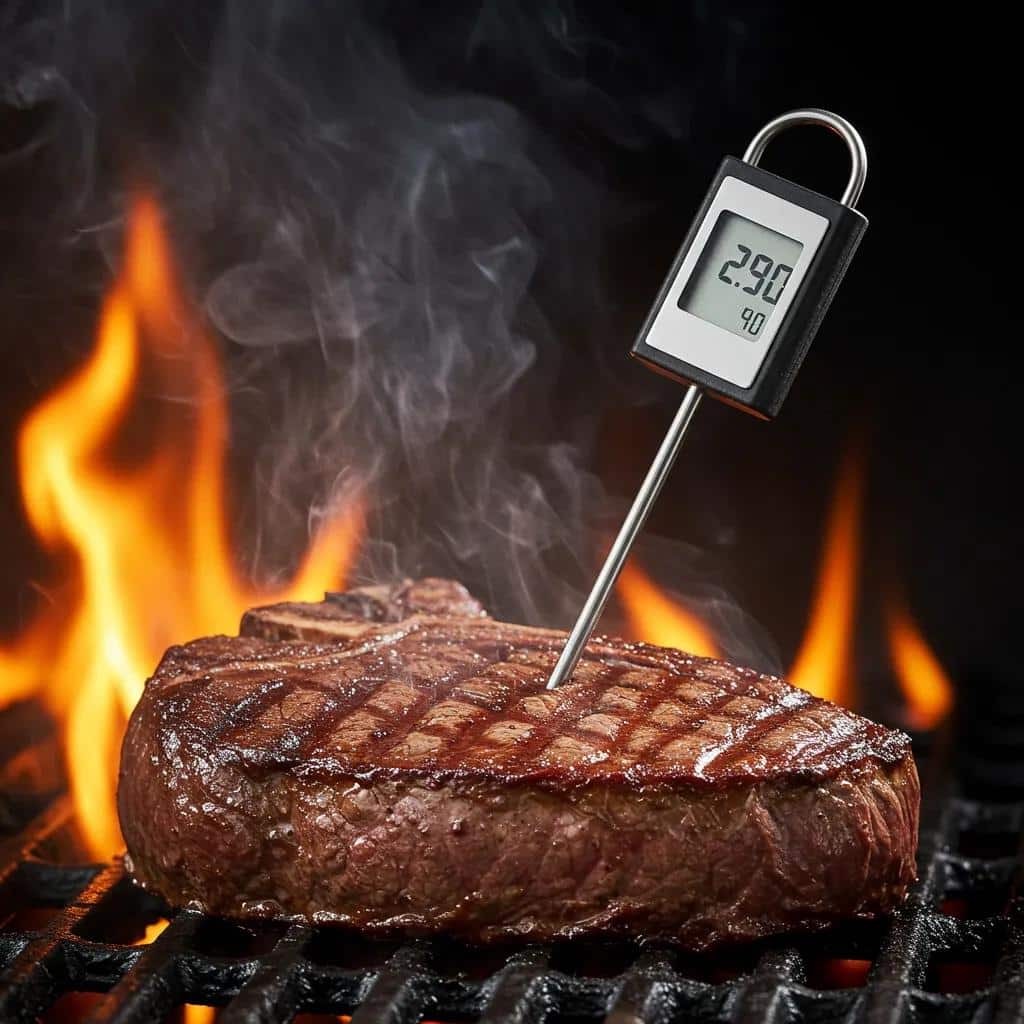
Carryover cooking is the rise in internal temperature that occurs after the steak leaves the heat source because residual heat moves inward, typically adding a few degrees to the core. Thin steaks (about 1 inch) commonly increase 2–5°F, while thick cuts and roasts can climb 10–15°F, so you should plan to remove steak slightly under target temperature to compensate.
Using this knowledge lets you time the rest so final doneness falls within your desired range without overcooking. Combining carryover expectations with resting time is the key to hitting exact doneness while still allowing juices to redistribute.
How Long Should You Let Your Steak Rest for Best Results?
Rest time depends on thickness and cut, but the simplest rule is short steaks need short rests and thicker pieces need longer rests to allow full temperature equalization and juice redistribution. A practical per-inch rule and examples help you decide quickly at the grill or pan. Below are compact rules and a quick reference table that you can use while cooking.
Steak resting quick rules:
- 1-inch steaks: Rest 5–7 minutes after cooking to reach even temperature and redistribute juices.
- 1.5–2-inch steaks: Rest 7–10 minutes to account for greater carryover and thicker muscle mass.
- Roasts or large cuts: Rest 15–20 minutes or more; larger mass needs more time for internal equilibrium.
These rules give a predictable baseline that you can adjust slightly for doneness preference and carryover cooking expectations.
What Are the General Resting Time Rules for Different Steak Thicknesses?
Use thickness as your main guide: thinner steaks need only minutes while thick steaks need more time because heat and juices travel inward more slowly. The per-inch rule above is easy to remember and applies to most single steaks; it also complements the “remove a few degrees early” approach tied to carryover cooking.
When timing, rest on a warm plate or cutting board and monitor internal temperature with a thermometer if precision is important. These simple practices make timing repeatable and reduce guesswork at service.
How Do Resting Times Vary by Steak Cut Like Ribeye or Filet Mignon?
Marbling, fat content, and muscle structure influence how long a cut benefits from resting: heavily marbled cuts like ribeye hold more internal fat and can tolerate slightly shorter rests without drying out, while leaner cuts such as filet mignon may show benefit from precise timing and gentler handling.
Roasts and whole-muscle cuts require longer rests because they have greater thermal mass and sustain more significant carryover. Adjust rests modestly by cut: more marbling means juices are retained more readily, so the goal is balancing warmth and moisture without over-steaming the exterior.
What Is the Best Way to Rest Steak for Maximum Juiciness?
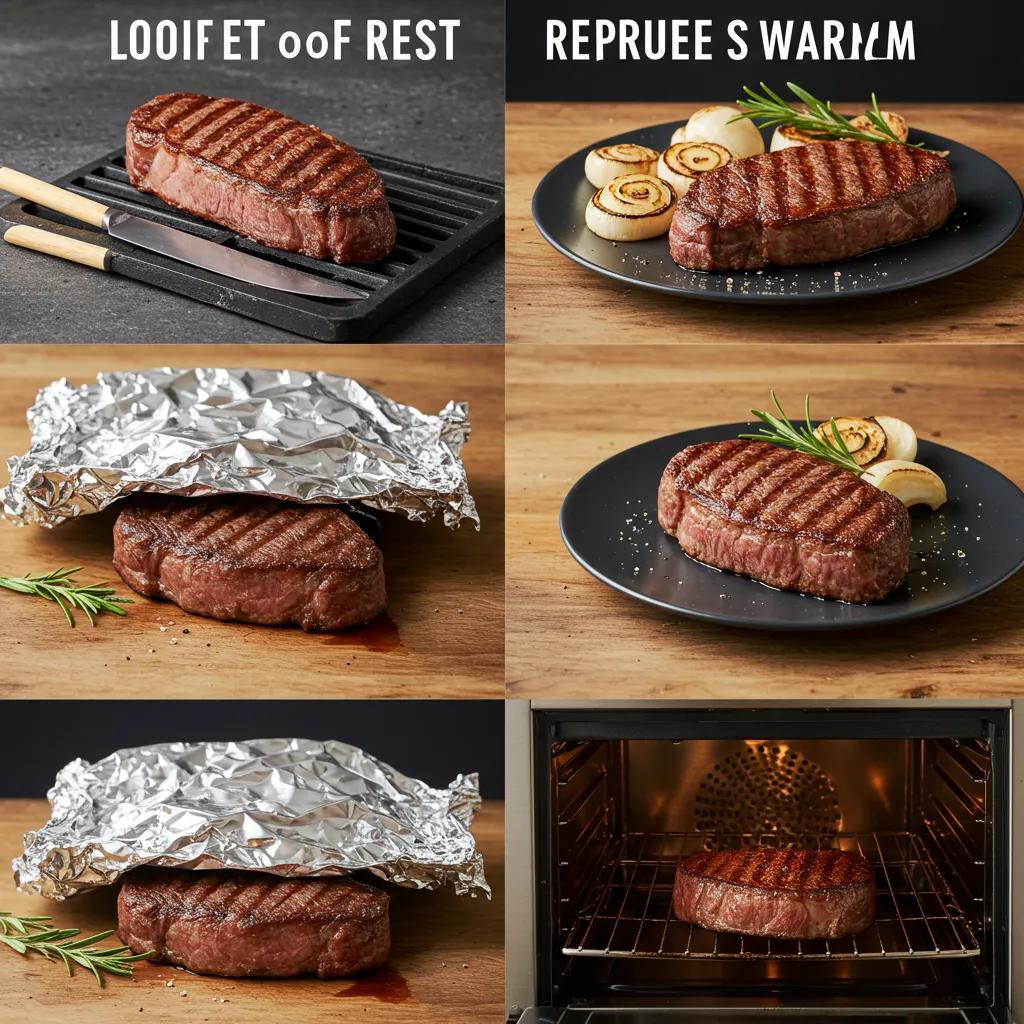
The best resting methods preserve crust texture while keeping internal temperature stable and allowing juices to redistribute; common approaches include a loose foil tent, resting uncovered on a warm plate, or a brief rest inside an off-heat oven for thicker cuts. Choose the method that matches the cut and your crust priorities, and always avoid tight wrapping that traps steam.
Use a meat thermometer, a proper cutting board, and a light foil tent when needed to control warmth without condensing steam. BBQ Host’s equipment guides recommend thermometers and cutting boards that make this step consistent and repeatable for home cooks.
Practical steps to rest steak:
- Tent loosely with foil: Create an airy tent to preserve warmth without steaming the crust.
- Use a warm cutting board or plate: Preheat a plate or board slightly to slow cooling.
- Monitor internal temp: Check the steak with a thermometer to guide timing and doneness.
Should You Cover Steak with Foil or Rest It Uncovered?
A loose foil tent keeps meat warm and reduces heat loss while minimizing steam buildup that would soften a crust, whereas leaving steak uncovered preserves the sear but allows faster cooling. Use a loose tent for thicker cuts or when serving will be delayed a few minutes, and choose uncovered rest for delicate crusts that must stay crisp at service.
The correct approach depends on your priority: maximum warmth versus maximum crust integrity. These trade-offs inform the rest method you choose for each cook.
How Can You Keep Steak Warm While Resting?
To retain heat without steaming the surface, preheat the plate or cutting board, use a light foil tent with ventilation, or for larger cuts employ an insulated cooler method to hold temperature gently. Avoid sealing the steak tightly in foil or plastic, because trapped steam negates the sear and softens texture.
Measure internal temperature periodically to ensure you don’t overshoot desired doneness during carryover. These low-effort tactics keep steaks warm and juicy while protecting the crust.
What Common Mistakes Should You Avoid When Resting Steak?
Resting mistakes are common but easily fixed: cutting too soon, wrapping too tightly, and ignoring carryover cooking lead to lost juices or softened crust. Recognizing these pitfalls and applying simple corrections ensures your steak maintains both juiciness and texture. The short lists and the table below highlight typical errors, consequences, and fixes so you can correct habits at the grill.
Common resting mistakes:
- Cutting immediately: This releases concentrated juices and dries the slice.
- Tight wrapping: Trapped steam softens the crust and alters texture.
- Over-resting large steaks without insulation: The meat cools and firms up excessively.
What Happens If You Cut Steak Too Soon or Rest It Too Long?
Cutting too soon forces hot juices out of contracting muscle fibers, producing a drier final bite and a pool of juices on the cutting board rather than within the slices. Conversely, resting too long without insulation lets the steak cool and firm, diminishing perceived juiciness and making texture less pleasant.
The solution is timing: follow per-inch rules, use a thermometer for precision, and use gentle insulation when necessary to avoid both outcomes. These adjustments create reliably juicy servings every time.
How Does Improper Covering Affect Steak Juiciness?
Wrapping steak tightly traps steam and moisture at the surface, which can soften or unglue the flavorful crust created by searing; this is especially noticeable on high-heat sears. Tight covering also changes texture and mouthfeel, turning crisp edges limp and reducing contrast between crust and interior.
The corrective measure is a loose tent that preserves heat while allowing moisture to escape, or warming plates that maintain temperature without trapping steam. Understanding this cause-effect relationship keeps both juiciness and crust intact and improves your plated presentation.
For more how-to guides, cut-specific timing charts, and unbiased equipment reviews that support precise resting—such as thermometer recommendations and grill reviews—see the steak resources and hub content produced by BBQ Host, which focus on practical, expert guidance for home grillers.
