
One undeniable experience belongs exclusively to the backyard cook.
You walk outside on a crisp Saturday afternoon, and the air hits you. It is not just the smell of autumn or spring; it is the unmistakable, rich aroma of wood smoke drifting over a fence.
Your mouth waters instantly. Your neighbor is grilling, and you know, without even looking, that they did not just flip a switch on a shiny stainless-steel appliance.
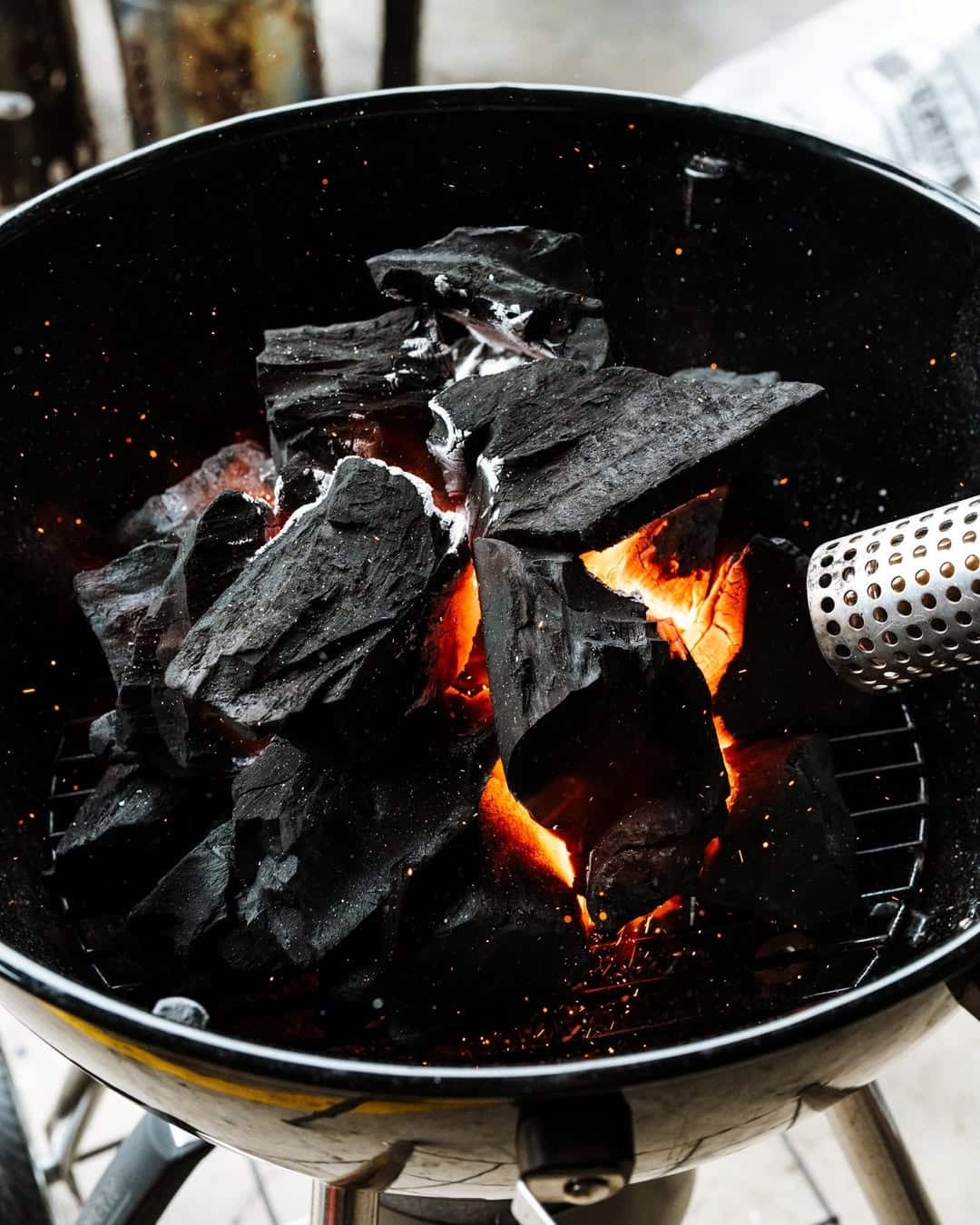
They built a fire.
For decades, the great backyard debate has raged on.
In one corner, you have the push-button convenience of gas. It is fast, it is predictable, and it lets you cook a chicken breast with the same emotional detachment you use to operate a microwave.
In the other corner, you have charcoal. It is primal, it requires patience, and it leaves you smelling like a campfire.
Many people choose gas because they want speed. They want to come home from work on a Tuesday, click an igniter, and have burgers on the table in twenty minutes. That is completely understandable. But let us be honest with ourselves.
While gas wins the battle of convenience, charcoal completely dominates the war on flavor.
This isn’t just a matter of nostalgia or stubborn tradition. As a pitmaster who has spent years behind both styles of grills, I can tell you that the superiority of charcoal is rooted in pure science.
The flavor difference isn’t an illusion created by the romance of the flame. It is the result of distinct chemical reactions, thermal dynamics, and vaporization processes that a gas burner simply cannot replicate.
If you want to understand why a charcoal-grilled steak tastes like a luxury meal while a gas-grilled steak tastes like it was cooked in a very hot kitchen, you have to look under the hood.
Let us dive deep into the fascinating, delicious science of why charcoal remains the undisputed heavyweight champion of outdoor cooking.
The Chemistry of Smoke: What Gas is Missing
To understand why charcoal tastes better, we have to look at what happens at a microscopic level when fuel burns. When you open the valve on a propane tank, you are releasing a gas made of carbon and hydrogen atoms (C3H8).
When propane ignites, it undergoes a highly efficient, clean combustion process. It breaks down almost entirely into carbon dioxide and water vapor.
This clean burn is excellent for home heating, but it is a culinary dead end. Propane gas adds absolutely nothing to the flavor of your food. It provides heat, but it is a sterile, neutral heat.
Cooking with gas is essentially the same as cooking in your indoor oven, just with a better view of your yard.
Charcoal is an entirely different beast. Charcoal is created by baking wood in an environment without oxygen. This process drives off moisture, sap, and volatile gases, leaving behind nearly pure carbon chunks.
When you ignite these chunks in your grill, you aren’t just creating heat. You are initiating a complex chemical performance.
Meet Lignin and Guaiacol
Wood is made of complex organic polymers, and one of the most important of these is lignin. Even after wood is turned into charcoal, a significant amount of this lignin structure remains.
When you burn charcoal, the combustion of these remaining wood elements releases a treasure trove of organic compounds into the air.
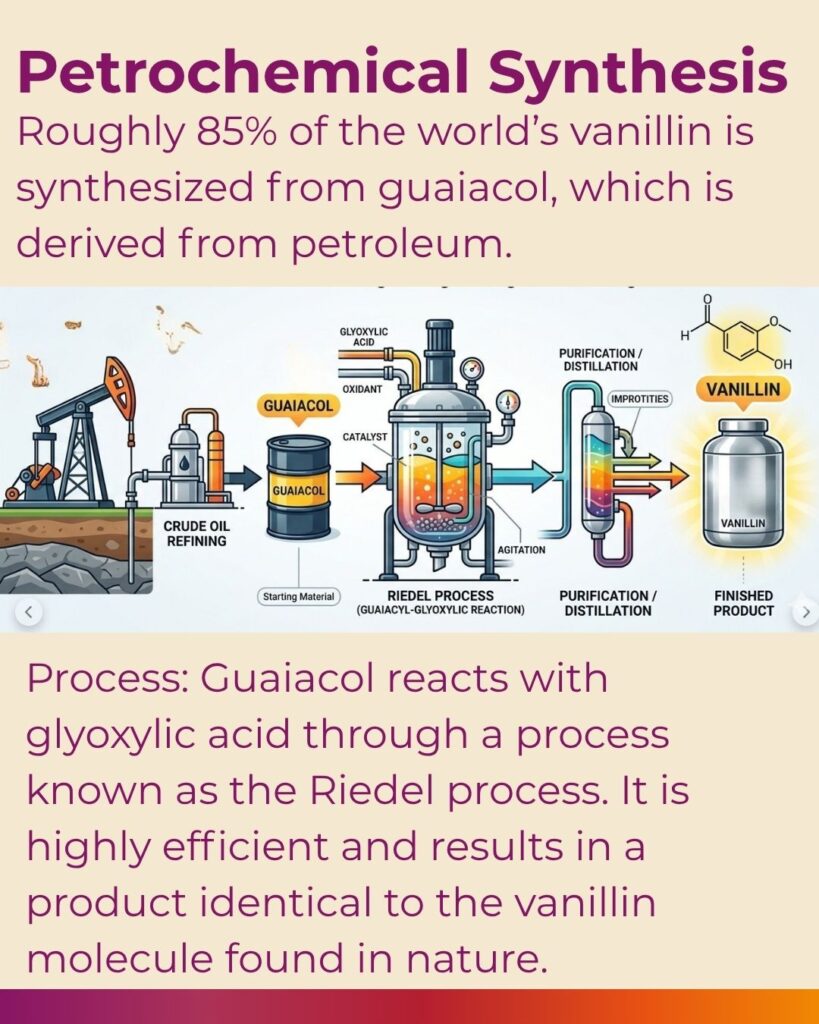
The star of this show is a chemical compound called guaiacol. If you have ever smelled a barbecue joint from three blocks away and felt your stomach growl, you were smelling guaiacol.
This specific compound is responsible for that classic, deeply desired smoky aroma and taste.
As your food cooks over glowing coals, a steady stream of guaiacol and other phenols rises from the fire.
These compounds stick to the moist surface of your meat, embedding themselves into the outer layers. This creates a complex, savory flavor profile that mimics the depth of a slow-smoked barbecue.
Gas grills simply cannot compete with this process:
- No Building Blocks: Gas grills cannot produce guaiacol because they lack the organic wood elements required to create flavor molecules.
- Sterile Results: When you cook a steak over gas, you miss out on the entire spectrum of wood-fired chemistry.
- The Bottom Line: You are feeding your family heat, but charcoal feeds them flavor.
Vaporization: How Drippings Create Flavor
There is a common misconception that all charcoal flavor comes directly from the wood itself. While the smoke compounds play a massive role, there is an even bigger flavor engine at work beneath the grates.
It is the magic of the flavor flare-up, and it is charcoal’s true superpower.
Think about what happens when a thick, well-marbled ribeye steak begins to warm up on a grill grate. The fat renders, the juices loosen, and marinades begin to run. This liquid has nowhere to go but down.
When those drops of fat, sugars, and proteins fall from the meat, they plummet toward the heat source. On a charcoal grill, they land directly onto a bed of white-hot, glowing coals resting at temperatures well above 700°F.
The moment that fat hits the scorching carbon surface, it doesn’t just burn; it instantly vaporizes. This vaporization process breaks the fat down into a rich, aerosolized mist packed with concentrated flavor.
Here is how this process upgrades your meal:
- Flavor Recycling: The rendering fat and juices drip down, hitting the white-hot charcoal. This causes instantaneous vaporization, sending a rich mist right back up into the cooking chamber.
- The Flavor Cloud: The rising mist completely envelops the meat in a dense cloud of its own vaporized essence, trapping flavors that would otherwise escape.
- The Final Crust: This continuous cycle coats the exterior of the food in a rich, complex flavor crust that tastes intensely savory, effectively recycling the meat’s own juices into seasoning.

The Gas Grill Compromise
Gas grill manufacturers know this vaporization process is the secret to great barbecue. Because they know gas burners cannot do this on their own, they have spent decades trying to engineer a workaround.
If you look inside a modern gas grill, you will see metal tents, porcelain plates, or lava rocks hovering directly over the burner tubes.
Marketing departments love to give these components fancy names like “flavorizer bars.” The goal is to catch the drippings and vaporize them before they clog the gas jets.
While it is a noble attempt, it simply does not work as well:
- Poor Heat Retention: Metal bars do not hold heat the way solid carbon charcoal does.
- Grease Pooling: When cold fat hits a metal tent, it often cools the metal down temporarily, causing grease to pool, slide off, and run down into a grease tray.
- Acrid Flames: When the grease does finally catch fire on a gas grill, it often creates sustained, acrid flames. This dirty yellow smoke coats your food in a bitter, soot-like taste rather than a clean, vaporized finish.
Charcoal handles drippings with ease, turning potential grease fires into pure culinary gold.
The Heat Factor: Searing and the Maillard Reaction
Great flavor isn’t just about what you smell; it is also about the texture and crust on the surface of your food. To get that perfect, steakhouse-style crust, you need an incredible amount of raw heat.
This brings us to the physics of grilling, where charcoal holds a massive thermal advantage.
Fire scientists divide heat into different categories, but for backyard cooks, the two most important are convective heat and radiant heat:
- Convective Heat (Gas Grills): Standard gas grills rely heavily on convective heat. The gas burners heat up the air inside the cook box, and that hot air moves around your food like a convection oven. While hot air will eventually cook your food, it does so slowly, often drying out the exterior layers of meat before the surface can develop a deep, dark sear.
- Radiant Heat (Charcoal Grills): Charcoal is an absolute beast when it comes to radiant heat, specifically infrared heat. When a bed of charcoal turns ash-white, it emits intense, direct thermal radiation. This energy travels in straight lines from the coals straight into your food, heating the surface of the meat almost instantly.
The Maillard Reaction Amplified
This intense radiant energy is exactly what you need to trigger the Maillard reaction. Named after the French chemist Louis-Camille Maillard, this is the chemical reaction between amino acids and reducing sugars that happens when food browns.
It is what makes the crust of a loaf of bread taste better than the dough, and it is what makes a seared steak taste infinitely better than a boiled one.
The Maillard reaction thrives at high temperatures. While it begins around 280°F, it goes into overdrive as temperatures climb. The performance difference between the two grill types is staggering:
- Gas Grills (Max ~500°F to 550°F): Most residential gas grills top out here. They can cook a burger perfectly fine, but they struggle to create that deep, uniform, mahogany crust across the entire surface of a steak.
- Charcoal Grills (Max ~700°F to 800°F): A well-arranged pile of hardwood lump charcoal easily reaches these extreme temperatures right at the grate level.
This extreme heat creates a rapid, intense sear. It locks in juices by cooking the outside so quickly that the interior remains tender and pink.
The result is a texturally perfect bite with a deeply caramelized flavor profile that a gas grill simply cannot match.
Types of Charcoal and Their Unique Flavor Profiles
One of the most exciting aspects of cooking with charcoal is that your fuel acts as an ingredient. When you cook with gas, your fuel is always the same. Propane is propane.
With charcoal, you have a spice cabinet of options that allows you to customize the flavor of every single meal. The charcoal universe is broadly divided into two main categories, and each has its own distinct personality.
Hardwood Lump Charcoal
If you are a flavor purist, lump charcoal is your holy grail. This fuel is made by taking actual pieces of forest timber – like oak, hickory, maple, or mesquite – and charring them down into raw carbon chunks.
When you look into a bag of lump charcoal, you can still see the natural shapes of the tree branches and logs.
Lump charcoal burns incredibly hot, leaves behind very little ash, and responds beautifully to oxygen adjustments. Most importantly, because it is pure wood, it retains a high concentration of natural aromatics.
- Oak and Hickory Lump: These provide a robust, traditional backyard flavor that pairs perfectly with beef brisket, beef ribs, and thick steaks.
- Fruitwood Lump (Cherry or Apple): These offer a milder, sweeter smoke profile that is incredible for pork chops, chicken wings, and delicate fish.
Charcoal Briquettes
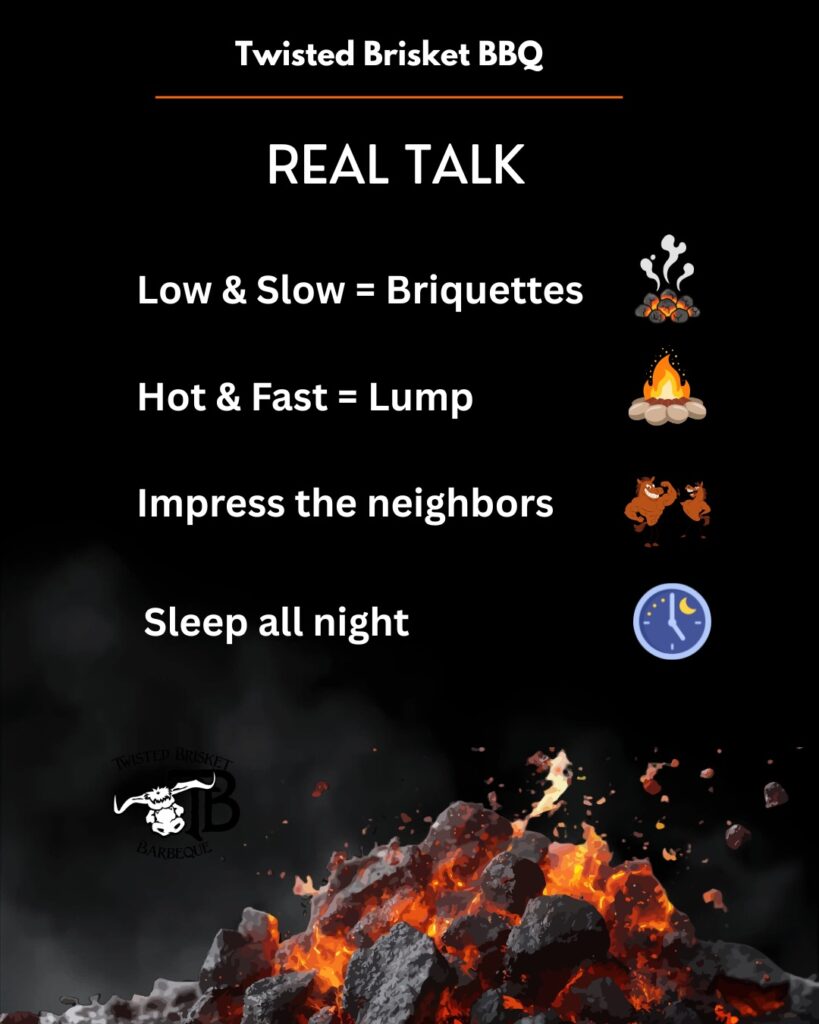
Briquettes are the iconic, pillow-shaped blocks that have defined American tailgating for generations. They are made by compressing sawdust, wood chips, and natural binding agents into uniform pieces.
While some barbecue snobs look down on briquettes, they are an incredible tool for the backyard chef. Because they are uniform in size and shape, they burn at a highly predictable, steady temperature for a long period of time.
This makes them ideal for low-and-slow cooking, like smoking a pork shoulder for twelve hours.
Modern, high-quality briquettes use clean, natural binders that offer a wonderfully consistent, classic smoky flavor. They provide a steady canvas of heat, allowing you to easily customize your cook.
Enhancing the Canvas with Wood Chunks
Because charcoal is a wood-based fuel, it acts as a perfect foundation for adding raw wood chunks. If you want to elevate your flavor game even further, you can drop a few chunks of seasoned applewood or hickory directly onto your lit coals.
The charcoal provides the steady, intense heat needed to keep the grill running, while the raw wood chunks slowly smolder, releasing a thick stream of flavorful smoke.
This level of customization is completely impossible on a standard gas grill without buying awkward aftermarket smoker boxes that rarely produce enough smoke to make a difference.
The Counter-Argument: When Does Gas Actually Make Sense?
To be fair and objective, we have to acknowledge that gas grills did not become popular by accident. They solved a real problem for the modern, busy homeowner. If we are looking at the argument strictly through the lens of logistics, gas has some undeniable advantages.
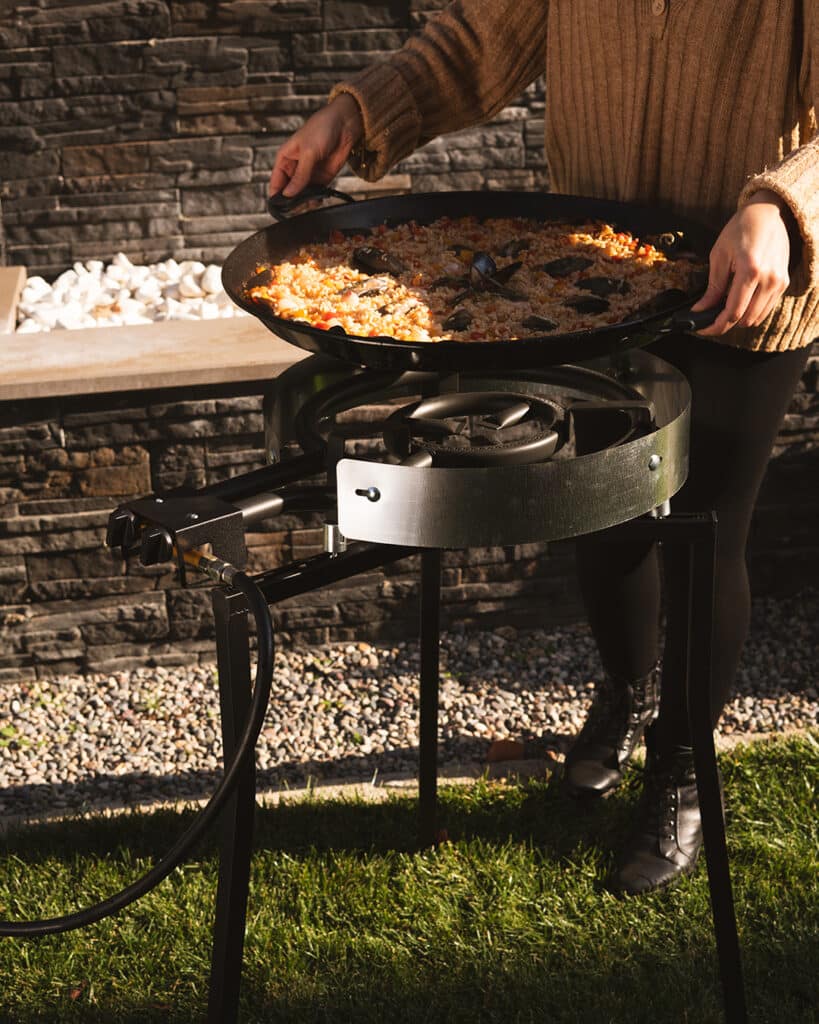
Gas grills offer unparalleled convenience and speed. You can walk outside in your work clothes, press a button, and be cooking within five minutes. There is no waiting for coals to ash over, no ash disposal to worry about, and no charcoal dust on your hands.
Gas also gives you precise, effortless temperature control. If your grill is running too hot, you simply turn a dial to the left. If it is too cold, you turn it to the right. It is as simple as operating a kitchen stove.
If your primary goal is to cook a quick meal on a frantic Monday night between soccer practice and homework, a gas grill is a fantastic tool. But it is vital to understand what you are trading away for that convenience. You are choosing speed over taste.
Gas is highly efficient for utilitarian cooking, but it remains a profound compromise on flavor for anyone who views cooking as a joyful, culinary experience.
How to Maximize Charcoal Flavor: Pro Tips
If you are ready to embrace the charcoal lifestyle, you need to know how to handle the fire correctly.
Managing a charcoal fire is an art form, but once you master a few basic principles, you can unlock flavors that will make you the envy of your neighborhood.
1. Ditch the Lighter Fluid
If there is one cardinal sin in the world of outdoor cooking, it is squirting half a bottle of petroleum-based lighter fluid over your charcoal.
Lighter fluid does not burn off completely. It vaporizes and coats the inside of your grill, and more importantly, it coats your food. If your burgers taste like a gas station looks, lighter fluid is the culprit.
Instead, invest in a chimney starter. It is a simple, inexpensive metal cylinder that uses a couple of pieces of newspaper or a natural wax cube to light your charcoal naturally using a chimney effect.
It is faster than lighter fluid, completely free of chemicals, and ensures that the only thing you taste is pure wood smoke.
- Place Newspaper at Bottom
- Fill Top with Charcoal
- Light Paper
- Perfect Coals in 15 Mins
2. Master Two-Zone Cooking
The biggest mistake amateur charcoal cooks make is dumping a flat, even layer of hot coals across the entire bottom of the grill. This creates a wall of direct heat that burns the outside of your food before the inside can cook through.
Instead, build a two-zone fire. Push all your lit charcoal to one side of the grill, leaving the other side completely empty.
- The Direct Zone: This is your searing station. Use the intense radiant heat directly over the coals to brown your steaks, crisp up chicken skin, or put a beautiful crust on burgers.
- The Indirect Zone: This is your roasting oven. Place thicker cuts of meat on the empty side of the grill and close the lid. The heat will circulate around the food gently, baking it thoroughly while allowing it to absorb maximum smoke flavor without burning.
3. Learn to Read the Smoke
Not all smoke is created equal. When you first light your charcoal, you will see thick, billowing white smoke. This is “dirty” smoke, packed with unburned volatile compounds and moisture.
If you put your food over the grill right now, it will taste bitter and acrid.
Wait for the smoke to settle down. You are looking for what pitmasters call “thin, blue smoke.” It is almost invisible to the eye, appearing as a gentle, shimmering blue haze dancing out of the grill vents.
This smoke is clean, sweet, and packed with the perfect balance of guaiacol. When you see thin blue smoke, it is time to cook.
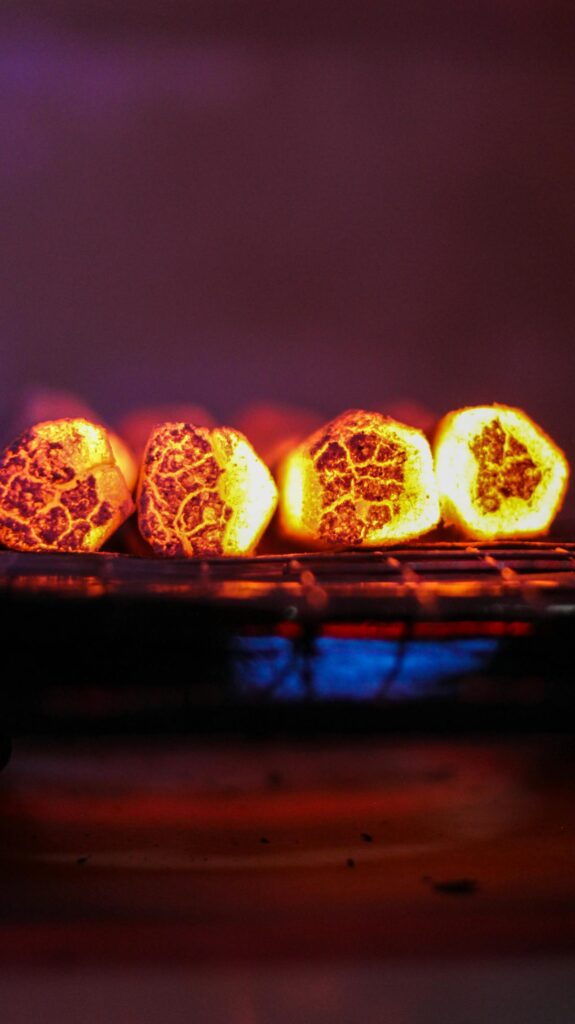
More Than Just Heat: The Magic of Charcoal Cooking
At the end of the day, grilling is about more than just applying heat to protein. It is an experience.
It is a chance to step away from screens, slow down, and connect with a method of cooking that stretches back to the dawn of human history.
While gas grills certainly offer speed and convenience for busy weeknights, they ultimately strip the soul out of outdoor cooking.
They replace the rich chemistry of burning wood, the magic of vaporized drippings, and the roaring power of radiant heat with a sterile, neutral blue flame.
Charcoal demands a little more of your time, but it rewards you with an undeniable, deeply satisfying depth of flavor that simply cannot be faked. The next time you have a free afternoon, resist the temptation to take the easy way out.
Skip the buttons, put away the dials, and light a real fire. Your tastebuds will thank you.
Frequently Asked Questions
Does charcoal actually taste different than gas?
Yes, absolutely. It is pure chemistry. Charcoal is made from wood, which releases organic compounds like guaiacol when burned, infusing your food with an authentic, smoky aroma and taste. Gas grills burn propane cleanly, which provides heat but adds zero flavor.
Is lump charcoal better than charcoal briquettes?
It depends on what you are cooking. Hardwood lump charcoal burns hotter and cleaner, making it the flavor purist’s choice for searing steaks.
Briquettes burn at a highly predictable, steady temperature for a long time, making them ideal for low-and-slow smoking projects like pork shoulders or ribs.
How do I get that smoky flavor without burning my food?
The secret is two-zone cooking. Push your hot coals to one side of the grill to create a “direct heat” zone for quick searing, and leave the other side empty for an “indirect heat” zone.
Roast thicker meats on the indirect side with the lid closed to let them absorb maximum smoke flavor safely.
Why does my food sometimes taste like lighter fluid?
Because lighter fluid leaves behind chemical residues that coat the inside of your grill and your food. To fix this, ditch the fluid entirely and use a chimney starter.
It uses a couple of sheets of newspaper or natural wax cubes to light your charcoal cleanly, safely, and naturally.
What is “thin, blue smoke” and why does it matter?
Thin, blue smoke is nearly invisible and represents a clean, perfectly burning fire that delivers a sweet, pleasant BBQ flavor.
Thick, billowing white smoke is “dirty” and packed with bitter, unburned compounds that will make your food taste acrid. Always wait for the smoke to turn thin and blue before putting your meat on the grates.
Featured image credit: @firebrandbbq
