
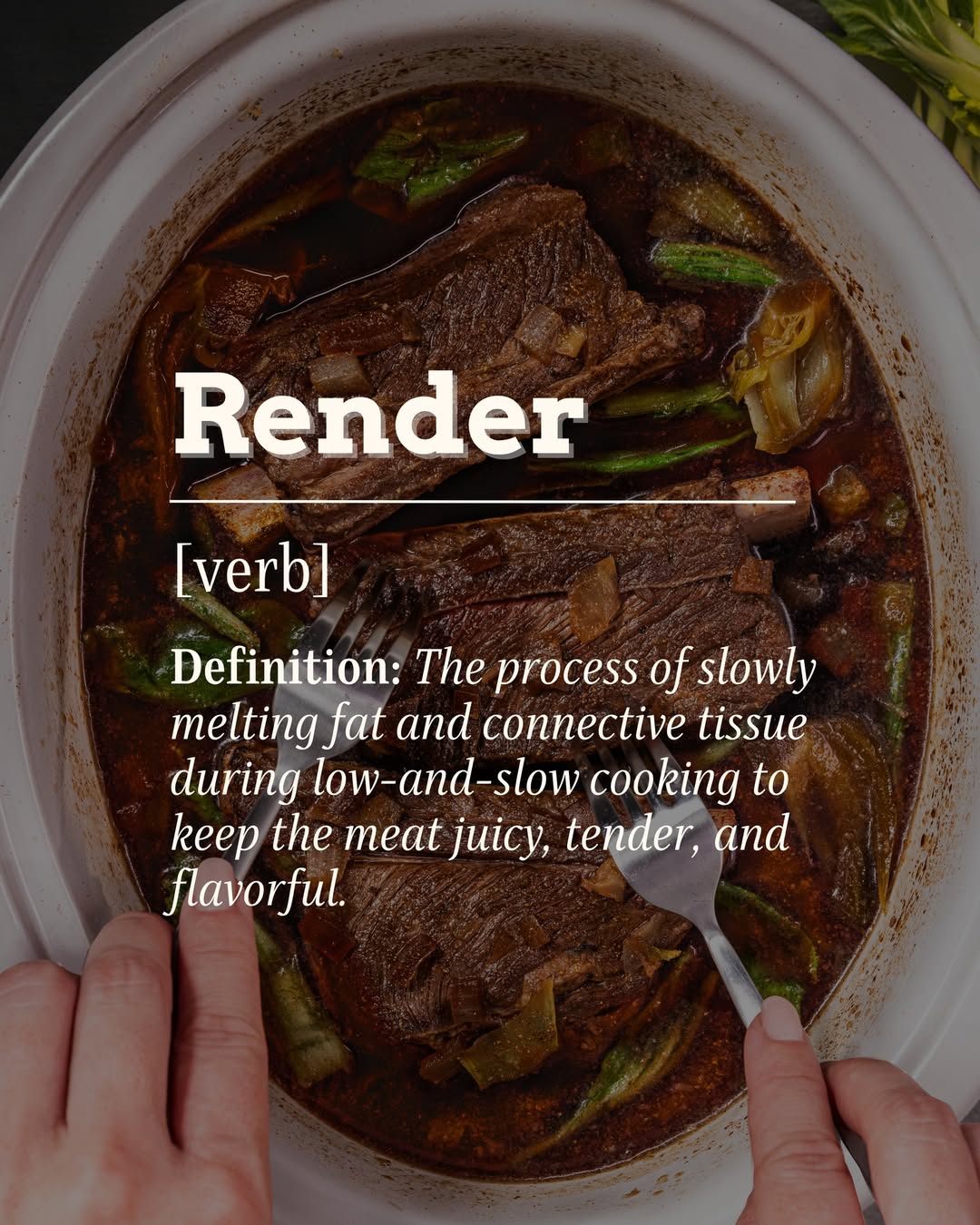
At four o’clock in the morning, the stars are still out and the air is crisp. While the rest of the neighborhood is fast asleep, you are standing alone in the backyard under a rising halo of wood smoke.
You have got a massive, twelve-pound beef brisket resting on the cutting board, looking about as tough and uninviting as a leather boot.
- The High-Heat Disaster: If you were to slice off a steak right now and throw it onto a searing hot grill, you would end up with something completely unchewable. Your jaw would get a workout, your guests would leave, and you would be banned from hosting the next block party.
- The Low-and-Slow Miracle: Yet, twelve hours from now, after hanging out in a smoky cooker at a gentle, steady heat, that exact same stubborn slab of meat will stretch, bend, and pull apart with the gentle tug of two fingers. It will be so incredibly juicy and packed with flavor that it defies logic.
How does a piece of meat make the journey from literal shoe leather to culinary gold?
The answer is not magic, though it certainly feels like it when you take that first bite. The answer is pure, unadulterated biological alchemy. Low-and-slow cooking is a precise, controlled series of chemical reactions that completely reorganizes the microscopic architecture of meat:
- Unlocking a Hidden Timeline: By slowing down the process, we give the muscle fibers, fats, and connective tissues time to transform.
- Forcing Cooperation: We compel these stubborn elements to work together in ways they never would on a high-heat grill.
To truly master the pit, you have to look past the smoke and understand exactly what is happening beneath the surface. Let us take a trip inside the meat to see how heat, time, and patience create the ultimate barbecue.
Anatomy of Meat: The Raw Materials
Before we fire up the logs, we need to know what we are actually putting into the cooker.
To the untrained eye, a raw pork shoulder or beef brisket is just a big hunk of red tissue. But to a pitmaster operating as a backyard scientist, that meat is a complex, finely tuned machine made of three distinct components:
- Muscle Fibers: Think of these as a massive bundle of microscopic, water-filled straws made primarily of two proteins: myosin and actin. Because raw meat is roughly 75% water, our number one goal throughout the cook is to keep as much of that liquid trapped inside these straws as possible.
- Connective Tissue (The Antagonist): This is the structural netting that keeps the muscle fibers bound together. The main component here is collagen, an incredibly tough, triple-helix protein that behaves exactly like structural steel cables. If you try to cook it quickly, it locks down tight and turns the meat into a rubber ball.
- Intramuscular Fat (The Hero): Also affectionately known as marbling, these are the beautiful, delicate white flecks woven directly into the muscle tissue. This fat holds the keys to flavor, aroma, and a rich texture.
When you look at a raw cut, you are looking at a battleground. The muscle fibers want to hold water, the collagen wants to squeeze everything to death, and the fat is waiting for its cue to save the day.
The secret weapon that determines who wins this battle is the rate at which we apply heat.
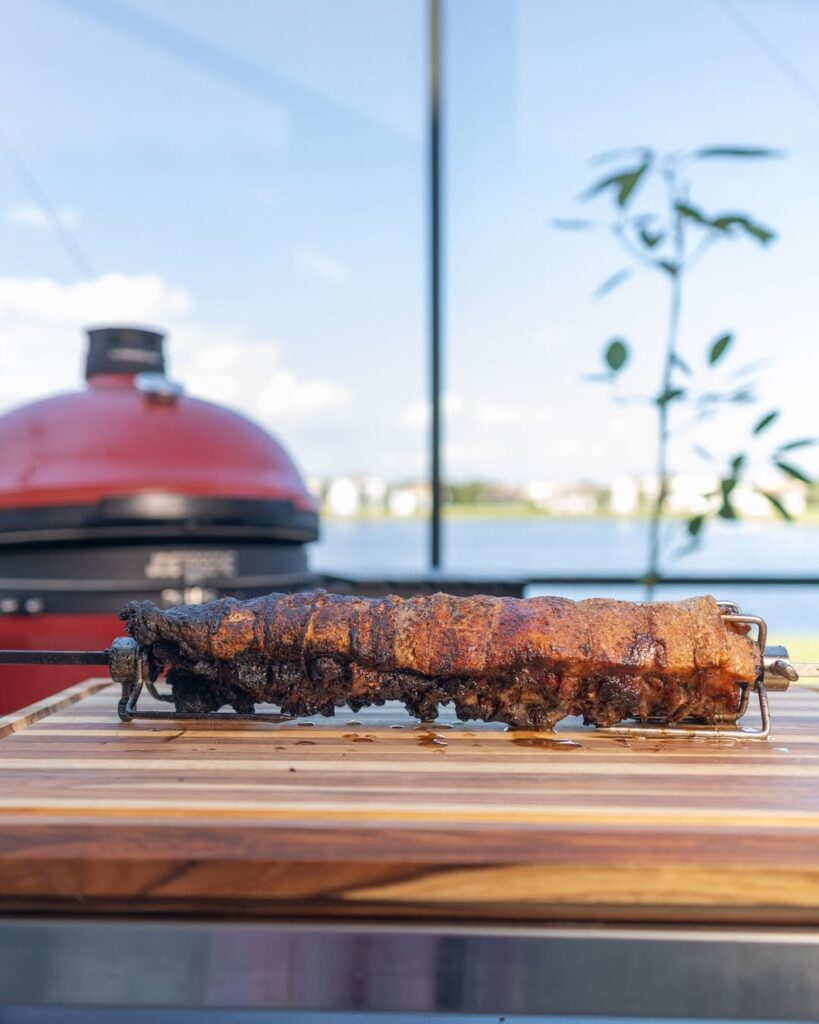
Phase 1: The Tightening (100ºF to 140ºF)
As your pit settles into its sweet spot, the internal temperature of the meat slowly begins to climb.
For the first hour or two, things seem pretty quiet from the outside, but at a microscopic level, a violent restructuring known as protein denaturation is already underway:
- Protein Uncoiling: Heat injects energy into the tightly wound molecular springs of the proteins, causing them to vibrate until their internal bonds snap, uncoil, and clump together (coagulation).
- Myosin Contraction: The protein myosin succumbs to heat right around 120ºF, causing the muscle fibers to shrink lengthwise. Imagine a row of microscopic sponges being compressed, squeezing out the water trapped inside.
- Color Shift: Around the same time, the meat changes from a vibrant red to a pinkish-tan hue. This happens because myoglobin – the iron-rich protein that stores oxygen and colors the muscle – is changing its shape under the rising heat.
Why High Heat Fails: If you throw a brisket onto a screaming hot grill, the temperature jumps through this window in minutes. The myosin contracts violently, instantly wringing out the internal water like a dry rag.
By utilizing low-and-slow cooking, we approach this threshold at a snail’s pace, giving the proteins time to gently relax and minimize initial moisture loss.
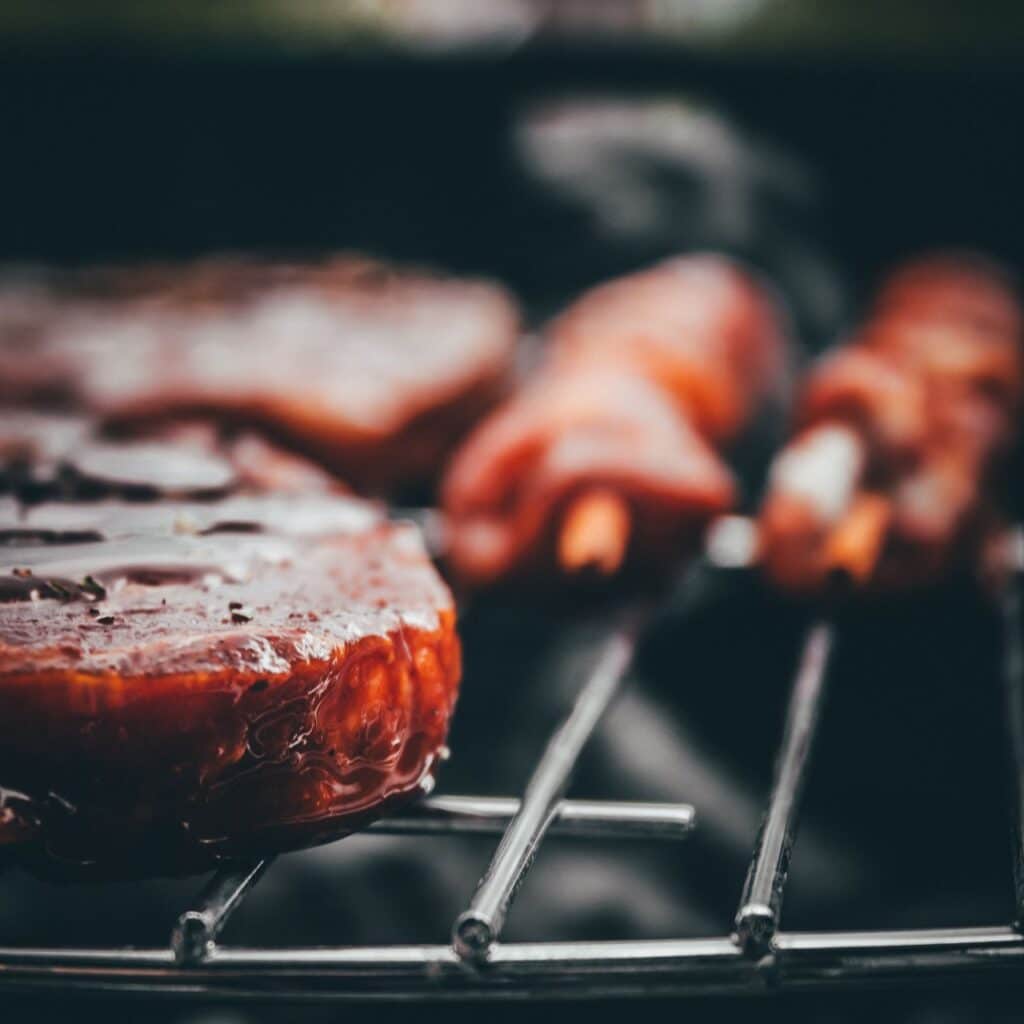
Phase 2: The Moisture Squeeze and “The Stall” (140ºF to 165ºF)
Once the internal temperature climbs past 140ºF, the second major muscle protein, actin, decides to join the party, escalating a mild warning into a full-blown crisis.
- The Widthwise Squeeze: When actin breaks down, it causes the muscle fibers to contract widthwise. Now the microscopic straws are getting significantly narrower, exerting massive pressure on the internal water and forcing it to migrate to the surface.
- The Thermodynamic Wall: Suddenly, right around 150ºF to 165ºF, the thermometer stops moving for hours. Decades of backyard myth claimed this “stall” was caused by melting fat or collagen. It isn’t. It is pure evaporative cooling.
- Thermal Equilibrium: Because the meat is literally sweating, the hot air of the cooker evaporates this surface moisture. This evaporation pulls heat away from the meat, perfectly balancing out the heating power of your smoker.
As a cook, you have two choices to beat the stall:
- Wait it Out: Let the pit slowly bake the moisture away over several hours, yielding a deeply crunchy, intensely flavorful exterior crust.
- Deploy the “Texas Crutch”: Tightly wrap the meat in aluminum foil or heavy-duty peach butcher paper. This traps the escaping moisture, completely stops evaporation, and allows the meat to smash right through the stall while conserving internal moisture.
Phase 3: The Magic of Collagen Conversion (160ºF to $180ºF)
If you wrapped your meat or patiently waited out the stall, you will eventually watch the internal temperature climb again into the zone where tough tissue turns into pure luxury.
Mathematically and physically speaking, the meat is actually quite dry right now. If you were to stop the cook at 160ºF, it would be tough and rubbery.
But between 160ºF and 180ºF, the sustained, gentle heat finally breaks down our ultimate antagonist:
- The Melting Point: The heat systematically tears apart the tight, rigid triple-helix bonds of the collagen molecules, melting the tough connective tissue down into a smooth, rich fluid called gelatin.
- A Calculation of Time: Collagen conversion cannot be rushed by blasting the meat with high heat; it requires hours of sustained exposure to unravel those tough protein chains.
- The Illusion of Juiciness: Gelatin can hold up to ten times its weight in water. It coats the tightly wound muscle fibers with a silky, rich layer of liquid. When you take a bite, your tongue does not register dry muscle strands; it registers the luxurious texture of premium gelatin.
Phase 4: Fat Rendering and Flavor Development (180ºF to $205ºF)
As the internal temperature pushes past 180ºF and heads toward the finish line, the final piece of the puzzle falls into place:
- Internal Basting: Unlike water, the delicate intramuscular fat does not evaporate. Instead, it liquefies and washes through the microscopic channels left behind by the evaporating water and dissolving collagen, carrying flavor directly to your taste buds.
- The Pull-Apart Window (201ºF to 205ºF): At the holy grail temperature of 203ºF, the structural integrity of the meat reaches a perfect tipping point. Virtually all collagen has transformed into velvety gelatin, the internal fat has completely liquefied, and the intact muscle fibers float in a decadent bath of rich moisture.
The Overcooked Danger Zone: If you let the internal temperature sail past 210ºF, the gelatin breaks down completely and loses its structural ability to hold the muscle strands together.
The fat drains out, leaving behind dry, mushy strands that crumble like sawdust. True tenderness requires structure; mush is just a mistake.
The Exterior Physics: Bark and the Smoke Ring
While wild biochemistry is happening deep inside the meat, an entirely separate set of scientific reactions is playing out on the exterior surface.
The Bark (The Maillard Reaction)
The dark, crunchy crust that forms on the outside of the meat is not burnt char. It is the result of the Maillard reaction – a complex chemical dance between amino acids and reducing sugars.
- As the meat sweats, rub ingredients (salt, pepper, spices) combine with escaping proteins and sugars.
- The warm, dry air of the cooker slowly bakes this mixture, creating a complex polymer matrix that darkens and hardens into a deeply savory crust.
The Smoke Ring (The Gaseous Illusion)
Just beneath the bark lies the badge of honor: a distinct halo of bright pink meat. While many believe it measures smoke penetration, it is actually an optical illusion caused by gaseous interactions:
- Burning wood releases nitric oxide (NO) and carbon monoxide (CO) gases, which diffuse into the outer layers of the raw meat.
- These gases tightly bind to the myoglobin before it has a chance to denature and turn brown, locking its bright pink color permanently in place.
- The heat eventually penetrates deeper, turning the center of the meat brown, but the outer edge remains frozen in its “raw” pink state. It doesn’t add flavor, but it proves your meat spent quality time in a real wood fire.
The Patience Payoff
When you finally pull that glorious hunk of meat off the cooker, wrap it up, and let it rest, take a moment to appreciate the journey it has been on.
You started the day with a cold, dense, incredibly tough piece of muscle tissue. Through the deliberate application of steady, low heat over a long period, you systematically re-engineered its molecular layout.
You gently coaxed the muscle fibers to relax, stood your ground against the stall, dissolved tough structural collagen into rich gelatin, and rendered fat into liquid gold.
Low-and-slow cooking is the ultimate testament to the idea that good things come to those who wait. You cannot rush biology, and you absolutely cannot shortcut physics.
The next time you fire up your cooker and settle in for a long, smoky day of managing the fire, remember: you are not just cooking dinner. You are a scientist in an apron, executing a flawless, beautiful microscopic transformation.
Now, grab your sharpest knife, slice into that bark, and enjoy the delicious results of your patience.
Frequently Asked Questions (FAQ)
General Concepts & Anatomy of Meat
Why does tough meat like brisket turn incredibly tender when cooked “low-and-slow”?
It comes down to biological alchemy. Low-and-slow cooking uses gentle, sustained heat over many hours to completely reorganize the microscopic architecture of the meat.
It gives tough connective tissues time to break down and allows fats to melt, turning what would otherwise be an unchewable piece of meat into something incredibly juicy.
What are the three main components of meat that a pitmaster needs to know?
- Muscle Fibers: Microscopic, water-filled straws made of proteins (myosin and actin). Raw meat is about 75% water, and the goal is to trap as much of this liquid inside as possible.
- Connective Tissue: The structural netting (made primarily of a tough protein called collagen) that holds muscle fibers together.
- Intramuscular Fat (Marbling): The delicate white flecks of fat woven into the muscle that deliver flavor, aroma, and a rich texture.
Cooking Phases & Temperature Milestones
What happens to the meat between 100°F and 140°F (Phase 1)?
This is the protein denaturation phase. Heat causes the protein tightly wound molecular chains to uncoil and clump together. Around 120°F, the protein myosin contracts lengthwise, squeezing out internal water like a sponge.
The meat also shifts from vibrant red to a pinkish-tan because the iron-rich protein myoglobin changes shape.
Why does high-heat grilling fail on large, tough cuts of meat?
If you cook a tough cut like brisket quickly over high heat, the proteins contract violently and instantly wring out the internal moisture.
Furthermore, the tough collagen doesn’t have the time it needs to break down, leaving you with a rubbery, unchewable disaster.
What causes “The Stall” between 140°F and 165°F?
Contrary to backyard myths, the stall is not caused by melting fat or collagen. It is caused by evaporative cooling. As the muscle protein actin contracts widthwise, it forces moisture to the surface.
The meat literally sweats, and as that moisture evaporates in the smoker, it pulls heat away from the meat, balancing out the cooker’s heat and causing the thermometer to stall for hours.
How do you beat “The Stall”?
You have two choices:
- Wait it Out: Let the cooker slowly bake the moisture away, which results in a deeply crunchy, flavorful exterior crust (bark).
- Deploy the “Texas Crutch”: Tightly wrap the meat in aluminum foil or heavy-duty peach butcher paper. This traps the escaping moisture, stops evaporation entirely, and allows the meat to push quickly through the stall while conserving internal moisture.
What is the magic of collagen conversion between 160°F and 180°F?
At this stage, the meat is actually quite dry. However, the sustained heat breaks down the tough, rigid triple-helix bonds of collagen, melting it into a smooth, rich fluid called gelatin.
Gelatin can hold up to ten times its weight in water, coating the dry muscle fibers and creating the illusion of extreme juiciness.
What is the ideal “pull-apart” temperature window for a finished brisket?
The holy grail temperature window is 201°F to 205°F (ideally 203°F). At this tipping point, virtually all collagen has transformed into velvety gelatin, the internal fat has completely liquefied to baste the meat internally, and the structural integrity is perfectly tender.
Can you overcook low-and-slow meat?
Yes. If the internal temperature passes 210°F, the meat enters the danger zone. The gelatin breaks down completely and loses its structure, and the liquefied fat drains out. This leaves behind dry, mushy strands that crumble like sawdust.
Exterior Physics: Bark & Smoke Rings
What is the barbecue “bark” and how does it form?
The dark, crunchy crust on the outside of the meat is not burnt char. It is the result of the Maillard reaction – a complex chemical reaction between amino acids and reducing sugars.
The rub ingredients (salt, pepper, spices) mix with escaping moisture and proteins, and the warm, dry air of the cooker bakes it into a deeply savory, hardened matrix.
What causes the pink “smoke ring” beneath the bark?
The smoke ring is an optical illusion caused by gases from the burning wood. Nitric oxide (NO) and carbon monoxide (CO) diffuse into the outer layers of the raw meat and tightly bind to the myoglobin before it can heat up and turn brown.
This permanently locks in the bright pink color at the surface, while the inside of the meat cooks normally to a brown color.
Does a larger smoke ring mean the meat has more smoky flavor?
No. The smoke ring is purely a visual indicator that gases interacted with the meat’s proteins before they denatured. While it proves your meat spent quality time in a real wood fire, it does not actually add flavor.
Featured image credit: @upperiowabeef_limesprings
