
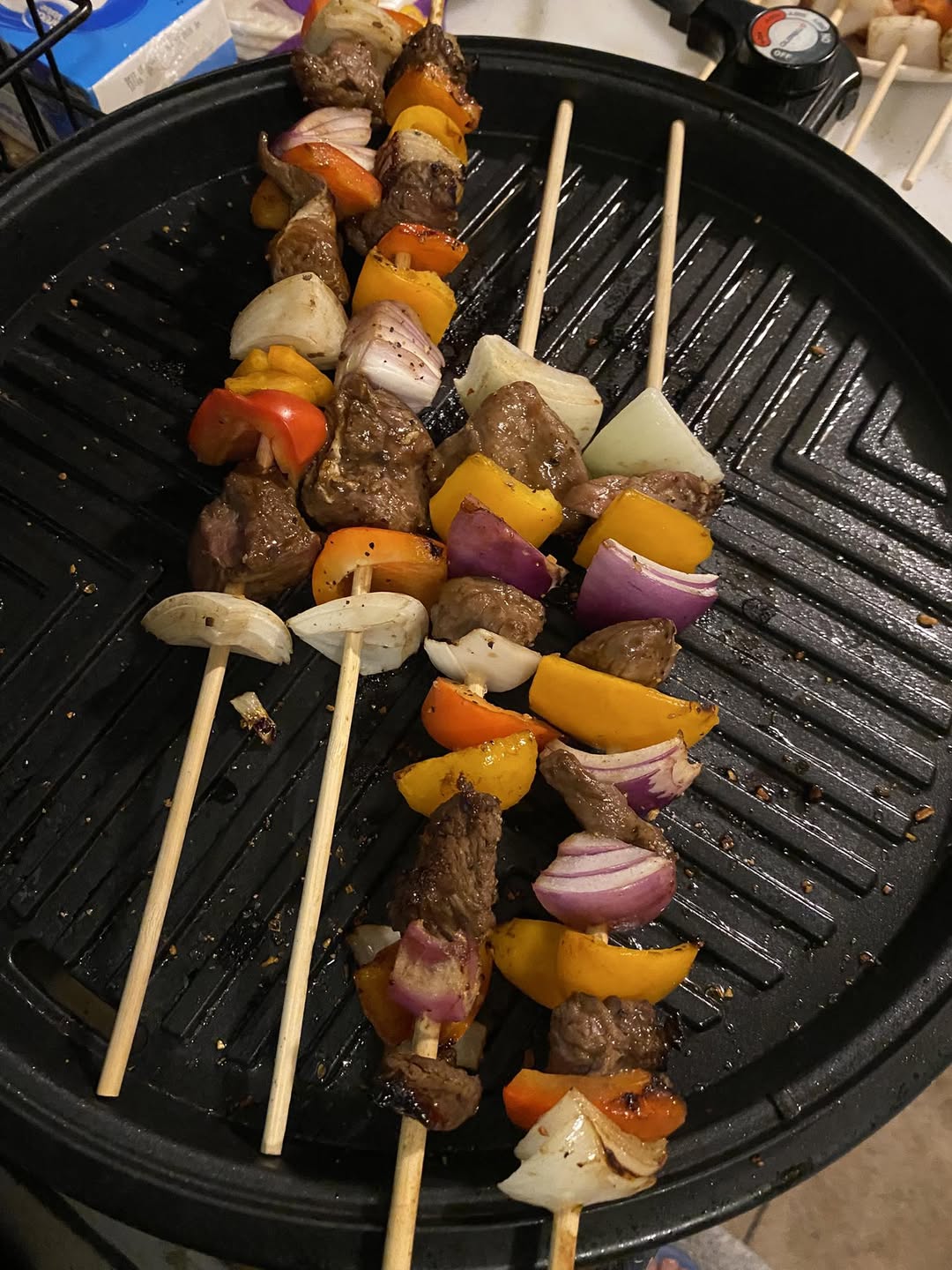
If you’ve ever ordered kabobs at a restaurant and thought, “This is good… but why does it cost this much for six pieces of meat and one lonely onion?” – you’re in the right place.
Because today, we’re making steak and veggie kabobs that don’t just compete with restaurant BBQ… they quietly walk in, take the grill tongs, and show the restaurant how it’s done.
I’ve been behind enough grills to know one thing: kabobs look simple, but when done right, they hit like a full BBQ symphony. When done wrong, they’re basically expensive skewered sadness. We’re aiming for the symphony.
Why You’ll Love These Steak and Veggie Kabobs
Let’s be honest – kabobs are just fun.
There’s something primal about food on a stick. It feels like you should be sitting by a fire telling exaggerated fishing stories.
But these steak and veggie kabobs go further:
- Juicy, seared steak with real BBQ char
- Vegetables that are tender, not soggy or sad
- A marinade that actually tastes like something you’d fight over at the table
- Easy cleanup (aka: fewer dishes, more victory)
And here’s the real chef secret: kabobs cook fast, but taste like they took all day.
That’s BBQ magic.
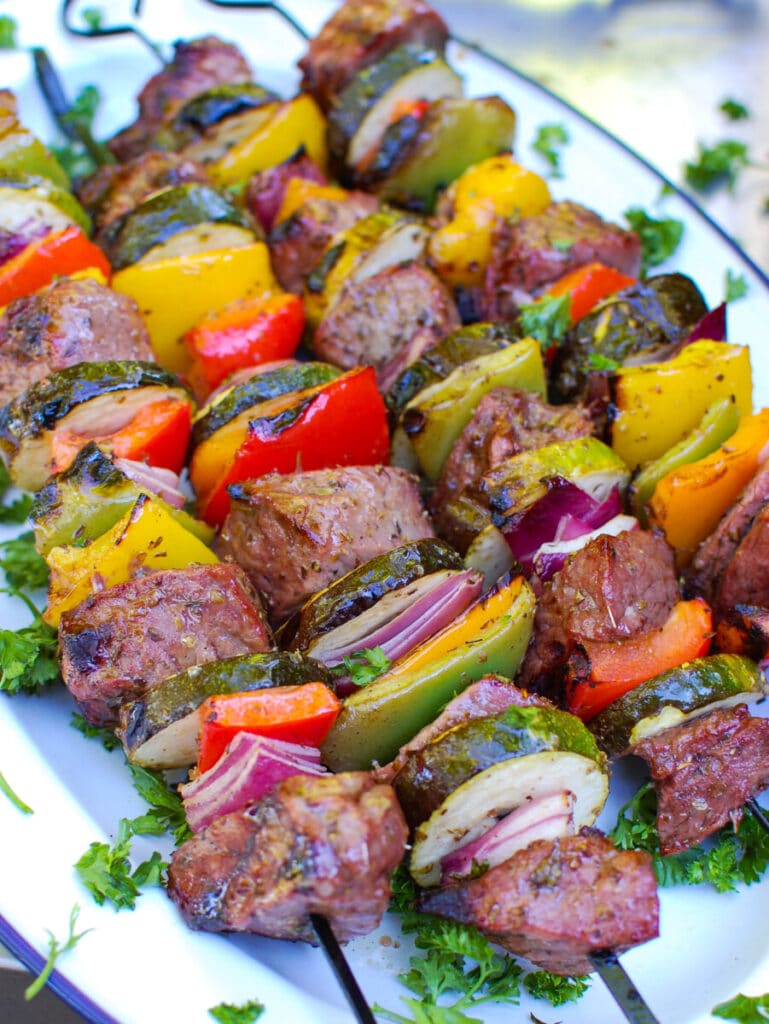
The Science of the Perfect Sear (Why Grill Marks Actually Matter)
Most people think grill marks are just for looks – like BBQ “tattoos” for Instagram bragging rights. But in steak and veggie kabobs, those char lines are doing real work.
When steak hits high heat, the Maillard reaction kicks in – a fancy term for “meat starts tasting amazing.” It’s what creates that deep, savory crust you can’t fake in the oven.
Here’s the pitmaster truth: you’re not just cooking steak, you’re building layers of flavor. Each time the meat touches the grill, sugars and proteins react, forming that smoky, slightly crispy exterior. That’s why flipping too often is a mistake – you’re interrupting flavor formation.
Veggies benefit too. Peppers and onions develop a slight caramelization that balances the richness of the beef.
So next time you see those dark grill lines forming, don’t panic and move the kabob. That’s not burning – that’s flavor negotiating with fire.
Skewer Strategy: Why Order Matters More Than You Think
Most people build kabobs like they’re decorating a salad. Random. Chaotic. A little steak here, a mushroom there. But with steak and veggie kabobs, structure matters more than style.
Think of your skewer as a heat map. Different ingredients cook at different speeds, and placement changes everything. For example, steak benefits from direct heat exposure, while vegetables like zucchini cook faster and can over-soften if placed carelessly.
A smart order looks like this: firm vegetable → steak → firm vegetable → softer vegetable → steak again. This creates balance and prevents one ingredient from turning into charcoal while another stays underdone.
Another pro move? Group similar textures together on separate skewers. One for meat-heavy bites, one for veggie-forward kabobs. This gives you control over doneness instead of chaos on a stick.
In BBQ, order isn’t decoration – it’s strategy. And strategy tastes better.
The Hidden Power of Resting Time (The Step Everyone Skips)
Here’s where even experienced grillers mess up: they pull the steak and veggie kabobs off the grill and immediately start eating like it’s a race.
Bad move.
Resting is where the magic settles. When steak cooks, juices rush toward the surface. If you bite too early, those juices end up on your plate instead of in your mouth. That’s not just loss – that’s flavor evacuation.
Give kabobs at least 5 minutes of rest time after grilling. This allows the proteins to relax and redistribute moisture evenly. The result? Juicier steak, richer flavor, and vegetables that don’t feel like they’ve been emotionally scorched.
Cover them lightly with foil if you want to keep warmth without steaming away the crust.
Think of resting like letting music finish its final note. You don’t clap mid-song – and you don’t cut kabobs mid-juice redistribution.
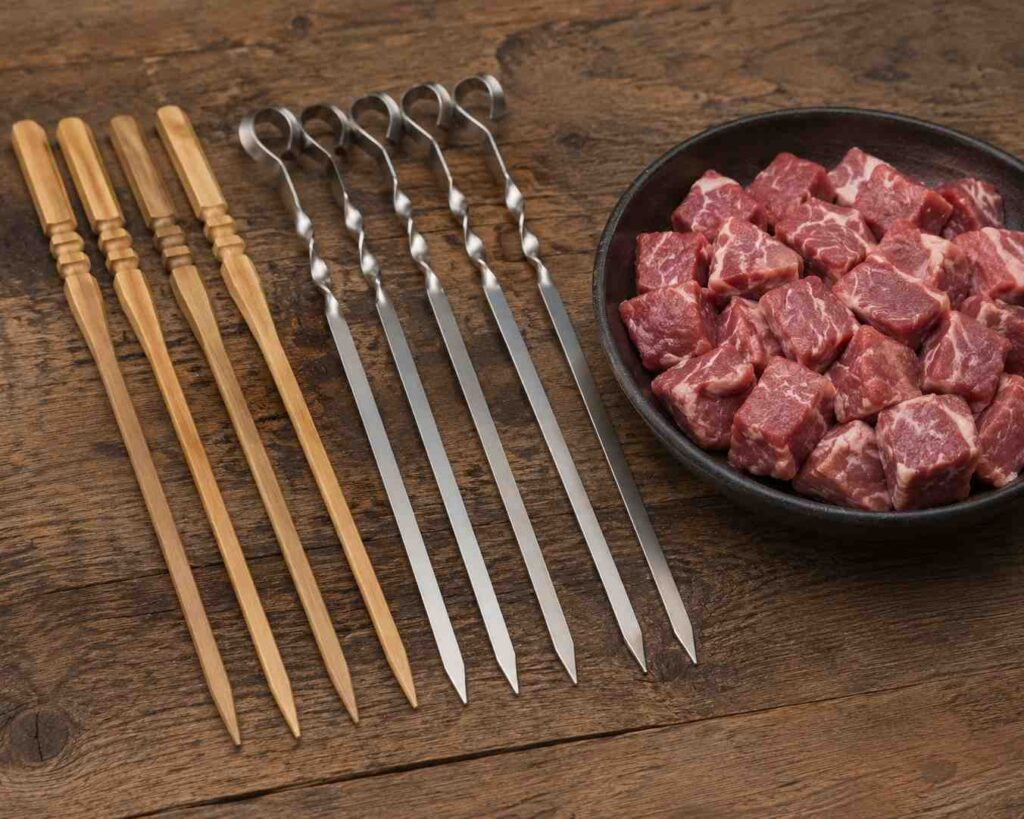
Wood vs Metal Skewers: The Battle of Heat Control
Skewers are often treated like background characters, but in reality, they’re silent influencers in your steak and veggie kabobs success.
Wooden skewers are classic. They’re cheap, easy, and disposable. But they absorb moisture (if soaked properly) and create a slightly gentler cook. They’re great for home grilling where control matters more than speed.
Metal skewers, on the other hand, are heat conductors. They heat from the inside out, cooking meat faster and more evenly. That means better searing from within – but also higher risk of overcooking if you’re distracted.
Here’s the chef truth: wood forgives mistakes, metal exposes them.
So choose based on your grilling personality. If you like precision and control, go metal. If you like relaxed BBQ chaos with fewer consequences, stick with wood.
Either way, your skewers are not just tools – they’re part of the cooking physics.
Flavor Layering: Why One Marinade Is Never Enough
Most home cooks think the marinade is the “flavor step.” But professionals treat it as only the first layer. In truly great steak and veggie kabobs, flavor is built in stages – like stacking heat and seasoning in levels.
Stage one is marinade: salt, fat, acid, and spice penetrating the steak. But stage two is where things get interesting – post-grill finishing.
A light brush of garlic butter, chimichurri, or even lemon herb oil right after grilling adds brightness and contrast. This creates a dual-flavor experience: smoky base + fresh top note.
Vegetables also benefit from finishing touches. A pinch of flaky salt or a drizzle of balsamic glaze can completely change the bite.
The secret here is contrast. Smoky vs fresh. Rich vs acidic. Soft vs charred. Without layering, kabobs taste good. With layering, they taste intentional – like someone actually designed every bite instead of just hoping for the best.
Tips for Perfect Kabobs Every Time
If kabobs were easy, everyone would be a grill master. Here’s how you win:
- Soak wooden skewers so they don’t turn into torches
- Oil your grill grates (unless you enjoy sticking and frustration)
- Keep everything evenly sized
- Don’t overcrowd skewers
- Use direct heat for sear, indirect heat if needed for finishing
And my personal rule:
If it looks too perfect, you probably forgot to season it.
Easy Recipe Variations
Once you master steak and veggie kabobs, you can start playing:
- Spicy version – add chili paste or cayenne
- Garlic butter finish – brush after grilling
- Mediterranean style – oregano, lemon, olive oil twist
- Pineapple steak kabobs – sweet + savory chaos (in a good way)
- Oven version – 425°F if grilling isn’t possible
Think of this recipe as a template, not a rulebook.
What to Serve with Steak and Veggie Kabobs
These kabobs don’t like being alone.
Pair them with:
- Garlic rice or pilaf
- Grilled corn
- Fresh green salad
- Roasted potatoes
- BBQ sauce or chimichurri
Or honestly, just eat them off the skewer while standing near the grill like a victorious caveman. That also works.
How to Store and Reheat Leftovers
If you somehow have leftovers (rare, but possible):
- Store in an airtight container for up to 3 days
- Reheat in a skillet or oven for best texture
- Avoid microwaving unless you enjoy rubber steak (no judgment… okay, mild judgment)
Common Mistakes to Avoid
Let’s save you from heartbreak:
- Overcooking steak (this is the big one)
- Cutting uneven pieces
- Packing skewers too tight
- Skipping marinade time
- Walking away from the grill “just for a second” (famous last words)
Kabobs don’t forgive distraction.
Final Thoughts
These steak and veggie kabobs are proof that great BBQ doesn’t need a restaurant reservation or a $40 plate with three asparagus spears pretending to be a side dish.
It just needs fire, seasoning, and a little confidence.
And once you pull these off the grill – smoky, juicy, perfectly charred – don’t be surprised if people start asking you for “your secret.”
You can tell them the truth.
Or you can just smile and say, “It’s a pitmaster thing.”
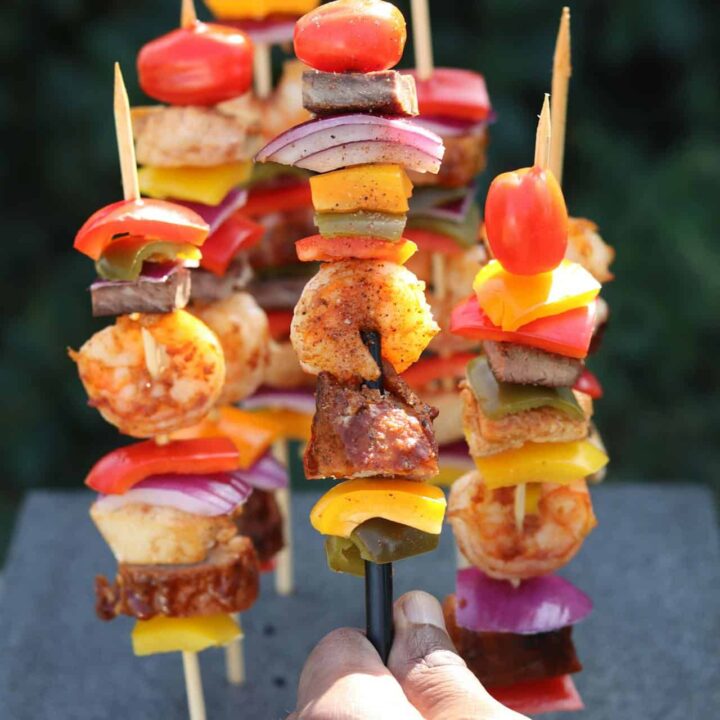
Steak and Veggie Kabobs Recipe
Image credit: Barbara G
Ingredients
- We’re not doing anything complicated here. No “imported spice blend from a mountain monastery.” Just real, bold flavors.
- For the Steak Marinade
- This is where the flavor starts doing push-ups:
- Olive oil
- Soy sauce
- Worcestershire sauce
- Garlic (don’t be shy… vampires aren’t invited)
- Smoked paprika
- Black pepper
- Optional: chili flakes or honey for heat/sweet balance
- This combo is what gives the steak that deep, savory backbone. Think of it as the personality layer.
- For the Kabobs
- This is the color, crunch, and balance:
- Beef sirloin or your preferred steak cut
- Bell peppers (red, yellow, green – go rainbow mode)
- Red onion (sharp, sweet when grilled)
- Zucchini
- Mushrooms
- Cherry tomatoes
- Skewers (wooden or metal)
- Pro tip from the grill line: if your kabobs don’t look like edible confetti, you’re doing it wrong.
- Best Steak Cuts for Kabobs
- Let’s talk meat – because this is where most people mess up.
- For steak and veggie kabobs, you want a cut that’s tender but still beefy enough to hold up on high heat.
- Best choices:
- Sirloin (top pick) – reliable, flavorful, affordable
- Ribeye – richer, more marbling, slightly indulgent
- Tenderloin – ultra tender, but you’ll pay for the privilege
- Strip steak – balanced and solid
- And here’s the pitmaster truth:
- Uniform cubes matter more than fancy cuts.
- Uneven steak = uneven cooking = some bites perfect, others chewing therapy.
- How to Prepare the Vegetables
- Veggies are not just filler here – they’re co-stars. The mistake most home cooks make? Cutting everything like it’s random.
- No.
- You want:
- Similar size pieces for even cooking
- Firmer vegetables (peppers, onions) slightly larger
- Softer vegetables (mushrooms, zucchini) a bit thicker so they don’t vanish on the grill
- Think of it like casting a movie: everyone needs the same screen time.
Instructions
Now we get to the fun part – assembly and fire. This is where things start smelling like summer and bad decisions in the best way.
Step 1 – Marinate the Steak
Mix all marinade ingredients in a bowl, toss in your steak cubes, and coat everything evenly.
Now here’s the rule:
- Minimum: 30 minutes
- Ideal: 2–6 hours
Don’t go overnight unless you like steak that tastes like soy sauce that gave up on life. The marinade should enhance the beef, not bully it.
Step 2 – Assemble the Kabobs
This is where you can pretend you’re an artist.
Alternate:
- Steak
- Pepper
- Onion
- Mushroom
- Zucchini
- Repeat
Don’t pack them too tight. Steak needs breathing room, not a group hug. A little space = better heat circulation = better char.
And yes, it’s okay if your first kabob looks slightly chaotic. Mine always does. It’s called “rustic confidence.”
Step 3 – Grill the Kabobs
Preheat your grill to medium-high heat. If you can hold your hand over it for more than 3 seconds, it’s not ready.
Now grill:
- About 10–12 minutes total
- Turn every 2–3 minutes for even searing
You’re looking for:
- Charred edges on steak
- Slight blistering on vegetables
- That unmistakable BBQ aroma that makes neighbors suddenly friendly
This is where the magic happens – the sugar in the marinade caramelizes, the steak develops crust, and everything starts smelling like you know what you’re doing.
Step 4 – Rest and Serve
Pull the kabobs off the grill and let them rest for 5 minutes. Yes, even skewers deserve a break. This keeps the juices inside the steak instead of all over your plate like a tragedy.
Finish with:
- A sprinkle of salt
- Fresh herbs if you’re feeling fancy
Or just dive in immediately like a normal human being
Featured image credit: @ccscriftycrafties
