
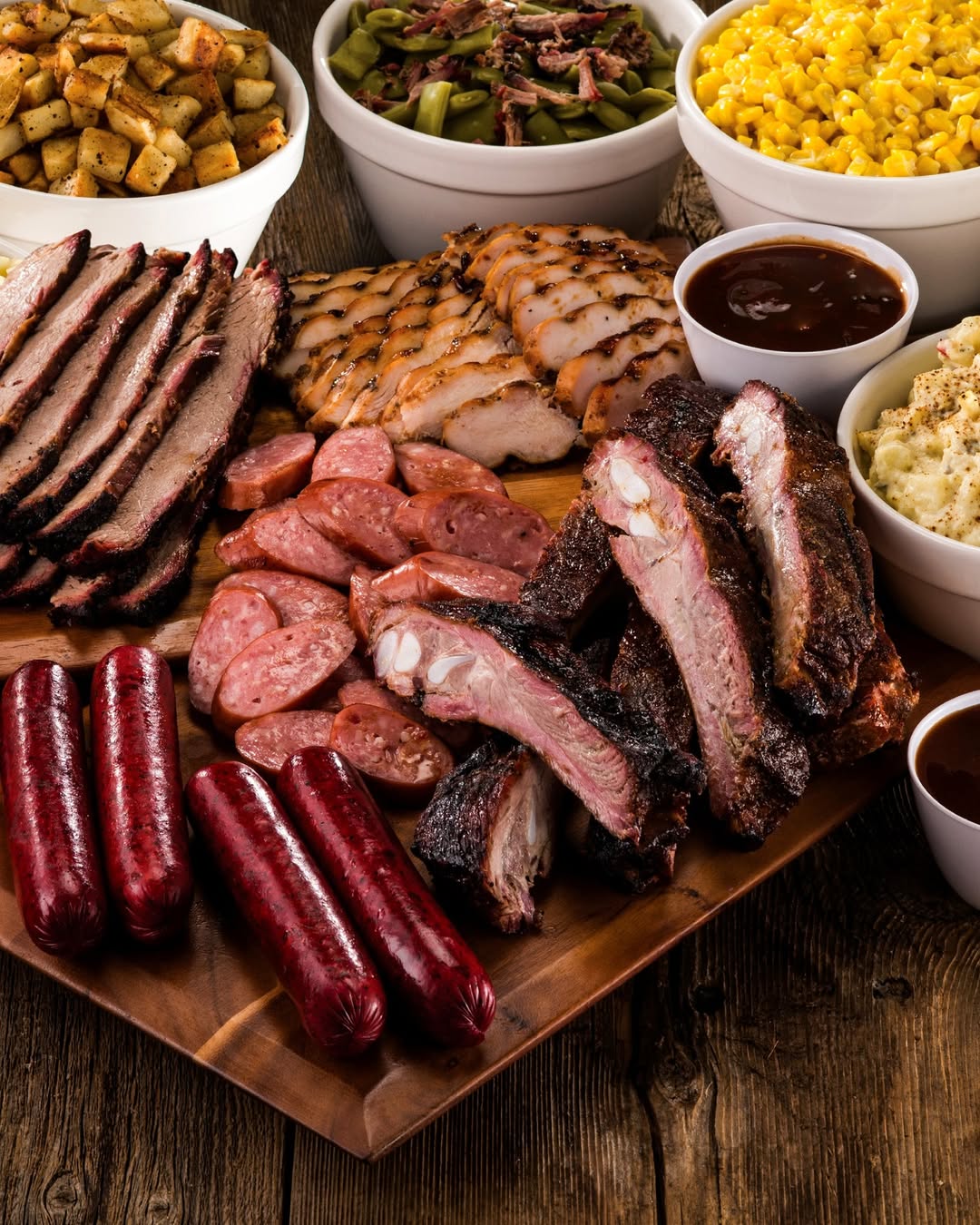
Every backyard cook eventually hits “The Wall.”
It’s that moment when you move from being the person who makes a killer Saturday night brisket for the family to the person “volunteered” to feed the entire neighborhood block party, a 50-person wedding, or a high-stakes fundraiser.
When you scale BBQ, you aren’t just multiplying numbers on a sheet of paper. You are managing a chaotic symphony of fire, airflow, and chemistry.
If you treat a 100-pound cook like a 5-pound cook multiplied by twenty, you’re going to end up with meat that’s either saltier than the Dead Sea or as bland as a cardboard box.
Scaling is about finesse. It’s about knowing when to trust the math and when to trust your nose. Let’s get into how to go big without going home in shame.
The Scaling Myth: Why Math Can Be a Traitor
In the kitchen, we’re taught that recipes are linear. If one cup of sugar makes one cake, two cups make two. In the world of smoke and fire, this logic is a trap.
When you scale BBQ, you have to account for flavor concentration. Large batches of meat in a confined space create their own micro-climate.
If you multiply your cayenne pepper ratio by ten, you aren’t just making it ten times spicier – you’re creating a cumulative heat that can become physically painful.
The Golden Rule: The more meat you add, the more you have to “taper” your strongest ingredients. Salt, heat, and acid do not play fair when they travel in packs.
The Science of Flavor Dilution vs. Concentration
To understand scaling, you have to understand surface area.
Imagine a single 5-pound pork butt. It has a specific amount of exterior “real estate” for rub. Now imagine ten of them. While the volume of meat has increased significantly, the way smoke and heat circulate around those surfaces changes.
- The Salt Trap: Salt is the most dangerous ingredient to scale. Large amounts of salt draw out massive amounts of moisture. When you have fifty slabs of ribs in a smoker, that moisture has nowhere to go. You risk “steaming” your meat instead of smoking it, leading to a grey, mushy disaster.
- Volatility of Aromatics: Ingredients like garlic powder and onion powder lose their “punch” differently in large batches. In a small cook, they stand out. In a large cook, they can get lost in the heavy fog of rendered fat.
Pro-Tip: Always scale your base (the meat) first, but keep your “punch” ingredients (clove, cinnamon, cayenne, salt) on a shorter leash.
Logistics: Equipment and Fuel Management
You can’t fit a semi-truck in a garage, and you shouldn’t cram fifty briskets into a smoker designed for five.
Airflow and Convection
Smokers work because of the “Venturi effect” – hot air moving from a heat source, across the meat, and out the stack. When you crowd a smoker to scale BBQ, you create “dead zones.”
These are pockets of cold, stagnant air where smoke settles and turns bitter.
- Don’t “Tetris” your meat. If the pieces are touching, they won’t develop bark. You’ll get “bald spots” where the meat looks boiled.
- Leave a “two-finger” gap. Ensure air can flow freely between every single piece of protein.
The Thermal Mass Problem
Think of your smoker like a battery. When you put 50 pounds of cold meat into a hot pit, it’s like throwing a bucket of ice into a bathtub. Your temperature will crater.
- The Fix: Pre-heat your pit 25-50 degrees higher than your target temp before loading.
- Anticipate the Recovery: Don’t panic and open the firebox wide. Let the meat come up to temp slowly, or you’ll scorched the exterior while the inside stays frozen.
Scaling the Rub: The Decreasing Multiplier Rule
If you are scaling a rub for a massive cook, stop using the “multiplication” button on your calculator. Instead, use the 1.5x Rule.
For every time you double the weight of the meat, only increase the most “aggressive” spices (salt, pepper, chili) by 1.5x to 1.75x.
Why Coarse-Ground is King
When you scale BBQ for a crowd, you are often cooking longer. Fine-ground table salt or “dusty” black pepper will dissolve and disappear.
- Coarse Kosher Salt and 16-mesh Black Pepper stay on the surface.
- They create the “nooks and crannies” that catch smoke.
- They provide a physical barrier that prevents the meat from drying out during an 18-hour marathon.
Scaling Sauces and Glazes
Scaling sauce is where most people lose their minds. If you try to boil five gallons of BBQ sauce in a pot meant for one gallon, the physics of evaporation change entirely.
The Reduction Variable
In a small pot, sauce reduces quickly because the heat-to-liquid ratio is high. In a giant stockpot, the middle stays cool while the bottom burns.
- The Trick: Scale your liquids (vinegar, water, juice) but add your thickeners (molasses, honey, ketchup) in stages.
- Emulsification: Use a stick blender. When you have large amounts of fat rendering out of the meat, your sauce needs to be stable enough to cling to it without sliding off like a cheap suit.

Cooking Techniques for Mass Production
When you’re feeding a hundred people, you cannot have “The Stall” happen to everyone at once.
The Staggered Start
If you put all the meat on at 8:00 PM, it will all (theoretically) be done at 10:00 AM.
But what if your guests don’t eat until 2:00 PM? Or what if your smoker has a hot spot and half the meat is done four hours early?
- Load in Waves: Put your largest, toughest cuts (briskets/shoulders) in the “hot spots” first.
- Rotate the Troops: Move meat from the back to the front every few hours. This ensures uniform color and “cook-through.”
The Power of the “Crutch”
When you scale BBQ, consistency is more important than “purity.” Using the Texas Crutch (wrapping in foil or butcher paper) isn’t cheating – it’s insurance. It locks in moisture and guarantees you hit your window of service.
The Crucial “Hold” Period: Your Secret Weapon
In the BBQ world, the “Rest” is just as important as the “Cook.” When you scale up, the rest becomes your best friend.
A single brisket stays hot for an hour. Ten briskets huddled together in an insulated carrier (a “faux Cambro”) will stay hot – and keep improving – for up to eight hours.
- The Science of the Hold: During the hold, collagen continues to break down into silky gelatin, but the meat isn’t “cooking” anymore. It’s relaxing.
- Insulation is Key: Use high-quality coolers lined with towels.
- Avoid the “Mush”: If you wrap too tight while the meat is screaming hot, the carry-over cooking will turn your brisket into pot roast. Let it vent for 10 minutes before the long hold.
Food Safety: Don’t Be the “Reason” for the Party Ending
There is nothing funny about “The Danger Zone.” That’s the temperature range between 40°F and 140°F where bacteria throw a rave.
When you have a massive amount of meat, the centers can stay in the danger zone for hours if you aren’t careful.
- Probe Everything: Don’t assume that because one chicken thigh is 165°F, they all are.
- Rapid Chill: If you are cooking a day ahead, do not put a 20-pound hot pork shoulder in the fridge. You will warm up the fridge and spoil everything else. Pull it, shred it, and spread it thin on trays to cool before storing.
The Art of the Feast
Scaling BBQ is a transition from being a cook to being an engineer. It requires a calm head, a sharp thermometer, and the realization that flavor is cumulative.
You’re looking for the “symphony effect.” You want the smoke, the rub, the fat, and the sauce to hit the palate at the exact same time, whether you’re serving one plate or one thousand.
The Hydration Strategy: Mastering the Bulk Spritz
When you have a lone rack of ribs, a quick spray of apple juice is easy. When you have forty, opening the lid every 45 minutes causes a massive thermal leak.
To scale BBQ effectively, you need to ditch the hand-pump bottle for a professional setup.
- Upgrade Your Arsenal: Use food-grade garden sprayers or pressurized canisters for a “fast-attack” moisture blast that coats the meat in seconds.
- The Cooling Effect: Spritzing creates evaporative cooling, which slows down the exterior cook and prevents the edges from charring.
- Smoke Magnetism: Keeping the surface tacky allows smoke to “stick” better, resulting in a deeper, more pronounced smoke ring.
- Lid Discipline: The faster you spray, the less heat escapes, keeping your pit’s internal temperature stable.
Remember: if you’re spraying, you’re not praying – you’re managing the micro-climate of the pit.
Fire Management: The “Coal Bed” Philosophy
In a small offset smoker, you can get away with feeding one log at a time. But when you’re powering a massive pit loaded with cold thermal mass, you need a proactive coal bed. Scaling up means you can’t afford temperature swings.
- The Burn Barrel Hack: Burn down secondary logs in a separate barrel to create a “reservoir of heat” before the coals ever touch your main firebox.
- Pure Carbon Heat: This method ensures you add heat without the “dirty” yellow smoke of a freshly lit log that ruins flavor.
- Thermal Momentum: A thick ember bed acts like a battery; if it dies out under 100 pounds of meat, it takes an eternity to recover.
- Visual Cues: Keep that bed glowing and consistent to ensure your exhaust smoke stays thin and blue.
Palate Fatigue: The Pitmaster’s Blind Spot
There is a psychological side to large-scale cooking that no one talks about: Palate Fatigue. After fifteen hours of smelling rendered fat, your brain literally stops “tasting” the nuances.
- The Danger Zone: Fatigue can lead you to over-salt or over-sauce because your senses are dulled.
- The Neutralizer Technique: Keep sliced cucumbers, pickled ginger, or plain sparkling water nearby to reset your sensors.
- The Second Opinion: Always have a “clean palate” person – someone who hasn’t been near the smoke – do the final seasoning check.
- Sensory Reset: Step away from the pit for ten minutes before tasting your batch sauce to ensure the balance is actually there.
The “Inverse Square” of Wood Selection
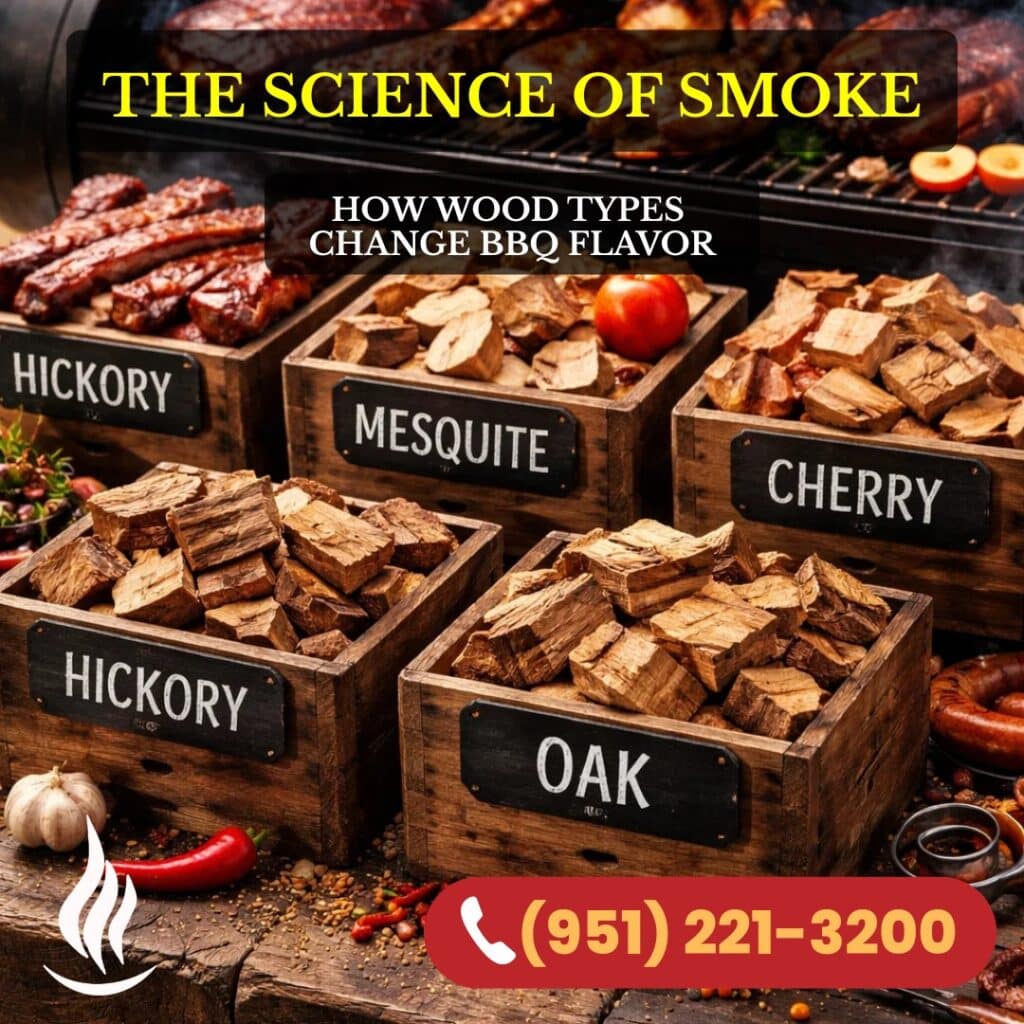
When you cook one chicken, heavy wood like Hickory or Mesquite provides a nice punch. When you scale BBQ to a massive trailer-load, that same wood can become acrid and creosote-heavy.
- Smoke Lingering: In a crowded chamber, smoke moves slower and stays in contact with the meat longer, increasing the risk of bitterness.
- Switch to Milder Bases: Use Fruitwoods (Apple/Cherry) or Post Oak for a cleaner finish that won’t overwhelm the palate.
- The Volume Knob: On a small cook, you can crank the smoke to ten. On a large cook, aim for a “seven” to keep the natural meat flavor front and center.
- Layering Flavors: Use oak for the heat and a small amount of hickory only at the beginning for the aroma.
Humidity Control: The Water Pan Hack
In a crowded smoker, the meat releases steam, but the massive fire required to keep the pit hot can still create a “drying” effect. To maintain ambient humidity, you must scale your moisture sources.
- Go Big: Replace tiny foil trays with heavy-duty hotel pans filled with boiling water, placed directly over the firebox transition.
- Moist Convection: This prevents the meat’s exterior from turning into “jerky” before the connective tissue breaks down.
- Aerosol Transport: Smoke is a “wet” aerosol; it travels better in humid air, ensuring meat in the back corners gets flavored.
- Bark Protection: Humidity keeps the surface supple longer, allowing for better Maillard reaction and a superior crust.
The Logistics of the “Cold Snap”
One of the biggest failures in large-scale BBQ happens after the cook. If you are cooking a day early, the way you cool the meat determines if the final product is a masterpiece or a soggy mess.
- Avoid the Condensation Bomb: Never put a screaming hot brisket directly into a fridge; the trapped steam will ruin your bark and soak the meat.
- The 140°F Rule: Let the meat rest at room temperature until it drops to 140°F before moving it to cold storage.
- Vented Cooling: Use a rack-lined tray in a cold room to allow 360-degree air circulation.
- Texture Retention: This “sets” the bark and ensures the fibers remain firm and juicy when you finally reheat the feast for your crowd.
The Pitmaster’s Final Checklist:
- Space out the meat. Give the smoke room to breathe.
- Taper the spices. Don’t let the salt win the war.
- The Rest is King. Use the holding period to your advantage.
- Stay Hydrated. (This usually means keeping a cold beverage nearby for the pitmaster, too).
Now go prep your kitchen and feed the masses. Just remember: if you’re looking, you ain’t cooking. Keep that lid closed, trust the process, and your big-batch BBQ will taste like a small-batch masterpiece.

Frequently Asked Questions: Scaling Your BBQ Like a Pro
How do I calculate how much meat I need per person when scaling up?
The standard rule of thumb is to account for one-half pound of cooked meat per person.
However, you have to remember the “pitmaster’s tax” – meat loses about 40% to 50% of its weight during the smoking process due to moisture loss and fat rendering.
If you want to serve 50 people a half-pound portion, you’ll actually need to start with roughly 50 to 60 pounds of raw product.
Can I use the same cook time if I’m cooking ten briskets instead of one?
Not exactly. While the internal temperature goals remain the same, the total cook time usually increases when the pit is loaded to capacity.
This is because the massive amount of cold meat acts as a “heat sink,” sucking the energy out of the air and lowering the ambient temperature of the smoker.
Plan for at least a 20% buffer in your schedule to account for the slower temperature recovery.
Should I scale my wood chunks at the same rate as my meat?
Actually, you should be more conservative with your wood. Because a crowded smoker has slower airflow, smoke tends to linger on the meat longer.
If you multiply your wood chunks linearly, you risk a heavy, bitter creosote buildup. Start with a slightly smaller wood-to-meat ratio than you’d use for a single rack of ribs and let the airflow do the work.
What is the best way to reheat large batches of BBQ without drying it out?
The secret is to reheat it low and slow with added moisture. If you’ve vacuum-sealed your meat, a sous vide or a hot water bath is the gold standard for preserving juice.
If using an oven, keep the meat wrapped tightly in foil with a splash of apple juice or beef broth and heat at 250°F until it reaches an internal temperature of 165°F.
How do I keep the “bark” crunchy when I’m holding meat for a large crowd?
Bark’s worst enemy is trapped steam. If you wrap your meat in plastic wrap or tight foil immediately after pulling it off the smoker, the bark will turn to mush.
To keep it firm, use butcher paper for the hold. It’s breathable enough to let excess steam escape while still being thick enough to retain the heat and rendered fats that keep the meat moist.
Is it safe to cook the meat halfway and finish it the next day?
No. This is a major food safety red flag. Stopping the cooking process in the middle leaves the meat in the “Danger Zone” (40°F–140°F) for too long, allowing bacteria to thrive.
You should always cook the meat until it is fully tender and reaches its final internal temperature. Once it’s done, you can then cool it down rapidly and reheat it safely later.
Featured image credit: @swadleysbbq
