
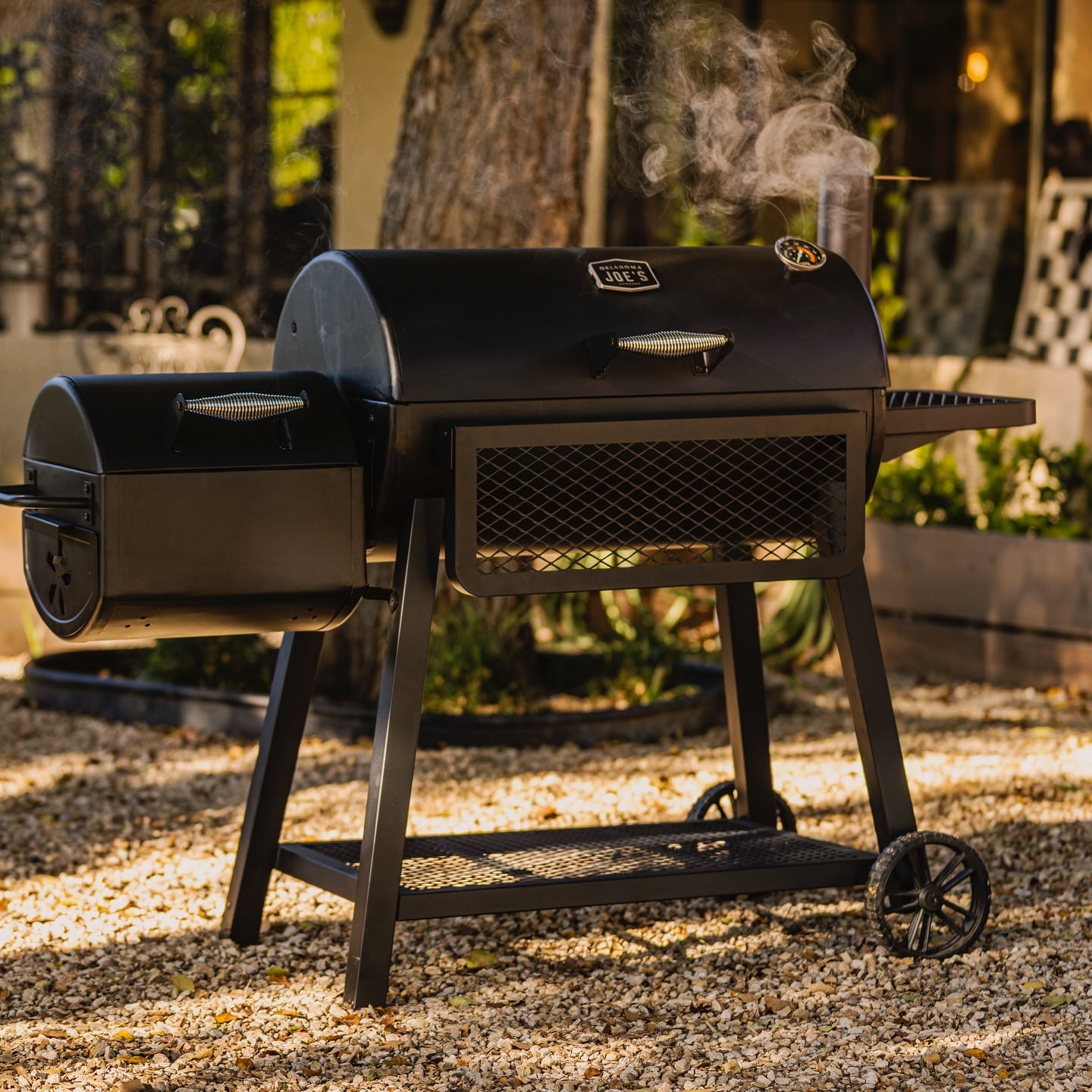
“I’m not a fan of set-it-and-forget-it pellet grills – if you aren’t smelling like hickory smoke, babysitting a fire, and actively fighting an air damper at 2:00 AM, are you even making barbecue?”
That quote from a legendary Texas pitmaster sums up the ultimate debate in backyard cooking.
We live in an era where modern outdoor cookers have turned smoking meat into an automated chore as easy as running a microwave. Button pushes, app notifications, and wood pellets have taken over.
But if you want authentic, deep wood smoke flavor, a razor-sharp smoke ring, and crisp mahogany bark, you need a real fire powered by real logs.
Enter the Oklahoma Joe’s Highland, an iconic entry-level smoker built to bring genuine offset smoking to your backyard without costing as much as a used car.
Executive Summary & Verdict Callout
The Oklahoma Joe’s Highland stands as a legendary heavy-duty contender in the budget offset category. Constructed from heavy-gauge steel, it delivers traditional offset smoke performance that leaves cheaper thin-metal barrel cookers in the dust.
While it demands active fire management and a few inexpensive afternoon modifications to seal minor air leaks, it offers unbeatable value for serious outdoor cooks.
- Target Cook: Backyard pitmasters and ambitious beginners ready to master real log-burning barbecue.
- Fuel Type: Lump charcoal and hardwood split logs (Oak, Hickory, Pecan, Apple).
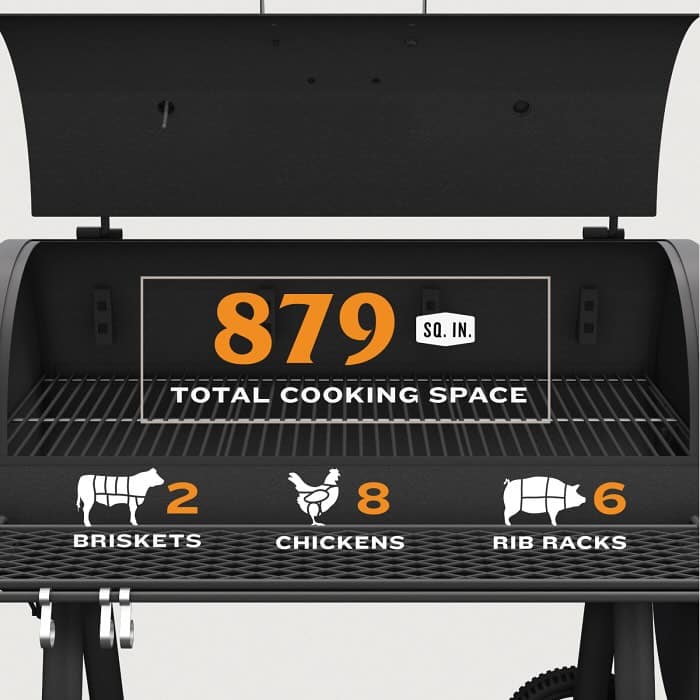
- Cooking Area: 619 sq. in. main chamber + 281 sq. in. firebox (900 sq. in. total).
- Build Material: Heavy-gauge steel with porcelain-coated wire grates.
- Weight: ~178 lbs.
Overall Rating Breakdown
- Build Quality: 4.2 / 5
- Heat Retention: 3.8 / 5 (Out of the box) | 4.6 / 5 (With basic mods)
- Cooking Capacity: 4.7 / 5
- Ease of Use: 3.2 / 5 (High learning curve, but rewarding)
- Value for Money: 4.9 / 5
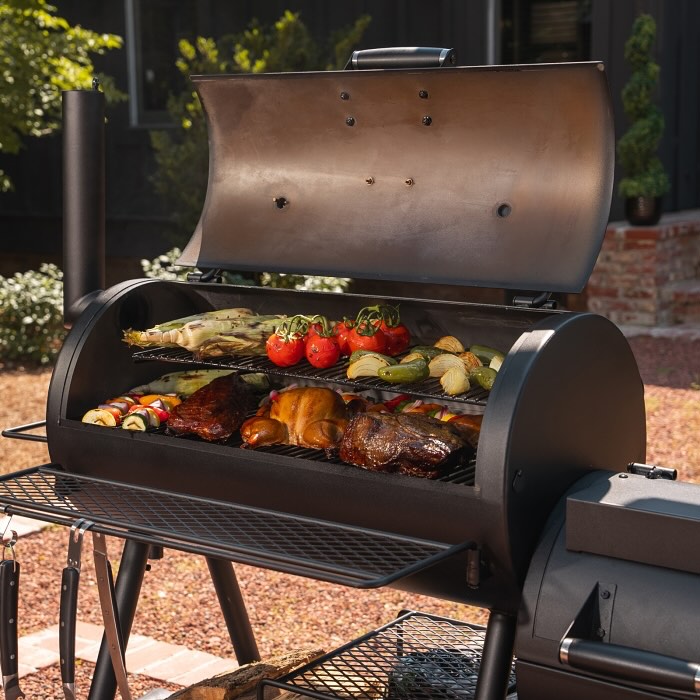
The Legend of Offset Smoking
Cheap sheet-metal smokers off the shelf at big-box stores are famous for leaking heat like a sieve, rusting out in a single season, and driving cooks crazy with massive temperature swings.
Offset smoking is an art form, but doing it on cheap equipment feels like trying to drive a sports car with four spare tires.
The Oklahoma Joe’s Highland changes that equation completely. Originally forged in Perry, Oklahoma back in 1987, the brand built its reputation on thick pipe steel and indestructible designs.
While modern production has evolved, the core DNA of the Oklahoma Joe’s Highland remains intact: heavy-gauge steel construction, massive airflow capacity, and classic offset mechanics.
Testing this unit over dozens of cooks – ranging from quick rack-of-ribs sessions to grueling 14-hour brisket marathons – answers one core question: Can a sub-$500 offset smoker truly deliver competition-grade results?
Unboxing, Build Quality & Assembly
Unboxing the Oklahoma Joe’s Highland requires a sturdy pair of work gloves and maybe a helpful neighbor. Shipping at nearly 180 pounds, this unit is solid metal.
Unlike paper-thin budget smokers that flex when you press on the lid, the barrel walls and firebox of the Oklahoma Joe’s Highland feel remarkably rigid.
Specifications at a Glance
- Total Weight: 178 lbs
- Main Chamber Cooking: 619 sq. inches (fits four large racks of ribs or two full briskets)
- Firebox Cooking Area: 281 sq. inches
- Material: Heavy-Gauge Steel Body with Cast Iron Grates
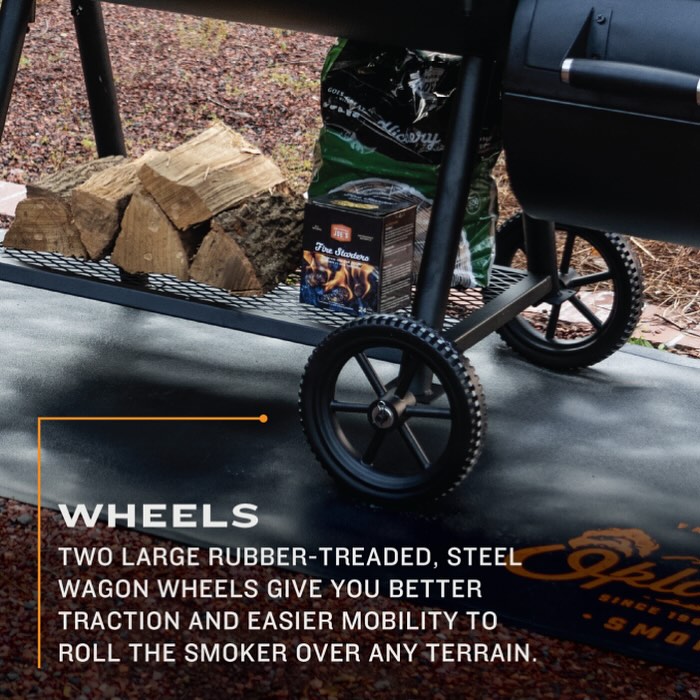
- Mobility: 2 Heavy-Duty Wagon Wheels + Front Tow Handle
The Assembly Experience
Assembly takes about two hours with basic hand tools. Bolting the heavy firebox onto the main cook chamber requires proper alignment to prevent large gaps.
- Heavy-Duty Barrel: The thick-gauge steel holds up against warping under intense firebox heat.
- Porcelain-Coated Grates: Thick wire grates prevent rust, clean easily, and handle heavy meat cuts without sagging.
- Hardware & Fittings: Solid steel handles with cool-touch spring grips prevent nasty palm burns during cooks.
Pro Tip: Apply a bead of high-temperature RTV silicone sealant between the firebox and main chamber connection during assembly. This simple step stops smoke leaks before you ever light your first piece of charcoal.
Design & Key Features
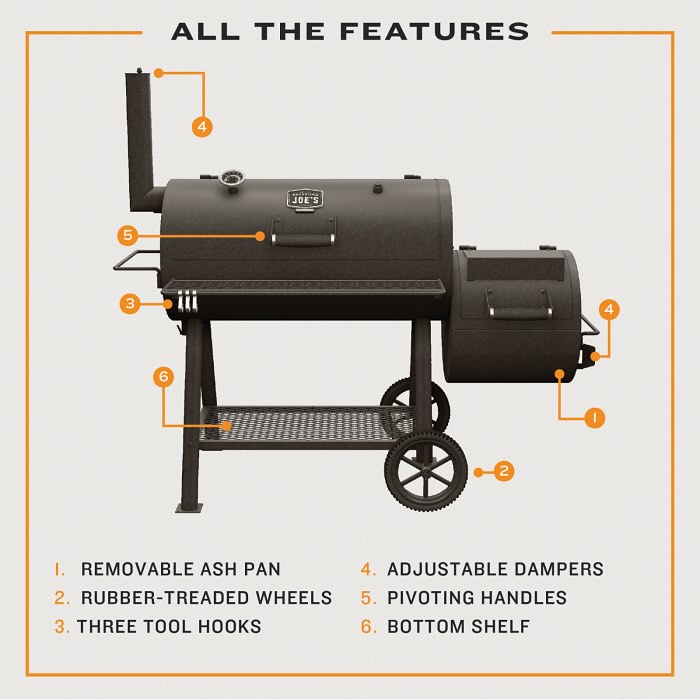
The beauty of the Oklahoma Joe’s Highland lies in its traditional design. It operates on pure fluid dynamics: air enters the side damper, feeds the firebox, sweeps heat and wood smoke across the main cooking chamber, and exits through the smokestack.
Airflow Dynamics Workflow
- Air Intake: Oxygen enters through the adjustable side damper on the firebox door.
- Combustion Zone: Split wood logs burn inside the firebox, creating heat and flavorful smoke.
- Main Chamber Draft: Heat and smoke roll directly into the cooking chamber, sweeping across your food grates.
- Exhaust: Clean smoke exits through the elevated smokestack vent on the opposite side.
Key Design Highlights:
- Generous Cooking Footprint: The main chamber comfortably handles two whole packer briskets, four pork butts, or six full racks of ribs simultaneously.
- Dual-Purpose Firebox: The top of the firebox features a flat surface that doubles as a warming plate or a searing station for cast-iron skillets.
- Large Wagon Wheels: Thick steel wheels make moving this 178-pound beast across grass or concrete surprisingly smooth.
- Front Storage Shelf: Provides ample room for cutting boards, meat trays, spray sprayers, and tongs.
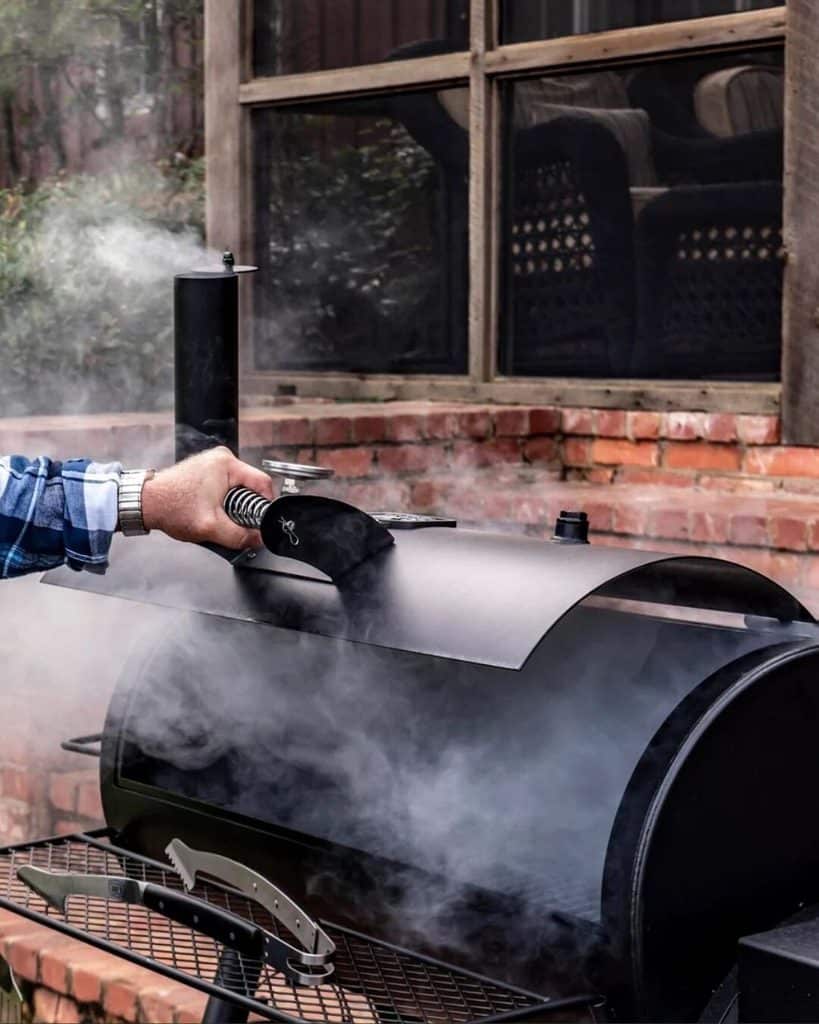
Pre-Smoke Setup: Curing & Modifying the Highland
Firing up an offset smoker straight out of the box without prep work is a recipe for flaking paint and uneven cooks. Curing and modifying the Oklahoma Joe’s Highland transforms a good smoker into an absolute smokehouse powerhouse.
Step 1: Curing and Seasoning
Before cooking food, wash out manufacturing residue. Coat every inch of the interior steel with cheap canola or peanut oil.
Fill a charcoal chimney with lump charcoal, dump it into the firebox, and run a 3-hour burn at 300°F–350°F. This bakes the oil into the steel, creating a non-stick, rust-resistant polymer layer just like a cast-iron skillet.
Step 2: Essential Aftermarket Modifications
To elevate the performance of the Oklahoma Joe’s Highland, consider adding these budget-friendly upgrades:
- Nomex High-Temp Lid Gaskets: Sticks around the rim of the main chamber lid to seal tiny gaps and stop escaping smoke.
- Toggle Latch Clamps: Pulls the heavy lid tightly against the gasket for an airtight lock.
- Heat Deflector / Tuning Plates: Placed near the firebox throat inside the main chamber to push heat downward and equalize temperatures across the grates.
- Grate-Level Thermometers: The stock lid gauge sits high near the top of the dome. Replacing it with a precision gauge installed at grate level gives true cooking temperature readings.
Performance Evaluation: Low & Slow in Action
This is where the rubber meets the road – or rather, where the wood meets the fire. Testing the Oklahoma Joe’s Highland across multiple cooks revealed its true personality.
Heat Gradient Profile (Out of the Box)
- Firebox Side (Right): Runs at approximately 265°F – 280°F (Hot spot zone, ideal for thicker cuts or searing).
- Smokestack Side (Left): Runs at approximately 225°F – 235°F (Ideal for low & slow ribs or poultry).
- Temperature Variance: Expect a 35°F to 45°F gradient across the cooking grates without tuning plates installed.
Fire Management & Airflow
Managing a fire on the Oklahoma Joe’s Highland requires attention. You start with a bed of glowing lump charcoal and add small, dry split logs every 30 to 45 minutes.
The side damper controls oxygen intake, while the smokestack damper controls smoke draw. Once you dial in the draft, the Oklahoma Joe’s Highland produces a steady stream of thin blue smoke – the holy grail of clean flavor.
Real-World Cooking Tests
- St. Louis Pork Ribs (3-2-1 Method): Cooked for 5.5 hours at 235°F. Developed a deep mahogany color, pristine smoke ring, and flawless pull-back off the bone.
- 14 lb Packer Brisket (Low & Slow): Cooked for 13.5 hours at 250°F. Rendered a pitch-black crunchy bark, rich fat distribution, and a distinct oak-smoke flavor profile.
Maintenance, Cleaning & Durability
Maintaining the Oklahoma Joe’s Highland comes down to basic rust prevention and ash management. Wood ash absorbs ambient moisture; if left sitting in the firebox, it forms corrosive lye that eats through steel.
Maintenance Checklist:
- Post-Cook Ash Removal: Wait for the firebox to cool, then sweep out ashes using the side access door.
- Grease Management: Scrape grease down into the bottom drain plug after every major cook.
- Exterior Touch-Ups: If high firebox temperatures cause paint to peel over time, sand the spot smooth and spray it with 1,200°F high-temp engine paint.
- Fitted Cover Protection: Keep the smoker covered when not in use to prevent water pooling in the bottom tray.
Pros & Cons Summary
Pros
- Heavy-Gauge Steel Build: Superior weight, stability, and durability compared to thin budget competitors.
- Authentic Wood-Fired Flavor: Unmatched smoke ring, bark development, and classic offset flavor.
- Massive Cook Surface: 900 total square inches provides plenty of room for large family feasts or party cooking.
- Affordable Entry Point: Delivers genuine offset mechanics under $500.
Cons
- Requires Active Fire Monitoring: Needs fresh log additions every 30–45 minutes; not a set-it-and-forget-it unit.
- Stock Lid Leaks: Requires basic gasket sealing for optimal heat control.
- Temperature Gradient: Natural hot spot near the firebox throat requires meat rotation or deflector plates.
Competitor Comparison
| Feature | Oklahoma Joe’s Highland | Weber Smokey Mountain 22″ | Dyna-Glo Signature Offset |
| Smoker Type | Traditional Offset | Vertical Bullet | Offset Vertical |
| Construction | Heavy-Gauge Steel | Porcelain Enamel | Medium-Weight Steel |
| Cooking Area | 900 sq. in. | 726 sq. in. | 1,098 sq. in. |
| Hands-On Effort | High (Log Feeding) | Low-Medium (Minion Method) | High (Log Feeding) |
| Primary Flavor Profile | Intense Wood Smoke | Mild Charcoal/Wood | Moderate Wood Smoke |
Oklahoma Joe’s Highland vs. Weber Smokey Mountain (WSM 22″)
The WSM bullet smoker holds steady temperatures for hours without intervention using charcoal briquettes.
However, the Oklahoma Joe’s Highland provides easier horizontal access to large meats and delivers a significantly bolder wood-smoke bark thanks to real log combustion.
Wood Pairing Science: Matching Hardwood Profiles to Meat Cuts
Unlocking the full potential of your smoker comes down to understanding wood species and smoke profiles. Different woods dramatically affect both taste and visual appearance:
- Heavy Hardwoods (Hickory & Mesquite): Deliver intense, punchy flavors that easily hold up against thick, fatty cuts like beef brisket or beef ribs.
- Fruitwoods (Apple, Cherry & Pecan): Offer a lighter, sweeter aroma that won’t overpower delicate proteins like poultry or pork loin.
- Cherry Wood: Highly prized by pitmasters because it reacts with protein surfaces to produce a stunning deep mahogany color.
- The 50/50 Oak & Apple Mix: Gives you the ideal balance of consistent heat generation, rich bark formation, and balanced, savory smoke flavor on long cooks.
The Physics of the Stall: How to Master Evaporative Cooling
Every cook faces the dreaded “stall” – that agonizing plateau where internal meat temperatures freeze between 150°F and 170°F for hours. Beginners often panic, assuming their fire has died, but this is actually pure thermodynamics.
Heat forces internal moisture to sweat out onto the meat’s surface, creating an evaporative cooling effect that balances out ambient cooker heat.
To handle the stall on long cooks, you have two distinct choices:
- Ride it out: Leave the meat untouched for maximum bark crunch, though it will extend your cook time significantly.
- Use the “Texas Crutch”: Wrap your meat tightly in heavy-duty aluminum foil or unlined pink butcher paper. This traps internal moisture, stops surface evaporation, speeds up fat rendering, and saves hours of fuel.
Humidity Management: Why Water Pans Change the Game
Airflow in an offset smoker continuously pulls moisture out of the cook chamber, risking dry meat if humidity isn’t actively managed. Placing a heavy-duty aluminum water pan right near the firebox throat serves two crucial purposes:
- Creates a Humid Microclimate: Slows down surface drying and allows smoke particles to adhere better to the meat, building a denser, richer smoke ring.
- Acts as a Thermal Heat Sink: Absorbs violent temperature spikes from the firebox and stabilizes internal chamber heat.
Filling your pan with warm water, apple cider vinegar, or beer adds subtle moisture and safeguards your barbecue against sudden thermal drops during breezy days.
Cold Smoking Potential: Converting Your Highland for Cheese & Fish
While designed for traditional hot barbecue, this unit easily transforms into a versatile cold smoking setup for delicate foods like sharp cheddar, salmon, nuts, and sea salt.
- The Temperature Rule: Cold smoking requires ambient chamber temperatures to stay strictly below 80°F, meaning you never light a charcoal fire in the main firebox.
- The Setup: Place an aftermarket smoke generator or pellet tube smoker directly inside the empty firebox.
- The Result: Clean, gentle smoke travels through the connection neck into the unheated main chamber, bathing your food in flavor without melting or cooking it – perfect for chilly spring and autumn projects.
Fuel Economics: Lump Charcoal vs. Hardwood Logs Cost Analysis
Operating an offset smoker requires evaluating fuel efficiency and ongoing running costs. Running a 12-hour cook solely on premium lump charcoal quickly becomes expensive, while using cheap green firewood leads to bitter, dirty smoke.
Follow this cost-effective fuel strategy:
- Start with Charcoal: Build a hot coal bed using a single chimney of lump charcoal to get the cooker up to temp.
- Switch to Seasoned Logs: Transition exclusively to properly seasoned hardwood split logs (12%–20% moisture content), which burn hotter, cleaner, and cheaper per pound than bagged charcoal.
- Buy Local: Sourcing split logs from local wood yards rather than buying retail bags drops your per-cook fuel expense dramatically.
Weatherproof Smoking: Conquering Cold, Wind, and Rain
Ambient weather conditions are the ultimate adversary for uninsulated offset smokers. Cold winter breezes and sudden downpours strip heat directly from the steel barrel, forcing you to burn through double the fuel just to hold 225°F.
Protect your cook using these weatherproofing tactics:
- Position for Wind Control: Face the firebox away from direct wind to prevent air gusts from blowing backward through the dampers.
- Add Thermal Insulation: Drape a welding blanket safely over the main cook chamber (kept well clear of the hot firebox) to lock in ambient heat.
- Manage Your Fire Bed: Maintain a slightly larger, hotter coal bed during winter to ensure steady draft velocity and prevent condensation from ruining your bark.
Upcycled Flavoring: Soaking Wood Chips, Spritzing, and Mopping Techniques
Building legendary flavor goes beyond dry rubs and wood selection; it requires active surface moisture management:
- Spritzing: Spray your meat every 45 minutes after the bark sets using a squirt bottle filled with apple juice, cider vinegar, and melted butter to keep the surface tacky for maximum smoke absorption.
- Mopping: Apply a heavy mop sauce over pork shoulder or ribs using a miniature cotton mop to layer tangy vinegar and spices directly over the rendered fat cap.
- Avoid Log Soaking: Never soak your wood logs in water beforehand – wet wood produces thick, bitter black smoke that ruins flavor rather than enhancing it.
Oklahoma Joe’s Highland vs. Dyna-Glo Signature Series
Dyna-Glo offers vertical offset designs with slightly more rack space, but the steel thickness on the Oklahoma Joe’s Highland feels noticeably sturdier, offering better structural durability over years of high-heat exposure.
Final Verdict & Buying Recommendation
The Oklahoma Joe’s Highland remains one of the absolute best entry points into real offset smoking.
It demands patience, active fire tending, and a willingness to learn the art of airflow management. But in exchange for that effort, it rewards you with the kind of melt-in-your-mouth barbecue that automated grills simply cannot match.
If you are tired of weak smoke profiles and want to learn the authentic craft of low and slow log-burning BBQ, the Oklahoma Joe’s Highland deserves a prime spot on your patio.
Final Score: 4.5 / 5 Stars
Frequently Asked Questions (FAQ)
1. Is the Oklahoma Joe’s Highland suitable for complete BBQ beginners?
Yes, but expect a learning curve. Unlike set-it-and-forget-it pellet grills or gas cookers, this unit requires active hands-on fire management.
- Fire Maintenance: You will need to add split logs every 30 to 45 minutes to maintain steady heat.
- Skill Development: It is an ideal platform for beginners who want to master real wood combustion, draft dynamics, and traditional pitmaster skills at an accessible price point.
2. Do I need to buy aftermarket mods right away?
No, but a few low-cost modifications will dramatically improve performance. Out of the box, the smoker cooks great, but adding budget-friendly mods makes heat and smoke control much easier:
- High-Temp Gasket Tape: Seals minor air leaks around the chamber lid rim.
- Toggle Latches: Clamps the lid down tight to trap smoke.
- Heat Deflector Plate: Helps equalize the temperature gradient across the grates.
3. How much meat can I cook on the Highland Classic at once?
With 900 total square inches of cook space (619 sq. in. in the main chamber plus 281 sq. in. in the firebox), you have plenty of room for large cooks:
- Main Chamber: Comfortably fits two full packer briskets, four pork shoulders, or up to six racks of ribs.
- Firebox Top: The flat top plate can be used simultaneously as a warming burner or searing surface.
4. What type of fuel should I use for the best results?
For clean, steady heat and authentic wood-smoke flavor, use a hybrid fuel strategy:
- Start with Charcoal: Light a chimney of lump charcoal to build a hot base coal bed.
- Transition to Hardwood Splits: Add seasoned hardwood logs (Oak, Hickory, Pecan, or Apple) every 30–45 minutes.
- Avoid Log Soaking: Never soak wood logs in water – wet wood creates bitter, thick black smoke instead of clean thin blue smoke.
5. How do I stop my Oklahoma Joe’s Highland from rusting outside?
Heavy steel will rust if exposed to rain and residual moisture, but routine care keeps it pristine:
- Season the Interior: Coat internal surfaces with canola oil and run a high-heat seasoning burn before your first cook.
- Clean Out Ash Promptly: Remove wood ash from the firebox after every cook, as damp ash turns into corrosive lye.
- Touch Up Exterior Paint: Spray any flaking paint spots on the firebox with 1,200°F high-temp engine paint.
- Use a Weatherproof Cover: Keep the smoker covered whenever it is not in use.
Featured image credit: @oklahomajoes
