
Tuesday evening has a unique way of crushing culinary ambition.
After a relentless day of staring at screens and answering emails that definitely could have been slack messages, the desire for a premium dinner is usually heavily outweighed by the sheer exhaustion of cooking it.
Too often, the default solution is a sad, microwaved leftover or a lukewarm takeout delivery that arrives soggy. It does not have to be that way. You can absolutely enjoy a restaurant-quality meal without spending two hours leaning over a smoking stove.
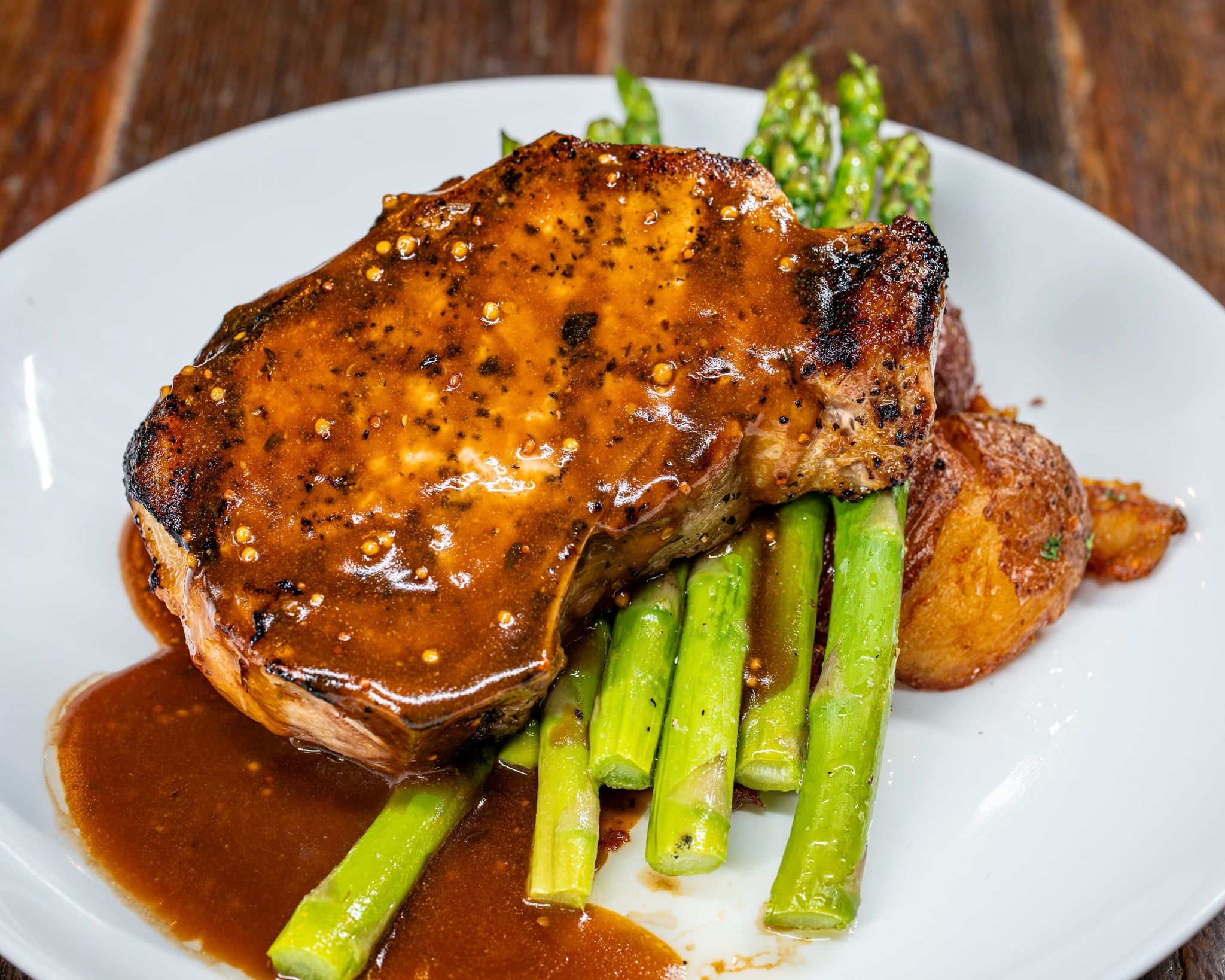
These mustard-glazed pork chops offer the ultimate shortcut to luxury, delivering an aggressive punch of sweet, tangy, and savory flavor in less time than it takes to scroll through a streaming menu.
The secret weapon here is a heavy-hitting pan glaze that completely transforms basic skillet pork from a dry, utilitarian protein into something deeply decadent.
By leveraging a few smart pantry staples and employing a handful of precise searing mechanics, you can consistently achieve a deeply caramelized crust while keeping the interior spectacularly juicy.
This is fast-casual backyard energy meeting refined indoor technique, resulting in a plate of food that looks and tastes expensive, even if you made it while wearing sweatpants.
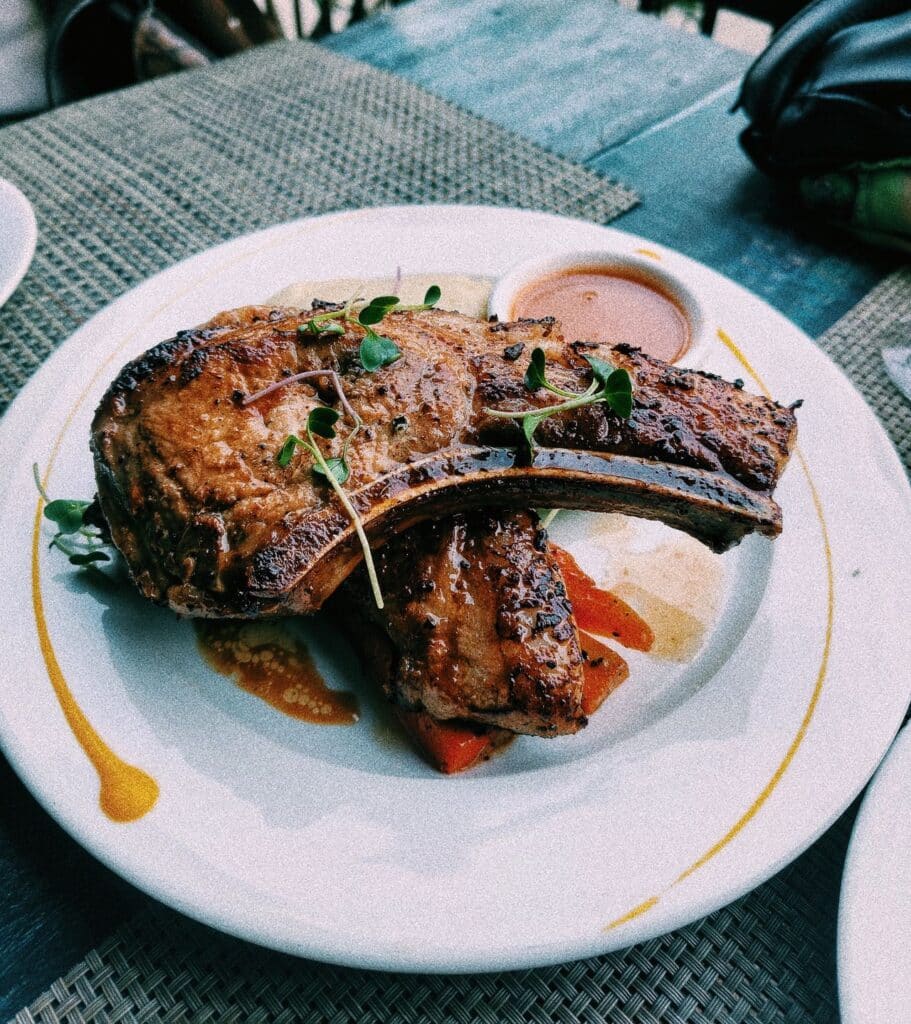
Why Mustard Glaze is the Ultimate Pork Chop Game-Changer
Pork is a naturally lean meat that desperately begs for an acidic, punchy partner to wake it up.
Without a vibrant sauce, a pork chop can easily taste flat, or worse, mimic the texture of a leather boot if left on the heat a minute too long.
A well-crafted mustard glaze provides both a protective barrier and an intense flavor profile that masks minor temperature missteps while enhancing every bite.
The Flavor Symphony (Dijon vs. Whole Grain)
Relying on just one style of mustard is a missed opportunity for complexity. A truly great glaze utilizes a dual-mustard strategy to achieve balance:
- Dijon Mustard: This provides a sharp, smooth, vinegary backbone and an emulsifying base that holds the glaze together. It delivers that familiar nasal heat that cuts right through the richness of the pork fat.
- Whole Grain Mustard: Think of this as the texture engine. The intact, pop-in-your-mouth mustard seeds add a rustic elegance and visual appeal that makes the final dish look like it rolled out of a high-end bistro.
The Science of the Glaze
When you whisk mustard with a sweetener like honey or maple syrup, something magical happens in a hot skillet. The sugars begin to break down and caramelize against the meat, creating a rich, lacquer-like coating.
Meanwhile, the natural acidity in the mustard gently breaks down surface proteins, ensuring the exterior of the pork remains incredibly tender rather than turning stringy and tough during the sear.
The “Weeknight Luxury” Ingredient Blueprint
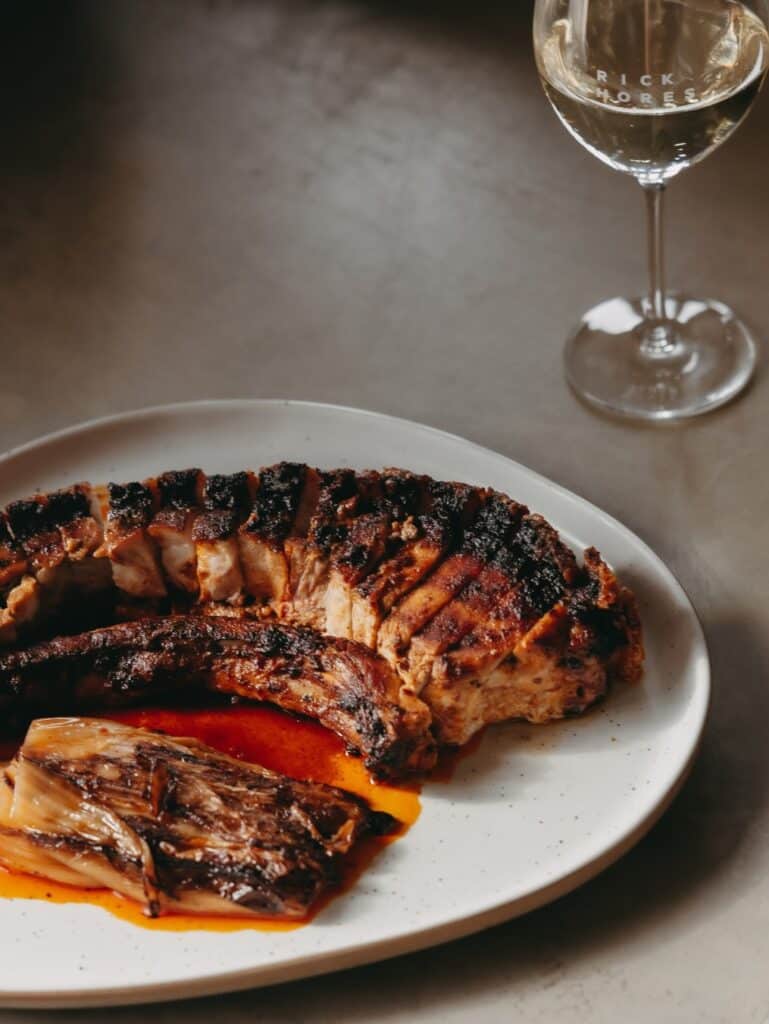
Great cooking relies on buying the right raw materials so you do not have to work twice as hard at the stove. For this recipe, the grocery list is remarkably lean, prioritizing high-impact items over a massive quantity of ingredients.
Choosing Your Chops (Thick-Cut and Bone-In)
If you take away only one lesson from this guide, let it be this: stop buying thin, boneless pork chops. Thin chops are engineered for disappointment; they overcook in the time it takes to flip them.
Instead, look for thick-cut, bone-in pork chops that are at least 1.5 inches thick. The bone acts as an insulator, slowing down the heat transfer and keeping the meat closest to it incredibly tender.
Additionally, that strip of fat running down the side of a thick-cut chop is pure flavor gold once it is properly rendered down.
The Golden Rules for Avoiding Dry Pork Chops
Cooking pork perfectly requires abandoning the outdated culinary fears of the 1970s. Modern pork does not need to be cooked until it resembles drywall to be safe to eat.
- Trust the Digital Thermometer: A reliable digital meat thermometer is the only way to guarantee success. Pull the pork chops out of the pan the exact second the internal temperature hits 140°F (60°C) at the thickest part away from the bone.
- Embrace the Rest: Transfer the glazed chops to a clean cutting board or plate and let them rest undisturbed for 5 minutes. During this window, residual heat will carry the internal temperature up to the ideal 145°F (63°C) sweet spot. More importantly, resting allows the muscle fibers to relax, locking the juices inside the meat rather than letting them flood out onto your counter.
Elegant Side Dishes to Complete the Meal
To maintain the weeknight luxury vibe, choose sides that require minimal effort but excel at wiping up extra pan sauce.
Velvety Garlic Mashed Potatoes
A smooth, buttery potato puree is the ultimate partner for this dish. Make a small well in the center of the potatoes on your plate and fill it with a generous ladle of the leftover mustard glaze from the skillet.
Crispy Roasted Asparagus
Toss fresh asparagus spears with olive oil, salt, and pepper, then roast them at high heat while you cook the pork. The charred, earthy tips of the asparagus provide a beautiful bitter contrast to the sweet and tangy notes of the honey-mustard coating.
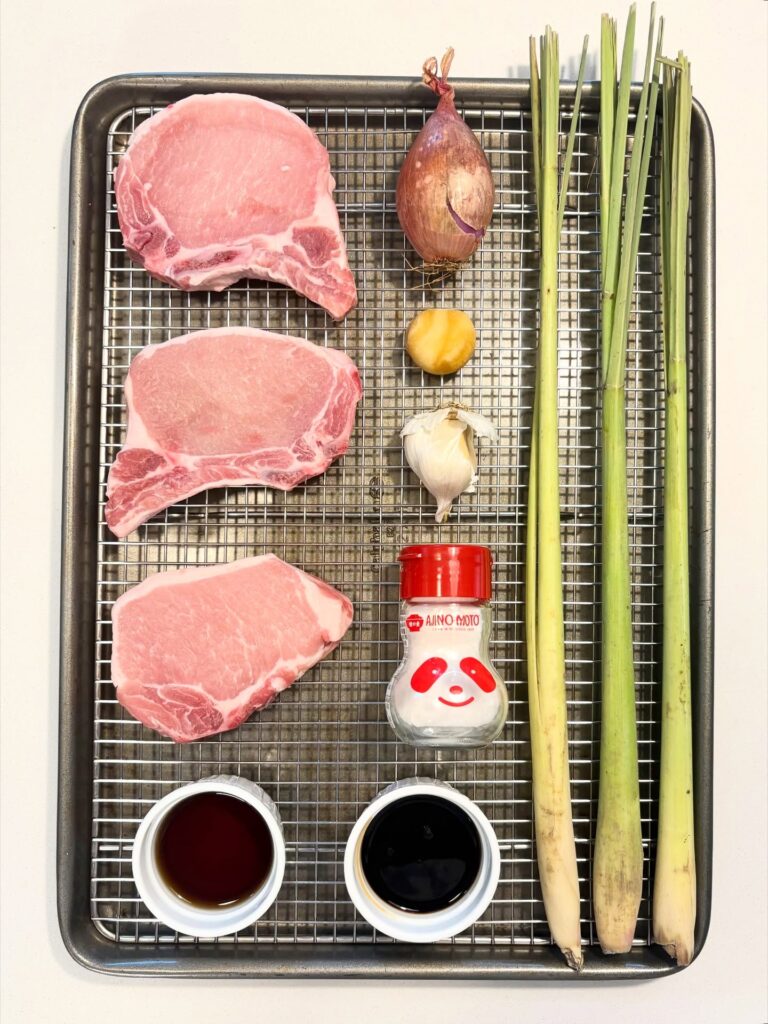
Recipe Card Summary & Storage Tips
| Prep Time | Cook Time | Total Time | Servings | Target Pull Temp |
| 15 Mins | 15 Mins | 30 Mins | 2-4 Chops | 140°F (Rest to 145°F) |
Should you somehow end up with leftovers, store the pork chops and the remaining glaze together in an airtight container in the refrigerator for up to 3 days. When reheating, skip the microwave entirely unless you enjoy eating rubber.
Instead, place the chops back into a small skillet with a splash of water or stock, cover it with a lid, and warm it gently over low heat until hot.
This creates a mini steam chamber that revives the sauce and keeps the meat perfectly tender for round two.
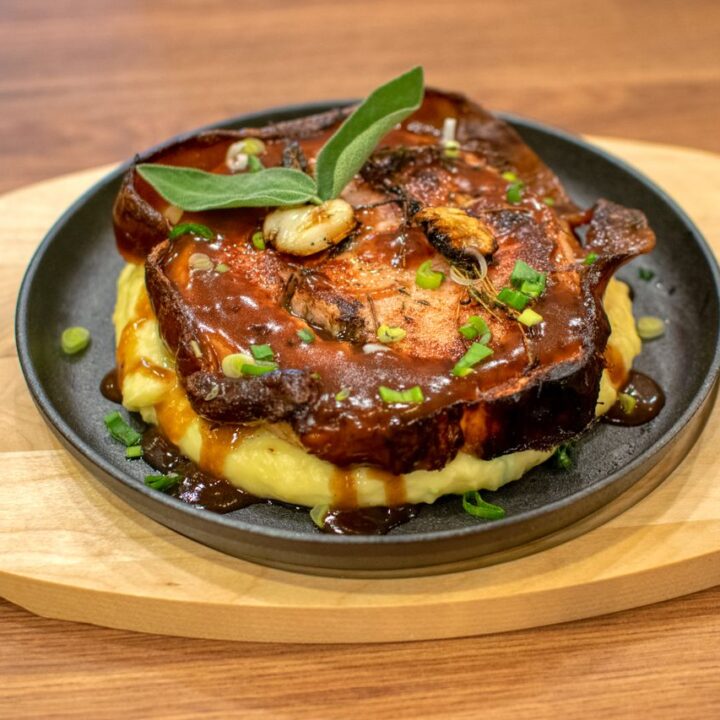
Juicy Mustard-Glazed Pork Chops Recipe
Image credit: Cristian Mihaila
Ingredients
- For the Pork & Sear
- 2 to 4 thick-cut, bone-in pork chops (at least 1.5 inches thick)
- 1 tablespoon high-smoke-point oil (avocado, canola, or grapeseed oil)
- Kosher salt and freshly cracked black pepper (to taste, applied generously)
- For the Pan Glaze
- 2 tablespoons Dijon mustard (for the smooth, sharp base)
- 2 tablespoons whole grain mustard (for texture and rustic flavor)
- 3 tablespoons raw honey or pure maple syrup
- 3 to 4 cloves garlic, smashed but left whole
- 2 to 3 sprigs fresh rosemary or thyme
- ⅓ cup crisp, dry white wine (such as Pinot Grigio) or low-sodium chicken stock for deglazing
Instructions
Before turning on the burner, pull the pork chops out of the refrigerator. Cold meat hitting a scorching hot pan causes the muscles to seize up instantly, squeezing out valuable moisture.
Let them sit on the counter for about 15 minutes to take the chill off.
Pro-Tip: A dry surface equals a spectacular crust. Wet meat steams; dry meat sears.
1. The Prep and the "Dry Brine" Technique
Pat the pork chops aggressively dry with paper towels until there is no surface moisture left. Season them generously on all sides with kosher salt and freshly cracked black pepper.
If you have an extra 10 minutes, let them sit with the salt on them; this acts as a quick dry brine, pulling moisture into the meat and altering the protein structure so it retains more juice during cooking.
2. Searing for Maximum Crust
Set a heavy cast-iron or stainless steel skillet over medium-high heat and add a tablespoon of high-smoke-point oil (like avocado or canola).
Once the oil is shimmering but not smoking, carefully lay the chops into the pan. Leave them completely alone for 4 to 5 minutes.
Resist the urge to poke, prod, or flip them early. You want to build a deep, mahogany-colored crust. Flip them over and sear the other side for another 3 to 4 minutes.
3. Rendering the Fat Cap
Using a pair of tongs, pick up the pork chops together and stand them up vertically on their fatty edges.
Press them gently into the hot pan for about 60 seconds. This renders down that thick strip of white fat, turning it incredibly crispy and filling your pan with a base of liquid pork gold.
Once rendered, remove the chops from the pan and set them aside on a plate; they will not be fully cooked yet, which is exactly what we want.
4. Building the Pan Glaze
Turn the burner heat down to medium. Toss in your smashed garlic and fresh herbs, letting them sizzle in the leftover pork fat for 30 seconds until your kitchen smells incredible.
Pour in your white wine or chicken stock to deglaze, using a wooden spoon to scrape up every single bit of browned food (the fond) stuck to the bottom of the skillet.
Whisk in the mustards and honey, letting the liquid come to a gentle simmer until it starts to thicken into a glossy, velvety sauce.
5. The Simmer and Baste
Nestle the pork chops back into the bubbling mustard-glazed pork chops base, along with any juices that collected on the plate.
Use a large spoon to continuously pool the hot glaze over the top of the chops. This process warms the meat through, glazes the exterior evenly, and ensures every bite is saturated with flavor.
Featured image credit: @skunkandgoattavern
