
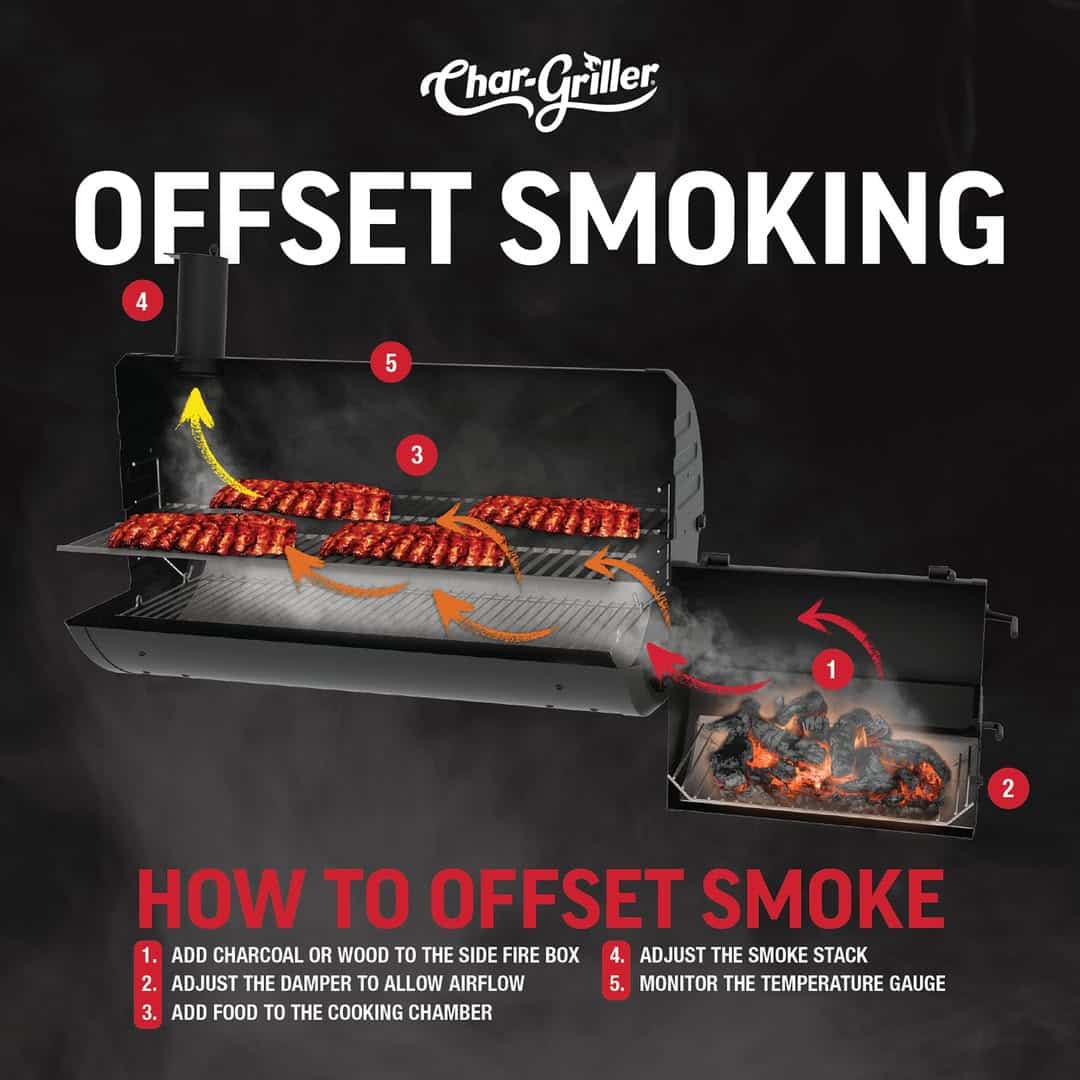
Few barbecue lessons are repeated as often as the advice to watch the smoke and understand what it’s saying.
Not the temperature.
Not the timer.
The smoke.
That advice might sound strange to beginners. After all, most people focus on thermometers, rubs, and cooking times. But experienced pitmasters know that smoke tells a story long before the food does.
In fact, one of the most valuable skills you can develop is learning how to read smoke color.
The color coming out of your smoker reveals what’s happening inside the firebox in real time.
It tells you whether your fire is burning cleanly, whether your fuel is getting enough oxygen, and whether your barbecue is headed toward incredible flavor or a bitter disaster.
I’ve seen cooks spend hundreds of dollars on premium briskets only to ruin them because they ignored the smoke. Meanwhile, some pitmasters can practically diagnose their smoker from fifty feet away just by looking at the chimney.
Let’s break down what smoke colors mean and how you can use them to cook better barbecue every time.
Why Smoke Color Is One of the Most Important BBQ Signals
Before food develops bark, before collagen breaks down, and before guests start hovering around the smoker asking when dinner will be ready, smoke is already influencing the final result.
Smoke color is essentially a visual report card for your fire.
When combustion is efficient, smoke carries pleasant aromatic compounds that enhance flavor.
When combustion is poor, smoke carries unwanted compounds that can create harsh, bitter, or even acrid flavors.
Think of smoke as a messenger.
A clean-burning fire sends good news.
A dirty-burning fire sends complaints.
The best pitmasters constantly monitor smoke because it provides immediate feedback. A thermometer tells you temperature. Smoke tells you quality.
And quality matters.
A perfectly cooked brisket with bad smoke flavor is still bad barbecue.
The Science Behind Smoke Color
To understand smoke color, you need to understand what smoke actually is.
Smoke is made up of tiny particles, gases, water vapor, and organic compounds released as wood burns.
As wood heats up, it goes through several stages:
- Moisture evaporates.
- Organic compounds begin breaking down.
- Combustible gases ignite.
- Charcoal forms.
- Remaining carbon burns away.
The color you see depends largely on the size and concentration of particles suspended in the air.
Large particles create thicker, whiter smoke.
Smaller particles create cleaner, thinner smoke.
When combustion becomes incomplete, more particles remain unburned, creating darker smoke colors.
This is why smoke can change throughout a cook. The fire is constantly evolving as fuel burns, airflow changes, and new wood is added.
A pitmaster isn’t just cooking meat.
They’re managing combustion.
That sounds much less romantic than barbecue, but that’s what’s really happening.
Thin Blue Smoke: The Gold Standard of Barbecue
If barbecue had a holy grail, it would be thin blue smoke.
This smoke can be surprisingly difficult to see. In some lighting conditions it appears almost invisible. In direct sunlight, you might notice a faint blue tint drifting from the chimney.
Thin blue smoke is the sign of clean combustion.
When wood burns efficiently, fewer particles remain suspended in the smoke stream. The result is cleaner flavor and a better balance between smoke and meat.
This is the smoke most pitmasters aim for because it delivers:
- Cleaner flavor
- Better bark development
- Less bitterness
- Better aroma
- More consistent results
One of the funniest moments at barbecue competitions is watching newcomers panic because they can’t see much smoke.
Meanwhile, experienced pitmasters are smiling.
Sometimes the best smoke is the smoke you can barely see.
If your smoker looks like a freight train charging through the backyard, that’s usually not a good sign.
Brisket, pork shoulder, ribs, and poultry all benefit from thin blue smoke because it enhances flavor without overpowering the meat.
White Smoke: Friend or Foe?
White smoke is probably the most misunderstood smoke color in barbecue.
Many beginners see thick white smoke and think:
“Wow, look at all that smoke flavor!”
Not exactly.
In reality, white smoke can mean several different things.
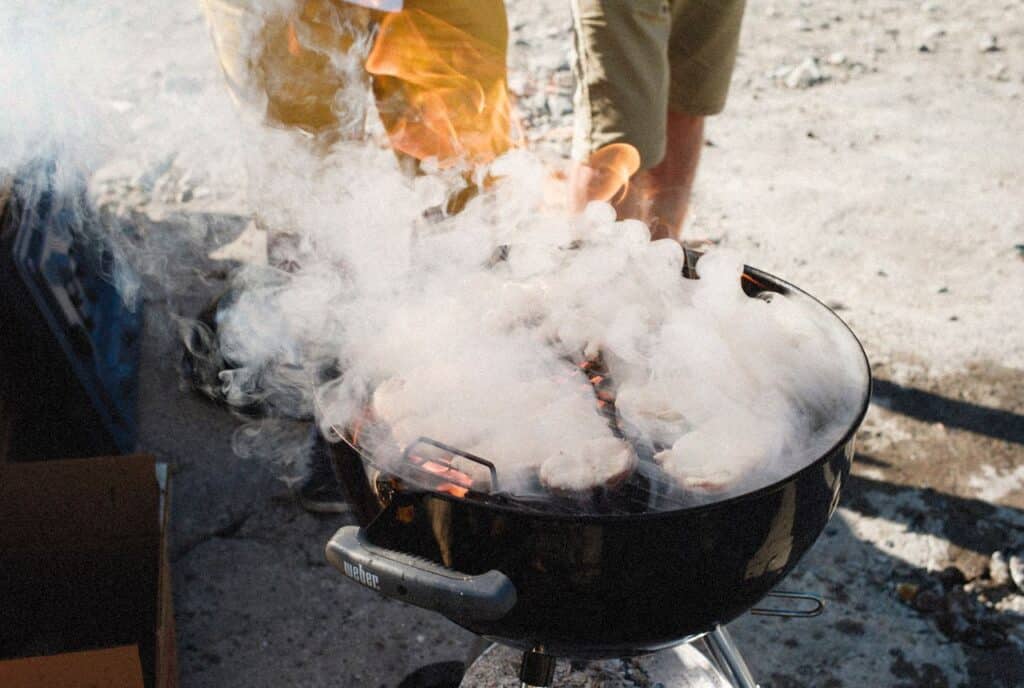
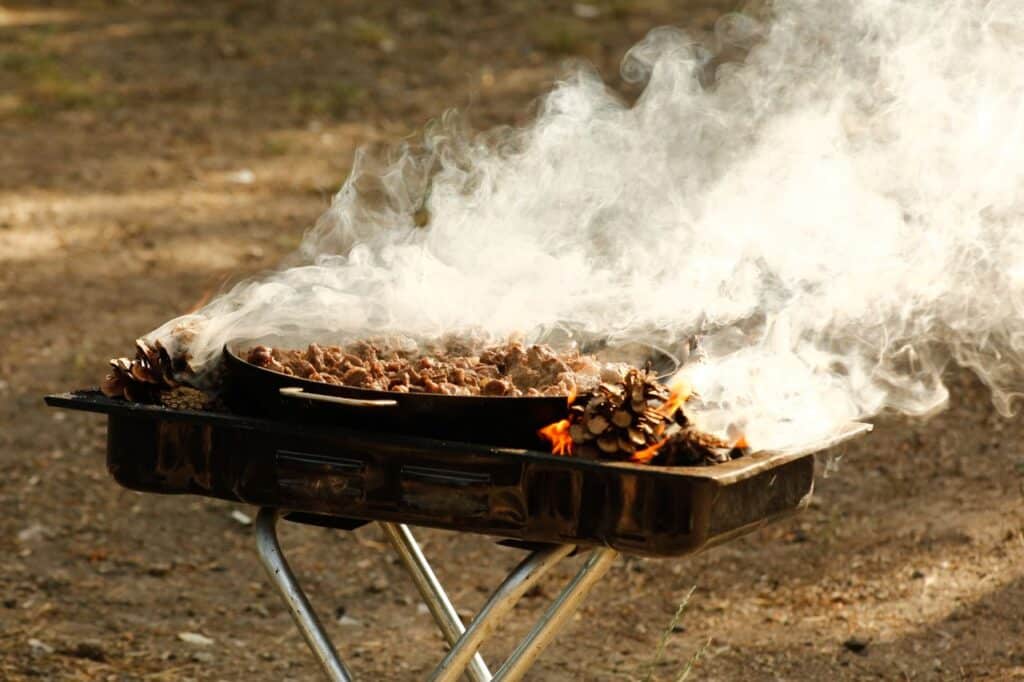
During startup, some white smoke is perfectly normal. Fresh wood contains moisture, and as that moisture evaporates, visible white vapor forms.
When adding new logs to an offset smoker, temporary white smoke is also expected.
The problem occurs when thick white smoke lingers for extended periods.
Heavy white smoke usually signals incomplete combustion.
Common causes include:
- Damp wood
- Restricted airflow
- Smoldering fuel
- Excess fuel in the firebox
When wood smolders instead of burns cleanly, it produces larger particles and compounds that can create unpleasant flavors.
This is where barbecue can start tasting bitter.
Or worse.
It can develop a flavor often described as licking an ashtray.
Not exactly the flavor profile most pitmasters are chasing.
If heavy white smoke continues for more than a few minutes, it’s usually time to evaluate airflow and fire management.
Gray Smoke: Your Fire Is Asking for Help
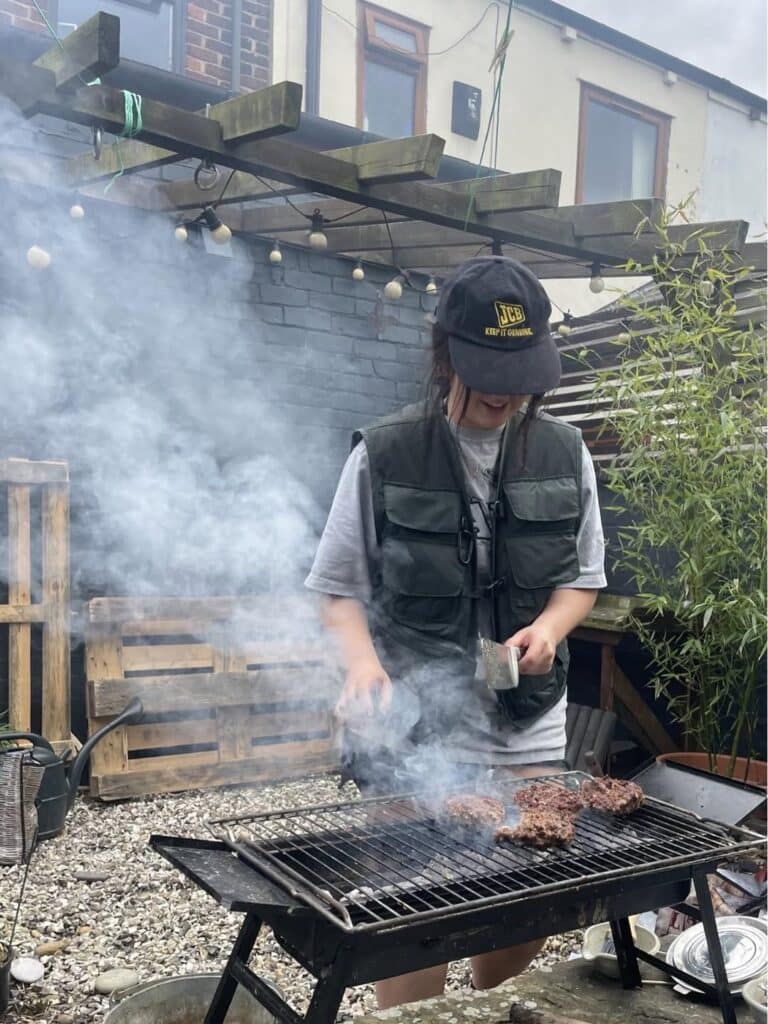
Gray smoke often represents the awkward middle ground between acceptable and problematic.
It’s not as alarming as black smoke.
But it’s not where you want to stay.
Gray smoke typically indicates that combustion efficiency has dropped.
The fire is burning, but not particularly well.
Common causes include:
- Too much fuel
- Poor oxygen supply
- Dirty fireboxes
- Damp wood
- Overcrowded coals
When I see gray smoke, I immediately start checking airflow.
Nine times out of ten, the fire simply needs more oxygen.
Remember this:
Fire needs fuel, heat, and oxygen.
Most barbecue problems come from disrupting one of those three ingredients.
Gray smoke often tells you oxygen is the missing piece.
Fortunately, adjustments are usually simple. Opening vents, rearranging fuel, or allowing the fire to breathe can often restore cleaner combustion quickly.
Black Smoke: The Smoke You Want to Avoid
If thin blue smoke is the hero of barbecue, black smoke is the villain.
Black smoke almost always indicates serious combustion problems.
This smoke contains large amounts of soot and unburned particles.
Common causes include:
- Grease fires
- Excess fuel
- Severely restricted airflow
- Poor-quality fuel
- Excessive wood additions
Black smoke doesn’t just affect appearance.
It affects taste.
The resulting flavor can become:
- Harsh
- Acrid
- Bitter
- Dirty
- Overwhelming
In extreme situations, food can develop a coating of soot that ruins the entire cook.
Whenever black smoke appears, action should be immediate.
Open airflow pathways.
Reduce excess fuel.
Identify potential grease fires.
Allow the fire to stabilize before continuing the cook.
Black smoke is your smoker’s way of waving a giant red flag.
Ignore it at your own risk.
How Different Smokers Affect Smoke Color
Not all smokers produce smoke the same way.
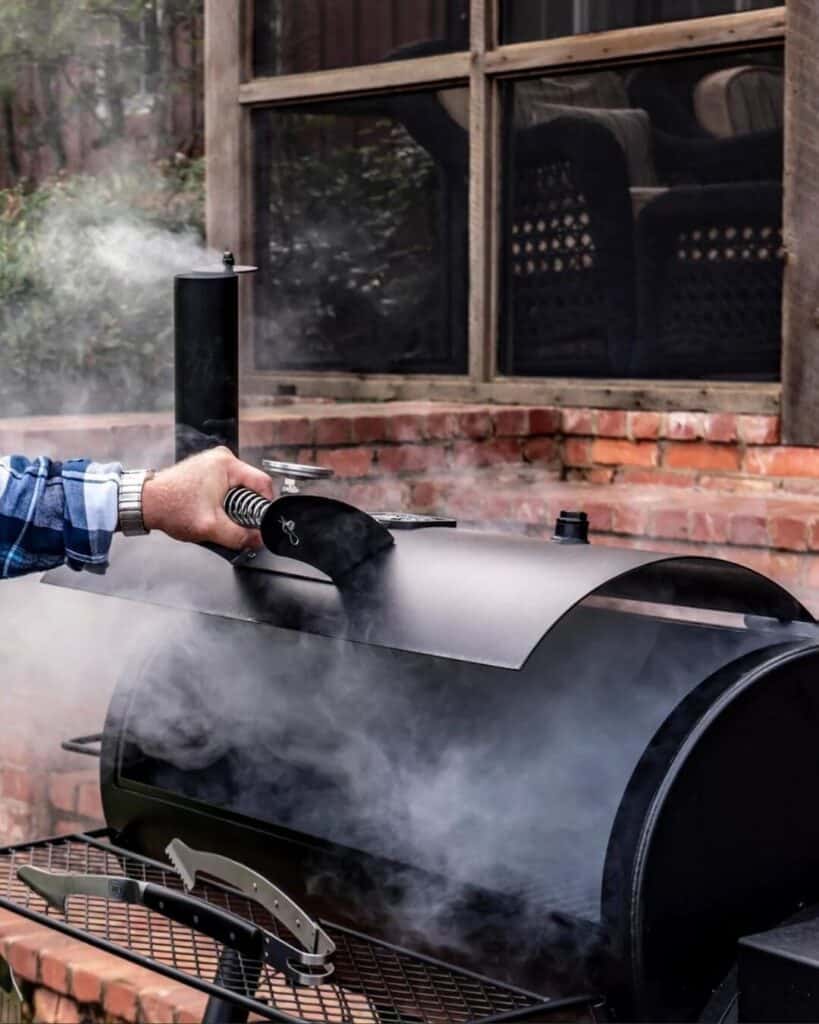
Offset Smokers
Offsets provide some of the clearest smoke signals because combustion occurs separately from the cooking chamber.
Small adjustments in airflow often create visible changes in smoke color.
This makes offsets excellent learning tools for understanding fire behavior.
Charcoal Smokers
Charcoal smokers tend to produce less visible smoke once stabilized.
Adding wood chunks can temporarily alter smoke color, especially during ignition.
Pellet Smokers
Pellet smokers often produce lighter smoke because computerized systems carefully regulate fuel delivery.
Many first-time pellet users worry there isn’t enough smoke.
Usually there is.
It’s simply cleaner and less visible.
Kamado Cookers
Kamado-style cookers excel at heat retention but can sometimes limit airflow if vents are adjusted too aggressively.
This can increase the risk of smoldering fires and thicker smoke.
The key is patience.
Small vent adjustments often produce significant results.
Reading Smoke Throughout the Cook
Smoke color changes naturally during different cooking stages.
Startup Phase
Expect visible white smoke.
The fire is establishing itself, moisture is evaporating, and fuel is beginning to ignite.
The goal is transitioning toward cleaner smoke before placing food inside.
Stabilization Phase
As temperatures level out, smoke should gradually become thinner.
This is often the ideal moment to begin cooking.
Active Cooking Phase
During the main cook, smoke should remain relatively clean and stable.
Frequent fluctuations may indicate inconsistent fuel management.
Refueling Phase
Adding wood often creates temporary bursts of white smoke.
This is normal.
The objective is returning to thin blue smoke as quickly as possible.
Experienced pitmasters anticipate these transitions and adjust before problems develop.
Common Smoke Problems and Easy Fixes
One of the biggest lessons I’ve learned is that smoke problems rarely fix themselves.
When something looks wrong, it usually is.
Thick White Smoke Won’t Disappear
Check:
- Airflow restrictions
- Wet wood
- Overloaded firebox
Smoke Turns Dark After Adding Wood
Possible causes include:
- Large wood pieces
- Cold logs
- Excess fuel additions
Try preheating wood before adding it to the fire.
Food Tastes Too Smoky
Contrary to popular belief, more smoke isn’t always better.
Clean smoke creates better flavor than large amounts of dirty smoke.
Bitter Flavor Despite Good Temperatures
Temperature and smoke quality are separate issues.
Your thermometer may look perfect while smoke quietly ruins flavor.
That’s why learning how to read smoke color is so important.
Pitmaster Tips for Producing Cleaner Smoke Every Time
After years behind smokers, I’ve found that cleaner smoke comes down to consistency.
A few habits make a huge difference.
Use properly seasoned wood.
Maintain steady airflow.
Avoid overloading the firebox.
Preheat wood before adding it.
Build smaller, more efficient fires.
Monitor smoke regularly.
Most importantly:
Trust your eyes.
Smoke provides real-time feedback that no thermometer can fully replace.
The chimney is constantly communicating with you.
You just need to learn the language.
Smoke Color Myths Every BBQ Cook Should Know
Several myths continue circulating throughout the barbecue world.
Myth #1: More Smoke Means More Flavor
Wrong.
Too much smoke often creates unpleasant flavors.
Myth #2: Thick White Smoke Is Always Good
Not true.
Extended white smoke frequently signals poor combustion.
Myth #3: Smoke Must Always Be Visible
Also false.
Some of the cleanest smoke is barely visible.
Myth #4: Smoke Color Doesn’t Matter
Ask any experienced pitmaster.
Smoke color matters enormously because it reflects combustion quality.
And combustion quality directly affects flavor.
Quick Smoke Color Reference Guide
Here’s the simple version:
Thin Blue Smoke
- Ideal condition
- Clean combustion
- Best flavor
Light White Smoke
- Often normal during startup
- Usually temporary
Heavy White Smoke
- Smoldering fuel
- Potential bitterness
Gray Smoke
- Reduced combustion efficiency
- Requires attention
Black Smoke
- Severe combustion problems
- Immediate correction needed
How Weather Conditions Can Change Smoke Color
One thing many backyard cooks overlook is how weather conditions affect the smoke coming out of a smoker. Sometimes the smoke isn’t changing at all – the environment around it is.
Several weather factors can make smoke appear different than it actually is:
- High humidity can make smoke look thicker and whiter because moisture in the air increases its visibility.
- Cold mornings often create the illusion of heavier smoke, even when the fire is burning cleanly.
- Windy conditions can distort smoke patterns, making it harder to judge combustion accurately.
That’s why experienced pitmasters don’t just watch the chimney – they observe the entire cooking environment. Smoke color should always be evaluated in context. A plume that looks concerning on a foggy morning may actually be perfectly clean-burning smoke.
Learning to separate weather effects from actual fire problems is an advanced pitmaster skill that develops with experience.
Why Wood Species Influence Smoke Appearance
Not all woods produce the same type of smoke. Different species contain varying levels of natural sugars, oils, moisture, and density, all of which influence both smoke color and aroma.
For example:
- Apple and cherry wood often produce lighter, sweeter-smelling smoke.
- Oak and hickory tend to create more visible smoke during ignition because of their density.
- Woods with higher moisture content may generate thicker smoke during the early stages of combustion.
This doesn’t necessarily mean one wood burns dirtier than another. In most cases, it simply reflects differences in the wood’s composition.
Many new cooks become concerned when they switch wood varieties and notice changes in smoke appearance. Professional pitmasters understand that wood selection influences both smoke behavior and flavor development.
The more familiar you become with your preferred woods, the easier it becomes to accurately interpret smoke color throughout the cook.
The Connection Between Smoke Color and Bark Formation
Most people associate bark development with seasoning and cooking time, but smoke quality plays a major role as well.
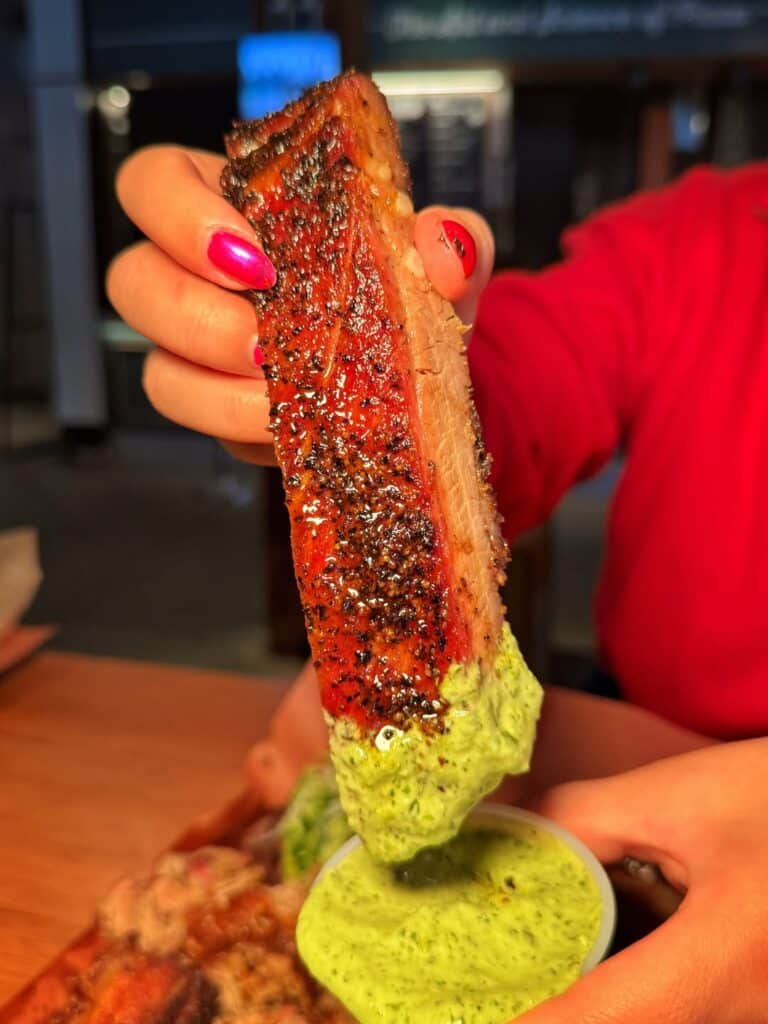
Clean-burning smoke contributes to the rich color, texture, and complexity that define great barbecue bark. Thin blue smoke carries desirable compounds that gradually interact with the meat’s surface during long cooks.
When smoke quality is good, it helps create:
- A darker, more attractive bark color
- Better flavor complexity
- Improved surface texture
- A cleaner overall barbecue profile
On the other hand, dirty smoke can create problems such as:
- Excessive soot buildup
- Harsh smoke flavors
- Bitter residues
- Uneven bark development
Think of bark as a record of everything that happened inside your smoker.
If the fire burned cleanly, the bark often reflects that success. Beautiful bark and clean smoke usually go hand in hand, which is why experienced pitmasters pay close attention to smoke throughout the entire cook.
What Smoke Color Can Tell You Before Flavor Problems Appear
One of the biggest advantages of learning how to read smoke color is catching mistakes before they reach the dinner table.
Smoke often reveals problems long before they become noticeable in the flavor of the meat. By the time bitterness develops, the damage may already be done.
Certain smoke colors can act as warning signs:
- Thick white smoke may indicate developing creosote buildup.
- Gray smoke often signals declining combustion efficiency.
- Black smoke usually points to serious airflow or fuel issues.
This is why experienced pitmasters treat smoke as an early warning system rather than simply a byproduct of cooking.
Instead of waiting until the meat tastes off, they make adjustments as soon as smoke conditions change. Monitoring smoke allows you to solve problems proactively rather than reactively, helping preserve flavor, texture, and overall barbecue quality throughout the cook.
How Experienced Pitmasters Read Smoke at a Glance
Watch a seasoned pitmaster walk past a smoker and something fascinating happens. They often glance at the chimney for only a few seconds before deciding whether everything is running properly.
That’s because years of experience teach them to evaluate much more than just smoke color.
They pay attention to:
- Smoke volume
- Smoke thickness
- Movement and flow
- Speed of dispersion
- Consistency over time
Clean smoke tends to flow smoothly and disappear quickly into the air. Dirty smoke often appears dense, sluggish, and concentrated.
Over time, these visual cues become second nature. It’s almost like reading body language. The smoker starts communicating without words, and experienced pitmasters learn how to interpret every signal.
Developing this skill takes practice, but once mastered, it transforms smoke from a mystery into one of the most valuable diagnostic tools in barbecue.
How Pitmasters Use Smoke Color to Perfect Their Fire
The ability to understand how to read smoke color separates casual backyard cooks from truly skilled pitmasters.
Smoke is more than a byproduct of fire.
It’s a diagnostic tool.
A flavor indicator.
A warning system.
And sometimes, it’s the difference between the best brisket you’ve ever cooked and one that tastes like it spent the afternoon sitting inside a campfire.
The next time you’re tending a smoker, spend less time staring at the thermometer and more time watching the chimney.
Learn what the smoke is telling you.
Pay attention to the colors.
Aim for that beautiful thin blue smoke whenever possible.
Do that consistently, and you’ll be cooking barbecue the same way professional pitmasters do – one clean-burning fire at a time.
Frequently Asked Questions about Reading Smoke Color
What is the best smoke color for barbecue?
The ideal smoke color is thin blue smoke. It indicates clean combustion, efficient burning, and balanced smoke flavor. Despite its name, thin blue smoke is often barely visible and may only show a faint blue tint in direct sunlight.
Most professional pitmasters aim for this type of smoke because it produces cleaner, more enjoyable barbecue.
Is white smoke always bad?
No. White smoke is normal during startup and after adding fresh wood to the fire. However, if thick white smoke continues for an extended period, it may indicate poor airflow, damp wood, or smoldering fuel.
Prolonged exposure to heavy white smoke can result in bitter flavors and creosote buildup.
Why does my smoke turn gray during a cook?
Gray smoke typically signals incomplete combustion. This often happens when the fire isn’t receiving enough oxygen or when too much fuel has been added at once. Improving airflow and allowing the fire to burn more efficiently can usually restore cleaner smoke.
What causes black smoke in a smoker?
Black smoke is usually caused by serious combustion issues such as restricted airflow, grease fires, excessive fuel, or poor-quality wood.
Since black smoke contains large amounts of soot and unburned particles, it should be corrected immediately to avoid negatively affecting the flavor of your food.
Can smoke color affect the taste of barbecue?
Absolutely. Smoke color often reflects the quality of combustion occurring inside the smoker. Clean smoke generally produces pleasant, balanced flavors, while dirty smoke can introduce bitterness, harshness, and unpleasant aromas.
Learning how to read smoke color helps you catch problems before they impact the final product.
Why can’t I see thin blue smoke very well?
That’s completely normal. Thin blue smoke contains fewer visible particles than white or gray smoke, making it difficult to see under certain lighting conditions. In fact, some of the cleanest-burning fires produce smoke that appears almost invisible.
Does the type of wood affect smoke color?
Yes. Different wood species contain varying levels of moisture, density, oils, and natural sugars, all of which influence smoke appearance.
Fruitwoods like apple and cherry often produce lighter smoke, while denser woods such as oak and hickory may create more visible smoke during ignition.
Should I wait for clean smoke before adding meat to the smoker?
In most cases, yes. Allowing the fire to stabilize and transition toward clean smoke before adding food helps prevent harsh smoke flavors from developing during the early stages of the cook.
How often should I check smoke color?
Experienced pitmasters monitor smoke throughout the entire cook. While there’s no need to stare at the chimney constantly, periodically checking smoke color can help you identify airflow issues, fuel problems, or combustion changes before they affect the meat.
Can weather conditions make smoke look different?
Yes. Humidity, cold temperatures, fog, and wind can all affect how smoke appears. For example, humid conditions often make smoke look thicker than it actually is.
That’s why professional pitmasters evaluate smoke color alongside environmental conditions rather than relying solely on appearance.
Is more smoke better for flavor?
No. One of the biggest misconceptions in barbecue is that more smoke automatically means more flavor. In reality, clean smoke produces better flavor than excessive smoke. Too much smoke can overpower the meat and create bitter or unpleasant tastes.
What’s the fastest way to improve dirty smoke?
The quickest solution is usually improving airflow. Opening vents, reducing excess fuel, using properly seasoned wood, and avoiding smoldering fires can help restore clean combustion and improve smoke quality within minutes.
Featured image credit: @chargrilleraustralia
