

Trying out some grilled monkfish.
Monkfish is sometimes hailed as “the poor man’s lobster,” which might not sound like much of a recommendation at first glance. However, the nickname is an apt one given that both monkfish and lobster both have a subtly sweet flavor—and the fact that monkfish is usually available at a fraction of the cost.
If you’ve never tried monkfish before, don’t be put off by the creature’s decidedly hideous appearance. While it’s widely regarded as one of the ugliest fish in the sea, the taste of the flesh more than makes up for its lack of aesthetic value. Besides, you’ll be able to remove the head before you eat it—that is, if this step hasn’t already been taken care of in advance (see Ingredients, below).

Here, we’ve provided our favorite recipe for grilled monkfish. The mild, lean flesh pairs especially well with the brightness of lemon, with the anise undertones of the dill providing a warm counterbalance. We recommend serving this dish with grilled asparagus and jasmine rice.
Anatomy of the Tail: Removing the Membrane
Before the fillet hits the grates, you must tackle the greyish outer membrane wrapping the tail. Unlike thin-skinned fish, monkfish has a tough, translucent layer that shrinks when heated, causing the fillet to warp and cook unevenly.
- Slide a sharp paring knife just beneath the connective tissue.
- Grip the edge with a paper towel for traction.
- Peel the membrane back in one smooth motion to reveal the tender, pale meat.
Removing this rubbery layer guarantees maximum surface area contact with your grill for a pristine, golden-brown sear.
Mastering Dual-Zone Heat for Thick Cutlets
Monkfish fillets are dense, meaty, and irregular in shape—making them notorious for burning on the outside while remaining raw in the center.
- Direct Heat Zone: Sear the fish over high heat for 2–3 minutes to lock in color and create defined grill marks.
- Indirect Heat Zone: Shift the cutlets to the cooler side with zero direct flame and close the lid.
This ambient convection heat cooks the center gently, preventing moisture loss and keeping your delicate lemon-dill infusion from scorching.
Unlocking Flavor with a Dry Brine
While wet brining adds moisture, a dry brine elevates both texture and taste. Rubbing coarse kosher salt and freshly grated lemon zest over the raw flesh 30 minutes prior to cooking yields key benefits:
- Concentrated Sweetness: Draws out excess water through osmosis while re-absorbing savory brine deep into the muscle fibers.
- Lobster-Like Texture: Creates a firmer, satisfying snap when you bite into the cooked meat.
- Superior Sear: Eliminates surface moisture to ensure a crispy crust rather than a soggy, steamed exterior.
Pairing Wine and Craft Brews
The rich, firm texture of grilled monkfish demands a beverage that cuts through its density while complementing bright herbal notes:
- Crisp White Wines: A high-acid New Zealand Sauvignon Blanc or an oaked Chardonnay mirrors the lemon and echoes the smoky grill char.
- Citrusy Craft Brews: A Belgian Witbier or dry Saison provides effervescent carbonation to cleanse the palate, with coriander and clove undertones that amplify the anise notes of the dill.
Upgrading the Butter: Dill-Lemon Compound Spread
Elevate your final presentation with a chilled compound butter instead of liquid brushings.
- Whip softened unsalted butter with minced fresh dill, lemon juice, sea salt, and cracked pink peppercorns.
- Roll the mixture into a log using parchment paper and chill until firm.
- Slice a thick coin of butter and place it directly onto the hot monkfish right as it leaves the grill.
The ambient heat creates a luxurious, velvety glaze that melts into every crevice, locking in juices while it rests.
Repurposing Leftovers for Monkfish Tacos
Avoid reheating leftover fillets whole, as monkfish quickly turns tough when warmed a second time. Instead, flake the cold meat into bite-sized chunks for gourmet fish tacos. Assemble your tacos with:
- Warm corn tortillas as the base.
- A crunchy cabbage slaw and diced avocado for contrast.
- A swirl of chipotle crema to balance the smoky char.
The underlying dill and lemon notes add an unexpected brightness that revitalizes yesterday’s dinner into a completely fresh meal.
Selecting Sustainable, Wild-Caught Yields
Making an outstanding meal starts with conscious sourcing at the seafood counter:
- Check the Source: Look for wild-caught monkfish from sustainable fisheries (such as US North Atlantic sources) that practice responsible harvesting.
- Talk to Your Fishmonger: Ask for tail meat harvested from larger fish, which offers the tightest muscle fibers and most consistent thickness.
Choosing sustainably caught yields protects marine ecosystems while delivering a cleaner, sweeter flavor profile straight to your dinner plate.
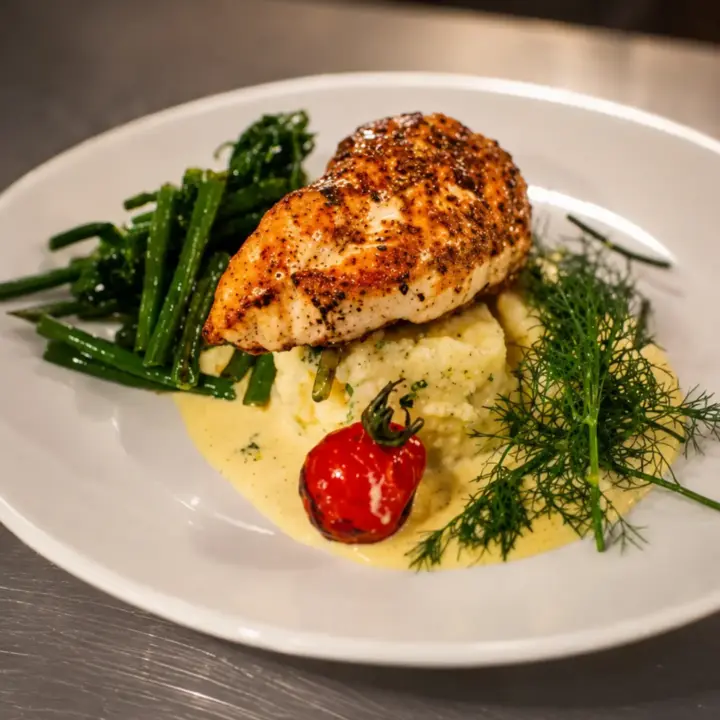
Grilled Monkfish with Lemon and Dill
Image credit: @byrneandwoodsww
Ingredients
- 2 pounds monkfish fillets, cleaned*
- 1/4 cup freshly squeezed lemon juice
- 2 tablespoons fresh dill, chopped and divided
- 1 clove garlic, smashed
- 1/4 cup extra-virgin olive oil
- 1/2 teaspoon kosher salt
- 1/2 teaspoon freshly ground black pepper
- Lemon wedges, for serving
- *Be sure to remove the membranes from the monkfish fillets before you start to cook. If you’d prefer, you can start with a whole monkfish and do the filleting yourself.
- This should provide you with plenty of leftovers to freeze for later use. Take a look at this video tutorial for a visual guide on how to skin and fillet a monkfish.
Instructions
1. In a medium nonreactive bowl, whisk together the lemon juice, garlic, salt, pepper, and 1 tablespoon dill. Slowly whisk in the olive oil in a steady stream until the mixture is well-blended.
2. Place the fish in a wide, shallow container. Pour the marinade over the fillets and turn them once to ensure that they’re fully coated.
3. Marinate the fish in the refrigerator for two hours, turning the fillets over after the first hour. It’s important not to leave it in the marinade for too long, or the fish will be have an unpleasantly mushy texture when it’s cooked.
4. Remove the monkfish from the marinade and allow the excess to drip off. Sprinkle the fillets with most of the remaining dill, reserving about 1 teaspoon for garnish.
5. Prepare a medium fire in a charcoal grill, or preheat a gas grill to medium-high. If you opt to use a pellet grill, the temperature should be set at about 400 degrees.
6. Grill the fillets, turning once and basting occasionally with the marinade, for about 10-12 minutes total. Be careful not to overcook it – because monkfish is so lean, the flesh dries out easily.
7. Remove the fish from the heat and arrange on a serving platter. Let rest for 5 minutes while you assemble the side dishes.
8. Garnish the monkfish fillets with the remainder of the fresh dill and serve with lemon slices.
And there you have it – the ideal recipe for grilled monkfish with lemon and dill. Enjoy!
Tips On How To Grill Monkfish
- Be sure to buy the freshest fish available. The flesh should be firm, with no noticeable fishy odor.
- Monkfish can sometimes give off a milky fluid when it’s cooked, which could cause flare-ups on the grill. Marinating the fish will help to alleviate this problem. Alternatively, you can thoroughly salt the flesh or soak it in brine for up to one hour before cooking.
- The flesh is a natural partner for the grill because it doesn’t flake or fall apart easily. It can even be cubed and skewered for kebabs.
- To check whether the monkfish is fully cooked, carefully slide a sharp paring knife into the thickest portion of the fillet. If the blade is hot to the touch when it comes out, the fish is ready to come off the grill. You can also press lightly on the top of the fillet—it should be firm and slightly springy beneath your fingers.
- Always allow the cooked fish to rest for at least five minutes before serving.

Related article: Grilled rockfish recipe

I like the idea of lemon & dill for monkfish, as the texture and some of the taste is like lobster. Your recipe looks interesting and I will try it, but as shashlyk my favourite grilling bethod for various proteins. This will allow for alternated veggies like, onion wedges, button mushrooms and bell peppers cut to 1 1/2″ pieces, same as the fish. However a 2 hour marination for most fish is too long. I’ll try half that, given monkfish firmness level. Recommendations for fish marination is typically no longer than 30 minutes..