
The smell of charcoal, the sound of sizzling meat, and that beautiful crust on a perfectly grilled steak. Some things never go out of style. But can traditional briquette grilling still compete with modern heating technology?
Here’s a question that might get a few backyard barbecue enthusiasts fired up: Is a traditional charcoal grill still worth the effort when newer grilling systems promise greater convenience and more precise temperature control?
For some grillers, nothing beats lighting briquettes, arranging glowing coals, and waiting for the perfect cooking temperature. Others would rather spend less time managing a fire and more time enjoying the food.
Fair enough.
Nobody invites friends over for barbecue just to spend the entire afternoon babysitting charcoal.
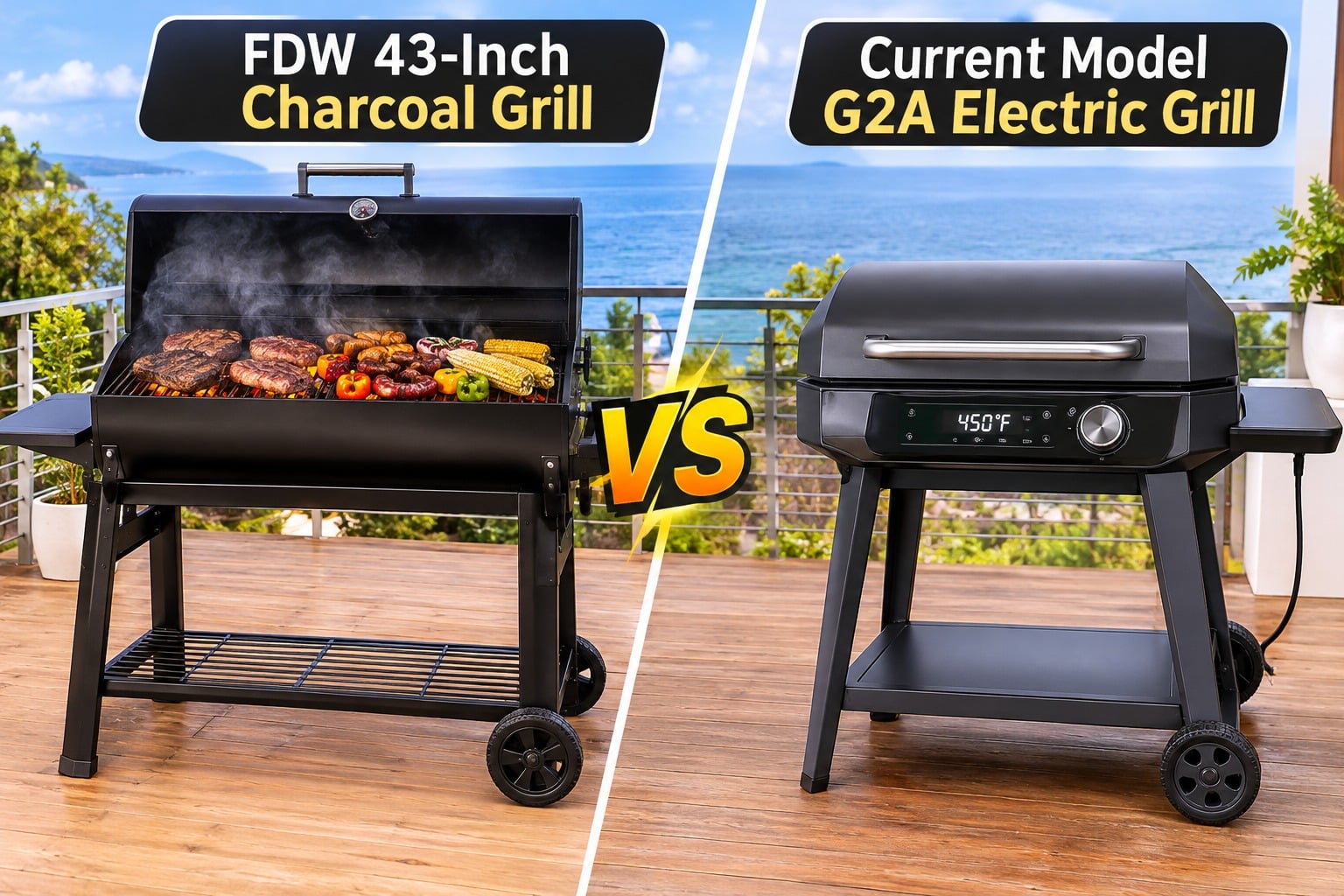
That’s what makes the FDW 43-Inch vs Current Model G2A comparison interesting. These two grills represent different approaches to outdoor cooking: the familiar appeal of traditional briquette grilling and the convenience of modern electric heating technology.
But newer doesn’t automatically mean better, and old-school doesn’t necessarily mean outdated. What really matters is how a grill performs when food hits the cooking surface.
In this review, we’ll examine design, heat performance, cooking versatility, ease of use, maintenance, and overall value to help determine which grill deserves a place in your backyard.
The goal is simple: find out whether traditional charcoal grilling still holds its ground or modern heating technology has finally taken the lead.
Note: This comparison focuses on documented product features and the general characteristics of each heating method. Actual performance measurements and hands-on testing results should be independently verified before publication.
Meet the Contenders: FDW 43-Inch vs Current Model G2A
Before getting into the details, it’s worth understanding what makes this comparison interesting.
The FDW 43-Inch represents the traditional briquette-grilling approach.
It uses charcoal as its primary heat source, allowing grillers to manage cooking temperatures through fuel placement, airflow, and fire management.
It’s a hands-on approach that rewards patience and a little practice.
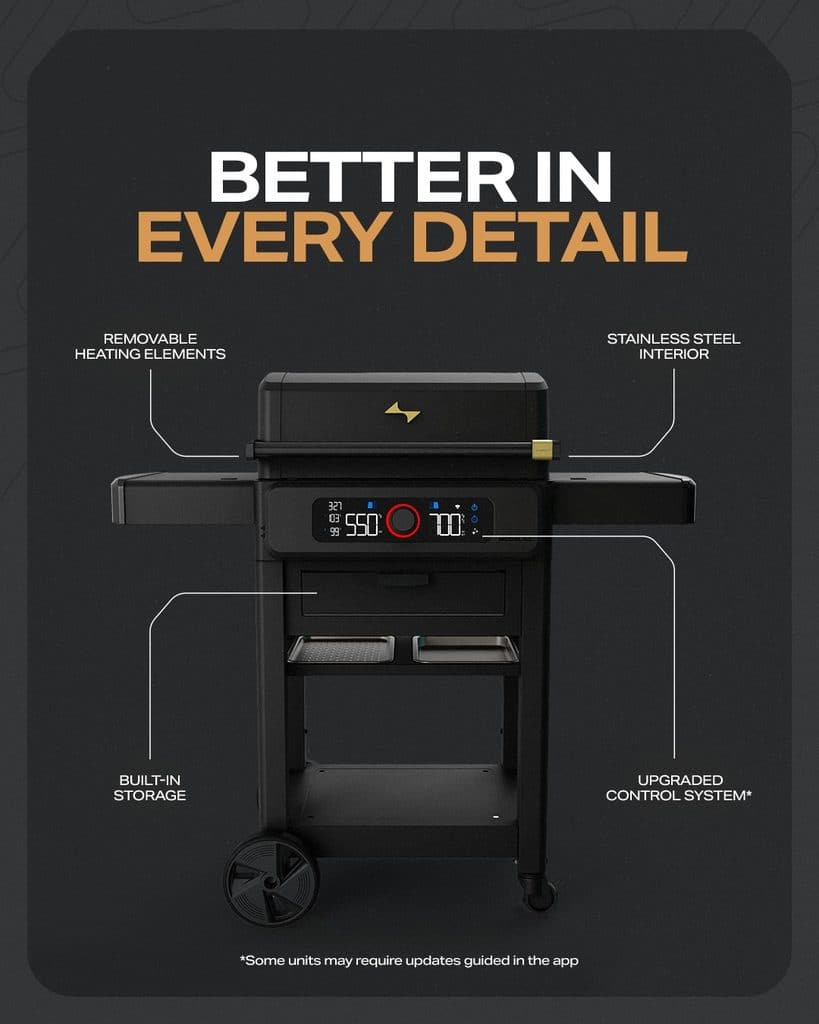
The Current Model G2A, on the other hand, represents a more modern approach to outdoor cooking. Its all-electric heating system eliminates the need for charcoal or gas, while its independent cooking-zone controls offer a different way to manage heat.
These aren’t simply two grills competing for the same spot on a patio. They represent two different grilling philosophies.
- FDW 43-Inch: Appeals to people who enjoy traditional charcoal cooking, hands-on fire management, and the distinctive characteristics of briquette grilling.
- Current Model G2A: Appeals to grillers who prioritize electric heating, independent temperature controls, and a more streamlined cooking routine.
The real winner depends on how effectively each model fits your cooking habits.

Design and Build Quality: Traditional Construction vs. Modern Engineering
A grill can have impressive features, but none of them matter much if the construction can’t handle regular outdoor use.
Build quality is the foundation of a good grilling experience. It affects durability, heat management, cleaning, and how well the equipment holds up after dozens of cookouts.
FDW 43-Inch: Traditional Grilling Appeal
The FDW 43-Inch offers a traditional charcoal-grilling format with a design intended for different outdoor cooking techniques.
Its 43-inch designation provides a useful starting point for evaluating its size, although buyers should check the manufacturer’s stated cooking-area dimensions rather than assuming the entire measurement represents usable cooking space.
Several construction details deserve attention:
- Cooking grates: Sturdy grates are important for handling repeated exposure to high temperatures and supporting different types of food.
- Charcoal support: The fuel tray should hold briquettes securely while allowing adequate airflow.
- Air vents: Adjustable ventilation helps regulate combustion and manage cooking temperatures.
- Exterior finish: Heat-resistant coatings and weather protection help reduce premature wear.
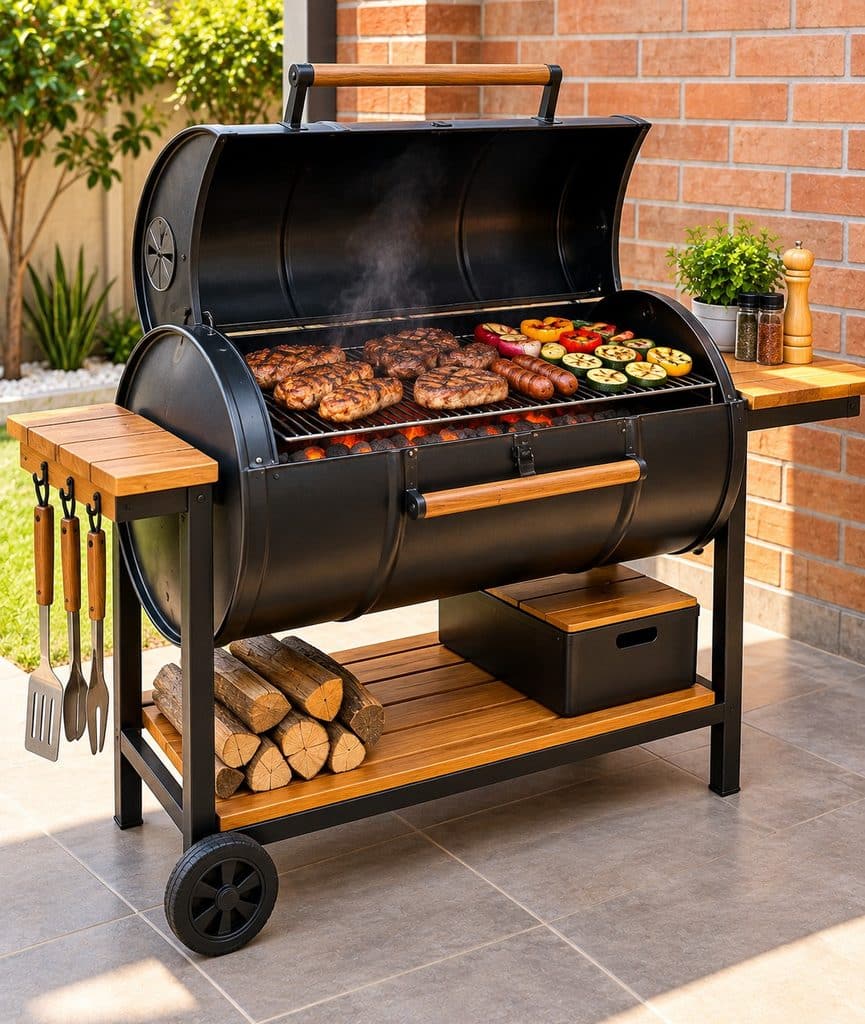
The FDW also features an offset firebox, which expands its potential beyond basic grilling. It gives users the opportunity to experiment with indirect cooking and smoking techniques.
Current Model G2A: Modern Electric Construction
The Current Model G2A takes a different approach with its electric heating system and modern cooking design.
Its dual-zone configuration is one of its defining features. Instead of depending on coal placement to create different heat zones, users can independently manage the temperature of each cooking area.
This arrangement makes the grill particularly interesting for people who regularly prepare different ingredients at the same time.
However, modern technology also introduces additional components that need proper care. Heating elements, electrical connections, and temperature controls should all be considered when evaluating long-term durability.
The takeaway: The FDW emphasizes traditional charcoal construction and versatility, while the G2A focuses on modern electric cooking and temperature management. Neither should be judged by appearance alone. Materials, component quality, and long-term reliability matter more.
Heat Performance: Briquettes Take on High-Tech Heating
This is where the FDW 43-Inch vs. Current Model G2A comparison really heats up.
After all, a grill’s primary job is to cook food properly. Fancy finishes and extra accessories are nice, but they won’t save a steak that’s burned outside and raw in the middle.
The biggest difference between these models is their heating approach.
FDW 43-Inch: The Familiar Power of Briquettes
The FDW 43-Inch relies on traditional charcoal cooking. Briquettes generate heat through combustion, creating the radiant heat needed to grill, sear, and cook different foods.
Briquettes require attention, but they also give grillers considerable influence over how the fire behaves.
Three things matter most:
- Airflow: Opening or closing the vents changes how much oxygen reaches the burning fuel. More airflow generally encourages more active combustion.
- Fuel placement: Concentrating briquettes in one area creates a hotter cooking zone, while spreading them out can provide more even heat.
- Distance from the coals: The distance between the food and burning charcoal influences how intensely the food receives direct heat.
The FDW’s adjustable air vents and offset firebox are particularly useful features to consider. The offset firebox provides another cooking arrangement for indirect heat and smoking.
For anyone who enjoys tending a fire, this is part of the fun. You can build a hot zone for searing steaks and a cooler area for finishing thicker cuts.
The downside? Briquettes don’t respond instantly to adjustments. Once they’re burning, temperature changes take time. A little patience is essential.
Current Model G2A: Modern Electric Heating
The Current Model G2A takes a different route. It’s an all-electric grill designed to provide powerful heat without charcoal or gas.
One of its standout features is dual-zone precision cooking with independent temperature control.
That means users can adjust the two cooking zones separately rather than relying entirely on fuel placement and airflow.
Why does that matter?
Imagine grilling chicken on one side while keeping vegetables at a different temperature on the other. Or cooking burgers while preparing ingredients that require gentler heat.
Independent controls make this kind of cooking more manageable.
The G2A is also designed for balconies, patios, and backyards where an all-electric grilling option may be more practical than traditional charcoal cooking. However, access to an appropriate electrical connection is essential.
Heat performance verdict: The FDW offers hands-on fire management and the flexibility of charcoal cooking. The G2A offers independent electric temperature controls and a more controlled approach to managing two cooking zones.
Neither approach is automatically better; the choice depends on how you prefer to cook.
Cooking Performance: Flavor, Texture, and Versatility
Heat is important, but the food is the real reason anyone buys a grill. A grill can have excellent temperature controls and still leave you disappointed if it can’t deliver the flavor, texture, and cooking results you expect.
FDW 43-Inch: Traditional Charcoal Flavor
Charcoal has a special place in barbecue culture for good reason. Briquettes provide radiant heat, while dripping fats and juices can vaporize on hot surfaces and contribute to the characteristic aromas associated with grilling.
That combination helps create the familiar backyard barbecue experience.
Steaks benefit from direct high heat, which helps develop a browned exterior. Chicken can be moved away from the hottest area to cook more gently. Vegetables can be grilled over moderate heat until their edges become beautifully caramelized.
The FDW’s barrel-style layout, adjustable vents, and offset firebox also make it worth considering for people interested in experimenting with different cooking arrangements.
Pitmaster tip: Don’t spread your briquettes across the entire firebox automatically. Creating a hotter side and a cooler side gives you room to sear food before moving it away from direct heat to finish cooking.
Current Model G2A: Consistent Electric Grilling
Electric grilling doesn’t require charcoal to produce excellent food. The G2A’s heating system offers a different way to approach everyday barbecue.
Its independently controlled cooking zones are particularly useful when preparing different ingredients at the same time.
For example:
- Burgers can cook in one zone while buns are warmed separately.
- Chicken can be cooked at a suitable temperature without constantly rearranging charcoal.
- Vegetables can receive gentler heat while thicker cuts continue cooking.
The main difference is flavor. An electric grill does not produce charcoal combustion aromas, so it won’t automatically replicate the traditional smoky character associated with briquettes.
That doesn’t mean the food has to be boring. Good seasoning, proper browning, marinades, and careful temperature management can still produce satisfying results.
Cooking performance verdict: Choose the FDW if traditional charcoal flavor and hands-on cooking are priorities. Consider the G2A if independent temperature management and convenient multi-zone cooking matter more.
Ease of Use: Which Grill Makes Cooking Less Complicated?
A great grill should make cooking enjoyable, not feel like a second job.
The FDW 43-Inch requires more preparation. You’ll need to arrange the briquettes, light the fuel, wait for the coals to reach a suitable cooking condition, and monitor the fire throughout the session.
It’s a familiar routine for charcoal enthusiasts, but beginners may need a few attempts to get comfortable.
The Current Model G2A removes much of that fire-management process. Instead of arranging briquettes, users work with electric temperature controls. Its dual-zone setup also reduces the need to constantly move food around to find the right heat.
However, electric convenience comes with its own requirements. You need a suitable power supply, proper placement, and compliance with the manufacturer’s electrical and outdoor-use instructions.
Ease-of-use winner: The G2A offers a more straightforward approach to temperature management. The FDW provides a more traditional experience for people who enjoy managing a live fire.
Fuel Consumption and Operating Costs: Which One Is Easier on Your Wallet?
The initial purchase price is only part of the story. A grill also needs fuel or electricity, cleaning supplies, and occasional replacement parts.
The FDW 43-Inch uses charcoal briquettes or other suitable charcoal fuel. Its operating costs depend on how often you grill, how much fuel you burn, and how long your cooking sessions last.
A quick burger session might use relatively little charcoal. An afternoon of smoking ribs, however, can consume considerably more. Poor airflow management and unnecessary fuel additions can also increase consumption.
The G2A eliminates the need to purchase briquettes. Instead, it uses electricity, so its running cost depends on your local electricity rate, cooking temperature, and time spent grilling.
Here’s the practical difference:
- FDW 43-Inch: Ongoing charcoal expenses, plus the occasional need for fire starters and cleaning supplies.
- Current Model G2A: Electricity consumption, with no charcoal purchases required.
Neither system is automatically cheaper. The fairest comparison involves calculating the cost of several typical cooking sessions rather than looking at fuel prices alone.
For frequent grillers, those small operating expenses can add up over a year.
Cleaning and Maintenance: Keeping Your Grill Ready for the Next Cookout
Nobody likes cleaning a grill. It’s probably the least glamorous part of barbecue, right after scraping burnt cheese off a cooking grate.
However, regular maintenance is essential for food safety, reliable operation, and extending the life of your equipment.
FDW 43-Inch: Managing Ash and Grease
The FDW requires the usual maintenance associated with charcoal cooking.
After the coals have completely cooled, remove the ash and dispose of it safely. Never assume that charcoal is harmless simply because it no longer glows. Ash can conceal hot embers for hours.
The cooking grates also need attention. Scrape away food residue, remove accumulated grease, and inspect the firebox for corrosion.
Its offset firebox and multiple cooking areas make it particularly important to keep different sections clean.
Current Model G2A: Electric Grill Maintenance
The G2A avoids ash disposal, which is a considerable convenience.
However, electric grills still require regular cleaning. Grease, food residue, and cooking debris can accumulate around the cooking surface and other accessible components.
Before cleaning, disconnect the power and allow the grill to cool completely. Follow the manufacturer’s instructions for cleaning the heating components. Never immerse electrical parts in water or use cleaning methods that could damage them.
Maintenance verdict: The G2A has an advantage when it comes to avoiding charcoal ash. The FDW requires more traditional firebox maintenance, while the electric model needs proper care of its heating and electrical components.
Features and Practical Convenience: What Do You Actually Get?
A grill’s feature list can look impressive, but the real question is whether those features make cooking easier.
The FDW 43-Inch has several practical features worth highlighting. Its double-grill-mesh design supports different barbecue arrangements, while its temperature monitor helps users keep an eye on cooking conditions.
It also includes adjustable air vents, an offset firebox, and wheels for moving the grill. The combination gives it flexibility for different outdoor cooking activities.
The Current Model G2A focuses on a different set of conveniences.
Its standout feature is dual-zone precision cooking with independent temperature control. It also offers all-electric operation and is marketed for balconies, patios, and backyards.
Here’s a quick comparison:
| Feature | FDW 43-Inch | Current Model G2A |
| Heating method | Charcoal | Electric |
| Heat management | Air vents and fuel arrangement | Independent zone controls |
| Cooking layout | Double grill mesh | Dual-zone cooking |
| Temperature monitoring | Built-in temperature monitor | Independent temperature controls |
| Offset firebox | Yes | No charcoal firebox |
| Ash cleanup | Required | Not required |
| Electrical connection | Not required for heating | Required |
| Wheels | Listed feature | Check configuration |
The FDW offers flexibility through its traditional charcoal layout. The G2A offers convenience through independently managed electric cooking zones.
Feature winner: The G2A stands out for modern temperature management, while the FDW provides traditional charcoal versatility.
Pros and Cons: Where Each Grill Shines
Let’s put the comparison into practical terms.
FDW 43-Inch Charcoal Grill
Pros
- Traditional charcoal cooking with briquettes.
- Adjustable air vents for managing combustion.
- Offset firebox for exploring smoking and indirect cooking.
- Double-grill-mesh design for different cooking arrangements.
- Temperature monitor for checking cooking conditions.
- Wheels for easier movement around the cooking area.
Cons
- Requires time to prepare and light charcoal.
- Temperature adjustments require attention and experience.
- Ash and charcoal residue need regular cleaning.
- Smoke and combustion make it less suitable for some residential settings.
- Fuel consumption varies with cooking time and fire management.
The FDW is appealing to people who enjoy the process as much as the finished meal. It’s not necessarily the easiest option, but it offers a traditional barbecue experience.
Current Model G2A Electric Grill
Pros
- All-electric heating system.
- Dual-zone cooking with independent temperature controls.
- No charcoal preparation or ash disposal.
- More straightforward temperature management.
- Designed for balconies, patios, and backyards.
Cons
- Requires access to a suitable electrical connection.
- Does not reproduce traditional charcoal combustion flavor.
- Electricity costs depend on usage and local rates.
- Electrical and heating components require proper maintenance.
- Initial purchase price is considerably higher than the listed FDW retail example.
The G2A makes a strong case for convenience. It removes several traditional charcoal-related tasks and gives users separate controls for their cooking zones.
Price and Overall Value: Which One Is Worth Your Money?
Let’s talk money. Because even the most beautiful grill in the world becomes less attractive when it starts eating into the budget for steaks.
The FDW 43-Inch is positioned as a more budget-friendly option. A Walmart Business listing showed it at approximately $109.99, although retail prices and availability can change.
The Current Model G2A sits in a considerably higher price category. Home Depot listed the Slate version at approximately $1,199, with other color options also listed around that price.
That’s a substantial difference, so buyers should think carefully about what they’re getting for the additional investment.
The FDW makes sense for people who want an affordable entry into charcoal grilling. Its traditional cooking setup, offset firebox, and double-grill-mesh design provide several possibilities without requiring a premium purchase.
The G2A, on the other hand, asks buyers to invest significantly more in an electric grilling system with independent temperature controls.
However, price alone shouldn’t determine the winner.
Consider these questions before purchasing:
- How frequently will you use the grill?
- Do you prefer charcoal flavor or electric convenience?
- Will you benefit from independent cooking zones?
- Are charcoal and electricity readily available?
- How much time do you want to spend preparing and cleaning the grill?
Value verdict: The FDW is the more accessible purchase for budget-conscious charcoal enthusiasts. The G2A is a premium alternative for people who place greater importance on electric heating and independent temperature management.
The best investment is the grill that matches your cooking habits, not necessarily the one with the longest feature list.
Final Verdict: Should You Choose Briquettes or High-Tech Heat?
So, which grill deserves the winning spot? The answer depends on what you want from your barbecue experience.
The FDW 43-Inch is a compelling option for traditionalists. Its charcoal-based design, adjustable air vents, offset firebox, and double-grill-mesh arrangement provide plenty of opportunities to experiment with different grilling techniques.
It also has a major advantage in upfront affordability.
The Current Model G2A takes a more modern approach. Its all-electric heating system and independent temperature controls make it attractive to people who want a more streamlined way to manage their cooking zones.
It costs considerably more, but its features target a different kind of grilling experience.
Choose the FDW 43-Inch if:
- You enjoy traditional charcoal grilling.
- You want the flexibility of an offset firebox.
- You appreciate hands-on temperature management.
- You want a more affordable grill.
Choose the Current Model G2A if:
- You prefer electric grilling.
- You value independently controlled cooking zones.
- You want to avoid charcoal preparation and ash cleanup.
- You’re comfortable paying more for modern heating convenience.
Ultimately, the FDW 43-Inch vs. Current Model G2A debate isn’t really about old versus new. It’s about choosing the kind of grilling experience you enjoy most.
Some people want glowing briquettes, smoky aromas, and the satisfaction of managing a live fire. Others want independent temperature controls, less preparation, and more time to enjoy the food.
Both approaches have their place.
And honestly, the best grill is the one that gets you cooking more often. After all, nobody ever made unforgettable barbecue by leaving the grill covered in the backyard.
Frequently Asked Questions
Is the FDW 43-Inch better than the Current Model G2A?
Neither grill is universally better. The FDW 43-Inch is suited to traditional charcoal cooking and budget-conscious buyers. The Current Model G2A is better suited to people who prefer electric heating and independent temperature controls.
Does the FDW 43-Inch use charcoal briquettes?
Yes. The FDW 43-Inch is a charcoal grill that can use charcoal briquettes or suitable lump charcoal. Its adjustable air vents help regulate airflow and combustion.
Does the Current Model G2A use charcoal?
No. The Current Model G2A is an all-electric grill. It uses electricity rather than charcoal or briquettes to generate cooking heat.
Which grill is easier to clean?
The Current Model G2A has an advantage because it doesn’t produce charcoal ash. However, both grills require regular cleaning to remove grease, food residue, and cooking debris.
Can the Current Model G2A produce smoky charcoal flavor?
Not in the same way as a charcoal grill. Electric heating doesn’t produce the same combustion aromas associated with burning charcoal. However, seasoning, marinades, browning, and proper cooking techniques can still produce delicious results.
Which grill offers better value for money?
The FDW 43-Inch has a considerably lower initial purchase price. The G2A costs more but offers independent electric temperature controls. The better value depends on your budget and preferred cooking style.
Final takeaway: Traditional briquettes still have plenty of firepower, but modern electric grilling brings a different kind of convenience to the backyard. Whether you choose the FDW 43-Inch or Current Model G2A, understanding what each grill does best will help you make a smarter purchase.
Featured image credit: ChatGPT
