
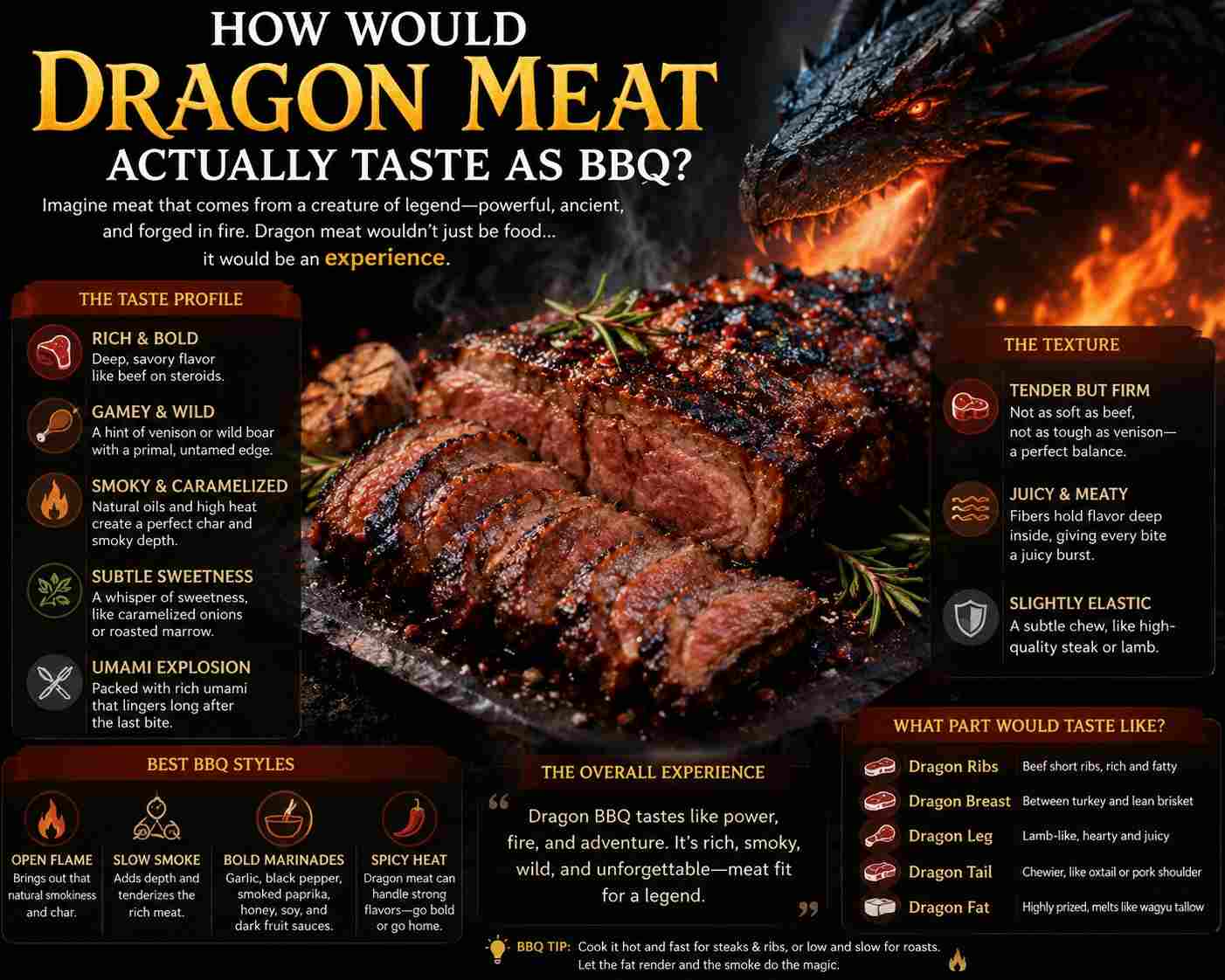
A dragon on the BBQ sounds like the kind of idea that gets you banned from the neighborhood cookout before the charcoal is even lit.
But forget the fantasy for a minute and ask a surprisingly serious food question: what would dragon meat actually taste like?
Nobody has a reliable answer, mostly because nobody has successfully bought a dragon shoulder at the butcher counter.
The closest we’ve come is folklore, fantasy novels, video games, and the occasional ambitious person with a very questionable barbecue menu.
Still, we can make an educated guess.
Take what we know about real animals, muscle structure, diet, fat, connective tissue, and the way smoke transforms meat.
Add a creature the size of a small house with wings, scales, and a serious attitude problem, and suddenly dragon meat becomes a fascinating BBQ thought experiment.
Would it taste like beef? Venison? Chicken? Crocodile? Something completely different?
My money is on rich, intensely savory, slightly gamey meat with some seriously tough muscles. And if you picked the wrong cut, you might spend six hours smoking it only to discover that your legendary feast has the texture of a leather boot.
So let’s break down what a dragon might taste like – and how we’d cook it if one ever wandered into the backyard.
What Kind of Meat Would a Dragon Actually Have?
Before seasoning the ribs and arguing about wood chunks, we need to think about the animal itself.
Dragons come in countless forms across mythology and modern fiction. Some are enormous reptiles. Others resemble giant winged dinosaurs. Some breathe fire, hoard treasure, and apparently have enough spare time to terrorize entire kingdoms.
That makes their anatomy difficult to pin down.
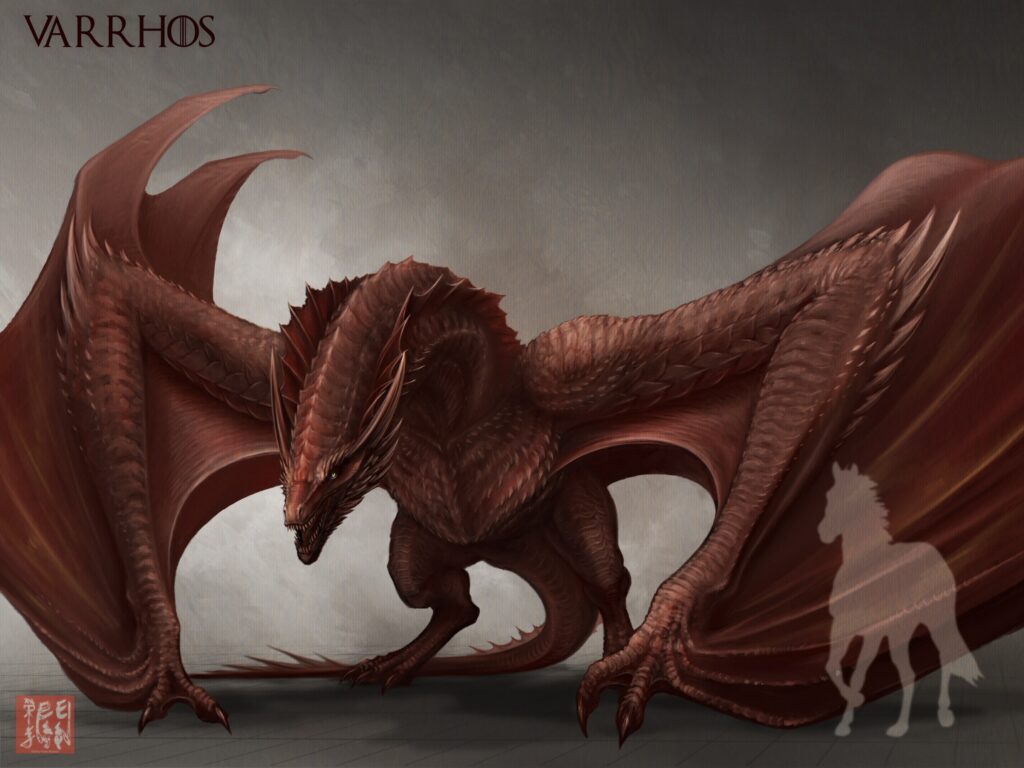
For our BBQ experiment, let’s assume we’re dealing with a classic large, winged dragon: muscular, heavy, active, and capable of flight.
That last part matters.
Size Means Muscle
A large animal that moves its body around all day would develop substantial muscle. A flying dragon would need even more.
Birds provide a useful real-world comparison. Flight requires powerful muscles, especially around the breast and shoulders. Those muscles are constantly working, which can make them lean, dense, and full of connective tissue.
A dragon’s wings could create a similar problem.
The bigger the dragon, the more work its muscles would have to do to move all that weight. That suggests some cuts could be wonderfully flavorful but frustratingly tough.
Think less “instant steak” and more “give me the Dutch oven.”
The legs would probably be another story. A massive dragon landing, walking, climbing, and launching itself into flight would need tremendous lower-body strength.
That could produce deeply flavored, heavily worked meat.
And heavily worked muscle tends to need more careful cooking.
The Diet Changes Everything
What a dragon eats could be just as important as its size.
A dragon that spends its days eating sheep, cattle, and unfortunate knights would probably develop a different flavor profile from a dragon living on fish.
Diet influences the fat, flavor, and composition of meat in real animals.
Consider beef. Grass-fed and grain-finished beef can have noticeably different flavor characteristics. Wild game can taste different from farm-raised meat. Even among the same species, age, diet, activity, and environment can change the final product.
So dragon meat would probably vary dramatically from one dragon to another.
A young dragon that eats mostly fish might produce relatively mild, lean meat. An ancient mountain dragon that has spent 400 years eating livestock and flying through freezing valleys?
That’s probably going to be some serious meat.
And possibly some serious paperwork.
So, What Would Dragon Meat Actually Taste Like?
Here’s where things get interesting.
The safest prediction is that dragon meat wouldn’t taste like one familiar animal. Different cuts would probably have different characteristics.
But we can make some useful comparisons.
Would Dragon Meat Taste Like Beef?
Possibly.
Large land animals often produce substantial muscle and rich, savory flavors. If a dragon had a mammal-like muscle structure, certain cuts could be comparable to beef.
Imagine something between a hearty roast and a strongly flavored steak.
The shoulders and legs would likely have plenty of connective tissue. Cooked properly, that connective tissue could break down into gelatin, producing the kind of luscious texture BBQ fans chase.
Low heat plus time could turn a tough dragon shoulder into something remarkably tender.
That’s the same basic principle behind pulled pork and brisket.
The trick would be patience.
A dragon isn’t something you’d want to throw over screaming-hot coals for ten minutes and call dinner.
Unless dinner is “dragon-flavored hockey puck.”
Could It Taste Like Venison?
This might be an even better comparison.
Wild animals tend to develop strong, active muscles. That can contribute to a more pronounced flavor than the mild meat many people are accustomed to.
A dragon that spends its life flying, hunting, climbing mountains, and generally refusing to sit still could have a distinctly gamey character.
Think venison, goat, or other strongly flavored meats rather than mild supermarket chicken.
That doesn’t necessarily mean unpleasant.
Gamey can be delicious when balanced properly.
A rich, slightly earthy meat paired with smoke, black pepper, garlic, and a sharp vinegar-based sauce could make a spectacular combination.
The problem comes when everything gets too strong.
You wouldn’t want to cover naturally flavorful dragon meat with a sauce so sweet that the animal’s entire personality disappears.
What About Crocodile or Alligator?
Here’s another intriguing comparison.
Crocodile and alligator meat are often described as mild, firm, and somewhat similar to poultry, depending on the cut.
A reptilian dragon might share some broad characteristics with reptiles, although appearance alone doesn’t tell us what its muscles would taste like.
Scales don’t automatically mean “tastes like alligator.”
Otherwise, we’d have a lot more interesting options at the seafood counter.
Still, reptile meat gives us a useful reference point for imagining firm, lean muscle with a relatively clean flavor.
A dragon wing, for example, might be surprisingly lean compared with a fatty beef rib.
That would make cooking technique extremely important.
The Most Likely Dragon Meat Flavor Profile
Put all those possibilities together, and here’s my best fictional tasting note:
Rich. Savory. Dense. Slightly gamey. Potentially lean. With enough connective tissue to reward slow cooking.
Depending on the species and diet, you could expect:
- A deep meaty flavor
- Firm muscle fibers
- Some gamey or earthy notes
- Different flavors between cuts
- Potentially low fat in heavily worked areas
- Richer flavor around fatty sections
- A texture ranging from steak-like to pulled-meat tender
In other words, dragon meat might be less about one universal flavor and more about finding the right cut.
That’s something BBQ already teaches us.
Brisket doesn’t taste like ribs. Ribs don’t taste like pork shoulder. Chicken breast isn’t chicken thigh.
The animal may be the same, but the muscle tells a different story.
Dragon meat would probably be no different.
How Would Dragon Meat Hold Up on the BBQ?
Now we get to the fun part.
Suppose a very cooperative dragon has somehow provided us with a few cuts. What happens next?
The first rule would be simple:
Don’t cook every piece the same way.
A tough dragon shoulder needs a completely different strategy from a tender steak-like cut.
Low and Slow for Tough Cuts
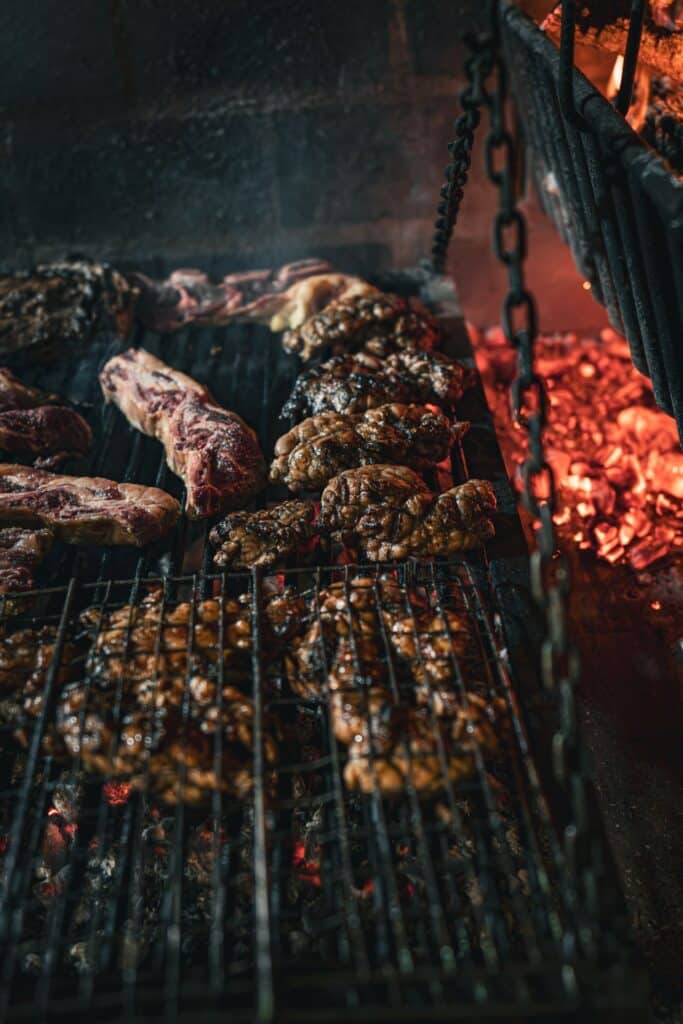
For heavily worked muscles, I’d reach for the smoker.
Keep the temperature moderate and give the meat plenty of time.
The goal isn’t simply to “cook” the dragon meat. It’s to gradually break down connective tissue while building a flavorful exterior.
That means:
- Season the meat generously.
- Let the surface dry slightly before smoking.
- Use clean-burning wood smoke.
- Cook steadily rather than chasing temperature swings.
- Give tough cuts enough time to become tender.
- Rest the meat before slicing or pulling.
The exact cooking temperature is impossible to prescribe for fictional dragon anatomy, but the principle is familiar.
Tough meat rewards time.
And time is one ingredient BBQ enthusiasts have in suspiciously large quantities.
Hot and Fast for Tender Cuts
Not every piece should spend half a day in a smoker. A tender dragon cut could be treated more like steak.
Give it a hard sear.
Build a dark crust.
Let the inside remain juicy.
That contrast between smoky, charred exterior and tender interior could be spectacular.
The challenge would be avoiding overcooking lean meat.
A lean piece of dragon meat could go from juicy to dry faster than a dragon can burn down your shed.
Which Parts of a Dragon Would Make the Best BBQ?
This is where the fictional butcher shop gets interesting.
Dragon Ribs
The obvious superstar.
Large ribs would make an impressive centerpiece, assuming the dragon isn’t small enough to fit in a toaster oven.
Ribs contain bone, connective tissue, meat, and potentially fat—all excellent ingredients for slow cooking.
A long smoke followed by a flavorful glaze could produce fall-apart dragon ribs with a smoky bark.
And yes, serving them at a backyard party would probably generate a few questions.
Dragon Shoulder
The shoulder could be the BBQ workhorse.
Because it would likely be heavily used, it could contain plenty of connective tissue. That’s exactly what slow cooking is good at handling.
Cooked long enough, the collagen could break down and create a tender, juicy texture.
Think pulled pork – but with considerably more mythology.
Dragon Leg
The leg could produce a large roast with serious flavor.
Because the legs would carry substantial weight, this could be another intensely worked muscle.
Slow roasting or smoking would make more sense than quick grilling. Slice it thinly after resting, and you might get something resembling a rich wild-game roast.
Dragon Wings
This is where things could go either way.
A wing used for actual flight would be heavily muscled. That could mean excellent flavor but a firm texture.
A long cook might be necessary.
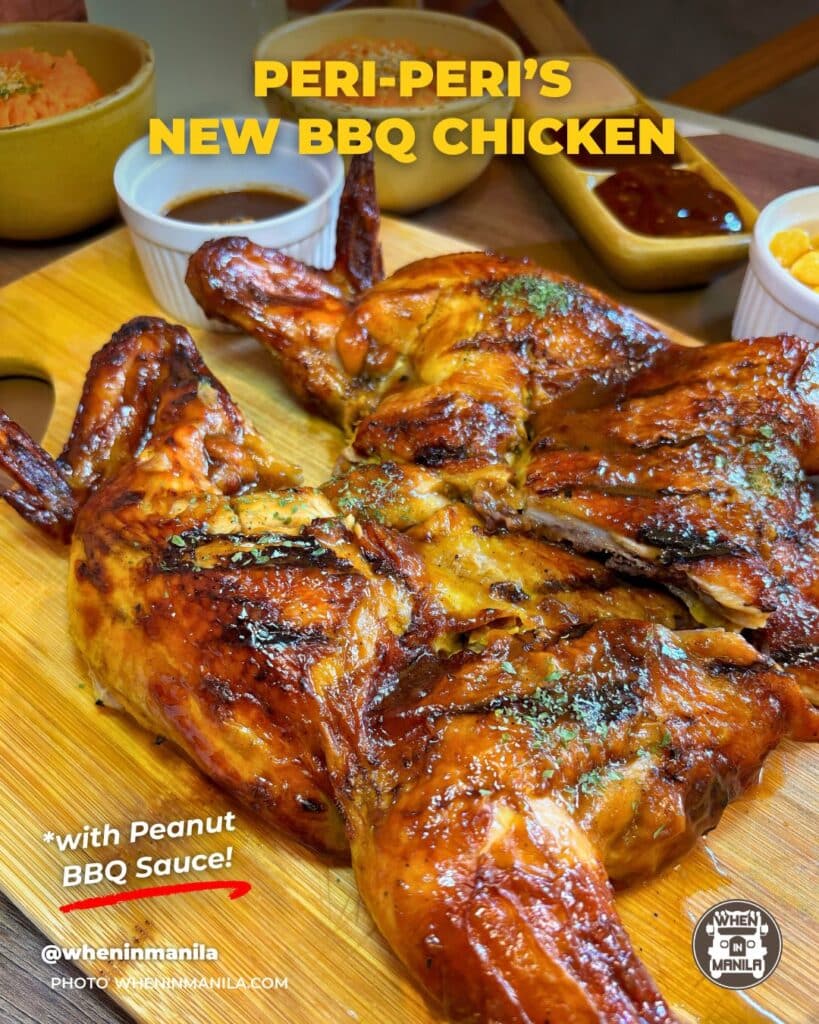
Then again, imagine an enormous platter of smoked dragon wings. Buffalo sauce suddenly feels a little less ambitious.
Dragon Tail
The tail could be one of the most flavorful cuts because it would be constantly moving.
It might also be exceptionally tough.
That makes it a natural candidate for braising, smoking, or another slow cooking method.
The tail could be the cut that separates great dragon BBQ from expensive dragon jerky.
What Rub Would You Put on Dragon Meat?
Seasoning should work with the meat rather than bury it.
For a rich, beef-like dragon cut, I’d keep the rub straightforward:
Salt + black pepper + garlic + smoked paprika.
That’s enough to create a flavorful crust while allowing the meat itself to remain the star.
For a gameier cut, I’d move toward herbs and aromatic spices.
Rosemary, thyme, garlic, black pepper, and a little juniper could provide an earthy counterpoint.
For lean dragon meat, a slightly sweeter rub could help create caramelization.
Brown sugar, paprika, garlic, and chili could work well.
But I’d resist the temptation to throw 19 spices into the bowl just because they’re sitting in the cupboard.
Good BBQ doesn’t need to shout.
It needs to build layers of flavor.
What BBQ Sauce Goes With Dragon Meat?
The sauce would depend on the cut.
A rich, beef-like piece could handle a dark, smoky sauce with molasses, tomato, and pepper.
A gamey cut might benefit from something sharper.
A vinegar-based BBQ sauce could cut through richness and brighten the meat.
For leaner cuts, a sweeter glaze could add moisture and contrast.
A fruit-based sauce could also be interesting.
Cherry, blackberry, plum, or even a tart berry sauce could work beautifully with a strong game-meat flavor.
And here’s an important BBQ rule:
Don’t drown the meat in sauce.
If you have supposedly legendary dragon meat on your plate, you should actually be able to taste the dragon.
Otherwise, you could have saved yourself the trouble and grilled a burger.
What Would a Dragon BBQ Feast Actually Taste Like?
Let’s go all the way with the fantasy.
The smoker is running.
The dragon ribs have been cooking for hours.
The shoulder has developed a dark, smoky bark.
The tail is slowly breaking down.
A tray of wings is waiting for sauce.
The air smells of wood smoke, rendered fat, pepper, garlic, and char.
The first bite of the ribs would probably be the real test.
You’d expect a deep savory flavor first, followed by smoke and seasoning. The texture would depend heavily on the cut, but properly cooked ribs should be tender enough to pull away from the bone without becoming mush.
The shoulder would be richer and softer.
The wing might be firmer.
The leg could have the hearty character of a wild roast.
And the tail?
Well, the tail might require the kind of chewing that gives you time to reconsider your life choices.
That’s the beauty of BBQ.
The same animal can give you completely different experiences depending on the muscle and the cooking method.

So, Would Dragon Meat Actually Make Good BBQ?
My fictional verdict?
Absolutely – provided you cook the right cut the right way.
The biggest problem wouldn’t necessarily be the flavor.
It would be the anatomy.
A giant, active, flying creature would likely have plenty of heavily worked muscles. Those muscles could be flavorful but tough.
That makes BBQ an excellent cooking method.
Smoke adds complexity.
Low heat helps break down connective tissue.
Time develops tenderness.
A good rub creates a flavorful crust.
And the right sauce balances the final bite.
The most convincing version of dragon meat would probably sit somewhere between beef, venison, and firm reptile meat, with the exact flavor depending on the dragon’s diet, age, activity, and species.
A young dragon raised on fish might be relatively mild.
An ancient mountain dragon that has spent centuries hunting livestock could be dramatically richer and more gamey.
And a dragon that eats nothing but knights?
Well, we’d need to consult a medieval nutritionist before putting that one on the smoker.
Here Be Flavor
The funny thing about imagining dragon meat is that the question isn’t really about dragons.
It’s about understanding meat.
Muscle matters. Diet matters. Fat matters. Cooking matters.
Those same principles determine whether ordinary meat ends up tender and flavorful or dry and tough.
So while nobody can tell you what real dragon meat tastes like, we can make a pretty reasonable culinary prediction.
Expect something dense, savory, potentially gamey, and highly dependent on the cut.
Treat the tender pieces like steak.
Treat the tough ones like brisket.
Give the ribs plenty of smoke.
Keep the seasoning balanced.
And never underestimate the power of patience.
Would dragon meat be the greatest BBQ ever created?
Maybe.
Would it make the neighbors nervous?
Almost certainly.
But one thing is certain: if dragons ever become real, the BBQ community is going to have a lot of questions – and probably a very large smoker on order.
Until then, we’ll have to settle for brisket.
Honestly, that’s probably safer for everyone.
FAQs About Dragon Meat BBQ
1. What would dragon meat taste like?
Dragon meat would likely taste rich, savory, and slightly gamey, depending on the dragon’s diet, age, size, and activity level. Some cuts might resemble beef or venison, while leaner cuts could have a firmer texture similar to certain reptile meats.
2. Would dragon meat be good for BBQ?
Yes, at least hypothetically. Dragon meat could make excellent BBQ if the right cuts were cooked properly. Tough, heavily worked muscles would likely benefit from low-and-slow smoking, while tender cuts could be grilled over high heat.
3. What part of a dragon would make the best BBQ?
Dragon ribs and shoulder would probably be among the best BBQ cuts. Both could contain substantial connective tissue that becomes tender during slow cooking. The leg and tail could also work well as slow-cooked or smoked cuts.
4. Would dragon meat be tough?
Some cuts probably would be. A large dragon that spends its life flying, hunting, and climbing would have heavily developed muscles. The more a muscle is used, the more important cooking technique becomes, making slow cooking a likely choice for tougher dragon meat.
5. How would you cook dragon meat?
The cooking method would depend on the cut. Tough dragon meat would likely benefit from low-and-slow smoking, similar to brisket or pork shoulder. Tender cuts could be grilled or seared quickly to develop a flavorful crust without drying them out.
6. What BBQ rub would work best with dragon meat?
A simple rub of salt, black pepper, garlic, and smoked paprika would be a good starting point for rich dragon meat. Gameier cuts could also pair well with earthy herbs such as rosemary, thyme, and juniper.
7. What BBQ sauce would pair with dragon meat?
The best sauce would depend on the meat’s flavor. A smoky, slightly sweet sauce could complement rich cuts, while a tangy vinegar-based sauce could balance fattier or gameier dragon meat. Fruit-based sauces could also work with strongly flavored cuts.
8. Is dragon meat real?
No. Dragon meat is purely fictional, so there is no scientifically verified description of its flavor or texture. Any discussion of how dragon meat would taste is a culinary thought experiment based on real animals, meat science, and traditional BBQ techniques.
Featured image credit: ChatGPT
