
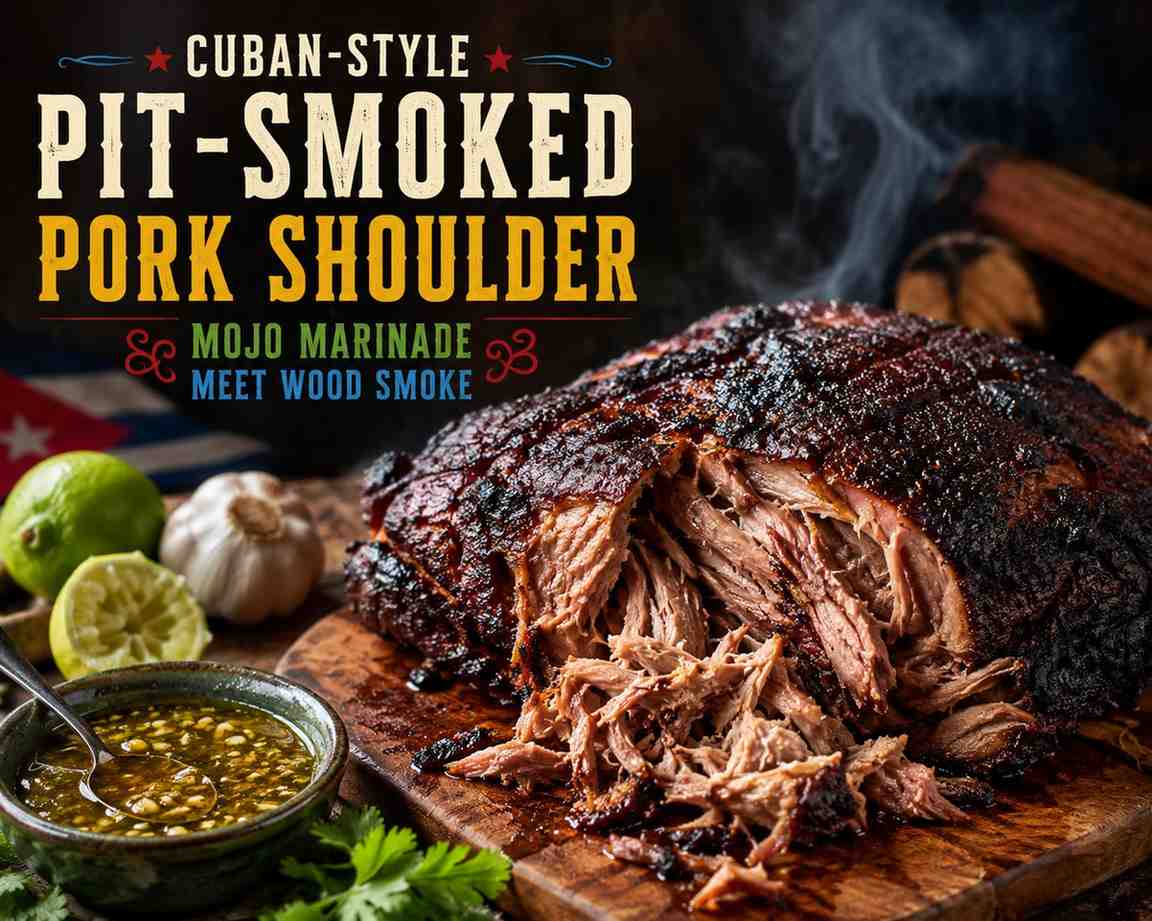
Right in the heart of a backyard barbecue, a sacred moment happens when the world goes quiet.
It is that precise second when you lift the lid of your smoker, and a cloud of wood smoke parts to reveal a perfectly dark, crackling masterpiece of meat.
If you are used to the sweet, molasses-heavy profiles of traditional Kansas City or Carolina-style pork, prepare to have your mind blown.
Today, we are taking a trip across the Florida Straits, blending the bright, garlicky, citrus-soaked soul of Havana with the low-and-slow alchemy of the American smoke pit.
We are making a Cuban-style pit-smoked pork shoulder.
This is not just another weekend cook; it is a culinary handshake between two legendary food cultures. It is what happens when classic Lechón Asado decides to move to Texas or the Carolinas and buy a heavy-duty offset smoker.
The result is a piece of pork that defies logic: it is impossibly juicy, radically bright from citrus, deeply savory from a mountain of garlic, and wrapped in a rich, smoky mahogany bark.
Let’s fire up the pit and dive in.
The Soul of the Dish: What is Cuban Mojo?
To understand this dish, you have to understand mojo marinade (pronounced mo-ho, not like the magic energy Austin Powers lost).
Classic Cuban mojo is the undisputed king of citrus marinades. It is a vibrant, pungent elixir built on a foundation of sour oranges (naranja agria), an aggressive amount of garlic, cumin, oregano, and good olive oil.
If you have never tasted a real sour orange, imagine a fruit that had an identity crisis halfway between a lime and a grapefruit.
It is sharp, incredibly acidic, and carries a distinct floral aroma. In a traditional Cuban kitchen, this pork is roasted in an oven or over an open pit until the skin shatters like glass.
But here is where the science of flavor comes into play.
The high acidity of the citrus acts as a natural tenderizer. It goes to work on the tough connective tissues of the pork shoulder, breaking them down before the meat ever touches a grate.
When you introduce this citrus-soaked meat to a wood-fired environment, something magical happens. The sugars and acids in the mojo caramelize against the smoke, creating a savory, tangy bark that is a far cry from your standard brown sugar rub.
It is sharp enough to cut through the heavy, unctuous fat of the pork, meaning you can eat twice as much before needing a nap. You’re welcome.
Choosing Your Wood & Setting Up the Pit
Let’s talk about wood, because this is where a lot of backyard pitmasters accidentally ruin a great piece of meat. Pork shoulder is incredibly forgiving, but it is also a sponge for flavor.
If you toss heavy mesquite or thick hickory into the firebox, you are going to overpower the delicate notes of the orange and oregano. You will end up with meat that tastes like a campfire rather than a Caribbean holiday.
For a Cuban-style cook, fruity and mild hardwoods are your best friends.
- Apple and Cherry: These woods provide a beautiful, sweet smoke profile and give the pork a gorgeous, deep-red mahogany color.
- Pecan or Oak: If you want a bit more of a traditional barbecue backbone, mix in a little pecan or post oak for a clean, nutty smoke flavor.
Your goal is to maintain a steady, clean-burning fire between 225°F and 250°F (107°C to 121°C). Setup your cooker for indirect heat. If you are using a pellet grill or an offset smoker, make sure you include a water pan in the cook chamber.
This introduces humidity into the cooking environment, which does two things: it keeps the pork from drying out during the long cook, and it helps the smoke particles stick to the meat, building a superior bark.
The Liquid Gold: Crafting a Post-Smoke Mojo Mojo
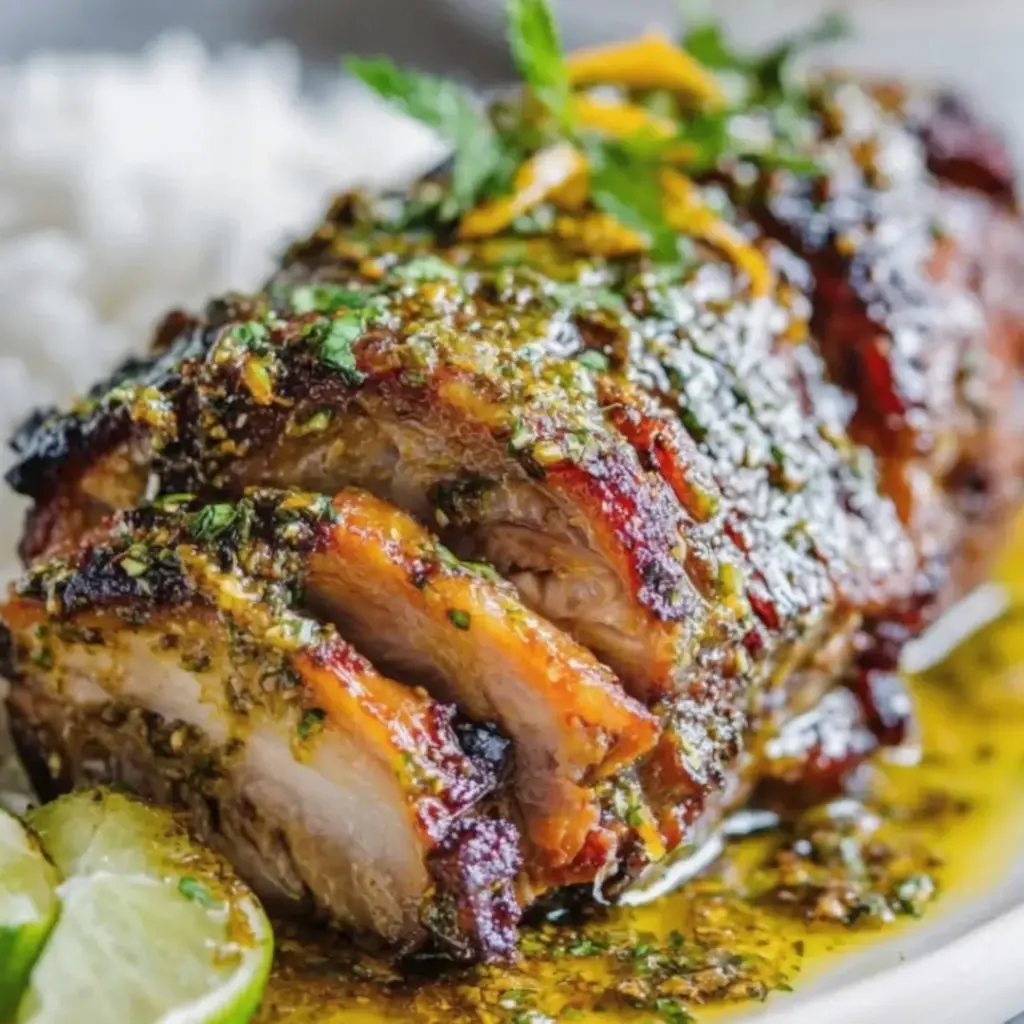
Don’t let the flavor stop at the marinade. While the meat rests, whip up a fresh batch of uncooked mojo sauce to use as a finishing drizzle. Whisk raw minced garlic, fresh sour orange juice, and warmed olive oil together.
Splashing this vibrant, zesty emulsion over the warm, shredded pork right before serving awakens the heavy fats, adding a brilliant pop of raw acidity that cuts through the rich wood smoke.
The Secret Ingredient: Sourcing or Substituting Naranja Agria
Finding authentic Cuban sour oranges outside of Hispanic markets can be a pitmaster’s ultimate challenge. If you can’t find them, don’t panic. You can forge a flawless citrus counterfeit right in your kitchen.
Mix two parts fresh orange juice with one part fresh lime juice and a splash of grapefruit juice. This precise cocktail perfectly mimics the sharp, floral acidity required to chemically tenderize the tough pork shoulder fibers before smoking.
Injection Alchemy: Driving Flavor to the Bone
Pork shoulder is incredibly thick, meaning a surface marinade won’t reach the center. To ensure maximum flavor penetration, weaponize a meat injector. Load the syringe with strained, pulp-free mojo and map out a grid across the meat.
Injecting the liquid deep into the muscle tissue creates internal pockets of citrus and garlic, ensuring every single bite is just as intensely flavorful as the smoky, caramelized outer bark.
The Crispy Finish: The Cast-Iron Plancha Sear
Traditional Cuban lechón is famous for its shattered, crispy skin, a texture easily lost in a low-and-slow smoker. To fix this, heat up a heavy cast-iron skillet or outdoor plancha to screaming hot.
Take your freshly shredded pork and press it flat onto the oiled iron for just two minutes. This creates deeply caramelized, crispy burnt ends that perfectly replicate the crunch of authentic, pit-roasted Cuban street food.
The Perfect Pour: Pairing Drinks with Caribbean Smoke
Balancing a meal this rich requires the ultimate beverage wingman. Skip the heavy stouts and pour a classic Cuban Mojito packed with muddled mint and lime, or a crisp, ice-cold Caribbean lager.
The effervescence and sharp mint cut through the pork’s unctuous fat. For non-alcoholic options, a tart shaved-ice Citrus Agua Fresca cleanses the palate between bites, keeping your tastebuds primed for the next wave of garlic-smoke magic.
Cuban-Style Pit-Smoked Pork Shoulder Shredding and Serving Suggestions
Once the hour is up, unwrap the pork into a large tray, making sure to save every single drop of the liquid accumulated in the foil. Grab the shoulder bone and give it a gentle tug.
If you did your job right, the bone should slide out completely clean, leaving you with a mountain of steaming, incredibly tender meat.
Shred the pork coarsely using two forks or your hands (wear cotton glove liners under nitrile gloves unless you have asbestos fingers). Once shredded, pour those reserved pan juices back over the meat and toss it gently.
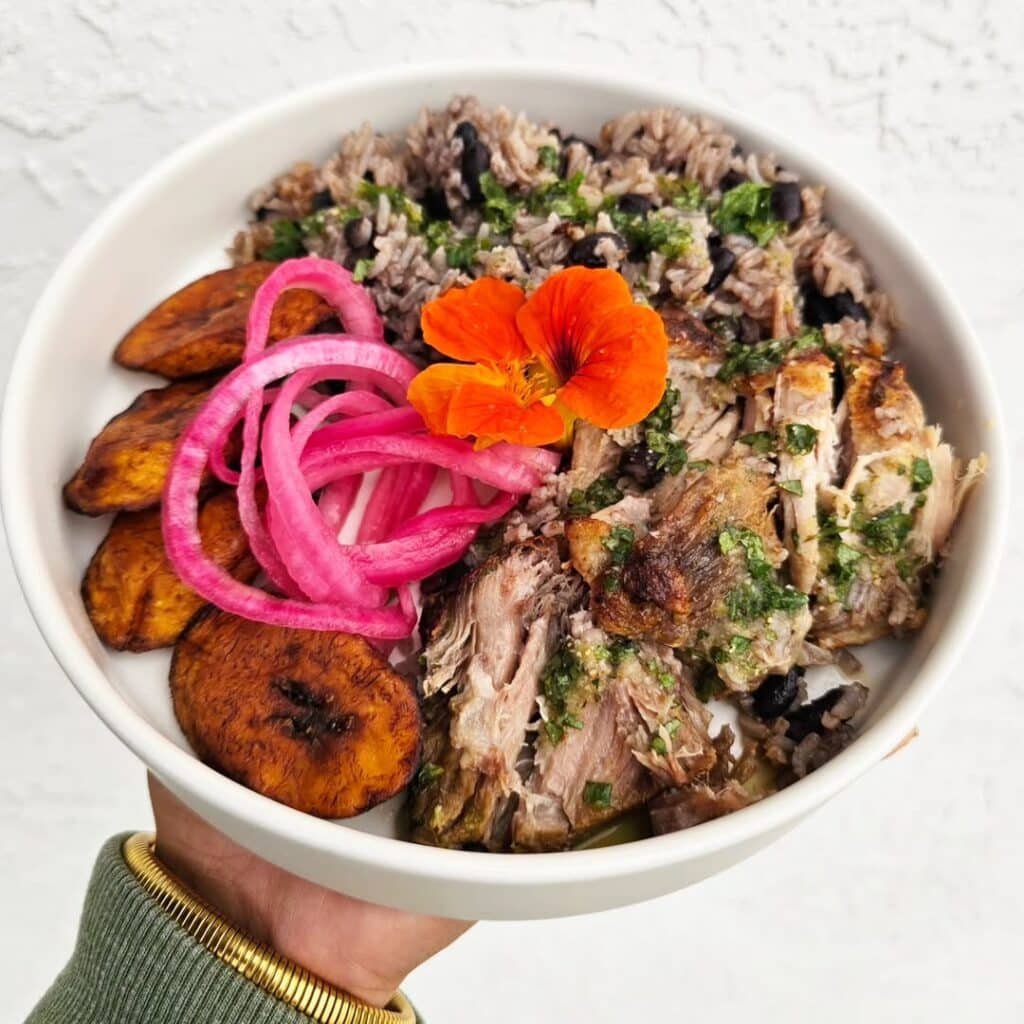
To serve this up like a true pro, forget the hamburger buns and commercial barbecue sauce. Lay this spectacular meat over a bed of Congrí (Cuban black beans and rice), and serve it with a side of sweet, caramelized fried plantains (maduros).
If you have leftovers the next day, you are legally obligated to make a classic Cuban Sandwich with Swiss cheese, ham, pickles, mustard, and this incredible smoked pork pressed between crispy Cuban bread.
Pro-Tips for the Perfect Cook
Before you head out to the pit, keep this final tip in mind: Don’t throw away the crispy fat cap.
When you are shredding the meat, chop up those deeply caramelized, smoky pieces of bark and fat, and mix them right back into the pulled pork.
It adds an incredible texture contrast – a little crunch and an explosion of intense garlic-citrus flavor in every single bite. Now go fire up your smoker and make some history.
Final Thoughts
At the end of the day, great barbecue is about breaking rules and creating something unforgettable.
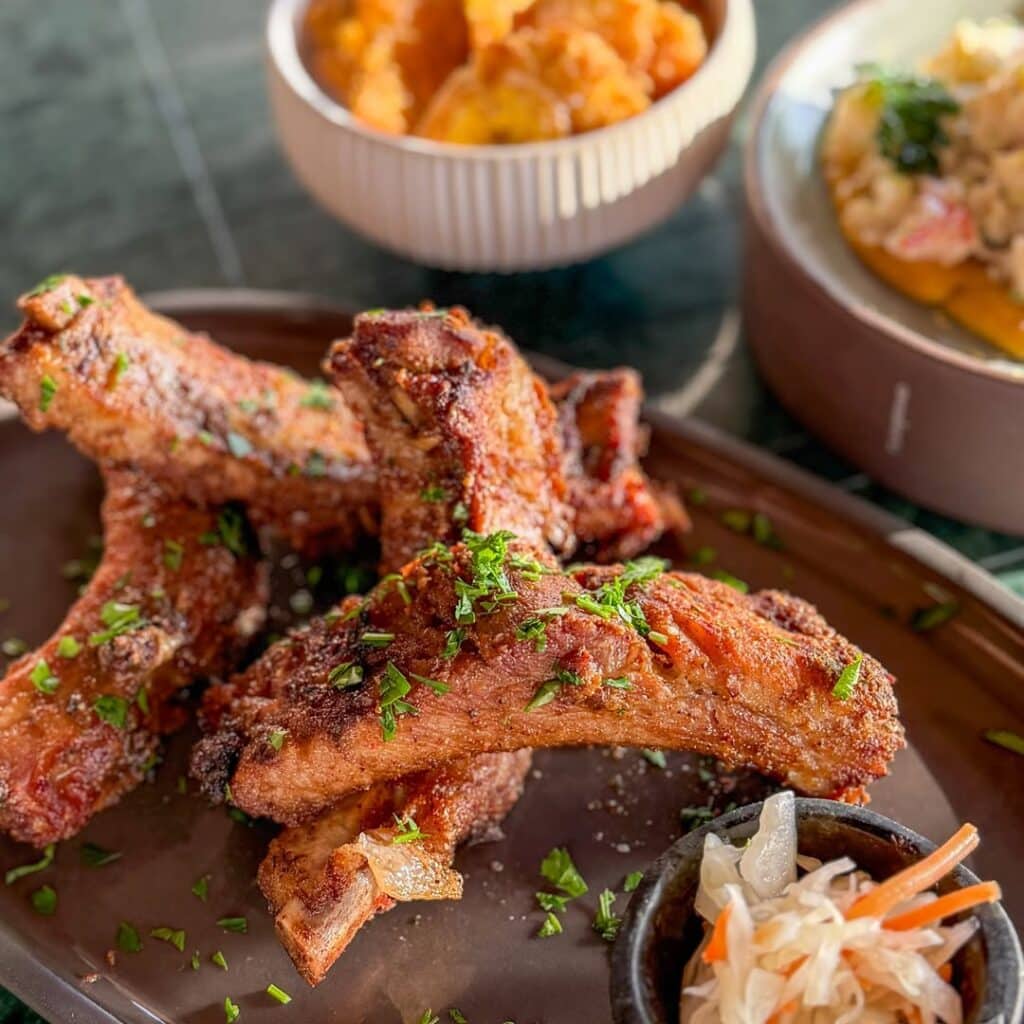
Merging the vibrant, sun-drenched flavors of a Cuban kitchen with the smoky, slow-burning tradition of the American pit gives you exactly that – a dish that feels both comfortingly familiar and wildly exciting.
It’s a reminder that cooking isn’t a set of rigid laws, but an evolving conversation.
When you pull that bone clean from the meat and take that first bright, garlicky, smoky bite, you’ll realize the extra effort was worth every single second. So fire up the coals, invite the neighbors, and let the food do the talking.
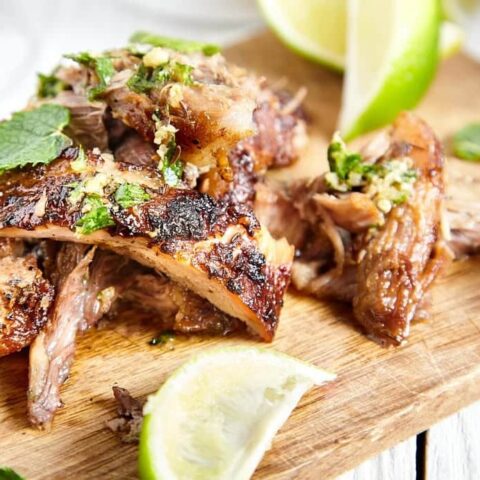
Cuban Pit-Smoked Mojo Pork Shoulder
Image credit: @chefashton
Ingredients
- The Pork:
- 1 bone-in pork shoulder (Boston butt), roughly 7 to 8 pounds. Do not get boneless; the bone acts as a heat conductor and keeps the center juicy.
- The Ultimate Mojo Marinade:
- 2 cups fresh sour orange juice (If you can't find sour oranges, mix 1 cup of fresh regular orange juice with 1/2 cup of fresh lime juice and 1/2 cup of fresh lemon juice. Do not buy the bottled stuff. Your pork deserves better.)
- 20 cloves of fresh garlic, peeled (Yes, 20. Trust the process.)
- 1 tablespoon ground cumin
- 1 tablespoon dried Mexican oregano
- 2 tablespoons kosher salt
- 1 tablespoon coarsely cracked black pepper
- 1/2 cup olive oil
Instructions
Step 1: The Mojo Bath
Smash your garlic cloves into a paste using a mortar and pestle with a little salt, or just blitz them in a food processor. In a large bowl, whisk the garlic paste with the sour orange juice, cumin, oregano, black pepper, and olive oil.
Take your pork shoulder and score the top fat cap in a diamond pattern, cutting through the fat but not into the meat. Place the pork in a large ziplock bag or a deep pan, and pour over two-thirds of the marinade.
Save the remaining one-third of the mojo in the fridge – we will need it later. Seal the pork up and let it marinate in the refrigerator for at least 12 hours, though 24 hours is the sweet spot.
Step 2: Firing Up the Pit
Bring your smoker up to a stable 225°F (107°C) with your chosen fruitwood. Pull the pork out of the marinade and let the excess drip off.
Do not wipe away the bits of garlic and herbs sticking to the meat – that is future flavor. Let the meat sit on the counter for about 30 minutes to take the refrigerator chill off.
Step 3: The Initial Smoke
Place the pork shoulder directly onto the smoker grates, fat-side up. As the fat melts down during the cook, it will naturally baste the meat. Close the lid and leave it alone for the first 3 to 4 hours.
Resistance is a virtue here. If you're looking, you ain't cooking.
Around hour 4, you will notice the pork hitting the infamous "stall" – a point where the internal temperature hovers around 160°F to 165°F (71°C to 74°C) as moisture evaporates from the surface. The bark should look beautifully dark and caramelized.
Step 4: The Wrap
Lay out a double layer of heavy-duty aluminum foil or pink butcher paper.
Remove the pork from the smoker and place it on the wrap. Before sealing it up tight like a shiny little burrito, pour that reserved one-third of the fresh mojo marinade right over the top of the meat.
Place it back on the smoker. This locks in the moisture and braises the pork in the bright citrus juices during the final leg of the journey.
Step 5: The Finish and the Rest
Continue cooking until the internal temperature reaches 203°F (95°C). At this point, an internal meat thermometer should slide into the pork shoulder with absolutely zero resistance, like sticking a warm knife into a stick of butter.
Pull the wrapped pork from the smoker, place it in an empty cooler or a warm oven, and let it rest for at least one full hour.
Skipping the rest period is a culinary crime; resting allows the muscle fibers to relax and reabsorb all those glorious, citrusy juices.
Featured image credit: ChatGPT
