
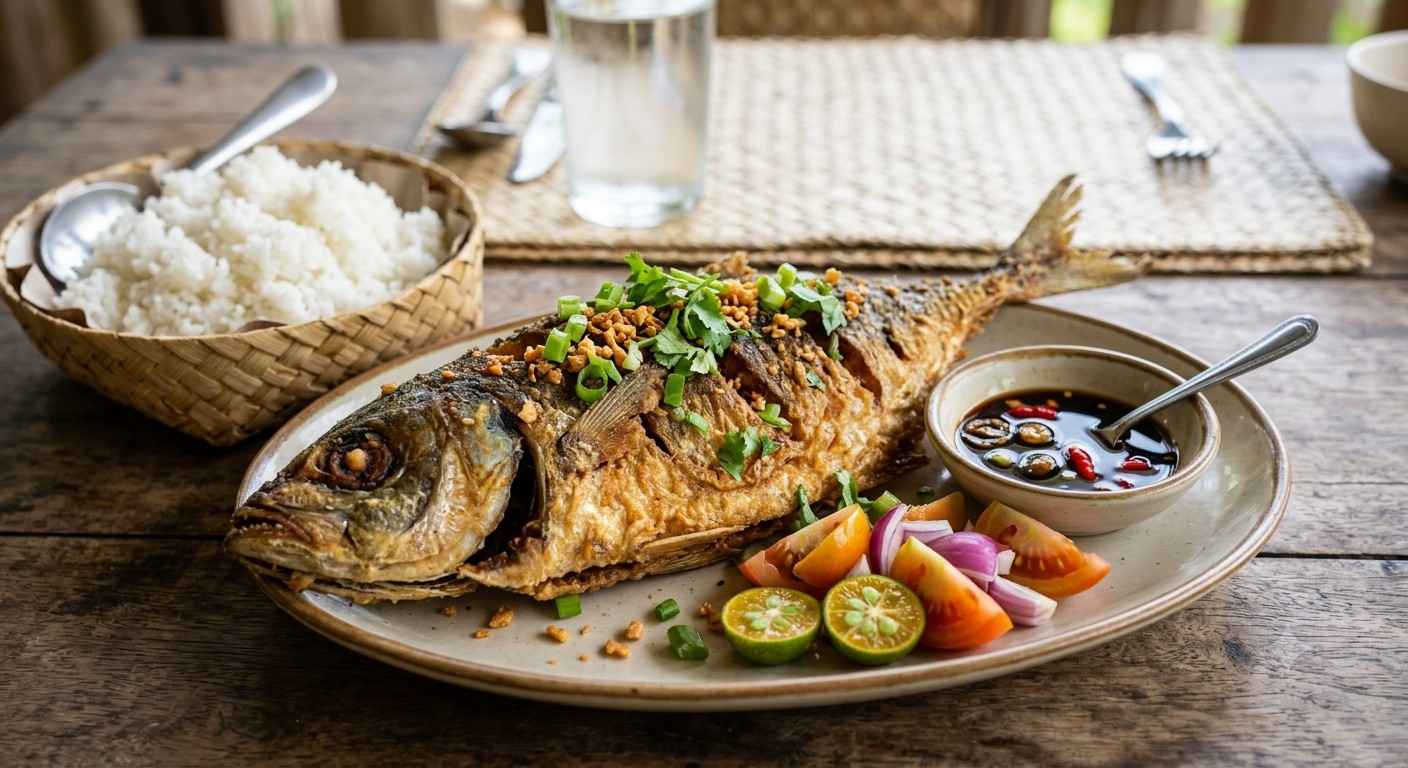
Few sounds in a sizzle-filled kitchen command respect quite like whole fish hitting hot oil.
In Filipino homes, that furious crackle signals a simple truth: dinner is going to be absurdly good.
At the center of this culinary magic lies Matangbaka – or Bigeye Scad – a modest, wide-eyed ocean swimmer that transforms into pure culinary gold under the right thermal beatdown.
When executed properly, crunchy Filipino deep fried Bigeye Scad offers a shatteringly crisp exterior, tender seasoned flesh, and tail fins so delightfully brittle you can eat them like potato chips.
Why Bigeye Scad is Built for the Fryer
Fish selection matters when you want serious crunch. Some delicate fillets disintegrate the moment hot oil looks at them sideways. Bigeye Scad, however, is built like a tank.
- Ideal Fat Profile: Scad sits right in the sweet spot for pan-frying. It boasts enough natural oils to stay juicy inside, while its firm skin acts as a heat shield that crisps up without burning instantly.
- Structural Integrity: The compact, streamlined shape allows heat to penetrate evenly, meaning you won’t end up with burnt tails and raw bellies.
- The Edible Fins: Frying this species at high heat turns the outer fins and small tail bones into savory, crispy morsels. If you’re discarding the tail fin, you’re missing out on half the fun.
Finding them is straightforward. Walk into any vibrant Asian seafood market, look for bright silver bodies with impossibly large, clear eyes staring back at you, and you’ve found your prize.
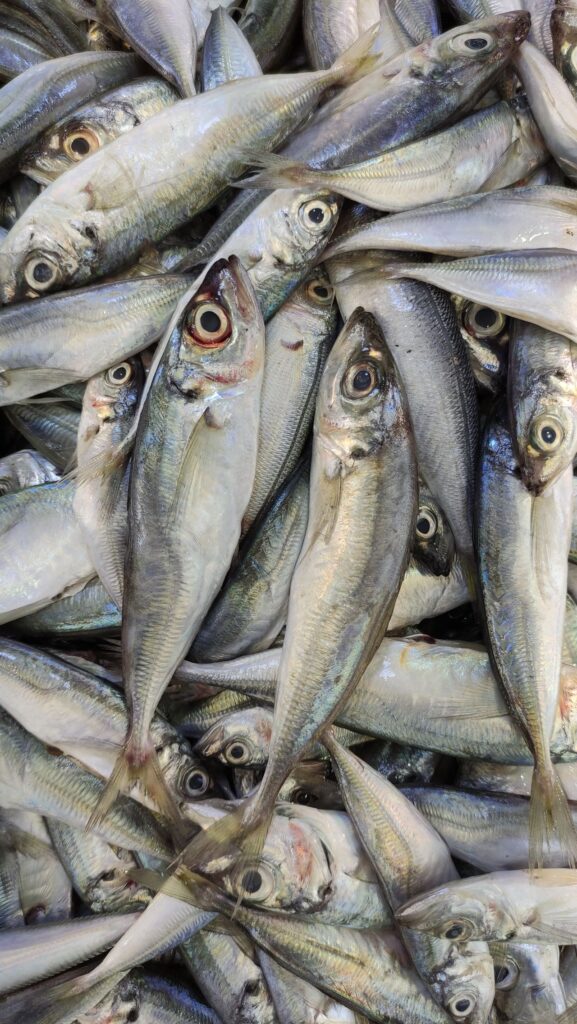
Finding fresh whole fish can intimidate first-timers, but a few quick sensory checks guarantee top-tier quality:
- Clear Eyes: Look straight into the fish’s oversized eyes – they should appear glassy, clear, and slightly bulged, never cloudy or sunken.
- Crimson Gills: Inspect the gills beneath the flap for a bright crimson red color, which signals a recent catch rather than a dull brownish hue.
- Firm Flesh: Press the flesh along the spine with your index finger. Fresh scad springs back immediately, showing solid muscle density.
- Clean Aroma: Trust your nose. Quality seafood smells clean like the ocean breeze, never pungent or metallic.
Buying whole fish isn’t just cheaper; it gives you total control over fresh, high-heat cooking.
Air Fryer vs. Deep Fryer: Can You Get That Crackle?
The air fryer promises quick cleanup, but can it replicate authentic street-style crunch? The answer lies in thermal conduction:
- Deep Frying: Submerses the fish in hot fat, instantly sealing the skin and producing an unbroken, shatteringly crisp crust.
- Air Frying: Uses circulating dry air, which tends to dry out whole fish before rendering the skin properly brittle.
To achieve a respectable air-fryer result, generously spray oil on scored skin and cook at high heat (400°F).
While the air fryer reduces calorie intake and eliminates grease splatters, nothing beats traditional deep frying when you want edible crispy fins and ultimate skin texture.
The Science of the “Sawsawan”: Acid Meets Fat
A classic dipping sauce isn’t just a flavor booster; it’s a brilliant study in culinary balance when paired with crunchy Filipino deep fried Bigeye Scad:
- Cane Vinegar: Provides an acidic contrast that cuts through heavy grease and neutralizes oiliness, resetting your palate for the next bite.
- Crushed Garlic: Releases allicin, bringing a pungent punch that highlights the fish’s natural saltiness.
- Bird’s Eye Chilies: Contribute sharp heat, stimulating endorphins and turning a simple fried meal into an addictive flavor harmony.
Zero Waste Cooking: Transform the Leftovers into Pinakbet
Never discard leftover fried fish; it holds concentrated flavor ideal for traditional stews. Instead of reheating the fish in a pan – which ruins its delicate texture – flake the meat to create a rich, umami-packed seasoning base:
- Pinakbet Upgrade: Drop the leftover head, bones, and crispy skin into a boiling pot of Pinakbet (Filipino vegetable stew). Savory fats melt into the broth, infusing squash, eggplant, and bitter melon with deep seafood flavor.
- Ginataang Fish: Simmer the flaked fish in coconut milk and chilies for a quick, creamy comfort dish.
Reusing cooked scad prevents food waste while elevating humble vegetable dishes into feast-worthy meals.
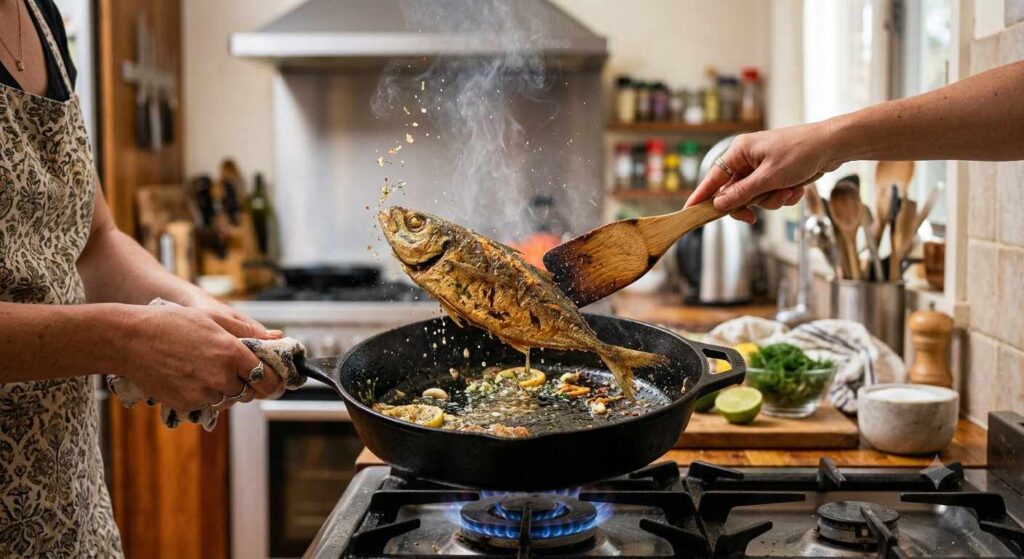
Master the Flip: How to Stop Skin From Sticking
Nothing ruins a pristine piece of seafood faster than skin tearing off on a hot skillet. The culprit is almost always premature flipping and cold cookware. Follow these rules to keep skin intact:
- Wait for the Maillard Reaction: Cold protein forms chemical bonds with hot metal. You must allow the fish to sizzle undisturbed until a golden barrier naturally releases the crust.
- Preheat Properly: Ensure your pan is hot before adding oil, then wait until the fat shimmers.
- Build a Seasoning Layer: If using a carbon-steel or cast-iron skillet, build a solid oil seasoning layer beforehand.
Patience is key: let the heat do the work, and the fish will slide freely.
Pairing Drinks Like a Pro: What to Sip Alongside
Heavy meals call for refreshing beverages that scrub your palate between bites. Consider these top beverage pairings:
- Crisp Pilsner or Pale Lager: The gold standard pairing; carbonation scrubs the palate while mild hop bitterness cuts straight through rich, fried skin.
- Chilled Calamansi Juice or Iced Barley Tea: Ideal non-alcoholic options with a citrus tartness that echoes the vinegar dipping sauce.
- What to Avoid: Skip overly sugary sodas or heavy red wines, as they overwhelm subtle seafood flavors.
A light, effervescent drink keeps every bite tasting just as fresh and vibrant as the first.
Sustainable Seafood: Why Scad is an Eco-Friendly Choice
Choosing what to put on your dinner plate extends beyond taste – it impacts ocean ecosystems:
- Rapid Reproduction: Bigeye Scad (Selar crumenophthalmus) is a fast-growing species whose populations replenish quickly under reasonable fishing pressure.
- Community Support: Eating small-to-medium pelagic fish supports sustainable artisanal fishing communities across Southeast Asia.
- Lower Mercury: Small wild fish accumulate significantly lower levels of heavy metals compared to long-lived apex predators like tuna or grouper.
Enjoying this crispy delicacy allows you to feast satisfyingly while making a conscious, environmentally friendly seafood choice.
The Golden Rules for Maximum Crunch
- Never Rush Thermal Energy: Cold oil yields soggy, grease-logged fish that tastes like disappointment. Wait until the oil hits target temp before introducing the protein.
- Respect the Cooling Rack: Paper towels absorb oil, but they also hold moisture right against the bottom skin. Elevating cooked food on a wire rack lets air circulate, locking in a 360-degree crunch.
- Score the Flesh Wisely: Slashing the sides shortens cooking time, preventing overcooked, dried-out meat while ensuring the skin renders down to a crackling texture.

How to Serve It Right
In the Philippines, fried fish rarely sits alone on a plate. The magic happens when high-heat crunch collides with sharp, bright side dishes.
| Companion Component | What It Brings to the Table |
| Garlic Fried Rice (Sinangag) | Warm, garlicky carbs that absorb the savory juices and salted oil. |
| Spicy Vinegar (Sawsawan) | Acidity that cuts through rich oil, resetting your palate after every bite. |
| Fresh Sliced Tomatoes | Sweet, juicy contrast to the salty, crunchy skin. |
| Ginisang Munggo (Mung Bean Stew) | The ultimate pairing – crispy fish served alongside savory, comforting lentil-like soup. |
Pulling a hot piece of crunchy Filipino deep fried Bigeye Scad apart with your fingers, dipping it into garlic-infused vinegar, and pairing it with steamy rice is a masterclass in elemental cooking.
Simple ingredients, proper technique, and zero compromises on heat – that is how you turn an ordinary dinner into an unforgettable feast.
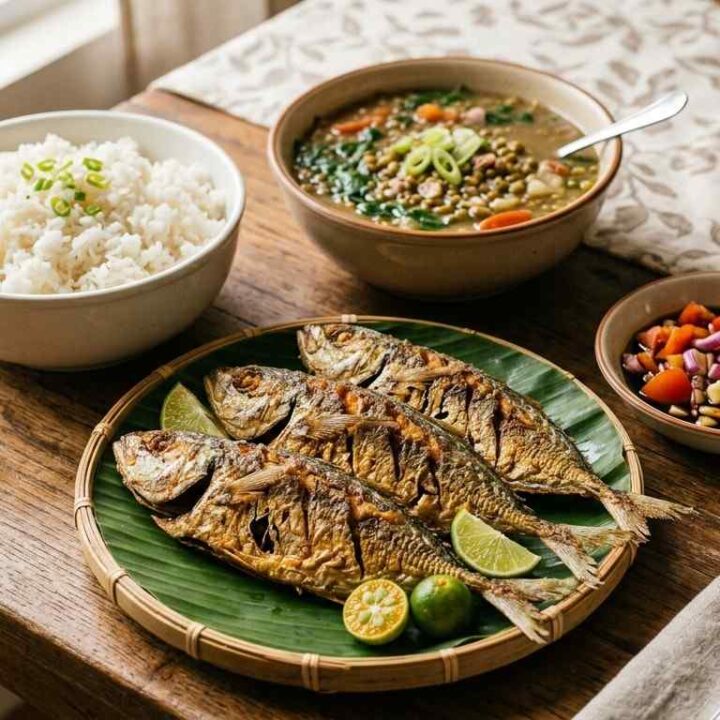
Crunchy Filipino Deep Fried Bigeye Scad (Matambaka)
Image credit: Google Gemini
Ingredients
- Great frying isn't about hiding behind twenty spices; it's about highlighting the core protein. Keep it minimal so the natural seafood salinity shines through.
- For the Main Dish:
- 4 whole Bigeye Scad (Matangbaka), scaled, gutted, and rinsed thoroughly
- 1.5 tablespoons sea salt or coarse rock salt
- 1 teaspoon freshly cracked black pepper
- 1/2 teaspoon garlic powder (optional, but highly recommended)
- 1 quart cooking oil with a high smoke point (Canola, Vegetable, or Peanut Oil)
- For the Classic Sawsawan (Dipping Sauce):
- 1/2 cup cane vinegar (or coconut vinegar)
- 3 cloves garlic, crushed and peeled
- 2 bird's eye chilies (siling labuyo), bruised
- 1/4 teaspoon black pepper
- A pinch of salt
Instructions
Cooking whole fish can intimidate beginners, but following a disciplined thermal workflow guarantees success every single time.
1. Prep and Moisture Removal: Dry skin is the secret to ultimate crunch.
Scale, gut, and thoroughly rinse the fish under cold water. Take a sharp knife and make 2 to 3 shallow diagonal slashes along each side of the fish. These scores allow the salt to penetrate the flesh and let steam escape during frying.
Using paper towels, dry the fish inside and out until bone dry. Moisture is the absolute enemy of a crisp crust; water causes violent hot oil splatters and steams the skin instead of frying it.
2. Season Generously:
Rub sea salt, black pepper, and garlic powder into the exterior skin, making sure to get inside the diagonal cuts and cavity. Let the fish rest at room temperature for 10 to 15 minutes while heating the oil.
3. Heat the Fryer:
Pour oil into a heavy-bottomed skillet or deep Dutch oven until it reaches about 1.5 inches deep. Heat over medium-high until the oil reaches 350°F to 365°F (175°C to 185°C).
If you don't have a thermometer, dip the tail end of a fish into the oil – if it immediately bubbles furiously, you're ready.
4. The Fry Phase: Do not crowd the skillet.
Gently lay 2 fish away from you into the oil to prevent splashes. Fry for 5 to 7 minutes per side. Resist the urge to flip constantly; let the crust establish itself first. Flip only once when the underside turns deep golden brown.
5. Drain and Rest:
Transfer the cooked fish directly onto a wire cooling rack set over a baking sheet. Avoid setting them straight onto paper towels, as trapped steam underneath will ruin your hard-earned crispiness. Mix your dipping sauce ingredients in a small bowl while the fish rests for 2 minutes.
Featured image credit: Google Gemini
