
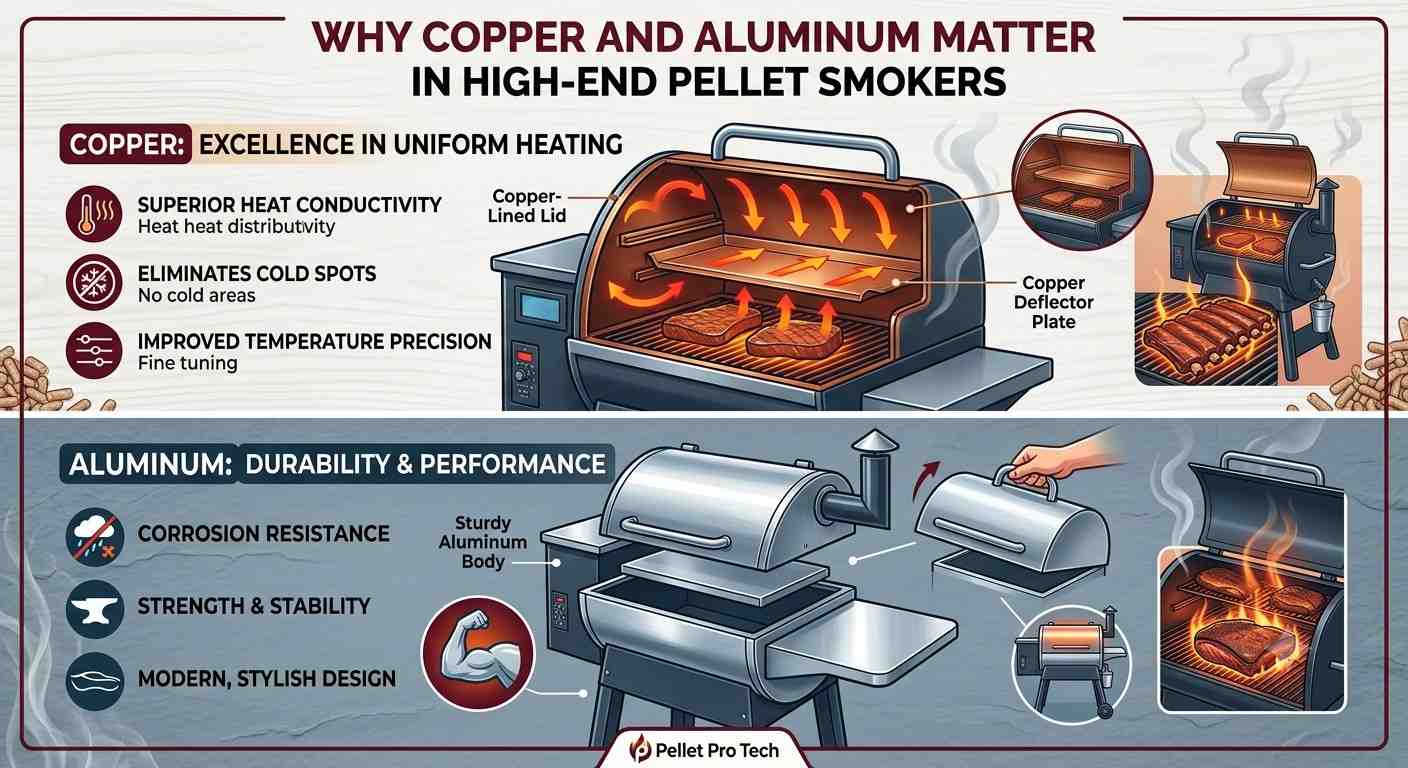
A brisket does not care how much you spent on your smoker. It does not care whether the logo on the lid is famous or whether the neighbors admire your backyard setup. What it does care about – quite dramatically, in fact – is heat.
Spend enough weekends tending fires, adjusting vents, and peeking under lids you swore you would stop opening, and one lesson becomes impossible to ignore: great barbecue is really a story about temperature management.
Smoke flavor gets the spotlight, but heat distribution is the quiet engineer behind every tender rib and perfectly rendered pork shoulder.
That is exactly why premium smoker manufacturers obsess over materials. In the world of high-end smoker builds, copper and aluminum are more than flashy additions or marketing buzzwords.
They are carefully selected metals that influence how heat travels, how quickly temperatures recover, and how consistently food cooks from edge to edge.
The science behind these materials is fascinating.
Better yet, it explains why some smokers maintain rock-solid temperatures while others behave like toddlers after too much sugar.
Let us lift the lid and explore why copper and aluminum matter so much in modern smoker design.
Understanding Heat Distribution in Smoker Performance
Before diving into metal properties and thermal conductivity charts, it helps to understand why heat distribution sits at the heart of barbecue.
Low-and-slow cooking is all about patience. A brisket might spend twelve hours in the smoker. Ribs can take six. During that time, even small temperature swings can change the final result.
Even heat matters because it affects:
- Cooking consistency.
- Bark formation.
- Fat rendering.
- Moisture retention.
- Smoke absorption.
- Texture and tenderness.
Poor heat distribution creates hot spots and cold zones. One rack of ribs finishes early while another still needs an hour. Suddenly, dinner turns into a puzzle nobody wanted to solve.
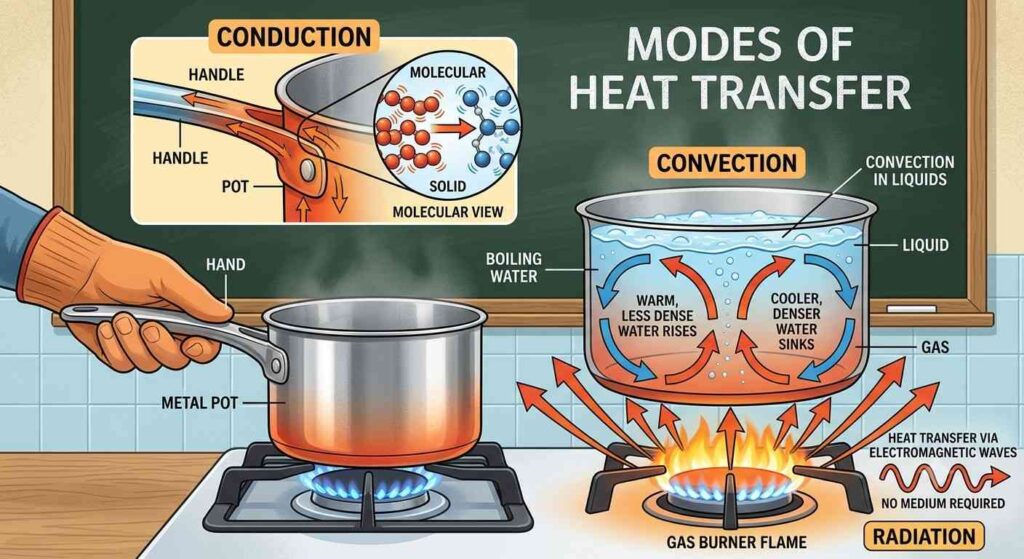
The Three Ways Heat Moves Inside a Smoker
Every smoker relies on three forms of heat transfer.
1. Conduction
Conduction occurs when heat moves through solid materials. The smoker walls, cooking grates, heat plates, and internal components all transfer energy through direct contact.
This is where copper and aluminum shine.
2. Convection
Convection is the movement of hot air and smoke throughout the cooking chamber. Proper airflow helps distribute heat evenly across food surfaces.
A smoker with excellent airflow behaves like an orchestra conductor. A poorly designed one sounds more like somebody learning drums in an apartment building.
3. Radiation
Radiant heat travels directly from the fire source and heated surfaces toward the food.
Balancing these three mechanisms is what separates an average smoker from a truly exceptional one.
The Material Science Behind Premium Smokers
The average backyard cook rarely thinks about thermal conductivity while seasoning ribs. Yet engineers designing high-end smokers spend countless hours studying it.
Simply put, thermal conductivity measures how efficiently a material transfers heat.
Materials with high conductivity:
- Heat quickly.
- Spread temperature evenly.
- Recover faster after heat loss.
- Reduce hot spots.
Materials with low conductivity:
- Heat unevenly.
- Respond slowly.
- Create temperature inconsistencies.
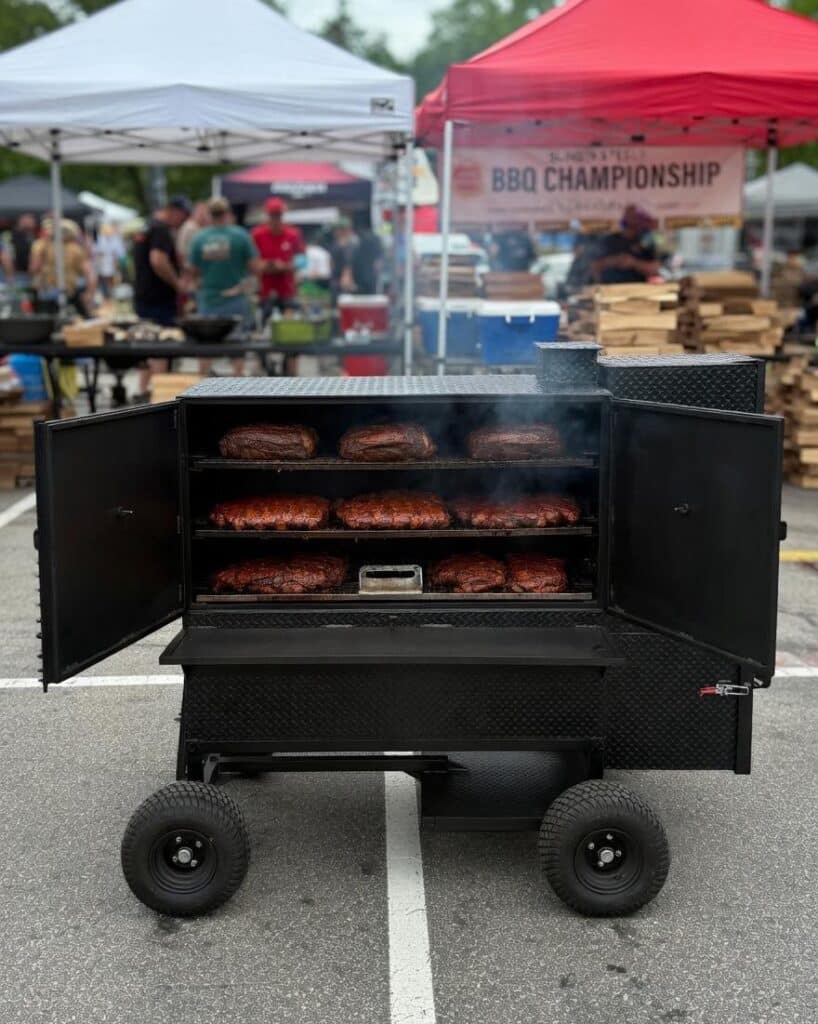
Common Smoker Materials Compared
| Material | Thermal Conductivity | Heat Retention | Weight | Cost |
| Stainless Steel | Moderate | Good | Medium | High |
| Carbon Steel | Moderate | Very Good | Heavy | Moderate |
| Cast Iron | Low to Moderate | Excellent | Very Heavy | Moderate |
| Aluminum | High | Good | Light | Moderate |
| Copper | Extremely High | Very Good | Heavy | Expensive |
The numbers tell an important story, but numbers alone never cooked a brisket. The real question is how these materials behave during an actual cook.
That is where copper and aluminum earn their reputation.
Why Copper Is Valued in Premium Smoker Builds
Copper has long been the superstar of heat management.
Professional kitchens rely on copper cookware for precise temperature control, and premium smoker manufacturers borrow that same principle. The reason is straightforward: copper conducts heat extraordinarily well.
For perspective, copper transfers heat significantly faster than steel. Heat moves across its surface rapidly and evenly, minimizing the temperature swings that plague lower-end smokers.
Faster Heat Recovery
Every pitmaster knows the temptation. You tell yourself not to open the lid. Then curiosity wins.
You peek at the brisket. Ten minutes later, you peek again.
By the fourth inspection, the smoker has lost enough heat to qualify as outdoor air conditioning.
This is where copper becomes valuable.
Because of its superior thermal conductivity, copper components help restore lost heat more quickly. The chamber stabilizes faster, reducing cooking interruptions and maintaining consistent conditions.
Faster recovery means:
- Better bark development.
- More predictable cooking times.
- Less fuel waste.
- Fewer temperature spikes.
Reducing Hot Spots
Hot spots are barbecue’s version of potholes: everybody complains about them, yet they always seem to appear.
Copper helps distribute energy across larger surfaces, smoothing out those troublesome temperature differences.
In smokers designed for long cooks, this creates several advantages:
- More even cooking across multiple racks.
- Consistent smoke circulation.
- Better moisture retention.
- Improved control during overnight cooks.
For competition teams and serious enthusiasts, those small improvements add up quickly.
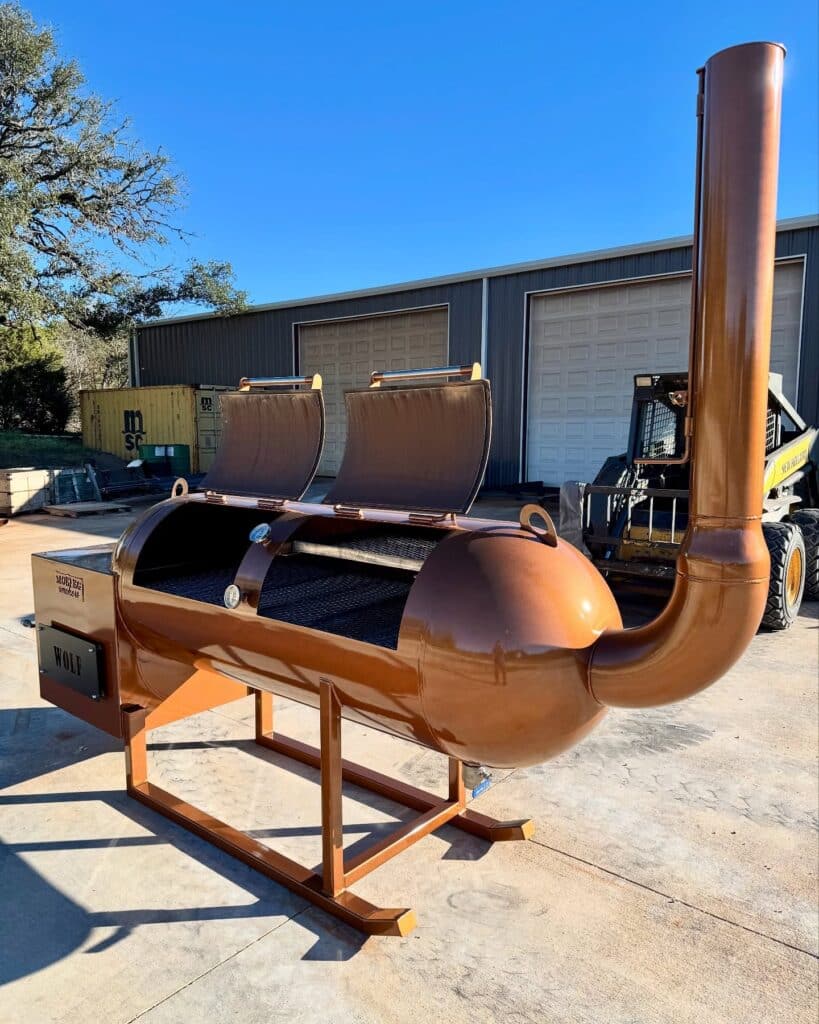
Why Full Copper Smokers Are Rare
At this point, you might wonder why manufacturers do not simply build entire smokers from copper.
The answer arrives on two wheels and with a large invoice.
Copper is:
- Expensive.
- Heavy.
- More difficult to fabricate.
- Prone to cosmetic oxidation.
Building a full copper smoker would cost a fortune and weigh enough to require structural engineering and perhaps a diplomatic agreement with your patio.
Instead, manufacturers strategically place copper where it delivers the greatest benefit:
- Heat diffusers.
- Internal panels.
- Firebox components.
- Specialized cooking surfaces.
This approach captures copper’s strengths without introducing unnecessary cost.
How Aluminum Improves Heat Distribution and Efficiency
Copper may get the glory, but aluminum quietly does much of the heavy lifting in modern smoker design.
One reason engineers love aluminum is balance. It offers excellent thermal conductivity while remaining lightweight and affordable.
That combination opens the door to smarter smoker construction.
Fast Heating and Efficient Energy Transfer
Aluminum absorbs and spreads heat rapidly.
Unlike heavier materials that require substantial energy to warm up, aluminum reaches operating temperatures relatively quickly. This improves efficiency and shortens startup time.
Nobody buys a smoker because they enjoy waiting an extra forty-five minutes for it to heat up.
Aluminum contributes to:
- Faster preheating.
- Reduced fuel consumption.
- Improved energy efficiency.
- More responsive temperature adjustments.
For pellet smokers and digitally controlled systems, that responsiveness matters. When sensors call for additional heat, aluminum components react quickly, helping maintain tight temperature ranges.
Common Aluminum Components in Premium Smokers
Modern smokers use aluminum in clever ways.
You will often find it in:
- Heat deflector plates.
- Diffusers.
- Drip trays.
- Interior liners.
- Insulated wall systems.
- Airflow channels.
These parts work behind the scenes, redistributing heat and eliminating uneven cooking zones.
Many owners never notice them. Their brisket certainly does.
Aluminum’s Limitations
No material is perfect.
Although aluminum transfers heat efficiently, it stores less thermal energy than heavier metals such as cast iron or thick carbon steel.
Potential drawbacks include:
- Lower thermal mass.
- Reduced heat retention during extreme cold.
- Possible warping in poorly engineered designs.
That is why premium manufacturers rarely rely on aluminum alone. The best systems combine materials to maximize performance.
Think of aluminum as the fast sprinter and steel as the marathon runner. The smartest smoker designs let each play to its strengths.
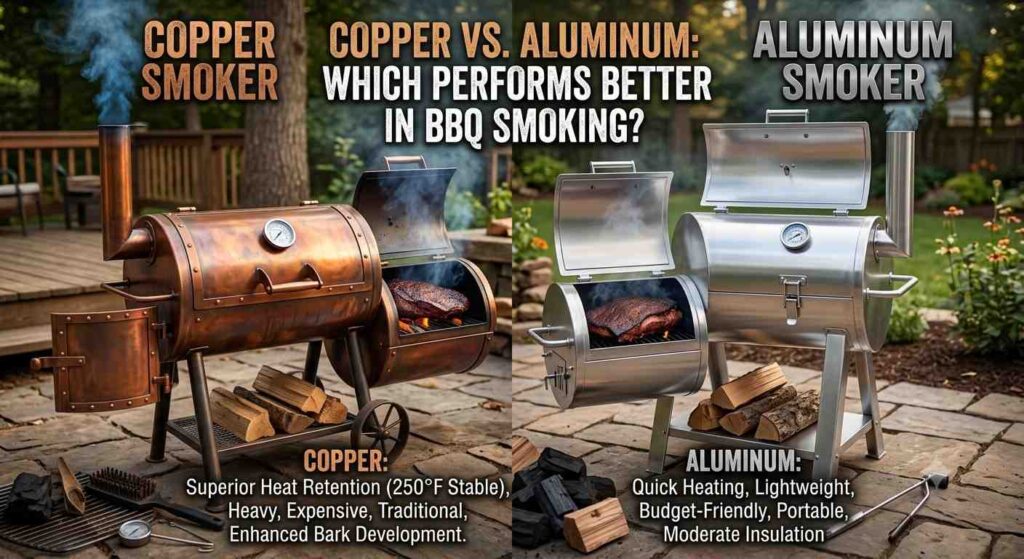
Copper vs. Aluminum: Which Performs Better?
The barbecue world loves debates. Charcoal versus pellets. Texas versus Carolina sauce.
Fat side up versus fat side down. The question of copper and aluminum belongs on that list.
The truth is less dramatic than many online arguments suggest: both materials excel, but for different reasons.
Heat Conductivity
Copper wins the conductivity contest.
It transfers heat more effectively and distributes energy with exceptional precision.
Aluminum still performs extremely well, especially compared with steel and cast iron, but copper remains the gold standard – ironically, while being neither gold nor standard.
Weight and Practicality
Aluminum holds a major advantage in portability.
Large smokers already weigh hundreds of pounds. Adding extensive copper construction increases cost and complexity.
For backyard users, aluminum often delivers the best balance between performance and practicality.
Cost Comparison
Copper’s superior performance comes at a premium.
Aluminum offers:
- Lower manufacturing costs.
- Easier fabrication.
- Reduced shipping expenses.
- Greater accessibility.
That cost difference explains why aluminum appears in far more products.
Which Material Fits Your Cooking Style?
Backyard enthusiasts often benefit most from aluminum-enhanced smokers because they combine performance and value.
Competition pitmasters may prioritize copper components for their precision and recovery speed.
Luxury outdoor kitchens frequently incorporate both materials to maximize heat control and visual appeal.
The winner depends less on the metal itself and more on how intelligently it is used.
Why the Best Smokers Combine Multiple Metals
Premium smoker engineering resembles race-car design.
Nobody asks whether tires are more important than the engine. The magic comes from combining specialized parts into a complete system.
The same principle applies to smoker construction.
High-end manufacturers strategically pair:
- Steel for structural strength.
- Aluminum for responsiveness.
- Copper for heat transfer.
- Insulation for stability.
Multi-Layer Construction
Modern smoker builds often feature layered systems designed to manage heat movement.
A typical premium design might include:
- An insulated steel shell.
- Aluminum heat diffusers.
- Copper-lined components.
- Precision airflow channels.
- Temperature sensors.
Every layer plays a role.
Without this balance, even expensive smokers struggle to maintain consistency.

Airflow Matters Just as Much
Many buyers focus entirely on materials while ignoring airflow design. That would be like buying racing tires for a car with no steering wheel.
Heat distribution depends heavily on:
- Vent placement.
- Exhaust positioning.
- Chamber geometry.
- Firebox design.
- Internal baffles.
The best smokers use copper and aluminum as tools within a larger thermal system.
Other Factors That Influence Heat Distribution
Materials matter enormously, but they are only part of the equation. Several additional variables influence cooking performance.
Smoker Shape
Horizontal offset smokers behave differently from vertical cabinets. Horizontal designs encourage heat gradients, while vertical systems often produce more even temperatures.
Shape affects:
- Smoke circulation.
- Heat retention.
- Cooking zones.
- Fuel efficiency.
Wall Thickness
Thicker walls provide greater thermal stability.
Heavy construction:
- Retains heat longer.
- Resists outdoor temperature swings.
- Improves fuel efficiency.
Thin walls may save money, but they often lose heat faster. Winter cooks quickly reveal which smokers skipped leg day.
Vent Placement
Small changes in vent positioning can dramatically alter airflow patterns.
Proper vent design:
- Reduces stagnant air.
- Promotes even heat distribution.
- Improves smoke quality.
Poor vent placement creates unpredictable temperature pockets.
Fuel Type
Different fuels generate heat differently.
- Wood offers complex flavor.
- Charcoal delivers strong heat retention.
- Pellets provide automation.
- Gas supplies convenience.
The smoker’s materials must work in harmony with its fuel source.
Is a Copper- or Aluminum-Enhanced Smoker Worth the Investment?
For casual cooks making burgers twice a summer, premium thermal engineering may be unnecessary.
For anyone chasing championship-level barbecue – or simply wanting more predictable results – the story changes.
Investing in smokers that incorporate copper and aluminum can deliver meaningful benefits:
- More consistent temperatures.
- Faster recovery after opening the lid.
- Better fuel efficiency.
- Fewer hot spots.
- Improved cooking precision.
- Reduced frustration.
The key is understanding that premium materials alone do not guarantee great barbecue.
A beautifully engineered smoker still cannot rescue an overcooked brisket or fix ribs forgotten during halftime.
Good barbecue remains a partnership between craftsmanship, patience, and equipment.
Before purchasing, ask:
- Where are copper or aluminum components located?
- How does the smoker manage airflow?
- What insulation system does it use?
- How thick are the walls?
- How stable are temperatures during long cooks?
The answers reveal far more than the marketing brochure.
The Engineering Behind the Smoke: Thermal Dynamics in Pit Design
Behind every memorable rack of ribs and every perfectly sliced brisket lies an invisible science experiment powered by fire, airflow, and metal.
Copper and aluminum play a crucial role in that process. Copper delivers exceptional thermal conductivity and rapid heat recovery, while aluminum provides lightweight efficiency and responsive temperature control.
Together, they help premium smokers maintain the consistency that low-and-slow cooking demands.
The best smoker designs rarely depend on a single material. Instead, manufacturers combine copper, aluminum, steel, insulation, and intelligent airflow systems to create stable cooking environments.
Understanding that science changes how you look at a smoker. Suddenly, the shiny metal surfaces are not just parts – they are carefully engineered tools working to make every cook smoother, every bark deeper, and every barbecue story just a little more delicious.
And yes, it still helps to keep the lid closed. At least most of the time.
Frequently Asked Questions
How do copper and aluminum improve heat distribution in smokers?
Copper and aluminum are highly conductive metals that transfer heat quickly and evenly throughout the smoker. This helps minimize hot spots, maintain stable cooking temperatures, and ensure food cooks consistently from one end of the cooking chamber to the other.
Which conducts heat better: copper or aluminum?
Copper has significantly higher thermal conductivity than aluminum, allowing it to move heat more efficiently. However, aluminum offers an excellent balance between performance, weight, and cost, making it a popular choice in many high-end smoker builds.
Why aren’t smokers made entirely from copper?
Although copper provides exceptional heat distribution, it is expensive, heavy, and more difficult to manufacture on a large scale. Most premium smokers use copper selectively in components such as heat diffusers and internal panels rather than throughout the entire unit.
What smoker parts commonly use aluminum?
Aluminum is often found in heat deflector plates, drip trays, interior liners, airflow channels, and insulation systems. These components help distribute heat evenly while keeping the smoker lightweight and efficient.
Does aluminum retain heat as well as steel or cast iron?
Not quite. Aluminum heats up faster than steel and cast iron, but it generally has lower thermal mass, meaning it does not hold heat for as long.
Many premium smokers combine aluminum with heavier materials to achieve both quick responsiveness and strong heat retention.
Are copper and aluminum smokers more fuel-efficient?
Smokers that incorporate copper and aluminum components can be more fuel-efficient because these metals distribute heat effectively and recover temperature quickly after heat loss. Better heat management often translates into lower fuel consumption during long cooks.
Premium materials primarily improve heat consistency rather than directly changing flavor. Stable temperatures and even cooking conditions can help create better bark, more uniform smoke absorption, and improved texture in meats.
Can copper and aluminum withstand high smoking temperatures?
Yes. Both metals can handle the temperatures typically used for smoking and barbecue. However, manufacturers often combine them with steel and other materials to increase durability and structural strength in high-heat areas.
Is a smoker with copper or aluminum components worth the extra cost?
For barbecue enthusiasts who regularly cook brisket, ribs, pork shoulder, and other low-and-slow dishes, smokers featuring copper and aluminum components can provide better temperature control, fewer hot spots, and more consistent results over time.
What should buyers look for in a high-end smoker?
When evaluating a premium smoker, consider the following factors:
- Material composition.
- Heat distribution system.
- Wall thickness and insulation.
- Airflow and vent design.
- Fuel efficiency.
- Temperature stability.
- Placement of copper and aluminum components.
The best smoker is not necessarily the one with the most expensive materials – it is the one that uses them intelligently.
Featured image credit: Google Gemini
