
“Barbecue is the only sport where a man can sit outside in his underwear, drink six beers, burn half a hog, and still get called a culinary genius.”
That old pitmaster wisdom holds true right up until you try hauling a 300-pound offset smoker to a tailgate or a remote lakeside campsite. Outdoor cooking has a way of humbling even the most confident backyard cooks.
Most portable propane setups feel like glorified hotplates – struggling to reach decent searing temperatures the moment a gentle breeze rolls in, or burning every sausage link because they only have one heat setting: surface of the sun.
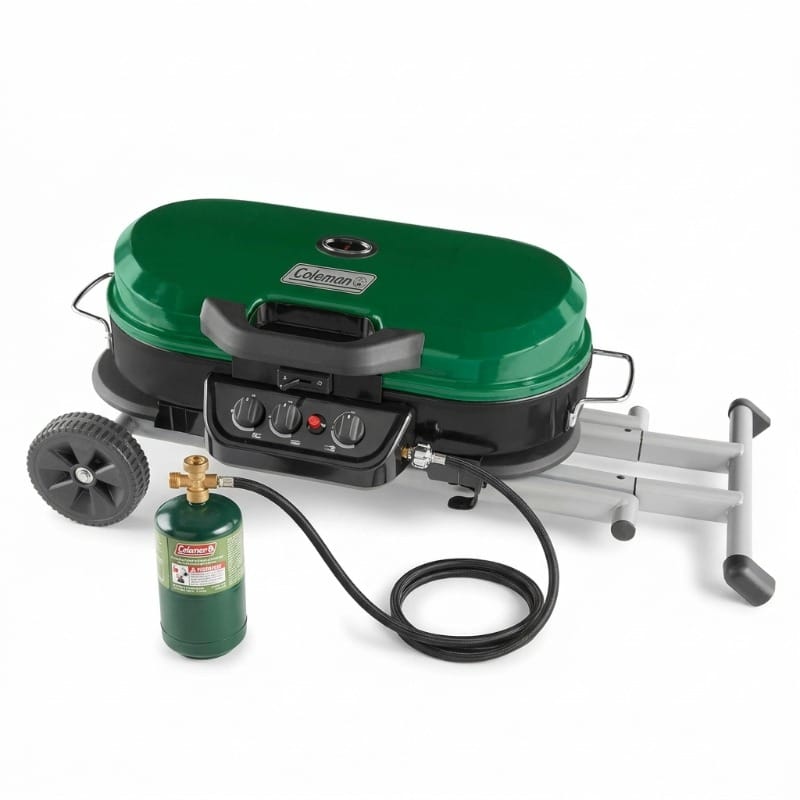
Enter the Coleman RoadTrip 285. Marketing hype promises it is the undisputed king of mobile outdoor cooking, promising backyard-quality heat control on a collapsible set of wheels.
But does it actually hold up under the high-heat scrutiny of serious live-fire cooking, or is it just another shiny piece of camping gear destined to rust in your garage?
Quick Verdict & Performance Summary
- Overall Rating: 4.6 / 5
- Pros: Three independent burner zones, impressive temperature range, instant setup scissor-stand, heavy-duty cast iron grates.
- Cons: Pushes 49 pounds on the scale, sliding side tables feel slightly flexy under heavy loads, water pan requires steady hands when full.
Key Specifications at a Glance
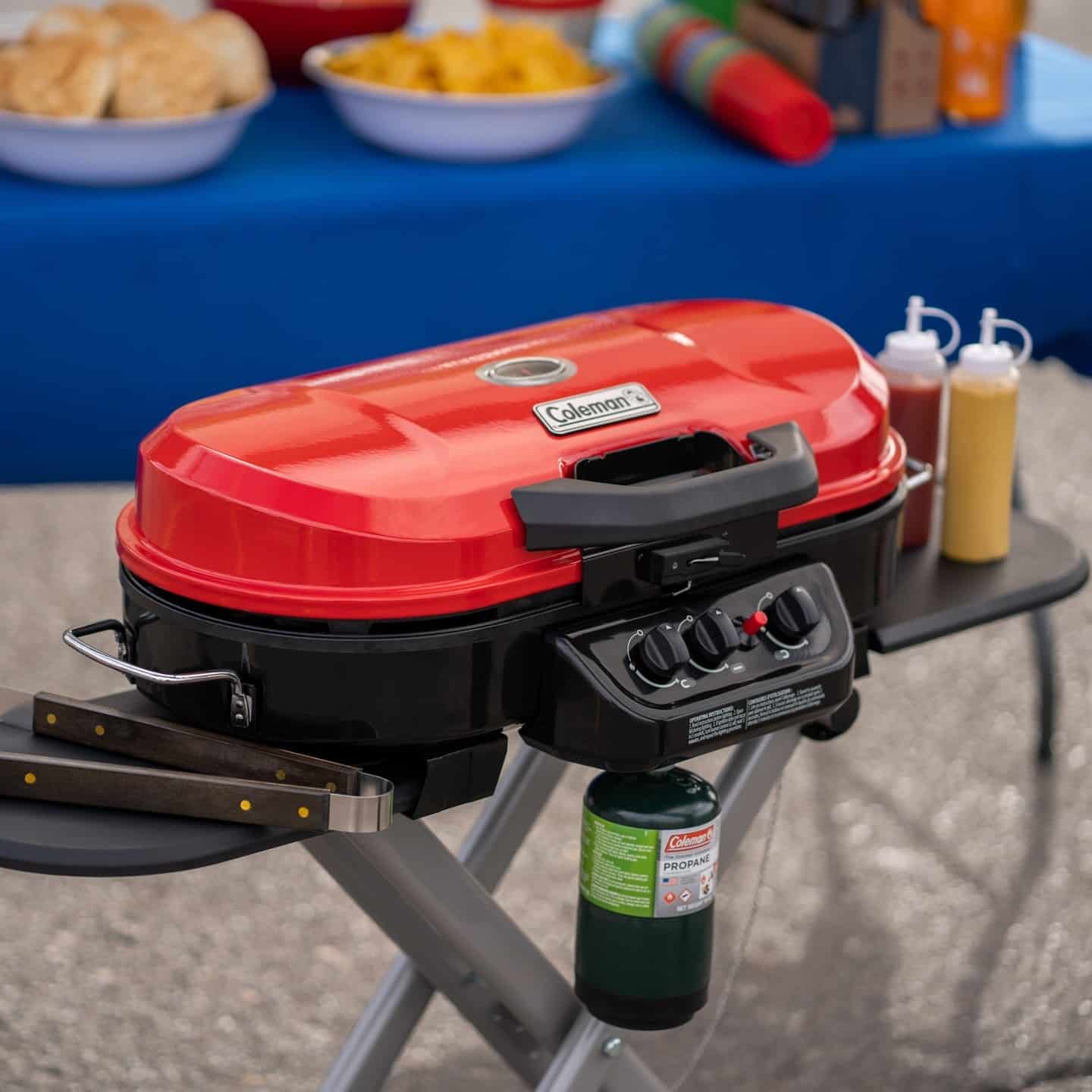
- Cooking Surface Area: 285 sq. in. (Porcelain-coated cast iron)
- Total Heat Output: 20,000 BTUs across 3 burners
- Burner Configuration: 3 independent stainless steel burners (Left, Center, Right)
- Ignition System: Push-button Instastart™ piezo ignition
- Fuel Type: 16.4 oz propane cylinder (20 lb tank adapter sold separately)
- Total Weight: 49 lbs
- Frame & Cart: Steel scissor-leg folding cart with rugged wheels
Design, Build Quality, and Setup
Unboxing a new cooker usually involves two hours of wrestling with confusing manuals and cursing tiny screws. Coleman clearly designed this setup to avoid that headache. Out of the box, assembling the base frame takes roughly 15 minutes with basic hand tools.
The steel scissor-leg cart forms the core foundation. It operates using a smooth quick-release latch that lets you expand the entire unit to full standing height without breaking your back.
Folding it flat for storage is equally simple: pull the lever, lower the frame, and let the locking mechanism secure the lid.
The Modular SwapTop System
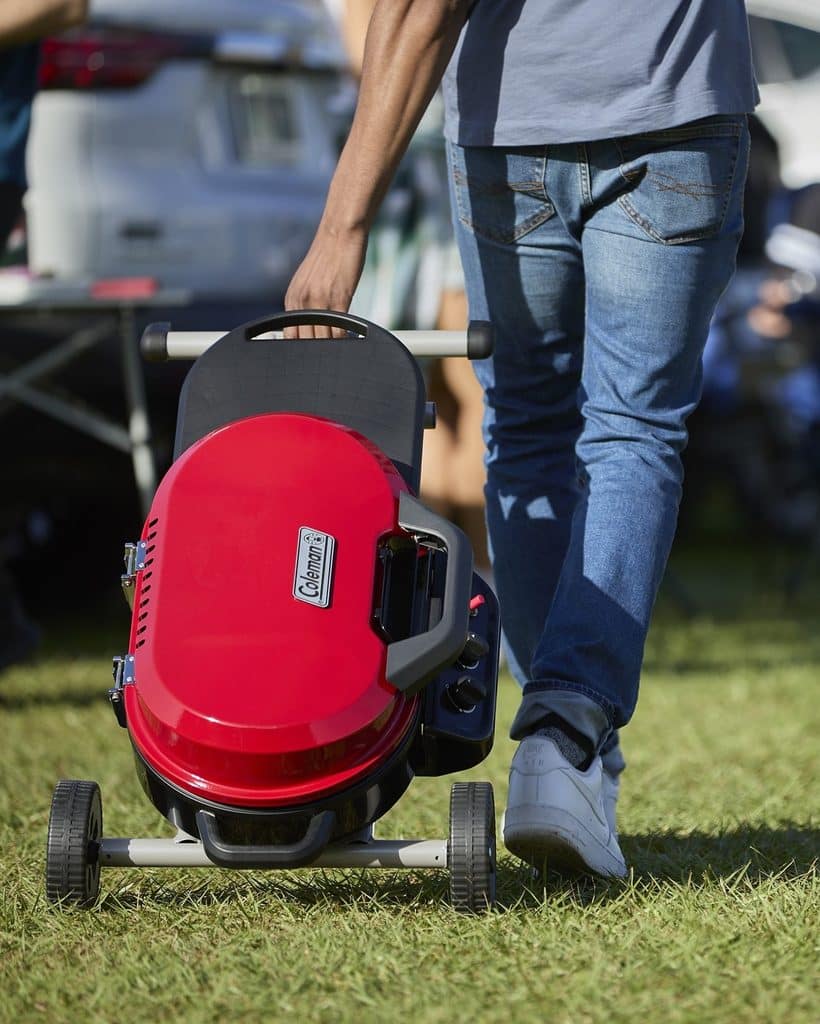
The cooking surface consists of heavy-duty porcelain-coated cast iron grates. Cast iron retains heat dramatically better than stamped wire racks, producing defined sear marks while preventing cold spots.
Coleman also integrated their SwapTop™ interchangeable grate design.
You can remove one or both cast iron grates and swap in a griddle plate or stove grate (sold separately), turning the left side into a breakfast diner while using the right side to sear steaks.
The two sliding side tables pull out from beneath the main body to provide landing space for tongs, spices, or prepped meat.
While they handle seasoning rubs and light prep plates easily, keeping heavy cast iron skillets or full beer cases off these plastic extensions is best practice.
Cooking Performance & Thermal Control
The single biggest flaw of most portable units is poor thermal management. A single circular burner gives you zero zone flexibility: you are either searing everything or burning everything.
The Coleman RoadTrip 285 addresses this by dividing 20,000 total BTUs across three distinct stainless steel burner zones.
1. The Multi-Zone Advantage
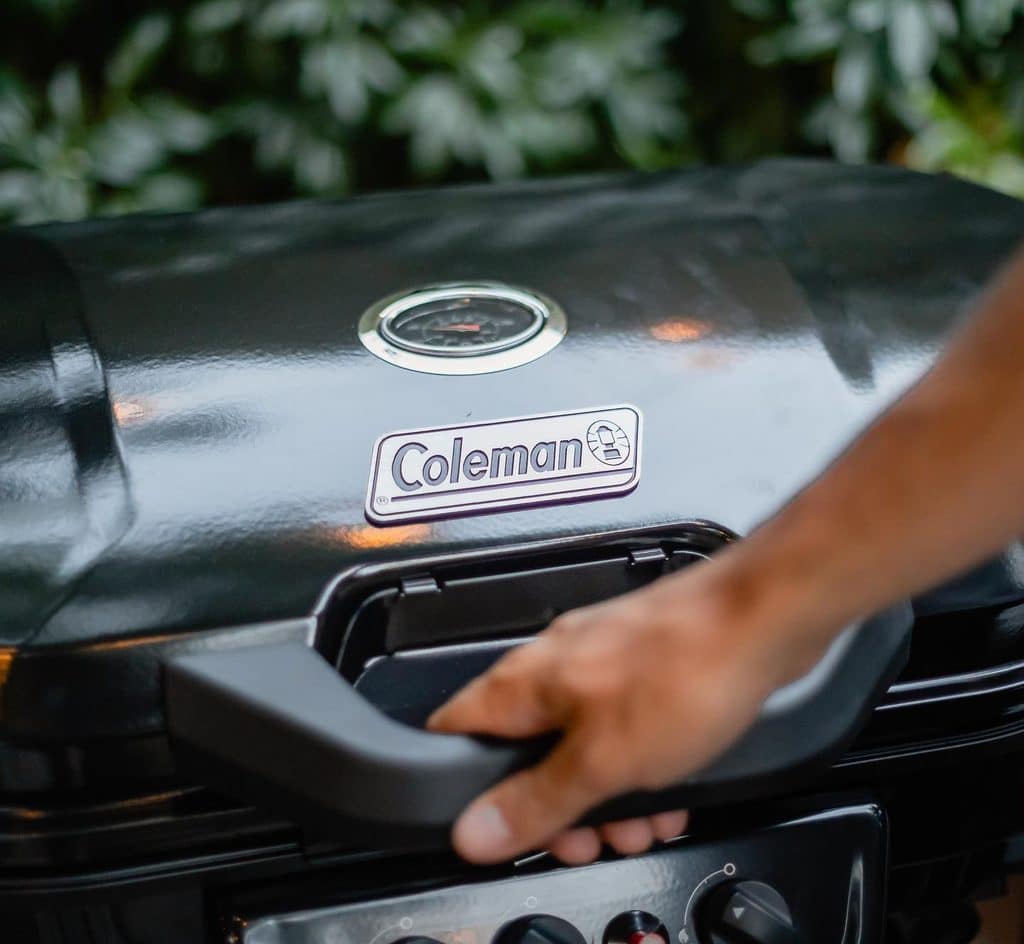
Having three dedicated dials gives you real indirect cooking capability on the road. Turn the left burner to high, leave the center off, and run the right burner on medium. Now you have a true two-zone setup on a portable footprint:
- Direct High-Heat Zone: Perfect for locking in crusts on thick-cut ribeyes or smash burgers at 550°F+.
- Indirect / Warming Zone: Ideal for gently pushing bone-in chicken thighs to temp or letting seared meat rest without drying out.
- Low & Slow Simmer Zone: Keeps sides, beans, or sauces warm without scorch marks.
2. Searing Power and Temperature Range
Cranking all three burners to maximum pushes the built-in thermometer past 600°F in under eight minutes. That kind of rapid heat buildup is essential when cooking in brisk autumn air or windy tailgating lots.
The precision control valves let you dial heat down to roughly 250°F, giving you enough range to gently roast delicate fish or cook thick brats slowly without bursting the casings.
3. Real-World Cooking Tests
Test 1: Searing High-Fat Burgers
Four half-pound chuck patties went directly over the high-heat left zone. Flame distribution remained tight, and heat transfer from the heavy cast iron grates produced rich, dark crusts within three minutes per side.
Test 2: The Sunday Morning Breakfast
Swapping the right grate for the cast iron griddle attachment allowed cooking half a pound of thick-cut bacon alongside four fried eggs. The center burner was kept on low, warming tortillas on the left grate while breakfast cooked simultaneously on the right.
Test 3: Wind-Resistance Evaluation
Tested in 15 mph coastal winds. The deep lid lip and recessed burner construction protected the flame ports, preventing blowouts and maintaining internal temperatures without spiking gas consumption.
Portability, Mobility, and Transportation
Weighing in at 49 pounds, this is not a backpacker’s cooker. It is a full-featured stand-up unit designed for vehicle-based adventures, tailgates, and RV bays.
Folding and Maneuverability
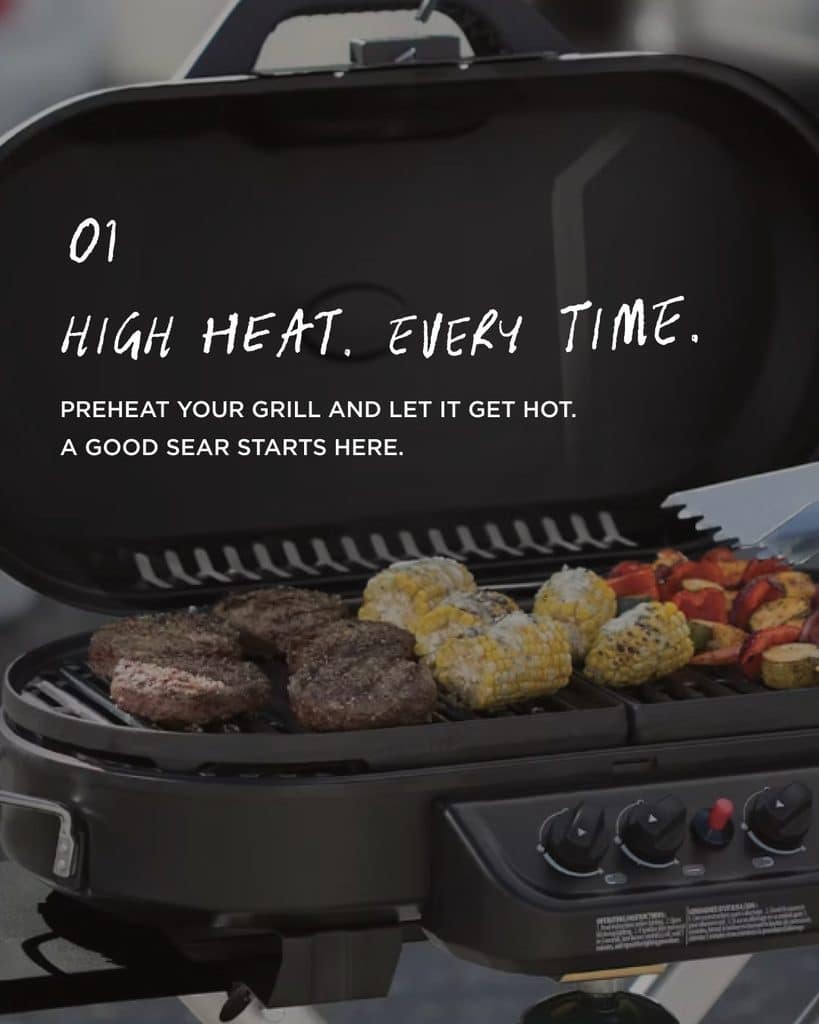
The integrated handle and rugged wheels allow rolling the collapsed cart like a piece of rolling luggage. The wheels easily navigate gravel, turf, and packed dirt paths.
- Mid-Size SUV / Truck Bed: Fits comfortably with plenty of extra room for coolers and gear.
- Compact Sedan Trunk: Fits diagonally (check trunk depth before loading).
- RV Storage Bay: Fits flat or upright cleanly inside standard bays.
When folded, the entire assembly measures roughly 32″ x 19″ x 15″, sliding neatly into vehicle cargo spaces without monopolizing your entire haul.
Cleaning, Care, and Maintenance
Cleaning portable gear after a long cook is rarely enjoyable, but Coleman incorporated a clever removable water pan system to streamline grease management.
Before turning on the gas, fill the bottom stainless tray with a few cups of tap water. Dripping rendered fat drops straight into the water bath, cooling instantly rather than sticking to the floor or causing wild flare-ups.
Once the cooker cools, pull out the water pan, dispose of the liquid responsibly, and wipe it clean with warm dish soap.
Essential Maintenance Checklist
- Seasoning the Cast Iron: Treat the grates like a trusted cast iron skillet. Rub them down with a thin coat of high-smoke-point oil (like canola or grapeseed) after washing to maintain the protective coat and block rust.
- Clear the Burner Ports: Inspect the burner tubes periodically for spider webs or carbon buildup that could impede gas flow.
- Lock the Lid: Always double-check that the lid latch is firmly engaged before lifting the unit onto its wheels for transport.
Fuel Economy & Propagation: How Far Does One Canister Go?
Running out of gas mid-cook is every pitmaster’s worst nightmare. Those standard 16.4 oz liquid propane cylinders will last roughly 2 to 3 hours if you are running all three burners at maximum output.
However, clever thermal management extends that runtime significantly:
- Single-Canister Performance: Utilizing the three independent burner dials to establish indirect heating zones lets you cruise for up to 5 hours on a single green bottle.
- The Bulk Tank Upgrade: Buying a high-pressure hose adapter to hook up a standard 20 lb propane tank slashes long-term fuel costs while completely eliminating mid-cook cylinder swaps during extended weekend camping trips or day-long tailgates.
Upgrading Your Rig: Essential Must-Have Accessories
Transforming a solid portable cooker into a fully functional mobile kitchen comes down to choosing the right add-ons.
- SwapTop™ Accessories: Replace half the cast iron grate with a full-sized steel griddle or a heavy-duty stove ring for boiling pots of water.
- Protection & Transport: A padded carry case with reinforced handles protects your vehicle’s interior from grease stains and charcoal dust.
- Nighttime Cooking: A magnetic LED grill light clipped to the lid handle lets you gauge internal meat temps and crust color accurately well past sunset.
Converting to RV Low-Pressure Quick-Connect Systems
RVers love tapping directly into their rig’s onboard propane supply, but connecting the Coleman RoadTrip 285 requires a quick mechanical workaround.
- The Problem: Plugging the unit directly into an RV’s regulated low-pressure port causes extremely weak flames or ignition failure due to its built-in high-pressure regulator.
- The Fix: Install an aftermarket regulator bypass kit by removing Coleman’s stock regulator.
- The Result: Connect a quick-connect propane hose straight from your motorhome’s main tank for unlimited RV-powered grilling without hauling green canisters.
Cold-Weather & High-Altitude Grilling Dynamics
Sub-freezing temperatures and thin mountain air drastically alter how portable propane cookers perform.
- Freezing Temperatures: Liquid propane struggles to vaporize in freezing weather, causing tank pressure drops. Counter winter sluggishness using an insulated sleeve on your 16.4 oz canister to maintain stable gas flow alongside its 20,000 BTU thermal density.
- High Elevations (5,000+ ft): Reduced atmospheric oxygen creates a richer fuel mixture that can turn flames yellow. Closing the lid quickly between flips traps radiant heat, allowing the porcelain cast iron grates to maintain high sear temperatures even in howling winds.
Tacking On Smoke Flavor: Foil Packets & Smoker Boxes
Gas cookers are famous for convenience, but they lack natural hardwood smoke. Fortunately, you can hack the RoadTrip 285 into a portable smokehouse:
- Place a stainless steel smoker box filled with soaked hickory or applewood chips directly over the high-heat left burner.
- Leave the center and right burners turned off.
- Once thin blue smoke wafts from under the lid, place your meat on the unheated right side. The curved lid architecture circulates wood smoke evenly before venting, delivering authentic wood-fired aroma.
Safety Protocol: Stability, Wind, & Surface Prep
Cooking safely in wild outdoor settings requires paying close attention to your immediate environment.
- Terrain Setup: The scissor-leg stand has a wide footprint, but setting up on loose gravel, sloped grass, or sand requires leveling the wheels to prevent dangerous tipping.
- Wind Alignment: Position the cooker so the back hinge faces incoming wind gusts to prevent drafts from blowing out low-heat settings or driving smoke toward your face.
- Clearance: Avoid placing flammable vinyl tablecloths directly beneath the sliding side tables, as radiated heat from the main firebox can warm surrounding plastic surfaces.
Resale Value, Warranty Coverage, & Long-Term Sourcing
A quality outdoor cooker should be viewed as a multi-year investment rather than a disposable seasonal appliance.
- Factory Warranty: Coleman backs this model with a limited 3-year warranty covering manufacturing defects, valve failures, and burner manifold issues.
- Spare Parts Sourcing: Coleman maintains a robust spare parts catalog, making it easy to order replacement piezo igniters, fresh lid latches, and rubber wheel treads years down the road.
- Value Retention: Keeping your original receipt, storing the unit inside a weatherproof cover, and regularly oiling the grates ensures strong resale value on local marketplaces.
Top 3 Alternatives for the Coleman RoadTrip 285
1. Weber Traveler
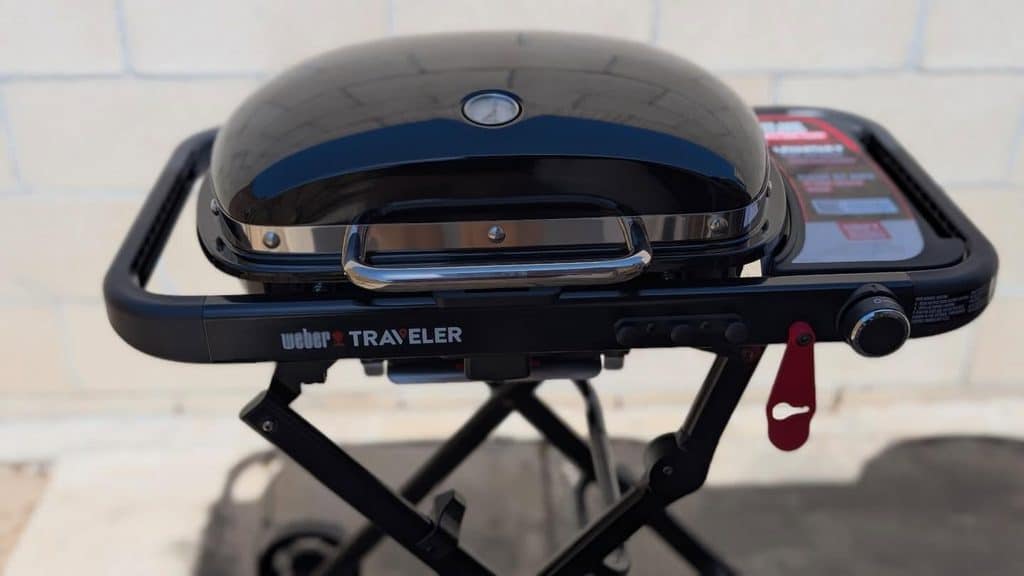
The Weber Traveler is the most direct competitor to the Coleman RoadTrip 285. It features a built-in scissor cart that folds flat with one-handed hydraulic assistance, making transport and setup even smoother.
- Key Strengths: Features a larger 320 sq. in. porcelain-enameled cast-iron cooking area and a smooth, gas-strut folding mechanism.
- How It Compares: It uses a single loop burner instead of Coleman’s 3 independent burner zones, but it offers superior temperature distribution and a more premium, durable frame build.
2. Weber Q 2200
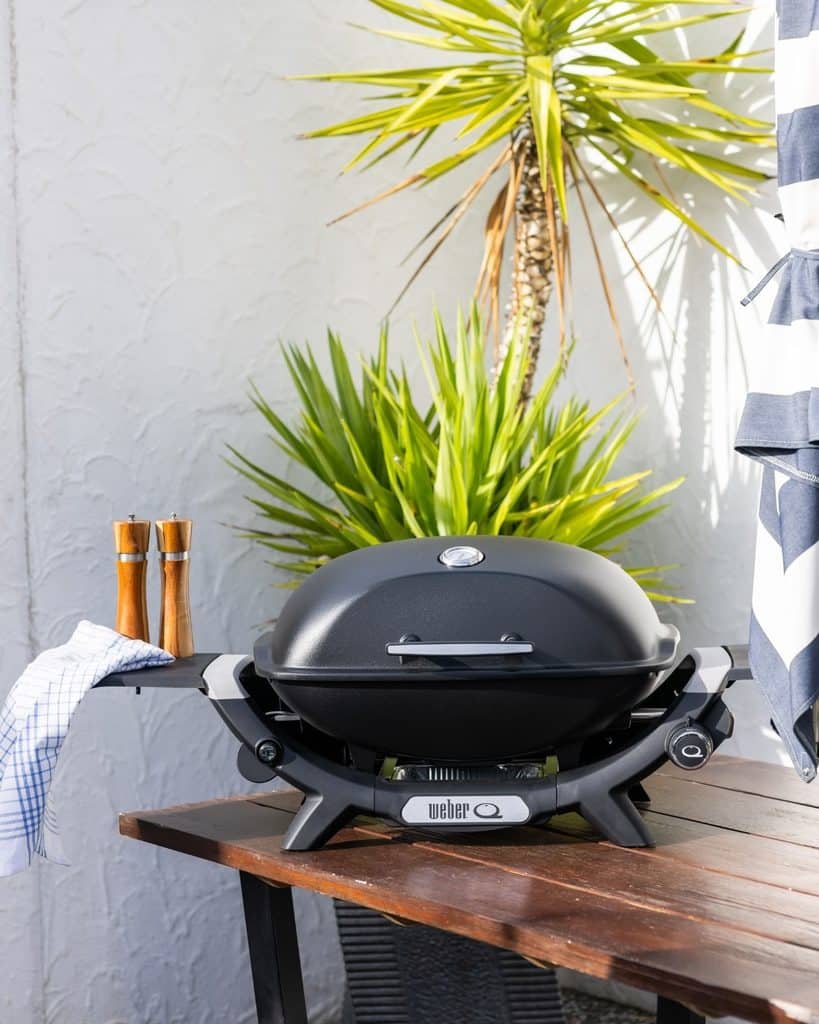
If you prefer a robust tabletop model or want a grill that doubles as a permanent small-patio cooker, the Weber Q 2200 is a top-tier option.
- Key Strengths: Features a cast-aluminum lid and body that resist rust, heavy-duty porcelain-enameled grates, and sturdy fold-out side tables.
- How It Compares: It offers 280 sq. in. of cooking space with 12,000 BTUs. It lacks built-in stand wheels out of the box (requires a portable cart accessory), but its build quality and heat retention outshine most stand-up alternatives.
3. Cuisinart Prep ‘N Go Folding Gas Grill
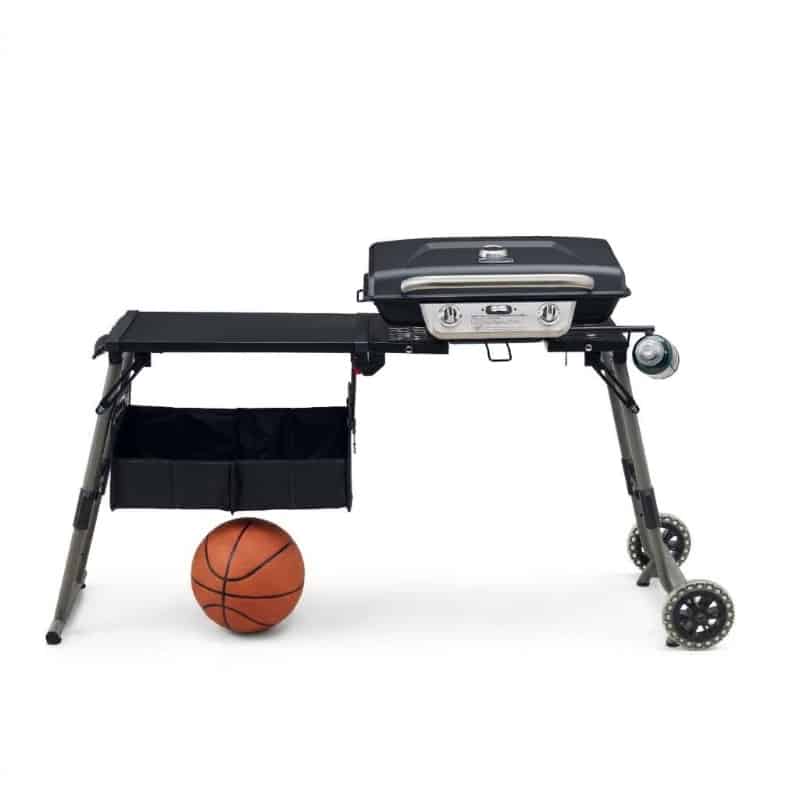
The Cuisinart Prep ‘N Go matches the Coleman RoadTrip 285 in cooking capacity while focusing heavily on meal prep and storage integration.
- Key Strengths: Provides 285 sq. in. of cast iron cooking space, 18,000 BTUs, a large integrated prep table, and a removable under-grill storage tote.
- How It Compares: It folds down into a highly compact form factor for tight vehicle trunks while offering a built-in workspace for prep work.
Final Verdict and Recommendation
The Coleman RoadTrip 285 easily earns its reputation as a premier portable cooker. By delivering three independent burner zones, heavy cast iron heat retention, and a quick-collapsing cart, it bridges the gap between bulky backyard setups and underpowered portable cookers.
Who It Is Perfect For
- Tailgaters & Sports Fans: Quick setup and high thermal output make feeding a crowd before kick-off fast and painless.
- Rovers & Car Campers: Collapses flat for easy storage while offering enough cooking versatility to handle breakfast, lunch, and dinner.
- Patio Cooks with Limited Space: Excellent option for apartment balconies or small decks where a full-sized cabinet cooker won’t fit.
Who Should Look Elsewhere
- Backpackers or Solo Trekkers: At nearly 50 pounds, this is built for vehicle transport, not trail carrying.
- Low-and-Slow Purists: If you expect authentic hickory smoke flavor without using foil packets or wood chip smoker boxes, you’ll still want a dedicated offset or pellet smoker.
The Coleman RoadTrip 285 delivers uncompromising power, exceptional multi-zone control, and practical durability – proving you don’t have to leave real cooking performance behind when you hit the road.
Frequently Asked Questions (FAQ)
1. How temperature control work on the Coleman RoadTrip 285, and can I cook using indirect heat?
Answer: Yes, you can cook using indirect heat.
Unlike most portable grills that feature a single burner, the RoadTrip 285 has 3 independent stainless steel burners producing a total of 20,000 BTUs.
With dedicated temperature dials for each zone (Left, Center, Right), you can create multi-zone setups – such as running high heat on one side for searing while leaving the center or opposite burner off for indirect cooking, warming, or resting meat.
2. How long does a 16.4 oz propane cylinder last, and can I connect a larger tank?
Answer: A single 16.4 oz propane cylinder lasts approximately 2 to 3 hours with all three burners set to maximum output. However, by managing your burner zones efficiently, a single cylinder can last up to 5 hours.
If you want to avoid frequent swaps or connect to an RV, you can purchase a high-pressure hose adapter to hook up a standard 20 lb propane tank, or use an aftermarket regulator bypass kit for RV low-pressure quick-connect systems.
3. Can I swap out the cooking grates for different surface types?
Answer: Yes. The RoadTrip 285 features Coleman’s SwapTop™ interchangeable grate system.
You can remove one or both of the included porcelain-coated cast iron grates and replace them with a steel griddle plate or a stove grate (sold separately) to cook breakfast items like bacon and eggs or boil pots of water.
4. Is the Coleman RoadTrip 285 easy to transport and store?
Answer: Yes, although it is designed for vehicle-based transport rather than manual carrying, as it weighs 49 lbs. It features a steel scissor-leg cart with a quick-release latch that collapses flat to roughly 32″ x 19″ x 15″.
With its integrated handle and rugged wheels, you can roll it like a piece of luggage over grass, gravel, and dirt, making it easy to slide into an SUV, truck bed, RV bay, or compact sedan trunk.
5. How does the water pan grease management system work?
Answer: Before cooking, fill the removable bottom stainless steel tray with a few cups of tap water.
Dripping grease and rendered fat drop directly into the water bath, cooling instantly to prevent flare-ups and grease sticking to the floor of the grill.
Once the unit cools, simply pull out the water tray, dispose of the liquid, and wash it clean with warm dish soap.
Featured image credit: @colemanusa
