
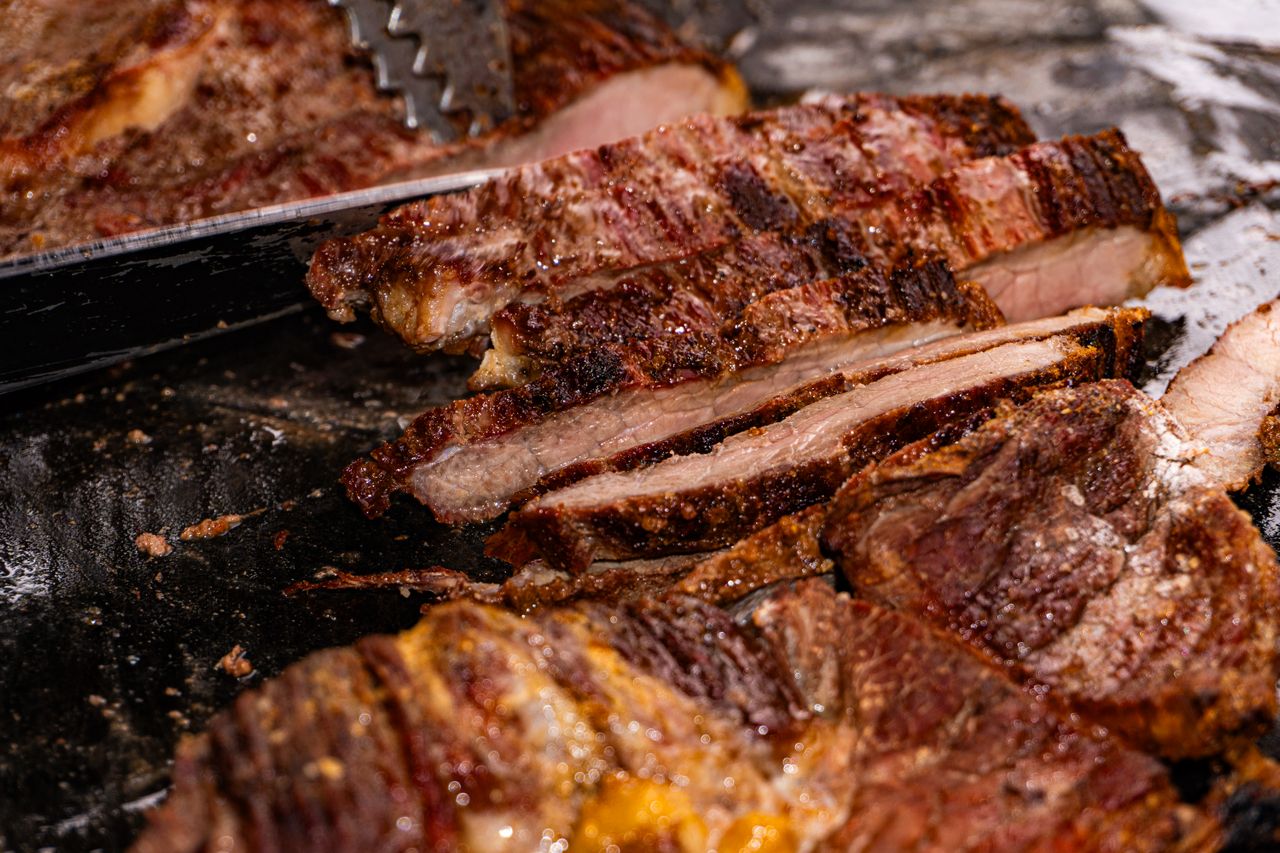
Few cuts of meat reward patience like brisket. Give it the right seasoning, steady smoke, and plenty of time, and it transforms from a tough piece of beef into something incredibly tender.
This recipe uses a coffee-based spice rub, a simple beer spritz, and a homemade Zinfandel BBQ sauce that elevates the finished brisket without hiding its smoky flavor.
Whether you’re cooking for a backyard barbecue, holiday gathering, or weekend feast, this coffee beer smoked brisket is guaranteed to become a favorite.
Why You’ll Love This Coffee Beer Smoked Brisket
This recipe isn’t about piling on ingredients just because they sound impressive. Every component has a purpose.
- Ground coffee deepens the bark while adding earthy richness rather than a noticeable coffee flavor.
- Dark beer helps keep the brisket moist during the smoking process while contributing subtle malt notes.
- Zinfandel wine creates a barbecue sauce with remarkable depth that pairs beautifully with smoked beef.
- The recipe works well for both beginners and experienced pitmasters.
- Leftovers taste even better the next day, making incredible sandwiches, tacos, sliders, or loaded baked potatoes.
One common misconception deserves clearing up right away: your brisket won’t taste like a cup of coffee. The coffee simply enhances the spices and helps produce that dark, beautiful crust every barbecue lover chases.
Tips for the Best Coffee Beer Smoked Brisket
Small details often produce the biggest improvements.
- Choose a well-marbled brisket. More intramuscular fat means better flavor and tenderness.
- Use freshly ground coffee. Fresh coffee provides a richer aroma than older grounds sitting in the pantry.
- Don’t rush the stall. Every brisket cooks differently.
- Cook by tenderness, not strictly by temperature.
- Rest longer than you think you need. The payoff is worth every minute.
- Slice against the grain to maximize tenderness.
One more tip: avoid opening the smoker every fifteen minutes. Every peek costs heat, and brisket appreciates privacy almost as much as teenagers do.
Choosing the Best Brisket Cut
Not every brisket cooks the same, and selecting the right one makes a noticeable difference. A whole packer brisket includes both the flat and the point, offering the ideal balance of lean slices and richly marbled meat.
The flat is easier to slice and serves beautifully, while the point contains more fat, making it exceptionally juicy and perfect for burnt ends. Look for good marbling, a flexible cut that bends slightly when lifted, and a creamy white fat cap instead of yellow fat.
Higher USDA grades, such as Choice or Prime, generally deliver better tenderness during long smoking sessions. Starting with quality beef makes every hour spent at the smoker even more worthwhile.
Why Coffee and Beef Make the Perfect Pair
Coffee may seem like an unexpected barbecue ingredient, but it’s one of the best flavor enhancers for beef. Ground coffee contributes roasted, earthy notes that intensify the natural richness of brisket without making it taste like your morning espresso.
During smoking, the coffee combines with spices and rendered fat to help create an impressive dark bark with complex flavor. The slight bitterness of coffee also balances the sweetness from brown sugar and the fruity richness of the Zinfandel BBQ sauce.
It’s a classic example of contrast working in harmony. Think of coffee as a secret supporting ingredient – it never steals the spotlight, but the entire performance would feel incomplete without it.
How to Know When Brisket Is Truly Done
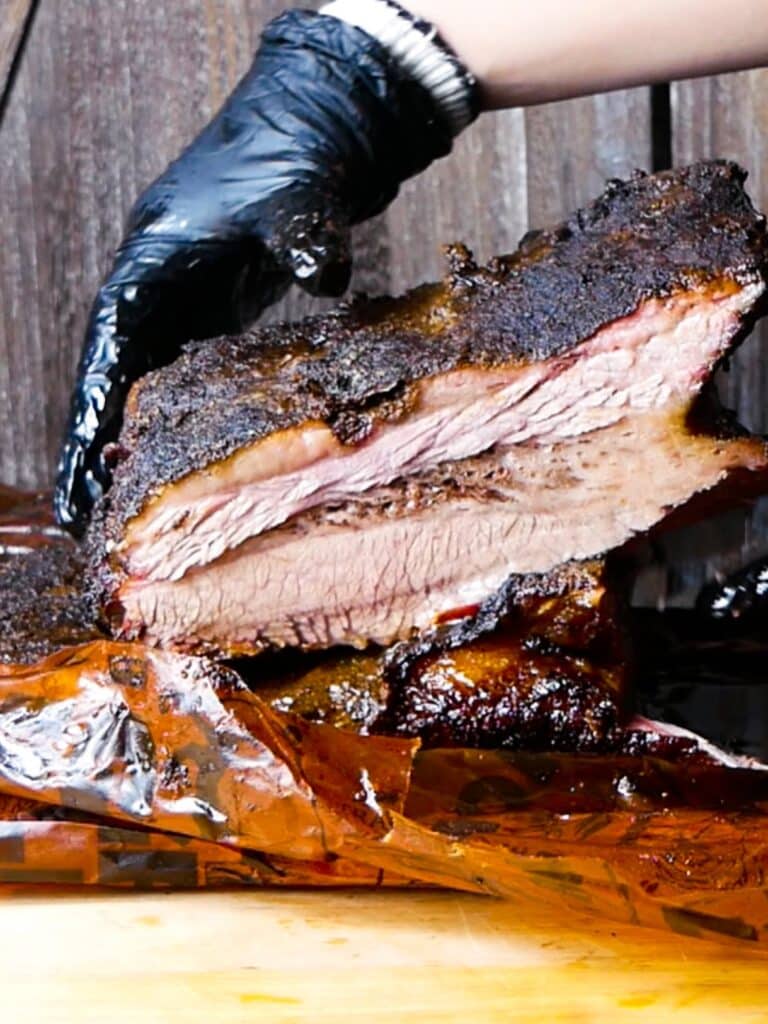
Many cooks focus only on temperature, but experienced pitmasters know that tenderness is the real finish line. While most briskets finish between 200°F and 205°F, every piece of meat behaves differently. The best way to check doneness is with the probe test.
Slide a temperature probe or skewer into the thickest part of the brisket. It should glide in with almost no resistance, similar to pushing through softened butter. If it still feels firm, let the brisket continue cooking and check again after 15 to 20 minutes.
Learning to trust feel over numbers is one of the biggest steps toward consistently producing restaurant-quality smoked brisket.
Best Drinks to Serve with Coffee Beer Smoked Brisket
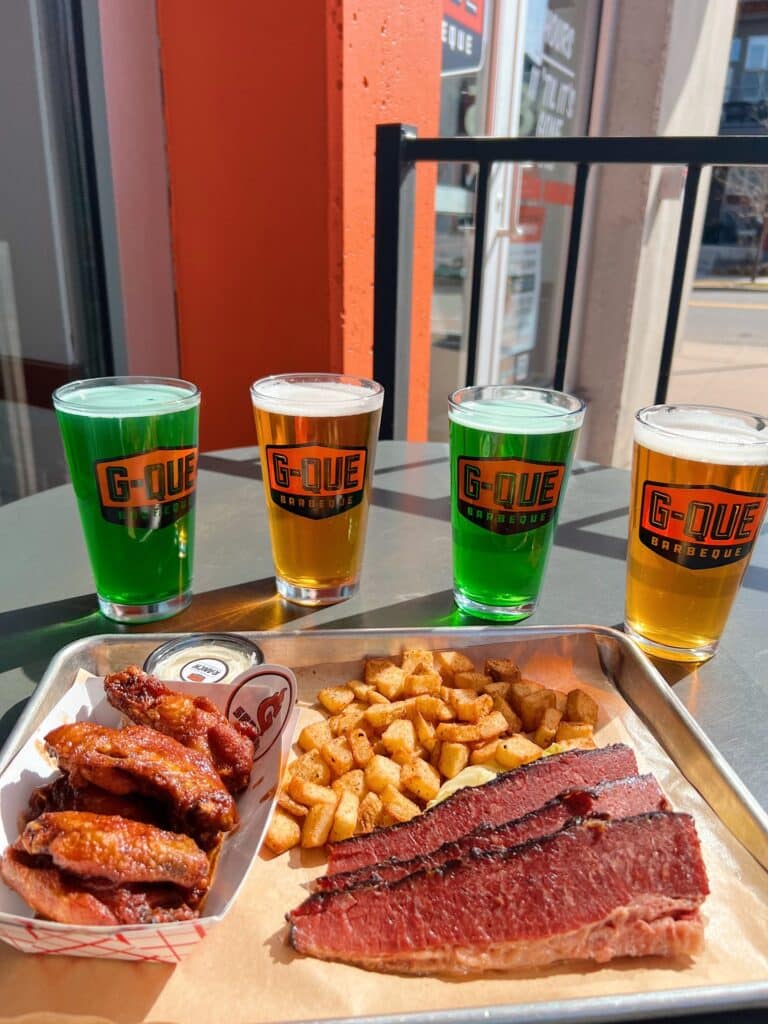
The bold flavors of coffee beer smoked brisket deserve equally satisfying beverages. A dark stout, porter, or amber ale naturally complements the smoky bark and roasted coffee notes.
Wine lovers can continue the theme by serving a glass of Zinfandel, whose fruity character pairs beautifully with the homemade BBQ sauce. For non-alcoholic options, sweet iced tea, sparkling lemonade, or a lightly sweetened cold brew coffee create surprisingly refreshing contrasts.
Even classic root beer works well alongside smoky barbecue. Pairing the right drink doesn’t just complete the meal – it highlights the brisket’s layers of flavor and makes the entire barbecue experience feel more memorable.
Common Brisket Mistakes and How to Avoid Them
Even seasoned grill masters occasionally make mistakes, but avoiding a few common ones can dramatically improve your results. Cooking at temperatures that are too high often dries out the meat before the connective tissue has time to break down.
Skipping the resting period is another frequent error, causing flavorful juices to spill onto the cutting board instead of staying inside the brisket. Applying too much smoke can also overwhelm the beef, leaving bitter flavors instead of clean smokiness.
Finally, slicing with the grain creates chewy pieces regardless of how perfectly the brisket was cooked. Paying attention to these details helps ensure every slice is tender, juicy, and packed with smoky flavor.
Serving Suggestions
This coffee beer smoked brisket pairs beautifully with classic barbecue favorites.
Great side dishes include:
- Smoked mac and cheese
- Creamy coleslaw
- Baked beans
- Jalapeño cornbread
- Grilled corn on the cob
- Potato salad
- Pickles and sliced onions
- Roasted vegetables
For leftovers, pile brisket onto toasted brioche buns, stuff it into tacos, or top crispy fries for an easy crowd-pleaser.
Storage and Reheating
Store leftover brisket in an airtight container with its juices for up to 4 days in the refrigerator.
For longer storage, freeze sliced brisket in freezer-safe bags for up to 3 months.
To reheat, place the brisket in a covered baking dish with a splash of beef broth and warm gently in a 300°F oven until heated through. This method helps preserve moisture far better than blasting it in the microwave.
Final Thoughts
Great barbecue rewards patience, and this coffee beer smoked brisket proves exactly why.
The coffee rub builds an intensely flavorful bark, the beer spritz helps maintain moisture throughout the cook, and the homemade Zinfandel BBQ sauce adds just enough richness to complement every smoky slice without overpowering it.
Fire up the smoker, trust the process, and don’t be surprised when everyone suddenly volunteers to host the next barbecue – provided you bring the brisket.
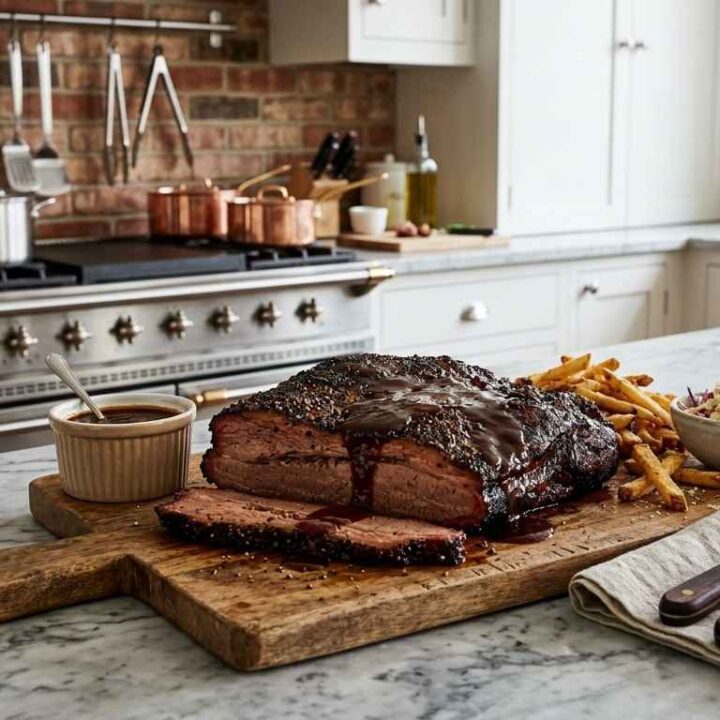
Coffee Beer Smoked Brisket Recipe (with Zinfandel BBQ Sauce)
Image: Google Gemini AI Generated Image
Ingredients
- For the Brisket
- 1 whole beef brisket (10–14 pounds)
- 2 tablespoons olive oil or yellow mustard
- 2 tablespoons kosher salt
- 2 tablespoons coarse black pepper
- 1 tablespoon smoked paprika
- 1 tablespoon garlic powder
- 1 tablespoon onion powder
- 2 tablespoons finely ground coffee
- 1 tablespoon brown sugar
- 1 teaspoon chili powder
- ½ teaspoon cayenne pepper (optional)
- For the Beer Spritz
- 1 cup dark beer or stout
- ¼ cup apple cider vinegar
- For the Zinfandel BBQ Sauce
- 1 cup Zinfandel wine
- 1½ cups ketchup
- ¼ cup brown sugar
- 2 tablespoons apple cider vinegar
- 1 tablespoon Worcestershire sauce
- 1 tablespoon Dijon mustard
- 2 cloves garlic, minced
- 1 teaspoon onion powder
- 1 teaspoon smoked paprika
- Salt and black pepper to taste
Instructions
1. Trim the Brisket
Start by trimming away excess hard fat while leaving about ¼ inch of the fat cap intact. This layer slowly renders during cooking, helping protect the meat from drying out.
Don't obsess over making it look perfect. Brisket isn't entering a beauty contest – it just needs enough trimming for even cooking.
2. Apply the Coffee Rub
Lightly coat the brisket with olive oil or mustard so the seasoning sticks.
Mix together the salt, pepper, coffee, paprika, garlic powder, onion powder, brown sugar, chili powder, and cayenne before applying generously over every surface.
For the best flavor, refrigerate the seasoned brisket overnight. Even a few hours makes a noticeable difference.
3. Prepare the Smoker
Heat your smoker to 225°F–250°F.
Oak, hickory, and pecan are excellent wood choices because they produce a clean smoke that complements beef without overpowering it.
Avoid chasing thick white smoke. Thin blue smoke is the goal, delivering clean flavor instead of bitterness.
4. Smoke the Brisket
Place the brisket in the smoker according to your smoker's heat source. Close the lid and let the magic happen.
After about three hours, begin spritzing the brisket every hour using the beer and apple cider vinegar mixture.
The beer doesn't soak deeply into the meat, but it helps maintain surface moisture, encourages smoke adhesion, and supports bark development.
Continue smoking until the internal temperature reaches around 165°F, which is commonly known as the stall.
Patience matters here. Brisket has its own schedule and rarely checks your calendar.
5. Wrap and Finish Cooking
Wrap the brisket tightly in butcher paper or aluminum foil.
Continue cooking until the internal temperature reaches 200°F–205°F, but rely more on feel than numbers.
The brisket is ready when a probe slides into the meat with almost no resistance, similar to inserting it into softened butter.
That's the moment every pitmaster waits for.
6. Make the Zinfandel BBQ Sauce
While the brisket finishes cooking, prepare the sauce.
Simmer the Zinfandel wine for several minutes to reduce slightly before adding the ketchup, brown sugar, vinegar, Worcestershire sauce, Dijon mustard, garlic, onion powder, smoked paprika, salt, and pepper.
Cook over medium-low heat for about 20 minutes until thickened.
The finished sauce should be rich, glossy, and balanced, allowing the smoked beef to remain the star.
7. Rest Before Slicing
This step separates good brisket from unforgettable brisket.
Rest the wrapped brisket for at least one hour, or up to two hours in an insulated cooler.
Resting allows the juices to redistribute throughout the meat instead of running onto your cutting board.
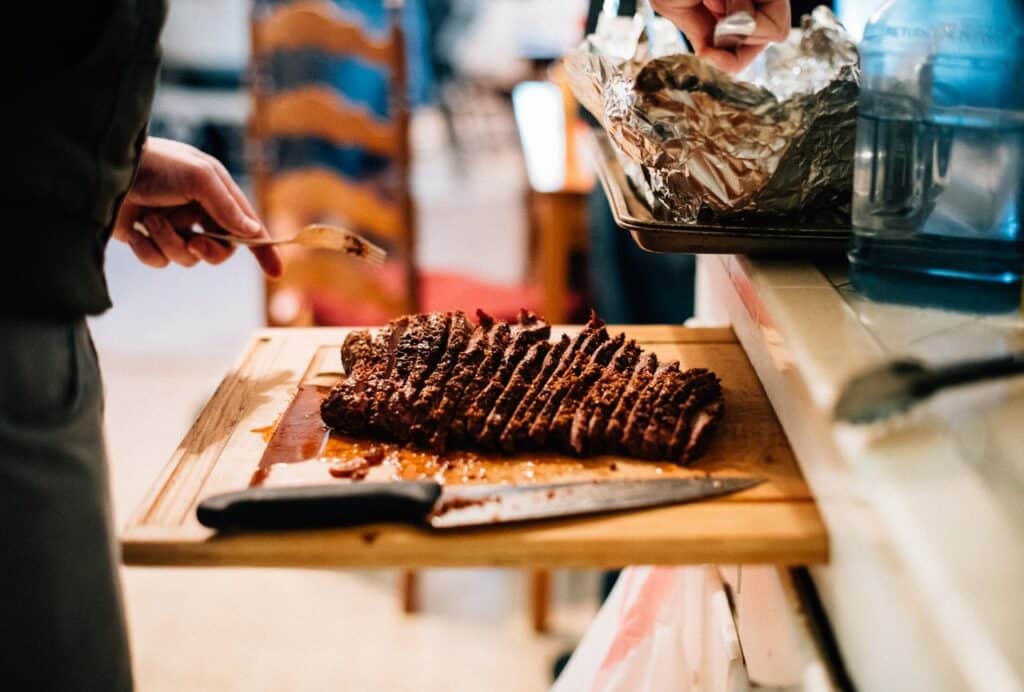
Slice against the grain and serve with warm Zinfandel BBQ sauce on the side.
Featured image credit: Gabriel Zachi
