

Keeping tens of thousands of heavily armed men moving across thousands of miles of hostile territory takes more than just tactical genius; it requires a flawless grasp of fire, fuel, and meat.
History loves to fixate on the flashing swords, the brilliant battlefield formations, and the sheer charisma of Alexander the Great. But if you look at his campaign through the lens of a live-fire pitmaster, you see a completely different story.
You see the ultimate masterclass in smoke, survival, and high-stakes catering.
Great empires aren’t built on empty stomachs. To conquer the known world by the time you’re thirty, you have to know exactly how to feed an army under the worst possible conditions.
Alexander the Great managed a logistical engine that didn’t just keep his men alive – it fundamentally changed how they ate. Over twelve years of non-stop marching, the food of his empire transformed completely.
It evolved from rugged, low-and-slow Balkan survival rations into an exotic, wood-fired fusion of Mediterranean, Persian, and Indian cuisines.
The Bedrock: The Traditional Macedonian Soldier’s Rations
Long before the army ever tasted the luxuries of the East, they ate like survivalists.
Alexander the Great inherited a military machine perfected by his father, Philip II. Philip’s biggest tactical breakthrough wasn’t a weapon; it was a devastatingly strict rule about baggage trains.
He banned heavy, slow-moving oxcarts. Alexander the Great took that rule and ran with it, forcing every single soldier to carry his own gear, tools, and a ten-day supply of raw flour.
The Basic Macedonian Daily Ration Stack
- 2.0 lbs Barley or Wheat Flour: For flatbread or daily porridge.
- 0.5 lbs Hard Sheep’s Milk Cheese: A shelf-stable, high-fat protein source.
- 1 Handful of Olives & Wild Garlic: Essential antimicrobial flavor boosters.
- Water + Sour Wine Blend: Used for electrolytes and water purification.
This made the army incredibly fast, but it meant the daily menu was brutally simple. The absolute backbone of the march was barley and wheat. Soldiers ground their own grain using portable handmills and baked a dense, heavy flatbread called maza.
They didn’t have portable ovens; they mixed the flour with water, slapped the dough directly onto flat stones heated by charcoal campfire coals, and baked it hard. It wasn’t artisanal brioche – it was pure, unadulterated fuel.
To keep their stamina up, the men supplemented these heavy carbs with salted fish, dried mutton, and a sharp, hard cheese made from sheep or goat’s milk. Flavor came down to whatever could survive a hot, dusty pack: pocketfuls of garlic, onions, and cured olives.
Hydration was its own battle.
Drinking straight surface water on the road is a fast track to dysentery, which can clear out an army faster than a cavalry charge. The troops kept themselves upright by mixing their water with a splash of sour, highly acidic wine or vinegar.
This acidic punch didn’t just kill off some of the nasty bacteria lurking in questionable watering holes; it provided critical electrolytes to men sweating out a march under a brutal Mediterranean sun.
Marching East: Adapting to the Lands They Conquered
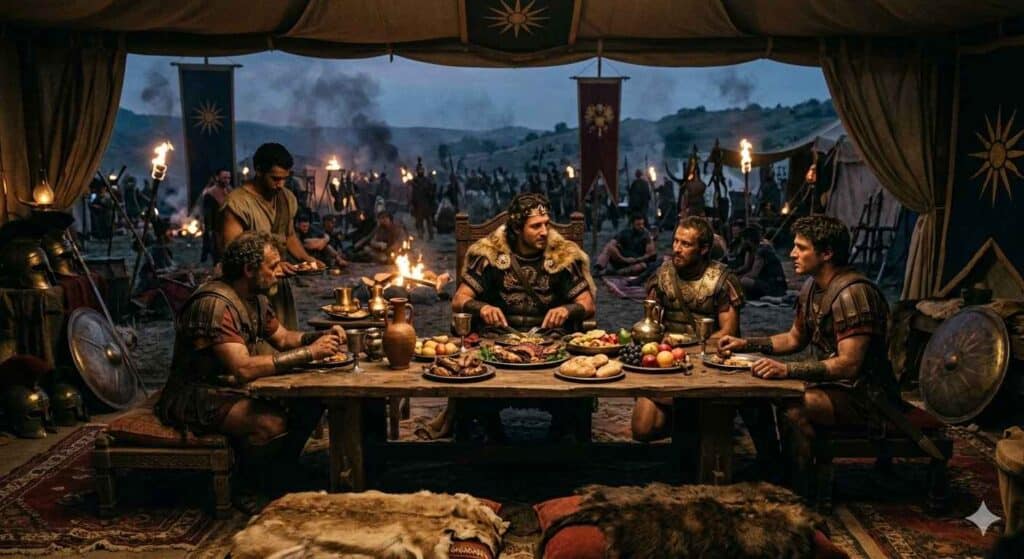
Speed is everything on a campaign, but you cannot outrun a bad supply chain. As the army crossed into Asia Minor – modern-day Turkey – and pushed south into the Levant, the sheer scale of the food operation grew massive.
- The Core Strategy: Instead of hauling supplies with them, Alexander relied on a calculated system of aggressive foraging and local diplomacy to live off the land.
- Pre-Invasion Planning: Before entering a new territory, scouts were sent ahead to secure the surrender of local rulers. The explicit price of peace was providing food and setting up massive grain depots along the army’s planned route.
- The Carrot or the Stick:
o Cooperation: Cities that surrendered willingly became crucial, peaceful suppliers for the army.
o Resistance: Cities that resisted were stripped bare by foragers, who seized every animal and bushel of wheat they could find.
The 15-Mile Sweep System
Alexander the Great was very strategic even when it comes to managing his supply lines before any battle ever begins.
- The “Rolling Foraging Radius”: To prevent delays, the main army marched down primary roads with a standard 10-day supply of flour. Meanwhile, fast-moving foraging units fanned out 15 miles into the countryside to gather fresh food and funnel it ahead to the next supply depot.
- An Upgraded Military Diet: Living off the local land introduced the troops to a much richer variety of food. Soldiers began tossing local Anatolian figs, wild mountain greens, and pomegranates into their daily iron-pot stews.
- The Uses of Wild Honey: Honey became a highly prized commodity in the camp, serving a dual purpose as both a natural sweetener and a crude preservative to keep fresh meat from spoiling on short hauls.
- Geography-Driven Menus: The landscape dictated what the soldiers ate. In lush valleys, they feasted on open-fire roasted lamb and goat. In arid, dry terrains, they were forced back into survival mode.
- Desert Adaptation with Camels: When crossing brutal deserts, the army swapped out their usual mules and horses – which couldn’t handle the intense heat – for camels. These camels could haul 300 pounds of dried dates and parched grains across harsh environments without slowing down.

The Splendors of Babylon: Embracing Persian Feast Traditions
When the Macedonian army finally broke the back of the Persian Empire and marched into the legendary city of Babylon, they experienced a massive cultural shock.
For decades, the Macedonians had prided themselves on being tough, no-nonsense frontiersmen who ate their food simple and drank their wine heavy. The Persian court, by comparison, was the absolute pinnacle of culinary luxury.
Instead of fighting the local culture, Alexander the Great chose to consume it. He understood that food is the ultimate political tool.
To convince his newly conquered Persian subjects that he was their legitimate king, he began adopting the lavish, multi-course banquet traditions of the old Achaemenid rulers.
| Culinary Element | Old Macedonian Camp Style | New Persian Fusion Style |
| Primary Grain | Coarse barley flatbread (maza) | Delicate long-grain pilaf rice |
| Meat Selection | Salted fish, tough dried mutton | Spit-roasted gazelle, duck, wild boar |
| Flavor Profile | Raw garlic, onion, wild sea salt | Saffron, mint, pomegranate, cumin |
| Sweeteners | Occasional wild honey | Candied pistachios, almonds, dates |
The old campfires were replaced by massive palace kitchens churning out dishes the Greeks had never even dreamed of. Long-grain rice, completely foreign to the Mediterranean world at the time, became a staple of the royal table.
The meat got a massive upgrade, too. Instead of stringy pack mules or boiled goat, the kitchens turned out spit-roasted pheasants, tender gazelle, and wild boar glazes made from reduced pomegranate juice and wild honey.
This cross-cultural food blending reached its absolute peak during the famous Susa Weddings. To permanently seal the bond between his two worlds, Alexander the Great ordered a mass wedding where thousands of his top Macedonian officers and soldiers married Persian noblewomen.
The feast lasted for days. Thousands of guests sat on embroidered cushions while open pits roasted tons of meat infused with exotic spices like saffron, cumin, and coriander. It was history’s grandest barbecue, a carefully engineered statement of pure, smoky power.
To the Edge of the Known World: India and the Spice Frontier
By the time the army pushed past the Hindu Kush and descended into the Punjab region of India, they had been on the road for nearly a decade. They weren’t just tired; their digestive systems were facing an entirely new ecosystem.
The humid, monsoon-soaked plains of India presented an agricultural world that looked nothing like the dry Mediterranean or the fertile river valleys of Babylon.
The army had to adapt on the fly once again. Here, they encountered crops that completely blew their minds.
They discovered an strange stalk that produced a sweet juice, which the Greek chroniclers recorded with utter fascination as “honey without bees” – the Western world’s very first major look at sugarcane.
They encountered wild mangoes, eggplants, and a completely different profile of heat: fresh ginger and black pepper berries ripening on the vine.
The Spice Route Evolution
- Phase 1 (The Baseline): Macedonian Barley – Purely functional, coarse carbohydrate fuel to sustain long marches.
- Phase 2 (The Empire): Persian Saffron – Luxury coloring and delicate earthy notes introduced at royal tables.
- Phase 3 (The Frontier): Indian Black Pepper – Bold tropical heat and punch that transformed old campfire stews.
This geographic transition altered the army’s everyday food culture.
The traditional white garlic spreads of Greece began to merge with local cooking styles, setting off an evolutionary chain that would eventually lead to regional staples like tzatziki and northern Indian raitas.
Even the way they baked bread began to shift, as local thin flatbreads influenced what we know today as pita and naan.
But you can only push a crew so far on exotic ingredients. The relentless tropical downpours rotted their clothes, rusted their gear, and ruined their grain stores. Foraging in the dense, unfamiliar jungles became a nightmare.
The soldiers were profoundly homesick, and their stomachs were completely spent. When they reached the Hyphasis River, the men finally revolted.
They didn’t mutiny because they were afraid of the armies ahead; they mutinied because they were completely exhausted, waterlogged, and broken by years of relentless, stressful survival eating.
They wanted to go home to simple wine and familiar bread.
The Macedonian Symposium: Wine, Power, and Tragedy
To fully understand the inner circle of Alexander the Great, you have to understand how they drank.
In ancient Greece, a symposium was a highly structured, philosophical drinking party where wine was carefully watered down to keep the conversation smart and civil.
The Macedonians thought that custom was for weaklings. They drank their wine akraton – completely undiluted – and they drank it by the gallon.

The Great Ancient Drinking Divide
- The Greek Symposium Format: One part wine mixed with two parts water. This ratio was specifically designed to maintain moderation, long philosophical debates, and emotional control.
- The Macedonian Feast Format: 100% pure, undiluted wine served in massive, shared vessels. This style valued heavy drinking as a sign of machismo, physical dominance, and political loyalty.
For the king and his generals, the evening meal wasn’t a time to relax; it was a high-stakes political arena.
After hours of heavy eating, the massive serving bowls of pure wine would come out, and the atmosphere would turn incredibly volatile.
These legendary drinking bouts were fueled by intense military pride, old grudges, and the crushing stress of a never-ending campaign.
This toxic mix of alcohol and raw ego regularly led to historic disaster. The most famous example went down during a massive feast in Maracanda (modern Samarkand).
Alexander got into a screaming, drunken argument with Cleitus the Black, the veteran general who had literally saved the king’s life at the Battle of the Granicus.
As the undiluted wine flowed, insults were hurled, and tempers completely erupted. In a blind, alcohol-fueled rage, Alexander the Great snatched a pike from a guard and run Cleitus straight through.
He woke up the next morning sober, horrified, and broken with grief, locking himself in his tent for days. It is a stark reminder that while fire and meat can build a kingdom, raw wine and unchecked pride can tear it right apart.
Bring the Conquest into Your Modern Kitchen
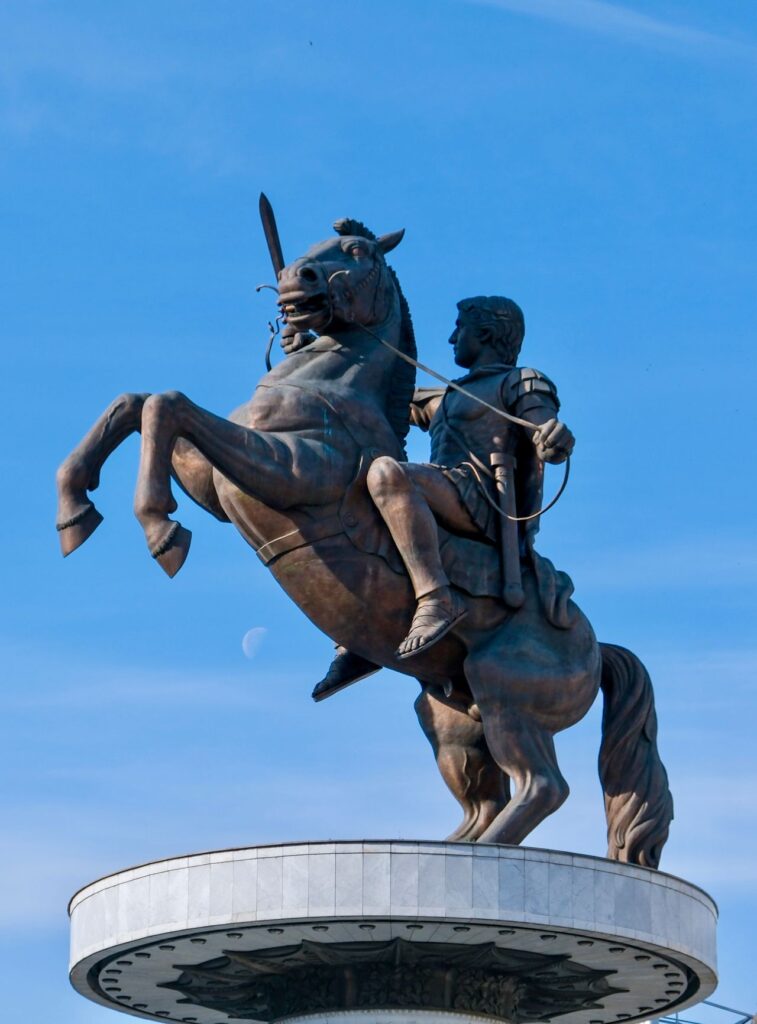
The vast empire forged by Alexander the Great fractured almost immediately after his sudden death in Babylon, but the culinary lines he opened changed the world forever.
His march acted as a massive, world-spanning blender, pulling spices, ingredients, and techniques across continents and setting the stage for the famous Silk Road trade networks.
If you want to channel the spirit of a Macedonian conqueror at your next backyard cookout, you don’t need to march across a desert. You just need to build a clean, hot hardwood fire and focus on high-impact flavor fusions.
Fire up your grill or smoker with a mix of oak or olive wood to capture that authentic Mediterranean aroma.
Take a leg of lamb or a thick shoulder of goat, score the skin deeply, and rub it down with a heavy dose of coarse sea salt, crushed garlic, and wild rosemary.
As it roasts low and slow over the live coals, baste it with a glaze made from reduced pomegranate juice, a touch of red wine vinegar, and raw honey. Serve it smoking hot alongside char-grilled flatbreads and a sharp, garlic-heavy cucumber yogurt spread.
It is a meal that bridges the rugged simplicity of the Balkan mountains with the deep, rich sweetness of ancient Babylon – a feast truly fit for a king who conquered the world one bite at a time.
Frequently Asked Questions
General Campaign Logistics
How did Alexander’s army manage to move so quickly without starving?
Alexander’s father, Philip II, banned slow-moving oxcarts from the baggage train.
Alexander took this further by forcing every soldier to carry their own gear, tools, and a strict 10-day supply of raw flour.
This eliminated heavy logistical drag and made the army incredibly agile.
What was the “Rolling Foraging Radius”?
To keep the main army moving down primary roads without delay, fast-moving foraging units would fan out 15 miles into the surrounding countryside.
They gathered fresh meat, crops, and fruits, funneling them ahead to the next secured supply depot so the main army never had to stall out waiting for food.
How did Alexander use diplomacy to secure food?
Before entering a new territory, Alexander sent scouts ahead to demand the formal surrender of local rulers. The explicit “price of peace” was food. Cooperating cities were ordered to establish massive grain depots along the army’s projected route.
What happened to cities that refused to cooperate?
If a city resisted, Alexander used the “stick” approach: foragers stripped the local fields completely bare, seizing every goat, sheep, and bushel of wheat they could find, leaving the resisting population with nothing.
The Evolution of the Military Diet
What did a Macedonian soldier’s basic daily ration look like?
Before conquering the East, the daily baseline survival ration consisted of:
- 2.0 lbs Barley or Wheat Flour (for flatbread or porridge)
- 0.5 lbs Hard Sheep’s Milk Cheese (shelf-stable, high-fat protein)
- 1 Handful of Olives & Wild Garlic (antimicrobial flavor boosters)
- Water + Sour Wine/Vinegar Blend (for hydration and purification)
How did the soldiers bake bread without portable ovens?
Soldiers ground their own grain using portable handmills, mixed the flour with water to create a dense dough called maza, and slapped it directly onto flat stones heated by campfire coals.
How did the army avoid getting sick from drinking surface water?
Drinking straight surface water on the road often led to dysentery. To prevent this, troops mixed their water with a splash of sour wine or vinegar.
The acidity helped kill off harmful bacteria and provided critical electrolytes for men marching under the hot sun.
How did the food change after the army captured Babylon?
The food transitioned from simple survival rations into a luxurious Persian fusion. Coarse barley flatbread was replaced by delicate long-grain pilaf rice.
Tough, dried mutton was upgraded to spit-roasted pheasant, gazelle, and wild boar glazed with reduced pomegranate juice and wild honey, all infused with exotic spices like saffron, cumin, and coriander.
What new ingredients did the army discover in India?
In the Punjab region, the army encountered completely new tropical ingredients:
- Sugarcane: Recorded by chroniclers as “honey without bees.”
- Fruits & Vegetables: Wild mangoes and eggplants.
- Spices: Fresh ginger and black pepper berries ripening on the vine.
Cultural Clashes & Drinking Customs
Why did the army finally mutiny at the Hyphasis River in India?
The mutiny wasn’t caused by fear of enemy armies.
After a decade on the road, the men were exhausted, waterlogged by relentless tropical monsoons that rotted their clothes and ruined grain stores, and deeply homesick.
They were broken by years of stressful survival eating and simply wanted to go home to familiar bread and wine.
What was the difference between Greek and Macedonian drinking customs?
- The Greek Symposium: Highly structured and valued moderation. Wine was diluted (typically one part wine to two parts water) to keep conversations smart, philosophical, and civil.
- The Macedonian Feast: Valued heavy drinking as a sign of machismo and political loyalty. Wine was served akraton – 100% pure and completely undiluted – out of massive shared vessels.
What tragedy occurred due to Macedonian drinking habits?
During a drunken feast in Maracanda (modern Samarkand), an alcohol-fueled argument erupted between Alexander and Cleitus the Black – the veteran general who had previously saved Alexander’s life.
In a blind rage fueled by the undiluted wine, Alexander snatched a pike from a guard and killed Cleitus, leaving the king guilt-ridden and broken with grief when he sobered up.
Legacy & Modern Cooking
How did Alexander’s campaign permanently change world cuisine?
Alexander’s 12-year march acted as a massive world-spanning blender.
It opened up culinary lines that blended Greek garlic spreads with eastern styles (influencing modern staples like tzatziki and raitas) and impacted bread-making styles (influencing pita and naan). It ultimately set the stage for the famous Silk Road trade networks.
How can you recreate a “Conqueror’s Feast” on a modern grill?
- The Fire: Burn a clean, hot hardwood fire using oak or olive wood.
- The Meat: Take a leg of lamb or shoulder of goat, score the skin, and rub it with coarse sea salt, crushed garlic, and wild rosemary.
- The Glaze: Roast it low and slow over live coals while basting it with a glaze made of reduced pomegranate juice, red wine vinegar, and raw honey.
- The Sides: Serve it smoking hot with char-grilled flatbreads and a sharp, garlic-heavy cucumber yogurt spread.
Featured image credit: @royalty_now_
