
“He aha te mea nui o te ao? He tangata, he tangata, he tangata.”
That famous Māori whakataukī (proverb) attributed to Rangatira (chief) Te Aupouri translates to, “What is the most important thing in the world? It is people, it is people, it is people.”
Anyone who has ever gathered around a smoky backyard pit – or a traditional Pacific Island umu earth oven – knows that fire and food exist to bring people together.
Yet nothing divides a Saturday afternoon cookout faster than a debate over what the words actually mean.
Walk up to any smoker and you will hear grown adults throwing around phrases like “blue smoke,” “the stall,” and “Texas crutch” with the solemn authority of nuclear physicists.
Meanwhile, the guy holding the tongs just threw frozen burgers over roaring flames and called it barbecuing.
Learning BBQ terms feels a lot like trying to decode a secret society handshake while smoke blows directly into your eyes.
You buy a shiny new rig, watch a few videos online, and suddenly realize you have no idea whether your brisket is developing bark or turning into a meteorite.
Mixing up these concepts does more than bruise your pride in front of your neighbors. It leads directly to dry chicken, bitter ribs, and briskets tough enough to resole a pair of work boots.
Forget the gatekeeping and the pretentious pitmaster jargon. Decoding the language of live fire comes down to understanding how heat, smoke, and time actually behave inside a cooker.
Let’s clear the air, rescue your weekend cookouts, and break down the exact BBQ terms beginners mix up the most.
Cooking Methods & Heat Management
Grilling vs. Barbecuing vs. Smoking
Calling a hot dog cookout a “barbecue” is the fastest way to make a Texan twitch. People use grilling, barbecuing, and smoking as interchangeable verbs, yet they describe completely different relationships between fire, temperature, and time.
Grilling is hot, fast, and direct. You are cooking tender cuts of meat – think steaks, burgers, chicken breasts, and sausages – directly over high heat, usually between 400°F and 550°F.
The food cooks in minutes, relying on intense radiant heat to sear the outside before the inside overcooks.
Barbecuing and smoking, on the other hand, are slow, indirect, and built for tough cuts packed with connective tissue. When you smoke a pork shoulder or beef brisket, you cook it at low temperatures – typically 225°F to 275°F – for hours on end.
The meat sits away from the flames, bathing in warm air and wood smoke until stubborn collagen melts into rich, silky gelatin.
| Cooking Method | Typical Temp Range | Heat Placement | Best Cuts of Meat | Cooking Time |
| Grilling | 400°F – 550°F | Directly over the fire | Steaks, burgers, chops, veggies | Minutes |
| Barbecuing | 225°F – 300°F | Away from the fire (indirect) | Ribs, chicken quarters, tri-tip | 1 to 6 hours |
| Smoking | 200°F – 275°F | Offset or shielded from fire | Brisket, pork butt, beef ribs | 6 to 16+ hours |
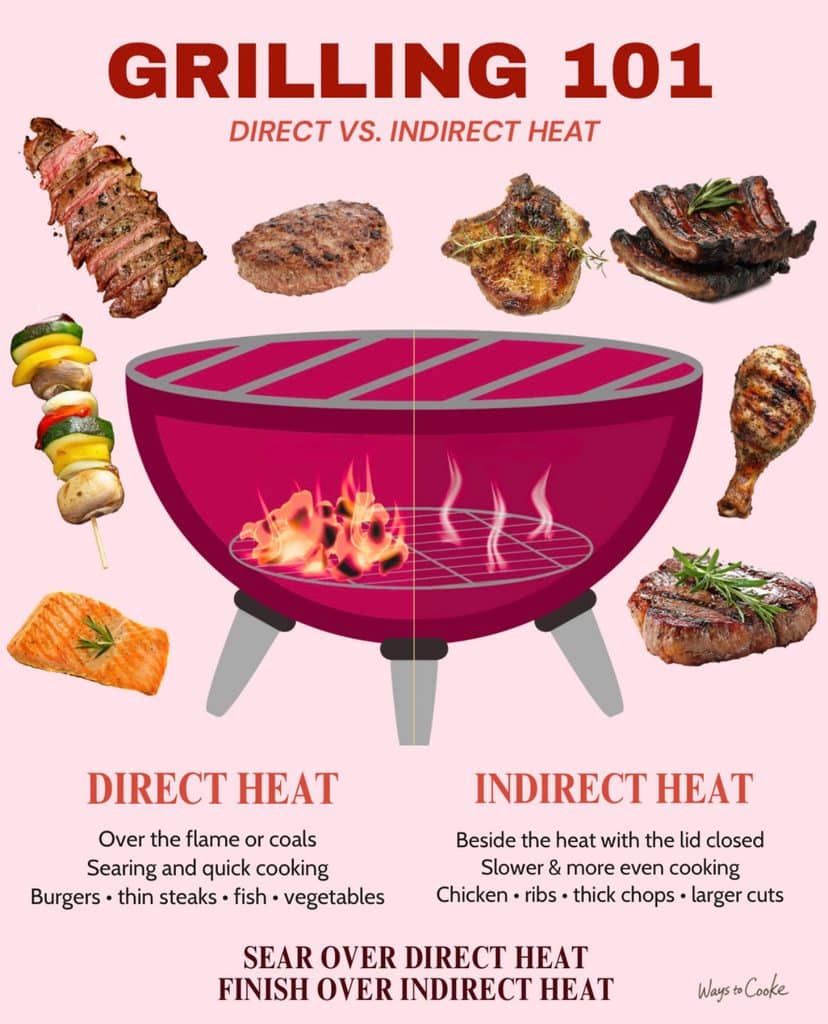
Direct Heat vs. Indirect Heat (Two-Zone Cooking)
Beginners love dumping an entire bag of charcoal across the bottom of a kettle grill, lighting it up, and laying thick bone-in chicken thighs right over the glowing embers.
Ten minutes later, the skin looks like charred cardboard while the meat near the bone is still cold enough to cluck.
Direct heat means the food sits straight above the heat source. This setup acts like a blowtorch, making it ideal for getting a crusty brown sear on a ribeye or charring corn on the cob.
Indirect heat means the food sits off to the side, cooking via circulating hot air – essentially turning your grill into a smoky convection oven.
Mastering a two-zone fire solves ninety percent of beginner burning disasters. Pile all your lit coals on one side of the grill and leave the other side completely empty.
Sear your meat over the hot zone to build color and flavor, then slide it over to the cool safe zone, close the lid, and let it finish gently without scorching.
Hot-and-Fast vs. Low-and-Slow
Traditional barbecue dogma insists that real pitmasters only cook at 225°F, staying awake for eighteen straight hours while tending a firebox in the freezing dark.
That romantic misery is known as low-and-slow cooking, and while it works wonderfully, it is far from the only way to make competition-worthy meat.
Hot-and-fast barbecue cranks the smoker up to 275°F–325°F. Larger cuts like brisket and pork shoulder have plenty of internal fat and moisture to handle the higher heat, cutting a fourteen-hour slog down to six or seven hours.
Low-and-slow gives you a wider margin of error and maximum smoke absorption, whereas hot-and-fast delivers crispier poultry skin and lets you actually get a full night of sleep before hosting guests.
Smoke & Fire Terminology
Thin Blue Smoke vs. Thick White Smoke (Dirty Smoke)
New pitmasters often beam with pride when thick, billowing clouds of white smoke pour out of their chimney like a steam locomotive.
They assume more visible smoke equals deeper smoky flavor. Half an hour later, their ribs taste like a freshly paved highway and leave a weird numbing sensation on everyone’s tongue.
That billowing white cloud is dirty smoke, caused by incomplete combustion when wood is starved of oxygen or smoldering too cold. Dirty smoke is loaded with creosote and soot – harsh chemical compounds that coat your meat in bitterness.
What you actually want is thin blue smoke, sometimes called sweet blue. When a fire burns hot and gets plenty of oxygen, the wood gases ignite cleanly, producing a faint, translucent bluish wisp that smells like a pleasant campfire.
You can barely see it coming out of the stack, yet it delivers that sweet, clean, mouthwatering kiss of wood flavor that separates great barbecue from an ashtray.
Wood Chunks vs. Wood Chips vs. Pellets
Walking down the grilling aisle feels like shopping for hamster bedding, with bags of chips, chunks, logs, and pellets stacked to the ceiling.
Tossing dry wood chips straight onto a bed of red-hot charcoal is a classic rookie mistake; they flare up into flames, turn to ash in four minutes, and vanish before the meat absorbs a hint of flavor.
Each wood format belongs to a specific style of cooker:
- Wood chunks are fist-sized blocks of hardwood meant for charcoal grills, kamados, and vertical smokers. They smolder steadily over hot coals for forty-five minutes to an hour at a time.
- Wood chips are tiny shavings designed for gas grills (placed inside a metal smoker box) or small electric smokers where heating elements need thin wood to generate smoke quickly.
- Wood pellets are compressed sawdust cylinders engineered exclusively for automated pellet grills, feeding via an auger into a tiny firepot to maintain precise digital temperatures.
Lump Charcoal vs. Briquettes
Grabbing whatever charcoal bag sits closest to the grocery store exit seems harmless until your fire either burns out mid-cook or rockets past 500°F when you wanted 250°F. Understanding your fuel keeps your temperatures locked in.
Lump charcoal is pure hardwood burned down in a low-oxygen kiln until only carbon remains. You can still see the grain of the original branches and logs inside the bag.
Lump lights fast, burns hotter, responds quickly when you adjust your air vents, and leaves behind very little ash. The downside is irregular piece sizes that can burn unevenly during marathon cooks.
Charcoal briquettes are manufactured pillows made from compressed wood scraps, sawdust, and natural binders like cornstarch. Because every briquette is identical in size and density, they burn at a slow, steady, predictable pace.
Briquettes produce significantly more ash – which can choke airflow on long smokes if you do not clear the vents – but their consistency makes them a beginner’s best friend for steady temperature control.
Meat Science & the Cooking Process
Bark vs. Burnt
Nothing triggers beginner panic quite like opening a smoker six hours into a pork butt cook and seeing a slab of meat that looks completely jet-black. Every instinct screams that dinner is ruined, prompting folks to yank the meat off the grates hours too early.
That dark, craggy exterior is bark, and it is pure barbecue gold.
Bark forms through a combination of the Maillard reaction, caramelized sugars and spices from your dry rub, rendered surface fat, and smoke particles clinging to moisture on the meat.
It should look dark mahogany or meteorite-black, feel slightly firm to the touch, and pack an intense punch of savory crunch.
Burnt meat, by contrast, is carbonized ash. It happens when direct flames lick the meat or sugar-heavy sauces scorch at high heat. Bark tastes rich, complex, and deeply seasoned; burnt food tastes bitter, dry, and charcoal-like.
If your smoker held steady below 275°F away from direct flames, that black crust is bark – leave it alone and let it ride.
The Stall vs. Done
Picture watching your digital meat thermometer climb steadily from 40°F up to 160°F over four hours, only for the temperature to freeze dead in its tracks. Two hours later, it still reads 161°F. In fact, it might even drop to 159°F.
Beginners routinely assume their thermometer broke or the meat is finished, pulling a rock-hard brisket off the pit at 162°F.
Welcome to the stall, the ultimate test of pitmaster patience.
Around 150°F to 170°F, moisture inside the meat rises to the surface and evaporates – the exact same way sweat cools your skin on a humid summer afternoon. This evaporative cooling cancels out the heat of your smoker, halting the internal temperature rise for hours.
Large cuts like brisket and pork shoulder are nowhere near done at 160°F. At that temperature, the tough muscle fibers and collagen have not broken down yet.
You have to push past the stall until the internal temperature reaches 195°F to 205°F, where the meat turns probe-tender – meaning a thermometer slides into the thickest part with zero resistance, like poking room-temperature butter.
Texas Crutch vs. Boat Method
Once you understand the stall, you have two choices: wait it out naturally, or outsmart it. Wrapping meat midway through a smoke used to spark fierce arguments online, with purists claiming foil ruined the craft.
Today, even Texas legends wrap their briskets – they just pick the right method for the texture they want.
- The Texas Crutch involves tightly wrapping your meat in heavy-duty aluminum foil or pink butcher paper once it hits the stall and develops good bark (usually around 165°F). Trapping the steam stops evaporative cooling immediately, blasting the meat through the stall in half the time while keeping it ultra-juicy. Aluminum foil steams the meat fastest but softens your crunchy bark; butcher paper breathes slightly, preserving firmer bark while still speeding up the cook.
- The Foil Boat Method splits the difference. Instead of sealing the meat completely, you nestle your brisket or pork butt inside an open-topped cradle made of aluminum foil. The bottom sits in its own rendered juices and fat – preventing the underside from drying out – while the top stays completely exposed to smoke and heat, building a thick, crispy bark crown.
Smoke Ring vs. Undercooked Meat
Slicing into a rack of smoked pork ribs or a platter of barbecue chicken thighs and spotting a vivid, bright-pink band just beneath the surface causes plenty of dinner guests to push their plates away in fear of food poisoning.
That rosy border is the smoke ring, and it is a badge of honor rather than raw meat. Wood smoke contains gases like nitric oxide and carbon monoxide.
When those gases dissolve onto the moist surface of cold meat early in the cook, they bind with myoglobin – the oxygen-storing protein in muscle tissue – locking in a permanent pink pigment even after the meat climbs past 200°F.
Undercooked meat feels rubbery, translucent, and squishy throughout the center, whereas a smoke ring sits strictly along the outer edge while the interior looks opaque and cooked through.
Never judge doneness by color alone; trust a reliable instant-read thermometer every single time.
Prep, Seasoning & Finishing Terms
Rub vs. Marinade vs. Mop vs. Spritz
Dumping thick, sweet bottled barbecue sauce onto chicken legs at the start of a two-hour cook turns dinner into blackened sugar glue. Each liquid and seasoning tool plays a specific role at a specific moment in the timeline.
- Dry Rub: A blend of kosher salt, black pepper, brown sugar, paprika, garlic, and spices applied before cooking. Salt draws out surface moisture, dissolves the spices, and creates a flavorful paste that barks up under heat and smoke.
- Marinade: An acidic, oil-based liquid bath used hours before cooking to infuse surface flavor and lightly tenderize thinner cuts like flank steak or chicken breasts. Pat marinated meat dry before hitting the grates so it sears instead of steams.
- Mop and Spritz: Thin liquids applied during the cook. A mop uses a miniature cotton mop to brush heavier vinegar-and-spice liquids onto big cuts, while a spritz uses a spray bottle filled with apple juice, cider vinegar, or water to mist the meat every hour. Moisture attracts smoke particles and keeps edges from drying out.
- Glaze or Sauce: Thick, sugar-rich finishing sauces brushed on only during the final 15 to 30 minutes of cooking so the sugars tack up into a glossy shine without burning.
Brining vs. Injecting
Lean cuts like turkey breast and pork loin turn into sawdust faster than you can blink, while a massive sixteen-pound packer brisket laughs at surface seasonings trying to reach its center.
That is where deep-moisture techniques step in.
Brining relies on osmosis and diffusion over several hours. A wet brine submerges meat in salted, seasoned water, while a dry brine coats the meat in kosher salt and lets it rest uncovered in the fridge overnight.
Salt denatures muscle proteins so they trap more water during cooking, making brining unbeatable for poultry and pork chops.
Injecting skips waiting around for osmosis and uses a giant culinary syringe to pump seasoned broth, melted butter, or phosphates straight into the center of thick muscles.
Competitive pitmasters inject briskets and pork butts so every bite in the dead center tastes juicy and seasoned, not just the outer quarter-inch.
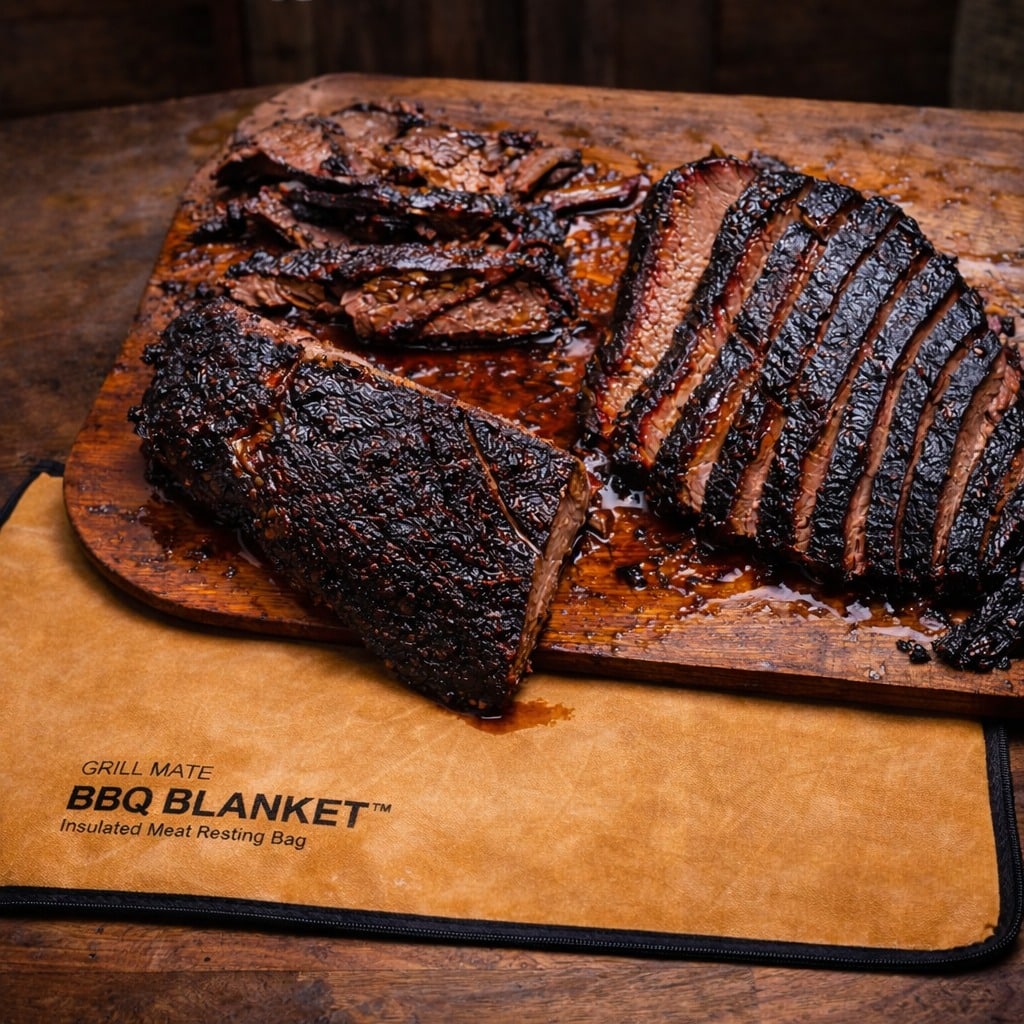
Resting vs. Holding (Faux Cambro)
Pulling a gorgeous brisket off the smoker and slicing into it five minutes later is like popping a shaken champagne bottle – all those precious juices flood straight onto your cutting board, leaving the meat dry on the plate.
Resting applies to smaller cuts like steaks, burgers, and pork chops. Leaving them on a warm cutting board for 5 to 15 minutes lets tight muscle fibers relax so internal juices redistribute evenly instead of running out at the first knife stroke.
Holding is the secret weapon behind melt-in-your-mouth brisket and pulled pork. Large cuts retain massive amounts of heat and actually continue breaking down collagen after leaving the smoker.
Pitmasters wrap the hot meat in foil and old bath towels, tucking it inside an empty, unpowered cooler – nicknamed a Faux Cambro – for 2 to 4 hours.
As long as the internal temperature stays safely above 140°F, the meat transforms into tender, juicy perfection while freeing up your schedule before guests arrive.
Quick-Reference BBQ Terms Cheat Sheet
| Confused BBQ Term Pair | The Real Difference | Beginner Rule of Thumb |
| Grilling vs. Smoking | High direct heat (400°F+) for minutes vs. low indirect heat (225°F–275°F) for hours. | Tender cuts get grilled; tough, fatty cuts get smoked. |
| Direct vs. Indirect Heat | Cooking straight over flames vs. cooking off to the side in circulating air. | Always set up a two-zone fire so food has a safe zone. |
| Blue vs. White Smoke | Clean, hot combustion (sweet flavor) vs. smoldering, oxygen-starved wood (bitter creosote). | Wait until thick white smoke clears before adding meat. |
| Bark vs. Burnt | Dark, flavorful caramelized rub and smoke crust vs. bitter, carbonized char. | Black crust at 250°F is bark; black crust over flames is burnt. |
| The Stall vs. Done | Evaporative cooling pause at 160°F vs. tender collagen breakdown at 200°F+. | Never pull brisket or pork butt at 160°F; push to probe-tender. |
| Rub vs. Sauce | Dry spices applied before cooking vs. sugary liquids brushed on at the very end. | Keep sweet sauces off the pit until the final 20 minutes. |
| Resting vs. Holding | 10-minute counter pause for steaks vs. multi-hour insulated cooler rest for big roasts. | Plan at least 2 hours of cooler hold time for every brisket. |
Wrapping Up Your Pitmaster Vocabulary
Mastering backyard barbecue has nothing to do with memorizing an encyclopedia or owning a five-thousand-dollar offset smoker.
Once you stop confusing direct heat with indirect heat, dirty smoke with clean blue smoke, and a 160°F stall with a finished brisket, everything inside the pit suddenly starts making sense.
Next time you fire up the coals, pick just one of these concepts to dial in. Build a proper two-zone fire, wait patiently for thin blue smoke before laying down your ribs, or stash your pork butt in a towel-lined cooler for two hours before shredding it.
Your taste buds – and everyone lining up at your picnic table – will notice the difference immediately.
Frequently Asked Questions
1. What is the real difference between grilling and barbecuing?
Grilling uses high, direct heat (400°F–550°F) to cook tender cuts like steaks, burgers, and chicken breasts in just a few minutes.
Barbecuing uses low, indirect heat (225°F–300°F) and wood smoke over several hours to slowly break down tough, collagen-rich cuts like ribs, pork shoulder, and brisket.
2. Why is my brisket or pork butt turning completely black – is it burnt?
As long as your smoker is running below 275°F and away from direct flames, that dark crust is bark, not burnt meat.
Bark is a flavorful, crunchy exterior created by caramelized rub spices, rendered fat, and smoke particles clinging to the meat – whereas burnt meat happens over high direct flames and tastes bitter and chalky.
3. Why did my meat thermometer stop climbing around 160°F?
Your meat has hit the stall. Around 150°F to 170°F, internal moisture rises to the surface and evaporates, cooling the meat at the exact same rate your smoker heats it.
Do not pull the meat off the pit; either wait it out or wrap it in foil or butcher paper (the Texas Crutch) until it reaches 195°F–205°F and feels probe-tender.
4. Is a pink smoke ring a sign that my barbecue is undercooked?
No.
A smoke ring is a chemical reaction between gases in wood smoke (nitric oxide and carbon monoxide) and a protein in the meat called myoglobin, which locks in a bright pink color just beneath the surface.
Always verify doneness with an instant-read thermometer rather than judging by color.
5. When should I apply BBQ sauce so it doesn’t burn?
Wait until the final 15 to 30 minutes of cooking to brush on thick, sugar-based BBQ sauces or glazes.
Applying sugary sauces too early causes them to scorch and turn bitter, whereas adding them at the very end lets the sugars caramelize into a glossy, tacky finish.
Featured image credit: @bytesizeenglish
