
“Good barbecue doesn’t need a fancy kitchen. It needs good fire, good meat, and somewhere to put the tongs.”
That philosophy works pretty well outdoors, too. You don’t need to spend the price of a small car – or worse, a very large car – building a backyard kitchen just to grill a steak on Saturday night.
Traditional outdoor kitchens can quickly become expensive once masonry, custom cabinets, countertops, plumbing, electrical work, appliances, and labor start piling up.
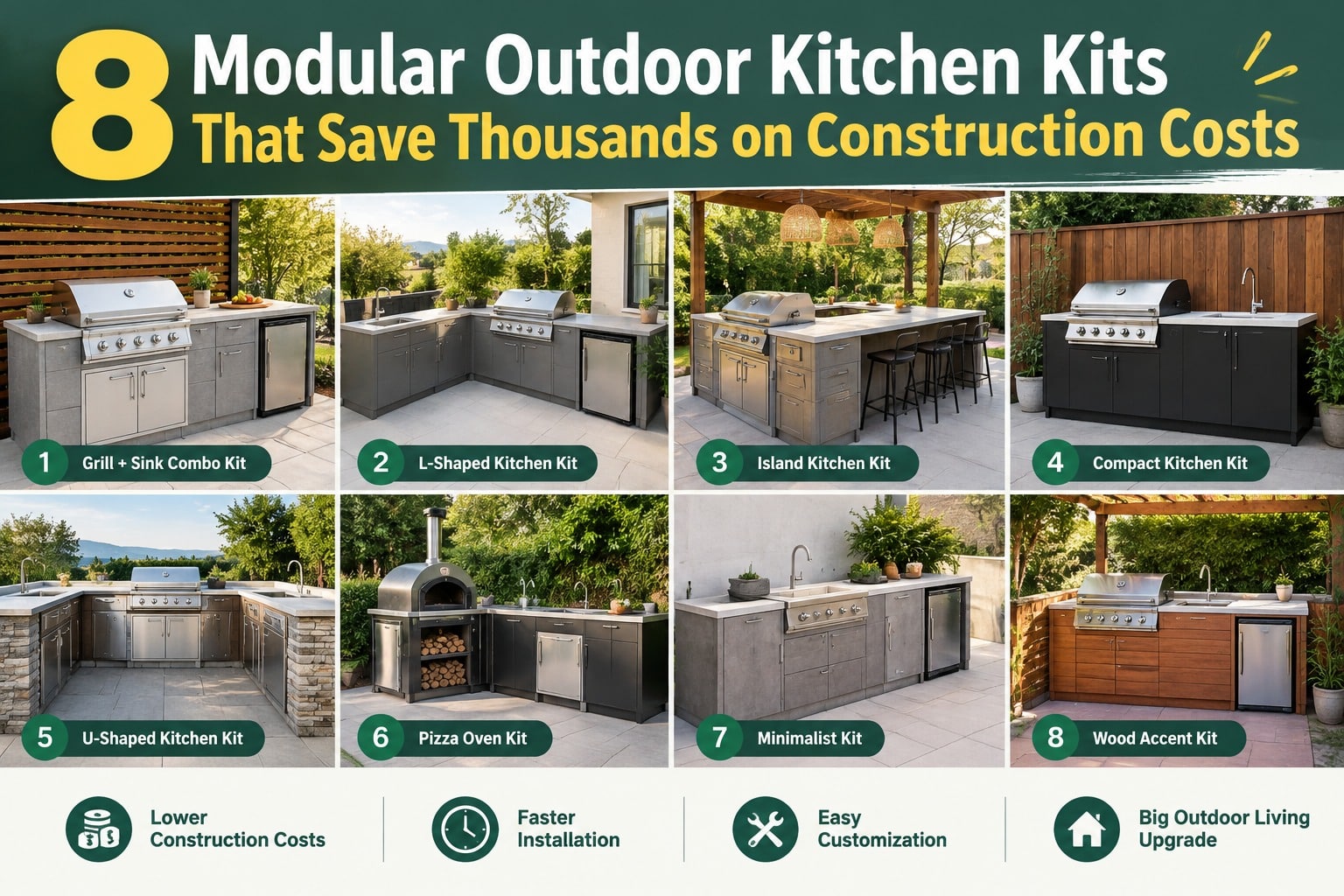
That’s where modular outdoor kitchen kits come in.
Built from ready-made components, these systems can deliver the look and functionality of a custom outdoor kitchen while cutting down on fabrication and installation costs. Some can even be assembled with basic DIY skills.
Here are eight types worth considering if you want a serious outdoor cooking setup without watching your construction budget go up in smoke.
1. Stainless Steel Modular Outdoor Kitchen Kits
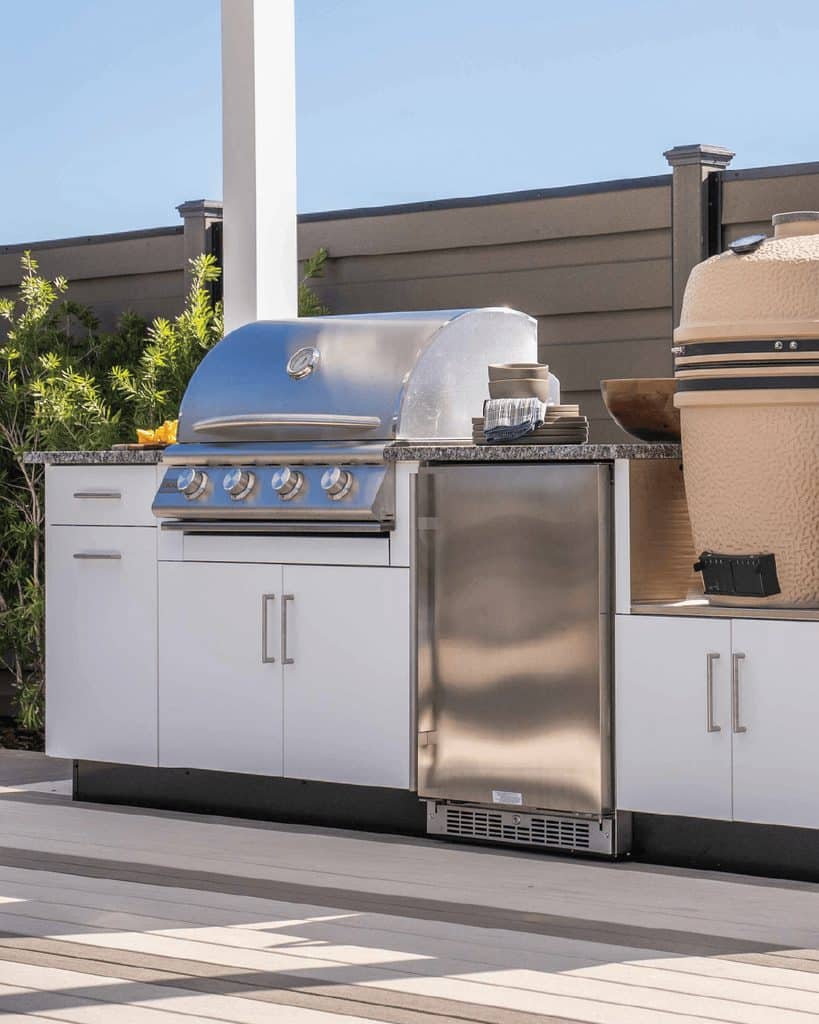
Stainless steel is a classic choice for outdoor cooking – and for good reason. It handles heat, moisture, grease, and the occasional enthusiastic barbecue session better than many traditional materials.
Stainless steel modular outdoor kitchen kits typically combine cabinets, drawers, countertops, grill modules, and storage into a coordinated system. Instead of having each component custom fabricated, you can purchase standardized pieces that are designed to work together.
That can mean less fabrication, faster installation, and lower labor costs.
Stainless steel also has a professional look that fits everything from a minimalist patio to a full-blown backyard entertaining area. Just make sure the system is designed for outdoor use and uses appropriately weather-resistant materials.
Best for: Homeowners who want durability, easy maintenance, and a sleek professional appearance.
2. Ready-to-Assemble Outdoor Kitchen Kits
Want to save even more? Roll up your sleeves.
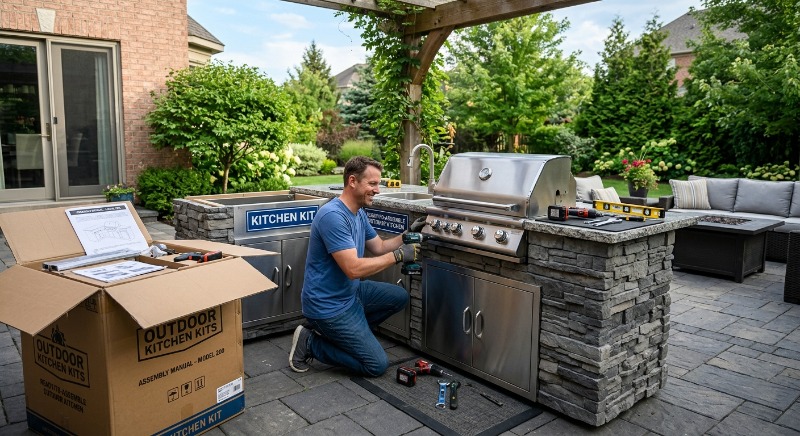
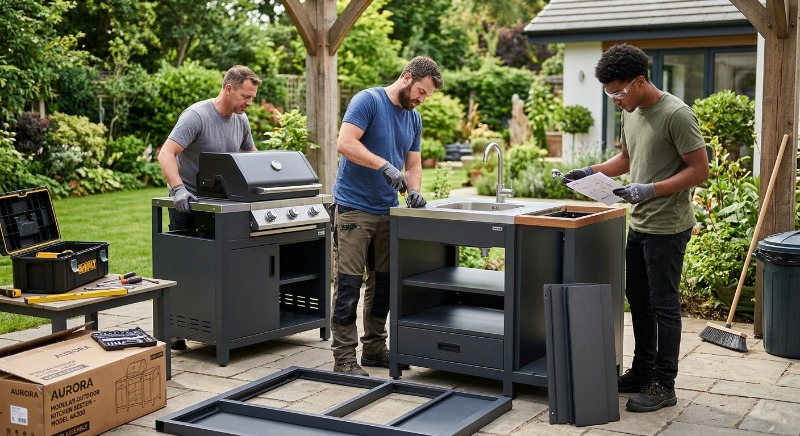
Ready-to-assemble outdoor kitchen kits are designed to be put together on-site rather than installed as a completely finished structure. Think of them as the outdoor-kitchen cousin of flat-pack furniture – only considerably more useful when dinner is involved.
These kits can include cabinets, countertops, storage, and appliance modules. The biggest potential savings come from reducing professional assembly and installation costs.
That doesn’t mean every kit is a weekend project. Heavy countertops, gas connections, plumbing, and electrical work may still require professionals. But handling the straightforward assembly yourself can keep more money in your wallet.
Best for: DIY-minded homeowners who are comfortable with tools and want to reduce labor costs.
3. Modular Kits with Built-In Grills
For many backyard cooks, the grill is the star of the show. Everything else is supporting cast.
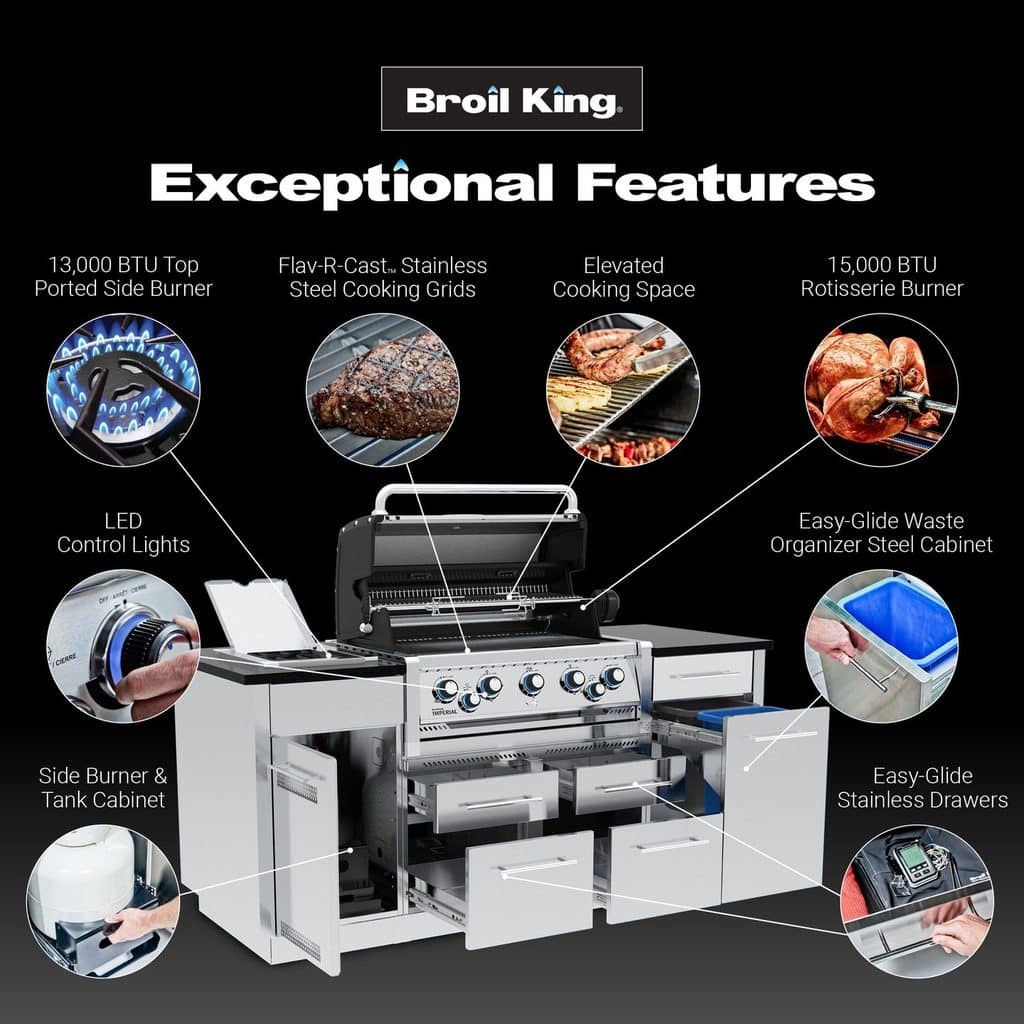
Modular kitchen systems with built-in grills combine the cooking appliance with surrounding cabinets, prep space, and storage. Instead of buying a grill, cabinets, and countertop separately, you get components designed to function as one unit.
That can make the entire project easier to plan and potentially less expensive than building around individually sourced components.
The real advantage is convenience. Your grill has a dedicated home, your tools have somewhere to live, and you don’t have to perform the traditional outdoor-kitchen dance of carrying ingredients, utensils, and plates back and forth from the house.
Best for: Grill-focused cooks who want a dedicated outdoor cooking station.
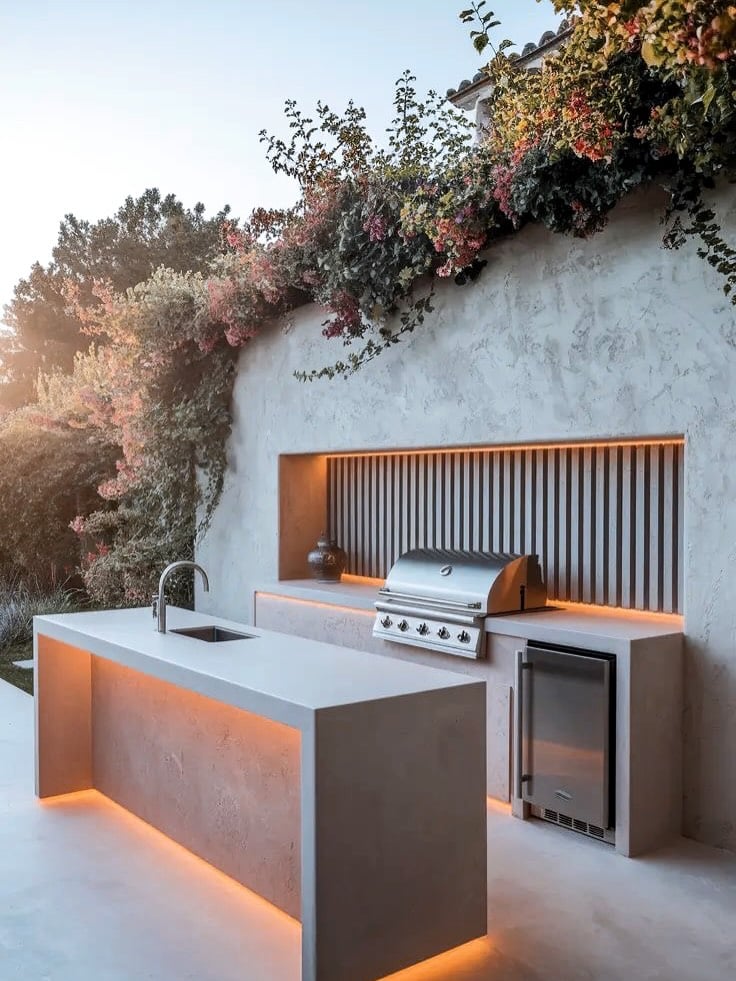
4. Concrete-Look Modular Outdoor Kitchen Kits
Love the appearance of a custom concrete kitchen but not the price – or the construction mess?
Concrete-look modular systems can offer a similar modern aesthetic without requiring extensive on-site masonry.
Manufactured panels and finishes can create the appearance of stone or concrete while using a more streamlined installation process.
The result can look impressively custom without actually being custom.
That matters because masonry work can involve significant labor, site preparation, curing time, and material costs. Modular construction moves much of that work into a controlled manufacturing process.
Best for: Homeowners chasing a modern, high-end look while keeping construction more predictable.
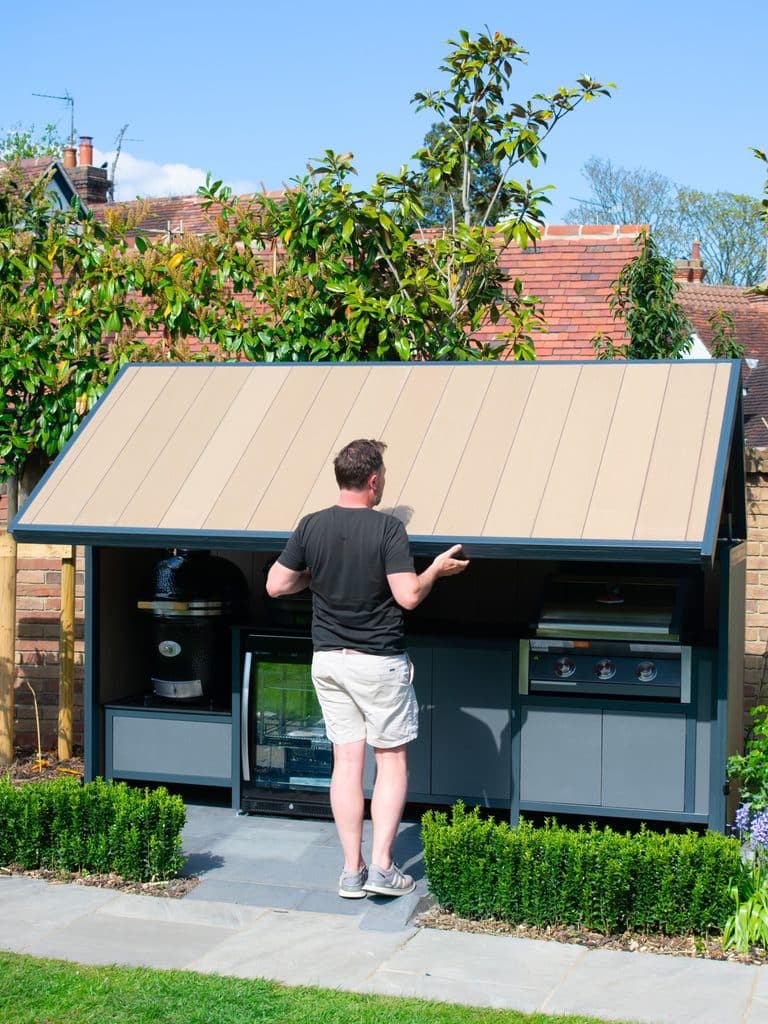
5. Compact Modular Outdoor Kitchen Kits
Not every backyard needs a kitchen large enough to cater a wedding.
Compact modular kitchen kits are ideal for smaller patios, decks, terraces, and entertaining spaces where every square foot matters. A basic setup might include a grill, prep surface, and storage without unnecessary extras.
And here’s an underrated money-saving trick: don’t buy features you won’t use.
A built-in refrigerator sounds fantastic until you realize you already have one 20 feet away in the house. The same goes for specialty burners, enormous countertops, and storage modules that spend most of their lives holding things you forgot you owned.
A compact design can reduce both the upfront cost and the installation requirements.
Best for: Smaller spaces and homeowners who want the essentials without paying for excess.
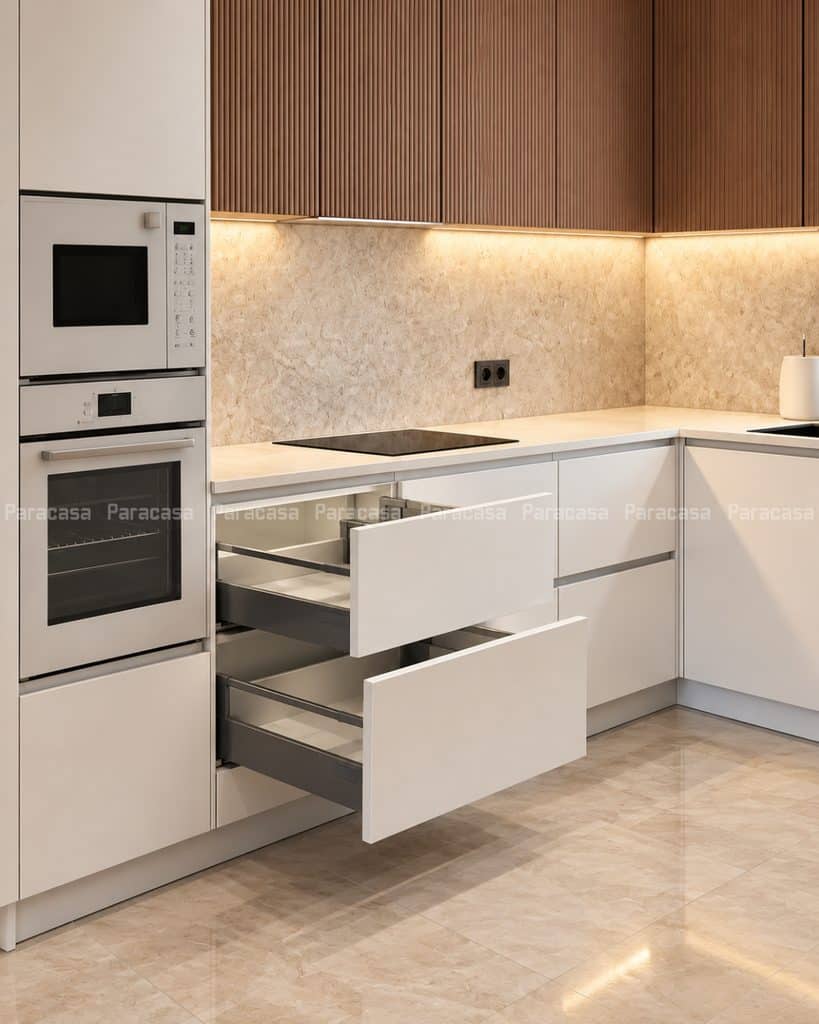
6. Modular Kits with Countertop and Storage
Sometimes the smartest outdoor kitchen upgrade isn’t another appliance. It’s somewhere to put things.
Modular countertop-and-storage systems can provide drawers, cabinets, prep space, and serving areas while allowing you to keep an existing grill.
That makes them particularly attractive for homeowners who already own a good barbecue.
Why replace a perfectly good grill just because you’re upgrading the kitchen?
By separating the cooking appliance from the surrounding infrastructure, you can build the kitchen in stages. Start with storage and counter space, then add appliances later when the budget allows.
Best for: Homeowners who already have a grill and want to expand gradually.
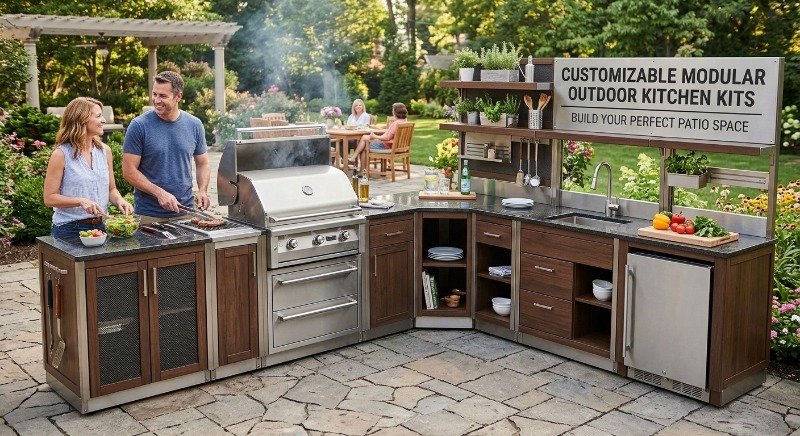
7. Customizable Modular Outdoor Kitchen Kits
Modular doesn’t have to mean boring.
Many systems allow you to mix and match components to create a layout that fits your space. You might add a sink, refrigerator, drawers, trash storage, side burner, or additional counter space depending on how you cook.
The major advantage is flexibility without full custom-construction pricing.
You can also plan for future expansion. Start with the essentials and add modules later rather than financing the backyard equivalent of a restaurant kitchen on day one.
Before ordering, measure carefully. A tape measure is considerably cheaper than discovering your new countertop doesn’t fit against the wall.
Best for: Homeowners who want customization but don’t need every component custom-built.
8. Budget-Friendly Modular Outdoor Kitchen Kits
Finally, there are entry-level modular systems designed specifically for keeping the initial investment down.
These can be a smart choice when you’re more interested in functionality than flashy extras. Focus on the components that affect your actual cooking: a reliable grill, useful prep space, durable storage, and weather-resistant construction.
But don’t automatically choose the cheapest kit.
A bargain becomes expensive when cabinets warp, hardware corrodes, or countertops need replacing after a couple of seasons. Look at the material quality, warranty, construction, and replacement-part availability – not just the price tag.
Best for: Budget-conscious homeowners who want practical features without paying for luxury upgrades.
How Much Can Modular Outdoor Kitchen Kits Save?
The savings vary widely, but the biggest advantage comes from reducing the amount of custom work required.
Your final price can depend on:
- Materials and finishes
- Number of modules
- Appliances
- Countertop selection
- Plumbing and electrical requirements
- Site preparation
- Professional installation
A modular kitchen isn’t automatically cheap. However, standardized components can reduce fabrication time, construction complexity, and labor, which are often major expenses in custom outdoor kitchens.
The smartest comparison is therefore the total installed cost, not simply the advertised kit price.
How to Choose the Right Kit
Before reaching for your credit card, figure out what you actually need.
Measure the available space, decide how you cook, and establish a realistic budget. Then consider:
- Weather resistance: Outdoor materials need to handle the elements.
- Appliances: Buy only what you’ll regularly use.
- Installation: Know what you can DIY and what requires a professional.
- Storage: Give grilling tools, fuel, cookware, and serving items a home.
- Future expansion: Leave room to add modules later.
A beautiful outdoor kitchen that makes cooking easier is a win. A beautiful outdoor kitchen that leaves you eating instant noodles for six months afterward is considerably less impressive.
Final Thoughts
The best modular outdoor kitchen kits prove that you don’t need a massive construction project to create a backyard cooking space that looks polished and performs well.
From stainless steel systems and built-in grill stations to compact and expandable designs, there’s a modular approach for almost every budget and backyard.
Start with what you actually need, prioritize durable materials, and compare the complete project cost – including installation. Save the money where you can, then spend it where it matters most.
Preferably on better steaks.
Featured image credit: ChatGPT
