
What do a perfectly grilled bratwurst, a freshly baked pretzel, a lively polka band, and a giant stein of German beer have in common? They can turn an ordinary afternoon into one heck of a celebration.
Welcome to Oktoberfest, where German heritage meets hearty food, good music, and the kind of community spirit that makes strangers feel like old friends.
But here’s the interesting part: Oktoberfest is about much more than beer. Behind the clinking glasses and crowded festival tents lies a tradition that began with a royal wedding more than two centuries ago.
Today, that tradition has crossed oceans, taken root in North American cities, and evolved into a celebration that brings together families, food lovers, music fans, and barbecue enthusiasts.
For Oktoberfest 2026, the appeal remains as strong as ever. From German-inspired street food to traditional folk dancing and lively beer gardens, festivals across North America offer countless ways to experience the culture.
Some events lean heavily into Bavarian customs, while others mix German heritage with local flavors and modern entertainment.
And let’s be honest: few things bring people together quite like good food. Put a sizzling sausage on the grill, add a warm pretzel and a little mustard, and suddenly nobody seems interested in checking their phone.
Here’s a closer look at the history, traditions, flavors, and celebrations that make Oktoberfest a standout cultural event across North America.
What Is Oktoberfest?
Oktoberfest is a traditional German folk festival best known for its Bavarian food, beer, music, clothing, and communal celebrations. Its most famous version takes place in Munich, Germany, but the festival’s influence now reaches far beyond its birthplace.
At its heart, Oktoberfest celebrates German culture, hospitality, and togetherness. Beer may attract plenty of attention, but the experience includes traditional music, dancing, regional cuisine, amusement rides, parades, and activities for visitors of different ages.
North American celebrations often reflect this broad appeal. Some feature large beer tents and live bands, while others focus on heritage displays, family entertainment, local breweries, and German food.
When Is Oktoberfest 2026?
Despite its name, Oktoberfest traditionally begins in September. Munich’s festival usually runs from mid-September into early October, taking advantage of milder weather and longer days.
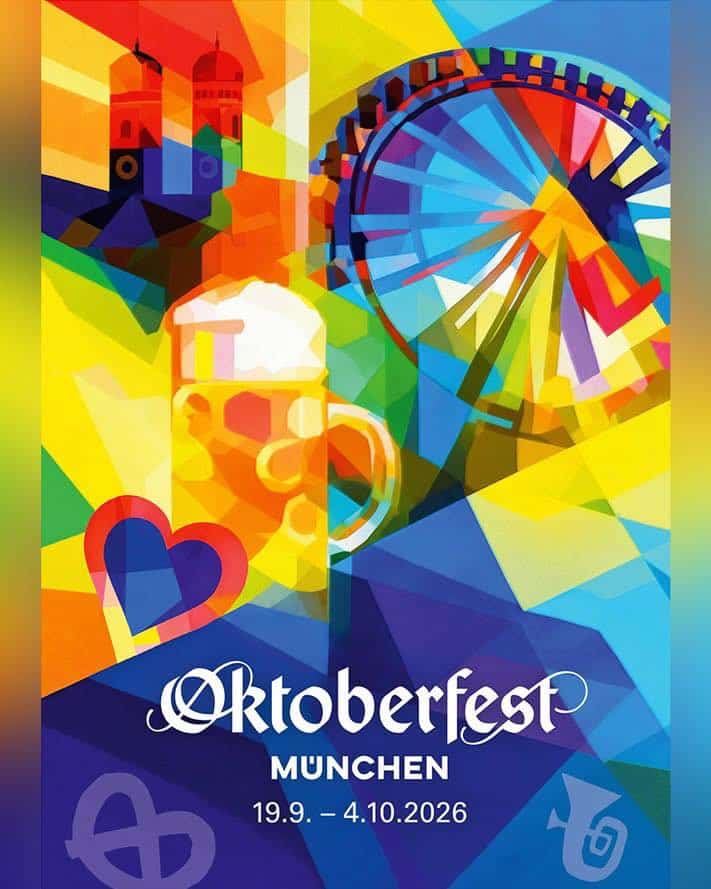
In 2026, Munich’s official Oktoberfest is scheduled for September 19 through October 4.
North American celebrations follow their own calendars, with many events taking place throughout September and October. Some cities organize multiple weekends of festivities, while others hold a single large celebration.
Important tip: Check the official website of your chosen festival before making travel plans. Dates, ticket availability, opening hours, entertainment schedules, and family programming vary by location.
And don’t assume every event called Oktoberfest will look like Munich. One festival might feature traditional Bavarian music and imported beer, while another might serve locally brewed lager alongside regional barbecue. Both can offer a memorable experience.
The History and Origins of Oktoberfest
A Royal Wedding Started It All
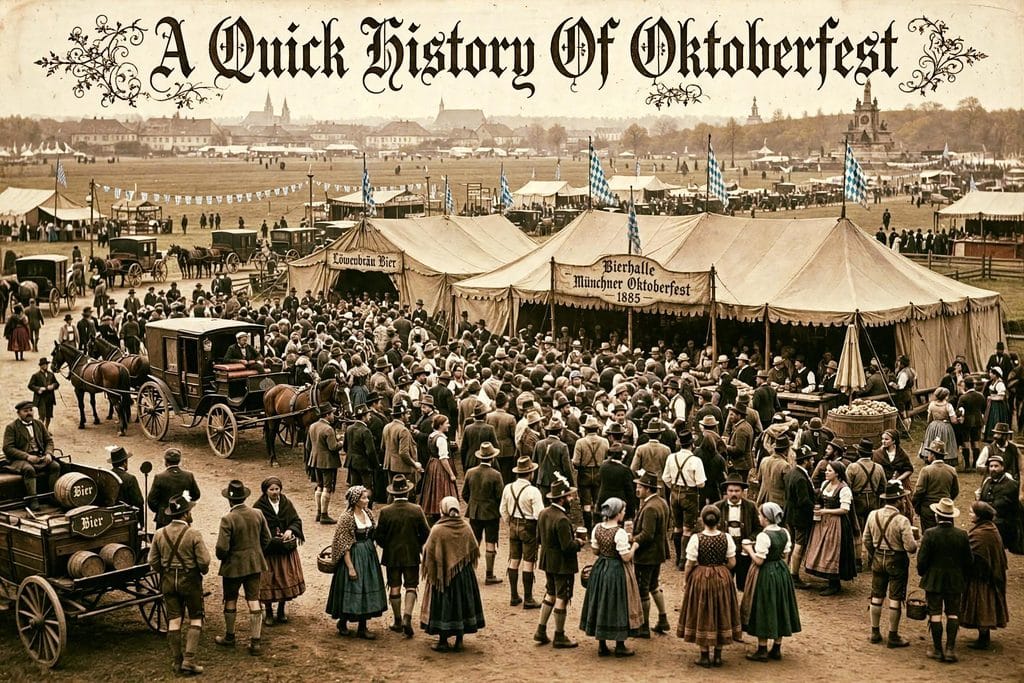
Oktoberfest began in Munich in 1810, when Crown Prince Ludwig of Bavaria married Princess Therese of Saxony-Hildburghausen.
To celebrate the royal wedding, Munich residents were invited to join public festivities held over several days. Horse races formed part of the original celebration, and the event proved popular enough to inspire another gathering the following year.
The festival grounds became known as Theresienwiese, named after the princess. Locals often shorten the name to Wiesn, a term still closely associated with Munich’s Oktoberfest.
What started as a royal wedding celebration gradually developed into an annual public festival.
Agricultural shows, amusement rides, food stalls, music, and beer halls became part of its growing identity.
Over time, Oktoberfest evolved from a local celebration into an internationally recognized symbol of Bavarian culture.
From Munich to North America
German immigration helped carry traditions such as folk music, regional cooking, brewing, and community festivals to North America. German-speaking communities established cultural organizations, restaurants, breweries, and social gatherings that preserved elements of their heritage.
Oktoberfest-style celebrations grew from that foundation. Some began as small community events and eventually became major regional attractions.
The lasting appeal of Oktoberfest comes from its ability to preserve tradition while welcoming new influences.
The clothing, music, and food may reflect Bavaria, but the people around the table can come from almost anywhere.
That’s a pretty good recipe for a successful festival – and it doesn’t require a complicated sauce.
How Oktoberfest Is Celebrated Across North America
North America doesn’t have a single Oktoberfest experience. Each destination brings its own personality, whether through German heritage, local food, regional beer, or a lively festival atmosphere.
Several cities have become particularly well known for their celebrations.
Kitchener-Waterloo, Ontario
The Kitchener-Waterloo region hosts one of Canada’s best-known Oktoberfest celebrations. Its German cultural roots influence the festival’s music, food, parades, and community events.
Visitors can encounter traditional entertainment alongside family activities and local attractions. The celebration also highlights the contribution of German heritage to the region’s identity.
Cincinnati, Ohio
Cincinnati’s Oktoberfest Zinzinnati is known for its energetic atmosphere, German-inspired food, music, and large crowds. The event brings together traditional elements and a distinctly American festival style.
It’s also a reminder that food can become part of a city’s cultural identity. Sausages, pretzels, and other German-inspired favorites fit naturally into a celebration built around eating, gathering, and having fun.
Leavenworth, Washington
Leavenworth’s Bavarian-inspired architecture gives the Washington town a distinctive setting for German-themed festivals. Its mountain scenery and European-style streets create an atmosphere that feels especially suited to traditional clothing, music, and hearty seasonal food.
Milwaukee, Wisconsin
Milwaukee’s strong brewing history makes it a natural setting for German-inspired celebrations. Festivals in the region often connect beer culture with German food, live entertainment, and local community traditions.
New Ulm, Minnesota, and Denver, Colorado
New Ulm has deep German-American cultural roots, which are reflected in its heritage events and traditional celebrations. Denver, meanwhile, offers Oktoberfest festivities that bring German-inspired food, music, and beer culture into a larger urban setting.
Before choosing a destination, check the details of the specific 2026 event.
Festival names, dates, locations, ticketing arrangements, and entertainment can change from year to year.
German Heritage Meets Local Culture
The best North American Oktoberfests don’t simply copy Munich. They preserve recognizable traditions while making room for local tastes.
A festival might feature a Bavarian band in one tent and a regional craft brewery in another. A traditional sausage stand might share space with food vendors serving modern interpretations of German favorites.
That mix is part of the charm. Cultural traditions survive when people continue to practice them, share them, and make them meaningful to new generations.
Traditional Oktoberfest Customs and Activities
Oktoberfest has a recognizable collection of customs that give the celebration its character. Some are rooted in Bavarian history, while others have become popular ways for modern festivalgoers to join the fun.
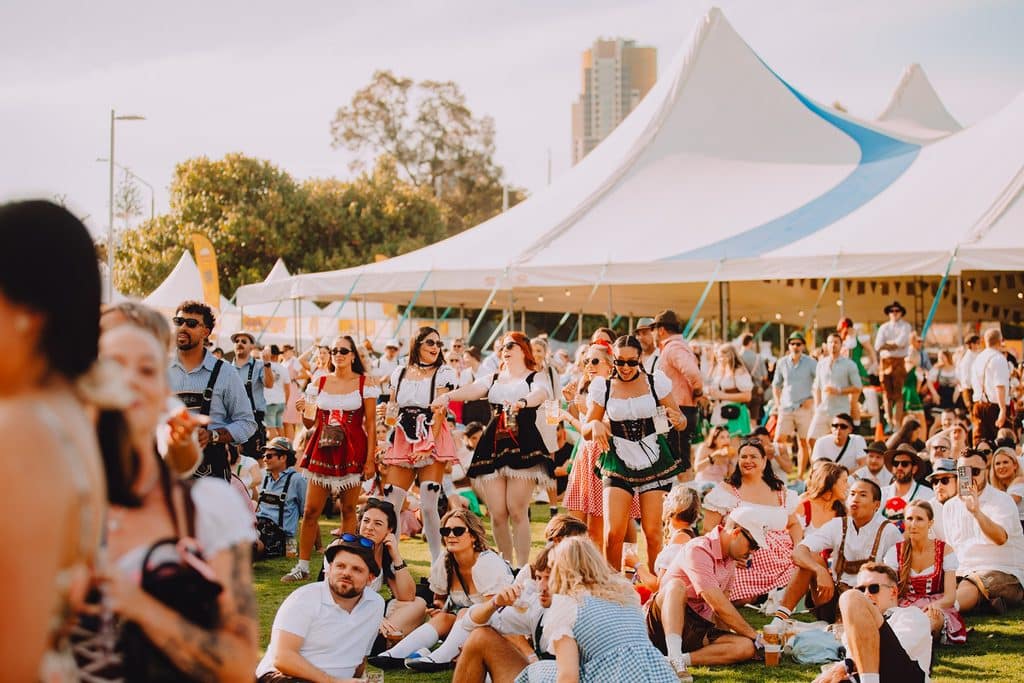
Dirndls, Lederhosen, and Bavarian Style
Traditional clothing is one of the most recognizable features of Oktoberfest.
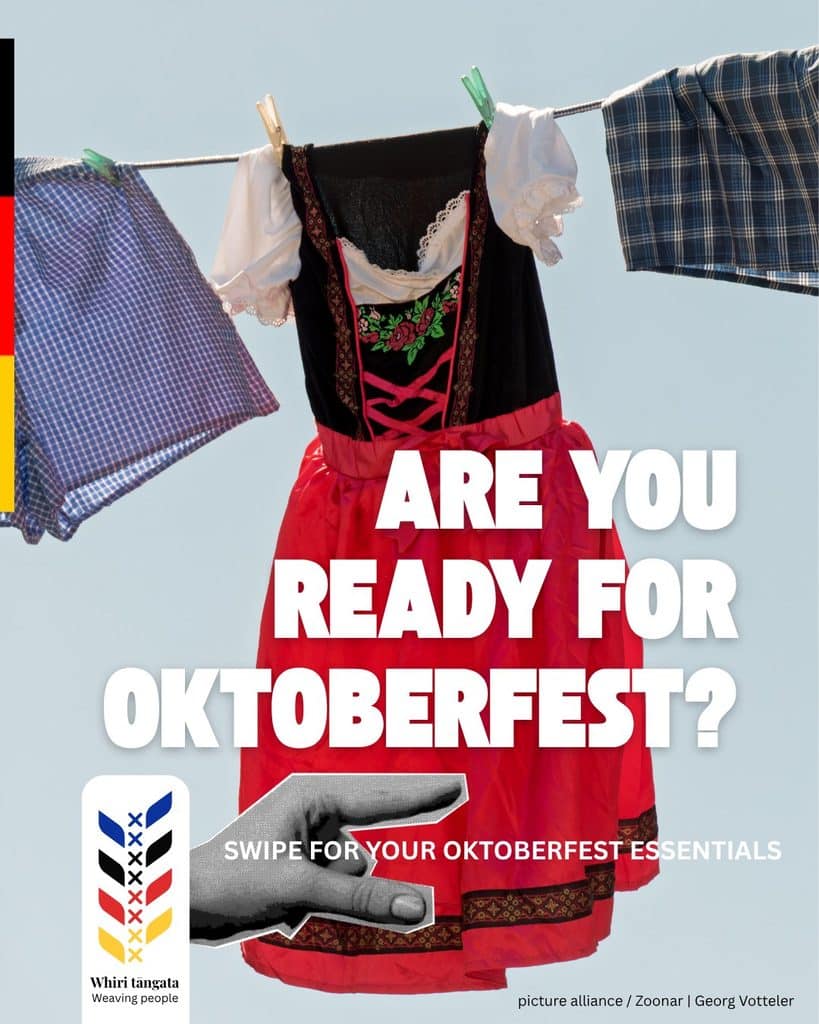
- Dirndl: A traditional dress associated with Alpine and Bavarian clothing, typically consisting of a bodice, blouse, skirt, and apron.
- Lederhosen: Leather breeches traditionally associated with Alpine working clothes and Bavarian folk dress.
At many festivals, visitors wear these outfits to celebrate German heritage and add to the atmosphere. Others arrive in jeans, T-shirts, and comfortable shoes. Both approaches work just fine.
One small detail worth knowing: dirndl apron bows can carry traditional social meanings in some contexts, although interpretations vary. The important thing is to approach cultural clothing with appreciation rather than treating it as a costume without a story.
Music, Dancing, and Festival Cheers
Traditional Bavarian music often features brass instruments, accordion melodies, and lively folk rhythms. Oompah bands and polka performances give Oktoberfest its familiar sound, while sing-alongs encourage everyone to participate.
You don’t need to know every lyric or master a dance step. A little enthusiasm goes a long way, and nobody expects a perfect performance after your first pretzel.
Another familiar word is Prost!, the German equivalent of “Cheers!” It’s commonly heard when people raise their glasses together.
The real tradition isn’t just drinking – it’s sharing the moment. Whether you’re enjoying a beer, sparkling water, or another non-alcoholic drink, the communal spirit remains the same.
Popular Oktoberfest Food and Drinks
Let’s get to the part that makes any food lover pay attention. Oktoberfest is a celebration of hearty dishes, satisfying flavors, and food that tastes even better when shared.
For anyone who appreciates live-fire cooking, the festival offers plenty of inspiration.
Traditional German Foods Worth Trying
Bratwurst is a natural starting point. These German sausages are typically grilled or pan-cooked and served with mustard, bread, or other accompaniments. Their appeal is straightforward: a browned exterior, juicy interior, and plenty of savory flavor.
A few other classics deserve a place on your plate:
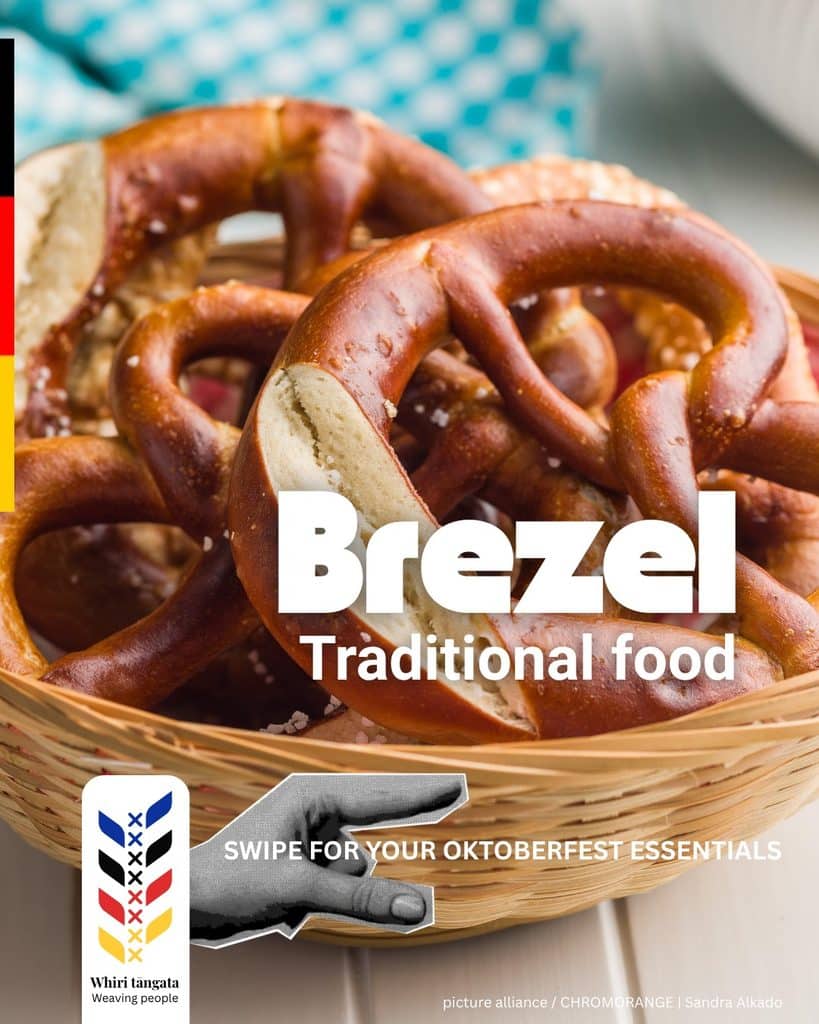
- Pretzels: Large, chewy baked breads with a deep-brown crust and a sprinkle of coarse salt.
- Schnitzel: Thin meat cutlets coated in breadcrumbs and fried until crisp.
- Sauerkraut: Fermented cabbage that provides a tangy contrast to rich meats and sausages.
- Roast chicken: A popular Oktoberfest-style meal with crisp skin and tender meat.
- Potato dishes: From potato salad to dumplings, potatoes provide a hearty companion to traditional German meals.
- German pastries: Sweet baked treats offer a satisfying finish after a savory feast.
Food vendors may also offer regional specialties and modern interpretations. You might find a bratwurst topped with locally made mustard or a German-inspired sandwich featuring smoked meat.
A practical tip from the barbecue side of the table: don’t judge a sausage by its toppings alone. Good cooking starts with quality ingredients, proper heat, and enough patience to develop a flavorful exterior without drying out the meat.
Beer and Other Beverages
Beer is central to Oktoberfest’s public image, but German brewing traditions are more varied than a single oversized mug suggests.
Traditional Munich Oktoberfest beer is generally a strong, malty lager brewed for the festival season. Other German styles, including pilsners and wheat beers, may appear at North American celebrations, depending on the venue.
Local breweries often add their own interpretations, creating a mix of traditional styles and contemporary craft offerings.
Of course, you don’t have to drink alcohol to enjoy Oktoberfest. Sparkling water, soft drinks, non-alcoholic beer, and other refreshments can keep everyone included. Drink responsibly, eat regularly, and arrange safe transportation before the festivities begin.
What to Expect From Oktoberfest 2026
Oktoberfest 2026 celebrations across North America are likely to offer the familiar combination of food, music, cultural activities, and social gatherings, although each event will have its own schedule and attractions.
Depending on the destination, visitors may encounter:
- Live German music and folk dancing
- Beer gardens and food stalls
- Traditional clothing and cultural demonstrations
- Parades and community performances
- Craft vendors and local businesses
- Family activities, games, and amusement rides
Some festivals emphasize nightlife and beer tents, while others offer a broader cultural program suitable for visitors of different ages.
Oktoberfest for Families
Oktoberfest doesn’t have to be an adults-only outing. Many festivals include daytime entertainment, children’s activities, cultural demonstrations, and food options that appeal to younger visitors.
However, family access and alcohol-service policies differ between venues. Check whether the event has dedicated family areas, age restrictions, or separate admission arrangements before bringing children.
Tips for First-Time Visitors
A little planning can save you time, money, and unnecessary frustration.
1. Check the schedule before leaving. Popular performances, parades, and special activities may run at specific times.
2. Arrive early when possible. Large events can attract crowds, particularly during evenings and weekends.
3. Dress for the weather. September and October conditions vary widely across North America. Comfortable shoes are essential for walking between tents and stages.
4. Check ticket and payment policies. Some events require advance tickets, while others offer different admission arrangements. Cashless payment systems may also be used.
5. Plan your transportation. Public transit, rideshares, designated drivers, or organized transport can make the trip home safer and easier.
6. Bring an appetite and an open mind. Try an unfamiliar dish, listen to a band you wouldn’t normally choose, and take time to learn something about the traditions behind the celebration.
German Tradition Meets North American Culture
One reason Oktoberfest has endured is that it can evolve without losing its identity.
In Germany, the festival is closely connected to Bavarian traditions, regional food, local brewing, and Munich’s history.
In North America, the celebration often serves another purpose: it provides a way for communities to honor German ancestry while inviting people from different backgrounds to participate.
That combination creates some interesting results. Traditional German sausages may sit beside locally smoked meats. Bavarian folk music might share a stage with contemporary entertainment. German beer styles may be served alongside craft beverages brewed just a few miles away.
These adaptations don’t automatically make a festival less authentic. They show how cultural traditions can take root in new places.
The key is respecting the heritage while allowing the celebration to reflect its local community.
For food lovers, that means exploring traditional recipes while appreciating the creativity of modern cooks. For visitors, it means recognizing that Oktoberfest is not simply a themed party. It’s an opportunity to learn about a culture through its food, music, history, and people.
And for anyone standing beside a grill, it offers a timely reminder: good food has a remarkable ability to bring different people to the same table.
Tips for Enjoying Oktoberfest 2026 Responsibly
A great festival experience should end with good memories, not a transportation problem or an avoidable mishap.
Keep these simple principles in mind:
- Eat before and during the event. Food makes the experience more enjoyable, although eating does not prevent alcohol impairment.
- Stay hydrated. Alternate alcoholic beverages with water if you choose to drink.
- Set a limit. Know your plans before the first toast, and don’t drive after drinking.
- Keep your belongings secure. Busy festival grounds can make it easy to misplace a phone or wallet.
- Respect the venue and other guests. Follow event rules, be considerate of performers and staff, and dispose of waste properly.
Visitors with dietary restrictions should check menus in advance and ask vendors about ingredients, allergens, and preparation methods.
Responsible choices help everyone enjoy the celebration. The goal is to leave with a full stomach, a few good stories, and enough energy to remember them the next morning.
Why Oktoberfest Remains Popular in North America
Oktoberfest has lasted because it offers something beyond a single attraction. It brings together food, entertainment, cultural heritage, and community in one accessible experience.
For people with German ancestry, it can be a way to celebrate family traditions and cultural identity. For others, it offers an introduction to German cuisine, music, and customs without requiring an overseas trip.
The festival also supports local businesses, breweries, restaurants, artists, and cultural organizations. When visitors buy a meal, attend a performance, or explore a heritage display, they help keep those experiences available to future generations.
Its broad appeal is easy to understand. You can attend for the food, stay for the music, discover an unfamiliar tradition, and leave with a new favorite dish.
Not every festival needs a grand attraction. Sometimes a well-cooked sausage, a lively band, and a table full of friendly people are more than enough.
Celebrating German Tradition in 2026
From its beginnings at a royal wedding in Munich to its many celebrations across North America, Oktoberfest has grown into a lasting expression of German heritage and community spirit.
Oktoberfest 2026 is an opportunity to experience that tradition through food, music, cultural activities, and shared celebrations.
Whether you’re sampling bratwurst, listening to a Bavarian band, exploring a local heritage festival, or raising a glass with friends, there’s more to discover than the familiar festival stereotypes suggest.
Choose an event that interests you, check its schedule, and arrive ready to explore. Try a traditional dish, learn the meaning behind a custom, and appreciate the people keeping these traditions alive.
And remember: the best festival meal doesn’t need to be complicated. Sometimes all it takes is a well-grilled sausage, a warm pretzel, good company, and a hearty Prost! to make an ordinary day feel like a celebration.
Frequently Asked Questions
When is Oktoberfest 2026?
Munich’s official Oktoberfest is scheduled for September 19 to October 4, 2026. North American festivals have separate dates, so check the official event website for the location you plan to visit.
Is Oktoberfest celebrated only in Germany?
No. Oktoberfest-style festivals take place throughout North America and other parts of the world. Many celebrate German heritage through food, music, beer, dancing, and community events.
What food is traditionally served at Oktoberfest?
Popular options include bratwurst, pretzels, schnitzel, sauerkraut, roast chicken, potato dishes, and German pastries. Individual festivals may offer additional regional specialties and modern variations.
Do you have to wear lederhosen or a dirndl?
No. Traditional Bavarian clothing is popular at Oktoberfest, but it is generally optional. Comfortable everyday clothing is perfectly acceptable unless a specific event has its own dress requirements.
Is Oktoberfest family-friendly?
Many Oktoberfest events offer family-friendly activities, particularly during the day. However, age restrictions, alcohol-service areas, and entertainment options vary by venue. Check the event’s official guidelines before visiting.
What kind of beer is served at Oktoberfest?
Traditional Munich Oktoberfest beer is a malty lager brewed for the festival season. North American events may also serve other German beer styles, locally brewed craft beers, and non-alcoholic alternatives.
Featured image credit: @deutschtroit
