
“He who does not know how to look back at where he came from will never get to his destination.” — José Rizal
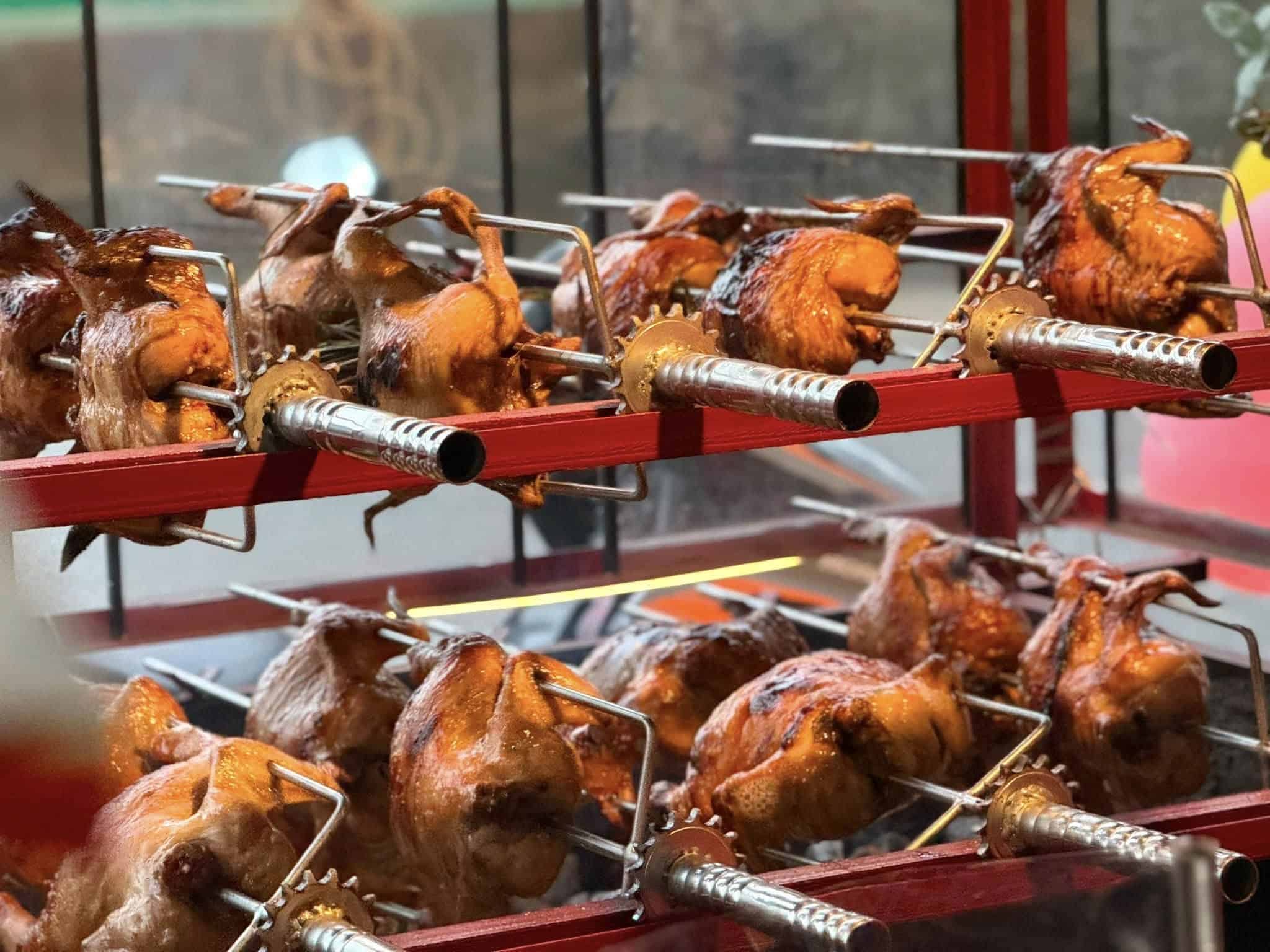
José Rizal was talking about history, identity, and remembering where we came from. But the same idea works surprisingly well when you’re standing beside a Filipino rotisserie stall, watching a row of chickens turn slowly over glowing charcoal.
Because some Filipino food traditions are easier to understand when you follow them backward.
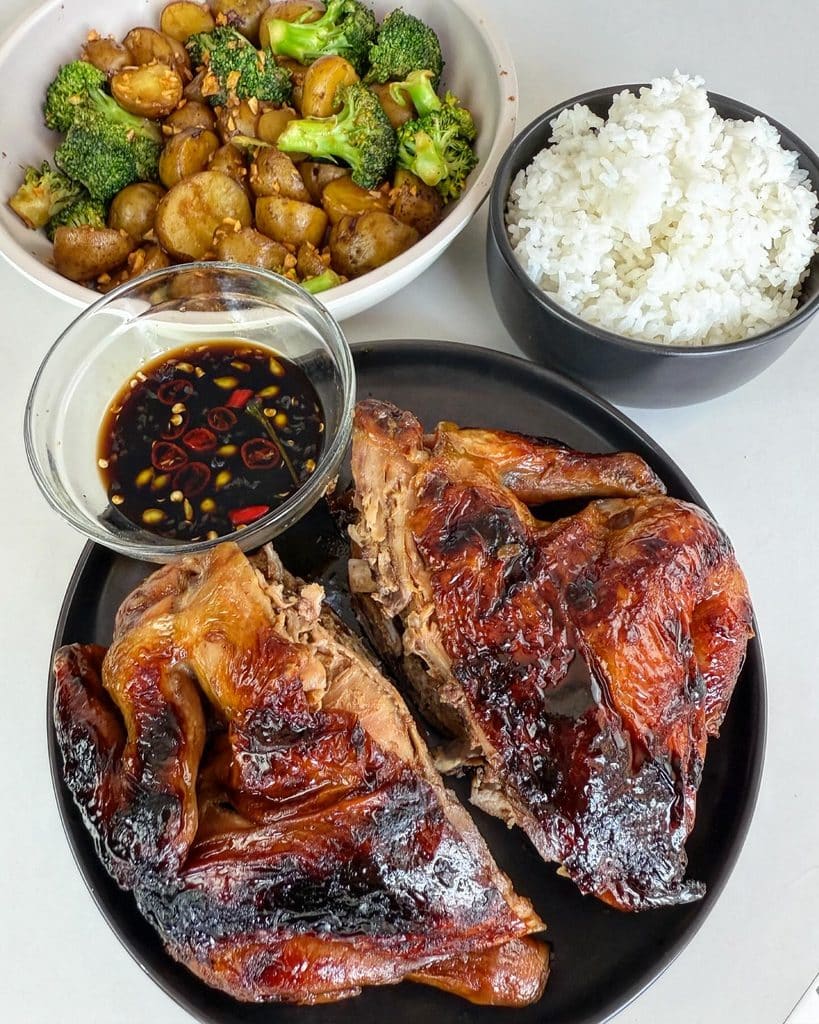
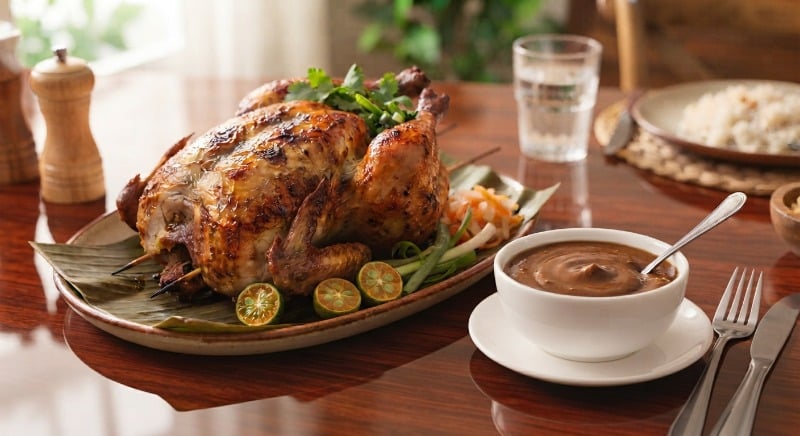
Start with the finished plate: smoky lechon manok, steaming rice, and a generous spoonful of rich chicken liver sauce.
Then follow the trail.
You get charcoal roasting. Filipino marinades. The country’s long love affair with lechon. Neighborhood rotisserie vendors. Family recipes.
And eventually, brands such as Baliwag Lechon Manok and SLQ Lechon Manok, which helped make this style of roasted chicken a familiar part of everyday Filipino dining.
And then there’s that sauce.
Ask someone why lechon manok tastes so good and they’ll probably mention the smoky skin, juicy meat, or marinade. Ask why it tastes even better with liver sauce, and the answer becomes more interesting.
The chicken brings the smoke. The sauce brings the richness.
One gives you char and roasted meat. The other gives you umami, moisture, sweetness, and depth.
Put them together and suddenly a humble roasted chicken tastes like it has been preparing for this moment its entire life.
So, what exactly is Filipino lechon manok, and why did chicken liver sauce become such a perfect partner?
Let’s follow the smoke.
What Is Filipino Lechon Manok?
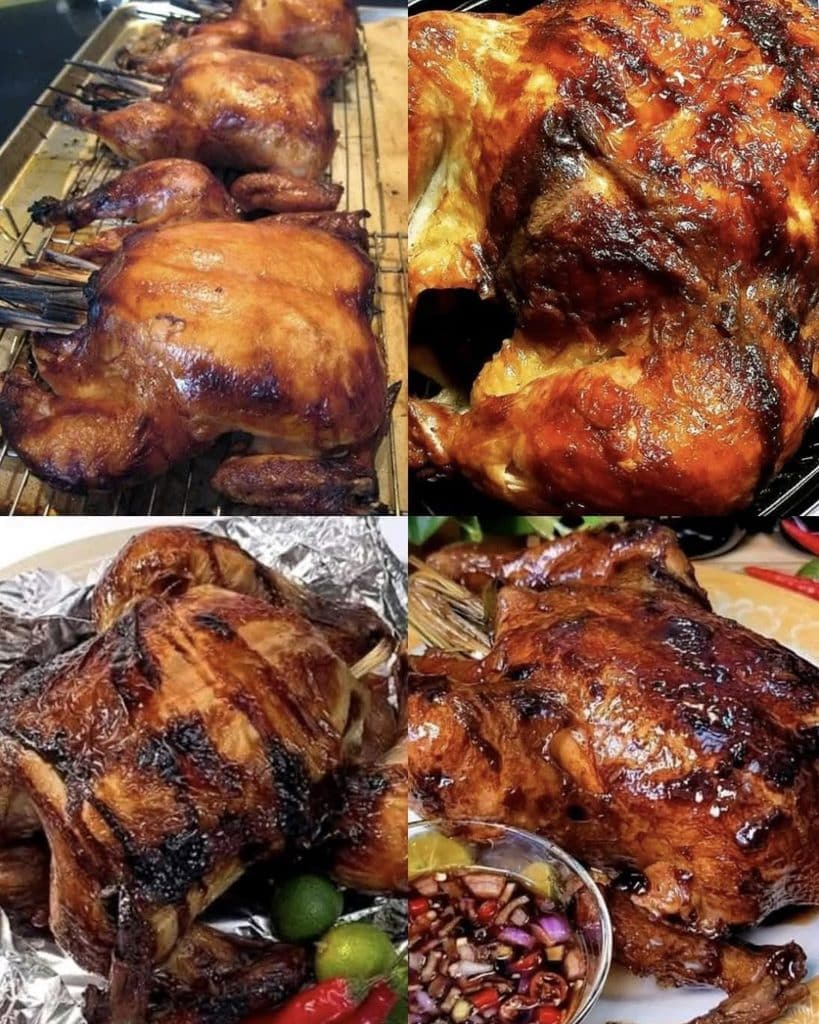
At its most basic, Filipino lechon manok is whole chicken roasted on a spit, usually seasoned with a Filipino-style marinade and traditionally cooked over charcoal.
The name tells you much of the story.
“Manok” means chicken, while “lechon” refers to the Filipino tradition of roasting meat on a spit.
But calling it simply “Filipino rotisserie chicken” misses something important.
Lechon manok has its own personality.
Depending on the recipe or vendor, the chicken may be seasoned with ingredients such as garlic, onion, pepper, bay leaf, soy sauce, fish sauce, vinegar, or lemongrass.
There isn’t one universal recipe.
That’s part of what makes the dish interesting.
One vendor might make a sweeter marinade. Another might emphasize garlic. Another might let the charcoal do most of the talking.
The cooking process is just as important as the seasoning.
The chicken is secured to a spit and slowly rotated over heat. As it cooks, the fat renders from the skin. The exterior browns. The marinade develops deeper flavors. Smoke settles into the surface.
The result is tender chicken with browned, smoky, savory skin and juicy meat underneath.
And because this is Filipino food, the chicken rarely travels alone.
Rice comes along.
Condiments come along.
And very often, a rich sauce comes along for the ride.
How Did Lechon Manok Become a Filipino Favorite?
Filipinos have been roasting meat long before the modern neighborhood rotisserie became a familiar sight.
The most famous example, of course, is lechon.
But a whole roasted pig isn’t exactly something most families order because nobody feels like cooking on a Tuesday.
Chicken is another story.
A chicken is smaller, more affordable, faster to cook, and easy to divide among a family.
That made lechon manok a natural candidate for everyday Filipino dining.
Instead of waiting for a fiesta or major celebration, families could simply stop at a neighborhood rotisserie stand and take home dinner.
The smell helped sell it.
Actually, “helped” might be underselling the situation.
A good lechon manok stall doesn’t need an aggressive advertising campaign.
The charcoal smoke is the advertising campaign.
By the 1980s, commercial lechon manok businesses were becoming increasingly prominent.
One of the most recognizable names from this period is Baliwag Lechon Manok, founded in 1985 by Dwight and Dolores Salcedo. The business started with a kiosk in Project 8, Quezon City.
Its history is particularly interesting because the chicken and sauce were developed as part of the same culinary concept.
The company’s historical account says the original recipes for its lechon manok, liempo, and sauce were developed with help from family and refined through testing and feedback.
That detail is worth remembering.
The sauce wasn’t merely an optional extra. It was part of the flavor identity.
Other long-running rotisserie businesses, including SLQ Lechon Manok, also became associated with chicken liver sauce and helped reinforce this familiar combination.
Together, businesses like these helped turn lechon manok into something more than roasted chicken.
They helped create a recognizable Filipino rotisserie experience.
What Makes Filipino Lechon Manok Taste so Good?
The secret isn’t one magical ingredient. It’s the way several things happen at once.
1. The Marinade Builds a Savory Foundation
A good lechon manok begins before the chicken ever sees the fire. Seasoning gives the meat its foundation. Garlic adds aroma and bite.
Pepper adds warmth. Soy sauce or fish sauce can provide salt and umami. Lemongrass can contribute a fresh, citrusy fragrance.
Some versions include sweetness. Others may include vinegar or other acidic ingredients.
The exact combination varies.
And that’s perfectly normal.
Lechon manok is not a laboratory formula. It’s a food tradition.
Every family, cook, and vendor can have an opinion about what makes the “right” version.
That’s why you can eat lechon manok from several places and find that each one has a slightly different character.
2. Charcoal Adds Something an Oven Can’t Quite Fake
You can roast chicken in an oven. You can even make excellent chicken in an oven. But charcoal gives you something special.
Smoke.
The chicken rotates over the heat while the skin slowly browns. Fat drips toward the coals, creating bursts of smoke that settle onto the chicken.
The result is a more complex exterior. You get roasted meat, browned skin, rendered fat, and smoky aromas all at once.
That smoky character is one of the things that makes Filipino lechon manok so recognizable.
It’s also why walking past a rotisserie stand can be dangerous.
You may have eaten lunch two hours ago. You smell the chicken. Suddenly, lunch has become a distant memory.
3. The Skin is Doing More Work Than You Think
Chicken skin gets a bad reputation from people who think of it only as fat. But when properly roasted, the skin is a concentrated package of flavor.
It holds seasoning.
It collects smoke.
It browns over the fire.
Fat renders through it.
And the surface develops all those delicious roasted flavors created by high heat.
That combination of crisp edges, smoky aroma, savory seasoning, and rendered chicken fat is one of the defining pleasures of good lechon manok.
But then comes the sauce. And that’s where things get really interesting.
What is Filipino Chicken Liver Sauce?
Chicken liver sauce is a rich Filipino-style condiment commonly associated with roasted meats and lechon.
Recipes vary, but liver gives the sauce its distinctive savory, earthy, deeply umami character.
Depending on the preparation, the sauce may be smooth and thick or thinner and more gravy-like.
Other ingredients can provide sweetness, acidity, saltiness, and additional aromatics. That’s important because a good liver sauce shouldn’t taste like someone simply liquefied a chicken liver and declared victory.
The liver is one part of the flavor equation.
It provides body and depth. Other ingredients balance it.
Think of the sauce as a supporting actor that knows exactly how much screen time to take. Too little and you miss it.
Too much and it steals the movie. The best versions sit somewhere in the middle.
Why Does Chicken Liver Sauce Taste so Great with Lechon Manok?
This is where food science and Filipino food culture shake hands. The pairing works because the flavors complement each other instead of competing.
Smoke Meets Richness
The chicken brings charcoal smoke and roasted flavor. The liver sauce brings richness and depth. That contrast is powerful.
Smoky chicken + rich sauce = a more complete bite.
The sauce doesn’t erase the flavor of the chicken. It amplifies it.
The Sauce Adds Moisture
Even a beautifully cooked chicken can have leaner portions.
Breast meat, in particular, can sometimes benefit from an extra hit of moisture. A spoonful of sauce fixes that immediately.
It coats the meat and gives each bite a richer mouthfeel.
Suddenly, the chicken breast is no longer the piece everyone quietly hopes someone else takes.
Liver Adds Umami
Umami is the deep savory quality that makes food taste substantial and satisfying. Roasting already gives chicken plenty of savory character.
Liver adds another layer of umami.
That helps explain why the sauce can taste so satisfying even in small amounts. It’s not simply salty. It’s deeply savory.
Sweetness and Acidity Create Balance
A rich sauce needs contrast. Sweetness can soften the earthy character of liver. Acidity can cut through richness.
Salt brings out savory flavors.
Together, those elements prevent the sauce from becoming heavy. That’s why one bite can feel rich without becoming exhausting.
The secret is balance, not brute force.
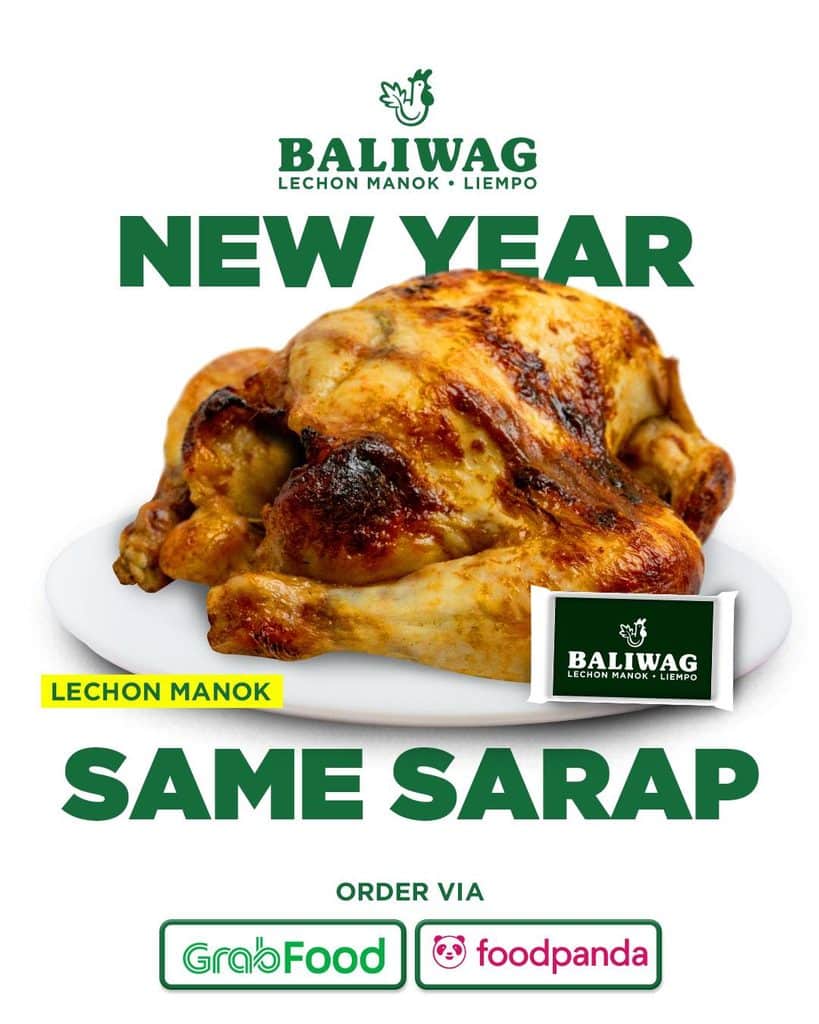
Baliwag Lechon Manok and the Rise of Chicken Liver Sauce
When talking about Filipino rotisserie culture, Baliwag Lechon Manok deserves special attention.
The company was founded in 1985 by Dwight and Dolores Salcedo, beginning with a kiosk in Project 8, Quezon City.
The name Baliwag came from Dolores Salcedo’s hometown of Baliwag, Bulacan. But the more interesting part for food lovers is the recipe development.
Baliwag’s historical account describes the development of its original lechon manok, liempo, and sauce recipes with help from family members, followed by testing and refinement.
That gives us an important clue about how commercial Filipino food traditions develop. The sauce wasn’t simply something added after the chicken had been perfected.
Chicken and sauce were developed as a pair.
That’s a smart culinary strategy.
A customer might enjoy the chicken on its own, but the sauce creates another reason to remember the meal.
Eventually, the combination becomes part of the brand. People don’t just remember “roast chicken.”
They remember the chicken with that sauce.
It is worth being careful with the word “invented,” however.
Baliwag should not automatically be described as the inventor of Filipino chicken liver sauce. Liver-based sauces have deeper roots in Filipino cooking and lechon traditions.
A more accurate description is that Baliwag was an important pioneer in the commercial lechon manok industry and helped popularize the recognizable chicken-and-sauce combination.
And that is arguably more interesting than claiming one company invented everything.
Food rarely works that way.
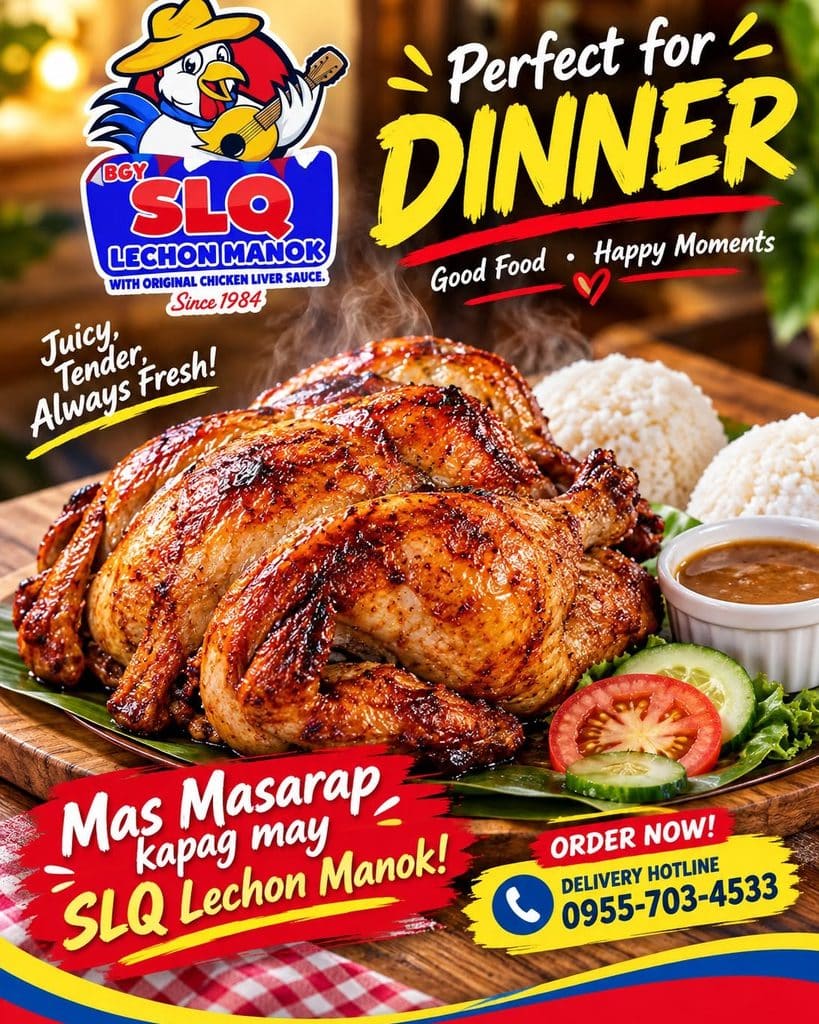
SLQ Lechon Manok and the Same Filipino Sauce Tradition
Another name that belongs in the story is SLQ Lechon Manok.
SLQ is associated with the long-running Filipino rotisserie tradition and is particularly known for pairing roasted chicken with chicken liver sauce.
Its story is useful because it shows that the popularity of this combination wasn’t limited to a single brand.
Multiple rotisserie vendors helped shape what Filipinos came to expect from lechon manok.
The history of food is rarely as neat as a timeline with one inventor at the top.
Recipes spread.
Workers move from one kitchen to another.
Customers ask for their favorite flavors.
Competitors notice what sells.
Cooks experiment.
And eventually, a particular combination becomes part of the culture. That’s exactly what makes Baliwag and SLQ interesting.
They represent the commercial side of a much larger Filipino tradition.
The vendors didn’t simply sell chicken. They helped define how Filipinos experienced rotisserie chicken.
Baliwag and SLQ: Why These Vendors Matter
It’s tempting to turn the story into a competition.
Who was first?
Who had the original sauce?
Who invented the recipe?
But Filipino food history is usually more complicated – and more interesting – than that. Baliwag’s documented history places its beginnings in 1985.
SLQ is another established name associated with lechon manok and liver sauce.
Both belong to the generation of Filipino rotisserie businesses that helped make roasted chicken a convenient and affordable family meal.
Their importance isn’t simply about dates. It’s about influence.
They helped turn lechon manok into a recognizable food category.
They also helped establish the idea that the sauce was part of the experience rather than an afterthought.
That distinction matters. A chicken can be good. A chicken with a sauce people remember can become a signature.
Is Chicken Liver Sauce Essential to Lechon Manok?
No.
But for many Filipino diners, it certainly feels that way. There are plenty of other condiments that work beautifully with lechon manok.
Toyomansi gives you salty, citrusy sharpness.
Vinegar provides acidity.
Chili brings heat.
Atchara gives you sweet-and-sour crunch.
But liver sauce is different.
It’s richer.
Heavier.
More savory.
More closely connected to the flavors people associate with traditional lechon-style sauces.
That’s why it feels so natural alongside roast chicken.
The chicken provides the smoky roast. The sauce provides the richness. Rice ties everything together.
Simple.
Effective.
Very Filipino.
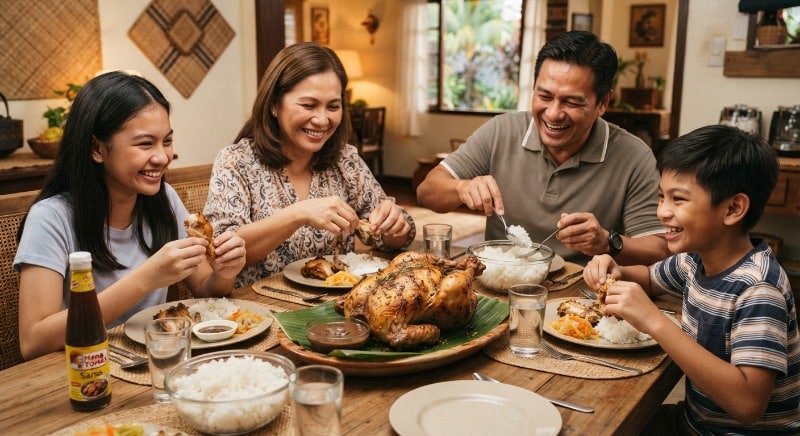
How Do Filipinos Usually Eat Lechon Manok?
The beauty of lechon manok is that it doesn’t require complicated plating.
Put chopped chicken on a plate.
Add rice.
Give the customer sauce.
Done.
Of course, Filipinos have ways of making even that simple arrangement more interesting. Some people pour the liver sauce directly over their rice.
Others dip every bite.
Some combine liver sauce with vinegar or another condiment.
And then there’s the person who puts a little bit of everything on the plate and somehow creates a completely different meal.
That’s part of the fun.
A side of atchara is particularly useful because its acidity and crunch cut through the richness of the chicken and sauce.
The meal works because of contrast.
Smoke. Salt. Sweetness. Acidity. Richness. Freshness. Texture.
Nothing needs to dominate. Everything just needs to work together.
Why Filipino Lechon Manok Became a Classic
The brilliance of Filipino lechon manok isn’t that it depends on some mysterious ingredient.
It’s the combination of practical cooking and big flavor.
The chicken is affordable.
The spit-roasting method cooks a whole bird efficiently. Charcoal creates smoke and browning.
Filipino seasoning builds savory depth.
The skin becomes intensely flavorful. The sauce adds richness. Rice makes the meal filling.
And the whole thing is easy to bring home and share.
Lechon manok is comfort food with a built-in aroma advertisement.
You don’t need a giant billboard outside a good rotisserie stall. The smell does the job. That’s one reason the dish became such a fixture in Filipino neighborhoods.
It fits real life.
You can buy it after work.
Bring it home to the family.
Put rice in the cooker.
Open the sauce.
Dinner is ready.
The Chicken May Be the Star, but the Sauce Steals the Scene
José Rizal’s reminder about looking back at where we came from fits Filipino food surprisingly well.
Because when you look at Filipino lechon manok, you’re not just looking at a chicken turning over charcoal.
You’re looking at a food tradition shaped by lechon culture, neighborhood cooking, family meals, commercial rotisserie vendors, and generations of Filipino taste.
Brands such as Baliwag Lechon Manok and SLQ Lechon Manok helped make that tradition part of everyday dining for countless customers.
But the real magic isn’t owned by a single brand.
It’s in the combination.
The fire gives the chicken smoke.
The roasting gives it char and browned skin.
The marinade gives it Filipino character.
The liver sauce gives it richness and umami.
And the rice?
Well, the rice has been quietly waiting for all of it. That’s why the pairing works so beautifully.
The chicken doesn’t need to be complicated.
The sauce doesn’t need to overpower it.
Together, they create something greater than either one delivers alone. So the next time you see a row of chickens slowly turning over charcoal, don’t pretend you’re just passing by.
You already know how this story ends.
You smell the smoke.
You see the browned skin.
You order the chicken.
And then you ask the question every experienced lechon manok eater eventually asks:
“Pahingi pa ng sauce,” meaning “May I have more sauce, please?”
Frequently Asked Questions
Is lechon manok the same as rotisserie chicken?
Not exactly.
Both use a rotating spit, but Filipino lechon manok has its own seasoning, aromatics, charcoal-roasting tradition, and accompaniments.
What is chicken liver sauce made from?
Recipes vary, but liver is combined with seasonings and other ingredients to create a rich, savory sauce. Some versions are sweeter, thicker, or more acidic than others.
Does every lechon manok come with liver sauce?
No.
Different vendors have different sauces. Some use liver-based sauces, while others serve vinegar, soy-based sauces, toyomansi, or other condiments.
Who invented Filipino lechon manok?
There isn’t strong evidence that one individual invented modern commercial lechon manok. The dish developed from the broader Filipino tradition of spit-roasting and became widely popular through rotisserie vendors.
Why does liver sauce taste so good with chicken?
Because the rich, savory flavor of liver complements the smoky, roasted character of the chicken. It also adds moisture, umami, and richness to the meat.
Featured image credit: @rhonvibes
