
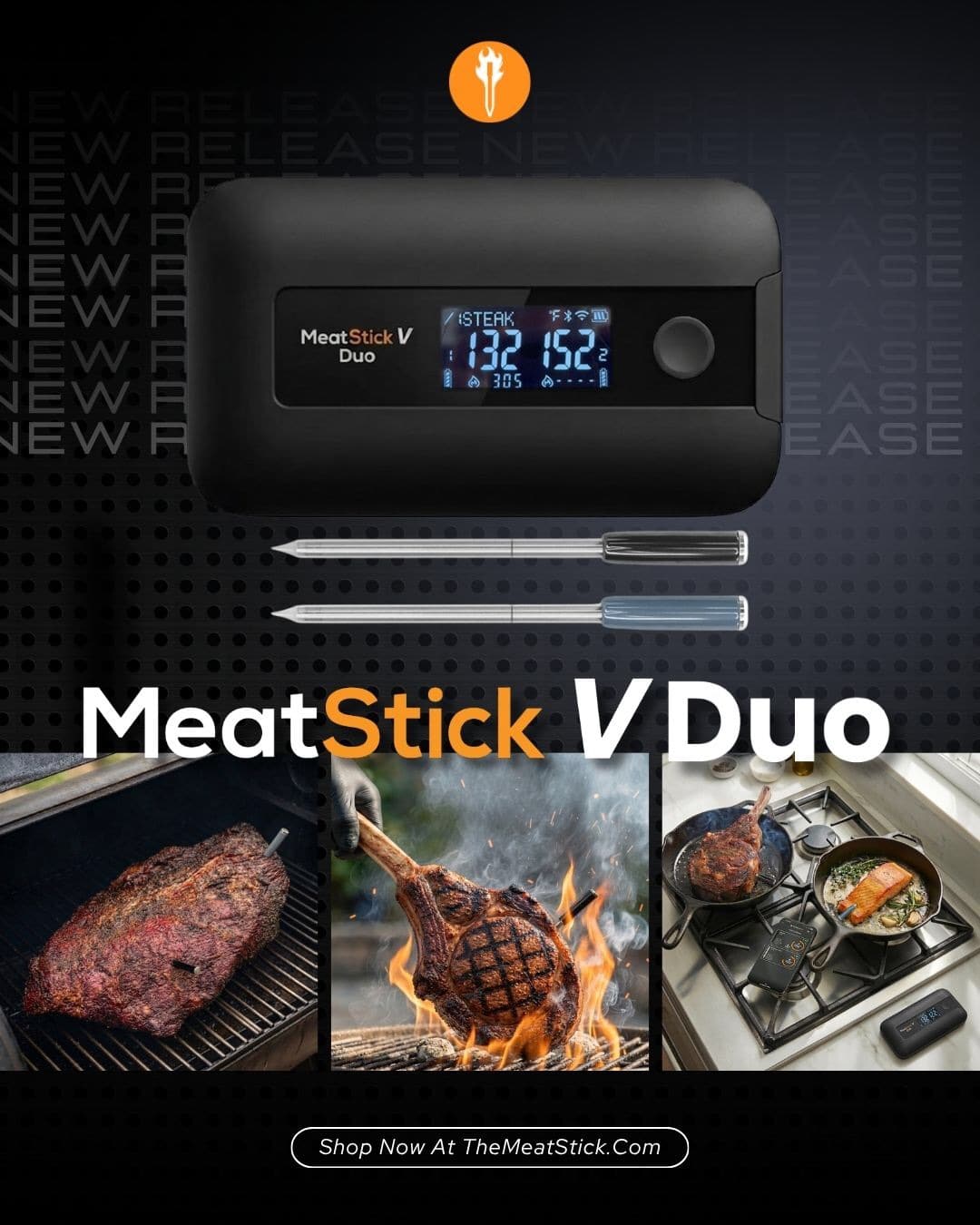
Standing over a roaring offset smoker at three o’clock in the morning develops a unique relationship with heat. For generations, backyard cooks relied entirely on intuition, visual cues, and a healthy dose of good luck.
Cooking a massive, expensive beef brisket meant playing a high-stakes game of guesswork against variables like wind, wood moisture, and stubborn connective tissue. Today, the backyard barbecue landscape looks entirely different.
The old-school approach of “poke it and pray” has officially met its match. We have entered the golden age of data-driven smoking, where advanced technology integrates seamlessly with traditional woodfire craft.
The biggest leap forward in this modern live-fire revolution centers around how we measure internal temperature. For decades, traditional single-point temperature readings gave outdoor cooks a false sense of security.
Relying on one isolated temperature node often leads directly to dry brisket flats or undercooked pork shoulders because of the complex thermal dynamics inside a smoker.
The recent technological jump from basic mechanical bimetal coils to wireless, multi-sensor smart thermometers represents a massive paradigm shift.
It changes how live-fire cooks understand heat transfer, manage long cooks, and achieve flawless doneness every single time.
From Coils to Clouds: A Brief History of BBQ Thermometers
The Analog Era: Bimetal Dial Thermometers
The iconic, circular metal dial mounted on the lid of vintage smokers belongs in a museum, not on a modern cook. These legacy bimetal dial thermometers function using two distinct metals bonded together in a coil.
As heat increases, the metals expand at different rates, mechanically forcing the display needle to move.
While simple, these devices present severe limitations:
- Terrible Factory Calibration: It is incredibly common for a stock dome thermometer to be miscalibrated by 20ºC to 30ºC straight out of the box.
- The Spatial Disconnect: These analog gauges measure the ambient temperature at the very top of the smoker dome. Your meat sits several inches lower on the cooking grate, where the actual micro-climate can be drastically different.
- Frustrating Response Times: Mechanical coils take several minutes to react to sudden temperature fluctuations, rendering them useless during fast-moving fire spikes.
Using a stock hood gauge to monitor an expensive piece of wagyu beef is the culinary equivalent of checking the weather in another city to decide if you need an umbrella today.
The Digital Revolution: Thermistors and Thermocouples
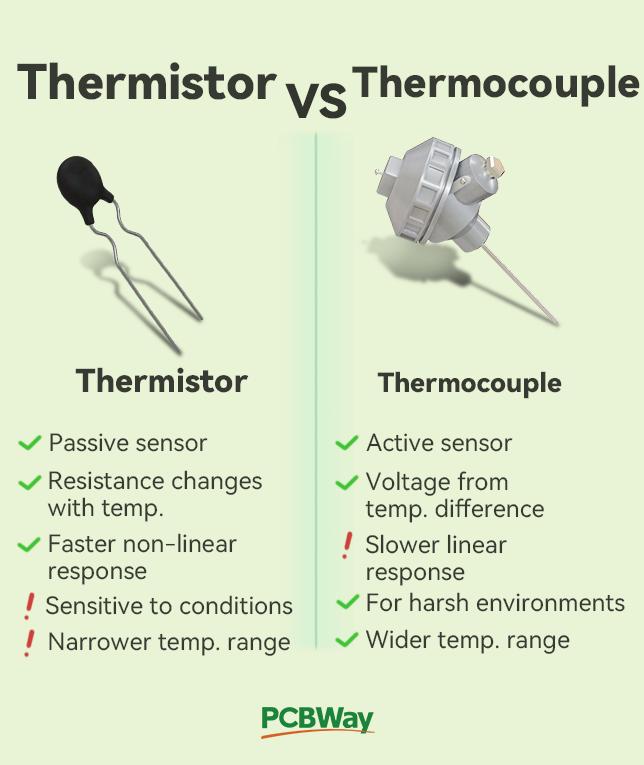
The introduction of digital meat thermometers finally brought precision into the backyard. Early digital models utilized Negative Temperature Coefficient (NTC) thermistors.
These sensors measure temperature by tracking changes in electrical resistance within a ceramic or polymer element. They offered massive improvements in accuracy over analog dials, though they required a few seconds to stabilize.
Soon after, heavy-duty thermocouples arrived on the competitive barbecue circuit. Thermocouples measure temperature by generating a tiny voltage across the junction of two different wire alloys.
This allowed for near-instantaneous readings, dropping stabilization times down to a single second. The classic setup quickly evolved into a digital base station sitting on the side of the grill, connected to the food by a web of braided steel cables.
These early digital systems gave cooks real-time numbers, but keeping track of tangled, fragile wires remained a massive headache.
Going Truly Wireless
Cutting the physical cord changed outdoor cooking forever.
True wireless smart thermometers eliminated the frustration of pinched wires, melted cables, and failed ports. This breakthrough opened up entirely new culinary possibilities, allowing pitmasters to freely use motorized rotisseries without tangling lines.
The progression from inaccurate analog dials to tangled digital probes has finally landed on precise, free-moving wireless technology.
However, early wireless iterations introduced their own set of engineering challenges. Thick steel smoker walls and heavy ceramic kamado grills act like Faraday cages, frequently blocking low-power Bluetooth signals.
Early users often complained about dropped connections the second they stepped inside their houses. Manufacturers quickly responded by building Bluetooth repeaters and Wi-Fi cloud bridges directly into the charging docks.
This advancement allowed the probe to beam data to the base station, which then pushed the metrics directly to your home Wi-Fi network, keeping you connected from anywhere in the world.
The Limitations of Single-Point Temperature Sensing
The Myth of the “Perfect Center”
Every classic barbecue guide tells you to insert your temperature probe into the thickest part of the meat, avoiding fat and bone. In reality, hitting that exact thermal center on a misshapen, 15-pound pork shoulder is nearly impossible.
If your single-sensor probe misses the true thermal core by even half an inch, your digital reading will be significantly flawed.
Imagine the protein as having distinct layers: an outer layer subjected to high heat, a middle transition zone, and a true thermal center where the temperature is lowest.
During an active cook, proteins develop a distinct internal temperature gradient. The outside of the food stays hot, while the core remains cool. A single-point probe only gives you a look through a tiny keyhole.
It tells you the temperature of one isolated cluster of cells, leaving you completely blind to what is happening through the rest of the meat.
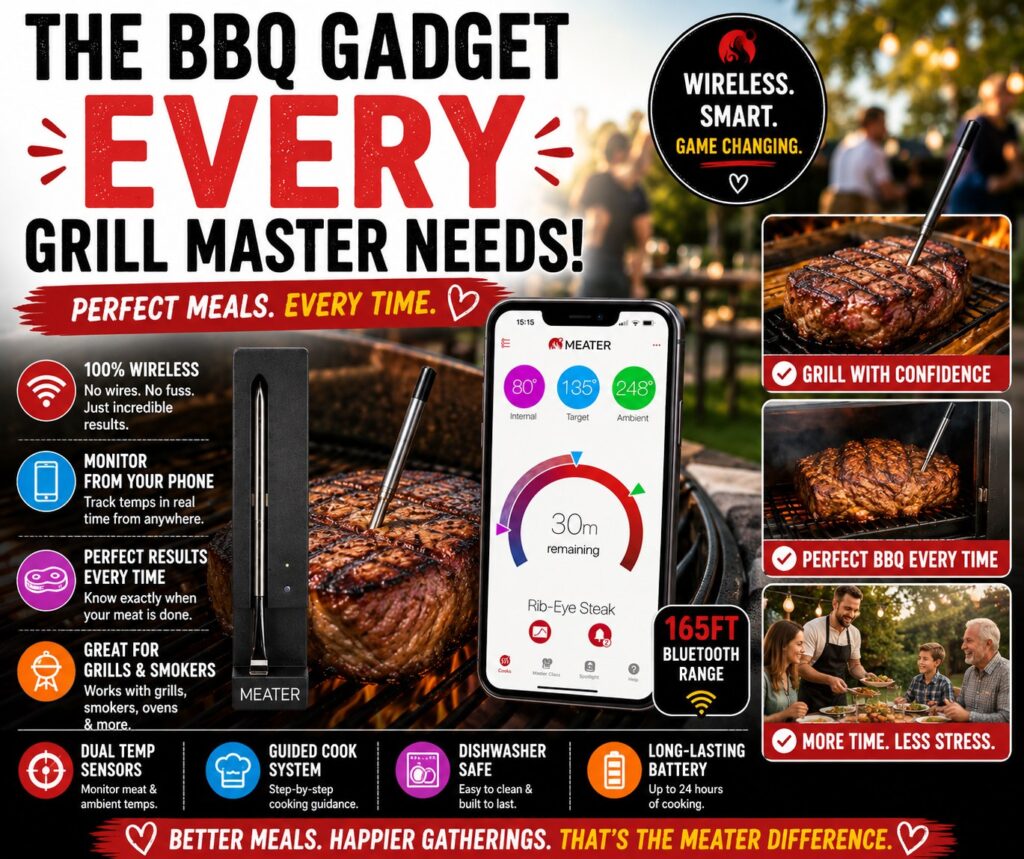
Thermal Gradients in Low and Slow Cooking
Heat moves through food systematically from the outside inward. When smoking at a low temperature, this heat transfer happens slowly, creating a dynamic thermal profile across the meat.
- The Outer Crust: The exterior layers stay close to the ambient temperature of your cooker, quickly drying out to form the bark.
- The Middle Zone: The interior meat acts as a buffer zone, steadily absorbing energy.
- Internal Anomalies: Built-in heat sinks like a dense pork blade bone or thick pockets of unrendered intramuscular fat alter the flow of energy.
Fat conducts heat much slower than lean muscle tissue.
If a single-point probe lands directly inside a thick pocket of fat, it will read lower than the surrounding meat. This often tricks you into leaving the food on the pit for too long, resulting in dry, overcooked dinner.
Enter the Multi-Sensor Probe: How the Tech Works
Anatomy of a Multi-Sensor Smart Probe
Modern multi-sensor smart thermometers pack incredible engineering into a slim, stainless steel shaft. Instead of housing a single sensor at the very tip, these advanced probes feature an array of separate temperature sensors spaced precisely along the needle.
Think of a probe marked evenly with sensor nodes. The sensors on the lower portion sit deep within the food’s interior, while an ambient sensor sits exposed at the handle to monitor the air temperature outside the meat.
A high-end modern probe can hold between four to eight independent sensor nodes inside a housing no thicker than a standard drinking straw. This allows the device to capture an entire cross-section of data simultaneously, mapping out the internal thermal gradient in real time.
Inside the Meat vs. Outside the Meat
The sensors along the shaft handle the internal environment, tracking the core, middle, and outer layers of the food. Meanwhile, the top end of the probe, which stays exposed outside the meat, houses a high-temperature ambient sensor.
| Sensor Position | Function | Critical Benefit |
| Lower Shaft Nodes | Measure internal core temperatures | Locate the true lowest temperature point automatically |
| Upper Shaft Nodes | Measure outer meat layers | Track heat penetration and gradient steepness |
| Exposed Handle Tip | Measures ambient air temp | Monitors the true micro-climate 1 inch off the meat |
This ambient sensor provides a massive advantage over standard grill thermometers. It tracks the exact air temperature rushing directly over your food, rather than reading empty air space near the top hood.
Real-Time Algorithmic Smoothing
All of this raw data feeds directly into a dedicated smartphone application. Instead of forcing you to sort through eight different temperature numbers, the software uses predictive algorithms to analyze the curves.
The application looks at how fast the outer layers are heating up compared to the core. It automatically finds the lowest internal temperature node, rendering human placement errors irrelevant.
The system then calculates the thermodynamic trajectory of your cook, giving you a highly accurate countdown timer that estimates exactly when the food will hit its target temperature.
Why Multi-Sensor Probes are Game-Changers for Pitmaster Accuracy
Conquering the Dreaded “BBQ Stall”
Every outdoor cook eventually battles the infamous barbecue stall. You watch your meat climb steadily to around 65ºC to 70ºC, only for the temperature to completely flatten out for hours.
This frustrating phenomenon happens because of evaporative cooling; the meat is actively sweating off moisture, and that evaporating water cools the surface at the exact same rate the pit is trying to heat it.
Multi-sensor smart thermometers take the guesswork out of managing this phase. By tracking both the surface temperature and the deep core simultaneously, the companion app shows you exactly when the evaporative cooling rate matches the heat input.
This precise data tells you the perfect moment to execute the “Texas Crutch” – wrapping the meat in butcher paper or foil to stop evaporation – without stalling your bark development too early.
If you graphed the temperature curve, you would see a steady rise that suddenly plateaus – the tell-tale sign that evaporative cooling has triggered a stall.
Mastering the Carryover Cook and Resting Phase
Taking your meat off the smoker at your exact target finish temperature is a common mistake. When you pull a large beef brisket off a 110ºC pit, the outer layers of the meat are significantly hotter than the center.
Once removed from the heat source, those hot outer layers continue pushing energy inward. This process can raise the core temperature by another 5ºC to 8ºC while the meat sits on your counter.
Multi-sensor systems track this carryover cooking phase perfectly.
The app monitors the heat equalization as the internal temperatures stabilize during the rest. It alerts you exactly when the thermal gradient has flattened out, indicating that the internal juices have settled and the meat is ready to slice.
Real Grate-Level Ambient Tracking
Airflow inside a traditional offset smoker or pellet grill is rarely uniform. Air currents bounce around, creating significant hot and cold zones across the cooking grate. A multi-sensor probe measures the precise ambient micro-climate just an inch away from the food’s surface.
Knowing this exact ambient temperature allows you to adjust your fire dampers or pellet settings based on the real conditions affecting your meat, rather than relying on generic ambient estimates.
Choosing the Right Smart Thermometer for Your Pit
Investing in a high-end multi-sensor system requires looking closely at your specific cooking style.
When evaluating a smart thermometer, you need to balance both hardware specifications – like the number of sensor nodes, a thin shaft diameter to prevent juice loss, and long battery life – with software features, including real-time graphing, cloud connectivity, and custom alert thresholds.
When shopping around, prioritize these core features to get the most out of your hardware:
- Sensor Density: Look for probes that pack at least four internal sensors. Higher sensor counts give the companion app more data points to locate the true thermal center.
- Connectivity Integrity: Choose a system whose charging dock acts as a high-powered Bluetooth relay, or one that bridges directly over your home Wi-Fi network. Consistent range is critical for long, overnight cooks.
- Shaft Thickness: Look for a slim probe profile. Thicker shafts require larger entry holes, which can let valuable juices escape during the cook.
- App Quality: Download the manufacturer’s app ahead of time if possible. Look for clean user interfaces, historical cook graphing, and fully customizable alert thresholds.
Top 5 Smart Thermometers
Finding the perfect smart thermometer comes down to rock-solid connectivity, precision sensors, and a great app interface. Here is a direct review of five of the best options currently changing the game for outdoor cooks.
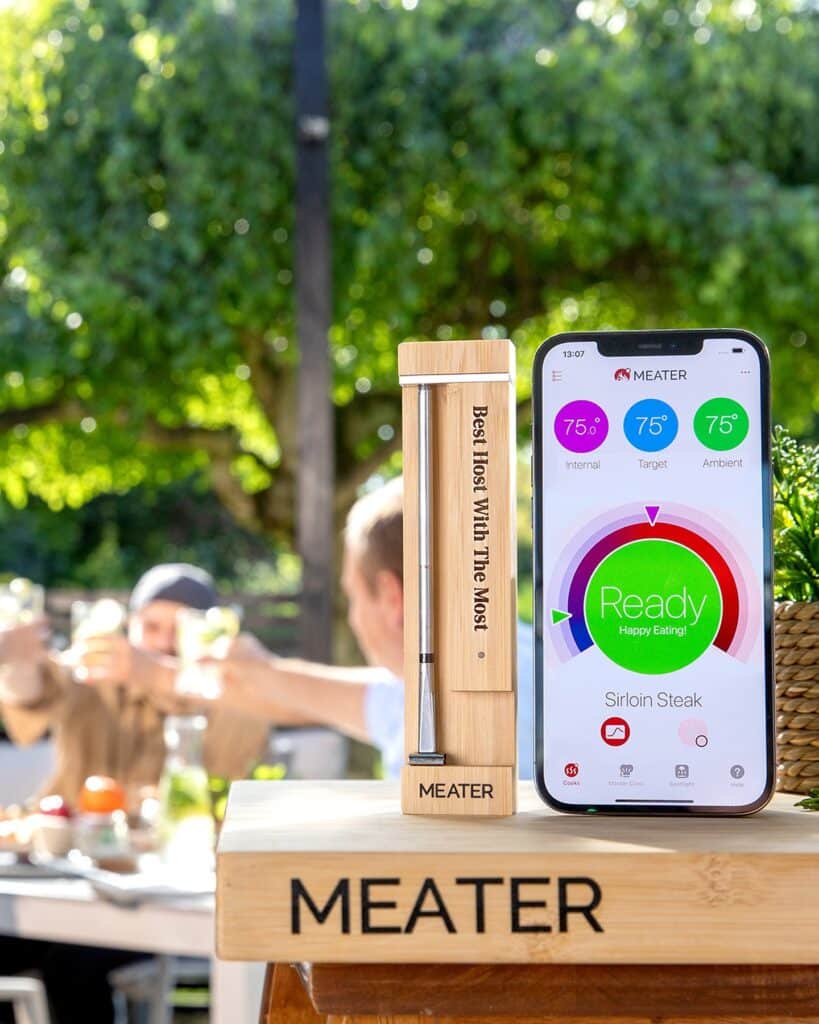
1. Meater Pro (Meater 2 Plus)
The Meater Pro represents the gold standard in wireless convenience, offering a rugged build capable of handling open-flame cooking and even deep-frying up to 1000°F.
- Best For: All-around open flame grilling, smoking, and rotisserie.
- Key Specs: 5 internal multi-sensors plus 1 ambient sensor; certified ±0.5°F accuracy; 250-foot Bluetooth range extended by an LCD-enhanced charging dock base.
- Pros: Ultra-fast 5-minute charge gives you a 2-hour cook window; fully waterproof and dishwasher safe.
- Cons: Premium price point; the shaft diameter is slightly wider than some competitors.
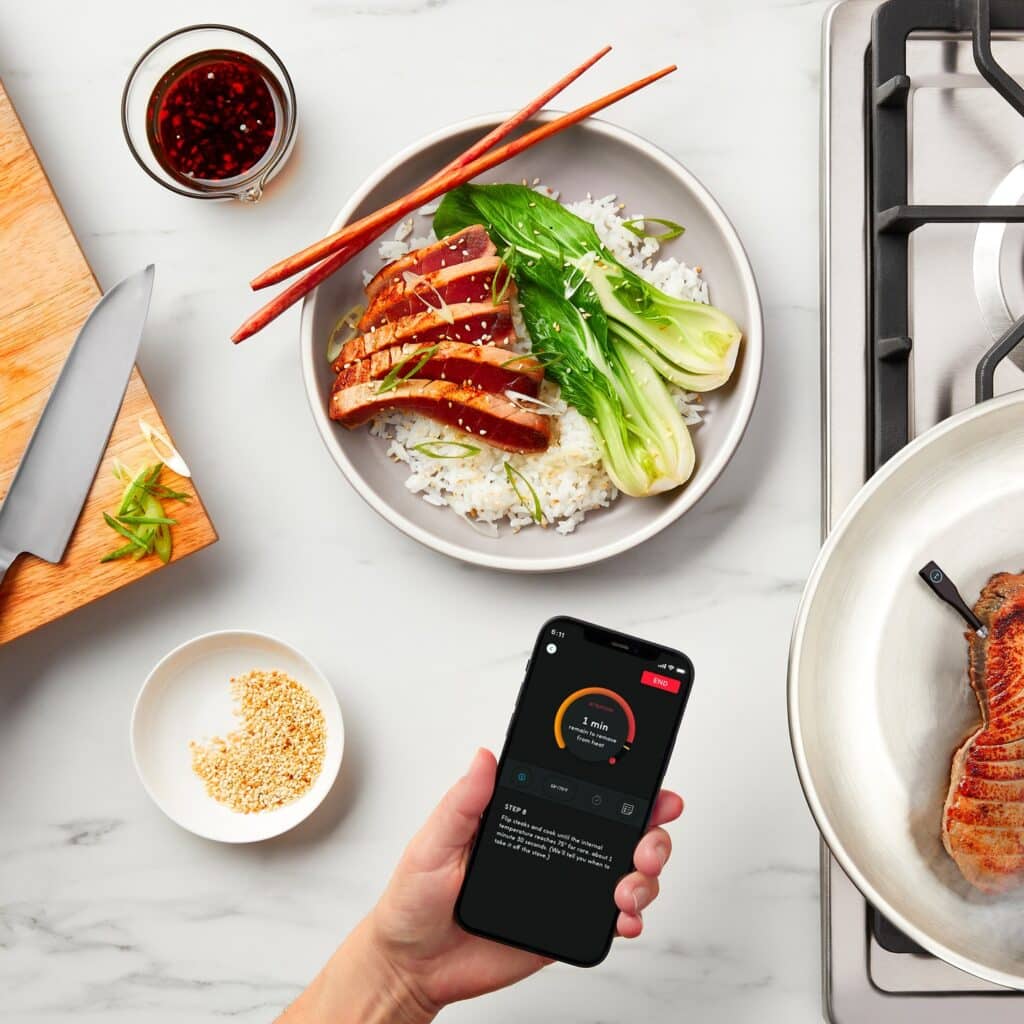
2. Chef iQ Sense
The Chef iQ Sense focuses on a sleek hardware footprint, boasting an ultra-thin needle profile that keeps meat fibers intact so precious juices don’t escape during low-and-slow sessions.
- Best For: Delicate proteins like fish or chicken breasts where juice retention is critical.
- Key Specs: 4 internal sensors plus ambient tracking; WiFi 6 connectivity for unlimited range; accurate to within 1°F.
- Pros: Incredibly fast data update speed (refreshing every 1.5 seconds); massive battery life lasting up to 70 hours.
- Cons: Requires a smartphone app dependency; no dedicated digital standalone display screen on the base station.
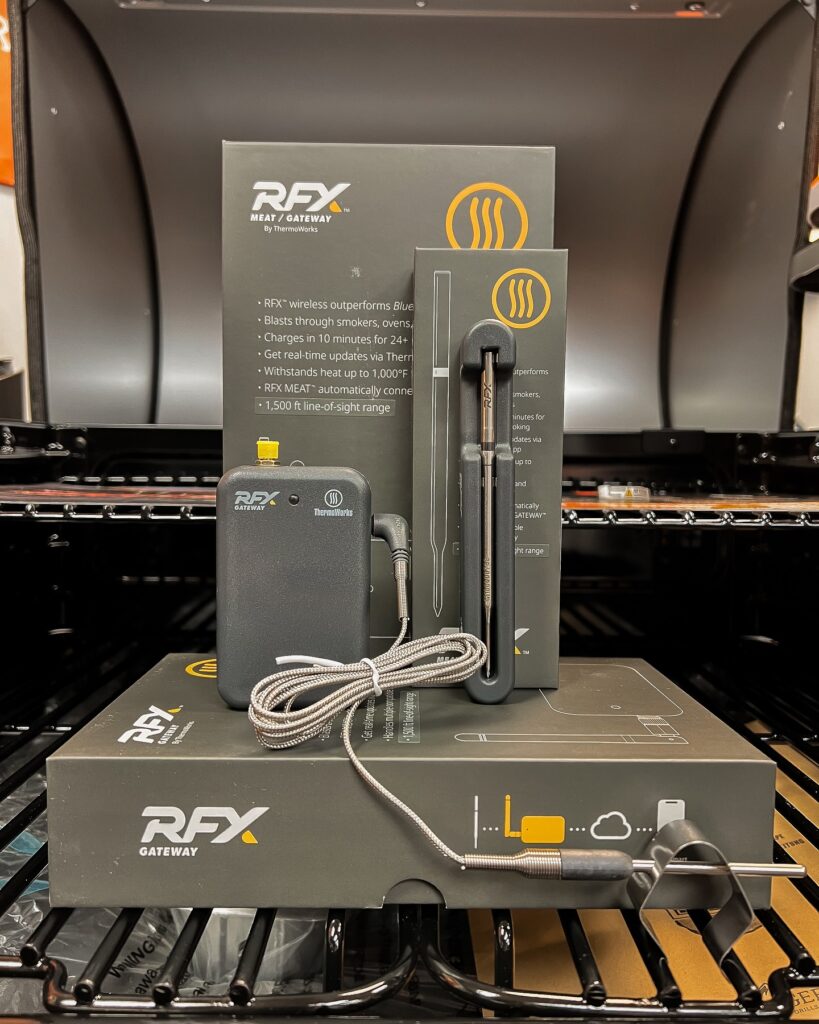
3. ThermoWorks RFX
The ThermoWorks RFX skips standard low-energy Bluetooth altogether, choosing high-penetration Radio Frequency to punch data easily through heavy steel smoker walls and home drywall.
- Best For: Heavy-duty pitmasters or kamado grill owners who struggle with dropped signals.
- Key Specs: Sub-1 GHz RF transmission technology combined with Wi-Fi cloud syncing; 100% waterproof construction.
- Pros: Unmatched signal reliability that eliminates mid-cook dropped connections; commercial-grade sensor accuracy from a trusted brand.
- Cons: Very expensive multi-probe kit barrier to entry; visual styling is utilitarian rather than modern kitchen-friendly.

4. ThermoPro TempSpike Lite 2.0
The ThermoPro TempSpike Lite 2.0 offers excellent value by packaging wireless multi-sensor accuracy into an affordable system with an impressive operating distance.
- Best For: Budget-conscious backyard cooks wanting long-range performance without a premium price tag.
- Key Specs: 3 precision internal sensors plus 1 handle ambient sensor; up to 600-foot wireless line-of-sight range.
- Pros: Budget-friendly price; slimmed-down probe shaft improves upon older, bulkier versions.
- Cons: Companion app interface can feel clunky compared to more polished competitors; temperature sampling intervals are slightly slower.
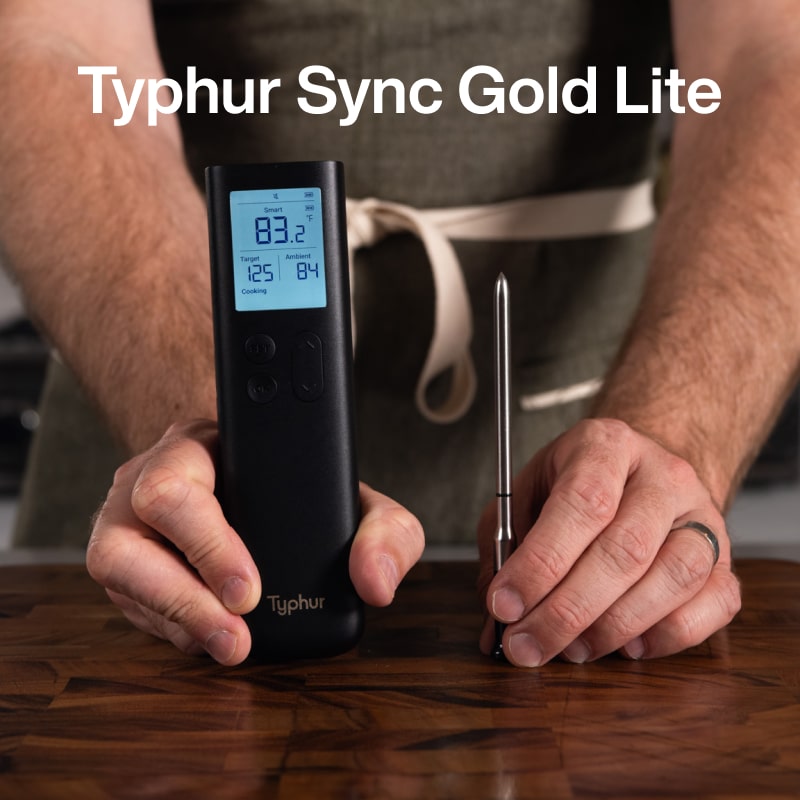
5. Typhur Sync Gold
The Typhur Sync Gold is built around a premium, independent control hub featuring a large, vibrant color display, removing the constant need to pull out your smartphone.
- Best For: Cooks who prefer a standalone visual base station right next to the grill over checking their phone.
- Key Specs: 6 high-accuracy sensors per probe; proprietary long-range base connectivity; USB-C fast-charging dock.
- Pros: Gorgeous integrated touchscreen display; dual-probe multi-meat versatility out of the box.
- Cons: Substantial desktop footprint; a heavy premium investment compared to single-probe alternatives.
Bridging the Gap Between Smoke and Science
Barbecue will always remain an art form driven by woodfire, smoke, and tradition. However, integrating modern data collection does not take away from the soul of cooking low and slow.
Using advanced multi-sensor smart thermometers simply shines a clear light on the complex thermodynamics happening beneath the surface.
By eliminating guesswork and pinpointing the true internal thermal core, this technology protects your investment in premium meats and ensures competition-level results every time you fire up your pit.
Smart Thermometer FAQ
How do multi-sensor probes find the “true” internal temperature?
Instead of reading just one spot, the probe takes measurements at multiple points along its shaft simultaneously.
The companion app running the thermometer’s software constantly analyzes these data points, compares them, and automatically isolates the absolute lowest number.
This means even if your placement is slightly off-center, the app still pinpoints the true thermal core of the meat.
Can I leave a wireless smart thermometer inside the smoker for the whole cook?
Yes, but you must insert it correctly. The steel shaft of the probe is built to handle the lower, insulated internal temperatures of the meat (usually up to 100ºC / 212ºF).
The exposed ceramic or steel handle is specifically engineered to withstand the high ambient heat of your smoker or oven.
Always make sure to push the probe past its safety notch into the meat so the internal electronics don’t overheat.
Why does my smart thermometer give a different ambient reading than my grill’s built-in hood gauge?
Your grill’s factory hood gauge sits at the very top of the cooking dome, measuring trapped air that is often significantly hotter or colder than the actual cooking surface.
A wireless smart probe tracks the ambient temperature exactly one inch away from the meat’s surface.
This gives you a highly accurate reading of the actual micro-climate cooking your food, rather than the temperature of empty air space.
Will a heavy metal or ceramic smoker block the wireless signal?
Thick metal smoker walls and heavy ceramic kamados act like wireless shields, which can easily degrade a standard low-power Bluetooth signal.
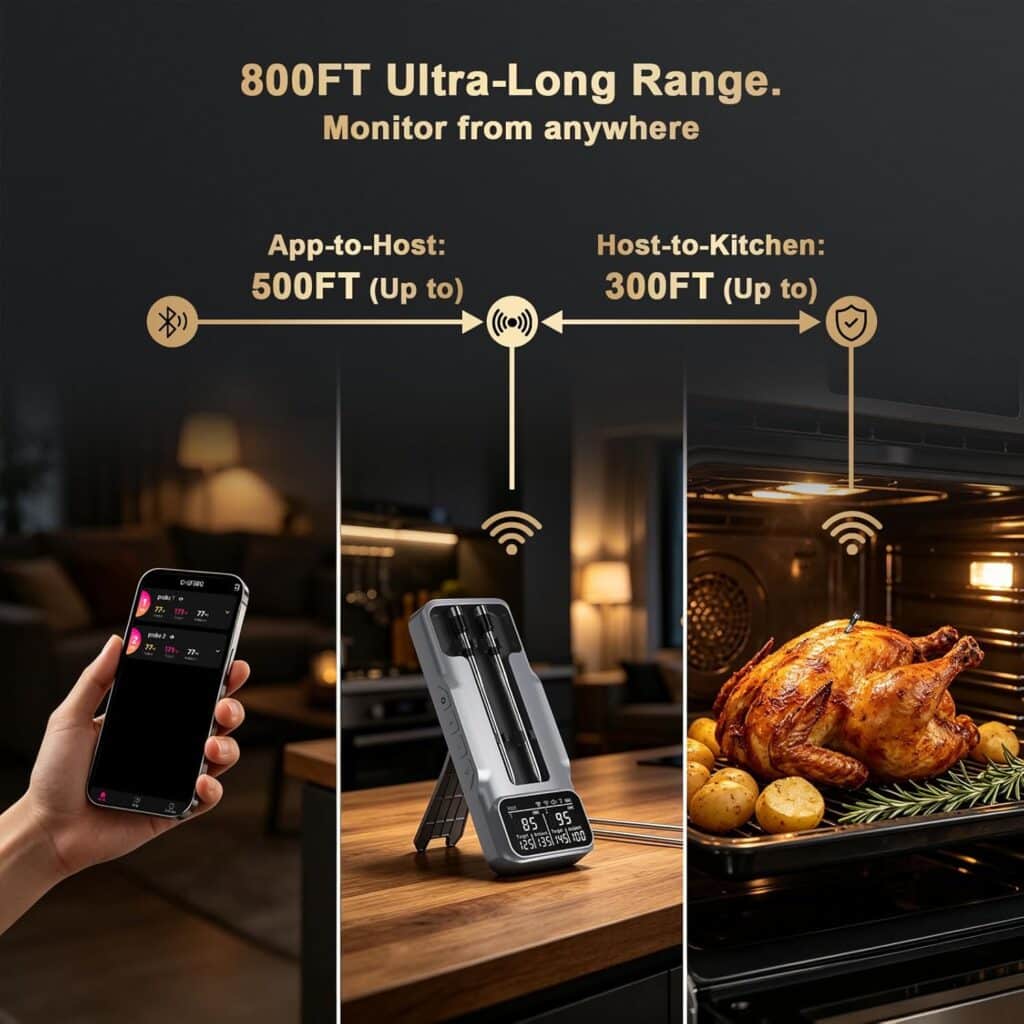
To combat this, modern smart thermometers include a charging dock that stays right next to the pit.
The dock picks up the short-range signal from the probe and uses an extended Bluetooth repeater or your home Wi-Fi network to push the data seamlessly to your phone.
Do I need to remove the probe before wrapping my meat?
No, you can keep the probe inserted when wrapping your meat in butcher paper or aluminum foil. However, if you are using foil, avoid wrapping the exposed ambient handle too tightly.
Crushing aluminum foil directly against the antenna handle can severely disrupt wireless signal transmission back to your base station.
Featured image credit: @themeatstickig
