
If you’ve ever caught the smell of a smoker running from three houses away and suddenly felt hungry, nostalgic, or just plain happy, you’re not alone.
Managing smokers for years, I’ve witness this “shift” in people’s behavior countless times. Someone walks into the backyard, catches a whiff of hickory smoke drifting through the air, and immediately starts smiling. They haven’t tasted the food yet.
They haven’t even seen what’s on the grill. Yet something about that smoky aroma already feels good.
That’s what makes the psychology of BBQ so fascinating.
Great barbecue isn’t just about cooking meat low and slow. It’s about creating an experience that taps into memory, emotion, anticipation, and even some deeply rooted instincts. The comforting feeling we get from smoky flavors goes far beyond taste buds.
In fact, the secret ingredient behind great BBQ may not be smoke itself – it’s what smoke does to the human brain.
Let’s fire up the smoker and explore why smoke flavor feels so comforting.
What Makes Smoke Flavor Unique?
One of the first things I tell new pitmasters is that smoke isn’t really a flavor in the traditional sense.
It’s an experience.
When wood burns, it releases hundreds of aromatic compounds that attach themselves to food. These compounds create the earthy, sweet, spicy, woody, and savory notes that make barbecue so distinctive.
The interesting part?
Most of what we think of as flavor actually comes from smell.
When you’re eating brisket, ribs, or smoked chicken, your nose is doing a huge portion of the work. As the food warms in your mouth, aromatic compounds travel through the back of your throat and into your nasal passages.
Your brain then combines:
- Taste
- Aroma
- Texture
- Temperature
- Visual cues
Into one complete eating experience.
That’s why smoke flavor feels richer than many other flavors. It engages multiple senses at the same time.
A perfectly smoked brisket isn’t simply salty or savory.
It’s layered.
It’s complex.
It’s memorable.
And our brains love complexity when it’s paired with familiarity.
The Role of Smell in Emotional Memory
Here’s where the psychology of BBQ gets really interesting.
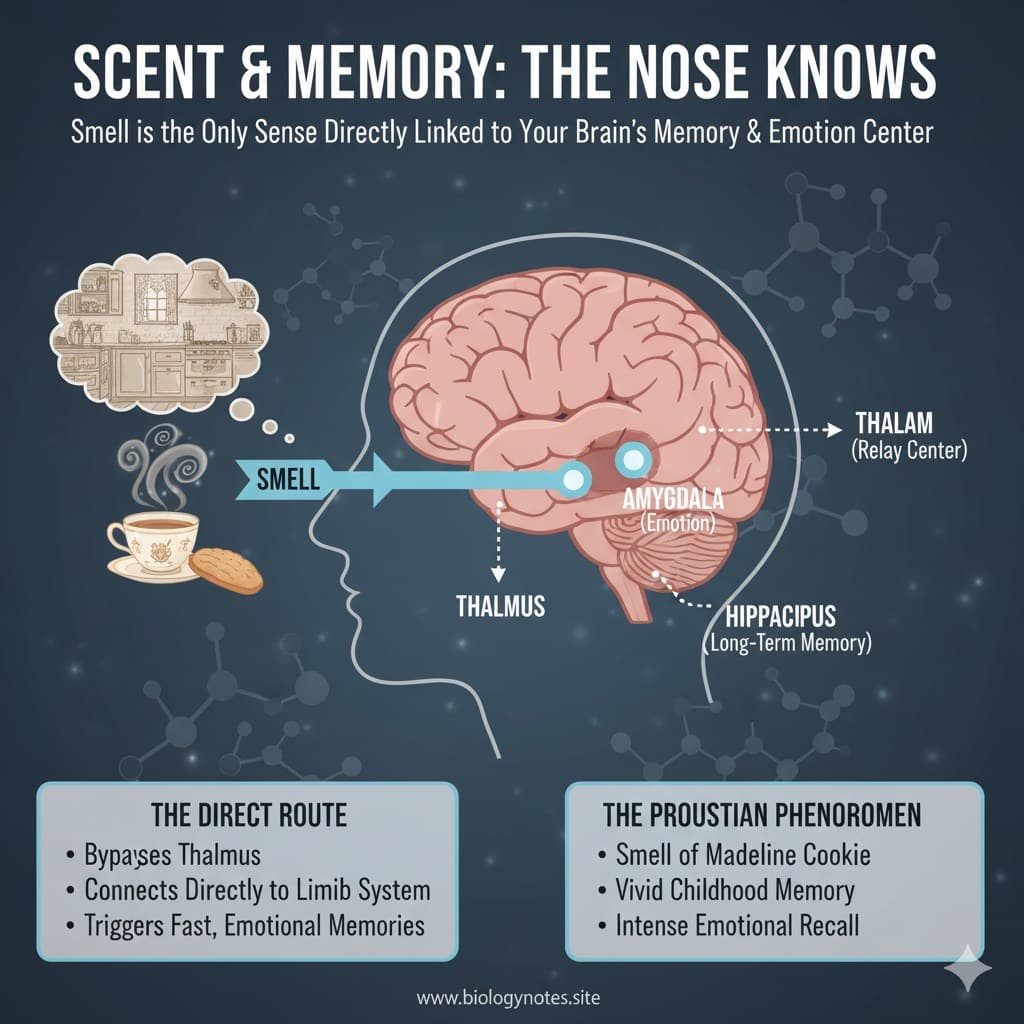
Unlike most senses, smell has a direct connection to areas of the brain involved with memory and emotion.
That’s why certain scents can instantly transport you back in time.
Maybe it’s:
- Grandpa tending a smoker on a summer afternoon
- Family reunions in the backyard
- Tailgate parties before the big game
- Camping trips around a fire
One smell can unlock memories that have been sitting quietly in your brain for years.
Scientists sometimes call this the “Proust Effect,” named after writer Marcel Proust, who famously described how a simple scent-triggered memory brought an entire childhood experience rushing back.
BBQ does this remarkably well.
I remember cooking ribs at a competition years ago when an older gentleman stopped by the pit. He closed his eyes after smelling the smoke and said:
“That smells exactly like my dad’s backyard in 1974.”
He hadn’t tasted a thing.
The aroma alone was enough.
That’s the power of smoke.
Smoke flavor often feels comforting because it activates positive memories before we even take a bite.
How BBQ Activates Feelings of Comfort
Most comfort foods share a few common traits.
They’re familiar.
They’re satisfying.
And they’re connected to positive experiences.
BBQ checks every box.
When people think of barbecue, they rarely picture eating alone at a desk under fluorescent lights.
Instead, they imagine:
- Family gatherings
- Summer celebrations
- Weekend cookouts
- Holidays
- Friendly conversations
In psychology, this is called associative learning.
Over time, our brains link certain experiences with certain emotions.
If many of your happiest moments happened around smoked food, your brain begins associating smoke aroma with:
- Relaxation
- Security
- Belonging
- Celebration
The next time you smell barbecue, those emotional connections automatically activate.
It’s almost like your brain says:
“I’ve smelled this before. Good things usually happen when this smell is around.”
As a pitmaster, I’ve always believed that great BBQ feeds more than hunger. It feeds memories.

The Evolutionary Origins of Our Love for Smoke
Now let’s go back much further than backyard cookouts.
Long before pellet grills, offset smokers, and brisket competitions, humans gathered around fire.
Fire changed everything.
Cooking made food safer.
It made nutrients easier to absorb.
It brought people together.
For thousands of generations, fire represented:
- Safety
- Warmth
- Protection
- Community
When darkness fell, the campfire became the center of human life.
Stories were told.
Meals were shared.
Relationships were built.
Some researchers believe these ancient experiences may still influence how we react to smoke today.
While nobody can say we’re genetically programmed to love brisket, there is evidence suggesting that humans developed positive associations with cooking smoke over thousands of years.
Think about it.
The smell of smoke often means:
Food is coming.
For our ancestors, that was excellent news.
Today, the smell of a smoker running in the backyard sends essentially the same signal.
Dinner is on the way.
The Social Psychology Behind BBQ Culture
One reason barbecue occupies such a special place in food culture is that it naturally brings people together.
Very few foods are as social as BBQ.
When I smoke a brisket, it’s rarely for one person.
It takes hours of preparation.
Hours of cooking.
Hours of anticipation.
The entire process encourages gathering.
That’s important because humans are social creatures.
Research consistently shows that meals shared with others tend to feel more enjoyable than meals eaten alone.
People often report that food tastes better when they’re surrounded by friends and family.
And honestly?
Most pitmasters already knew this without reading a single study.
A rack of ribs always seems to taste better when someone nearby is saying:
“You have got to try this.”
BBQ has become a ritual in many cultures because rituals strengthen social bonds.
Think about the traditions surrounding barbecue:
- Preparing the smoker
- Choosing wood
- Monitoring temperatures
- Sharing recipes
- Gathering around the grill
These activities create connection.
The food becomes a symbol of community.
And community is one of the strongest sources of comfort humans have.
How Expectations Shape the Taste of BBQ
Here’s a fun fact.
The best part of barbecue sometimes happens before you eat it.
The anticipation matters.
A lot.
When smoke starts drifting through the neighborhood, something happens psychologically.
People begin imagining the meal.
Their brains start predicting flavors.
Their expectations rise.
This anticipation can actually increase enjoyment once the food is served.
It’s similar to why movie trailers work.
The excitement begins long before the main event.
Good barbecue creates a buildup.
You see the smoker.
You smell the wood.
You hear people talking about the brisket.
By the time you take your first bite, your brain is already invested.
As pitmasters, we sometimes joke that half the flavor comes from the wait.
That may not be scientifically accurate.
But it isn’t completely wrong either.
Expectation plays a huge role in how we experience flavor.
Why Different Cultures Find Comfort in Smoked Foods
Although BBQ styles vary dramatically around the world, smoked foods appear in countless cultures.
You’ll find smoking traditions across:
- North America
- South America
- Europe
- Asia
- Africa
The ingredients may change.
The seasonings may change.
The techniques may change.
But the emotional themes remain surprisingly similar.
Smoked foods are often linked to:
- Family traditions
- Community gatherings
- Celebrations
- Preservation methods passed down through generations
That’s because comfort isn’t really about a specific flavor.
Comfort comes from familiarity.
A Texas brisket enthusiast and someone enjoying smoked fish in Northern Europe may be eating very different foods.
Yet both may experience similar feelings of nostalgia and satisfaction.
The cultural details differ.
The psychology stays remarkably consistent.
The Science of Cravings for Smoky BBQ
Ever wonder why barbecue cravings can feel so intense?
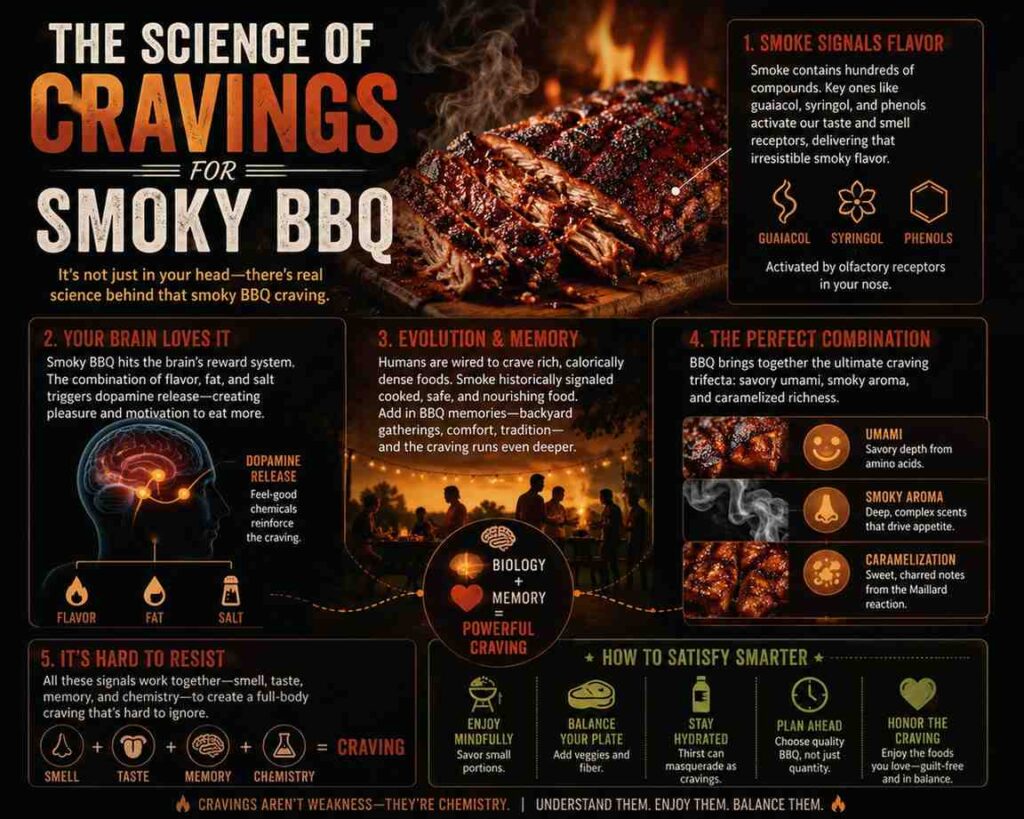
Part of the answer involves the brain’s reward system.
When we eat foods we enjoy, the brain releases chemicals associated with pleasure and motivation.
This encourages us to seek those foods again.
Smoke flavor enhances this process because it creates a richer sensory experience.
You’re not just tasting meat.
You’re experiencing:
- Aroma
- Texture
- Visual appeal
- Temperature
- Emotional associations
The brain receives signals from multiple directions simultaneously.
That can make the experience feel more rewarding.
Stress also plays a role.
Many people crave familiar comfort foods during difficult periods.
Why?
Because familiar foods provide emotional predictability.
When life feels uncertain, familiar experiences become more valuable.
And for many people, barbecue represents something stable.
Something comforting.
Something connected to happier moments.
That’s a powerful combination.
Can Smoke Flavor Improve the Overall Eating Experience?
As someone who reviews grills and smokers regularly, I can confidently say that smoke flavor changes far more than taste.
It transforms the entire meal.
One reason premium smokers have become so popular is their ability to produce consistent, high-quality smoke that enhances every bite.
The best grills don’t simply cook food.
They create atmosphere.
Think about the complete barbecue experience:
You see smoke rolling from the stack.
You smell wood burning.
You hear the gentle crackle of the fire.
You anticipate the meal.
You gather with family and friends.
By the time food reaches the table, the experience is already underway.
That’s why many grill enthusiasts spend so much time comparing smokers, pellet grills, charcoal cookers, and offset pits.
They’re not only chasing flavor.
They’re chasing the feeling that comes with it.
A quality smoker helps create that experience consistently.
And from a practical standpoint, that’s one reason grill buyers often prioritize smoke production and flavor quality above almost every other feature.
The comfort factor matters.
The emotional payoff matters.
The experience matters.
Why BBQ Often Feels Like More than Just Food
At first glance, barbecue seems simple.
Wood.
Fire.
Food.
Time.
But underneath that simplicity lies a surprisingly complex psychological experience.
The psychology of BBQ combines several powerful forces:
Memory.
Smoke can instantly reconnect us with meaningful moments from the past.
Emotion.
Barbecue is often tied to celebrations, family, and friendship.
Evolution.
Humans have gathered around fire for thousands of years.
Anticipation.
The cooking process builds excitement long before the first bite.
Community.
BBQ naturally brings people together.
Very few foods activate all of these factors at once.
That’s why smoked foods often feel different from other meals.
They don’t just satisfy hunger.
They satisfy something deeper.
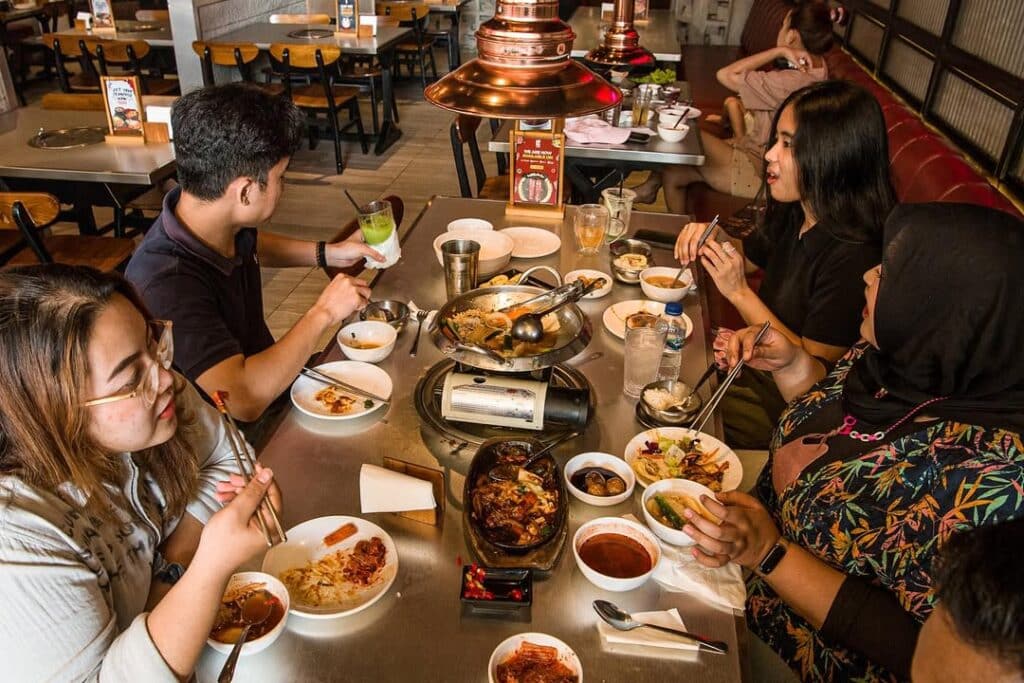
Beyond the Bark: The Real Reason We Love BBQ
The next time you catch the aroma of wood smoke drifting through the air, pay attention to your reaction.
You may notice yourself smiling before you’ve even seen the food.
That’s not an accident.
The comforting power of barbecue comes from a unique blend of sensory science, memory, emotion, culture, and human connection.
The psychology of BBQ shows us that smoke flavor is much more than a seasoning. It’s a trigger for nostalgia, a symbol of togetherness, and a reminder of experiences that matter.
As a pitmaster, I’ve learned that the best barbecue isn’t necessarily the brisket with the perfect bark or the ribs with the ideal tenderness.
Those things matter, of course.
But what people remember most often is how the experience made them feel.
The laughter around the table.
The stories shared near the smoker.
The smell that lingered in the backyard long after dinner ended.
That’s the real magic of barbecue.
And that’s why smoke flavor continues to feel so comforting, generation after generation.
Frequently Asked Questions
Why does smoke flavor feel comforting?
Smoke flavor often triggers positive memories, social connections, and feelings of familiarity. The aroma is strongly linked to parts of the brain responsible for emotion and memory.
What is the psychology of BBQ?
The psychology of BBQ explores how smoky flavors, aromas, traditions, and shared meals influence emotions, nostalgia, comfort, and overall enjoyment of food.
Why do BBQ smells bring back memories?
Smells are closely connected to the brain’s memory centers. The aroma of barbecue can instantly remind people of family gatherings, holidays, cookouts, or other meaningful experiences.
Are humans naturally attracted to smoky flavors?
Some researchers believe humans developed positive associations with cooking smoke because fire played a crucial role in survival, cooking, warmth, and community throughout human history.
Social experiences can enhance food enjoyment. Eating BBQ with family and friends often creates positive emotions that make the meal feel more satisfying and memorable.
Does the type of wood affect the psychological experience of BBQ?
Yes. Different woods create distinct aromas that can influence flavor perception and personal memories. For example, hickory, oak, apple, and mesquite each evoke unique sensory experiences.
Why is anticipation such a big part of BBQ?
The long cooking process builds excitement before the meal is served. Smelling smoke and watching food cook can increase anticipation, which often enhances overall enjoyment.
Featured image credit: @brobible
