
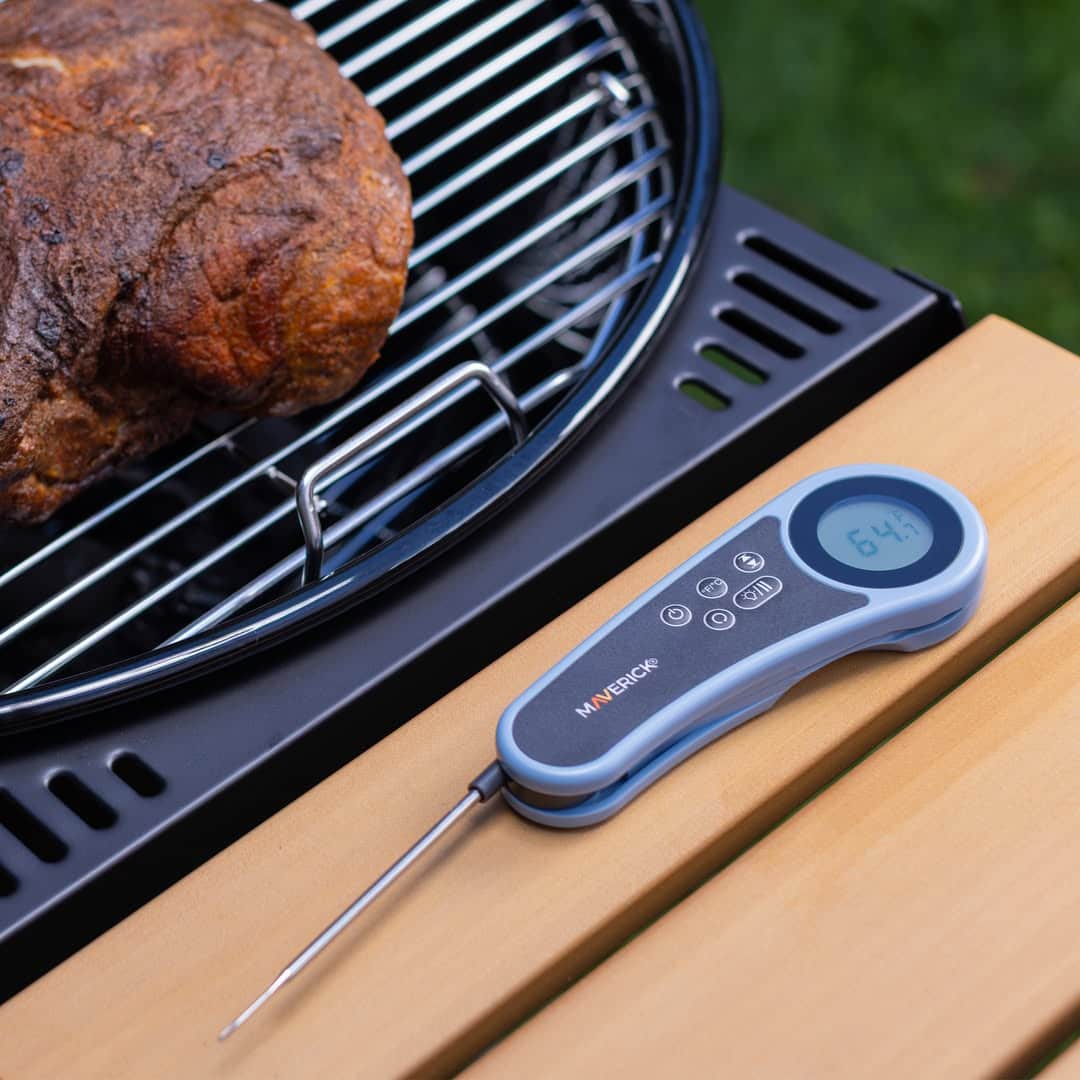
When “Looks Done” Lies to You
I’ve seen it too many times on the pit: a beautiful piece of meat pulled off the grill, sliced open… and boom – cold, pink center betrayal.
That’s the danger of grilling by instinct alone.
A grill can lie. Smoke can lie. Even that perfect sear crust can absolutely lie to your face like it’s on a mission.
That’s why a grill thermometer isn’t just a tool – it’s your truth-teller. Your reality check. Your “don’t embarrass yourself at the cookout” device.
In this guide, I’ll show you exactly how to read a grill thermometer correctly, avoid the classic mistakes, and cook like someone who actually knows what they’re doing (even if you’re still secretly winging it a little).
Why a Grill Thermometer Is the Real MVP of BBQ
Let’s get one thing straight:
Grilling without a thermometer is like driving blindfolded… but with seasoning.
A proper grill thermometer does three critical things:
- Keeps your food safe (especially chicken – no one wants “salmonella surprise night”)
- Prevents overcooking expensive cuts into leather
- Turns “I hope this is done” into “I KNOW this is perfect”
Here’s a pitmaster truth:
The pros don’t guess. They verify.
Even backyard legends who swear by “feel” are secretly checking temps when no one’s looking.
And honestly? Smart move.
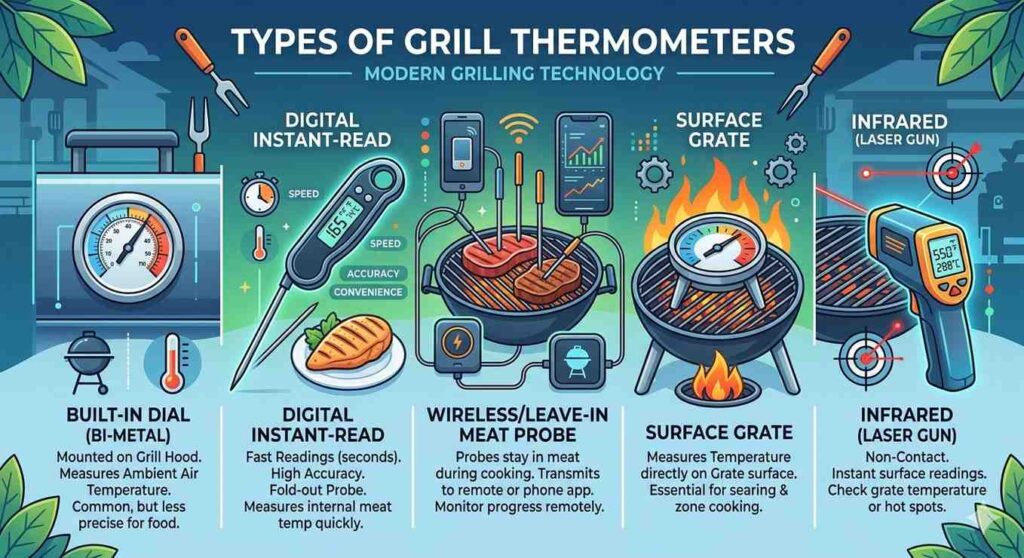
Types of Grill Thermometers (Know Your Weapon)
Not all thermometers are built the same. Picking the right one is like choosing between a butter knife and a chef’s knife – you can use either, but one makes life way easier.
Instant-Read Thermometer
Fast. Sharp. No commitment.
You poke, you read, you move on.
Perfect for:
- Steaks
- Burgers
- Chicken breasts
Think of it as the “drive-thru” version of temperature checking.
Leave-In Probe Thermometer
This is your long-haul BBQ partner.
Stick it in, close the lid, and let it ride.
Best for:
- Brisket
- Pork shoulder
- Whole chicken
This one is basically: “I trust you… but I’m still watching you.”
Digital vs Analog
Analog is like an old pickup truck – it works, but you need patience.
Digital is the modern upgrade:
- Faster readings
- Easier to read
- More accurate (usually)
If analog thermometers were BBQ advice, they’d say: “It’s probably done-ish.”
Smart Thermometers (Bluetooth/Wi-Fi)
This is where grilling meets the future. You get alerts on your phone like:
“Hey boss, your ribs are hitting 203°F. It’s go time.”
It’s basically having a pit assistant… without paying them or feeding them.
How to Read a Grill Thermometer Correctly (The Real Skill)
Now we get to the heart of it. Because owning a grill thermometer is easy.
Reading it correctly? That’s where most people mess up.
1. Placement Is Everything (Seriously, Everything)
Stick the probe in the wrong place and your reading is basically fiction.
Always aim for:
- Thickest part of the meat
- Center, not edge
- Away from bone and fat pockets
Why?
Because bone heats faster. Fat lies to you. And edges cook faster than the middle.
If grilling were a movie, the center is the main character. Everything else is just background noise.
2. Wait for the Number to Settle
This is where impatience ruins dinner. You insert the probe, see a number, and think:
“Yep, that’s it.”
Nope. Most thermometers fluctuate before stabilizing. Give it a few seconds.
Pitmaster rule:
If the number is still dancing, the meat isn’t done and neither is the reading.
3. Learn Temperature Zones (Don’t Wing This Part)
Here’s where precision matters.
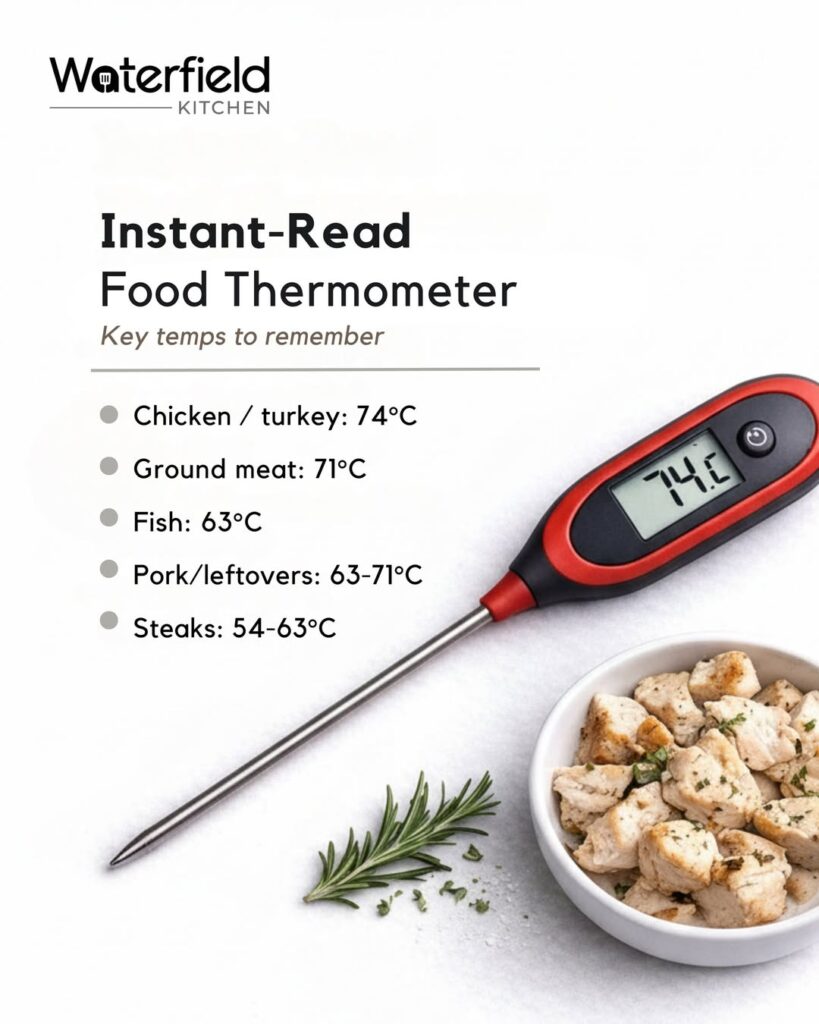
- Chicken: 165°F (74°C) minimum
- Pork: 145°F (63°C) + rest
- Steak:
o Rare: 120–125°F
o Medium: 135–145°F
o Well: 155°F+
If you’re guessing doneness by color alone… I admire your optimism, but I’m also concerned.
4. Internal Temperature > Grill Heat
One of the biggest rookie mistakes is trusting grill lid gauges.
Let me be blunt:
The lid thermometer is a suggestion. The grill thermometer in the meat is the truth.
Your grill might be screaming 400°F, but your brisket is still chilling at 140°F like it’s on vacation.
5. Don’t Rush the Final Reading
This is where confidence meets discipline.
Pull the meat early if needed, but always verify:
- Insert
- Wait
- Confirm
- THEN decide
No speed-reading your dinner.
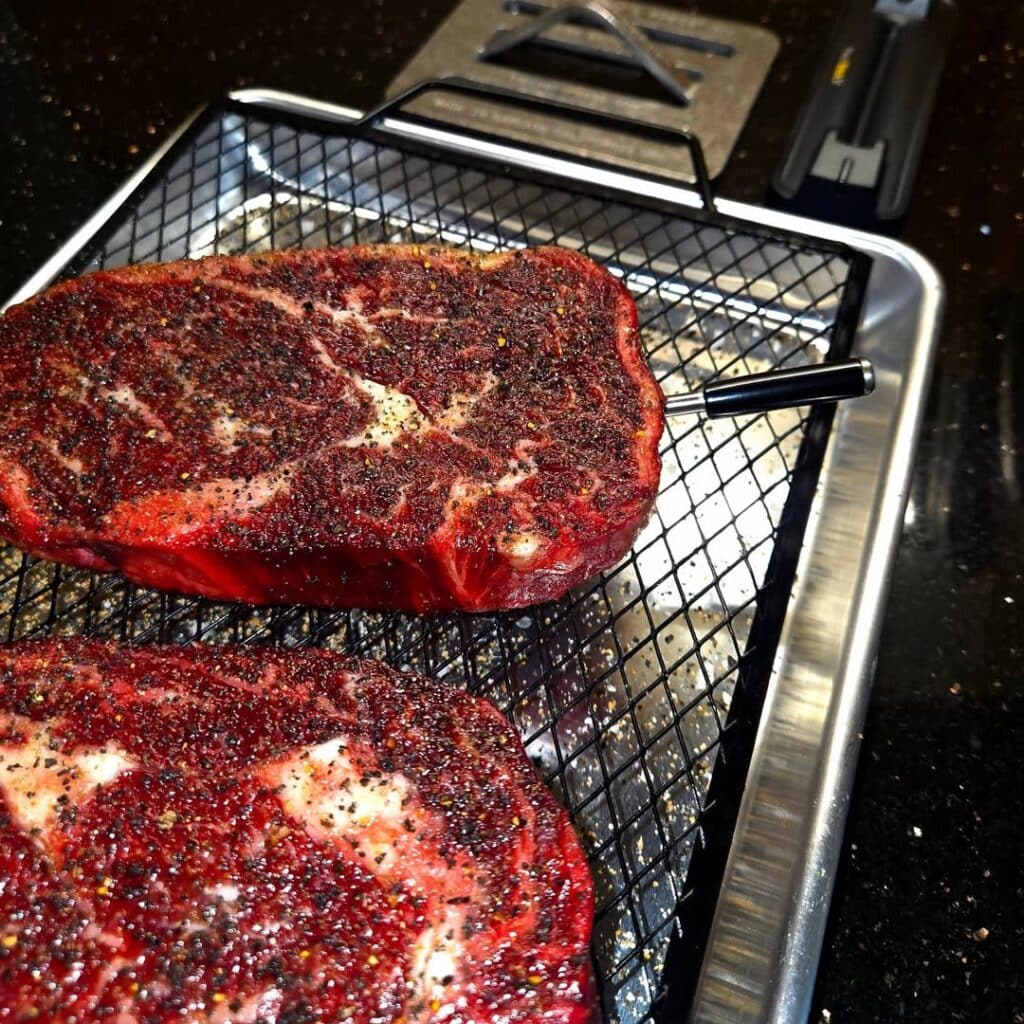
The Mistakes That Cost People Perfect BBQ
Let’s talk about the crimes against meat I see every weekend.
Mistake #1: Shallow Probing
If your probe barely touches the surface, congratulations – you’ve measured “outside vibes,” not doneness.
Mistake #2: Hitting Bone
Bone conducts heat differently. If your grill thermometer hits it, your reading is basically fan fiction.
Mistake #3: Checking Too Often
Every time you open the grill, you lose heat. And heat loss = longer cook = uneven meat. It’s like opening the oven every 2 minutes to “check vibes.” Stop it.
Mistake #4: Ignoring Carryover Cooking
Meat keeps cooking after it leaves the grill. I’ve seen steaks jump +5°F while resting like they just drank espresso.
How to Calibrate Your Grill Thermometer (Because Trust Issues Are Healthy)
Even the best grill thermometer drifts over time.
Here’s a simple calibration check:
Ice Water Test
- Fill glass with ice + water
- Insert probe
- Should read 32°F (0°C)
If it doesn’t? Adjust or replace.
Boiling Water Test
- Boil water
- Insert thermometer
- Should read 212°F (100°C) (sea level varies)
Think of calibration like resetting your BBQ “truth meter.”
Why Air Temperature Lies but Meat Temperature Tells the Truth
A grill can feel like it’s running hot, but that’s usually just surface heat playing tricks on you. The real story is always inside the meat.
Here’s the pitmaster breakdown:
- Air temperature is unstable
o Changes with wind
o Shifts when you lift the lid
o Spikes during flare-ups
- Internal temperature is the truth
o Measured by your grill thermometer
o Stable and reliable
o Shows actual doneness, not “grill vibes”
- A steak can sit in a 450°F grill and still be undercooked inside
- Heat moves inward slowly, even when the outside looks perfect
Think of it like this:
- Air temperature = weather forecast (changes constantly)
- Meat temperature = GPS location (exact and dependable)
Pitmasters don’t gamble on appearance – they trust the reading inside the meat. That difference is where great BBQ is either made… or ruined.
The Hidden Danger of Thin Cuts and Fast Cooking Meats
Thin cuts don’t forgive mistakes. They cook fast, react fast, and punish hesitation even faster.
Here’s what makes them tricky:
- Very short cooking window
o A 10–20 second delay in reading your grill thermometer can change everything
- Heat moves through quickly
o Less time to correct mistakes
o Easy to overshoot doneness
- Visual cues lie more often here
o Color changes before internal temp stabilizes
o “Looks done” is often misleading
Pitmaster mindset for thin cuts:
- Pull slightly early
- Let carryover heat finish the job
- Use temperature, not color, as your guide
- Treat the thermometer like a reflex, not a tool
Thin meats are where confidence gets tested. You either respect speed – or you serve dry disappointment.
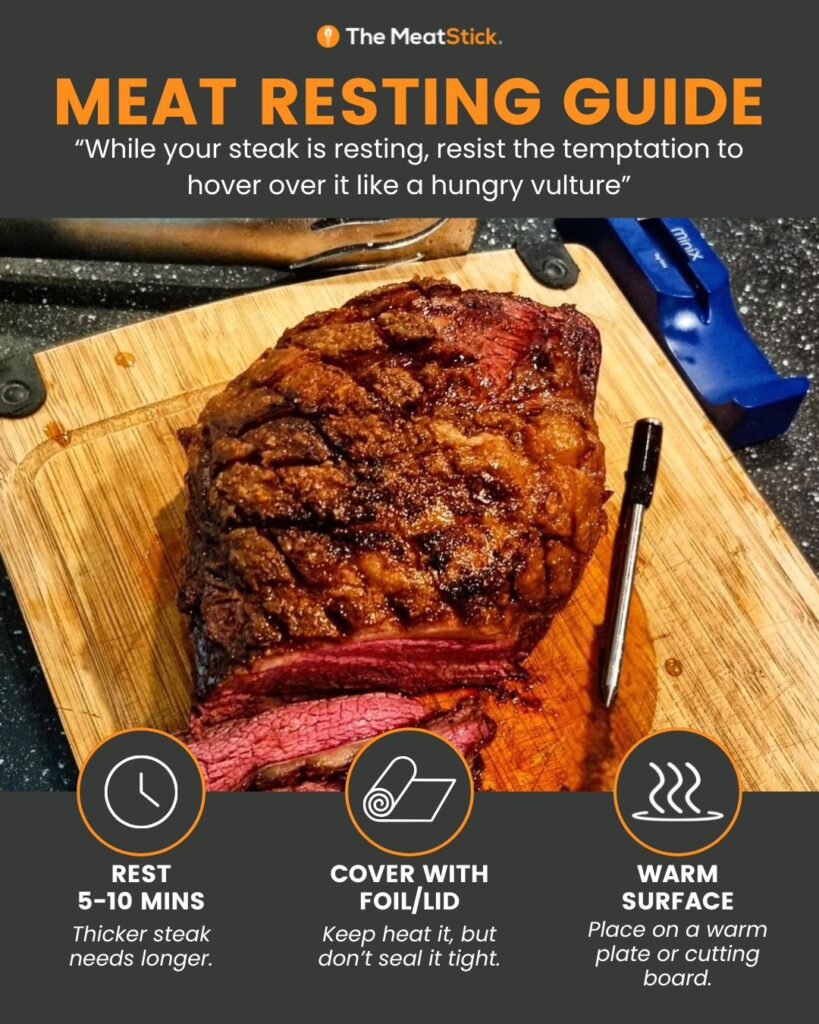
The Role of Resting Temperature (The Forgotten Final Step)
Most people think the grill is the finish line. Pitmasters know it’s just a checkpoint.
Resting changes everything:
- Carryover cooking continues
o Internal temp rises another 3–8°F
o Heat redistributes inside the meat
- Juices settle back in
o Prevents dry slicing
o Improves texture and flavor
- Muscle fibers relax
o Makes meat noticeably more tender
Your grill thermometer helps you:
- Pull meat before the final target temp
- Avoid overcooking during the resting phase
Think of resting like this:
- Not “waiting”
- But active finishing without fire
Skip it, and even perfect grilling turns into dry regret.
How Weather Conditions Affect Thermometer Accuracy
Grilling doesn’t happen in a vacuum. The weather is always part of the cook – even if you ignore it.
Here’s how conditions interfere:
- Wind
o Pulls heat away when lid opens
o Creates uneven cooking zones
- Cold air
o Slows internal temperature rise
o Makes food cook longer than expected
- Humidity
o Slightly affects heat retention
o Changes how steady temps hold inside the grill
What this means for your grill thermometer:
- Readings may seem inconsistent
- Cooking times shift without warning
- “Normal settings” may no longer apply
Pitmasters adjust constantly because:
- No two grilling days behave the same
- Outdoor cooking is a living system, not a controlled lab
Adaptability is part of accuracy.
The Psychology of “Feeling Done” vs “Being Done”
This is where most BBQ mistakes are born – not in heat, but in the mind.
Here’s the mental trap:
- It looks done
- It smells done
- It feels done
But your grill thermometer says otherwise.
What’s really happening:
- Humans trust senses over data
- Sight and smell trigger confidence
- But meat only responds to temperatur
Pitmaster truth:
- Confidence ≠ doneness
- Emotion ≠ accuracy
The discipline is simple but hard:
- Trust the thermometer
- Not the urge to cut early
Every time you choose data over instinct, you stop guessing and start controlling the cook.
That’s where real grilling skill is built.
Why Probe Speed Matters More Than People Think
Not all thermometers think fast enough for real grilling.
Key points:
- Slow probes = delayed truth
o Read outdated temperatures
o React too late to changes
- Fast-response probes = real-time control
o Immediate feedback
o Better decision-making on the fly
Why it matters:
- Especially critical for steaks and small cuts
- Seconds can mean:
o Juicy perfection
o Or overcooked regret
Pitmaster mindset:
- Grilling is not static
- It’s live-fire decision making
So:
- Speed = control
- Control = consistency
A slow thermometer doesn’t just lag – it lies a little behind reality.
Multi-Zone Grilling and Why One Temperature Reading Isn’t Enough
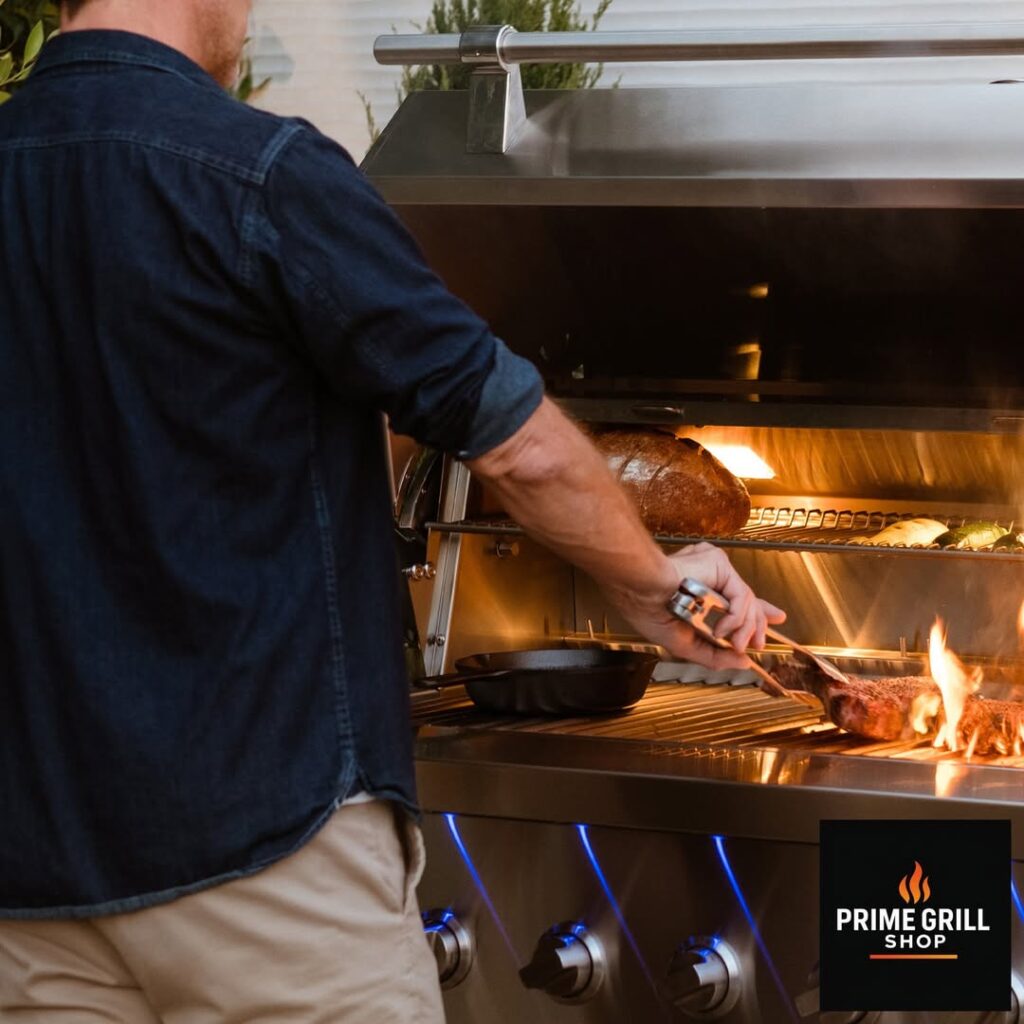
Great grilling isn’t one temperature – it’s multiple environments working together.
Multi-zone grilling setup:
- High heat zone
o Searing
o Creating crust and flavor
- Low heat zone
o Gentle cooking
o Finishing without burning
How the grill thermometer fits in:
- Tracks internal meat temp across zones
- Helps decide when to move food between heat areas
- Prevents overcooking during transitions
Why it matters:
- One temperature = limited control
- Multiple zones = strategic cooking
Think of it like driving:
- One speed = survival
- Multiple gears = control
Multi-zone grilling turns BBQ into strategy, not guesswork.
Why Cheap Thermometers Fail at Critical Moments
Cheap tools rarely fail when nothing is happening. They fail when everything matters.
Common problems:
- Sensor drift
o Gradual loss of accuracy
o Misleading final temps
- Lag under heat stress
o Slow response during high heat cooks
- Inconsistent readings
o Same meat, different numbers
What this causes:
- Brisket pulled too early
- Chicken overcooked “just in case”
- Lost trust in your own process
The real cost isn’t money:
- It’s ruined meat
- It’s wasted time
- It’s second-guessing every cook
A reliable grill thermometer removes doubt. Cheap ones create it.
The Importance of Probe Angle and Meat Geometry
Where and how you insert your probe matters more than most people realize.
Meat is not uniform:
- Fat pockets heat differently
- Muscle fibers vary in density
- Bones distort temperature readings
Common mistakes:
- Hitting fat instead of center
- Touching bone accidentally
- Wrong insertion angle
What happens:
- False high readings
- False low readings
- Misjudged doneness
Pitmaster approach:
- Aim for the true center mass
- Avoid edges and structure interference
- Think of it like mapping the “heart” of the meat
A properly placed grill thermometer tells the truth. A poorly placed one tells a story you don’t want to hear.
When NOT to Trust Your Grill Thermometer (Yes, Really)
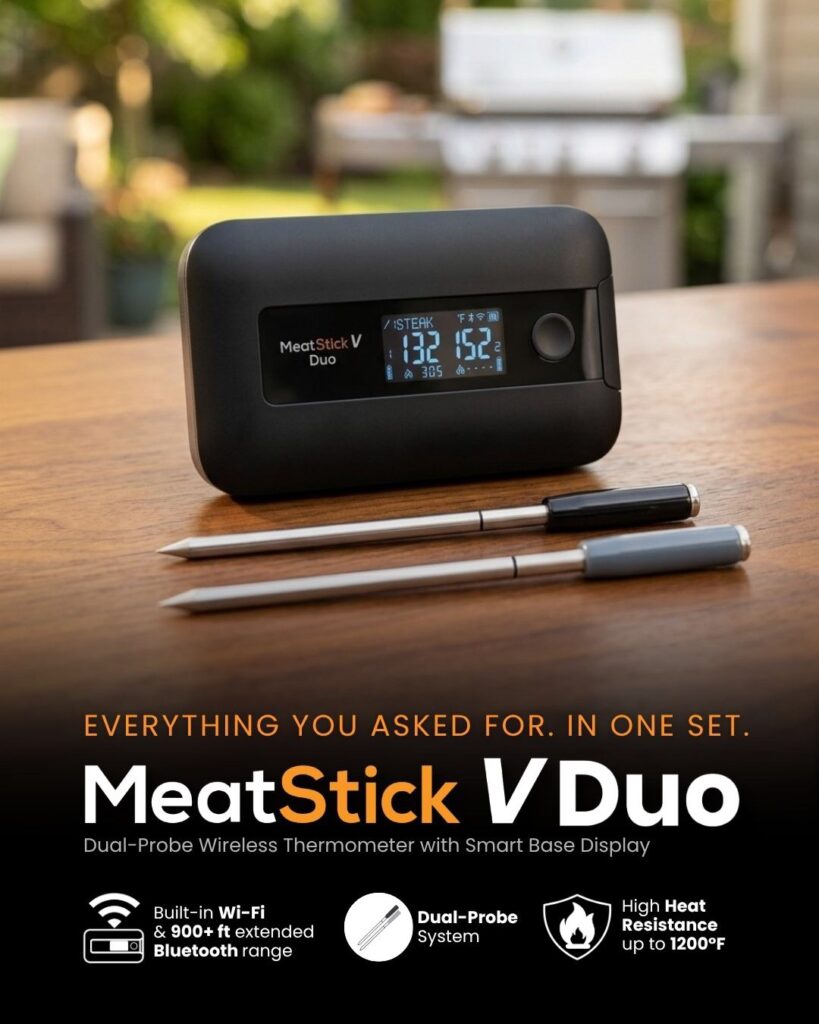
Even the best tools have limits.
Situations where readings can mislead you:
Probe touching bone
- Sitting in a fat pocket
- Too close to grill grate
- Airflow hot spots inside the grill
What happens:
- Inflated or deflated temperatures
- False sense of doneness
- Confusing fluctuations
What pitmasters do instead:
- Double-check with a second probe
- Reposition and re-test
- Compare multiple readings before deciding
Key truth:
- Don’t worship the thermometer
- Don’t ignore it either
Real mastery is balance:
- Trust data
- But verify when something feels off
Because even the best grill thermometer needs a smart operator behind it.
Pitmaster Pro Tips for Perfect Reads
Here’s where experience kicks in:
- Always let meat rest 5–10 minutes before slicing
- Use multiple readings for thick cuts (don’t trust one poke)
- Clean your probe like it’s part of your knife set
- Don’t grill drunk and trust memory readings (I say this from… observation)
- Use your grill thermometer as the final authority, not your gut feeling
Why Your Thermometer Might Be Lying to You
Sometimes the problem isn’t you – it’s the tool.
Common issues:
- Weak batteries = slow or wrong readings
- Cheap sensors = inconsistent temps
- Dirty probes = false readings
- Heat flare-ups = temporary spikes
A bad thermometer is like a bad GPS: confidently wrong.
Stop Guessing, Start Grilling Like a Pitmaster
At the end of the day, grilling isn’t about luck – it’s about control.
And the simplest way to gain control is knowing how to properly read a grill thermometer.
Once you trust the numbers, everything changes:
- No more overcooked steaks
- No more underdone chicken panic
- No more “I think it’s ready” guesswork
Just clean, repeatable, confidently cooked BBQ.
Because in this pitmaster’s world?
Heat brings the flavor… but the thermometer brings the truth.
FAQ
1. What is the correct way to use a grill thermometer?
To use a grill thermometer correctly, insert the probe into the thickest part of the meat, avoiding bones and fat. Wait a few seconds for the reading to stabilize before making decisions.
The key is measuring internal temperature, not surface heat or grill lid readings.
2. Where should I insert the grill thermometer in meat?
Always insert the probe into the center of the thickest part of the meat. For irregular cuts like brisket or whole chicken, aim for the densest area. Avoid:
- Bones (they heat differently)
- Fat pockets (they give false readings)
- Direct contact with the grill grate
3. Why does my grill thermometer give different readings in different spots?
This usually happens because meat is not uniform. Different areas heat at different speeds due to:
- Thickness variations
- Fat distribution
- Bone proximity
- Grill heat zones
That’s why pitmasters often take multiple readings before deciding.
4. How do I know if my grill thermometer is accurate?
You can test accuracy using simple calibration methods:
- Ice water test (32°F / 0°C)
- Boiling water test (212°F / 100°C at sea level)
If readings are off, your thermometer may need recalibration or replacement.
5. Can I rely on the grill lid thermometer?
No. The lid thermometer measures ambient grill temperature, not internal meat temperature. It can help estimate heat, but it should never replace a grill thermometer inserted into the meat.
6. Why does meat keep cooking after I remove it from the grill?
This is called carryover cooking. After removal, internal temperature can rise another 3–8°F as heat redistributes inside the meat. That’s why pitmasters often pull meat slightly early using their grill thermometer.
7. What is the biggest mistake people make with grill thermometers?
The most common mistake is checking too early or relying on surface cues instead of internal temperature. Other major errors include:
- Placing the probe incorrectly
- Hitting bone or fat
- Not waiting for stable readings
8. Do I need a different grill thermometer for different meats?
Not necessarily. One good-quality grill thermometer works for all meats. However:
- Instant-read thermometers are best for steaks and quick checks
- Leave-in probes are better for long cooks like brisket or pork shoulder
9. How often should I check the temperature while grilling?
For thin cuts, check near the end of cooking. For large cuts, avoid constant checking – every time you open the grill, you lose heat. Instead, rely on a leave-in grill thermometer for steady monitoring.
10. Can weather affect grill thermometer readings?
Yes. Wind, cold air, and humidity can affect cooking speed and heat stability inside the grill. While your grill thermometer remains accurate, the cooking environment changes how fast or slow meat reaches target temperature.
Featured image credit: @maverickthermometers
