
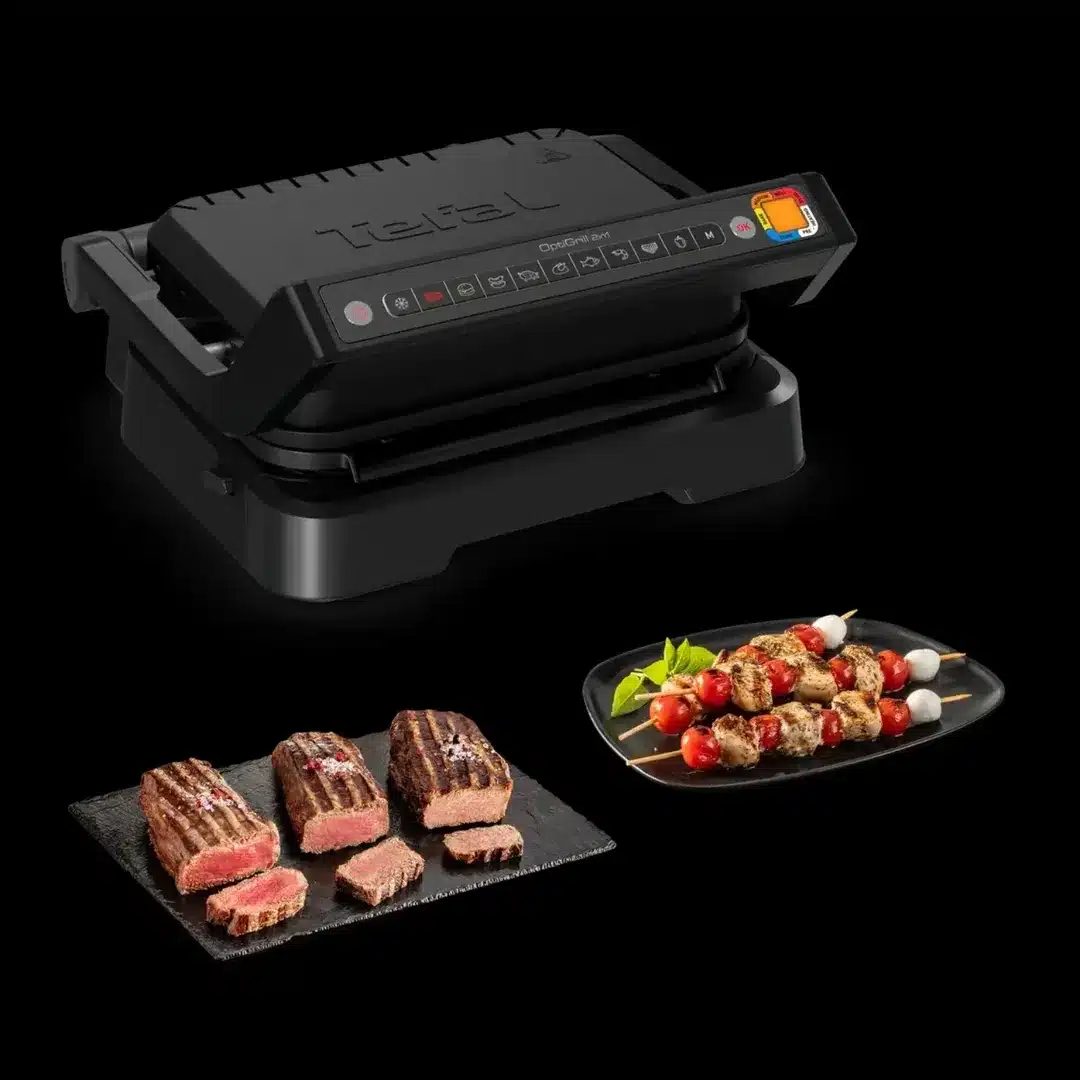
Let’s be honest: for someone who spends their weekends wrestling with a charcoal chimney and monitoring ambient pit temperatures, the idea of a “smart” indoor grill usually sounds like a glorified toaster.
I’ve always believed that if you aren’t smelling like hickory at the end of the day, you aren’t really grilling.
But then life happens. It’s Tuesday, it’s raining, and you have four hungry kids and a wife who isn’t interested in waiting three hours for a “clean burn” on a brisket. Enter the T-Fal OptiGrill XL.
After putting this machine through its paces, I’ve realized it’s not trying to replace your offset smoker. It’s trying to solve the “I-need-a-perfect-steak-in-twelve-minutes” problem.
As a pitmaster, I’m picky about internal temps and sear marks.
Here is the deep dive into whether this tech-heavy countertop titan actually earns its keep.
The Evolution of Indoor Grilling
For decades, indoor grilling was defined by the “clamshell” design that essentially steamed your meat while pressing out every ounce of joy (and fat) into a plastic tray. We called it grilling; the meat called it a tragedy.
The T-Fal OptiGrill XL represents a shift from “dumb” heat to “calculated” heat. The problem with most electric grills is the recovery time and the lack of intuition.
You flip a switch, wait for a light, and pray you don’t turn a $40 ribeye into a work boot.
The OptiGrill XL attempts to take the guesswork out of the equation using sensors that feel more like aerospace engineering than kitchen appliance tech. It’s about precision over participation.
Design & Build Quality: What Makes it “XL”?
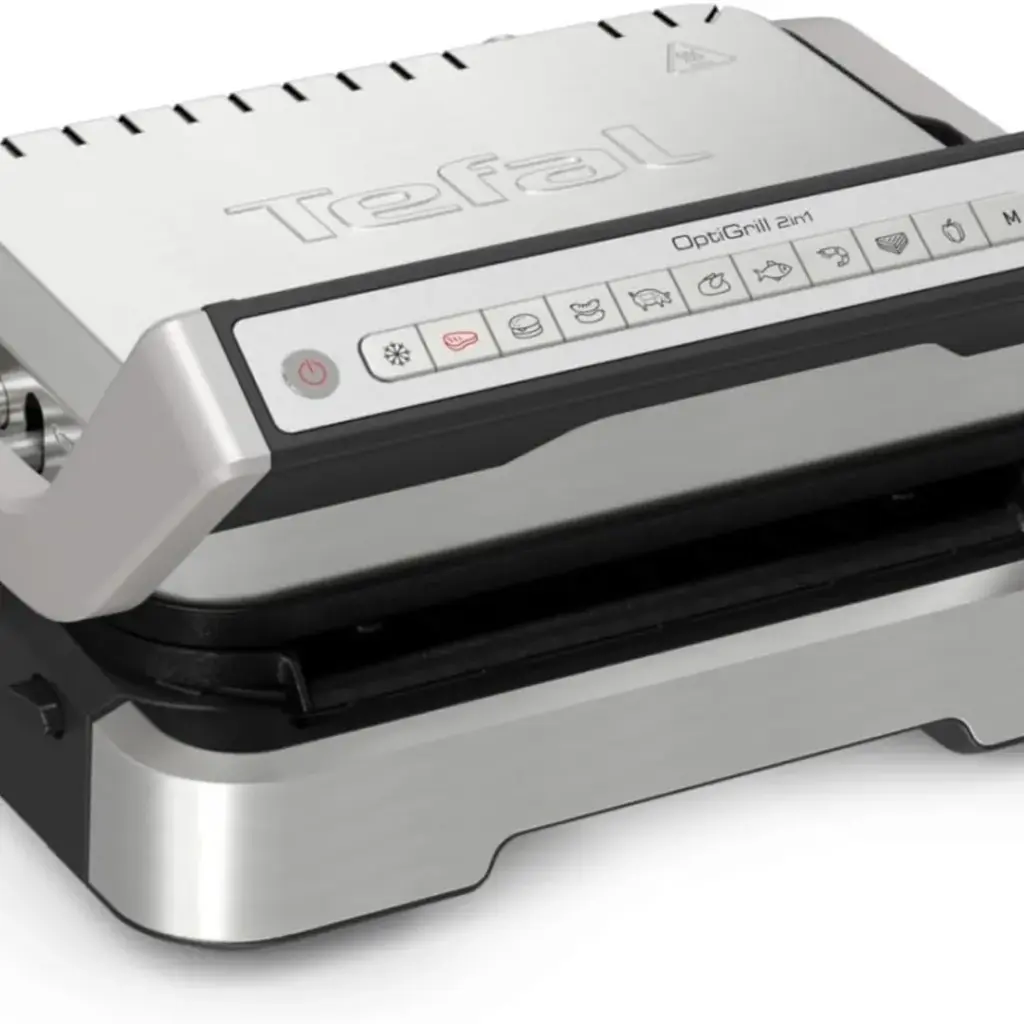
The first thing you notice when unboxing this beast is the footprint. This isn’t a dainty sandwich press. The “XL” designation isn’t just marketing fluff; it boasts an 800 cm² cooking surface.
In plain English, that’s about 33% more real estate than the standard version.
The Space Factor
You can comfortably fit six to eight burgers or three massive New York strips on this surface. If you’re a culinary content creator or a high-volume home cook, that extra width is the difference between eating together and eating in shifts.
Construction & Plates
The build feels premium.
The handle is a heavy-duty thermoplastic that stays cool while the internals are screaming. The plates themselves are die-cast aluminum with a high-quality non-stick coating. They feel substantial, which is vital for heat retention.
The 7-Degree Slant
One of my favorite design tweaks is the 7-degree incline. It’s just enough of an angle to let the rendered fat and juices “exit the building” into the extra-large drip tray without making your sausages roll off the front.
It’s a subtle touch that shows the designers actually cooked a real meal before finalizing the blueprint.
The Tech: Automatic Sensor Cooking Explained
This is where the pitmaster in me got skeptical. T-Fal claims this machine uses Automatic Sensor Cooking technology.
Thickness Detection
The grill doesn’t just look at the temperature of the plates; it senses how many items are on the grill and measures the thickness of the meat to the millimeter. It then adjusts the cooking cycle (time and temperature) accordingly.
The Light Indicator System
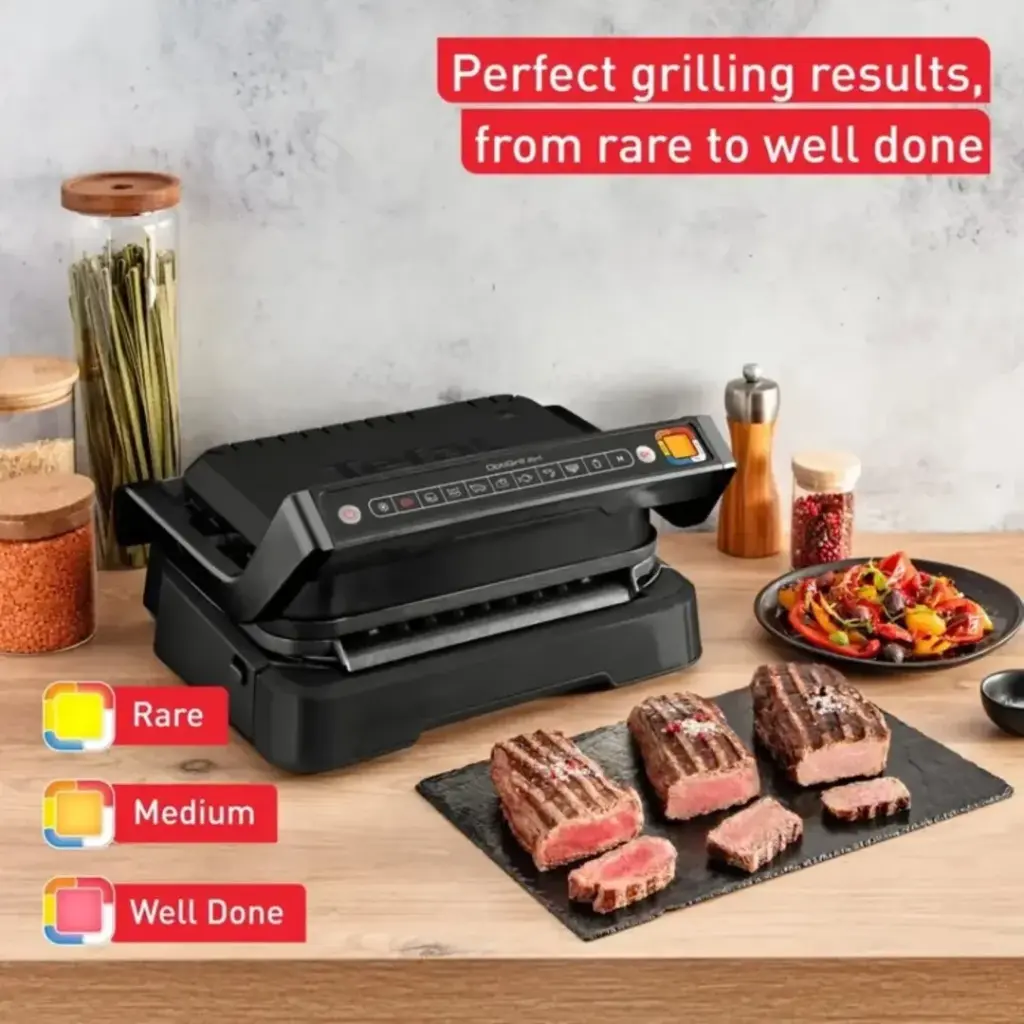
Instead of a digital countdown that is usually wrong, the OptiGrill XL uses a color-coded LED ring.
- Blue/Purple: Preheating (The “be patient” phase).
- Green: The start of cooking.
- Yellow: Rare.
- Orange: Medium.
- Red: Well-Done.
It beeps at every stage. For someone used to poking meat with a Thermapen, letting a glowing circle tell me when my steak is ready felt like giving a robot the keys to my car.
But, spoiler alert: the robot is a surprisingly good driver.
Power Output
With a 2000W heating element, this machine doesn’t mess around. It gets hot fast and, more importantly, it stays hot. Cheap grills lose their “oomph” the second cold meat hits the metal.
This one recovers its heat quickly, which is the secret to getting a decent crust.
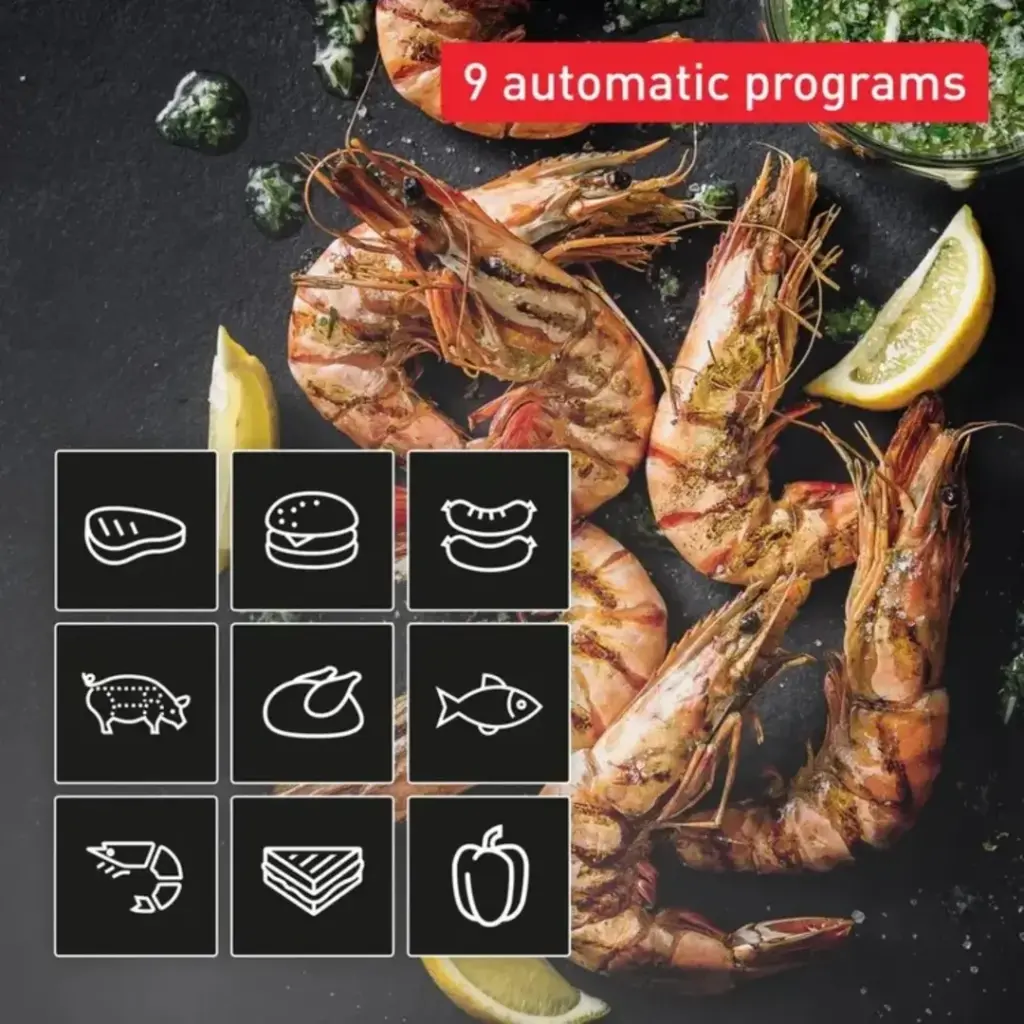
The XL version steps up the game by offering nine pre-set programs. These aren’t just timers; they are unique temperature curves designed for specific protein structures.
The Staples You have the standard Burger, Poultry, Sandwich, Sausage, Red Meat, and Fish modes. These are the workhorses. The “Red Meat” mode is particularly aggressive with its initial heat to mimic a sear.
The XL Exclusives
The XL adds Seafood, Pork, and Bacon. Let’s talk about the Bacon mode.
Cooking bacon on a flat top usually results in a grease-splattered kitchen. On the OptiGrill, the slant drains the fat immediately, leaving you with strips that are crispy rather than soggy. It’s a game-changer for Sunday breakfast.
Frozen Food & Manual Modes
There is a snowflake button for Frozen Food.
It adds a defrost cycle before jumping into the grill mode. I tried it with some “emergency” frozen burger patties. It wasn’t five-star dining, but it was remarkably juicy for something that was an ice cube ten minutes prior.
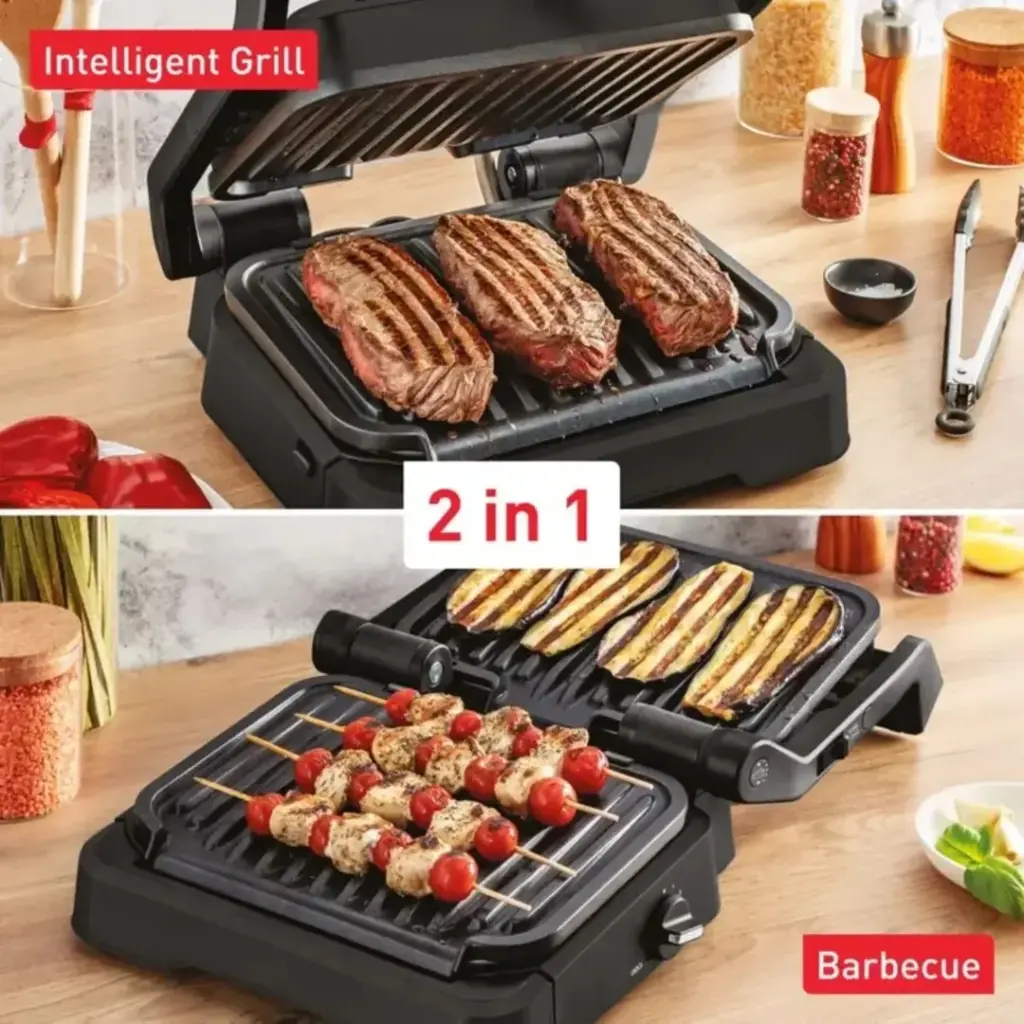
The Manual Mode offers four temperature levels. This is where I go when I’m grilling sliced zucchini, asparagus, or halloumi. It gives you back the control if you feel like the sensors are overthinking things.
Real Results: Testing the Performance
A grill is only as good as the “Real Results” on the plate. I tested three specific scenarios to see if it could pass the “Pitmaster Test.”
The Steak Test (The Holy Grail)
I threw on a 1.5-inch thick Ribeye. I waited for the beep at the “Orange” (Medium) stage.
- The Result: The internal temp was a perfect 142°F.
- The Critique: While the internal doneness was spot on, you won’t get that deep, charred “crust” you’d get from a 700-degree cast-iron skillet. You get “grill marks,” but not a total sear. However, for a weeknight dinner with zero cleanup, it’s an A-minus.
The Chicken Breast Challenge
Chicken breast is the easiest thing to ruin. Most people overcook it until it’s like chewing on a yoga mat.
- The Result: Using the Poultry mode, the sensor stopped exactly when the juices ran clear. It was arguably the most consistent indoor chicken I’ve ever produced.
The Sausage Test
Sausages usually burst on a contact grill because the heat is too direct.
- The Result: The OptiGrill XL seems to pulse the heat. The casings stayed intact, and the snap was perfect.
Maintenance & Longevity: The Cleanup Reality
If a kitchen gadget is hard to clean, it eventually becomes a very expensive paperweight in the back of your pantry.
Dishwasher Safety
T-Fal claims the plates and drip tray are dishwasher safe. I’ve run mine through twenty cycles, and the non-stick coating is still holding strong.
- Pro-Tip: Even though they are dishwasher safe, I usually give them a quick soak in warm soapy water first. It preserves the “slickness” of the plates for longer.
The “White Light” Mystery
Occasionally, if you open the lid too many times during preheating, the grill gets “confused” and shows a white light.
This is the sensor telling you it lost its calibration. It’s a minor annoyance, but a quick power cycle usually fixes it.
Just remember: Trust the process and leave the lid closed.
T-Fal OptiGrill XL vs. The Competition
In the world of indoor cooking, the main rivals are the Ninja Foodi Grill and the classic George Foreman.
The Ninja Foodi is a beast because it’s also an air fryer. If you want “fried” textures, the Ninja wins. However, the Ninja is essentially a small oven. The T-Fal OptiGrill XL is a contact grill. Because the plates touch the food on both sides, it cooks twice as fast as an air fryer.
The George Foreman is the budget king, but it lacks the brains. It’s “on” or “off.”
The OptiGrill is for the person who wants to walk away, fold some laundry, and come back to a steak that isn’t ruined. You’re paying for the peace of mind.
The Science of the “Searing” Cycle
Most indoor electric grills struggle with the Maillard reaction – that chemical shorthand for a “delicious brown crust.”
The T-Fal OptiGrill XL tackles this with a high-intensity heating phase. Unlike standard grills that maintain a flat, uninspired temperature, this machine uses smart software to front-load thermal energy.
- Thermal Boost: The 1800W–2000W elements create a rapid moisture-evaporation barrier on the meat’s surface.
- Caramelized Finish: Concentrated contact heat ensures a savory, browned exterior rather than a grey, “steamed” texture.
- Precision Pressure: The top plate works in tandem with the sensors to lock in internal juices through direct physical contact.
- The Result: A delicate dance of thermal management and pressure that delivers real-world results for your “Red Meat” settings.
The Art of the “Vegetable Medley” in Manual Mode
While the “XL” is a protein powerhouse, its Manual Mode is a secret weapon for plant-based sides. You have four color-coded temperature levels, ranging from a gentle “keep warm” to a blistering sear.
- Uniformity is Key: Slice bell peppers, zucchini, and eggplant to a consistent thickness for even cooking.
- Dual-Sided Heat: Achieve charred grill marks and a tender interior in half the time of an oven roast.
- Steam Control: Avoid overcrowding the plates; giving each slice room to breathe ensures a crispy-tender consistency rather than a soggy mess.
- Efficiency: It’s the fastest way to whip up a healthy grilled salad without the hassle of firing up the backyard rig.
Optimizing the “Stall” During Batch Cooking
For large family gatherings or meal prepping, you have to understand recovery time. Every time you lift the lid and introduce cold protein, the plate temperature drops. To keep your results consistent across three or four back-to-back batches, follow these pitmaster rules:
- The 60-Second Rule: Give the machine one minute to “re-stabilize” between batches.
- Avoid the “Temperature Trap”: Waiting ensures your second and third batches don’t look paler than the first.
- Monitor the Ring: Wait for the LED indicator to return to a solid “preheat” color before reloading the grill.
- Batch Integrity: This small adjustment ensures your last steak is just as impressive as the first one off the line.
Flavor Infusion: Dry Rubs vs. Wet Marinades
The way the T-Fal OptiGrill XL interacts with seasonings is a topic rarely discussed. Because this is a contact grill, your choice of flavor matters for both taste and sensor accuracy.
- The Case for Dry Rubs: I advocate for Texas-style dry rubs (salt, pepper, garlic). They create a “bark” that handles direct plate contact beautifully.
- The Risk of Sugar: Wet marinades – especially those high in sugar – can caramelize too quickly, stick to plates, or trick the thickness sensors.
- The Wet-to-Dry Prep: If you use a marinade, pat the meat dry before grilling and apply a thin layer of oil to the plates.
- Clean Release: Proper prep prevents “tearing” delicate surfaces like fish fillets and keeps cleanup easy.
The Economics of the Indoor Pitmaster
Let’s talk shop about the cost-to-benefit ratio. In the world of high-volume cooking and strategy, efficiency is everything.
- Fuel Efficiency: Running a full-sized outdoor grill for two chicken breasts is a waste of charcoal or propane.
- Heat Containment: The XL creates a sealed heat chamber, meaning you aren’t heating up your entire kitchen.
- Time Savings: You slash cooking times by 50% compared to a single-sided pan.
- Reduced Waste: The sensors prevent you from overcooking expensive cuts like Wagyu or salmon, meaning the machine practically pays for itself by saving your grocery budget.
- The Bottom Line: It’s a high-performance tool that bridges the gap between luxury convenience and practical home economy.
Top 3 Best Alternatives to the T-Fal OptiGrill XL
If the T-Fal OptiGrill XL feels a bit too “hands-off” or you’re looking for a machine that can handle more than just a panini, here are three heavy-hitting alternatives. Each one fits a different style of indoor pitmastering.
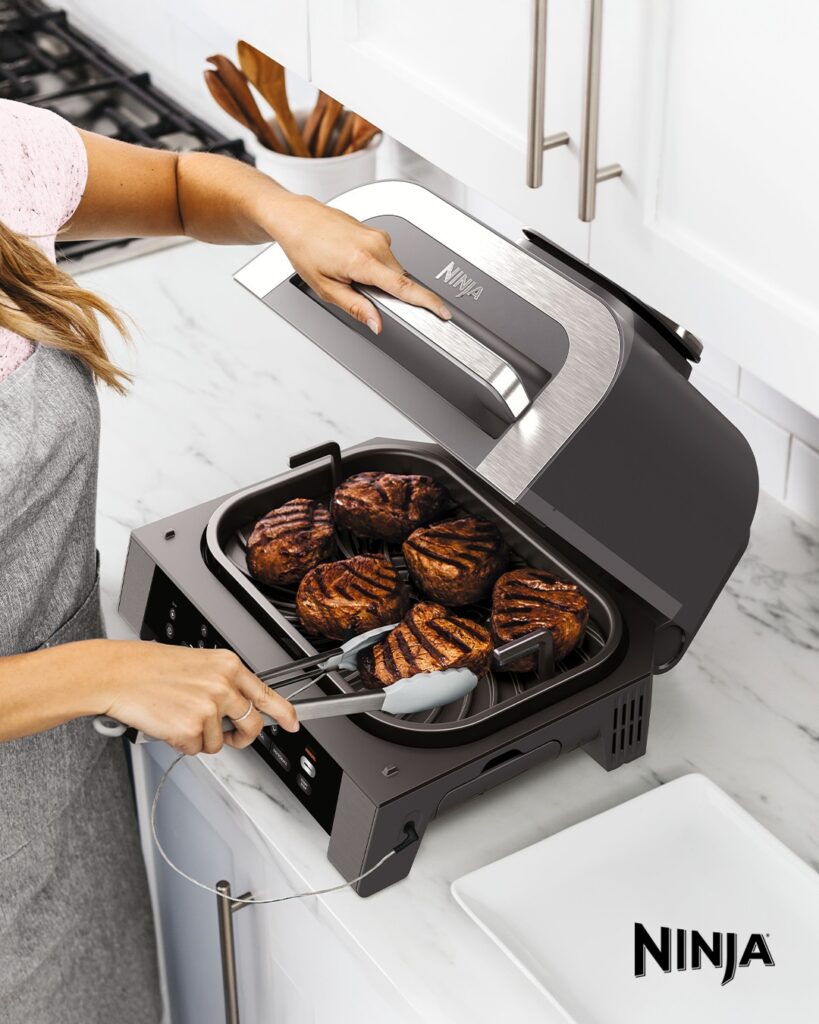
1. The Ninja Foodi Smart XL Grill (6-in-1)
If the OptiGrill is a “smart grill,” the Ninja Foodi is a “culinary multicooker.” This is the best choice if you want the capacity of the T-Fal but need more versatility.
- The “Hybrid” Edge: It doesn’t just grill; it air fries, roasts, bakes, broils, and dehydrates.
- Precision Probe: Instead of T-Fal’s thickness sensor, the Ninja uses a Leave-in Smart Thermometer. You stick the probe into the meat, and the machine shuts off exactly when it hits your target internal temp.
- The “Pitmaster” Take: You get a more authentic “char-grilled” flavor because it uses 500°F cyclonic air, though you’ll have to flip your meat manually to get grill marks on both sides.
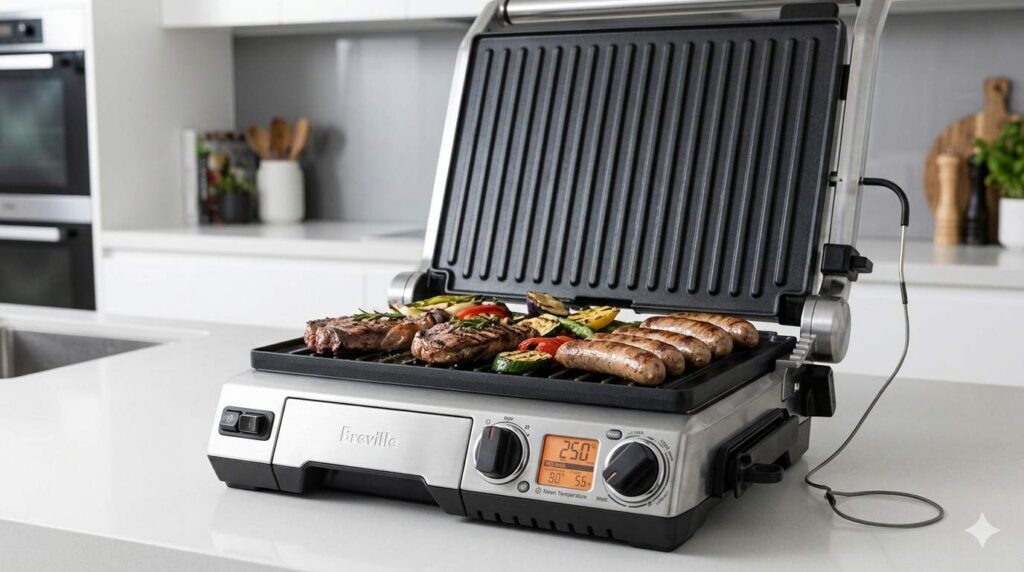
2. The Breville Smart Grill Pro
This is the “luxury sedan” of indoor grills. It’s built for the cook who wants professional-grade hardware and total control over the heating elements.
- Embedded Elements: Most grills have heating coils under the plates. Breville embeds them into the plates, which means zero heat loss when you drop a cold, heavy steak on the surface.
- BBQ Mode: The hinge opens 180 degrees, turning the contact grill into two flat surfaces. This effectively doubles your cooking area for eggs, pancakes, or a massive pile of sliders.
- The “Pitmaster” Take: The LCD screen is crisp and the temperature control is precise. It’s for the guy who wants to dial in a specific 425°F rather than trusting a “Medium” light.
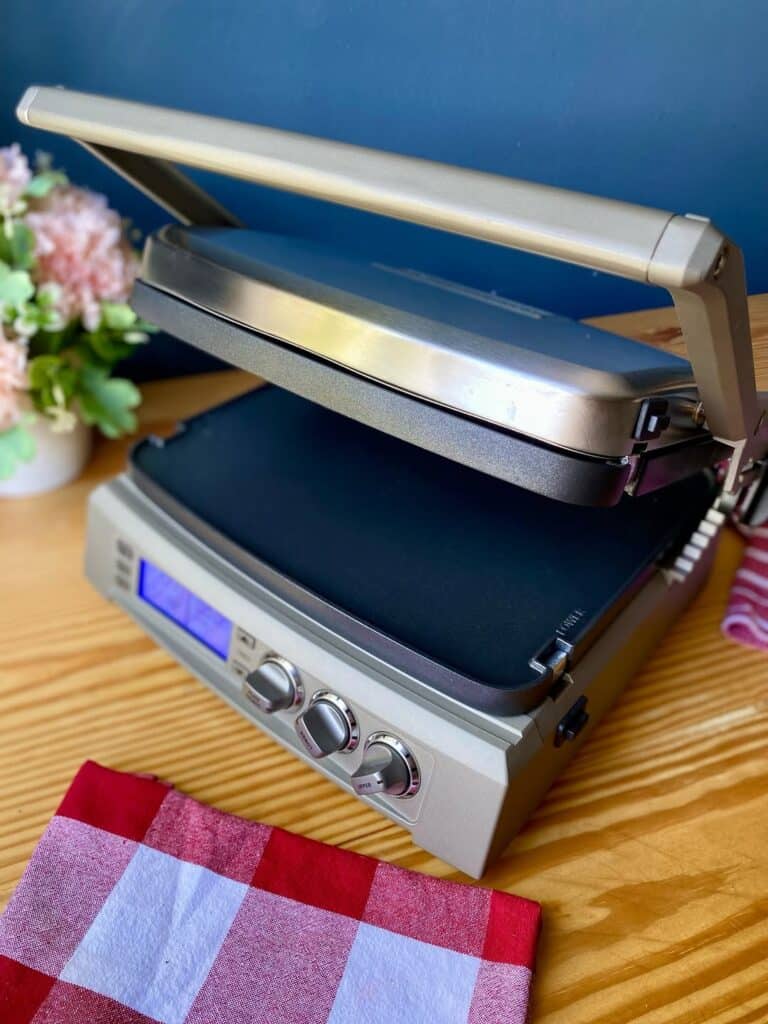
3. The Cuisinart Griddler Elite
This is the ultimate value-to-performance choice. It’s less “robotic” than the T-Fal but arguably more rugged and adaptable for a busy kitchen.
- Independent Zone Control: Unlike most grills, you can set the top and bottom plates to different temperatures. You can sear a steak on the bottom at 450°F while gently toasting a bun on the top at 250°F.
- Reversible Plates: The plates are double-sided – one side is a traditional grill grate, the other is a flat griddle. It’s a space-saver that replaces both a grill and a frying pan.
- The “Pitmaster” Take: It doesn’t have “auto-sense” tech, so you’ll need to keep your meat thermometer handy. However, the sear quality is top-tier, and the build quality feels like it could survive a decade of daily use.
Final Verdict: Is It Worth the Counter Space?
After weeks of testing, here is the bottom line: The T-Fal OptiGrill XL is the ultimate tool for the busy perfectionist.
The Pros:
- Consistency is king. It hits the same doneness every single time.
- Massive capacity. You can actually feed a family of five in one go.
- Brainless operation. You don’t need to be a pitmaster to get great results.
The Cons:
- The Price. It’s an investment compared to “dumb” grills.
- The “Sear” Factor. It won’t beat a roaring fire for a steak crust.
- The Size. You’ll need a dedicated spot on the counter; it’s not a “hide-in-the-drawer” appliance.
Who is this for? If you are a meal prepper who needs to cook 10 lbs of chicken on a Sunday, buy this. If you are a parent who wants a grilled cheese that isn’t burnt on the outside and cold in the middle, buy this.
If you are a hardcore traditionalist who thinks a “sensor” is a sign of the apocalypse… well, you might still want it for those rainy Tuesdays when the charcoal just feels like too much work.
Final Score: 9/10. It does exactly what it says on the box: it makes grilling predictable, fast, and remarkably clean. Now, if they could just figure out how to build in a “hickory smoke” scent, I might never go outside again.
Frequently Asked Questions
1. How does the OptiGrill XL know when my meat is done?
The grill uses Automatic Sensor Cooking technology. When you close the lid, it measures the thickness of the food to the millimeter and detects how many items are on the plate.
Based on the program you’ve selected (e.g., Red Meat), it calculates the exact time and temperature needed to reach your desired level of doneness, signaled by the color-coded LED ring.
2. Can I cook frozen meat directly on the grill?
Yes. There is a dedicated Frozen Food mode (the snowflake icon). When selected, the grill runs a defrost cycle to bring the internal temperature up safely before automatically transitioning into the grilling phase.
It’s perfect for those nights when you forgot to take the burger patties out of the freezer.
3. Is the OptiGrill XL surface truly non-stick?
The plates are made of die-cast aluminum with a high-grade non-stick coating. While they are very effective, as a pitmaster,
I recommend a very light brush of high-smoke-point oil (like avocado or grapeseed oil) if you are cooking lean proteins like fish or marinated chicken to ensure a clean release every time.
4. How do I clean the grill after a heavy session?
Cleanup is one of the XL’s best features. Both the upper and lower plates, as well as the extra-large drip tray, are fully removable and dishwasher safe.
If you’ve used a sugary marinade, a quick 10-minute soak in warm soapy water before hitting the dishwasher will keep the coating in pristine condition.
5. What does the “Manual Mode” do?
Manual Mode bypasses the sensors and gives you control. It features four temperature settings (Green, Yellow, Orange, Red) ranging from roughly 230°F to 525°F.
This is ideal for grilling vegetables, fruits, or personalizing the sear on a sandwich when you don’t need the machine to “guess” the thickness.
6. Can the OptiGrill XL replace an outdoor grill?
For convenience and consistency, yes. It’s faster and requires zero fuel management. However, because it’s an electric contact grill, you won’t get the deep “smoky” flavor of charcoal or wood.
It’s the ultimate tool for high-quality weeknight meals, while your outdoor rig remains the king of low-and-slow weekend BBQ.
7. Why is my grill flashing a white light?
A flashing white light usually indicates that the grill is in manual override or has encountered a sensor error (often caused by opening the lid too frequently during the preheating phase).
Simply turn the unit off, wait a few seconds, and restart the preheating cycle with the lid closed to reset the sensors.
Featured image credit: @cuisine__electro
